Loading summary
Transcript27 lines
- [00:05]
A
Good morning. It's Wednesday, September 17th. I'm Shemitah Basu. This is Apple News today. On today's show, unemployed Americans are having a hard time scoring a new job. How toxic fumes are leaking into planes and the surprising resting place of the world's oldest discovered mummies. But first, to what we know about Tyler Robinson, the suspect in the killing of conservative activist Charlie Kirk, now that the charges have been formally filed. Yesterday, the public saw him for the first time since the shooting as he appeared via video link to Judge Tony Graff for a court appearance.
- [00:51]
B
State of Utah versus Tyler James Robinson.
- [00:55]
A
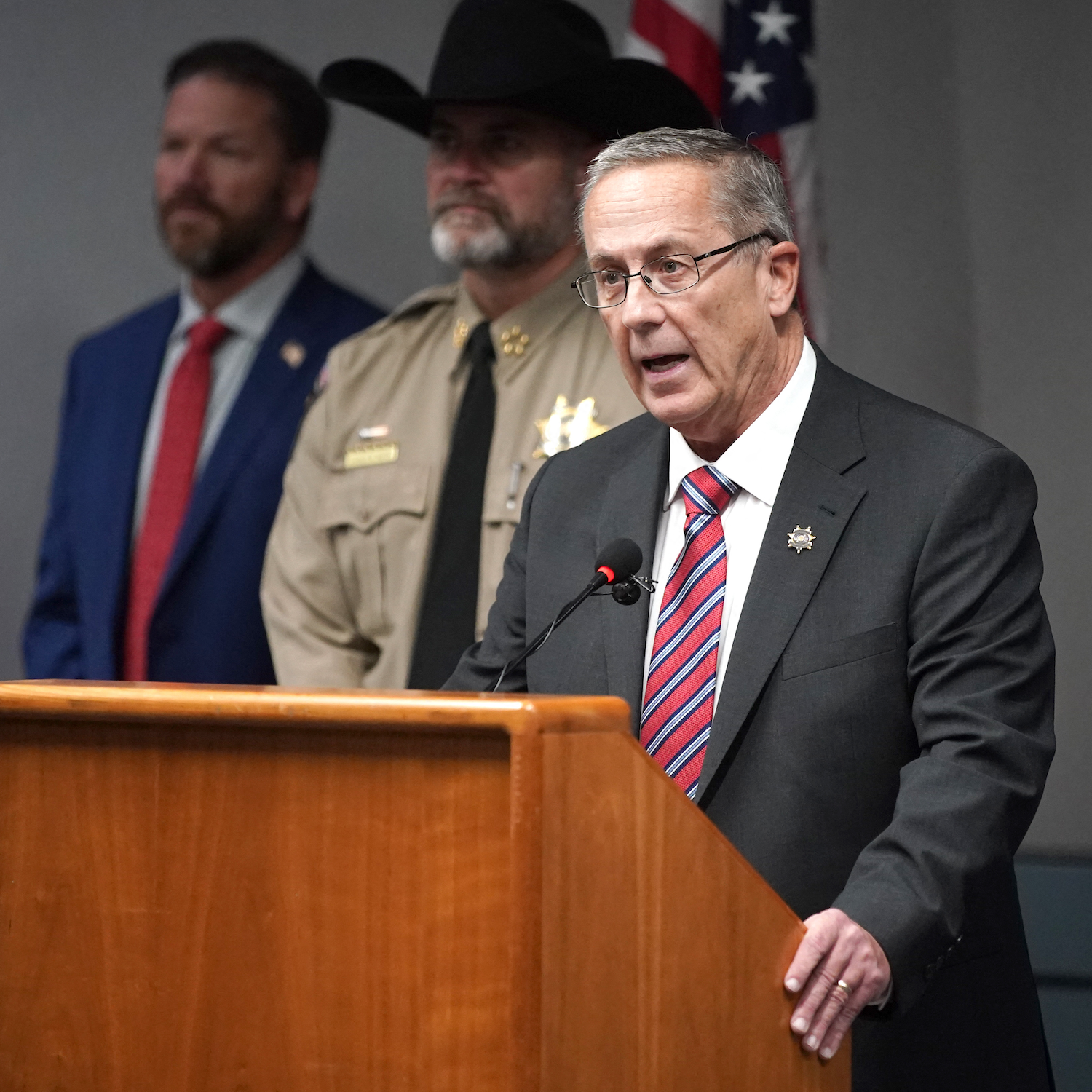
Could you state your name? Tyler James Robinson. He was not asked how he will plead. That will come at a later date, but Utah prosecutors are seeking the death penalty and alleged that Robinson targeted Kirk because of his belief or perception regarding Charlie Kirk's political expression. He faces seven charges in total, including aggravated murder. Earlier that day, Utah County Attorney Jeff Gray gave a press conference offering more details about Robinson's suspected activity before and after the shooting. He recounted exchanges between Robinson and his father. He said they spoke on the phone and later in person after the killing.
- [01:35]
C
As they discussed the situation, Robinson implied that he was the shooter and stated that he couldn't go to jail and just wanted to end it. When asked why he did it, Robinson explained, there is too much evil, and the guy referring to Charlie Kirk spreads too much hate.
- [01:53]
A
Robinson's parents, with the help of a retired sheriff family friend, eventually persuaded him to turn himself in. Prosecutors released a series of text messages they say were exchanged between Robinson and his roommate on the day of the shooting. In them, Robinson tells his roommate to look for a note left behind at the house in which prosecutors allege Robinson wrote that he had the opportunity to kill Kirk and decided to take it. When the roommate texted Robinson to ask why he did it, he replied, quote, some hate can't be negotiated out. Robinson also said he used his grandfather's rifle and he asked his roommate to delete their texts and to not work with police. The roommate has been working with investigators who, along with Robinson's family, say they were romantically involved with Robinson. This is the most comprehensive account we've had so far, but of course, it's far from a complete picture. It's in his press conference. Gray also explained why he has tried to stick to the facts of the case and the importance of finding an impartial jury.
- [02:57]
C
Why are we reluctant to share the details of the investigation itself and comment on the case? Because I want to ensure a fair and impartial trial. I became a prosecutor because of my love for the ideals of this great country and the principles embedded in our Constitution. The free exchange of ideas and opinions is critical to this great American experiment, but so too are the protections afforded to the accused found in the Fifth and Sixth Amendments.
- [03:33]
A
In recent days, President Trump and administration officials have said that, quote, the radical left are to blame for Kirk's death and the administration has signaled a desire to try and criminally prosecute left leaning organization, possibly by attempting to bring RICO charges against some groups or to strip them of tax exempt status. In a recent podcast interview, Attorney General Pam Bondi issued a warning, we will.
- [03:59]
D
Absolutely target you, go after you if.
- [04:03]
A
You are targeting anyone with hate speech, anything. And that's across the aisle. Her comments drew criticism from some commentators on the left and right, and she later said that the First Amendment must be protected. Separately, a number of employees at workplaces across the country have been penalized or fired for comments they made about Kirk, and administration officials like Vice President J.D. vance have encouraged people to contact the employers of individuals who celebrate Kirk's death. The First Amendment only protects speech from government intrusion, and laws vary a lot from state to state, but often there are few legal protections for employees who are punished for speech, whether that's in or outside of their workplace. Pennsylvania's Democratic governor Josh Shapiro, himself a victim of an arson attack in his home, also spoke about political violence yesterday, and he cautioned against the idea of prosecuting speech censorship.
- [05:02]
B
Using the long arm of government to silence people, to silence businesses and nonprofits and restrict their right to free speech, well, that will not solve this problem. Prosecuting constitutionally protected speech will only further erode our freedoms and deepen the mistrust that is UN American.
- [05:27]
A
Robinson's next hearing is scheduled for September 29th. Let's turn now to the economy. The latest Federal Reserve meeting is set for today, with an expectation that the Fed is going to announce its first interest rate cut since December. The idea is to help shore up the slowing labor market. On the surface, overall unemployment is still relatively low at 4.3%, but employers have been adding fewer jobs than expected and there's a lot of stagnation in the job market overall. Abba Bhatrai, economics reporter for the Washington Post, explained how these are signs that the economy is under strain.
- [06:12]
D
Right now we're seeing that more than one in four people who are unemployed have been out of work for more than six months, and that's a threshold that we've only crossed a few times in the last 75 years and it's generally only in periods of economic turmoil.
- [06:27]
A
And according to economic data from the University of Chicago, the proportion of college educated people in this position has also risen. Economists suggest that this could be in part because there are more college graduates overall today than there were 10 years ago, but it also might be due to factors like automation, technological changes and even cuts to federal workers and funding. Batrai explained that the six month mark is significant for economists because it bears financial and psychological impacts.
- [06:58]
D
Six months of unemployment is a really critical juncture. Usually that means your state unemployment insurance has run out, your severance payments, if you got any, have run out, you're in a much tougher financial situation and also you're probably feeling a little demoralized. I mean, it's tough to just send out applications on end and hear nothing back. I talked to so many people who have been unemployed for months on end and they all of them spoke about how difficult it has been, what a blow to their confidence it has been.
- [07:27]
A
The longer a person is out of work, the more discouraged they might be to keep looking for a job. According to new data from the New York Federal Reserve, pessimism among job seekers is the worst it's been in more than a decade. These challenges are evident with people like Felicia Enriquez, a paralegal in Los Angeles who lost her job in July of 2024 and has had no luck finding a new gig even though she's applied to hundreds of jobs.
- [07:54]
D
Felicia lives with her 16 year old daughter and they rely on SNAP benefits for food. But she's saying, you know, she really doesn't know what she's going to do next. She's six months behind on rent and isn't sure when, if ever, she's going to find a job at this point.
- [08:07]
A
Batrai said if the Fed cuts rates today, as expected, a large part of that will be because of the state of the job market and wanting to prevent these trends from deepening. And now to a problem on planes that you might not have heard about, but that's increasingly being toxic fumes creeping into the cabin and making passengers and crew members sick.
- [08:36]
E
It's almost a guarantee that a fume event is happening somewhere in the US Today.
- [08:41]
A
Ben Katz covers aviation for the Wall Street Journal.
- [08:44]
E
One common descriptor is referred to as kind of dirty socks. Dirty socks smell, also referred to as a wet dog smell. That's quite specific to an engine oil leak. Other liquids, when they leak smells so hydraulic fluid is described as being quite acrid, quite sweet smelling and can also kind of release really quite harmful neurotoxins into the air.
- [09:07]
A
Unfiltered toxic fumes leaking from a jet's engines and into the cockpit or cabin have been reported thousands of times since 2010, Katz told us. Most odors in aircraft aren't toxic, and sometimes passengers have reported being mildly affected or not affected at all. But some experience long lasting severe symptoms. Katz told us about JetBlue flight attendant Florence Chesson, who'd begun to feel sick during flights she was staffing one day from Boston to Puerto Rico and back after inhaling air that smelled like dirty socks, Chessen said she felt like she'd been drugged and observed other colleagues having a hard time too. One said she felt like she was struggling to breathe before she started to throw up. Chessen had sweat through her uniform and had a metallic taste in her mouth. And even once she was off the plane, her symptoms got worse for months.
- [09:56]
E
Until eventually she was diagnosed with traumatic brain injury and permanent damage to her central nervous system, which has of course kind of unraveled her life as she knew it and has been incredibly hard for her to adjust to.
- [10:09]
A
The neurologist who treated Chessen and who'd also treated close to a dozen pilots and more than 100 flight attendants with brain injuries after being exposed to fumes on an aircraft, told the Journal Chessen's injuries were similar to a chemical concussion.
- [10:25]
E
She is classified as disabled, has a workers compensation agreement with her employer. She hasn't worked since.
- [10:32]
A
Katz's reporting found the rate of incidents is accelerating in recent years, driven largely by leaks on Airbus best group of jets. Chessen was on this kind of plane when she began to feel ill. How fumes are reported to the FAA is part of the problem. The FAA doesn't have a formal definition of a fume event, and its reports don't always distinguish the severity of an incident. It also relies on crew members observing something's off and reporting the concern. The Journal reviewed FAA and NASA reports and conducted more than 100 interviews and says based on their findings, aircraft manufacturers and airlines have planned, played down health risks, successfully lobbied against safety measures and made cost saving changes that increased risks to crew and passengers.
- [11:20]
E
They don't see and haven't recognized that fumes being inhaled on their aircraft present high enough quantities of these toxic chemicals to actually do any damage. And unless the industry itself recognizes and takes ownership of that, there can't really be any action to fix it.
- [11:38]
A
Airbus and Boeing, the two biggest aircraft manufacturers, have acknowledged that malfunctions can lead to fluids leaking, but manufacturers, regulators and airlines have also said these incidents are too infrequent and the science on lasting health risks too inconclusive to warrant further fixes. Airbus, Boeing, the FAA and its European counterpart declined to be interviewed for the journal's reporting. Foreign before we let you go, a few other stories we're following. A United nations commissioned report has concluded that Israel has committed genocide incited by Prime Minister Benjamin Netanyahu and other officials. Reuters describe the report as the strongest UN Finding to date, though it is independent and does not speak directly for the un the report cited aid blockages, forced displacement and the destruction of a fertility clinic. In its 72 pages, the Israeli ambassador to the UN described the report as scandalous. Meanwhile, thousands of Palestinians are fleeing as Israel's ground offensive into Gaza City continues, which the military says will take several months to complete. A temporary immigrant detention center at a Texas military base was found to have violated at least 60 federal standards. That's according to a mandate inspection by ICE's Detention Oversight Unit, revealed by the Washington Post. It reports that the facility was still under construction as detainees were moved in. Among other violations were failures in monitoring and treating detainees, medical conditions, lack of basic safety procedures, and for weeks, some detainees had no way of contacting their lawyers. ICE did not respond to the Post's reporting. And finally, scientists say they have found the world's oldest mummies, and they are nowhere near the Nile. Some Egyptian mummies date back to 4,500 years or so, but this latest research looked at 54 burials across 11 sites in places like China, the Philippines and Indonesia, and found the oldest are something like 14,000 years old. If you're curious and it's not too early in the morning for you to look at mummies, you can find the pictures from NBC in our show Notes along with the rest of our stories we talked about today. And if you're already listening in the news app right now, we've got a narrated article coming up next. In recent weeks, the Trump administration has carried out deadly strikes on two Venezuelan boats in international waters, in one case claiming the vessel was carrying drugs run by members of the Trenda Aragua gang. The New Yorker reports on how this criminal group became a focus of the US Government and the Venezuelan citizens who've been caught in the crosshairs. If you're listening in the podcast app, follow Apple News plus narrated to find that story. And I'll be back with the news tomorrow.