Loading summary
Transcript29 lines
- [00:05]
A
Good morning. Democrats cast their eyes to California as it struggles to find a successor to Gavin Newsom. The LA Times tells you everything you need to know about a crucial set of primaries there.
- [00:15]
B
The race has been pretty volatile. It's been shaken up a number of times, so it's still a fight to see who advances.
- [00:23]
A
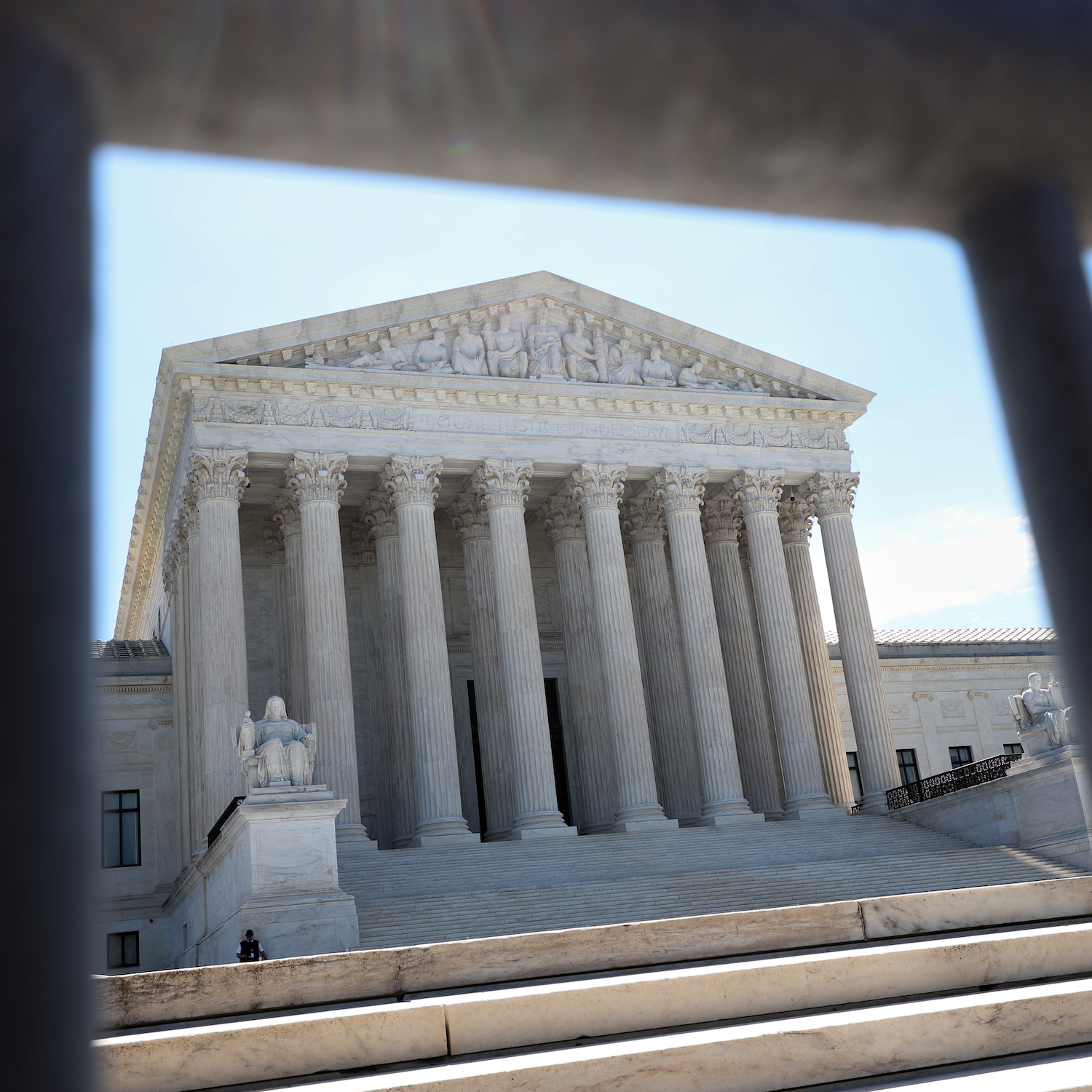
Reuters walks through two Supreme Court cases that could still shape the upcoming midterms. And Wall street prepares for a massive stock market listing that could make or the AI boom. It's Tuesday, June 2nd. I'm Gideon Resnick in for Shamita Basu. This is Apple News today. Californians head to the polls today for a crucial set of primaries. The most populous state with the largest economy is also one of the bluest. But this time around, Democrats have failed to rally behind any one clear favorite to become governor. That has contributed to a race with 61 candidates. And because of the state's unique primary system, a split Democratic vote could make for an unpredictable final two candidates in November. What the primary has lacked in star power, it has made up for in chaos. In part, that's because the biggest California politician, Kamala Harris, opted not to run and because Governor Newsom didn't back a successor.
- [01:21]
C
It's my intention not to get involved in the primary. It's my intention to do everything needs to be done to make sure that there's not a lockout for a Democratic choice in the general election. That's my focus.
- [01:33]
A
No single Democrat has really taken control of the race after the early front runner, former Congressman Eric Swalwell, dropped out amid allegations of sexual assault, which he has denied. Current polling suggests that there are three candidates leading the pack. Javier Becerra, the former AG in the state and the health secretary under President Biden. I will fight every cut and I
- [01:54]
C
will march California toward universal coverage of healthcare for our families.
- [02:00]
A
Tom Syer, the billionaire climate activist who has pitched himself as a candidate who would take on his own tax bracket. We can show them that single payer is possible and home ownership is achievable and that corporate monopoly power is not inevitable. And Republican Steve Hilton, a UK born political commentator who was endorsed by President Trump. If you want to have change in California, there's only one vote now that will guarantee the possibility of that. And that's a vote for Steve Hilton. Democrats were initially delighted when Trump backed Hilton, thinking that it would help consolidate Republican voters and make it easier for at least one Democrat to advance. But in a state of nearly 40 million people, there are still plenty of Republicans.
- [02:45]
B
Steve Hilton has said time and again that Democrats have failed California for years, and it's time for a change in direction.
- [02:52]
A
Kevin Rector covers politics for the Los Angeles Times.
- [02:56]
B
That voters who want to change should not vote for the status quo, and voting for a Democrat would be voting for the status quo. And so it's been interesting to see them frame each other as either being aligned with President Trump or being aligned with failed Democratic policies in the state for years.
- [03:13]
A
That is also part of the case being made in Los Angeles, where incumbent Democratic Mayor Karen Bass has stared down a spirited primary challenge from two candidates on the left and the right. Much of the criticism directed at Bass, and part of the reason that polls suggest such a tight race, is the way she responded to devastating wildfires last year, which killed 31 people and destroyed over 16,000 structures. She's been criticized for the city's preparedness and for initially being out of the country when the fires started. That propelled a more surprising candidate in the race, reality TV star Spencer Pratt.
- [03:45]
B
Pratt is a homeowner in the Palisades who lost his home in the fires and has entered the race with surprising strength in liberal LA as a sort of MAGA aligned candidate. And he has premised his candidacy largely on his frustration over the handling of the fires and the handling of some other pretty intractable problems in la, like homelessness.
- [04:11]
A
That frustration may have also helped progressive City Councilmember Nithya Rahman, who's drawing close to Bass in polls. The expectation is that no one will earn more than 50% of the vote to preempt a runoff between two candidates in November. One final thing to watch out for are congressional primaries. Statewide, California has the largest congressional delegation in the country and, like other states, recently redrew its congressional maps. Those new maps could gain Democrats another five seats. You can find all the results of these primaries and others happening tonight in the Apple News app. There were two big stories in the world of AI yesterday. First, Wall street is gearing up for what could be a blockbuster trillion dollar stock market listing. The AI company Anthropic, which makes the chatbot Claude, announced it had filed to go public yesterday. It's the first major player in the field to make the leap. The US Economy has a lot riding on the fate of these companies, so you can expect this to be one of the most scrutinized tech IPOs in history. Speaking at a conference last month, Anthropic's co founder Dario Amade noted that the company had far exceeded its own expectations for growth recently, to the point where their systems had struggled to keep up.
- [05:28]
C
We tried to plan very well for a world of 10x growth per year. In the first quarter of this year we saw if you were to annualize it ADX growth per year in revenue and usage. And so that is the reason we have had difficulties with compute right. We've planned for anything from it only grows a little to it grows 10x and yet we saw 80x.
- [05:51]
A
Anthropic has been engaged in a bitter rivalry with OpenAI. This year it ran a provocative commercial during the Super bowl mocking ChatGPT for inserting product recommendations into conversations. TriStep BoostMax the insult that add one vertical inch of height and help short king stand tall. What Use code HEIGHTMAXING10 for big discounts. What's the difference between me and you? Me and you Me and you A lot more people actually use OpenAI's ChatGPT day to day. But Anthropic has carved out a lucrative niche with its complex coding capabilities and a focus on businesses. It's also pushed further for regulation. It claimed to have created one model so powerful that put in the wrong hands it could wreak havoc on banks and local infrastructure. And it stood apart in its opposition to how the Defense Department could use its technology. Now Anthropic is suing the Pentagon, claiming it's been blacklisted as a result. On CNBC yesterday, OpenAI CEO Sam Altman denied there was a race to go public. I think there is a race to deliver the best technology and build the best business, but going public is a financing event, and I don't think that's one that we're focused on the timing of. We'll do it when we think it makes sense. But as the Wall Street Journal notes, there isn't an infinite amount of money to go around, so there could be some advantage in being the first mover, especially with Elon Musk's SpaceX on the IPO horizon as well. There's also plenty of risk, with the market less sure about valuations as these companies excite Wall street, another story provided a stark reminder of the concerns that people have about AI. Yesterday, Florida's attorney general said the state was suing OpenAI and Altman, alleging their chatbot is not safe for minors.
- [07:32]
B
Sam Altman and ChatGPT have chosen the AI race over the safety and security of our kids. They have chosen profit over public safety, and we're not going to stand for it here in Florida, so we will hold them accountable.
- [07:48]
A
The case builds on Florida's criminal investigation into whether OpenAI bears any responsibility for a mass shooting at Florida State University last year. Prosecutors are analyzing chat logs between the gunman and ChatGPT, and families accuse the company of doing nothing to stop him. OpenAI said they had put in place industry leading protections and policies. In the coming weeks, the Supreme Court will rule on two consequential cases that could upend how elections function. One involves mail voting used by tens of millions and how the court legally defines Election Day, Reuters reporter Jan Wolf told us about it.
- [08:33]
D
The U.S. supreme Court is hearing a Republican backed challenge to a Mississippi law that allows ballots to be counted if they are postmarked by Election Day but arrive up to five business days afterwards.
- [08:47]
A
Mississippi is one of 14 states along with Washington, D.C. that allows mail in ballots to be postmarked by Election Day. It was among the states that changed their rules in response to the COVID 19 pandemic. But the Republican National Committee, the plaintiff in this case, is arguing that that practice should not be allowed. Citing federal laws that establish when election day falls, the RNC argues that all ballots must arrive by the time that polls close in order to be counted. The Supreme Court's six conservative justices seem skeptical of Mississippi's position during oral arguments.
- [09:20]
D
The Democratic Party has opposed this. The DNC filed a brief saying they worry this could disenfranchise a lot of vulnerable voters.
- [09:28]
A
Roughly one in three people voted by mail in the last presidential election.
- [09:32]
D
Other experts say that it's not exactly clear what the impact will be because people tend to adapt to what the rules are if they know what the rules are. So they think that if there's enough awareness out there that you really should not procrastinate with your ballot, people will adapt to it.
- [09:49]
A
The other case Wolf is watching involves campaign spending.
- [09:52]
D
Since the 1970s, there's been a cap on how much money a political party can spend in coordination with a candidate. Proponents of this regulation say it's a good way to fight corruption. Basically, they are concerned that individual donors who are capped in how much money they can give to a candidate if allowed, would route massive sums of money to to candidates to curry their favor simply doing it through the party.
- [10:17]
A
Back in 2022, then Senate candidate JD Vance joined other Ohio Republicans in challenging this law.
- [10:23]
D
Their argument is that this really interferes with the ability of the parties to do their job, which is to elect the candidates they like, and that the First Amendment simply doesn't allow this sort of restriction on their political activity.
- [10:35]
A
The court is expected to rule on these two cases by the end of the month, but Wolf told us it's not clear if or how their rulings might impact the midterms. Under US Law, courts are supposed to be mindful of elections and avoid changing rules, requirements or maps too close to election day.
- [10:51]
D
So one thing we're going to be looking for is whether the court kind of shows that restraint on its own here or says that it's imperative that they act now to strike down laws they consider unlawful.
- [11:10]
A
And to a few other stories we're following, it appears the Trump administration's so called anti weaponization fund is on life support. The DOJ said in a statement Monday that it would abide by a judge's order barring the government from moving money into the fund or considering any claims. Several outlets reported that this is a first step toward the White House potentially dropping the fund altogether, though one official cautioned to the Wall Street Journal, the president could ultimately change his mind. Republicans might now move forward on a $70 billion immigration enforcement bill that was held up for lack of support in the GOP caucus. A number of Republicans were angry the fund might have paid January 6th rioters who assaulted police. Senate Majority Leader John Thune said the best way to advance that immigration bill would be for the White House to shut the fund down altogether. A tense back and forth day in the Middle east threatened to derail peace talks between the US And Iran. Iranian state media suggested the regime planned to walk away from negotiations over Israeli strikes towards Iran's allies Hezbollah and Lebanon. President Trump said that after talks with both sides they had agreed to stop attacks. Israeli Prime Minister Benjamin Netanyahu didn't acknowledge any new ceasefire yesterday, but he did appear to back off on a threat to strike southern Beirut. And finally, a story about a consumer choice that hints at a broader cultural shift. The Washington Post has a deep dive on the white picket fence, the image synonymous with middle class American front yards. One fence company owner told the Post that this spring was the first time ever that no one had hired him to build a white picket fence. Instead, customers are increasingly choosing cheaper material like vinyl and fences that offer more privacy. Some say it's a functional choice to keep children from wandering. But the article also posits that their decline signals an individualistic turn and a departure from casual neighborliness that these fences fostered. You can find all these stories and more in the Apple News app, and if you're already listening to the news app right now, we've got a narrated article coming up next. The New Yorker profiles a former Ukrainian stunt pilot who is now putting his aerobatic skills to work. She shooting down Russian drones. If you're listening in the podcast app, you can follow Apple News plus narrative to find that story. And I'll be back with the news tomorrow.