Loading summary
Transcript160 lines
- [00:05]
A
Good morning.
- [00:06]
B
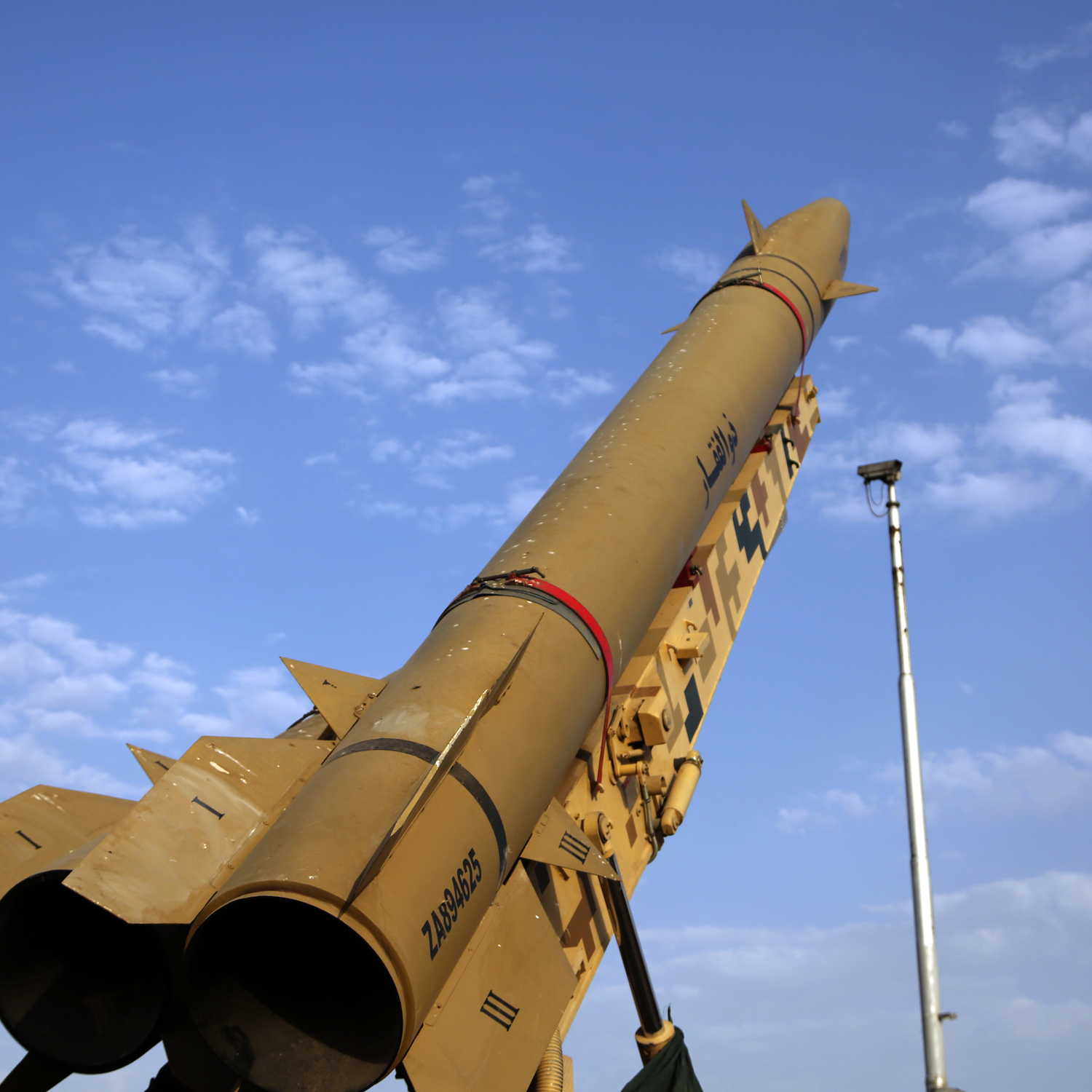
The U.S. and Iran pause fighting after
- [00:08]
A
nearly two weeks of strikes.
- [00:10]
B
Reuters explains where things now stand.
- [00:12]
C
We're in this really critical, difficult situation where neither side wants to give up almost anything, and yet both will have to if this conflict is going to end. How?
- [00:22]
B
An exam leak brought tens of thousands
- [00:24]
A
of young Indians to the streets and forced Narendra Modi into a rare retreat. And the latest on an attack near Berlin's Pride festival.
- [00:32]
B
It's Monday, July 27th. I'm Gideon Reznick in for Shemitah Basu.
- [00:36]
A
This is Apple News.
- [00:37]
D
Today,
- [00:45]
B
After 13 consecutive nights, the bombing
- [00:47]
A
has stopped, at least for now.
- [00:49]
B
On Friday, the U.S. suddenly paused its
- [00:51]
A
campaign in the Gulf and hasn't carried out any attacks over the weekend.
- [00:55]
B
And yesterday, Iran said it would hold
- [00:57]
A
off as long as the U.S. stuck to their word.
- [01:00]
B
The U.S. ambassador to the U.N. mike
- [01:02]
A
Waltz, told NBC's Meet the Press the President was keeping all options on the table.
- [01:06]
E
What the President is doing right now, as we've seen all along, is giving some talks, some space. Talks are ongoing. They're happening at every level, from the more technical aspect of it all the way to the highest levels, of course, within both the Iranian government and the US Government.
- [01:26]
B
Behind the scenes. Reuters reports that US Officials had warned
- [01:28]
A
President Trump about the risks of further strikes.
- [01:31]
C
It seems that top advisors are cautioning that the lists of targets that they had selected for these 13 nights of pretty heavy strikes have sort of reached their limits.
- [01:43]
B
Phil Stewart is chief national security reporter for Reuters.
- [01:46]
C
And the next step would be returning to major combat operations, which would be a major escalation and a return to a much bigger scale war than we've seen since April.
- [01:56]
B
The US Resumed the conflict after Iran
- [01:58]
A
began attacking commercial vessels passing through the Strait of Hormuz.
- [02:02]
B
But as Stewart told us, the two weeks of strikes that followed used up
- [02:06]
A
a lot of air defense munitions. Without changing the fundamental picture, it's been
- [02:10]
C
a war about returning freedom of navigation to one of the world's most critical waterways, a choke point for 20% of the world's crude oil. And all the strikes have been geared toward eliminating Iran's ability to, or at least diminishing it. So to threaten ships. And actually, military analysts often say you can't eliminate Iran's ability to strike those ships.
- [02:32]
B
The decision puts the spotlight back on
- [02:34]
A
negotiations, but without an obvious path forward.
- [02:37]
B
The last deal collapsed over drastically different
- [02:40]
A
interpretations of the agreement by both sides.
- [02:42]
C
That MOU was championed by the administration. The Iranians thought it was great, but then both sides claimed different interpretations of It. So it fell apart. The Iranians thought it meant that they could turn the Strait of Hormuz into their own kind of Panama Canal. And the US Absolutely did not think that. And so there was a fundamental misunderstanding about what they had negotiated.
- [03:01]
B
Tomorrow, Israeli Prime Minister Benjamin Netanyahu will
- [03:04]
A
visit the White House, marking his seventh appearance at the Oval Office since Trump began his second term.
- [03:09]
B
Stewart told us that Israel has actually
- [03:11]
A
been on the sidelines of the conflict in recent weeks.
- [03:14]
B
Iran has avoided Israeli targets, instead opting
- [03:17]
A
for US Military bases in neighboring countries like Kuwait.
- [03:20]
B
And Israel has not been involved in
- [03:22]
A
the US Bombing campaign.
- [03:23]
C
It always seems like when there's a conversation between Israeli Prime Minister Benjamin Netanyahu and President Trump, it always seems to be at one of these pivotal moments. And here we are again, right. I wonder whether this is not going to be one of those pivotal weeks when Israel really seeks to try and get its message across to President Trump and influence his thinking on these discussions.
- [03:44]
B
Stewart told us that conversations between the US And Iran are still happening, but it won't be easy for negotiators to
- [03:50]
A
come up with something that both sides can agree on and to interpret consistently.
- [03:54]
C
And so the real test here is what happens next in these talks and whether both sides can come to some understanding that they can both talk about in public. Otherwise, you're going to see factions inside Iran split about what's been agreed and what hasn't been agreed. And you're going to see the same thing in the United States and among America's allies like Israel.
- [04:24]
B
It began as an online protest driven
- [04:26]
A
by memes and satirical social media videos.
- [04:29]
B
But soon tens of thousands of India's
- [04:31]
A
so called cockroach movement were out on the streets protesting against an exam leak scandal and more broadly, youth unemployment.
- [04:39]
B
The scale of the movement ultimately became
- [04:41]
A
one of the biggest challenges to the ruling BJP party in years, putting Prime Minister Narendra Modi on the back foot. And over the weekend, the protests finally secured their key the resignation of India's education minister.
- [04:55]
B
NPR spoke to protesters on Saturday after
- [04:57]
A
news of the resignation broke.
- [04:59]
F
People are congratulating each other. I don't know. Some random person is hugging me. Some random people are just lifting me up and everything is like, it's more than a family. This will shape my future. This will shape the future of a lot of people who are here.
- [05:14]
B
The protests were ignited by the botched
- [05:16]
A
handling of a grueling medical entrance exam.
- [05:19]
B
Teachers and private tuition centers had leaked
- [05:21]
A
the paper in advance, charging students large sums for access.
- [05:25]
B
When the scandal came to light.
- [05:27]
A
The government canceled the release of results, setting off mass frustration.
- [05:31]
B
And as discontent grew online, one graduate
- [05:33]
A
named Abhijit Dipke seized upon comments made by the chief justice who had described some of the unemployed as cockroaches. Dipke created a joke party, the Cockroach
- [05:44]
B
People's Party, and within days had signed
- [05:46]
A
up tens of thousands of people speaking
- [05:49]
B
to the outlet India Today.
- [05:50]
A
He delivered a warning to Modi.
- [05:52]
F
I believe that it's in the best interest of this government to listen to these voices, because if you don't listen, then the youth of this country will demand the resignation of the prime minister of India. So somewhere the government needs to understand this.
- [06:03]
B
A high profile hunger strike brought more people to the cause, while a harsh
- [06:07]
A
police crackdown failed to dampen the crowds.
- [06:10]
B
Eventually, the government was reluctantly forced to concede. And yesterday, Modi posted on social media,
- [06:15]
A
filmed unusually in selfie style.
- [06:21]
B
He said exams should be trustworthy and
- [06:23]
A
transparent and promised to launch a task force that would overhaul the system.
- [06:28]
B
Similar Gen Z protests in Nepal and
- [06:30]
A
Bangladesh ultimately toppled prime ministers.
- [06:33]
B
Few believe that Modi faces similar threats
- [06:35]
A
to his position, but at the same time, he can't ignore this voting bloc. More than 40% of the population is under the age of 25.
- [06:43]
B
Yamini Iyyar is a visiting professor at Brown University. She told Al Jazeera that the protesters
- [06:49]
A
were an aspirational class of Gen Z Indians who feel they've earned the right to employment in a country that has struggled to create enough jobs for the middle classes.
- [06:58]
G
This young population who has done everything that they can to educate themselves. If you look at overall cost of education, there's been a huge increase in private expenditure on education in India, and yet we've not been able to provide jobs for these educated young of the country. 40% of university graduates between the ages of 15 to 25 do not have jobs.
- [07:22]
B
Modi said new legislation aimed at tackling
- [07:24]
A
exam leaks would be introduced in Parliament today.
- [07:34]
B
The sister of Lindsey Graham plans to
- [07:37]
A
run for a full Senate term at President Trump's urging.
- [07:40]
B
Even if not, everyone in the Republican
- [07:42]
A
Party is completely convinced.
- [07:44]
B
Darlene Graham was appointed interim senator for
- [07:46]
A
South Carolina following her brother's death.
- [07:49]
B
But last week she told Fox News
- [07:51]
A
she wanted to put her candidacy to the voters.
- [07:54]
D
With God's help. By the grace of God, I am going to work as hard as I can to carry on his legacy and to help the people of South Carolina and to work for this country.
- [08:08]
B
Her decision created some uneasiness in the
- [08:10]
A
South Carolina Republican Party.
- [08:12]
B
In recent days, operatives have reportedly raised
- [08:14]
A
the fact that her political profile is
- [08:16]
B
thin and that the state's governor and
- [08:18]
A
other Senate leaders have yet to endorse her.
- [08:20]
B
The younger Graham is a political newcomer
- [08:23]
A
and something of a wild card for the Republican Party.
- [08:25]
H
I think it's fair to say that Darlene Graham's pursuit of a full Senate term came as a surprise.
- [08:31]
B
Meg Kennard is a national political reporter
- [08:33]
A
for the Associated Press based in South Carolina.
- [08:36]
B
She said that Darlene Graham is well
- [08:38]
A
known because of her brother, but not as a political actor in her own
- [08:41]
H
right in terms of being a public figure. This is something new for Darlene Graham. So South Carolina voters are really just getting to know that side of her. She's a bit of an unknown commodity. I mean, clearly is coming into this with a lot of good buy in from Republicans who had elected and reelected her brother. But in terms of being her own politician in her own right, Darlene Graham is unknown to South Carolina voters.
- [09:06]
B
She previously served as head of the
- [09:07]
A
South Carolina Commission for the Blind and was recently elected to be the next president of the National Council of State Agencies for the Blind.
- [09:15]
B
Darlene Graham took over Lindsey Graham's committee
- [09:17]
A
assignments through the end of the Senate
- [09:19]
B
term, but recently told Fox News she
- [09:21]
A
has different priorities than her national security focused brother.
- [09:24]
D
I used to see him on the talk shows. I would watch him and I'd be like, lindsey, you're just talking about national security all the time. And I understand that's important, protecting our borders, national security. Absolutely, I said. But, you know, talk about also what matters to the average person. You know, the price of groceries, the price of gas, health care insurance, those kind of things. That's what I'm worried about.
- [09:56]
B
Graham's decision to run has put some
- [09:58]
A
South Carolina Republicans in a bind.
- [10:00]
H
There's still kind of this period of mourning that voters, South Carolinians, Republicans and citizens writ large are going through, but trying to figure out how to do that and support Lindsey Graham and his family and his sister while also making political decisions that will have ramifications for South Carolina for not just the next couple of months, but for a potential six year term. That is something that is in front of voters right now.
- [10:25]
B
And even though she has Trump's endorsement,
- [10:27]
A
Darlene Graham can expect a relatively spirited primary.
- [10:31]
B
Former Governor Mark Sanford and two congressmen
- [10:33]
A
have already committed to running, including Russell Frye, who told a local Fox affiliate that he's undeterred by Graham's candidacy.
- [10:40]
I
If she wants to run, that is certainly her prerogative to do what I'm, I'M not focused on her, and I'm not focused on anyone else in the field. What I'm focused on is delivering for South Carolina. People want a new generation of conservative leadership.
- [10:52]
B
While President Trump has already endorsed Graham, it doesn't mean he might not support
- [10:56]
A
someone else in the future.
- [10:58]
B
Earlier this year, the president backed Attorney
- [11:00]
A
General Allen Wilson in the South Carolina Republican gubernatorial primary runoff after he had previously endorsed Lt. Gov. Pamela Yvette.
- [11:08]
H
With Trump's endorsement already known, there is a bit of a cliffhanger out there. Also, for the potential that he could do a double endorsement, Darlene Graham being somewhat of an unknown political commodity just further complicates a situation that would already be messy.
- [11:24]
B
The deadline for candidates to file is
- [11:26]
A
tomorrow, ahead of a primary election set for August 11th.
- [11:38]
B
Here are a few other stories we're following today.
- [11:41]
A
Police in Berlin shot and killed a 21 year old suspect yesterday, believed to have attacked the city's Pride festival.
- [11:48]
B
He's accused of driving a vehicle into a crowd and attacking people with a
- [11:51]
A
bladed weapon, killing one and injuring more than two dozen others. The Berlin public prosecutor's office alleged the suspect had wanted to join ISIS and previously made a failed attempt to travel to Syria to do so. Yesterday, mourners gathered at the Brandenburg Gate near where the attack happened.
- [12:08]
B
Hundreds of thousands are thought to have
- [12:10]
A
come to Berlin this weekend for what is one of Europe's largest LGBTQ celebrations.
- [12:16]
B
The Trump administration is reviewing its process
- [12:19]
A
for vetting immigration officers.
- [12:21]
B
It comes after reports that the man
- [12:23]
A
who allegedly shot and killed a Colombian immigrant in Maine had a history of violent outbursts.
- [12:28]
B
In an interview with CNN on Sunday, White House border czar Tom Homan did
- [12:31]
A
not confirm that the agent was in fact David Brulette, who had been identified in previous reporting.
- [12:37]
B
But he said that the alleged background
- [12:38]
J
would have been a problem based on that information. That's part of the ongoing investigation. You know, did the vetting process fail? Was that information not available? That did not know. So there's a separate administrative investigation on what happened here. Did you, did we have that information? Did we not have information but vetting process? If that was factual, he would have almost impossible time to pass vetting.
- [13:05]
B
Both of Maine's senators have called for
- [13:07]
A
an expedited investigation into the shooting.
- [13:11]
B
And finally, Tade Pogachar won the Tour
- [13:13]
A
de France again yesterday.
- [13:15]
B
He now joins four other riders as
- [13:17]
A
the only men to win it five times.
- [13:20]
B
It was a thrilling finish on Sunday, but the Tour had a series of
- [13:23]
A
other storylines off the main course, including late night drug tests and raging wildfires that rerouted the final stage.
- [13:30]
B
Yesterday, Pogaar described his victory as something
- [13:33]
A
you wouldn't even maybe write in a storybook.
- [13:38]
B
You can find all these stories and
- [13:40]
A
more in the Apple News app.
- [13:42]
B
And if you're already listening to the News app right now, we've got a
- [13:44]
A
narrated article coming up next.
- [13:46]
B
Popular Mechanics has the story of how
- [13:48]
A
two thermonuclear bombs went missing from a US Military plane and looks at just how close America came to detonating a nuclear weapon on its own soil.
- [13:57]
B
If you're listening in the podcast app, you can follow Apple News Narrated to find that story.
- [14:01]
A
And I'll be back with the news tomorrow.