Loading summary
Transcript34 lines
- [00:00]
A
Hi there. Before we get into today's episode, our interview show, Apple News and Conversation is working on an episode about men in America today and how commonly held ideas about masculinity conflict with lived experiences. We want to hear from you. Tell us about a moment when you might have felt that conflict in life. Record a message with your name, where you're from and your story. Send it to us@inconversationpple.com and we might include your voice on the show. Thanks. Good morning. Iran and the US Target ships in the Strait as both sides enforce their blockades. The Washington Post explains why peace will be so difficult to achieve and whether an eventual compromise could echo parts of Obama's Iran deal. Robert F. Kennedy, Jr. Attends a marathon of congressional hearings and one Republican vents frustration about his leadership.
- [00:58]
B
When I see outbreaks numbering in the thousands and people dying once more from vaccine preventable diseases, particularly children, it seems more than tragic.
- [01:07]
A
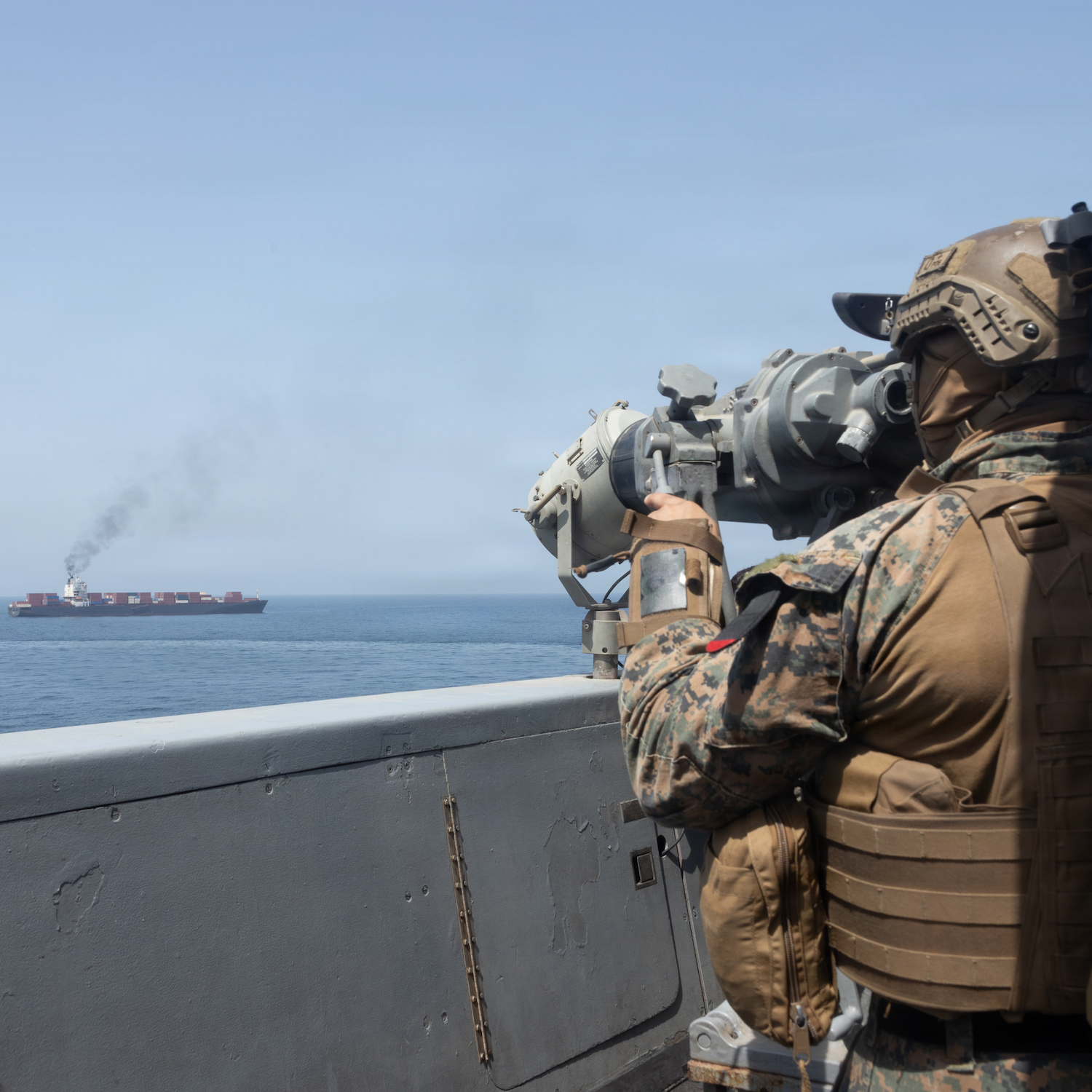
And Defense Secretary Pete Hegseth abruptly fires his Navy secretary. It's Thursday, April 23rd. I'm Cecilia Ley and this is Apple News. Today, Tensions are rising in the Strait of Hormuz where both the US And Iran are ramping up enforcement of their competing blockades. Yesterday, both sides intercepted cargo ships passing through the now dangerous waterway. Iran said it had seized at least two tankers, one owned by a Swiss based company and another from Greece, because they had failed to abide by their newly imposed rules. The Greek government said their ship had sustained, quote, extremely wide damage. Then Reuters reported that the US Military had intercepted at least three Iranian flagged tankers in Asian waters and turned them around. The US says it has now redirected 29 vessels in its attempt to choke off Iranian oil exports. And it comes days after the US Seized an Iranian cargo ship. Yesterday, President Trump's press secretary, Caroline Levitt, touted the success of their naval operation.
- [02:14]
C
We are completely strangling their economy through this blockade. They're losing $500 million a day. The Kharg island is completely full. They can't move oil in and out. They can't even pay their own people as a result of this economic leverage that President Trump has inflicted over them.
- [02:29]
A
Levitt also said there was no firm deadline to receive a proposal from Iran for further talks. As of now, a ceasefire is in place for an indefinite period until negotiations can bring a more permanent agreement. Behind the scenes, the Washington Post reports that Trump could end up pursuing a deal that involves trade offs similar to the ones accepted by his predecessor, President Obama. There are also trade offs that Trump had once criticized. That deal happened in 2015, and it lifted sanctions in exchange for curbs on Iran's nuclear program. It led to Iran significantly pulling back their enrichment, but critics say it was too narrow in focus and didn't go far enough to definitively prevent them from developing a nuclear bomb. Trump quit the Iran deal in 2018 during his first term and reimposed sanctions, and Iran resumed building out its uranium enrichment. Now the US Is considering again easing financial sanctions as part of current peace talks.
- [03:25]
D
One idea that's been floated by the Trump administration is potentially unfreezing 20 billion doll that could go to Iran. That's a lot of money.
- [03:35]
A
That's Michael Birnbaum, a White House reporter with the Washington Post.
- [03:39]
D
Some of the strongest proponents of this powerful Trump military action against Iran are now saying, whoa, whoa, whoa, whoa, we don't like this idea of sending a lot of money to Iran as part of the negotiations to end this conflict.
- [03:57]
A
But even if Trump could get past those concerns, Birnbaum reports that relations are strained. It would be difficult for either side to take the other at their word.
- [04:06]
D
The challenge of all of these talks, both the Obama era talks and this current round with the Trump administration, is that, you know, neither side trusts the other side. So the question is always how to set up a mechanism in which neither side really trusts the other, but they can set up enough verification mechanisms or other kinds of concessions that even without a lot of trust, they can still move forward.
- [04:33]
A
For years, Iran has denied that it wants a nuclear weapon, even as it insists on its right to enrich uranium. Trump has said by going to war, he will achieve what Obama's deal destroying Iran's nuclear and ballistic missile capabilities, severely weakening its military, and cutting off its support for regional proxies. But in recent weeks, Trump has mainly focused on destroying Iran's capacity to build a nuclear bomb. While the language on proxies has softened since Obama's deal, Birnbaum told us those in charge of Iran today are far more hardline.
- [05:06]
D
You have kind of empowered the hardest core Iranians, the irgc, the Islamic Revolutionary Guard Corps. They have always been the toughest on the United States. But what we have is a back and forth that involves a lot of the trade offs that the Obama administration confronted.
- [05:27]
A
Right now, the hardliners appear unwilling to blink first as both the US And Iran inflict pain through their blockades in the Strait. Over the past year, Health Secretary Robert F. Kennedy Jr. Has reshaped the federal government's public health institutions. But for months, he hasn't had to defend those decisions to Congress. This past week, that changed. In a series of over half a dozen hearings, he faced an onslaught of questions, denying responsibility for a measles outbreak he called a global problem and defending proposed health budget cuts he admits, would be, quote, painful. And then there were interrogations about vaccines. Yesterday, Republican and Senate Health Committee Chair Bill Cassidy leveled this charge against Kennedy.
- [06:17]
B
You have talked about restoring trust in the agency around the issue of immunization, and people lost trust during the pandemic. But I think it's safe to say the trust gap has worsened over the last year due to false statements about safety and efficacy of vaccines for preventable diseases like measles.
- [06:38]
A
Kennedy's testimony comes amid reports that the administration is looking to shift its public health messaging, downplaying the attacks on vaccines and focusing on issues like drug pricing and healthy food ahead of the midterms. He denied that strategy during the Senate questioning. But notably, the recent nominee to lead the cdc, Erica Schwartz, is a supporter of vaccines. And on Wednesday, Cassidy pressed Kennedy on whether she would be free to do her job.
- [07:05]
B
Will the new director, whoever she is, have the right to make decisions independently of those political appointees and or replace them or otherwise reassign them so they cannot continue to actively undermine trust in immunizations?
- [07:20]
D
Your characterization of the political appointees is wrong, and the CDC director has that power.
- [07:27]
A
As AP's health policy reporter Ali Swenson told us Cassidy was also being closely watched in these hearings.
- [07:34]
C
Cassidy has found himself walking an incredibly difficult tightrope at this moment. He has to balance three different roles as a senator, a doctor, and a political candidate. He is somebody who helped Kennedy get confirmed with a crucial vote last year. But he's also clashed repeatedly with Kennedy's anti vaccine ideas.
- [07:55]
A
Swensen told us that Cassidy's criticism of Kennedy might have had consequences. He was already in Trump's sights after once voting to impeach the president. But now his health stance is drawing unwanted attention for his upcoming primary challenge.
- [08:09]
C
Cassidy has a lot of pressure from the MAHA movement to support Kennedy and support the administration. And so even though there is a lot of support on both sides of the political aisle for vaccination, anything that Cassidy does that makes it seem like he's at odds with the administration could be a political risk.
- [08:28]
A
A Make America Healthy Again PAC aligned with Kennedy has pledged a million dollars to support Cassidy's primary opponent should he lose. It could have bigger ramifications for how Congress oversees the administration.
- [08:40]
C
Experts told me that Cassidy is part of a dying breed in Congress of people who are willing to go against their own party and stand up for what they believe in. Congress has become more hyper partisan over the years, and Cassidy is sort of a rare Republican who is willing to stand up against the Trump administration on an issue that he cares about. And that's an important role, especially because he currently chairs the Senate Health, Education, labor and Pensions Committee.
- [09:08]
A
With just about three weeks left until the primary, Wednesday might have been one of the last opportunities for Cassidy to get more answers out of Kennedy. The process of choosing the next leader of the United nations is now underway. It's a top role in global diplomacy, but in today's geopolitical climate, some say it's becoming an impossible job. Back in 2016, it was a crowded field of 13 candidates vying to become Secretary General. This time, just four people are in the running. Alexandra Sharpe writes for Foreign Policy and spoke to us about the process, which takes place every 10 years, and why it might not be as attractive of a gig as it used to be.
- [09:53]
E
So we look at this area of fragmentation and growing unrest and insecurity, and there is fear that the United nations isn't up for the job. And so there might be more hesitancy to take on such a role. Considering the shape of the UN and the influence that the UN has on the global stage has significantly changed over the past 10 years, some reports suggest
- [10:14]
A
countries are now hesitant to put forth nominees in case the person unintentionally offends the US and causes diplomatic headaches with the White House.
- [10:23]
E
So under the Trump administration, we've seen US Policy shirking away from the UN Trump has been adamantly opposed to the UN Going on in his last UNGA speech, declaring that the UN Was weak, that it didn't pursue its policies the way it should be, that it's ineffective. We've also seen the US Vowing to pull billions of dollars worth of US Funding for the UN So there's now less incentive to be involved in the multilateral organization.
- [10:52]
A
All that makes the job of running the UN an uphill battle, and increasingly the institution's capacity to influence world events is being called into question. The UN has struggled to broker peace in recent major conflicts, while world leaders warn that the rules based order that it depends on is collapsing. But as Sharpe points out, the new secretary General will step into a world still facing the very challenges the UN Was built to address.
- [11:18]
E
They're walking into a world of increasing fragmentation, a world of greater polarization, a world that has seen an uptick in regional wars, especially post Covid. They're going to have to face a vast array of allegations of human rights abuses, war crimes, acts of genocide.
- [11:40]
A
Among the candidates to replace the current Secretary General, Antonio Guterres is Rafael Grossi from Argentina. Currently he heads the UN's nuclear watchdog, the International Atomic Energy Agency. In a candidacy hearing, he was frank about the level of doubt many people have about the UN's value cynicism, frustration, sadness.
- [12:04]
B
And we, I think as people who work for peace and who believe in multilateral organizations, otherwise we would not be here today have to recognize that this is the case, that the trend is not a good one, that the direction in which the United nations is moving is not the one we would all like to see.
- [12:30]
A
Grossi has become popular for his shuttle diplomacy work on nuclear issues between Ukraine and Russia, as well as recent nuclear talks with Iran.
- [12:38]
E
He is known as being a man of action. He pushes forward conversations. He is a fierce advocate of non nuclearization and non proliferation. So he would be definitely pushing forward that agenda if he were to take on the role as head of the United Nations.
- [13:00]
A
The other three candidates include Chile's former president Michel Bachelet, Rebecca Grinspin, the former vice president of Costa Rica, and Senegal's former president Macky Sall. Whoever wins will take up the role in January 2027. Before we let you go, a few other stories we're following. Defense Secretary Pete Hegseth fired his Navy secretary yesterday even as the US engaged in a major naval blockade in the Middle East. The Wall Street Journal reports that the departure was sudden. Hegseth dismissed John Phelan in a phone call just minutes before the news was announced. Reuters, which broke the story, suggested Hegseth was unhappy with how slowly he was delivering on Trump's shipbuilding priorities. Phelan was not a military appointment. He was a private investor and donor to Trump's campaign, as well as a close Florida neighbor. His departure is the latest in a series of Pentagon firings. Pioneering black lawmaker and Georgia Democrat U.S. representative David Scott has died at the age of 80 after more than five decades of elected office. Scott was the first black chairman of the House House Agricultural Committee and was known as a leading voice for Democrats on issues related to farm aid policy and food aid for consumers. In recent years, he faced criticism and concerns from within his own party because of his declining health, but had recently filed to run for his 13th term in Congress. Older Democrats have faced pressure to step aside to make way for younger leaders, in part because of the razor thin Republican majority in the House. Scott is the fourth House Democrat to die in office during this Congress. Now Republicans hold a 218 to 212 advantage in the House. A special election will need to be called to fill out the rest of Scott's term and Finally Killing time at the airport is rarely much fun, but efforts to make it more enjoyable at Honolulu's airport are facing backlash because of AI if you find yourself at the Daniel K. Inouye Airport in Oahu, you might hear a song like this. That's one of 17 AI generated Hawaiian reggae songs that were programmed to play in rotation, according to the Honolulu Civil Beat. Hawaii's transportation spokeswoman said the songs are meant to highlight different aspects of the island and the airport, but the music has garnered criticism online, with one person calling it, quote, a terrible representation of our city and state. Others are also concerned that the AI generated airport songs are displacing the rich local musical culture of Hawaii. The spokeswoman said that traditional music playlists are still playing in the state's main airports, as well as live Hawaiian music performances. But not everyone hates the AI generated songs. Some people on social media showed enthusiasm for the earworms, posting on forums asking for the name of the songs. Unfortunately, Shazam won't be able to help them out with that. You can find all these stories and more in the Apple News app. And if you're already listening in the news app right now, we've got a narrated article coming up next. The NBA playoffs are in full swing, and Wired takes a deep dive into the elaborate surveillance apparatus at one of the league's most iconic venues, Madison's Square Garden. If you're listening in the podcast app, follow Apple News plus Narrated to find that story. And I'll be back with the news tomorrow.