Loading summary
Transcript33 lines
- [00:05]
Shemitah Basu
Good morning. It's Friday, May 16th. I'm Shemitah Basu. This is Apple News Today. On today's show, what's in the GOP's big tax bill, the EPA's regulatory rollback on forever chemicals in drinking water, and the world's first patient treated with personalized gene editing therapy. But first, the Supreme Court seems torn over what to do with the birthright citizenship case. As we mentioned yesterday, the constitutionality of Trump's order calling to end birthright citizenship is not what the court is being asked to consider. Rather, justices yesterday were asked to weigh the limits of judicial power and whether a lower court is allowed to block an executive order like this one from being enforced nationwide. The Trump administration has asked the court to scale back the nationwide injunctions against his order so they can apply to only those who are pregnant, immigrant advocacy groups and residents of the 22 states that challenged his order in the courts. Here's Solicitor General D. John Sauer arguing on behalf of the administration.
- [01:19]
D. John Sauer
Respectfully, I think what we have are lower courts making snap judgments on the merits that ignore the fundamental principle of the 14th Amendment, that it was about giving citizenship to the children of slaves, not to the children of illegal immigrants.
- [01:32]
Shemitah Basu
For more than a century, most scholars and courts have agreed that the 14th Amendment is not exclusively about slavery and that it plainly states intent that every child born within the territory of the United States is a citizen. The defendants, meanwhile, argued that restricting the scope of injunctions would go against the Constitution and previous court rulings. New Jersey Solicitor General Jeremy Feigenbaum said the Trump administration's request to let the injunction stand in some places but not others for now would lead to chaos.
- [02:04]
D. John Sauer
Since the 14th amendment, our country has never allowed American citizenship to vary based on the state in which someone resides, because the post Civil War nation wrote into our Constitution that citizens of the United States and of the states would be one and the same without variation across state lines.
- [02:22]
Shemitah Basu
This isn't the first time justices have been asked to weigh in on nationwide injunctions, and justices have expressed dismay in the past, past. Yesterday, Justice Clarence Thomas seemed to focus on the history of nationwide injunctions, suggesting at one point the United States had, quote, survived until the 1960s without using them. From the liberal wing, Justice Elena Kagan acknowledged that critics of both the Biden and Trump administrations had used friendly jurisdictions to their advantage. But she asked Sauer how else states could tackle executive orders they perceived to be blatantly unconstitutional. And Justice Ketanji Brown Jackson questioned the fairness of the Trump administration pushing ahead denying citizenship Documents, regardless, knowing only those with the means could successfully challenge in courts. The real concern, I think, is that.
- [03:13]
D. John Sauer
Your argument seems to turn our justice.
- [03:16]
Shemitah Basu
System, in my view, at least, into a catch me if you can kind.
- [03:20]
D. John Sauer
Of regime from the standpoint of the.
- [03:23]
Shemitah Basu
Executive, where everybody has to have a lawyer and file a lawsuit in order.
- [03:28]
D. John Sauer
For the government to stop violating people's rights.
- [03:32]
Shemitah Basu
As for how they might weigh in on a future, more direct question of birthright citizenship, Justice Sonia Sotomayor said Trump was violating four established Supreme Court precedents. And the conservatives on the court raised issues, too. Justice Neil Gorsuch referred to a patchwork of problems with enforcing the executive order in some states and not others. And. And Justice Brett Kavanaugh had a testy exchange with Sauer on the practicalities. With a newborn, what do states do with a newborn?
- [04:03]
D. John Sauer
I don't think they do anything different. What the executive order says in Section two is that federal officials do not accept documents that have the wrong designation of citizenship from people who are subject to the executive order.
- [04:13]
Shemitah Basu
How are they going to know that.
- [04:14]
D. John Sauer
The states can continue to. The federal officials will have to figure that out.
- [04:18]
Shemitah Basu
How.
- [04:19]
D. John Sauer
So you can imagine a number of ways that the federal officials could.
- [04:24]
Shemitah Basu
Such as?
- [04:25]
D. John Sauer
Such as they could require a showing of, you know, documentation showing legal presence in the country for a temporary visitor, for example. They could see whether they're on a B1 visa, which would exclude kind of the birthright citizenship and that kind of.
- [04:37]
Shemitah Basu
For all the newborns. Is that how that's going to work?
- [04:41]
D. John Sauer
Again, we don't know.
- [04:43]
Shemitah Basu
These were the last scheduled arguments of the court's term. A decision may not come until June or July, but the unusual nature of the case could mean that we would see a decision arrive sooner. Let's turn now to the huge economic package that Republicans in the House are hoping to pass to deliver on major parts of President Trump's agenda. And I should say, first, we are in the middle of this process. Large portions of the package are still unresolved, and it'll likely, likely go through significant changes as it winds its way through the House and eventually the Senate. But as of this week, we have a better sense of what Republicans want. Some of their goals have been outlined, and three committees approved critical pieces of the legislation. Richard Rubin, a US Tax policy reporter for the Wall Street Journal, spoke with us about what's in it so far.
- [05:40]
Richard Rubin
They're trying to extend all of the tax cuts that are expiring at the end of this year, the ones they passed in 2017, but temporarily they're trying to add new tax breaks. In addition to that, there are a.
- [05:54]
Shemitah Basu
Few temporary tax breaks in this bill that Trump campaigned on, like extending and increasing the 2017 child tax credit by $500 through 2028, also eliminating taxes on tips and overtime pay through 2028. As for how it might impact taxpayers across different income brackets, the biggest savings would go to the wealthiest. The Trump administration proposed raising the income tax for higher earners by 2.6 percentage points, but that doesn't appear in this bill. By one estimate, if this bill advances, the top 1% would save nearly $65,000 in taxes in 2027, and they would gain the ability to pass more wealth onto their heirs through a larger estate tax exemption. For middle income taxpayers, the bill would provide an average tax reduction of $1,300, according to the House Ways and Means Committee. And for people with low incomes who aren't paying income taxes now, Rubin reports that this bill offers relatively little. And according to one recent analysis by the nonpartisan Congressional Joint Committee on Taxation, the lowest income households would see an average tax increase in some years. That's in part because they would lose tax credits that help pay for health insurance. Overall, this bill calls for a reduction in spending of more than $900 billion, much of which would come from Medicaid and Food Stamp, both of which benefit low income Americans. Rubin says it's unclear how the Medicaid cuts might be applied.
- [07:26]
Richard Rubin
Does that change? You know, does that hit beneficiaries? Does it hit providers? Does it hit hospitals? I mean, there's a lot of concern about what a shrinking flow of funding might mean for rural hospitals in particular. And so I think that's something that we're still getting analysis on.
- [07:42]
Shemitah Basu
The nonpartisan Congressional Budget Office meanwhile, estimates over 10 million people would lose health care coverage. And House Republicans still have a number of issues to iron out on state and local tax deductions, also known as salt. Some Republicans want more Medicaid cuts and changes. Others have questioned parts of the bill that would cut clean energy tax credits, raising concerns about impacts to manufacturing in their districts.
- [08:09]
Richard Rubin
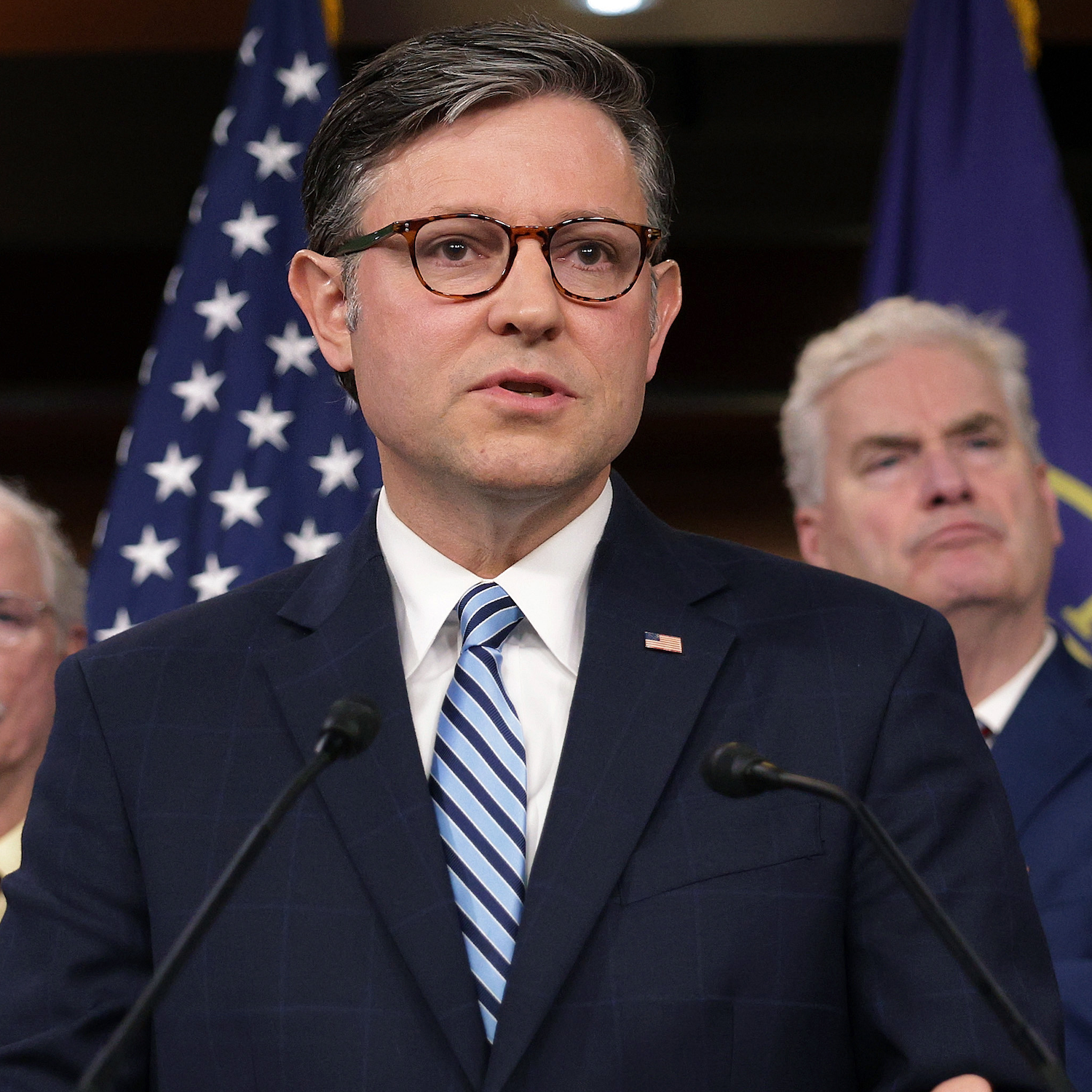
It's an incredibly difficult job that House Speaker Mike Johnson has, right? Like he's got all of these different factions who know that for all intents and purposes, this is their one big beautiful shot to write legislation with a Republican majority. So they want to make sure that they get something that they can live with.
- [08:30]
Shemitah Basu
They don't have much time. The House has a self imposed deadline to pass the legislation before Memorial Day weekend. Republicans want to make this bill law by July 4th. In both chambers, they can afford to lose no more than three votes. So advancing this legislation with consensus will be easier said than done. Earlier this week, the EPA announced a partial rollback of Biden era drinking water standards for pfas, also known as forever chemicals. Forever chemicals are a group of thousands of different compounds, many of which have been linked to higher risks of health conditions like cancer, infertility and thyroid dise. They're found in virtually every corner of the planet, in many household items, and in the bodies of nearly every person in the United States. In its announcement, the EPA said it was keeping strict limits on two types of forever chemicals found in drinking water, PFOA and pfos, but delayed a deadline for water utilities to meet those standards until 2031. It's rescinding and reconsidering the limits on four other compounds. Despite these federal actions, local bans on these chemicals remain in effect.
- [09:50]
Mariah Blake
So at this point, right now, 30 U.S. states have passed a total of, I think, 120 laws on PFAS, including 14 full or partial bans on these chemicals in consumer products.
- [10:04]
Shemitah Basu
That's Mariah Blake. She's an investigative journalist and the author of the book they Poisoned the Life and Death in the Age of Forever Chemicals. And she's my guest this week on Apple News. In conversation, Blake told me states are considering more limitations on these chemicals.
- [10:21]
Mariah Blake
So right now, there are 200 bills that have been introduced in state legislatures that would restrict the use of these chemicals. And a lot of them are in red states. So Texas, Oklahoma, Mississippi. You know, some of these red states are weighing consumer product bans. Montana, for example.
- [10:42]
Shemitah Basu
There's also thousands of pending lawsuits against the manufacturers of these chemicals. The company, 3M has announced that it's going to stop all PFAS manufacturing by the end of this year. But if you're still concerned about your exposure, Blake offers some ways to protect yourself. One of her tips, avoid locally caught freshwater fish.
- [11:03]
Mariah Blake
Freshwater fish have been found to be a major contributor to PFAS in human blood. So eating a single serving of locally caught freshwater fish can increase your blood levels as much as drinking highly contaminated water for an entire month.
- [11:20]
Shemitah Basu
To hear the rest of our conversation and a bunch more tips on how to protect yourself and your family from exposure. Stick around after today's show. We'll have that queued up for you to listen to next. Before we let you go, a few other stories we're following. Milwaukee County Judge Hannah Dugan pleaded not guilty yesterday to charges that she interfered with an immigration arrest. Back in April, federal agents showed up outside her courtroom to arrest Eduardo Flores Ruiz, a Mexican immigrant who was in court that day related to state misdemeanor domestic battery charges. According to the criminal complaint, Dugan sent the ICE agents down the hall and while they were away, she postponed the hearing and escorted Flores Ruiz and his lawyer through a jury exit. Dugan argues that federal officials have no power to prosecute her. President Trump's administration has given ICE agents more power to make arrests at courthouses. As of May 6, there have been 189 courthouse arrests since Trump retook office. That's double the pace of arrests made in 2024, according to Reuters. Immigration advocates and some state courts have warned that this can disrupt court operations and dissuade people from accessing the legal system. Now to sports. The WNBA returns tonight with a brand new team in the mix. In fact, it's the first brand new team in nearly 20 years. The Golden State Valkyries are led by the league's first Asian American head coach, Natalie Nakase, and they'll have a tough road ahead, the Athletic explains. Because the WNBA isn't very generous to new teams. They get no free agency, perks and very little love in the college draft, where brand new players to the league are available. How the team performs this year will be closely watched because there are more new teams coming, starting with Portland and Toronto in 2026. League commissioner Kathy Engelbert says she's confident the league will have a 16th team by 2028. The Athletic took a closer look at which cities are in the running. We'll include a link to that in our show notes. And finally, a medical landmark and a world first after a baby with a rare and deadly disease was treated with personalized CRISPR gene editing therapy. K.J. muldoon from Philadelphia was born prematurely with a rare disease that's impaired his liver's ability to process ammonia, which can cause brain damage. Scientists were able to rewrite and repair the code of his DNA. The baby received three infusions containing billions of microscopic gene editors that focused on a mutation in his liver. So far, KJ has responded positively to the treatment. His physician was cautiously optimistic, saying it was too early to be definitive, and called KJ a pioneer. The results offer hope of treatment for many more patients with their own DNA mutations too rare for generalized drug treatment. You can find all these stories and more in the Apple News app. And if you're already listening in the news app right now, stick around for my full conversation with Mariah Blake about forever chemicals and how you you can minimize your exposure. If you're listening in the podcast app, you can find that episode by searching for Apple News in Conversation. Enjoy your weekend and I'll be back with the news on Monday.