← Apple News Today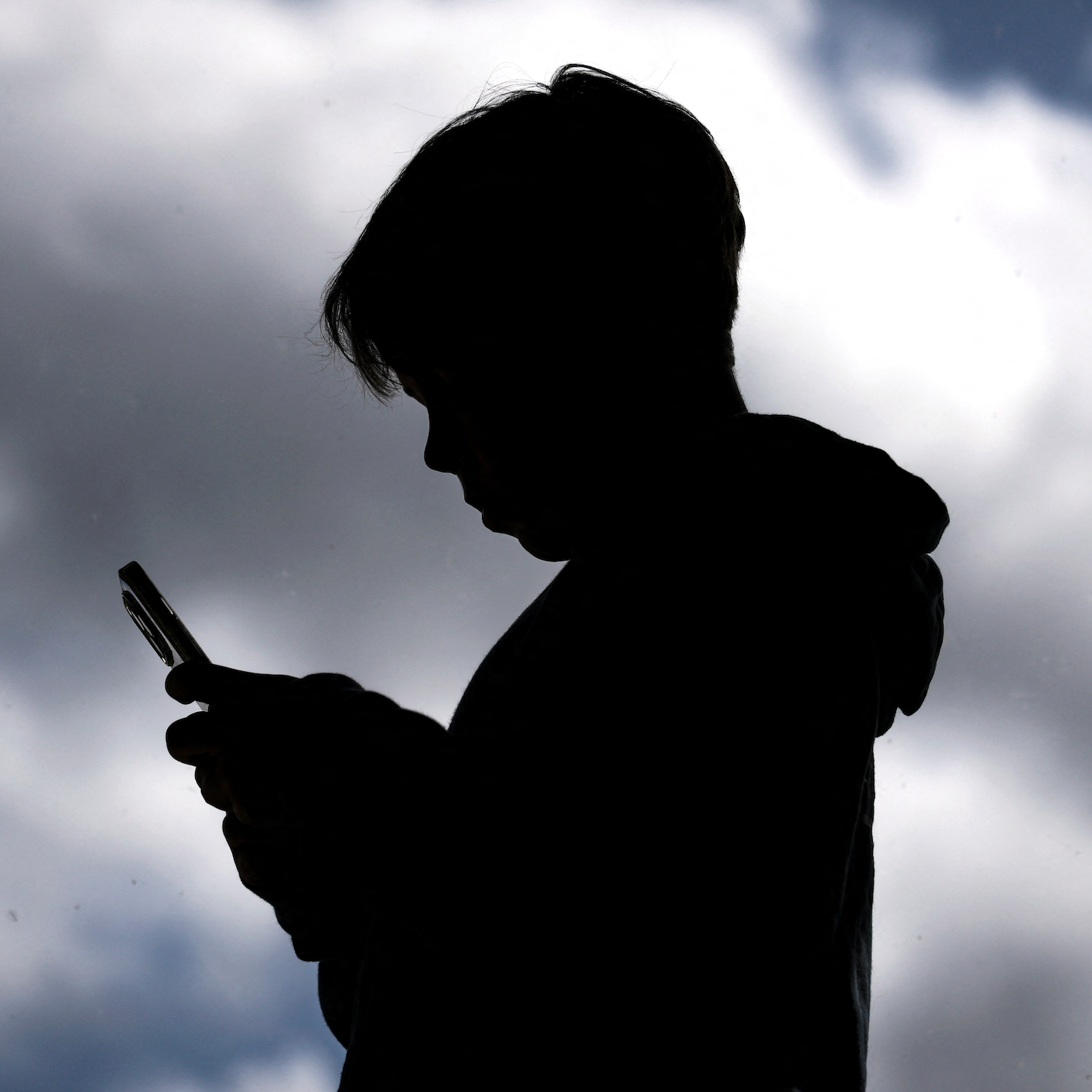
Loading summary
Transcript150 lines
- [00:05]
A
Good morning. It's Wednesday, December 10th. I'm Shemitah Basu.
- [00:09]
B
This is Apple News Today.
- [00:11]
A
On today's show, the internal divisions gripping.
- [00:14]
B
The Fed as it decides whether to cut rates today.
- [00:17]
A
Why?
- [00:17]
B
ProPublica claims some of Trump's own mortgages fit his definition of fraud.
- [00:23]
A
And after four centuries, one country winds.
- [00:26]
B
Down its letter deliveries for good.
- [00:34]
A
But first, Australia launched its social media.
- [00:37]
B
Ban for teens today.
- [00:39]
A
No country has ever attempted this before and there's still a lot of question.
- [00:42]
B
Marks over whether it can really be enforced.
- [00:45]
A
Accounts for more than 1 million children.
- [00:47]
B
Under the age of 16 will be deactivated across the digital ecosystem. That means on Instagram, YouTube, TikTok, Reddit, Snapchat and others.
- [00:57]
A
The ban has stoked conversations, weighing government overreach against individual freedoms generally. In Australia, there's a lot of support.
- [01:05]
B
For the ban outside of the younger age groups, with nearly 70% of people backing it in one poll. Many parents have hardened their views on tech platforms in recent years as they watch their kids spend more and more of their time doom scrolling.
- [01:19]
A
And a growing number fear that socializing.
- [01:21]
B
Primarily online is causing real harm. Emma Mason's daughter Tilly died by suicide when she was 15 after being bullied on social media. She told the BBC she backed the ban.
- [01:33]
C
I think our children have been the social experiment. We have just said, here's a phone, as I did when Tilly was 12. Her connection to an unfettered, unregulated world would mean that she was exposed to all sorts of harm, that as a parent, if it was in front of you, you wouldn't allow it.
- [01:53]
A
But the Internet has always been a.
- [01:55]
B
Space for people to find their communities.
- [01:57]
A
Especially those with societal or physical barriers.
- [02:00]
B
Ezra Sholl from Melbourne is 15 and quadriplegic and told the Guardian they fear the ban will lead to isolation.
- [02:07]
D
It's going to really disconnect me from the world. I think it's going to be a lot more difficult to socialize with friends. It's going to be a lot more difficult to make new friends. It's going to require really make my world a lot smaller.
- [02:24]
A
The burden falls on platforms to enforce the ban, which could include things like uploading government IDs as well as face or voice recognition. Annika Wells is Australia's Communications minister and.
- [02:36]
B
She defended the law on Sky News.
- [02:38]
E
I have every expectation that there'll be some kids who get around the ban and there'll be some accounts that take longer to shut down as various parts of age assurance roll out. But the point is it's happening. It is the Australian law. The Australian these companies have said they will abide by the Australian law, and if they don't, they're going to face a $49.5 million fine.
- [02:57]
A
NetChoice, a trade group that speaks for several tech platforms, said the ban would make Australia's youth quote less informed, less connected, and less equipped to navigate the.
- [03:06]
B
Spaces they will be expected to understand as adults.
- [03:10]
A
Now, here in the US There have.
- [03:12]
B
Been some efforts to curb teen online usage.
- [03:16]
A
Republican senators like Josh Hawley and Ted.
- [03:18]
B
Cruz and Democrats like Chris Murphy have.
- [03:21]
A
Sponsored various bills aimed at restricting access. Those national efforts have a mountain to.
- [03:27]
B
Climb to pass both houses, the president's desk and inevitable legal challenges over the First Amendment.
- [03:33]
A
But the fact that so many senior.
- [03:35]
B
Politicians have jumped on this issue shows the growing salience.
- [03:39]
A
Nick Clegg is a former British deputy.
- [03:42]
B
Prime minister and was until recently a vice president at Meta.
- [03:47]
A
He told the BBC he was receptive.
- [03:49]
B
To growing concerns but urged for a middle ground.
- [03:52]
F
I think it's just obvious that as kids are finding their own identity through their teen years, being able to communicate with others, find interests, find communities that they feel a part of is incredibly important. But I do think the big companies need to be put under far, far greater pressure to build what are called age appropriate experiences.
- [04:11]
A
Several other countries are now considering similar.
- [04:14]
B
Bans, including France, Denmark, Norway and Malaysia.
- [04:17]
A
Who all say they're keeping close eye.
- [04:19]
B
On how effective Australia's ban is over the coming months.
- [04:31]
A
Today, most economists expect the Federal Reserve.
- [04:34]
B
To lower borrowing costs at its final meeting of the year, but the key.
- [04:39]
A
Rate setters seem far from united about.
- [04:41]
B
The future of the US Economy.
- [04:43]
G
Normally, as you get closer to the meeting, differences among the meeting participants tend to narrow. But what's happened this fall since the Fed began cutting interest rates in September, is that those differences have, if anything, deepened.
- [04:58]
A
That's Nick Timoros, chief economics correspondent for.
- [05:01]
B
The Wall Street Journal and longtime chronicler of the Federal Reserve.
- [05:05]
A
He explained as many as five of.
- [05:07]
B
The 12 voting members are expected to say they don't see a good reason to cut further.
- [05:12]
A
Despite the strong preference of President Trump, more than two dissenting votes is considered pretty unusual. But these are unusual times for the Fed.
- [05:21]
G
Their job is to maintain low and stable inflation. Their job is also to promote a strong labor market. And what the president's trade and possibly his immigration policies have done is they've created upward pressure on prices, but they've created concerns about downside risks or weaker than expected labor market outcomes. And so the Fed really for the first time in a long time, feels itself being pulled in opposite directions.
- [05:51]
A
Inflation has stopped declining and it's still.
- [05:54]
B
Higher than the 2% that the Fed.
- [05:55]
A
Typically targets, which has led some to.
- [05:58]
B
Want to leave the rate unchanged since prices tend to rise faster in lower interest rate environments.
- [06:03]
A
But at the same time, a September.
- [06:05]
B
Jobs report showed that the unemployment rate had gone up to its highest level since late 2021, a factor that would.
- [06:12]
A
Typically prompt a Fed members are also.
- [06:15]
B
Going into this meeting with some missing.
- [06:17]
A
Data because of the government shutdown that.
- [06:19]
B
Stretched from October into November.
- [06:22]
A
The other added challenge for Fed Chair.
- [06:24]
B
Jay Powell is that his term ends in May of 2026.
- [06:28]
A
Timoros told us the current dissent on.
- [06:31]
B
The committee could prove to be a headache for Powell's successor.
- [06:35]
A
And there are other atypical factors hanging.
- [06:37]
B
Over this upcoming transition, like President Trump's adamance to lower interest rates and his so far unsuccessful effort to remove Fed govern.
- [06:46]
G
Lisa Cook what's different right now is that you have a president saying I want the Fed to be completely different from what it's been. And so the contenders to be Fed chair to varying degrees have had to go out and say that they will in fact break with what Powell has done. So that's one very fascinating development.
- [07:03]
A
The frontrunner at the moment appears to.
- [07:05]
B
Be Kevin Hassett, the director of the National Economic Council and a White House advisor.
- [07:10]
A
Timow said that he has a PhD in economics.
- [07:13]
B
He spent time as a research economist on the Fed's board.
- [07:16]
A
The though this year he has operated.
- [07:18]
B
In a more partisan space which could pose risks to the US Economy.
- [07:23]
G
So I think the question investors have right now, people who watch the Fed, is which Kevin Hassett would you get as the Fed chair? Would you get the Kevin Hassett who in 2018 was saying that you shouldn't try to replace the Fed chair and you should let the Fed set interest rates as it sees fit. Or would you get the Kevin Hassett who this year has been prosecuting the same kind of aggressive and more adversarial position justifying Donald Trump' remove Fed governors which no president has previously attempted and.
- [07:53]
A
Things like that, someone who would try.
- [07:55]
B
To acquiesce more to Trump in the role could attempt to cut rates faster than the rest of the committee might want?
- [08:02]
A
Hassett said this week that he would rely on his own judgment, but there's.
- [08:06]
B
Quote, plenty of room to cut rates further if the data suggests.
- [08:20]
A
For months now, the Trump administration has.
- [08:22]
B
Claimed that having two primary residence mortgages points to criminality.
- [08:27]
A
It's been the central accusation against political.
- [08:29]
B
Opponents the administration has sought to fire, including Fed board member Lisa Cook, as we just mentioned earlier, and New York Attorney General Letitia James.
- [08:39]
A
But according to ProPublica, the president has done this himself. Reporter Justin Elliott has been looking into.
- [08:45]
B
Trump's long and complex relationship with real estate.
- [08:49]
H
President Trump got two mortgages in Florida in the 90s that more than fit his own definition of what is criminal mortgage fraud. So Trump bought these two properties in 1993 in Palm Beach, Florida. There are these two homes right next to Mar a Lago, the private club.
- [09:07]
A
Often claiming a home as a primary residence comes with better mortgage terms than.
- [09:11]
B
A second home or an investment home.
- [09:13]
A
But proving that someone sought intentionally deceive.
- [09:16]
B
By claiming two primary residences isn't so straightforward.
- [09:21]
A
And just having two on its own isn't tantamount to fraud.
- [09:24]
H
The basic claim that they're making is that politicians have signed mortgages that state that, that they're going to live in the home that they're buying, and in some cases, the politician then hasn't lived in that home as their principal residence. And there's some sort of variations on that fact pattern, but that's the basic charge.
- [09:44]
A
In Trump's case, Elliott reports that he.
- [09:46]
B
Signed the mortgages and claimed that they would be his principal residents for at least a year.
- [09:50]
H
But what we found is that Trump, as far as we can tell, never moved into these properties, and instead they were immediately rented out. I actually spoke to the real estate agent on these properties from the 90s who confirmed to me they were rented out from the beginning.
- [10:04]
A
When a ProPublica reporter attempted to call.
- [10:07]
B
And ask the President about this story, he allegedly hung up.
- [10:11]
A
And a White House spokesperson said that.
- [10:13]
B
Because the mortgages were from the same lender, there is nothing fraudulent about it.
- [10:17]
A
Bill Pulte, the man leading the government's Federal Housing Agency, and by extension, these.
- [10:22]
B
Charges of mortgage fraud against some of Trump's critics, did not return a request for comment, but has in the past denied his investigations are politically motivated.
- [10:32]
H
This is really a story not about President Trump committing mortgage fraud. It's a story about President Trump committing what Trump calls mortgage fraud. Because we spoke to a lot of mortgage experts and lawyers who told us that there actually can be legitimate reasons to have more than one of these principal residence mortgages. Often the lender might have some side communication from the borrower, in this case Trump, that makes clear what their plans are for these properties.
- [11:02]
A
Earlier this year, ProPublica reported that three.
- [11:05]
B
Trump cabinet members had called multiple homes their primary residences as well, and all deny wrongdoing.
- [11:21]
A
Before we let you go, a few.
- [11:22]
B
Other stories we're following.
- [11:24]
A
Miami has elected its first Democratic mayor in nearly 30 years. Eileen Higgins will be the first woman.
- [11:30]
B
To run City hall there.
- [11:32]
A
Politico notes that Higgins, a mechanical engineer.
- [11:34]
B
And former Peace Corps director, avoided partisanship in her campaign.
- [11:39]
A
Local Republican officials called it fools, fool's.
- [11:42]
B
Gold for their opponents to claim Miami as a major victory. But Higgins campaign attracted attention from senators and endorsements from those with national name recognition, like Pete Buttigieg and Rahm Emanuel.
- [11:56]
A
The Nobel Peace Prize ceremony is set to take place today, but Maria Karina.
- [12:00]
B
Machado, the Venezuelan opposition leader and this year's recipient, will not be in Oslo to accept the award in person.
- [12:08]
A
Earlier reports said she was planning to.
- [12:09]
B
Attend, but she's been in hiding from the Maduro government for more than a year.
- [12:13]
A
And Nobel officials confirm that her daughter.
- [12:16]
B
Will stand on the stage and accept the award on her behalf. Meanwhile, NPR notes Machado has emerged as an unorthodox Peace Prize winner, having backed President Trump's military strikes in the region.
- [12:29]
A
In an interview with the network, she.
- [12:31]
B
Said, quote, you cannot have freedom without strength.
- [12:36]
A
And finally, the end of the year. Holidays are associated with sending letters in the mail.
- [12:41]
B
That might mean a Christmas or a New Year's card to your loved ones.
- [12:45]
A
Or maybe a letter to a friend.
- [12:46]
B
Catching them up on the year. In Denmark, however, the ability to do that could be coming to an end.
- [12:52]
A
The country's 400-year-old postal service, one of.
- [12:55]
B
The first modern mail services in the world, will deliver its last letter at the end of this month. Post Nord is ending letter delivery as.
- [13:04]
A
The world has largely turned to digital.
- [13:05]
B
Communications and the traditional letter has all but died.
- [13:09]
A
In 2000, the services delivered more than a billion letters.
- [13:13]
B
Last year, that number was just 110 million.
- [13:16]
A
Operators called it a necessary but tough.
- [13:18]
B
Decision as prices rose and demand dropped.
- [13:21]
A
Not all hope is lost for pen pals.
- [13:24]
B
A private logistics firm will now fill in some of the letter delivering gap.
- [13:28]
A
Postnord will also continue to deliver parcels.
- [13:31]
B
So the holiday shopping crisis is at least averted.
- [13:37]
A
You can find all these stories and.
- [13:39]
B
More in the Apple News app.
- [13:41]
A
And if you're already listening in the.
- [13:42]
B
News app right now, we've got a.
- [13:44]
A
Narrated article coming up next.
- [13:46]
B
Popular Mechanics has the story of a crucial but dwindling worldwide resource, sand and.
- [13:52]
A
Why some thieves are willing to kill for it. If you're listening in the podcast app.
- [13:57]
B
Follow Apple News Narrated to find that story. And I'll be back with the news tomorrow.