Loading summary
Transcript41 lines
- [00:05]
Yasmeen Khan
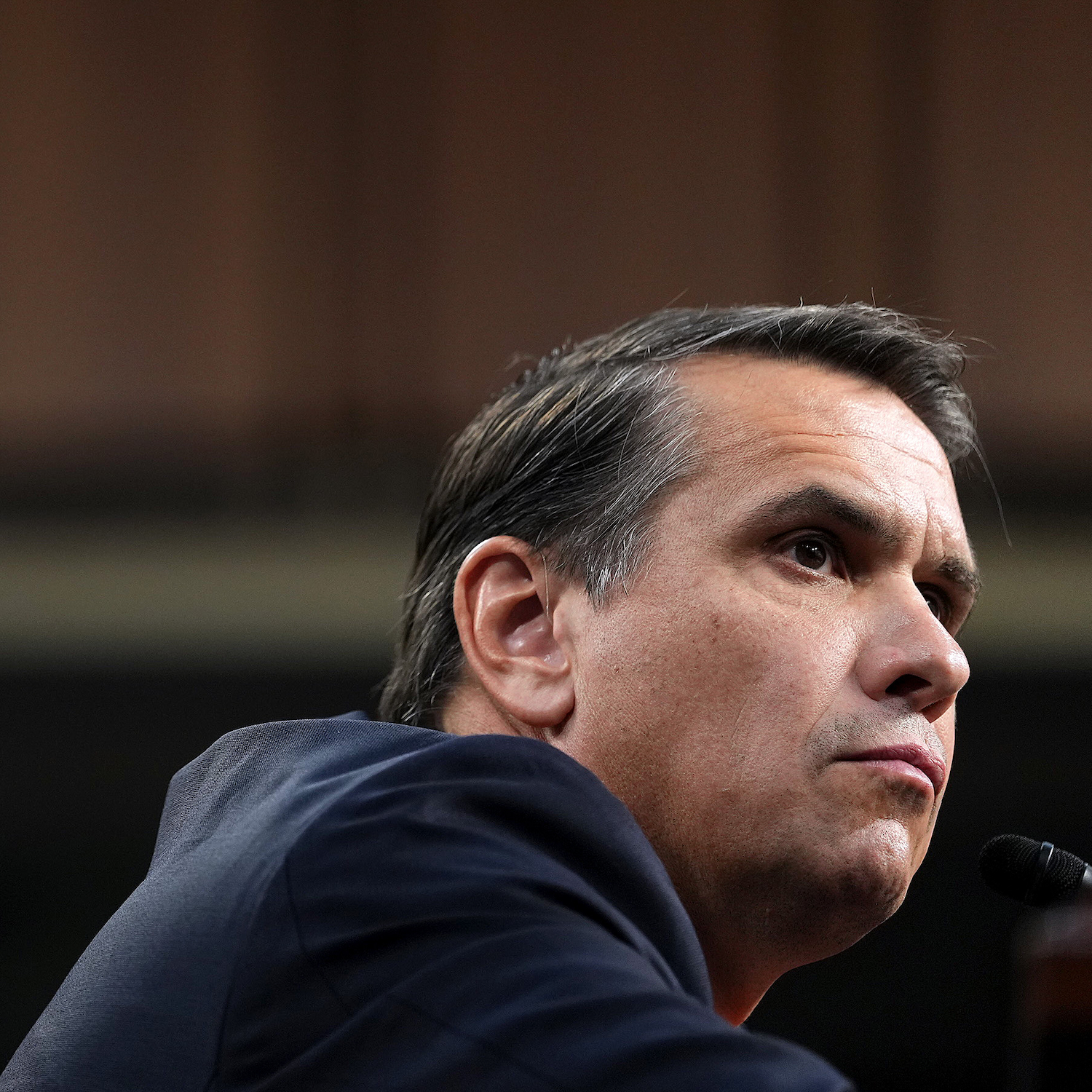
Good morning, Todd. Blanche faced some skeptical lawmakers in his confirmation hearing to be the new Attorney General, particularly when it came to his ties to the President.
- [00:15]
Todd Blanche
I met him as his criminal defense attorney. I'm not sure there's very many people who have ever had a criminal defense attorney who calls that person their friend.
- [00:25]
Yasmeen Khan
A community in Maine is grieving after ICE killed one of their neighbors and a key reason men's soccer can't seem to win a world title. It's Thursday, July 16th. I'm Yasmeen Khan in for Shamita Basu. This is Apple News. Today, Acting Attorney General Todd Blanche faced a slew of challenging questions from lawmakers in his confirmation hearing yesterday, and he has a razor thin margin to get their approval. Just one no from a Republican on the Judiciary Committee would be enough to sink his nomination for Attorney General. With the recent death of Senator Lindsey Graham, the committee has 11 Republicans and 10 Democrats, so even one Republican defection could spell trouble for Blanche. Republican Senators John Cornyn and Thom Tillis are being watched closely as deciding votes. Cornyn, who lost a recent primary in Texas, at one point pressed Blanche on the threat of the so called Anti Weaponization Fund, a controversial plan to create a payout fund for people claiming they were targeted by political prosecutions. Blanche canceled the plan last month after it got widespread backlash in Congress, including from members of the Republican Party. But Cornyn raised concerns in the hearing that even though Blanche says the fund isn't moving forward, there's nothing in writing committing to that.
- [01:54]
Senator John Cornyn
Just to be clear, the President of the United States, who was a plaintiff in this lawsuit, has not agreed in writing to delete the Weaponization fund. And there's no guarantee that he or one of the other plaintiffs might raise that issue by way of a breach of contract lawsuit in the future.
- [02:12]
Todd Blanche
Well, Senator, the plaintiffs have no power over the fund. The fund was administered solely by the. By the five commissioners and through the Department of Justice. So, no, they don't have any power with respect to the fund at all.
- [02:25]
Yasmeen Khan
Senator Tillis, meanwhile, has been indicating that he's leaning towards supporting Blanche. Tillis even told Blanche during the hearing that he was doing a great job answering questions. But Tillis also had concerns about the Anti Weaponization Fund. He wants to pass a bill that would block it from being revived.
- [02:42]
Senator Thom Tillis
Who on earth, who in this Senate chamber would raise an objection if we were able to put something on the floor that ended this debate? The only reason I think that a Democrat would be opposed to it is they love milk in this thing. For what it is.
- [02:54]
Yasmeen Khan
Much of the skepticism around Blanch, particularly from Democrats, stems from his time previously serving as the President's personal defense lawyer. And there was a moment in an exchange with Republican Senator John Kennedy that caught the ears of many observers yesterday.
- [03:10]
Senator John Cornyn
Are you and President Trump friends?
- [03:13]
Todd Blanche
I'm his lawyer, was his lawyer, and now I'm the Deputy Attorney General. So I met him as his criminal defense attorney. I'm not sure there's very many people who have ever had a criminal defense attorney who calls that person person.
- [03:26]
Yasmeen Khan
Their friend Blanche later told another member of the committee that he was not afraid to push back against the President. Blanche also answered questions about the Department's handling of files related to Jeffrey Epstein, and he defended the DOJ's transparency. He also apologized to Epstein survivors for errors the Justice Department made while releasing documents. The DOJ accidentally released personal information about the victims to the public.
- [03:53]
Todd Blanche
We put tons of resources to rectifying those mistakes immediately, including pulling down documents within minutes of being informed that there were mistakes, potential mistakes made, and working 247 to rectify any mistakes. And that's what I would expect the victims would want us to do in their council and this body as well.
- [04:12]
Yasmeen Khan
Blanche's hearing is scheduled to continue today with a vote later this month on advancing him to face the full Senate. John Thune, the Senate Majority Leader, said seemed optimistic that Blanche would be confirmed. But Cornyn told reporters yesterday that he still hasn't made a decision. More details are emerging about the death of Juan Sebastian Duran Guerrero, the 25 year old man who was shot and killed by ICE in Biddeford, Maine, on Monday. Duran Guerrero immigrated to the United States from Colombia in 2023 after crossing the southern border unlawfully. According to the Department of Homeland.
- [04:53]
Ted Hessen
It wasn't clear if he might have entered through one of the programs that were in place under President Joe Biden's administration that was letting some people who cross the border enter with temporary permission.
- [05:04]
Yasmeen Khan
Ted Hessen is an immigration reporter for the Washington post.
- [05:07]
Ted Hessen
But in 2025, he obtained work authorization legally. So while he was here, he was here legally. Advocacy groups have said that he was attending court hearings, that he had a Social Security number and that he had a work permit.
- [05:22]
Yasmeen Khan
On the morning of the shooting, ICE was reportedly looking for someone else, but it's not clear who that individual is. Still, officers tried to stop Duran Guerrero's car as he left his apartment building. His wife witnessed the aftermath of the shooting from their apartment building window.
- [05:38]
Ted Hessen
Basically, his wife rushed out to the scene afterwards, just overcome with grief. Just a horrific circumstance and tragic situation for her.
- [05:47]
Yasmeen Khan
Relatives told Hessen Duran Guerrero was the quintessential family man.
- [05:52]
Ted Hessen
He had a young daughter who had just turned three. He was working constantly. He worked as an Uber Eats driver or food delivery driver, and also as a cleaner. So he was just trying to make money for his family and get them ahead.
- [06:05]
Yasmeen Khan
One of his childhood friends said Duran Guerrero wanted to give his daughter a better life.
- [06:10]
Ted Hessen
They had said that he came to the US in pursuit of the American dream and that now that dream was gone.
- [06:16]
Yasmeen Khan
Biddeford, Maine, is a small coastal community. Hessen told us that people there were stunned to wake up to the violence that unfolded on the morning of the shooting, and they've been looking for ways to grieve together.
- [06:27]
Ted Hessen
They heard it, they rushed outside, and some of them saw the scene directly. You know, they saw the body on the ground, they saw first responders, they saw the car. There's now a makeshift memorial right near the site where he was pulled out of his car, and you see flowers there. And for the last few days, there's been really a steady stream of people honoring his memories. There's also been anti ICE protesters out carrying signs and having drivers pass by honking their horns for other immigrants.
- [06:55]
Yasmeen Khan
In Biddeford, Hessen told us the shooting has had a chilling effect.
- [06:59]
Ted Hessen
I spoke with a Venezuelan couple who also said they loved living in this town. People had been very friendly. It's quiet and, you know, they had really made a home out of it in the last few years. But now they were already planning to leave and they just didn't feel safe here anymore and were looking at other options.
- [07:15]
Yasmeen Khan
The FBI and authorities in Maine are investigating Duran Guerrero's death. Yesterday, President Trump said traffic stops by immigration officials should continue after DHS said there would be a temporary moratorium. He also reiterated his support for ICE officers, writing on social media that agents are doing a great job. When the World cup ended in disaster for the US Men's national team, fans walked away once again wondering why this program keeps losing and athletic. Reporter Henry Bushnell told us the conversation has recently turned toward how would be players get their start.
- [07:59]
Henry Bushnell
The youth sports industry in the United States has gotten out of control.
- [08:03]
Yasmeen Khan
It turns a sport that only requires a ball and a net into something where reaching elite levels often requires economic privilege.
- [08:12]
Henry Bushnell
For the most part, parents have to pay for their kids to play soccer. They have to pay fees, often to a youth soccer club, whether it's recreational or competitive travel, soccer, the money goes towards things like field space, to coaches salaries, uniforms, et Cetera, et cetera.
- [08:31]
Yasmeen Khan
Factor in travel for tournaments, and Bushnell says families are paying thousands and sometimes tens of thousands of dollars every year for their kids to play, and costs are climbing. According to one estimate, all youth sports got 46% more expensive in recent years, and travel is the biggest driver now. The US Is not the only country where families pay for their kids to play soccer, but Bushnell says it costs more to play here than anywhere else, so a lot of families can't afford it, which leaves plenty of kids out of the talent pipeline.
- [09:04]
Henry Bushnell
The main thing is just the lack of an ingrained soccer culture here. In a lot of other countries around the world, the entire soccer pyramid, as a lot of people call it, is connected. The professional clubs have connections with, you know, lesser professional clubs or semi pro clubs, which have connections with youth clubs. In some cases, these countries are a lot smaller, too, so it's easier, and there are just more soccer clubs per capita.
- [09:32]
Yasmeen Khan
That pipeline makes it easier to nurture talent from a young age and for scouts to keep an eye on emerging stars. Bushnell says many other governments actually allocate hundreds of millions of taxpayer dollars annually to sports organizations, which can help offset costs. And professional soccer clubs fund youth teams both directly and indirectly. But in the US Business plays a bigger role.
- [09:56]
Henry Bushnell
The main incentive is to make money for a lot of these coaches. You know, how do we grow our prestige? How do we market ourselves? And oftentimes the best way to do that is to win games and to go to tournaments and be the club that everybody in the town knows. It's not necessarily to develop that one kid to be the best version of his or herself.
- [10:18]
Yasmeen Khan
Part of the reason the US has such a different culture around soccer is because we're so late to the game. Soccer has been the world's sport for a very long time, and youth soccer and professional programs in other countries were largely able to develop in tandem. But here in the States, Major League Soccer didn't make its debut until the 1990s, and the youth soccer industry developed in more of a silo.
- [10:42]
Henry Bushnell
We had to basically find our way within the specific characteristics of America to create our own system that works, he says.
- [10:52]
Yasmeen Khan
The U.S. soccer Federation has been trying to work with youth organizations to align on incentives. But finding shared values at this point
- [11:00]
Henry Bushnell
is proving difficult because there's really no reason for average Joe, who runs a youth club in Michigan or Virginia or California or whatever, to really have the bigger picture of developing players for the national team in mind. And so it's very difficult to get everybody on the same page. And if you can't get everybody on the same page, then everybody's just going to act in self interest.
- [11:25]
Yasmeen Khan
And perhaps there isn't alignment because America's pay to play model isn't impacting US Soccer across the board. After all, the men's national team may have never won a World cup, but the US Women have won four out of nine world titles. Here are a few other stories we're following. More than 800 wildfires are burning in Canada and dozens more in northern Minnesota. They're spewing smoke and unsafe air across the Northeast and Midwest, so air quality for millions of Americans in those regions is expected to reach dangerous levels through Friday. Both New York City and the eastern Lake Ontario region had unhealthy air quality levels on Wednesday. Images from New York and Toronto show an eerie orange haze obscuring skylines. New York City Mayor Zoran Mamdani warned people with heart and lung conditions, as well as older adults and pregnant people, that they're especially susceptible to poor air quality and that folks should stay inside in air conditioning if possible. Rain at the end of the week could disperse the smoke. The Pentagon says it will screen Soldiers age 30 and over for testosterone deficiency. Defense Secretary Pete Hegseth, in a video announcement, said the program is to make sure troops, quote, have the right testosterone levels to operate at your absolute best. The screening will be part of annual health assessments, Hegseth said. Soldiers under 30 can be voluntarily screened. Soldiers will be given the option for testosterone replacement therapy if treatment is recommended, the AP reports. The announcement comes as the Trump administration advocates for easier access to testosterone treatment for men. The Defense Department did not respond to the AP's questions about research and science used to back the move. Some studies have shown testosterone levels in young men have declined since the 90s. And finally, the World cup championship match is set.
- [13:29]
Senator Thom Tillis
Messi resets. Messi driving in. Messi crossing back. Po there. Inez Lautaro Martinez Stoppage time. Go ahead. Goal for Argentina.
- [13:41]
Yasmeen Khan
That's the moment Argentina's Lautaro Martinez nailed a header from Lionel Messi into the back of the net in the 93rd minute against England, securing the defending champs a spot in the final. England held a one goal lead up until the 85th minute before Argentina broke through to eliminate the Three Lions. Argentina now faces Spain on Sunday, where Messi and Argentina will try to become the first back to back world champions in over half a century. You can find all these stories and more in the Apple News app. And if you're already listening in the news app right now. We've got a narrated article coming up next. Box reports on a growing trend in organ donation called Donation After Circulatory Death and how new techniques have turned it from a rare practice to one that accounts for nearly half of all organ donation types. If you're listening in the podcasts app, follow Apple News Narrated to find that story. And we'll be back with the news tomorrow.