Loading summary
Transcript29 lines
- [00:05]
Shemitah Basu
Good morning. It's Tuesday, April 1st. I'm Shemitah Basu. This is Apple News Today. On today's show, why Elon Musk is stumping for a state Supreme Court candidate in Wisconsin, what travelers should know about what border officials can access on your phone and corporate April Fool's jokes that have failed spectacularly. But first, a warning. This segment contains graphic descriptions of a miscarriage. Last month, a 24 year old woman in Tifton, Georgia was found unconscious and bleeding. She was transported to a hospital by paramedics who determined that she had miscarried. But instead of having the time to grieve the loss and recover from the trauma, police charged her with concealing the death of another person and abandonment of a dead body.
- [01:01]
Andrea Gonzalez Ramirez
This case, of course, has horrified abortion rights advocates and reproductive rights advocates because it's just like yet another example of what pregnancy criminalization looks like after the overturning of Roe v. Wade.
- [01:15]
Shemitah Basu
Andrea Gonzalez Ramirez is a senior writer with New York Magazine's the Cut.
- [01:19]
Andrea Gonzalez Ramirez
The coroner determined that the fetus gestational age was around 19 weeks, meaning it would not have survived outside of the womb. The coroner also said there was no evidence of harm and that instead the woman had naturally miscarried.
- [01:34]
Shemitah Basu
Pregnancy loss is very common. About one in four pregnancies ends in miscarriage. Some women might miscarry and not even realize it. In this specific case, the woman is not being charged for having a miscarriage, but for not properly disposing of the fetal remains which were found in the dumpster of her apartment complex.
- [01:53]
Andrea Gonzalez Ramirez
So the question here is like, what should a person do then if they're miscarrying? Right. If you have an 11 week pregnancy when that loss might look more like slightly more than a heavy period. Right. Does this mean that you're required to scoop the fetal remains from the toilet and take your pad to a hospital or to a coroner or to a funeral home. Right. Like it just opens up a lot of questions that there's no law, there's no legislation that dictates how people should be handling the product of their miscarriages.
- [02:29]
Shemitah Basu
According to the Cut, the woman in the Georgia case was taken to jail and released two days later on bond. This is believed to be the first time that officials in Georgia have tried to use a fetal personhood law to bring criminal charges. Here's Gonzalez Ramirez again.
- [02:45]
Andrea Gonzalez Ramirez
So when we talk about fetal personhood, we're talking about efforts to grant embryos and fetuses the same rights as people. The reproductive rights advocates have warned that this legal theory not only curbs access to abortion care, but can also impact things like ipf, because in that process you are creating and often destroying embryos, but also that this can lead to the criminalization of pregnant people. Like in this Georgia case. Granting fetuses equal rights has long been the anti abortion movement's ultimate goal.
- [03:19]
Shemitah Basu
In a sign of how Republicans in Georgia are thinking about the future of pregnancy, the state legislature recently held a hearing on a bill that makes abortion illegal from the moment of fertilization. It would also mean women who terminate their pregnancies could be charged with homicide, and it could pose a major threat to in vitro fertilization. And while the cut explains that, timing wise there's no chance the bill will pass before the end of this legislative session. The Georgia already has some of the highest maternal mortality rates in the country. Opponents warn a measure like this will certainly make the problem far worse. Let's turn now to Wisconsin, where a local election has turned into something of a national political temperature check. Today, voters will decide if Brad Schimmel or Susan Crawford will be elected to the state's Supreme Court. Currently, the balance on that court is 4:3 in favor of liberal leaning justices. So this race could tip the ideological scale, which would impact rulings on issues like abortion and congressional district maps. But there's been a curveball thrown into the contest. Elon Musk and allied groups have spent an estimated $20 million in support of Schimmel, making it the most expensive judicial race in history. Over the weekend, Musk traveled to Wisconsin. He put on a signature Green Bay cheesehead and described the stakes of the race as he sees it.
- [04:54]
Andrea Gonzalez Ramirez
I feel like this is one of.
- [04:55]
Shemitah Basu
Those things that may not seem that it's going to affect the entire destiny.
- [05:00]
Andrea Gonzalez Ramirez
Of humanity, but I think it will.
- [05:02]
Shemitah Basu
Others have not put it in such terms, but national liberal groups have poured millions of dollars into the race as well. Patrick Marley, a national reporter for the Washington Post, explained the role the state Supreme Court typically plays in a tightly divided partisan state like Wisconsin, with a Democratic governor and a Republican legislature.
- [05:21]
Patrick Marley
Pretty much every hot button issue winds up before the state Supreme Court. It decided whether the 2020 election results, which Biden won, were valid, and they found that they were by a 4:3 ruling. They're considering abortion. They'll consider future election challenges. So all of the most important things come here.
- [05:39]
Shemitah Basu
There's one other issue the court could take up soon that would be very personal for Elon Musk.
- [05:45]
Patrick Marley
Right before he got involved in the race, Musk's electric car company Tesla did sue the state over a law that it has that bans car manufacturers from owning dealerships. He's trying to change that law. That's certainly a case that could get to the state Supreme Court.
- [06:00]
Shemitah Basu
Part of Musk's efforts on Sunday involved giving two voters $1 million and paying other voters smaller sums if they signed a petition and provided their contact information, similar to what he did for November's election. Wisconsin's Democratic attorney general said that Musk was violating a state anti bribery law. The state Supreme Court declined to take the case. Days before an election that would impact its very makeup, Marley told U.S. voters in Wisconsin are hoping tomorrow's race is a bellwether of what's to come.
- [06:32]
Patrick Marley
Most voters really do seem to see this as a test of Donald Trump and his agenda after winning the presidency, with his supporters saying, hey, we won the swing state in November, we can keep it going. Let's build this moment momentum and the Democratic voters saying, we faced a bunch of losses. We're totally out of power in the federal government. This is one small way to show that we're fighting back against Trumpism.
- [07:06]
Shemitah Basu
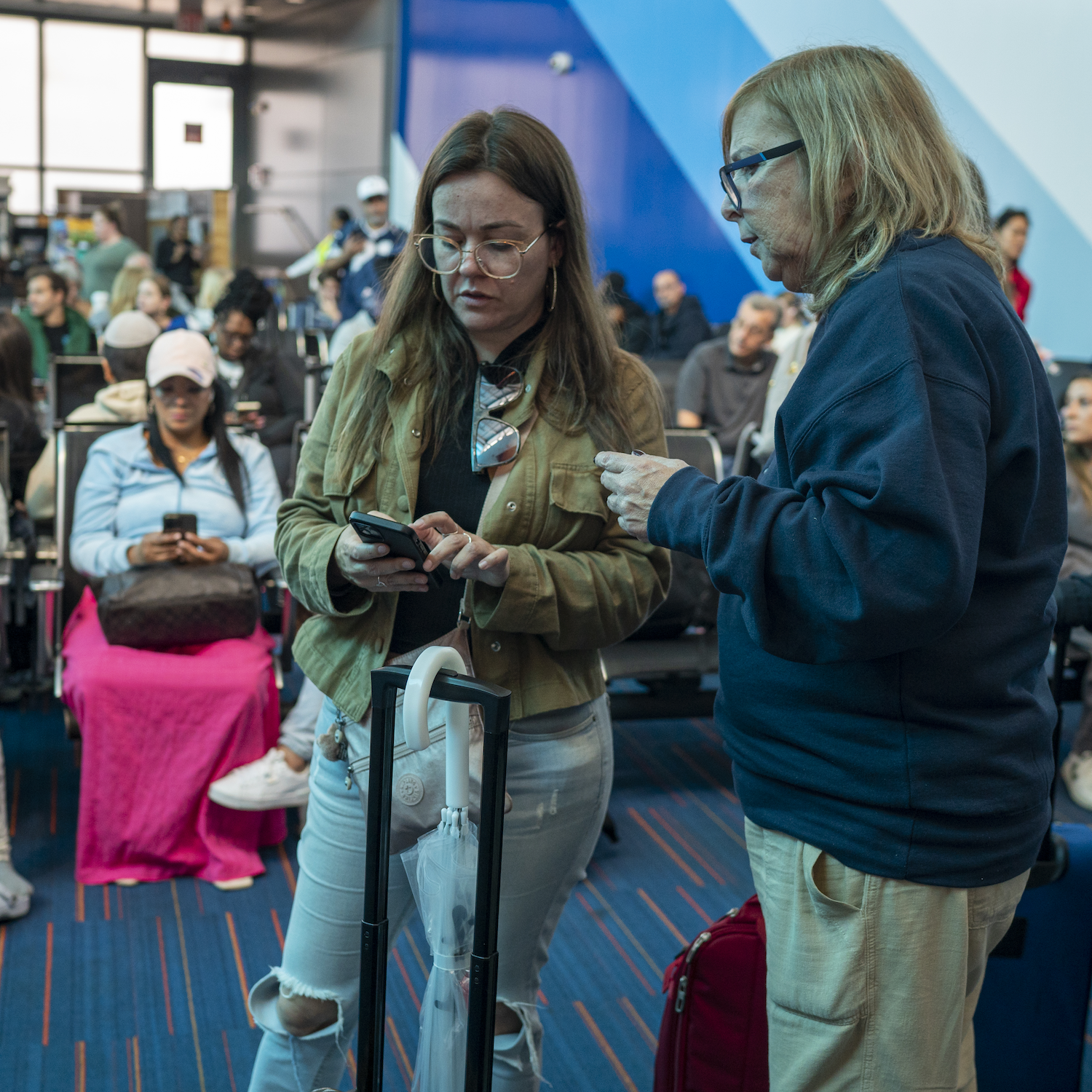
In recent weeks, there have been multiple instances of Customs and Border Protection denying people entry to the US after searching their devices. That includes a French scientist who French government officials say was turned away after a search of his phone revealed messages critical of Trump's cuts to research programs and a Lebanese physician at Brown University with a valid US Visa who agents say had content on her phone sympathetic to Hezbollah.
- [07:33]
Gabby Del Valle
I got a lot of questions, you know, from my friends, from my colleagues asking, should I be traveling with my phone right now?
- [07:38]
Shemitah Basu
Gabby Del Valle is a reporter with the Verge covering immigration politics and border surveillance technology.
- [07:45]
Gabby Del Valle
What happens if they ask to see my phone? Am I required to show them? And the answer is that it depends on your immigration status in the US and also kind of on where you're flying into or entering the country.
- [07:58]
Shemitah Basu
We called up Del Valle to ask what travelers should know about their rights.
- [08:02]
Gabby Del Valle
So travelers rights to decline a search depend on several factors, including their immigration status. If you're a U.S. citizen or a permanent resident, you can decline a search, but CBP can take your phone and they can hold on to it. If you are a visa holder, you can decline a search, but then you can also be denied entry into the US for declining a search.
- [08:24]
Shemitah Basu
CBP device searches have been pretty rare. Less than 0.01% of arriving international travelers had their electronics searched in the 2024 fiscal year. But the recent wave of headlines suggests things are shifting.
- [08:38]
Gabby Del Valle
The Trump administration is kind of taking this, like, whole of government approach to immigration enforcement. They're not just, you know, trying to completely stop immigration at the border, and they're not just like doing ICE raids in the interior of the country. They're also using CBP's presence at airports to conduct what appears to be like more stringent or additional screenings of travelers. These are practices that have been in place for a long time. But given the Trump administration's kind of heightened interest in immigration enforcement, I think that's why we're seeing so many more reports of this now.
- [09:15]
Shemitah Basu
In the past, the Supreme Court has found that cell phone searches that take place without a warrant violate the Fourth Amendment. But border searches are exempt. And airports, regardless of where they are geographically in the country, are considered to be border zones, which means the screenshots, memes, and messages on your phone are all fair game when you enter the country.
- [09:36]
Gabby Del Valle
The things on your phone, even things that you think are innocuous, can absolutely be used against you if you're seeking entry into the United States, but they can also be used against you or taken if you're a US Citizen. While I was reporting this, I came across stories of U.S. citizens who have had their devices searched and seized at the border as well, including one immigration lawyer who had his phone taken when he refused to let CBP access it. And then they had to use forensic tools to look through his phone because he wouldn't give them the password.
- [10:08]
Shemitah Basu
And that's maybe the biggest piece of advice. Some courts have ruled that police and CBP can't force you to enter your password to unlock your phone, but they can use your biometric data like touch or face ID to unlock your phone. Del Valle spoke to an attorney with the Electronic Frontier foundation, which defends civil liberties in the digital space, for some tips to keep in mind when you travel. One, back up your phone and then delete whatever data you think you should before you travel. Then once you're back home, you can restore data from the backup. They also suggest that you encrypt your devices, use secure passwords, disable face ID, and turn your phone off while crossing a border. Before we let you go, a few other stories we're following. The S&P 500 and Nasdaq capped off the worst quarter in years on the eve of President Trump's so called Liberation Day for the economy, where a number of tariffs on global goods are set to go into effect. The S and p saw a 4.6% decline since the start of the year, the worst performance since 2022, the New York Times notes. It's also the worst quarter for the S and P at the start of a presidential term since Barack Obama took office in 2009. The NASDAQ also ended the quarter down 10.4%. The Dow Jones Industrial Average is down 1.3% on the year. In other news, the search continues for a fourth US army soldier who went missing in Lithuania last week after a US Armored vehicle became submerged in a bog. The bodies of three other American soldiers have been recovered. NBC News reports. The army soldiers were conducting a training exercise. Their mission was to repair and tow an immobilized vehicle when they went missing on March 25. Muddy and swampy conditions complicated recovery efforts, but a Navy dive team was finally able to attach cables to hoist the vehicle after hours of diving in complete darkness. The soldiers, who are based out of Fort Stewart in Georgia, were not immediately identified and finally, today is April Fool's Day. The Indianapolis Star has a roundup of April Fool's pranks that have gone spectacularly bad and backfired on companies who thought they might get a laugh. A radio station in Bakersfield, California told a woman she had won a Hummer suv, but when she showed up, they gave her a toy. She sued for the value of the vehicle. Similarly, a Hooters in Florida told one of their waitresses she had won a Toyota for selling the most beer on April 1st. The real prize was a a toy. Yoda, as in the character from Star wars. And notably elon musk in 2018 posted on then Twitter that Tesla was bankrupt, sending stocks sliding 5% after an already rough march for the company where bad news stories, recalls and production issues had plagued the car maker. That tweet was later revealed to be an April Fool's prank. You can find all these stories and more in the Apple News app. And if you're already listening in the News app right now, we've got a Narrate article coming up next. New York magazine examines why so many heterosexual women keep going back to men, even when they're so unhappy, and what the science says about whether we could ever learn to choose our partners differently. If you're listening in the podcast app, follow Apple News plus narrated to find that story. And I'll be back with the news tomorrow.