Loading summary
Transcript27 lines
- [00:05]
Shemitah Basu
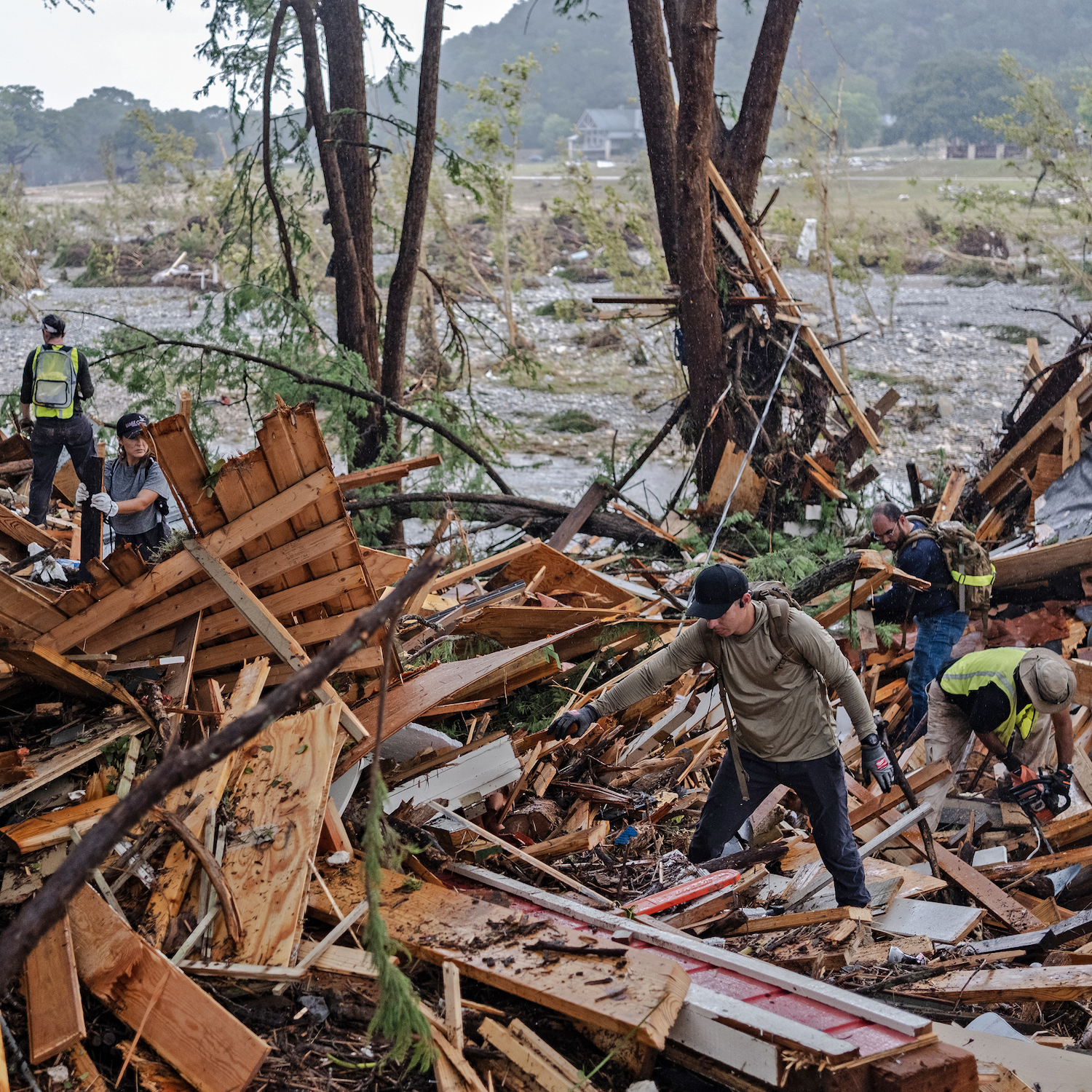
Good morning. It's Monday, July 7th. I'm Shemitah Basu. This is Apple News today. On today's show, inside Trump's big bill that's finally passed into law. What a Nebraskan meatpacking plant says about the challenge to hire domestic labor. And the world's largest time capsule gets cracked open after 50 years. But first, to the devastating impact of the flooding that hit central Texas over the weekend. There are now more than 80 people confirmed dead, many of them children. But that number is expected to go up with dozens still unaccounted for. It began on Friday when clusters of thunderstorms hit far worse than had been anticipated. Within a 45 minute period, the Guadalupe river had risen 26ft, sending an overwhelming wal of water several miles downstream and destroying everything in its path. Roads were submerged, cars overturned and houses ripped from their foundations. Emergency teams and local residents have been working through the weekend. And on Sunday, Texas Governor Greg Abbott confirmed that President Trump had approved federal disaster assistance for the state and said more than 800 people had been rescued. Ron Logue from Kerrville was one of those volunteering and he spoke to cnn.
- [01:29]
Ron Logue
This is our everything and a lot of our everything has been taken. It is destroyed. It is something that we don't even recognize. This whole devastation goes 20 miles that way, another 60 miles that way. We'll be looking for bodies for I couldn't tell you to win.
- [01:47]
Shemitah Basu
A focus for recovery teams has been on the missing children staying at Camp mystic, an all girls Christian summer camp that was based on the riverbank and decimated by the water. About 700 children were at the campsite when the flood struck and hundreds managed to evacuate safely. Local congressman Chip Roy told FOX of one campgoer found alive after floating on top of a mattress for three hours. But many are still considered missing and some have been confirmed dead. Among those identified as dead include 9 year old Janie Hunt from Dallas and 8 year old Sarah Marsh from Alabama. And the camp's longtime director, Dick Eastland was also confirmed dead by family. One mother of campers told CNN that the counselors, many of them teenagers themselves, acted as heroes, braving the rapids to get kids to dry land. On Sunday, Governor Abbott gave a press conference a day after visiting what remained of Camp Mystic.
- [02:43]
Ron Logue
It was nothing short of horrific to see what those young children went through. And we will remain 100% dedicated searching for every single one of the children who were at Camp mystic as well as anybody else in the entire riverbed.
- [03:01]
Shemitah Basu
Meanwhile, many, many families are searching for lost loved ones On Saturday, CNN came across Ty Baden walking along the river hoping to see signs of his missing daughter, 21 year old Joyce Catherine Baden. She was in the area with friends to celebrate the fourth of July. They were staying at a house along the river that's been swep.
- [03:21]
Ron Logue
She's a beautiful girl and just a wonderful girl. Couldn't ask for a better daughter. All through school is just easy, you know, no shenanigans or anything like that. I mean she was a normal girl. We would have fun, but yes, we loved her dearly.
- [03:43]
Shemitah Basu
This part of Central Texas is prone to flooding, but the county has never experienced this scale of devastation. We know that the weather service for San Antonio and Austin held briefings on Thursday for local emergency managers and issued a flood watch, cautioning that a narrow band of 3 to 5 inches could cause some flooding. But it proved to be much worse. By the early hours of Friday morning, emergency warnings were issued on phones and through social media, calling it a life threatening situation. By that point, the river was beginning to surge. Questions are now being asked about whether more could have been done, if the weather could have been more accurately predicted, better managed, or stronger flood mitigations to hold back the worst of the damage. It's going to take some time for emergency services officials and the public to get answers now to Washington, which is recovering from an intense period with mammoth debates and record breaking speeches. Having now finally passed President Trump's massive tax and spending bill, Republicans successfully met his July 4 deadline with the House passing the bill on Thursday afternoon. After a narrow vote, mostly down party lines, and four months of back and forth in Congress, the President signed it the same day.
- [05:07]
Ron Logue
Are we ready?
- [05:09]
Shemitah Basu
Are we ready? We are ready. The act allowed the GOP to pass a big chunk of President Trump's domestic policy in one fell swoop. While unwinding some Biden era measures. The tax cuts Trump put into place in his first administration are now permanent. Spending on immigration and defense will rise to be offset by a $1 trillion cut to Medicaid and a reduction on spending for SNAP, the nation's biggest food assistance program. And over the next decade, the mega bill is estimated to increase the national debt by $3.3 trillion. Sahil Kapoor, a senior national political reporter for NBC News, followed the bill as it made its way to the president's desk.
- [05:53]
Sahil Kapoor
At the end of the day, the revenue decreases from the tax cuts far outweigh the roughly $1.2 trillion in net spending cuts. So that's one real point of contention that conservative senators and conservative House members rebelled against, but when push came to shove, they simply folded and caved to President Trump and accepted this bill under pressure from him, even though it does precisely what they said they would never.
- [06:21]
Shemitah Basu
Support, kapoor told us. Cuts to Medicaid were the stickiest point of contention for House Republicans. The Congressional Budget office predicts nearly 12 million Americans will lose their health insurance entirely, and those who still qualify will face heightened barriers to getting care, including strict work requirements and an eligibility check twice a year.
- [06:41]
Sahil Kapoor
Even if they're the types of people who everyone says should remain on Medicaid, some people are going to fall through the cracks because they won't meet all those paperwork requirements or won't do it in time.
- [06:52]
Shemitah Basu
The final version of the bill also gets rid of the child tax credit for immigrants without Social Security numbers, cuts half a trillion dollars in funding for clean energy, temporarily lowers the federal income tax on tips and overtime pay, and gives money to immigration enforcement somewhere around.
- [07:10]
Sahil Kapoor
$150 billion to expand the military, which is unusual to do in a party line bill because the military is typically authorized by Congress once per year. On a very bipartisan basis, this is $150 billion in addition to that, which should bring the Pentagon's budget to a record trillion dollars just this year.
- [07:30]
Shemitah Basu
Democrats in both the House and Senate have loudly criticized the final bill, saying it's the biggest setback the social safety net's seen in decades.
- [07:39]
Sahil Kapoor
The message you're going to hear from Democrats over and over again for the next year and a half in the run up to the 2026 midterms is that Republicans just passed a massive piece of legislation that cuts taxes for the rich and pays for it by cutting health care benefits and food aid benefits for the working class.
- [07:58]
Shemitah Basu
And while some of the GOP's most visible members stood at Trump's side outside the White House as he signed the package into law, Kapoor told us some Republicans haven't wanted to talk about it.
- [08:08]
Sahil Kapoor
I reached out to Congressman Valadao's office to ask why he supported the bill with the Medicaid cuts after he insisted he wouldn't do that. I didn't get a respons. I asked them several times. They ignored it. Congresswoman Jen Kiggins her office sent over a statement saying she believes that no bill is perfect, but on balance she decided this bill would be worth supporting.
- [08:38]
Shemitah Basu
And finally, turning to Nebraska and the story of one small meat plant's big pitch to local workers as it looks to transform the fortunes of a town in economic trouble, meatpacking is crucial to Quite literally putting food on the American table. But it's one of the most dangerous jobs in the country. An average of 27 workers a day suffer amputation or hospitalization, and it tends to come with minimal benefits and poor pay. It's an industry that employs a lot of migrant workers. So it's not an obvious contender to lead the recovery of North Plate Platte, Nebraska, an old railroad town with a declining population that's largely white.
- [09:17]
Ron Logue
There is unquestionably some stigma associated with it. And it's not necessarily that this is like undignified work, it's just that it's not for me.
- [09:24]
Shemitah Basu
That's Scott Calvert, reporter at the Wall Street Journal, who's been exploring how the company, Sustainable Beef, has tried to appeal to an American workforce.
- [09:33]
Ron Logue
They've really tried to present this as something that is appealing because you have just one single shift during the daytime, so you can go to work and come home and. And go to your kids baseball game and be home for dinner and all of that.
- [09:46]
Shemitah Basu
That makes it unusual for meatpacking, which often relies on night shifts. The starting pay is $22 per hour, which is on par with the average in town. And the company has prioritized modern facilities and employee benefits like 401ks. But the company has an uphill battle, and it's a struggle that exemplifies the challenges of revitalizing towns and businesses in rural states like Nebr. Employment in the North Platte area is down 20% since 2008, according to official statistics. And in that time, the city's population has dropped to 22,500 below 1990 levels. The town historically relied on employment from the freight company Union Pacific, but that's dwindling, and local officials urgently recognize the need to diversify to stave off further decline. But even as Sustainable Beef makes its pitch to the local population, Calvert reports that ultimately it appears the frontline work is still largely going to people from Cuba, Mexico and Central America.
- [10:47]
Ron Logue
One of the reasons why that's turning out to be the case is that the company need people who have experience, who know how to do this work. And the people who tend to have experience in this field are Hispanics, immigrants.
- [10:59]
Shemitah Basu
Calvert notes the local anxiety around changing demographics and strained resources, particularly as other cities saw their communities change following the introduction of meatpacking facilities. He spoke to one local hire, a forklift driver, who acknowledged some of those tensions.
- [11:16]
Ron Logue
He has had a lot of heated arguments, as he puts it, with people around town, and he simply says, look, just, you know, get off your butt and come and do the work. Somebody has to do it. Why not let it be you? So I think it's there's really an interesting sort of debate happening within the city right now.
- [11:32]
Shemitah Basu
Calvert says the company is optimistic, and so far they've received more than 2,000 applications for 850 jobs. But sustainable beef is entering a tough industry dominated by the big four companies, which control 85% of the beef market. And as the Trump administration's crackdown on migrant workforce continues, its pool of experienced talent may shrink and the company's hopes of attracting local workers may become all the more important, something Calvert says is on everyone's minds. Before we let you go, a few other stories we're following. Israel sent negotiators to Qatar yesterday in an attempt to close the remaining gaps in a potential Gaza ceasefire deal with Hamas. The last round of talks fell flat six weeks ago. This time, Hamas says it's responding positively to Israel's newest proposal. President Trump has been central to these talks, putting pressure on both Israel and Hamas to reach a deal that includes a complete ceasefire, 60 days and the release of 10 living hostages. Israeli Prime Minister Benjamin Netanyahu is in Washington today, meeting with the president, who told reporters on Air Force One that he's optimistic about the two finalizing a concrete deal this week, though he said some of Hamas's proposed changes he had seen were unacceptable. In the proposal currently on the table, Hamas is asking for a complete stop on all attacks and the withdrawal of Israeli troops, conditions that Israel has rejected before turning now to France and to a sound not heard in Paris for over a century, at least not legally. That is a man taking a dip in the River Seine, where Parisians can once again go swimming for the first time in 102 years. The nation banned swimming in the river that snakes through the city in the 1920s because of pollution and increasing boat traffic. Environmental advocates have been lobbying for cleanup of the sand for decades, but last year's Olympics was the push the city needed. France invested over a billion euros leading up to the Games to bring the bacteria to a low enough level for athletes to safely swim. And after a few more months of fine tuning, environmental specialists confirmed the waters consistently meet European safety standards. People dove in early Saturday morning at three of the authorized swimming sites, one of which is just up the river from the Eiffel Tower. And finally, the world's largest time capsule was opened in Nebraska over the holiday weekend, 50 years after it was sealed in 1975. The items inside included pet rocks, a groovy teal suit, an entire car, a yellow Chevy Vega, and lots of letters and cassette tapes. People traveled from around the US for the unveiling. Some were present for the burying of the capsule and had come to retrieve their old items. Some people received mementos or notes left for them by now deceased family members. And one man came to collect his 1975 wedding invite. You can find all these stories and more in the Apple News app. And if you're already listening in the news app right now, we've got a narrated article coming up next. Rolling Stone has the story of one writer as she tries to make sense of her best friend's murder two decades ago, how it became a tabloid sensation at the time, and what it's meant for the people who loved her. If you're listening in the podcasts app, follow Apple News Narrated to find that story. And I'll be back with the news tomorrow.