Loading summary
Transcript25 lines
- [00:05]
Shemitah Basu
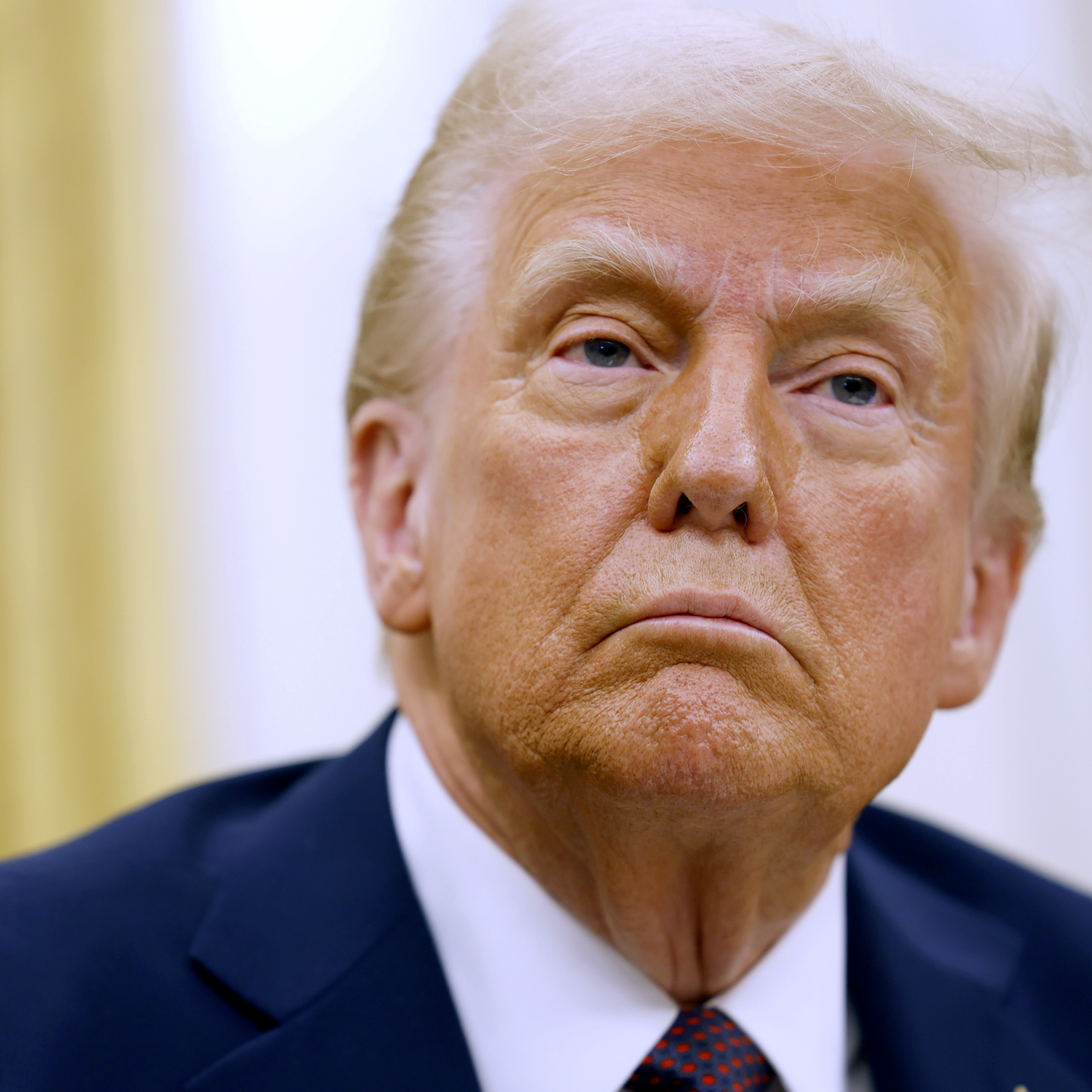
Good morning. It's Wednesday, January 29th. I'm Shemitah Basu. This is Apple News today. On today's show, Robert F. Kennedy Jr's confirmation hearing for health secretary gets underway. What to know about a new AI from China that's rattled American tech companies and financial markets. And the Mona Lisa is moving. But first, President Trump's order to freeze trillions of dollars in federal spending caused widespread confusion on Tuesday. The administration says it's vetting all spending and has promised to cut off money to programs, grants, loans, and anything else that doesn't align with the administration's agenda, in particular, what they call woke ideology. Trump's order, however, was quickly blocked by a judge, putting it on hold, at least temporarily, until February 3rd. 22 state attorneys general are also suing the administration over the order, saying Trump can't halt approved spending without an act of Congress. It wasn't immediately clear what Trump intended to happen when he ordered the freeze of federal grants and loans. But within hours, thousands of government programs seemed at risk of being cut. These are programs that have to do with everything from access to meals for low income families to childcare and health care. For hours, all 50 states said they couldn't access Medicaid's funding portal. The White House later clarified many of those programs are not at risk and never should have been impacted. Here's White House Press Secretary Caroline Levitt speaking to reporters on Tuesday. Social Security benefits, Medicare benefits, food stamps, welfare benefits, assistance that is going directly.
- [01:50]
Shereen Ghaffari
To individuals will not be impacted by this pause.
- [01:55]
Shemitah Basu
Despite the temporary halt on Trump's order, there were reports of nonprofits still having trouble accessing funds through federal websites. Yolanda Fields, who runs a group called Breakthrough, which provides education and housing services, told the Chicago CBS affiliate she doesn't know what would happen if they lost the $2 million in funding that they received from the federal government. We aren't talking about frivolous spending. We're talking about essential services that people need to live. And in Knoxville, Tennessee, Caitlin McGuire with the Tennessee Valley Coalition for the Homeless says the uncertainty of it all is what has people on edge.
- [02:34]
Caitlin McGuire
That unknown is so scary for so many people because there are countless individuals who depend on the services that organizations like ours are providing in this region, across the state and across the nation.
- [02:48]
Shemitah Basu
The big question here is whether the executive branch can make these cuts without Congress. Here's Illinois Attorney General Kwame Raul Congress.
- [02:57]
Kwame Raul
Is given the power to appropriate the funding. The executive branch cannot unilaterally disregard those appropriations passed by a separate and equal House of government.
- [03:09]
Shemitah Basu
Speaking on msnbc, former Republican Congressmember from Florida David Jolly, who served on the House Appropriations Committee, said he thinks Trump's justification for doing it this way won't hold water in court.
- [03:22]
David Jolly
What he has done is illegal. His justification for it is what makes it illegal. So what he said is, I'm not going to spend the money because I don't like these policies that are currently in place. And much like the Muslim ban, it showed the incompetency of an administration that doesn't know the law or is willing to violate the Constitution. And it revealed the cruelty of stopping Medicaid payments and childcare payments and all of these other issues.
- [03:47]
Shemitah Basu
The term being used to describe what the Trump administration is doing here is impoundment. That basically means that Congress has written the check for all these programs and the president is now refusing to put it in the mail. In 1974, Congress passed a law limiting the president's ability to claw back funding like this, citing the way Richard Nixon had abused the practice. But some Trump allies say that law is unconstitutional and should be struck down, which means this could all be headed for the Supreme Court, with a potential showdown over who really holds the purse strings in Washington. Robert F. Kennedy Jr's confirmation hearing to become the next head of the Department of Health and Human Services starts today. If he's confirmed, Kennedy would be in charge of 18 agencies and would have enormous influence over America's public health. He'd also have a lot of say over how Americans access and are advised on vaccines. In the past, he has spread baseless claims about the safety of vaccines, though he says he is not anti vaccine. Still, experts worry that childhood vaccination rates, which have already been dropping, could fall even faster under his leadership, potentially leading to a resurgence in diseases that we thought were lost to the history books. Dr. Paul Offit, an expert at the Children's Hospital of Philadelphia, recently testified in a Senate hearing about his concerns.
- [05:16]
Kwame Raul
The problem is not only that we've largely eliminated these diseases, we've eliminated the memory of these diseases. And for that reason, parents are now more scared of the safety of vaccines, real or imagined, than the diseases that they prevent. And so you're starting to see then an erosion in vaccine confidence and as a consequence, an erosion in vaccine rates.
- [05:36]
Shemitah Basu
According to a poll conducted by the Associated Press and Newark, 40% of Republicans and 69% of Democrats are very concerned about fewer children being vaccinated. Now, beyond vaccines, Kennedy has long expressed deep distrust in the very institutions he will potentially lead. And in. In that he reflects a growing sentiment among Americans. Data shows public trust in federal health agencies plummeted during the pandemic and crucially hasn't recovered. According to Gallup Polling, for example, the percentage of adults who describe the CDC as excellent or good dropped over 20% from 2019 to 2021. Javier Becerra, the outgoing health secretary, recently told the Washington Post he and other officials acknowledged they made some missteps during the pandemic. Here's how the Washington Post's Rachel Rubine put it.
- [06:29]
Caitlin McGuire
They will admit that there were kind of communication mistakes made during various points of the pandemic, specifically around using clear.
- [06:39]
Shemitah Basu
Language with the public saying what's known and what's not known about how the virus spreads. But Becerra told the Post he believes social media has fueled misinformation and distrust.
- [06:50]
Caitlin McGuire
Around health he believes federal agencies are essentially outmatched. This was his quote that I can't go toe to toe with social this.
- [07:00]
Shemitah Basu
Combination of pre existing doubts in health institutions plus the pandemic is what led us to RFK's nomination as health secretary. He's keeping his campaign slogan around Make America Healthy Again. And he's talking about reforms that a lot of Americans are excited about, things.
- [07:17]
Caitlin McGuire
Like stripping ultra processed food from school cafeterias or cracking down on food dye. And some of the food policies have support from Democratic lawmakers and other experts.
- [07:29]
Shemitah Basu
The same AP NORC poll that I mentioned earlier found that 66% of people favor requiring changes to processed foods to remove ingredients like added sugar or dyes. But some other ideas, like removing fluoride from drinking water and lifting restrictions on selling raw milk, have just around 25% support from Americans surveyed. The Post says Kennedy is among Trump's most vulnerable cabinet nominees. Some Republicans have raised concerns around his past support for abortion rights. But some other lawmakers, like Pennsylvania's John Fetterman, a Democrat, and independent Senator Bernie Sanders, have said they are open to supporting him. Now to the AI race and how a Chinese company called Deepseek rattled US Tech markets and suddenly became one of the most downloaded free apps. The company's open source model, called R1, looks and functions a lot like ChatGPT. But Deepseek claims their Chatbot costs far less, and that's upended assumptions and sent top AI companies scrambling to rethink what it takes to make a successful AI product. Bloomberg News AI reporter Shereen Ghaffari has been following this story.
- [08:49]
Shereen Ghaffari
It sort of took the world by storm and really surprised a lot of people in the west because the sort of popular conception was that US Companies were way ahead of China on AI.
- [09:03]
Shemitah Basu
Ghafari says part of that assumption had to do with the fact that the biggest AI companies, most of which are based in the US believed that only they could afford to make the most advanced AI systems. Plus, the Biden administration blocked Arabesque AI microprocessors from being sold to China. And there was a widespread belief that better AI came from using more chips like those made by US Chip maker Nvidia. But Deepseek claims its model only needed 2000 chips from Nvidia to run their chatbot, compared to other top companies, which typically use as many as eight times that amount. Ghaffari says she has heard some pushback to Deepseek's claim that their chatbot costs a fraction to operate compared to other competitors.
- [09:46]
Shereen Ghaffari
That could not be including the total cost. They say that does not include things like what the research cost was prior to this model in terms of other experiments that led up to this. It also doesn't include infrastructure costs, things like data centers. So, you know, it's not clear that we're getting an apples to apples comparison here.
- [10:05]
Shemitah Basu
And she says there's still a lot we don't know about how exactly Deep Seq created their chatbot and whether it drew on work done by American companies.
- [10:14]
Shereen Ghaffari
But I wouldn't discount the fact that, you know, China has some really top AI talent working for it who are pushing ahead at the forefront of AI research.
- [10:23]
Shemitah Basu
At least some leaders of American AI companies, like OpenAI's CEO Sam Altman, have welcomed the competition. Altman praised Deep Seek on social media, writing that it was, quote, invigorating to have a new challenger. Another prominent tech leader, Mark Andreessen, called their product AI's Sputnik moment, and Ghaffari says this will likely light a fire under American companies.
- [10:47]
Shereen Ghaffari
I think that we're just gonna hear more and more in the coming weeks about what the US Company's strategy is to get ahead and to what extent Deep Seek is potentially a long term threat versus is this, you know, a one time thing?
- [11:11]
Shemitah Basu
Here are a few other stories that we're watching in the Apple News app. About 2 million federal workers have been offered the chance to resign and be paid through September as part of the Trump administration's latest effort to overhaul the federal government. An administration official told NBC News they expect about 5 to 10% of the federal workforce to take the buyout, saving about $100 billion. An email sent to workers contained a resignation letter for review with the option to reply resign if they want to quit. The email also said a new, quote, enhanced standard of conduct would be implemented to ensure employees are, quote, loyal and trustworthy. The union that represents the largest share of federal employees warned the move will cause vast unintended consequences that will cause chaos for people who depend on government services. It's unclear whether Elon Musk, who is now in charge of Trump's new Department of Government Efficiency, was involved in this move, but he famously sent a similar email to employees shortly after he took over Twitter. In other news, the Mona Lisa is getting moved. For a long time, she's been hanging in an area of the Louvre in Paris that gets very overcrowded due to her popularity. So now, French President Emmanuel Macron announced the piece will get its own room as part of a large renovation of the world's most visited museum. It'll also be accessible separately from the rest of the museum with its own ticket. In a recent memo, the museum's director said the Louvre has become overrun with crowds and is in need of an overhaul. Other renovations to the museum will include a grand new entrance near the Seine and finally, today is Lunar New Year, one of the most important festivals of the year. For the more than 1 billion people who celebrate across many Asian countries, including China, Vietnam and Korea, this ushers in the Year of the Snake, a symbol of renewal, regeneration, and hopefully, positive transformation. Jonathan H.X. lee, an Asian studies professor at San Francisco State University, described it this way to NBC, it's about shedding the ego, letting go of the past, letting go of anger. This is the year where the kind of growth, personal and macro, internal and external, is very much possible. You can find all these stories and more in the Apple News app. And if you're already listening in the News app right now, we've got a narrated article coming up next. Elle profiles Lady Gaga as she gets ready to release her seventh studio album called Mayhem, which the writer describes as a feast. If you're listening in the Podcasts app, follow Apple News plus Narrated to find that story and I'll be back with the news tomorrow.