Loading summary
Transcript39 lines
- [00:05]
A
Good morning. President Trump heads to China in search of a way to end the conflict in the Middle East.
- [00:10]
B
A large portion of this summit is now going to be discussing the Iran war and really President Trump asking President Xi to help end this war.
- [00:22]
A
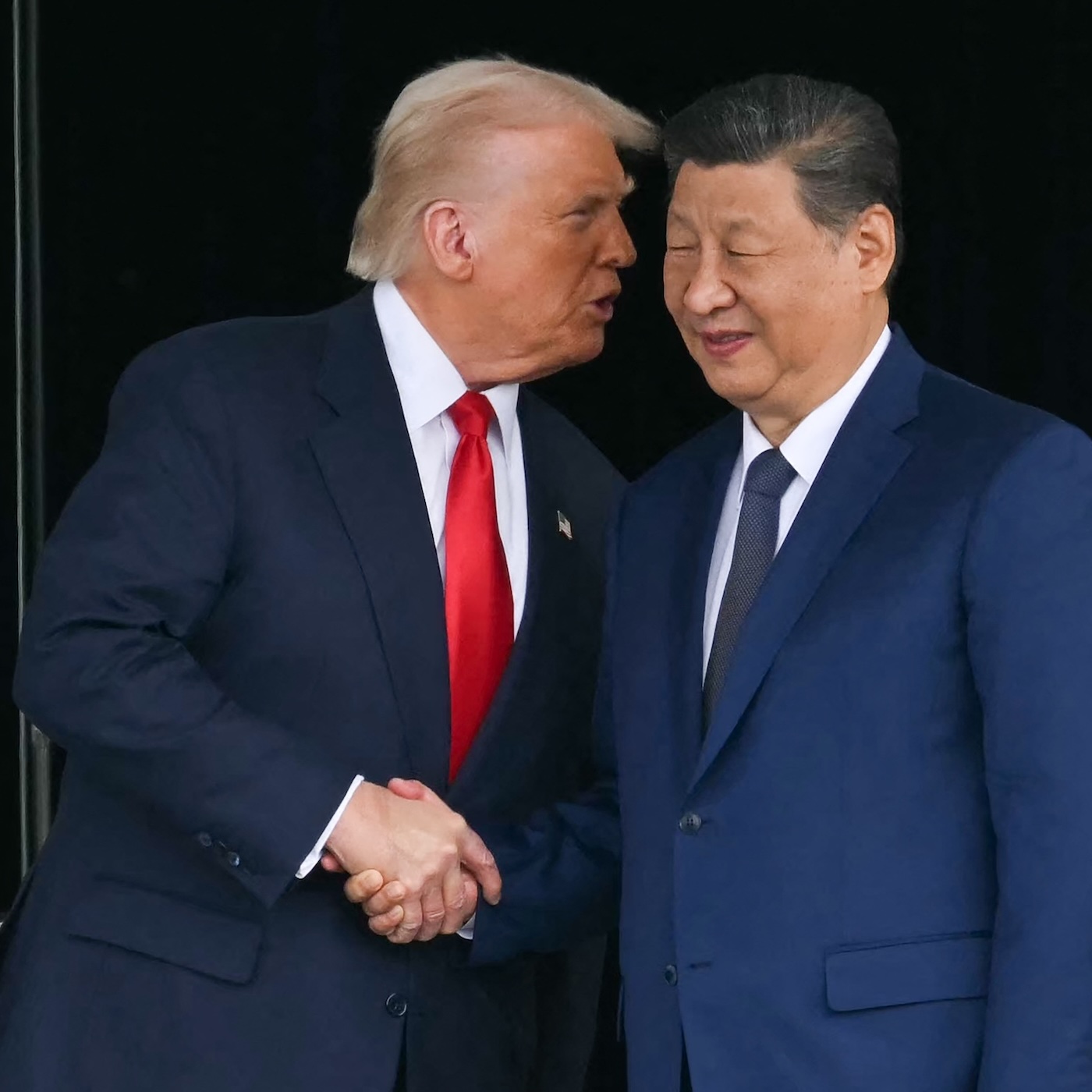
As the war drags on, NBC looks at why it's hit US Farmers so badly. And the Washington Post examines changes at ice. It's Tuesday, May 12th. I'm Gideon Resnick. This is Apple News Today. President Trump arrives in China on Wednesday for a high stakes summit with Chinese President Xi Jinping. It's Trump's second time visiting China as president and comes at a crucial moment for both countries. Trump, in his first year back in office, launched a tariff war with Beijing, who went tit for tat with the US over import taxes, straining an already tough relationship. Meanwhile, issues like the AI race and the U.S. s continuing support of Taiwan remain key points of contention between the two superpowers. To better understand what to expect out of Trump's trip, I spoke to Trevor Hunnicutt, a White House reporter for Reuters who is in Beijing. I began by asking him about the state of Trump and Xi's relationship.
- [01:19]
B
The president, President Trump makes a point of saying that his relationship with President Xi is really strong. And that's really important because Xi is the main decision maker in the chines. And so his theory is that if he maintains strong personal relations with this one man, that can overcome the deep tensions that exist in this broader relationship between the world's two largest economies.
- [01:45]
A
And what are some of those tensions between those economies, as you put it?
- [01:49]
B
As they exist right now, they run the gamut. So we have everything from the Iran war and the fact that China continues to be supportive of Iran while the US Is in a war with Iran, to the fact that you have these long standing disagreements about trade and the economy and the fact that these two economies are basically competing to win the next century's economy when it comes to everything from computer chips to critical minerals, basically these two countries are competing to dominate the same industries.
- [02:23]
A
And you mentioned Iran. How much is that overshadowing the goals of this particular summit?
- [02:31]
B
That's one of the more striking things about this summit. I mean, this was initially designed as a way to get these leaders on the same page in terms of trade and economic issues. And now what we're being told is that a large portion of this summit is now going to be discussing the Iran war.
- [02:49]
A
And what would the US like to see from President Xi?
- [02:52]
B
So basically, what Trump would like Xi Jinping to do is go to Iran and basically tell them that China will withdraw their support if Iran does not make a more serious attempt to come to a deal with the United States that will end this war. They believe that the Chinese have the same level of interest in what happens in the Strait of Hormuz as the United States, if not more, because they're the world's largest oil consumer, and they get a lot of their oil from the Middle east and it passes right through the Strait of Hormuz. So their theory is that China has as much to lose from this war as the United States does.
- [03:30]
A
And how feasible is that belief at the moment?
- [03:34]
B
So a lot of analysts who look at the situation, look at the relationship that China and Iran have, say that it's overstated. Right. The leverage that China has. The thinking goes that just because China has a strong economic relationship with Iran and is obviously a major buyer of their oil, that doesn't mean that they can dictate to the people in charge of the government in Iran. Now, what they should do and what they shouldn't do has shown over the past two months that they have a lot of willingness to tolerate pain in order to achieve their larger goals. And so having a major ally or partner abroad tell them they should change may not have the impact that the Trump administration thinks that it would.
- [04:21]
A
And that, of course, is going to be a big challenge throughout the summit. But your reporting also nods to some other potential agreements that may be in place or may be getting formalized ahead of the President's visit to China. What are some of those?
- [04:35]
B
That's right. So we expect that China is going to make some kind of announcement either during the trip or shortly thereafter, basically agreeing to buy more products from the United States, whether that's Boeing planes or soybeans that are grown in the United States. And they're also going to most likely agree to some level of conversation with the United States on a number of important economic issues, from artificial intelligence to trade and investment in areas that are less sensitive have been kind of the national security areas.
- [05:08]
A
There's often expectation raising and lowering ahead of summits like this. But I'm curious what these two countries would deem to be a success out of this meeting.
- [05:19]
B
So I think the biggest sign of success would be a sense that you have two powerful economies that are rowing in the same direction. Right. Even though they have various differences, even though they're competing for the markets of the future, that these two big, powerful countries can come together and can make decisions jointly that have some benefit beyond their two countries and for the world at large. And so if these two leaders can walk away from this and say to their domestic audiences that, hey, we've got something that benefits you, benefits the citizens of this country, and also keeps the ties with this other country in a stable and peaceful situation, then they have a win that they can take back to their constituents.
- [06:07]
A
Trevor Hunnicutt, thank you for your time.
- [06:09]
B
Thank you.
- [06:10]
A
Trump won't be going to China alone. Several high profile business leaders will also accompany the president on this trip, including Tim Cook from Apple, Boeing CEO Kelly Ortberg. And in what many are saying is a sign that their relationship is back on better footing, Elon Musk is also making the journey. As the war in Iran continues, more and more industries are seeing their supply ch squeezed by the US And Tehran's dueling blockades in the Strait of Hormuz, the crisis is hitting one group especially hard. Farmers.
- [06:47]
C
The fourth generation Iowa farmer described it as basically on the cusp of a farm crisis right now.
- [06:54]
A
Kayla Steinberg is a business and economy reporter for NBC News. She reports that increased competition from abroad is pushing the price of feed and other supplies higher. That means lower returns for crops like corn and soybeans. But what makes the pain so acute for American growers right now is that oil and fertilizer are crucial elements in farm operations. Roughly a fifth of the world's oil supply runs through the Strait and about a third of fertilizer ingredients, basically a
- [07:21]
C
double whammy for farmers. They're having to pay higher prices for fertilizer. And with all that oil not going through the Strait of Hormuz, we're seeing way higher diesel prices. They're up almost two bucks since the start of the Iran war. And that's what powers their farm equipment, their tractors, their other machinery. And so they're having higher prices for that, too. And it's just putting additional pressure on an industry that was already really strained.
- [07:49]
A
70% of respondents in a recent survey of more than 5,700 farmers said they were unable to afford the fertilizer they need.
- [07:57]
C
I talked with one Iowa farmer who said that he was paying $795 a ton for this nitrogen fertilizer he uses on February20, just a few days before the war started. And then a month later, at the end of March, it was $990 for that same fertilizer. So it had gone up almost $200 in just a few weeks.
- [08:20]
A
Steinberg says now is the busy spring planting season, and some farmers are opting to cut back on what they plant to save money on fertilizer. She told us that higher fertilizer prices now could mean less food being grown and ultimately higher prices passed on to the consumer.
- [08:36]
C
Now, that could take a sec because farmers are planting their spring crops now. It could take a few months before they're ready to be harvested, and then they have to get transported across the country and end up at your grocery store when you buy it and put it on your kitchen table. So that whole process could take a bit, meaning we probably haven't felt the full effect of rising prices from the Iran war just yet, but that could be coming in the next few months.
- [09:01]
A
It's not just farmers in the US that are struggling. The UN says the war has created, quote, disruption at the core of the global agri food system. One farmer in Thailand told the Washington Post, planting and harvesting her crops will cost her around $33,000, which she'll only be able to sell for $22,000.
- [09:19]
C
The Iran war isn't just affecting people in the US and farmers in the US it's the sort of thing that's creating energy shocks worldwide and that's affecting prices everywhere. So as the war stretches on and on, we could see prices keep going up.
- [09:36]
A
Agriculture Secretary Brooke Rollins has said the administration is already taking steps to help farmers. Those include working to boost fertilizer production in the US and suspending import restrictions on fertilizer from Venezuela. Meanwhile, lawmakers this week are taking up the issue. The Senate Committee on Agriculture, Nutrition and Forestry meets today to discuss how to provide longer term stability for farmers. The new Director of Homeland Security appears to be undoing some of his administration's own immigration enforcement reforms in the face of declining public support. DHS Secretary Mark Wayne Mullen is under pressure to shoot shift the perception of ICE without losing those who back a hardline approach. So far, he's paused plans to convert industrial warehouses into immigration detention centers, ordered a stop to entering houses without judicial warrants, and pledged to steer clear of another ICE operation like the one in Minneapolis, which led to the deaths of two American citizens. On Newsmax last week, Mullen acknowledged a shift in emphasis. We're purposely trying to be a little bit more quiet. I made this very clear that I wanted to get DHS out of the headlines so our ICE agents could go do their job without being harassed by the media. That doesn't mean we're slowing down even a little bit. The Washington Post has been looking into one area where things do seem to be changing. The training of ICE agents. Last year, Mullen's predecessor, Kristi Noem, drastically cut the time between new recruits signing up and getting into the field.
- [11:16]
D
It was shortened by almost half of the training hours, basically to facilitate this surge and get more ICE officers into the field more quickly.
- [11:25]
A
Sarah Blasky is an investigative reporter with the Post who told us about documents they had reviewed detailing the changes.
- [11:31]
D
And so a lot of that practical experience was what was cut. Some of the most significant cuts were actually two firearms training. The training hours were cut in half and down to 28 training hours, I believe. And again, this is for new recruits, many of whom have never held a firearm before. And so that was one that when we spoke to experts, when we were looking at what had been cut from this program, that was one that really stuck out to them.
- [12:00]
A
Those reductions had faced criticism from Democrats. They made expanded training a part of their demands during the shutdown negotiations. Now Mullen is changing things again.
- [12:09]
D
The goal was to double the number of boots on the ground by the end of 2025. And this was a way of facilitating that. Now we're seeing them go back to around a 70, 72 day training schedule is what we understand from our sources.
- [12:23]
A
The changes appear to be part of a broader trend. Data analyzed by the American Immigration Council found that arrests fell from a peak of more than 800 per day in December to less than 500 per day in March.
- [12:34]
D
We're not seeing nearly as widespread of actions as we had. And so this is following in that trajectory. I think it can be seen as kind of part of the same effort, which is to soften, I think, the public image of the Department of Homeland Security.
- [12:53]
A
Taken together, Mullen's recent changes have faced criticism from both sides. Some right wing activist groups worry he's reversed course too hard since taking over from Kristi Noem. While Democratic lawmakers say the changes are just cosmetic. In response to the Post's reporting, DHS did not confirm the return to its longer training program and insisted that previous instruction had not been diluted. Officials have also rejected claims that they're softening their stance on immigration. About half the country still thinks that Trump's deportation policy has gone too far. That's according to recent polling from Pew. But the number of people believing they are now doing too little has also ticked up a bit, from 10 to 15%. And finally, here are a few other stories we're following. The Supreme Court cleared the way for Alabama to redraw its congressional map to favor Republicans and to eliminate a majority black district. The conservative majority lifted a lower courts decision that had blocked state Republicans preferred map as illegally diluting the voting power of black voters in Alabama. Now, officials in the state could soon be free to use that older map that includes one fewer majority black district currently held by a Democrat. It follows the Supreme Court's ruling to weaken a part of the Voting Rights Act. Alabama's attorney general said the decision would put the power to draw the state's maps back to the people's elected representatives. The decision from the high court comes just a week ahead of the state's scheduled primaries. A temporary suspension in the federal gas tax might be on the way. The move would provide some measure of relief for consumers at the pump. In a phone interview with CBS News, President Trump said that he would seek to suspend the roughly 18 cents per gallon tax for, quote, a period of time, adding that when prices come down, he would phase it back in. Now the president can't impose a tax holiday on his own. Congress would need to act to make it happen. Senate Majority Leader John Thune has been skeptical, but Politico reports now that the president is on board, momentum is growing. And Missouri Senator Josh Hawley said that he plans to introduce a bill to suspend the tax. Democrats have been floating the idea for weeks. In the Senate, AAA reported yesterday that the average cost for a gallon of unleaded gas is now $4.52, the highest since 2022. And the New York Times Wordle is becoming a game show to be hosted by Savannah Guthrie. In case you're not familiar, the Daily Puzzle gives users six tries to guess a five letter word across a set of tiles and it's played by millions of people every day. The project is reportedly a long time in the making, but was put on hold after Guthrie's mother was abducted.
- [15:35]
D
I just want to say, like a quick, just thank you to NBC and to Jimmy and his production company and the New York Times and Studio Universal because they, you know, when everything happened with me and my family, they just stopped everything and said we'll wait for you of course. And Hollywood is like a really tough business, as you know. And I was, I didn't expect that. And I just want to say thank you. It means so much to me.
- [15:59]
A
Her mother remains missing and Guthrie said that it felt strange to do the show right now. But that quote, this is something that's full of joy. You can find all these stories and more in the Apple news app. And if you're already listening in the news app right now, we have a narrated article coming up next. Vox reports on a resurgence in neighborism and why, after years of social isolation, people are turning to their community on the block for support. If you're listening in the podcast app, you can follow Apple News plus Narrated to find that story. And I'll be back with the news tomorrow.