Podcast Summary: Apple News Today
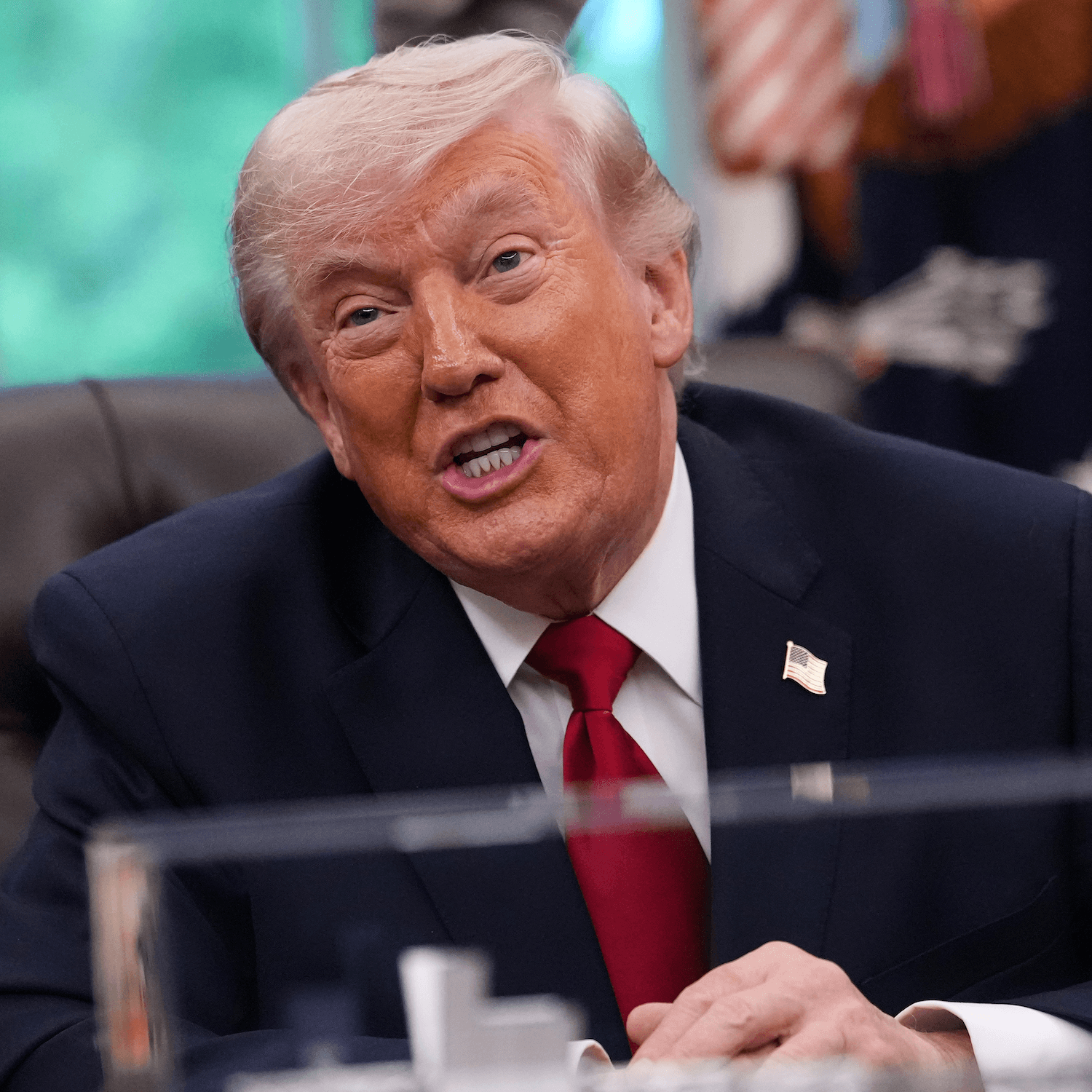
Episode Title: Trump hits a pivotal 60-day milestone in the Iran war
Date: May 1, 2026
Host: Cecilia Ley (Apple News)
Episode Theme:
A pivotal update on U.S. foreign and domestic policy landscapes, focusing on the 60-day War Powers Resolution deadline for President Trump's military action in Iran, the end of a prolonged shutdown of the Department of Homeland Security, political maneuvering in Congress, Maine’s crucial Senate primary shake-up, and highlights from the current news cycle.
Main Segment: The 60-Day War Powers Deadline and Iran War
Overview:
The episode’s central theme is the significance of the 60-day mark since President Trump notified Congress about military engagement with Iran. Under the War Powers Resolution, the President must now seek explicit congressional approval to continue operations, igniting debate and political calculation on Capitol Hill.
Key Discussion Points and Insights
-
War Powers Resolution & Ceasefire Nuance
- The 1973 War Powers Resolution requires the president to seek congressional approval 60 days after hostilities begin. Without approval, operations must wind down within 30 days.
- Defense Secretary Pete Hegseth suggested the ceasefire may pause or reset the "60 day clock," leading to legal uncertainty and debate within Congress.
“We are in a ceasefire right now, which our understanding means the 60 day clock pauses or stops in a ceasefire… I do not believe the statute would support that.”
— Exchange between Eric Watson and Patrick Whittle, [01:25 - 01:52]
-
Congressional Dynamics
- Early congressional sentiment among Republicans was generally supportive or deferential toward the White House, but many signaled the 60-day point as a threshold for demanding input (“more control”).
- Senators such as Thom Tillis, Lisa Murkowski, and Susan Collins highlighted their expectation of Congressional involvement at this milestone.
“If we move into 60 days of hostility, then technically the President should be ramping down the following 30 days.”
— Eric Watson, [02:20]
-
Republican Divides & Votes
- While leadership remains aligned, a cross-section of GOP lawmakers—from moderates (Murkowski, Collins) to populists (Hawley) and libertarians—wants a direct Congressional vote on war authorization.
- The most recent vote to halt U.S. participation in the war (led by Collins) failed by a narrow 47-50 margin—marking the sixth failed attempt.
“It’s not like these guys want to vote against the war, but they want Congress to vote on it.”
— Burgess Everett, [03:23]
-
Political Risks
- Voting to authorize war brings long-term political “baggage,” which many Republican leaders are eager to avoid.
“When you vote to authorize a conflict, you kind of take on the baggage for however that conflict plays out over time.”
— Burgess Everett, [03:46]
-
Next Steps & Legal Questions
- Some Republicans argue the President now has an additional 30 days to withdraw forces; if Trump does nothing, Congress may escalate resistance, potentially by withdrawing funding by June.
“If the Trump administration ignores it or gives a 30 day withdrawal notice, that kind of sets off another clock… the shoe would drop up in June.”
— Burgess Everett, [04:27]
Second Segment: DHS Shutdown Ends & Political Fallout
Overview:
A historic, 76-day partial government shutdown affecting the Department of Homeland Security ended following tense negotiations and a bipartisan funding deal—though immigration-related disputes were not fully resolved.
Key Discussion Points and Insights
-
Shutdown Resolution
- The House approved legislation funding most DHS agencies until September 30, excluding ICE and parts of Customs and Border Protection, which had already received substantial previous funding.
- Pressure from the White House (concerns over TSA and Secret Service) and public scrutiny over a recent assassination attempt at the White House Correspondents Dinner played a key role in breaking the impasse.
“In spite of our razor thin, historically small majority, House Republicans continue to deliver for the American people… that is a large reason why we are going to win the midterms so that the grownups can stay in charge here.”
— Speaker Mike Johnson (via Burgess Everett), [06:00]
-
Outcome for Democrats
- Democrats’ goals—judicial warrants for home entries, mandatory body cameras, and an end to ICE masking—were not achieved.
“They wanted ICE to start using judicial warrants... officers to stop masking... require body cameras. They’re going to get none of that.”
— Eric Watson, [06:31]
-
Political Calculations
- Although Democrats did not win concrete policy reforms, they believe the outcome arms them with campaign issues, given public discomfort with ICE’s tactics after recent protests and deaths.
“If you talk to Democrats...the majority of voters are uneasy with ICE's tactics...this just puts you in a political problematic spot. So they believe they have a campaign issue. But as far as the policy, I would say Republicans did win.”
— Eric Watson, [06:50]
-
Next Moves
- Republicans will pursue $70 billion in new immigration enforcement funding through reconciliation—a process immune to filibusters. Trump set a June 1 deadline for the legislation.
- The looming midterms and Trump’s low approval ratings promise further heated debate.
“Democrats say they're going to have a guns versus butter type of campaign where they're saying Republicans are only interested in… enforcement and weapons where Democrats would do more for social services…”
— Eric Watson, [07:58]
Third Segment: Maine Senate Race Shakes Up
Overview:
Governor Janet Mills drops out of the Democratic primary for U.S. Senate, solidifying Graham Platner—a previously obscure oyster farmer and political newcomer—as the likely Democratic nominee against incumbent Republican Susan Collins in a critical battleground state.
Key Discussion Points and Insights
-
Governor Mills' Withdrawal
- Mills, 78, cited lack of financial resources as the reason for ending her campaign, elevating Platner as the presumptive nominee.
“Governor Janet Mills said she no longer had the financial resources to compete in the primary.”
— Cecilia Ley, [08:24]
-
Graham Platner’s Emergence and Controversies
- Platner, 41, is new to politics and carries the baggage of a Nazi-associated tattoo (since covered up) and offensive online posts from his past. He has publicly taken responsibility for these actions.
“I'm proud of the person I am today. I'm not proud of the person I always was. But I also don't get to be who I am today without that journey.”
— Graham Platner (via Burgess Everett and Eric Watson), [10:29 - 10:37]
-
Voter Response and Platform
- Platner draws enthusiastic support with a platform focused on affordability, healthcare, housing, and fighting “the oligarchy and the billionaires,” reminiscent of Bernie Sanders’ message.
“They tend to talk about his focus on affordability, health care, housing, fighting the oligarchy, as he likes to call it, and the billionaires.”
— Patrick Whittle, [10:48]
-
High Stakes for Democrats
- Defeating Collins is seen as essential for Senate control; Platner’s outsider status and base enthusiasm contrast with Maine’s tradition of experienced, moderate candidates.
“Graham Platner has formed a different kind of campaign, a different kind of coalition than we're used to seeing…”
— Patrick Whittle, [11:29]
Notable Briefs: Other News Highlights
Attribution maintained where applicable.
-
Surgeon General Pick Dropped
- Trump withdraws Casey Means, an influencer with a non-traditional medical background, following Senate resistance. She is the second pick for the role Trump has dropped this term. New pick: Nicole Safire, radiologist and Fox News contributor.
-
Texas Flood Tragedy: Camp Mystic Will Not Reopen
- The all-girls Christian camp, site of a deadly flood (28 children killed last year), will not reopen for the summer season amidst continued investigation and community division.
-
Banksy’s New Statue in London
- A surprise Banksy sculpture at Waterloo Station, interpreted as a critique of blind nationalism, is drawing crowds and commentary. City officials embrace its presence—at least for now.
Memorable Quotes & Timestamps
-
“We are in a ceasefire right now, which our understanding means the 60-day clock pauses or stops in a ceasefire… I do not believe the statute would support that.”
— Eric Watson and Patrick Whittle, [01:25 - 01:52]
-
“If we move into 60 days of hostility, then technically the President should be ramping down the following 30 days.”
— Eric Watson, [02:20]
-
“When you vote to authorize a conflict, you kind of take on the baggage for however that conflict plays out over time.”
— Burgess Everett, [03:46]
-
“Governor Janet Mills said she no longer had the financial resources to compete in the primary.”
— Cecilia Ley, [08:24]
-
"I'm proud of the person I am today. I'm not proud of the person I always was. But I also don't get to be who I am today without that journey."
— Graham Platner (via Burgess Everett and Eric Watson), [10:29 - 10:37]
-
“They tend to talk about his focus on affordability, health care, housing, fighting the oligarchy, as he likes to call it, and the billionaires.”
— Patrick Whittle, [10:48]
Conclusion
This episode of Apple News Today spotlights a historic juncture in U.S. foreign policy with the War Powers Resolution deadline, the nuances of Congressional involvement, and its impact on both parties. It also covers domestic battles over DHS funding, shifts in Maine’s high-stakes Senate race, and quick-hit national news, providing a comprehensive, clear-eyed analysis helpful for anyone tracking the pulse of American policy and politics in mid-2026.