Loading summary
Transcript35 lines
- [00:05]
A
Good morning. Tensions between the US And Iran continue to escalate as American forces build up in the region.
- [00:12]
B
President Trump and others say if there is no deal, there will be other options available to them. But the risk there, of course, is a US Strike on Iran could lead to a bigger conflict in the region.
- [00:24]
A
The Wall Street Journal explains a new option on the table for Trump. Former Prince Andrew was arrested and released without charge. The Times, London tells us how the arrest went down and its ripple effects. And two big gold medals for the US on ice. It's Friday, February 20th. I'm Cecilia Ley and this is Apple News Today, In a meeting on Thursday that was intended to focus on the governance of Gaza, President Trump brought up another brewing conflict.
- [01:00]
B
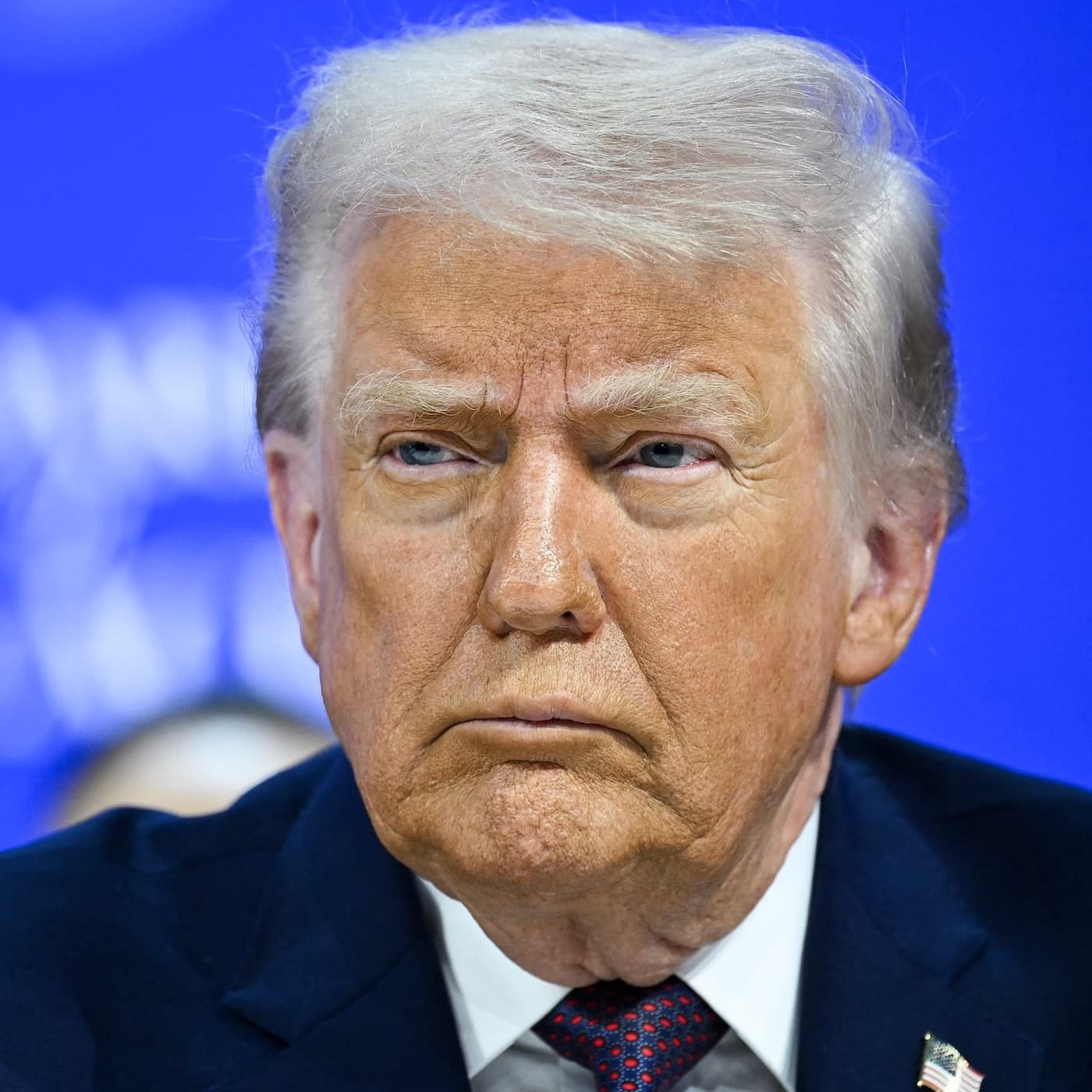
And we do have some work to do with Iran. They can't have a nuclear weapon. It's very simple. They can't have. You can't have peace in the Middle east if they have a nuclear weapon. And they can't have a nuclear weapon. And they've been told that very strongly.
- [01:14]
A
Alex Ward is a national security reporter for the Wall Street Journal and has been tracking the escalating tensions.
- [01:20]
B
The US And Iran are locked in both a military standoff and a diplomatic negotiation.
- [01:27]
A
U.S. diplomats met with Iranian counterparts earlier this week in Switzerland to discuss curbing Tehran's nuclear program. Ward says the two sides still appear very far apart.
- [01:37]
B
The US has pretty maximalist demands. It wants Iran to not only curb its nuclear enrichment, but also quit ballistic missile production and curb support for its regional armed proxies. Iran at this point is basically saying we're considering concessions on the nuclear front, but nothing else.
- [01:55]
A
The US has sent a significant military fleet to the region, including one aircraft carrier with another on the way, as well as the largest amount of air power in the Middle east since the 2003 Iraq War. Iran so far has not built up its forces, but has warned that it's prepared to retaliate should the US attack.
- [02:13]
B
But what it is saying to the US is if you strike us in any capacity whatsoever, Iran will retaliate at its most maximalist in the most maximalist way. Now, what that means is unclear, but basically it's kind of a you hit us, we will hit you as big as we possibly can.
- [02:30]
A
Ward says that until recently, Trump's team had only been discussing larger scale strike options against Iran to force regime change. Now, however, there appears to be another option on the table. Ward reported it first for the Journal.
- [02:45]
B
What we're hearing is that also as part of the discussions, Trump has been considering what's called a more limited strike and an initial limited strike, which could happen during the negotiations. So basically hit a few Iranian targets, you know, government military targets and signal to the Iranians, you know, make a deal or else, and really heap pressure on them. And this would be calibrated in a way that it could send a serious message, but perhaps not spark a much broader war. That of course, an all out attack could do.
- [03:12]
A
And that, Ward says is the larger risk for Trump here.
- [03:16]
B
If there's one thing he's promised from his first term to his second, it has been that even if the US does attack other countries, it would not engage in a large scale forever war, and particularly in the Middle East. Well, if the US Were to go big against Iran, could it just happen without an Iranian in retaliation or without sucking the US into a bigger conflict? I mean, it could, but most analysts I've talked to say that that's unlikely. That in fact going big and trying to topple the regime will lead to instability in Iran and require a continued U.S. engagement.
- [03:48]
A
Ward reports a limited strike like this is similar to one Trump considered against North Korea in 2018, when his administration said it want to give the country a so called bloody nose to force a deal on nuclear arms. Trump opted not to carry out that strike and engage in diplomacy instead, which ultimately failed. North Korea did not give up any of its nuclear weapons yesterday. Trump also gave an Ambiguous deadline of 10 days for Iran to make a deal. But with both sides so far apart, what happens next is still a big question. Ward says it's been a bit of a whiplash. Earlier this year, Trump had threatened regime change when the government killed thousands of protesters in the country. He has since changed his public tune to one of diplomacy.
- [04:33]
B
And so there's a lot of concern or there are questions that maybe this talk of negotiations has been a smokescreen all along for the US to have this massive military buildup. That said, Trump, when he talks about diplomacy, seems serious and he is wary about starting a bigger war. But what his actual goals are here are unclear. He might then say at some point that all of this was really to protect protesters. But it's been a long time since then, so it's hard to make that direct connection.
- [05:09]
A
It's been more than 350 years since a member of the British royal family was arrested. But yesterday morning, on his 66th birthday, former Prince Andrew Mountbatten Windsor was greeted by a team of police.
- [05:21]
C
A convoy of unmarked cars turned up at his home this morning around 8am apparently he had just finished breakfast and his aides hadn't had time to clear the breakfast crockery away.
- [05:33]
A
Fiona Hamilton is chief reporter for the Times of London.
- [05:36]
C
He was taken by detectives to a nearby police station. The standard procedure is that you're fingerprinted, they take your DNA, they take a custody shot, and then you go into a police interview. And then he was released with, you know, the glares of the cameras outside.
- [05:55]
A
Andrew was detained on suspicion of misconduct in public office and released without charge. He's denied any wrongdoing. To be clear, the arrest is not connected to separate allegations of sexual assault by the late Virginia Giuffre, a victim of the convicted sex offender Jeffrey Epstein, which Andrew also denies. Details are still unfolding. Police have said they were assessing a complaint that the former prince had allegedly shared confidential material with Epstein. From 2001 to 2011, Andrew was a trade envoy for the UK, meaning he would have had access to powerful people and important information. In recently released Epstein documents, Andrew appears to have knowingly passed along reports of his visits and shared details of investment opportunities. His time in that role was controversial.
- [06:42]
C
He got the nickname Air Miles Andy from the British press, and that was because he was frequently embarking on luxury travel around the world and it was funded by the taxpayer. And he met a series of very controversial figures, including leaders of autocratic regimes. And we've seen from the Epstein files that he even tried to facilitate a meeting between Jeffrey Epstein and Colonel Gaddafi of Libya.
- [07:06]
A
For his brother, King Charles, this is a constitutional, political and deeply personal crisis. He appeared at the opening of London's Fashion Week yesterday, and reporters only had one question for him.
- [07:18]
B
What's your reactions to your brother's arrest? Sir? Sir, what's your reaction to your brother's arrest? Any reaction to your brother's arrest, sir?
- [07:27]
A
He offered no response there, but he did release a statement which said the authorities had his, quote, full and wholehearted support and that the law must take its course. King Charles already exiled his brother, but that doesn't mean the royal family is protected from this latest development.
- [07:44]
C
I think there will now be increasing questions of exactly what was known about Andrew's activities, how much scrutiny palace officials and other members of his family gave to his activities, and whether he was really enabled by his family and his prominence for many years.
- [08:02]
A
Meanwhile, in the us, some lawmakers are pushing for similar accountability. Hamilton also told us Andrew's arrest highlights how much faster UK authorities are moving compared to their US counterparts.
- [08:14]
C
It's just really escalating here and the sheer importance of this, the crisis for the monarchy, the scandal potentially for police forces that had alleg reported to them many years ago. And whether or not these issues were properly investigated, it's an enormous deal over here.
- [08:41]
A
Politicians from the president on down are attempting to address a big problem facing many Americans, how difficult it is to afford a home or even find housing. Recently, Congress has been working on federal legislation to address housing costs and availability. Local and state leaders have also been taking on the issue. The cost of housing has ignited a heated debate in one state in particular, Massachusetts, where voters may get to decide in November whether one of the strictest rent control measures in the country will become law. It would make a big difference in a state that has one of the highest rents in the country.
- [09:17]
D
The average two bedroom apartment in Massachusetts goes for about $2,560 a month. That's according to Zillow, and that's 74% above the national average.
- [09:26]
A
Jared Mitovich with the Wall Street Journal told us about the effort and the motivations behind the measure. For most rental properties, it would cap annual rent increases at either 5% or the consumer price index, whichever is lower. Now, there's a small technical catch here. The state legislature will have a chance to review the proposal first, and they could decide to pass it. If they don't, voters will get to weigh in if proponents collect enough signatures before November to put it on the ballot. The measure has fiercely divided some high profile Democrats in the state. Boston Mayor Michelle Wu has voiced support for it. Here she is speaking with a local NPR affiliate earlier this month. It's not perfect, but I'm not going to let the perfect be the enemy of the good in this case, when there is so much urgency and pressure from housing costs on our residents. But there's plenty of opposition, including from the state's Democratic governor, Mara Healey. She told Boston Public Radio in December that the measure would stifle housing production and that some housing investors have already pulled out of the state. Developers, landlords and business groups are spending millions in the hopes of defeating the measure.
- [10:37]
D
There's a sense of agreement here that housing costs are too high and the state can be doing more about it. But the governor and others say that the rent control proposal at hand here would stifle housing production. It would make it unwise for developers to build to improve their properties. It just wouldn't make sense for their bottom lines.
- [10:54]
A
Nevertheless, rent control remains popular in Democratic led parts of the country. Los Angeles recently tightened rent controls for the first time in four decades. And New York City Mayor Zoran Mamdani wants a total freeze on rent stabilized units in the city. Early polling seems to show that many Massachusetts voters agree that capping rent increases is a good ide. And finally, a few other stories were following the Board of Peace, a group created by Trump to oversee the ceasefire plan in Gaza, met for the first time yesterday. Representatives of more than 40 countries at the meeting pledged to invest $7 billion to the reconstruction of Gaza. The US said it would give $10 billion to the board. Attendees included top diplomats and heads of state, but notably missing were key Western allies, including Germany, France and the UK they declined an initial invitation over fears that Russia would be part of the group, which could undermine the U.N. germany and the UK did send observers to Thursday's meeting. However, there is no Palestinian representation on the board, but Israel and Arab states are included. Reconstruction funds would only go to areas under Israeli military control. The Commission of Fine Arts, which advises the government on architectural and art projects, voted yesterday to approve Trump's plan for a new ballroom in the now demolished east wing of the White House. The commission approved the plan unanimously with one recusal. The secretary of the commission noted the project has garnered more public comments than any other that he's seen in 20 years and that almost all of them were negative. Some of the complaints included a lack of transparency, site demolition without permits, and that the scale of the project would dwarf the White House. In response, the chair of the commission said they want it to be the greatest ballroom in the world. The entire board was appointed by Trump himself. The project is pending one last approval by another panel, which could decide by March 5th. And finally, as we head into the final weekend of the Winter Olympics, Team USA scored a couple of dramatic and big time gold medals. First, the women's hockey team took down their Olympic rivals, Canada in the gold medal match.
- [13:13]
B
The outward pass for Keller, a defenseman, nice move.
- [13:16]
A
Cuts to the net score Megan Keller, the overtime hero the United States wins gold in Milan. That's the moment Megyn Keller scored the winning overtime goal. Previously, the US And Canada competed against each other in seven other Olympic finals. Meanwhile, also on the ice, but this time in women's figure skating. The San Francisco Bay Area's Alyssa Liu won the gold, ending a 24 year Olympic drought for US women. She beat out two Japanese skaters, Kaori Sakamoto and Ami Nakai, who took home the silver and bronze respectively. You can find all these stories and more in the Apple News app. And if you're already listening in the news app right now, stick around for the latest episode of Apple News In Conversation this week, Shamita Basu talked to Laura Malden, a disability scholar and author who became the primary caretaker for her partner when she had leukemia. Malden realized that her story was one of millions happening around the country and where spouses and partners sacrifice everything to fill the gaps left by an overburdened health care system. I think all of us think about or want to think about illness in this way. Oh, I just have to do xyz. And on the other side of that, everything will be resolved and I can go back to my life. But there was no going back. If you're listening in the podcast app, you can follow Apple News and Conversation to find that episode or come back to the Apple News Today feed tomorrow. All new episodes of In Conversation will be available there on Saturdays, too. Enjoy the weekend and we'll be back with the news on Monday.