Loading summary
Transcript25 lines
- [00:05]
Shemitah Basu
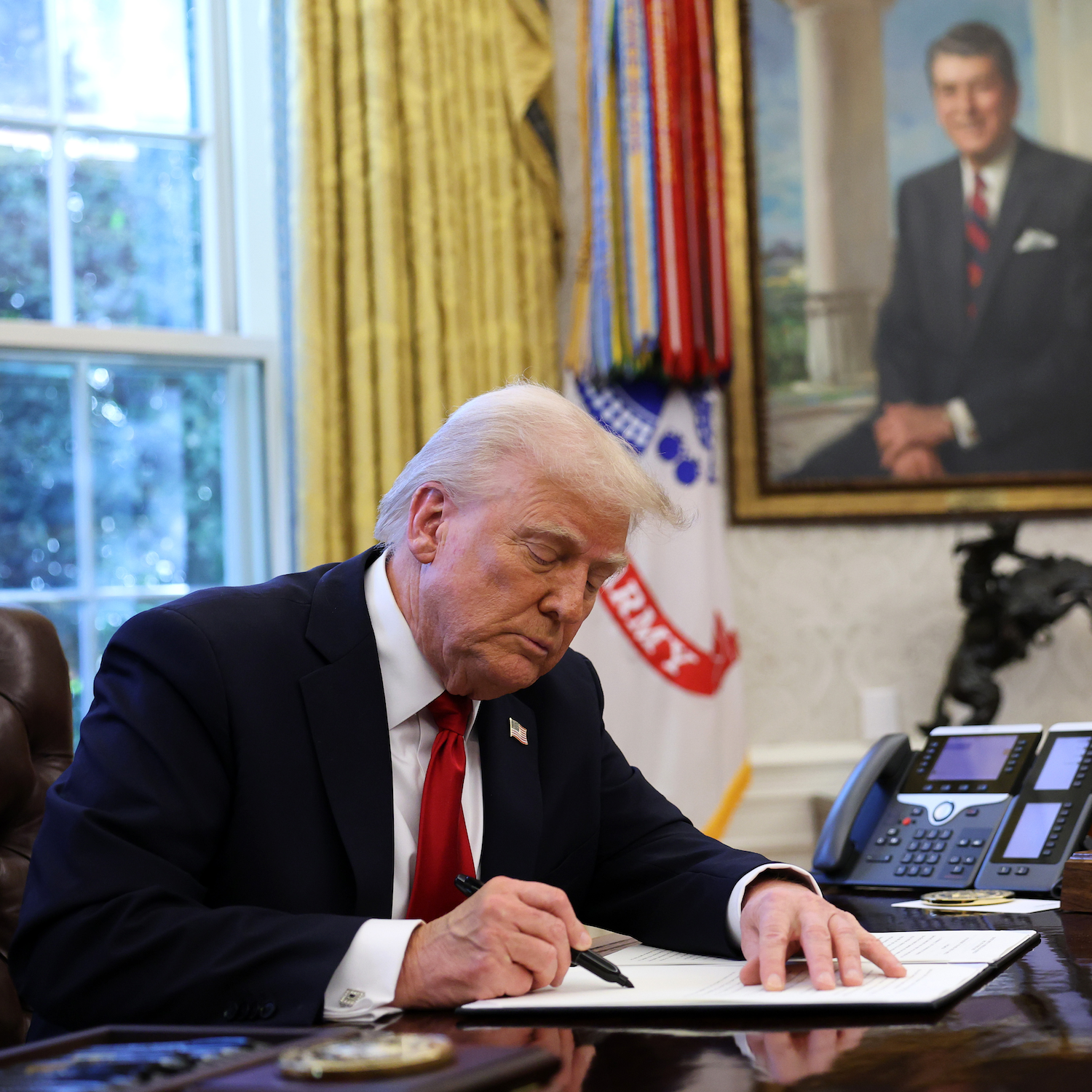
Good morning. It's Wednesday, April 2nd. I'm Shemitah Basu. This is Apple News Today. On today's show, a trio of election results sends a warning sign to President Trump and the Republican Party. A rare spate of protests in Gaza against Hamas's leadership. And Senator Cory Booker breaks the record for longest ever Senate floor speech. Foreign but first, today, President Trump will hold an event in the Rose Garden where he'll detail plans for his next batch of tariffs. Now, Trump is no stranger to proposing, delaying, enacting and even dropping tariffs. As of March 21, tariffs were placed on roughly $800 billion worth of goods, with many countries, including several of our allies, imposing their own tariffs back at us. Taken altogether, economists say there's little doubt consumer prices will go up and could even lead us into a recession.
- [01:05]
Emily Stewart
A lot of Americans are nervous about a lot of things in the economy.
- [01:10]
Shemitah Basu
That's Business Insider's Emily Stewart.
- [01:12]
Emily Stewart
If there is one word that I think kind of describes the moment, it is uncertainty, right? People are nervous about what's going to happen in the future. They're nervous about inflation. People are on edge about tariffs and economic policy. It seems like sort of day to day, we really don't entirely know what's going. And we also know that people are nervous about their jobs.
- [01:34]
Shemitah Basu
On paper, economic indicators are somewhat mixed. The labor market is, at least for the moment, in pretty solid shape with unemployment rates low, historically speaking. But the stock market just had its worst month in years and consumer confidence is way down. According to the Conference Board, a group that tracks consumer confidence on a monthly basis, the consumer confidence index dropped by 7.2 points in March, its lowest since January of 2021.
- [02:01]
Emily Stewart
As people's outlooks on income and business and the labor market declined, people's expectations for the future really declined to a level that tends to signal a recession. Now, that doesn't mean a recession is going to come, but people feel pretty bad.
- [02:15]
Shemitah Basu
Two thirds of consumers believe that unemployment will increase. And when that happens, people tend to be more conservative with their spending.
- [02:24]
Emily Stewart
The University of Michigan also does consumer sentiment surveys, and they're seeing similar things where people feel pretty bad, bad about a lot of things. They feel bad about the economy regardless of their age, their income, politics. What we are seeing is that people expect the unemployment rate to go up at levels that we were seeing around the Great Recession. So people are anxious. But we're also seeing that people are nervous about their own incomes. And that is a little bit different because that's not just saying, oh, things are bad, but I'm okay. It's saying I'm worried I'm not going to be okay as well.
- [02:55]
Shemitah Basu
It's easy for Americans to blame or thank the president when it comes to how they feel about their bank accounts. Typically, the president alone doesn't really control the outlook for the economy. But Stewart says we are living in remarkable times.
- [03:09]
Emily Stewart
I do think right now that we can say a fair amount of what's happening in terms of sentiment is really stemming from the White House, is stemming from the president. If you look at Doge Elon Musk is running day to day. It is these people are fired, these people are reinstated. Maybe they're not. We're cutting budgets here, we're not cutting budgets there. If you think about tariffs, again, it really has been today we're doing this, tomorrow we're doing that. I think there is like a real level of uncertainty. And so maybe that's not showing up in the data yet. But again, if you are a business, how do you make a decision about who to hire right now or whether or not you should hire because you don't know what's going to happen tomorrow?
- [03:48]
Shemitah Basu
President Trump has acknowledged prices will go up, but says the pain of tariffs will be worth it, with his senior trade advisor, Peter Navarro estimating the U.S. will raise about 600 billion to $700 billion a year from tariffs. But CNBC spoke with some economists who say in reality, the US Will probably bring in less than half of that. Results are in from yesterday's elections. All three are being seen as a warning sign for President Trump and the Republican Party. In Wisconsin, Susan Crawford, a liberal circuit court judge, beat her conservative counterpart for a seat on the state Supreme Court. The race drew national attention after Elon Musk and allies spent $25 million backing Crawford's opponent, Brad Shimmel, making it the most expensive judicial election in US History. Here's Crawford at her victory party last night. Today, Wisconsinites fended off an unprecedented attack on our democracy.
- [04:56]
Cory Booker
Yeah, Wisconsin's not worse fail.
- [05:00]
Shemitah Basu
That's right. Our fair elections and our Supreme Court. And Wisconsin stood up and said loudly that justice does not have a price. Our courts are not for sale. This means Wisconsin's Supreme Court will maintain its liberal majority. This is a nonpartisan office. But the court might take up cases with implications for national politics, like redistricting, abortion rights and election rules. According to cbs, the court might also hear a case involving a lawsuit brought by Musk against the state of Wisconsin involving Tesla. Crawford's victory was the latest in a string of small wins for Democrats who recently flipped state legislative seats in special elections in Iowa and Pennsylvania and defeated four Republican backed referendums in Louisiana. The New York Times notes it's the first time the party has been on its front foot since November. Moving on to two special elections that took place in Florida yesterday. Both Republican Trump backed candidates won their races. Randy Fine and Jimmy Petronas shoring up Republicans slim majority in the House. As we mentioned on yesterday's show, these are heavily Republican districts so Democrats weren't expected to flip either seat. But what's caught the attention of observers nationwide is the margins of those victories. The word you'll see in most coverage of these races underperform. Trump won both of those districts in November by more than 30 points. Petronas and Fine each won by around half of that. Here's pollster and MSNBC analyst Fernand Amandi speaking on the network about what that might mean.
- [06:42]
Cory Booker
You've gotta be deeply, deeply concerned if you're the Republican Party right now looking at these numbers, especially given that this is still supposed to be the honeymoon Trump at the apex of his powers. We're seeing anything but that.
- [06:55]
Shemitah Basu
It's also a reflection of turnout. Off year non presidential elections often have much lower turnout. But so far as the Times notes, Democrats seem to be doing well in lower turnout elections since Trump returned to office, meaning these types of off year races could swing their way. CNN's conservative political analyst Scott Jennings says that matters.
- [07:17]
Cory Booker
Turning out these low propensity Trump aligned voters is still a major problem for the Republicans. That's bad. And so if I'm looking out into the future, you know, the Republicans have something to work with in the House but also something to work on as it relates to the structural nature of how the party works. Now it's a major flip. This used to be the Democrats problem. You guys had the low propensity voters we sort of dominated in these low turnout settings. Now it's the opposite.
- [07:49]
Shemitah Basu
Lets turn now to Gaza where for two straight days Palestinians took to the streets to protest against Hamas. NPR reports that some people chanted that Hamas are terrorists, while another chant called for the militant group to get out. And it calls this a rare show of discontent. The first major protests in Gaza against Hamas since the war began more than a year ago. We reached out to Daniel Astrin, an international correspondent in the Middle east for NPR to tell us what's happening.
- [08:24]
Daniel Estrin
We spoke with several eyewitnesses who took part in the protests who said people are fed up with all of the conditions that they're under from the war with Israel, from Israeli displacement orders. People feel that there are no more safe places to go. And people in Gaza tell us that demonstrators spontaneously went to the streets and and demanded the fall of Hamas rule in Gaza.
- [08:50]
Shemitah Basu
Typically, Estrin said, Hamas does not tolerate protests without consequences.
- [08:55]
Daniel Estrin
We saw a Rare protest in 2019 by Palestinians protesting Hamas for their living conditions. That protest was quashed with arrests and beatings. And then during this war, we have seen open criticism by Palestinians accusing Hamas of not doing enough to protect them from Israel's retaliation for the October 7th attack in 2023. But these protests we saw last week were rare and were daring and were definitely something new.
- [09:25]
Shemitah Basu
The protests have subsided. At the moment. There are reports that one protester was killed by Hamas, but NPR couldn't independently verify that information. In recent days, Israel and Hamas have signaled openness to a new ceasefire deal. That comes after Israel broke the ceasefire on March 18, with surprise airstrikes resuming in Gaza and ground troops increasing their presence. Meanwhile, CNN reports all bakeries in Gaza have shut down as a result of an Israeli blockade on aid, which some say will deepen famine conditions. Many people are reportedly going hungry as the holy Muslim month of Ramadan drew to a close. And as many Palestinians protested, Israelis have also hit the street to protest their government and Prime Minister Benjamin Netanyahu's actions. Estrin said that it's unclear what will happen with this pressure mounting on all sides.
- [10:20]
Daniel Estrin
It's really hard to tell whether protests in Israel against the Israeli government and its policy of continuing the war will sway the Israeli government to change course. It's hard to say whether the anti Hamas sentiment we saw on the streets in Gaza will convince Hamas to change course. What we do know is that these protests on both sides come at a major inflection point in the war where Israeli civilians and Palestinian civilians in Gaza were saying that they're fed up. Whether their leadership will listen to them is an open question.
- [11:00]
Shemitah Basu
Before we let you go, a few other stories we're following. Attorney General Pam Bondi has directed federal prosecutors to seek the death penalty for Luigi Mangione. Mangione is accused of fatally shooting UnitedHealthcare CEO Brian Thompson in Midtown Manhattan. Mangione, who has gotten support from many Americans who are angry with the health care system, has pleaded not guilty to all charges. Bondi said the decision is part of President Trump's agenda to stop violent crime and make America safe again. In Washington, New Jersey Democrat Cory Booker broke the record for the longest ever speech on the Senate floor after he spoke for more than 25 hours protesting President Trump's agenda. Booker criticized the administration's complete disregard for the rule of law, the Constitution, and the needs of the American people.
- [11:54]
Cory Booker
The threats to American people and American democracy are grave and urgent, and we all must do more. We all must do more against them.
- [12:03]
Shemitah Basu
Tens of thousands of people watched via livestream as Booker discussed health care, immigration, education, free speech and Social Security. The previous record was held by South Carolina Senator Strom Thurmond, a segregationist who in 1957 spoke for 24 hours in a filibuster against the Civil Rights Act. And finally, the Trump administration says they deported a man to El Salvador due to an administrative error and that they are powerless to bring him home. Kilmar Abrego Garcia was arrested last month by ICE agents who believed he was a leader of a gang. The Maryland husband and father denied any gang affiliation and hasn't been charged with any crime. In fact, in 2019, an immigration judge ordered that he was to remain in the U.S. citing a credible fear that he would be killed or tortured if he returned to his country of origin, El Salvador. An acting field office director with ICE called his deportation a, quote, oversight. Garcia's lawyer filed a motion asking the Trump administration to work with the government of El Salvador to bring him home. You can find all these stories and more in the Apple News app. And if you're already listening in the news app right now, we've got a narrated article coming up next time spoke to Ukrainian President Volodymyr Zelensky on what it's been like to try and keep Trump on his side and momentum for international support going forward. If you're listening in the podcast app, follow Apple News Narrated to find that story. And I'll be back with the news tomorrow.