← Apple News Today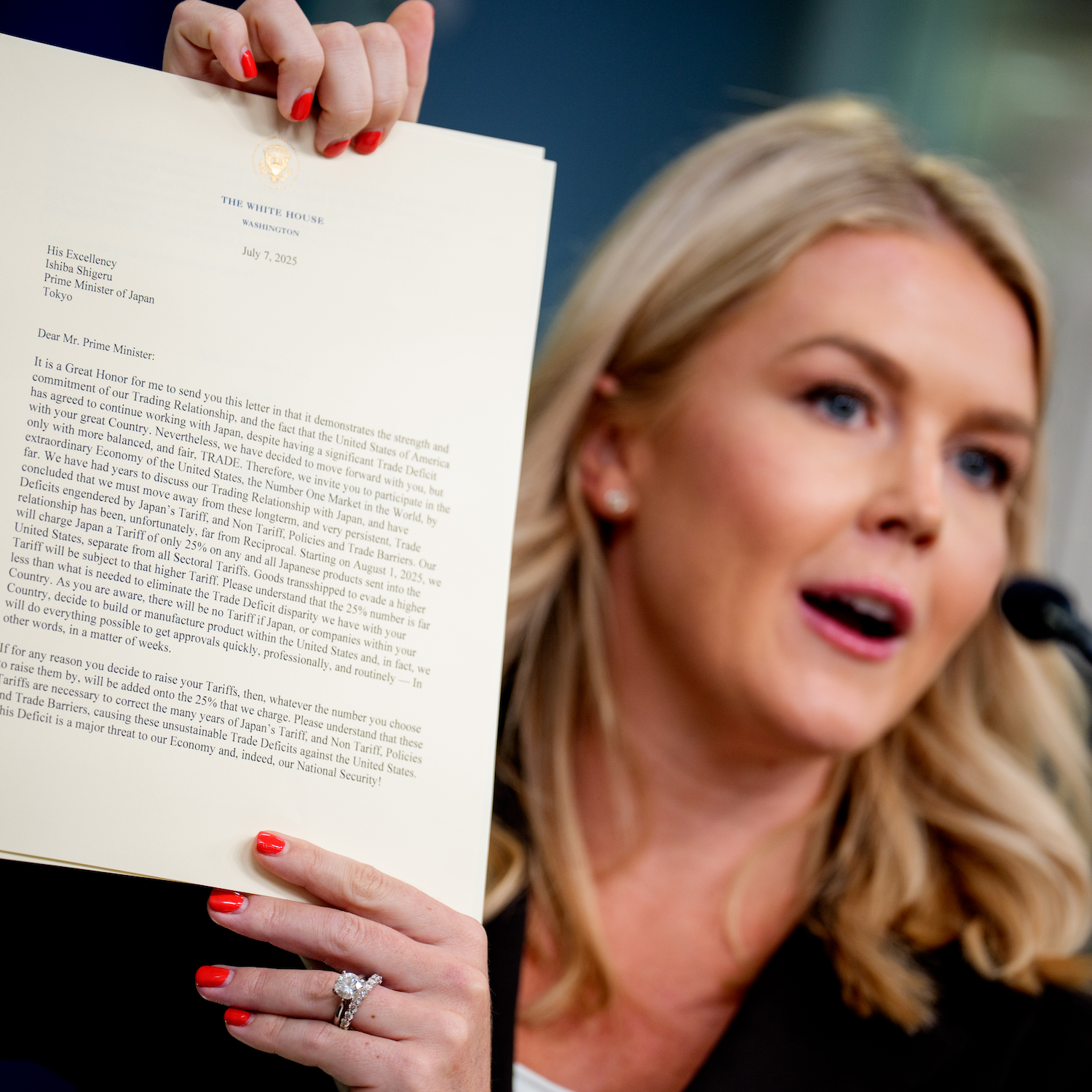
Loading summary
Transcript29 lines
- [00:05]
Shemitah Basu
Good morning, it's Wednesday, July 9th. I'm Shemitah Basu. This is Apple News today. On today's show, Russia's big anti woke pitch for Westerners to emigrate, an in depth look into the snap cuts and what they mean for food banks and an end to one of the most hated airport travel rules. But first, let's talk about the state of tariffs. Then President Trump's escalating series of threats as he vowed to drive through an aggressive regime in the coming days. Among his threats on Tuesday was a 50% rate on inbound copper products and an undefined amount for pharmaceuticals, semiconductor chips and specific levies for some of the so called BRIC countries. Today was meant to be the day a broad range of tariffs came into effect. He gave countries a 90 day window back in April to reach deals, but as we've seen before, it was the deadline that wasn't and Trump has now extended it to August 1st. Speaking on Tuesday, Trump denied ever putting forward the 90 day deadline in the first place despite writing it on a social media post.
- [01:17]
Brian Schwartz
It wasn't a change.
- [01:18]
Shemitah Basu
It was August 1st.
- [01:19]
Brian Schwartz
We don't change very much. You know, every time we put out a statement they say he made a change. I didn't make a change. Clarification, maybe.
- [01:26]
Shemitah Basu
Brian Schwartz, White House Economic Policy Reporter for the Wall Street Journal, has been following the wind ups and wind downs.
- [01:34]
Brian Schwartz
He says that he wants to go all in with the tariffs and someone pulls him back from the ledge of going all in with the tariffs. And it's this up and down kind of uncertainty based on whoever he speaks to or whatever he thinks about in a given day or in a given week.
- [01:49]
Shemitah Basu
Even the market turmoil from the early weeks of tariff talks seems to have settled down or at the very least surrendered to unpredictability.
- [01:57]
Brian Schwartz
It's almost as if investors are saying this is just going to be an uncertain period and we have to bake in our decision making from a business perspective based on that uncertainty coming from the White House specifically on trade.
- [02:11]
Shemitah Basu
Let's take stock of where we are right now. The 10% tariff on most products coming into the United States remains in place. There are also some duties on auto parts, steel, and then specific levies aimed at China, Canada and Mexico. And, and Schwartz told us those have begun generating revenue, all the more important following a very expensive tax and spending bill that was just passed. But otherwise, the most aggressive tariffs announced and the ones that caused the early market ruptures are on pause. On Monday, Trump posted a series of letters to various nations like Japan, Bangladesh and South Korea on social media warning of tariffs of up to 40%. And the European Union is expecting a letter in the coming days, too. As for new trade agreements, Trump's team had once promised 90 deals in 90 days. So far, the White House has announced two agreements with the United Kingdom and Vietnam, and it has a partial truce with China in place right now. Trump may feel he has some economic flexibility to go back and forth, even if it creates uncertainty for businesses. Unemployment is flat, the stock market is riding high, and consumers aren't noticing major changes to their shopping bills. But Schwartz told us that could change come August 1st, and consumers may start to notice toward the end of the calendar year they're going to have to.
- [03:32]
Brian Schwartz
Go to the stores. They're going to see. Possibly some of the goods that you buy for the holiday season are up because those goods are created whether the president wants to concede to it or not outside of the United States. And those companies are possibly going to have to raise prices in order to match the demand for consumers, but also the demand that's coming out of the White House for these countries to pay tariffs.
- [04:03]
Shemitah Basu
Let's turn now to a fascinating story from the Washington Post about Russia's welcome pitch to Westerners to emigrate. President Vladimir Putin created a new immigration process last year. Some are calling it the anti woke visa, which allows people to move to Russia to live closer to the traditional conservative and sometimes religious values they feel are slipping away in their Western home countries. Mary Ilushna, who covers Russia for the Washington Post, says some American families are taking advantage of Putin's new visa.
- [04:36]
Mary Ilushna
He basically gave an executive order to Russian government to issue them visas that allow them to work and live in Russia for three years without really any requirement but their nationality. They only need to be from a list of countries that is unfriendly and then be willing to move to Russia.
- [04:56]
Shemitah Basu
Ilushna says these so called moral migrants are being drawn in by things like Russia's anti LGBTQ laws, a more traditionalist stance on the role of women in society and the rejection of COVID vaccine mandates.
- [05:10]
Mary Ilushna
So all these things that I think Americans maybe have heard from some of the Republicans on the more like conservative side, Putin is presenting that as not just like a partisan thing but a basis of the entire country. And that's sort of their selling point to these Westerners.
- [05:26]
Shemitah Basu
Around 700 people from more than 40 countries have gotten the visa so far this year. Some had never visited before moving.
- [05:35]
Mary Ilushna
They watched a lot of YouTube channels from people who have done this before, especially foreigners who have done it before.
- [05:41]
Shemitah Basu
Relocating is just the beginning of a long transition. New citizens face a steep language barrier and several layers of bureaucratic red tape in setting up a bank account or renting an apartment.
- [05:53]
Mary Ilushna
It's kind of like, you know, you go to the dmv, but every single service is DMV and you have to suffer through it. And it's very difficult if you don't speak the language.
- [06:01]
Shemitah Basu
And Ilushna told us welcoming foreigners who consider themselves moral migrants fleeing progressive values in their home countries is a strategic move on Putin's part. Russian state media covers lots of stories of families immigrating for this reason. And Putin has publicly expressed a desire to cement Russia's grip on the ideological world.
- [06:23]
Mary Ilushna
So he can also tell Russians, look, these families are escaping this evil west and everything I've told you is true. And they're here now. And I was right. That's sort of, I think, the message here.
- [06:42]
Shemitah Basu
Now to some of the potential implications from the recently passed tax and spending bill. The act makes major cutbacks to the country's social safety net to cover the costs of tax cuts. And we've talked in the past about how that's going to affect Medicaid. Let's take a few minutes to look at another program that's also getting shrunk, the Supplemental Nutrition assistance program, or SNAP, which supports more than 40 million low income Americans with access to food. Republicans say the program is badly managed and riddled with fraud. The Government Accountability Office, an independent agency that sits in the legislature, put improper payments at $10.5 billion last year, around 10% of its annual budget. But even if the reforms eliminate that entirely, the program will still have less money for legitimate claims. Estimates from the Congressional Budget Office say the bill will reduce federal spending on snap by about 20% of its budget. The legislation makes it more difficult for people to qualify and places some of the funding burden onto states, especially those with higher overpayment rates. One of the biggest changes is similar to the Medicaid reforms and relates to work requirements. Previously, adults without dependents needed to fulfill work requirements until they reach age 54 to qualify for aid. That age has now been raised to 64. The CBO estimated that over 2 million Americans could lose SNAP coverage due to this change. These cuts to SNAP will, according to the nonprofit Feeding America, eliminate between 6 billion to 9 billion meals annually, which means more Americans could be turning to food banks for support.
- [08:23]
Marsha Brown
So food banks around the country are an essential emergency sort of fallback for folks when they don't know where their next meal is coming from.
- [08:33]
Shemitah Basu
Marsha Brown covers food and agriculture for Politico. The leaders of food banks in the US Told her that they're scrambling to figure out if and how they can make up the difference.
- [08:43]
Marsha Brown
Food banks would be expected to double themselves into perpetuity. And what I've heard from food bank leaders is they just really don't see how this is possible.
- [08:53]
Shemitah Basu
Before the added pressure of recent cuts to snap, food banks were already struggling to deal with around a billion dollars in cuts to federal funding implemented at the beginning of the Trump administration. It's likely that Americans contending with higher costs of living will be hit hardest.
- [09:09]
Marsha Brown
Since the pandemic, food prices alone have risen about 30%. And again, food is not the only thing that has increased in cost. Rent has gotten more expensive. Utilities are more expensive.
- [09:21]
Shemitah Basu
Here's how the leader of one food bank put it to Politico.
- [09:24]
Marsha Brown
They said, you know, you can't get free rent, you can't get free utilities, but you can usually get a free meal. And so people often look to groceries as a way to trim their spending. You know, they choose the store brand instead of the name brand. And that's just gotten a lot harder to do because food prices are higher even as the rest of their living expenses have also gone up.
- [09:48]
Shemitah Basu
Some of the states most likely to be hit hardest Lean Red Business Insider reports that while about 12% of Americans receive SNAP benefits, that rises to nearly 19% of the population in states like Louisiana, Oklahoma, West Virginia, and Alabama. Before we let you go, a few other stories we're following. An imposter used an artificially generated voice of Secretary of State and National Security Advisor Marco Rubio to contact three foreign ministers, according to a diplomatic cable later confirmed by the State Department. They also contacted a US Governor and member of Congress and targeted people on the messaging app signal with the username marco.rubio state.gov as experts told the Washington Post, these kinds of hoaxes are not necessarily very sophisticated. All that's needed is some contacts and a short clip of Rubio's voice. It's not clear if anyone responded to the attempts, and the State Department said it was taking steps to improve its cyber defenses. The international governing body for soccer FIFA, has a new office, and it's in Trump Tower in New York City, bringing its boss, Gianni Infantino, even closer to President Trump. Infantino has described his relationship with Trump as absolutely crucial. He had a prime seat at the inauguration and was criticized for showing up late to the FIFA Congress back in May after accompanying Trump on his Middle east tour, the US Just finished hosting the Club World Cup, a tournament Infantino said would herald a new era of the game, but which has received some ridicule and patchy attendance figures. But next year is the main event as the US Hosts the International World Cup. The at his Cabinet meeting on Tuesday, Trump said he would be going to the final, and after much speculation, it's official you no longer have to take off your shoes while going through airport security. For nearly 20 years, it's been one of the least favorite of most people's security clearance experience. The rule's been in place since 2006, when a British man hit a bomb in one of his shoes on a flight to Miami, only to be restrained by passengers before he was able to detonate it. Homeland Security Secretary Kristi Noem announced the policy change at Reagan national Airport near D.C. the Golden Age of America is here. We're so excited that we can make the experience for those individuals traveling throughout our airports in the United States much more hospitable, more efficient for them more timely. But for now, you still need to empty your water bottles and if you can remember, remove those laptops before you get to the trays. You can find all these stories and more in the app lo and if you're already listening in the news app right now, we've got a narrated article coming up next. A college professor writing in the New Yorker asks, what do we do when AI destroys the intellectual tradition of writing a college paper? If you're listening in the podcast app, follow Apple News plus Narrated to find that story. And I'll be back with the news tomorrow.