Loading summary
Transcript25 lines
- [00:01]
Shemitha Basu
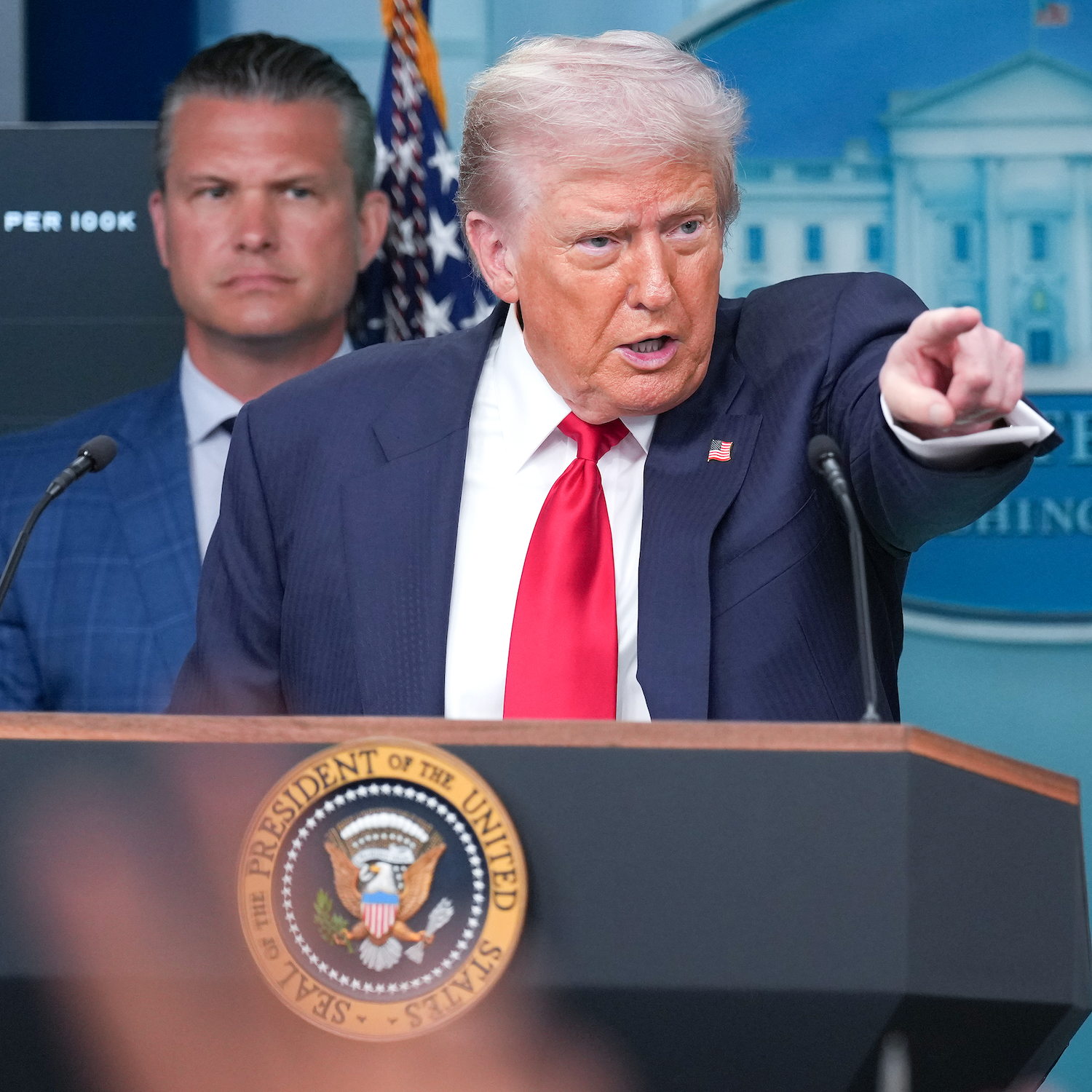
Hey there, it's Shemitha. I've got a quick request for you. If Apple News Today is an essential part of your morning routine, follow the show in Apple Podcasts. And if you have another 30 seconds, leave us a rating and a review, too. It helps other people find our show and it helps us know what you like about it. Thanks. Good morning. It's Tuesday, August 12th. I'm Shemitah Basu. This is Apple News Today. On today's show, detained migrants are being moved around so frequently their lawyers can't find them. Mothers are leaving the workforce in droves, and small towns are offering cash rewards, gym memberships, and even coffee with the mayor to try to get you to move there. But first, to President Trump's extraordinary decision to take over the Washington, D.C. police. Trump said yesterday he would deploy hundreds of National Guard troops to Washington, D.C. and strip the city's leadership of its law enforcement powers. He called it a necessary move to combat crime in the nation's capital and with the defense secretary at his side, warned that he would send in the military, quote, if needed. I'm announcing a historic action to rescue our nation's capital from crime, bloodshed, bedlam and squalor and worse. This is Liberation Day in D.C. and we're going to take our capital back. Violent crime is actually declining in Washington, D.C. in line with a national trend. In fact, data compiled by the Department of Justice found that violent crimes in D.C. had fallen by 35% last year compared to the year prior, representing a more than 30 year low in the city. The Washington Post also notes that D.C. police have made almost 20% fewer juvenile arrests so far this year compared to last.
- [01:59]
Brian Mann
There is a huge disconnect between the narrative we heard in the White House and what the vast majority of people experience here in the U.S. that's Brian.
- [02:07]
Shemitha Basu
Mann, an NPR correspondent who's been reporting from Washington. He told us that Trump's ability to assert executive control here hinges on the unique relationship between D.C. which lacks statehood, and the federal government.
- [02:21]
Brian Mann
What the president is pointing to in an executive order that he signed is a provision in the Home Rule charter of Washington, D.C. that was created in the 1970s that does allow the president to step in in an emergency. And what he's doing is saying this is an emergency.
- [02:36]
Shemitha Basu
Trump can exert this power for a maximum of 30 days. After that, he would need Congress to authorize an extension. DC's mayor, Muriel Bowser, called the move unsettling and unprecedented, but acknowledged there wasn't much local leaders could vowed to cooperate with federal authorities. She said she believes Trump's view of D.C. is stuck in the COVID era.
- [03:00]
Elizabeth Findell
We experienced a crime spike post Covid, but we work quickly to put laws in place and tactics that got violent offenders off our streets and gave our police officers more tools, which is why we have seen a huge decrease in crime because of those efforts.
- [03:27]
Shemitha Basu
There's still a lot of uncertainty about how this might actually impact day to day policing in the coming days. Trump said Attorney General Pam Bondi would now take control of the police, but what that means in practice remains unclear. Mayor Bowser, who CNN reports as getting no advance warning from the administration, insisted the D.C. chief of police was still in control. What Trump announced in D.C. closely follows his approach to LA earlier this summer, when he sent in the National Guard to tamp down protests over immigration rates. Then, as now, local leaders objected. In his speech, Trump listed off a host of cities he said had similar problems, including New York, Chicago and Baltimore, and he promised that this would go further. Notably, he left out Republican led states, even those with cities that top the country's murder rates, like Memphis.
- [04:19]
Brian Mann
One of the things the president said repeatedly was that he wants this to send a signal to the rest of the country, especially to cities around the US that are controlled by Democrats. And I think that's definitely a signal that's going to be heard loud and clear.
- [04:40]
Shemitha Basu
Let's turn now to how the Trump administration is managing the near 58,000 people it's now holding in immigration detention. According to more than a dozen immigration lawyers who spoke to the Wall Street Journal, many detainees in ICE's custody are getting effectively lost for periods of time in a sprawling system of long distance transfers across the country.
- [05:02]
Elizabeth Findell
What we're seeing right now is a pattern of people being moved between detention centers with a frequency that appears to be unprecedented, at least in the last few years.
- [05:16]
Shemitha Basu
Elizabeth Findell is a reporter with the Journal. She writes that there had already been concerns about detainee transfers during the Biden administration, but the practice dramatically accelerated this year, finds data from an immigration advocate who tracks domestic ICE flights and found they're the highest he has seen since he started keeping records five years ago. Last month alone there were 727 flights, compared to an average of 350amonth under Biden. And even though more people are being detained, far fewer are crossing the southern border now, which means this is mostly movement of people already in the country.
- [05:53]
Elizabeth Findell
They're just flying them between detention centers. And there are different reasons for this. Overcrowding at some centers plays a role. But there's also we have reporting to indicate that some of it is intentional, and it's to try to get people to give up and go home and to make the process as grueling as possible, with the result being that much of the time, attorneys and family members can't find these people.
- [06:26]
Shemitha Basu
The Journal reports that making the process as taxing as possible may also encourage detainees to sign paperwork to forego their court case and agree to deportation. Advocates say that the frequent movement could be a violation of the constitutional right to due process if, for example, individuals are moved far from legal counsel or mandatory court hearings. A number of cases are going through the courts at the moment, including some that challenge the Trump administration's invoking of the Alien Enemies act, which they have said at times is necessary for expedited removal. Meanwhile, the Trump administration told the Journal that they were following the law and that concerns about these movements were overblown. Find us There have been a number of cases where detainees appear to be flown to places that were less friendly to immigrants.
- [07:15]
Elizabeth Findell
We're seeing a pattern of people being moved from more liberal states with more lenient judges to more conservative states with judges who are more likely to deny them bond, keep them in detention.
- [07:32]
Shemitha Basu
DHS denied to the Journal that transfers were being made for ulterior motives, like relocation to more favorable political environments. In one case that find, a Texas man was arrested earlier this year and was bounced around the country, placed at various points in states including Oklahoma, New Mexico and California. Lawyers that were working on his behalf refiled a bond motion 20 times and found it challenging to set him up properly for a hearing as he kept getting moved and was facing other issues like technical problems within the facilities.
- [08:05]
Elizabeth Findell
So all of this created so many delays that by the time he actually got a bond hearing, there had been a change in administration policy and they had a new blanket policy of denying bond to people who had come into the country as recently as he had. So that meant that he had no opportunity for bond at all. Because of those delays, DHS denied that.
- [08:32]
Shemitha Basu
ICE did anything to prevent him from having access to the legal system. He was ultimately removed to Mexico in July. Now to some Washington Post reporting that's been looking into a new workplace trend, the growing number of mothers dropping out of the labor market. It's a reversal from recent years. Working mothers were disproportionately hit early on in the pandemic, but in 2024, their employment rates actually exceeded pre Covid levels. Now it appears to be heading the other way again abba Batrai is an economics reporter at the Post.
- [09:15]
Abba Batrai
We're in this period where, after the pandemic, we saw a rush of mothers, particularly mothers of young children, coming back into the workfor they were driving a lot of the labor market's gains. They sort of helped usher in this moment of economic growth for the country. But in the last six or seven months, we've started to see that change.
- [09:34]
Shemitha Basu
From January to June of this year, the number of working mothers between the ages of 25 and 44 with young kids has dropped by nearly 3 percentage points, bringing it to the lowest level in more than three years. The reduction of mothers in the workforce is part of a broader shift. Around 212,000 women over 20 have stopped working or applying for jobs since January. For black women and women between the ages of 25 and 34, that drop is even more pronounced. This is new data, so it's hard to pinpoint causal links, but Batrai spoke to more than a dozen working mothers who had recently left the workforce. None had wanted to leave, but all had faced recent changes in circumstances.
- [10:20]
Abba Batrai
A lot of it has to do with this push to return to the office for more days a week or maybe full time, as we've seen companies like AT&T, Amazon, JP Morgan do. All of a sudden mothers are saying, hey, I used to have flexibility to go pick up my kid to deal with sick days, to sort of, you know, juggle my home and my life responsibilities. And that's going away.
- [10:46]
Shemitha Basu
Hybrid work models are still popular, but industry tracking surveys suggest there's been a steady increase in mandated days in the office since 2023 and a decline in companies offering fully flexible arrangements. Batrai also pointed to broader economic trends going on.
- [11:03]
Abba Batrai
The job market is also cooling. We've seen a number of layoffs, both in the corporate world and also in the federal government, as the Trump administration has sort of sought to rethink what federal agencies look like. And that has disproportionately aff women and affected black women in particular, who have tended to rely on those federal government jobs for stability and flexibility and consistency.
- [11:26]
Shemitha Basu
A through line in Batrai's reporting was that it's become harder for those with caregiving responsibilities to fully participate in the workplace. That's exactly how Emily Santoni, formerly a chief marketing officer at a consulting company in Texas, felt.
- [11:41]
Abba Batrai
She felt like there was very little flexibility at work. She had a high powered job. There were days when she would maybe see her kids for 20 or 30 minutes, and that just didn't feel very fulfilling. So she decided to step away. It was tough at first, she said. You know, she had to sort of recalibrate her entire life.
- [11:58]
Shemitha Basu
The women who spoke to the Post said that after spending some time looking for jobs, they opted to stay at home and look after their kids or go back to school. Each said the decision to stop working was uncharacteristic for them and not something they would have considered a year ago. Before we let you go, a few other stories we're following. President Trump has revealed his pick to lead the Bureau of Labor Statistics weeks after firing its commissioner for delivering weaker than expected jobs Data. Trump chose Dr. E.J. antony, who is currently the chief economist of the conservative think tank the Heritage foundation and a longtime critic of the BLS's data gathering. He's also listed as a contributor to the Project 2025 policy document. And Steve Bannon has been pushing for his appointment on his podcast. This role has always been a technocratic position, and its main responsibility is to provide accurate reports for economists at institutions like the Federal Reserve who make crucial decisions partly based on that information. An explosion at a steel plant in Pennsylvania yesterday left at least one person dead and 10 more injured. The explosion happened at Clairton, about 15 miles from Pittsburgh, sending a thick pillar of gray smoke into the air. Right now, the causes are still unknown. Officials declare the rest of the plant, which employs more than 1,000 people, stable. And finally, a pandemic era incentive program seems to be here to stay. The Wall Street Journal reports on small towns trying to lure young people from expensive cities by making generous offers for remote workers to relocate. Terre Haute, Indiana, Columbus, Georgia, and Whitesburg, Kentucky, have been offering deal sweeteners ranging between $5,000 and $7,500, and it seems to be working. The Tulsa remote program has brought over 3,000 people to Oklahoma. Some areas are getting creative with their offerings with things like gym memberships, park passes, or even coffee with the mayor. The Journal describes what started as an experiment five years ago now seems to be a widespread strategy across towns and cities in in the American heartland. You can find all these stories and more in the Apple News app. And if you're already listening in the news app right now, we've got a narrated article coming up next. Mother Jones has been looking into what it calls a modern miracle for energy, rooftop solar panels, and asks whether politicians are deliberately stifling development with red tape. If you're listening in the podcast app, follow Apple News plus Narrated to find that story. And I'll be back with the news tomorrow.