Loading summary
Transcript25 lines
- [00:05]
Sumita Basu
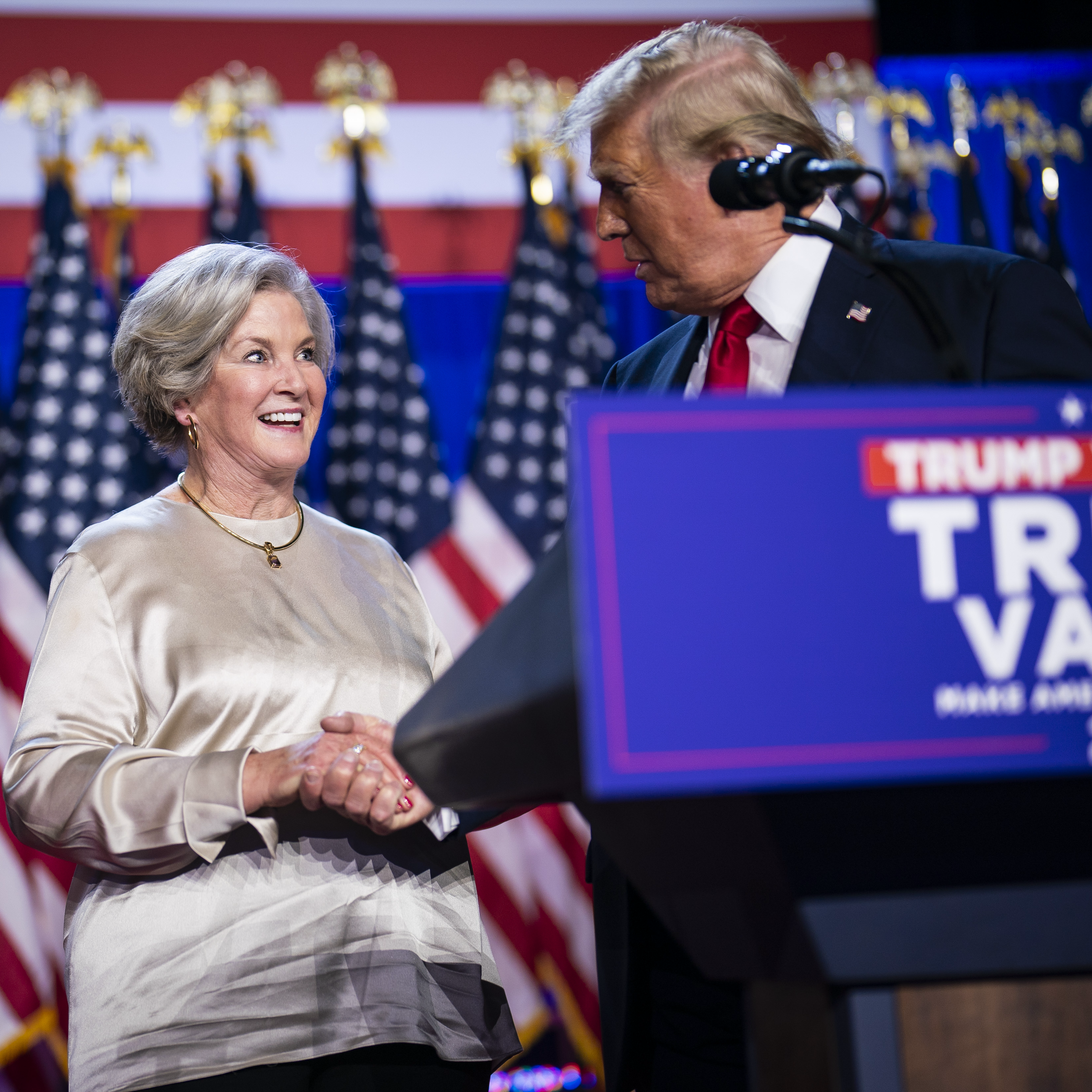
Good morning. It's Tuesday, November 12th. I'm Sumita Basu. This is Apple News today. On today's show, with Trump returning to office, global climate leaders aren't sure what to make of US Commitments. Biden attempts to Trump proof his legacy. And Harriet Tubman gets honored for her military service 160 years late. But first, one week after President elect Donald Trump's victory, his team is beginning to plan for the transition back into the White House and weighing appointments for his Cabinet. He's already made his first picks. Campaign manager Susie Wiles will be chief of staff. And Stephen Miller was tapped to be her deputy. He was a top adviser to Trump on immigration issues in his first term. We caught up with Vivian Salama, a national politics reporter at the Wall Street Journal, who told us that for whiles it was her command over the Trump campaign that led Trump to pick her so quickly.
- [01:08]
Vivian Salama
She's a very low key person, very unassuming and shy. She's an older woman, a grandmother who often talks about her grandkids. A different vibe than a lot of the people who Trump tends to surround himself with. But she's also a straight talker and tends to tell Trump what she thinks. And if he needs some tough love, then she gives it to him. And Trump has really grown to appreciate that.
- [01:33]
Sumita Basu
Trump also says that he will nominate New York Congresswoman Elise Stefanik as UN Ambassador and Lee Zeldin, another New York Congress member, to run the epa. And he wants former ICE Director Tom Homan to come back as his, quote, border czar. That means Homan will be in charge of carrying out Trump's plans for mass deportations. Homan oversaw ICE during the Trump administration's zero tolerance border policy that led to more than 5,000 children being separated from their parents. The ACLU estimates anywhere from 500 to 1,000 families still haven't been reunited. When Homan was on CBS's 60 Minutes two weeks ago, he was asked how mass deportations would work and whether there's a way to do it without causing more family separations.
- [02:20]
Vivian Salama
Of course, there's families can be deported together.
- [02:24]
Sumita Basu
Also over the weekend, Trump made it clear who he would not be making room for in his Cabinet. Mike Pompeo, who served as Secretary of State and CIA director in Trump's first term, and Nikki Haley, his previous UN Ambassador and his primary challenger for the Republican nomination in this election. Both Republicans have been critical of Trump in the past. Salama told us one priority for Trump's transition team is making sure that the kinds of people appointed are faithful to Trump and not what they have called fake Republicans.
- [02:57]
Vivian Salama
This is something that I even heard from Don Jr. President Trump's son, who happens to be one of the honorary co chairs of the transition team, where he told me, you know, my job is to weed out the fake R's from the real R's and make sure that people are loyal to the President and want to his vision through.
- [03:17]
Sumita Basu
There are also questions about other people in Trump's orbit who might serve some kind of role, including Robert F. Kennedy Jr. Who Trump has said he would appoint to some kind of health position, and Elon Musk, who's reportedly been spotted with Trump at Mar a Lago many times in the past week, according to cnn. Musk has even been weighing in on the President elect's staffing decisions. Trump has said Musk will advise him on spending cuts and government efficiency no matter who ends up working with Trump this time. The Journal reports his transition team is more prepared than they were for his first term and is anticipating smooth confirmation processes with a Republican controlled senate. Now to COP 29, the UN's annual global climate Summit underway right now this year. It's being hosted in Azerbaijan. Grist staff writer Jake Biddle is there and he told us so far no one can stop talking about Trump's reelection and the potential repercussions for the fight against climate change.
- [04:29]
Jake Biddle
The US is the largest economy in the world and the second largest emitter and having them completely pull out of the fight against climate change is huge and it's sort of an irreplaceable effort to say the least. If the United States pulls out of the Paris Agreement, it's probably impossible for the world's countries to achieve the one point degree Celsius goal which was set out in the Paris Agreement. So it's probably impossible to hold warming to the level that scientists think is sort of the last chance to prevent serious catastrophe around the world.
- [05:00]
Sumita Basu
Remember, Trump pulled out of the Paris Agreement in his first term, marking the only time a participating nation has walked away from that deal. President Biden reentered it when he was in office, and a spokesperson for Trump's campaign says Trump plans to withdraw from it again. But Biddle told us the political situation in the United States isn't the only uncertain element at the COP 29 conference.
- [05:23]
Jake Biddle
Germany's governing coalition just fell apart. Japan just held snap elections. The Canadian government is in trouble as well. And there's been persistently high inflation around the world, which is only now coming down.
- [05:35]
Sumita Basu
Inflation has strained government budgets in Some cases distracting them from climate action. So one of the main goals for the negotiators at COP 29 is to agree on how much money wealthier nations should contribute to poorer countries to help them adapt to climate and decarbonize their economies. Biddle says there are a lot of questions they'll need to answer to pinpoint that spending goal.
- [05:59]
Jake Biddle
How much of this money is going to come through loans which have interest rates for the countries that are receiving them, and how much is going to come through sort of no strings attached grants? How much of this is going to go toward disaster response versus mitigation like solar panels? And who's going to get most of this money? So that's a bunch of stuff. They describe this as the hardest negotiations since the Paris Agreement and potentially the most significant.
- [06:21]
Sumita Basu
The US And Europe want to see countries like Saudi Arabia and China contribute to this fund. China is the number one source of greenhouse gas emissions worldwide, according to the EPA, accounting for about 30% of all carbon emissions. And Saudi Arabia, as a country whose economy is heavily dependent on the extraction and export of oil, has recently been seen as uncooperative in global efforts to reduce emissions. So far, Beijing has resisted calls to contribute to climate finance goals and Instead says the U.S. and other industrialized countries should bear more responsibility to fund climate actions. Ultimately, Biddle says negotiators at COP 29 realize the conversations they'll have with officials from the Biden administration over the course of this conference need to be taken with a big grain of salt. Trump will be in charge by January, so anything Biden commits to now, Trump could potentially undo. Besides the environment, there are a number of ways that President Elect Trump is likely to diverge and try to dismantle key policies from the Biden administration. And Biden officials are racing to figure out how to block him. In fact, on the day that Joe Biden dropped out of the race, he gathered a group of advisers to talk about how to protect his legacy.
- [07:48]
Betsy Klein
I think that the Biden administration started thinking about this very early for the simple reason that Trump has made his time in office and his campaigns focused on dismantling some of the norms of the federal government.
- [08:03]
Sumita Basu
That's CNN White House reporter Betsy Klein. She told us it's not uncommon that a new president would come in, executive powers blazing, wanting to change things up, up quickly. Biden's first hours on the job were spent erasing some of Trump's achievements.
- [08:19]
Betsy Klein
We saw him rejoin the Paris Climate Agreement. He signed a number of new executive orders. We should expect Trump to do the very same thing. In January, Klein told us about what.
- [08:27]
Sumita Basu
Biden is most concerned about preserving. His legislative wins are the most durable feature of his time in office laws that put trillions of dollars of funding and federal resources toward rebuilding infrastructure, protections for the environment, expanding clean tech, and ramping up domestic chip production.
- [08:46]
Betsy Klein
So what they have tried to do is to get as much of that money out the door as quickly as possible.
- [08:52]
Sumita Basu
Klein noted it may be hard for Trump to convince other Republicans to get on board with repealing certain initiatives like those funded by the Inflation reduction act. That's Biden's signature $750 billion healthcare tax and climate bill.
- [09:07]
Betsy Klein
Just remember that most of the private investments from the bill are being made for things like new EV factories and wind and solar farms. Most of that is going to Republican districts, and that may make those lawmakers a little more hesitant to vote for a repeal of that law if it's benefiting their constituents.
- [09:23]
Sumita Basu
As for Biden's foreign policy legacy, Politico reports his administration is planning to rush billions of dollars in aid to Ukraine out the door before Inauguration Day, knowing that Trump has been critical of aid to Ukraine and whatever's left of the $61 billion in funding passed by Congress earlier this year could be clawed back. The US has provided more than $50 billion in security assistance since Russia invaded in early 2022. Beyond policy concerns, there's also personnel concerns. On the campaign trail, Trump talked about firing federal employees who aren't loyal to him. Earlier this year, the Biden administration passed a rule that would protect federal employees from political firings, but that's no guarantee.
- [10:08]
Betsy Klein
Trump could certainly roll that back, but it would take some time through the lengthy rulemaking process, and our sources in the Biden administration essentially say there's not much more they can do to bolster those protections. But it does buy those federal employees some time to find a new job.
- [10:29]
Sumita Basu
Before we let you go, a few other stories being featured in the Apple News app. A New York judge will decide today whether President elect Donald Trump's criminal conviction on charges involving falsifying business records to cover up hush money paid to a porn star should be overturned in light of the Supreme Court's ruling on presidential immunity. The judge in this case originally planned to issue a decision in September but postponed, citing concerns of appearing to sway the election. If the judge upholds the verdict, the case will move ahead to sentencing later this month. But even if it reaches sentencing, some legal experts say it's very unlikely that a judge would actually impose a sentence on someone who's about to be sworn in as president. One of America's most famous civil rights heroes, Harriet Tubman is now officially recognized as a one star general. Tubman is best known for guiding people out of slavery through the Underground Railroad after escaping from slavery herself. But once the Civil War started, she also served in the Union army as a spy, scout, nurse and cook, and NBC reports. Many historians also believe she was the first woman in American history to lead a combat regiment. But the Maryland native never got an official rank in the military. So Democratic Governor Wes Moore changed that yesterday, promoting Tubman posthumously to brigadier general in Maryland's Army National Guard.
- [11:57]
Jake Biddle
General Tumming continues to mark our path towards greater connectivity and community and compassionate love. She continues to be our North Star towards justice. She continues to do, as was said in Psalm 61, to help us to find a rock that is higher than I. And today we honor that legacy with an honor that puts on paper what we've always known in our hearts that our leader enacts. Deserved a star on her shoulder the whole time.
- [12:30]
Sumita Basu
And finally, let's turn to a story out of South Carolina where 43 monkeys escaped from a research laboratory. This is a lab that breeds and uses thousands of monkeys for biomedical testing. At least half of the monkeys have been recaptured. The lab says the rest don't pose a risk to the public. They're somewhat small monkeys, about the size of a cat. Now there's an interesting read in Vox. It's a piece written by two experts in animal law who ask if the remaining monkeys still at large have a legal claim to freedom. They argue we as a society are starting to rethink the way we have governed over animals. Zoos are being seriously rethought from an animal ethics perspective. So are circuses. Research on chimpanzees is no longer allowed in the U.S. these authors argue maybe the best outcome would be if any of these monkeys turn up, sending them to a sanctuary to enjoy their freedom. You can find all these stories and more in the Apple News app. And if you're already listening in the News app right now, we've got a narrated article coming up next. New York magazine looks at how climate activists are using polarizing stunts to force the public into picking sides between the environment or the status quo. If you're listening in the podcast app, follow Apple News plus Narrated to find that story. And I'll be back with the news tomorrow.