Loading summary
Transcript21 lines
- [00:05]
Shemitah Basu
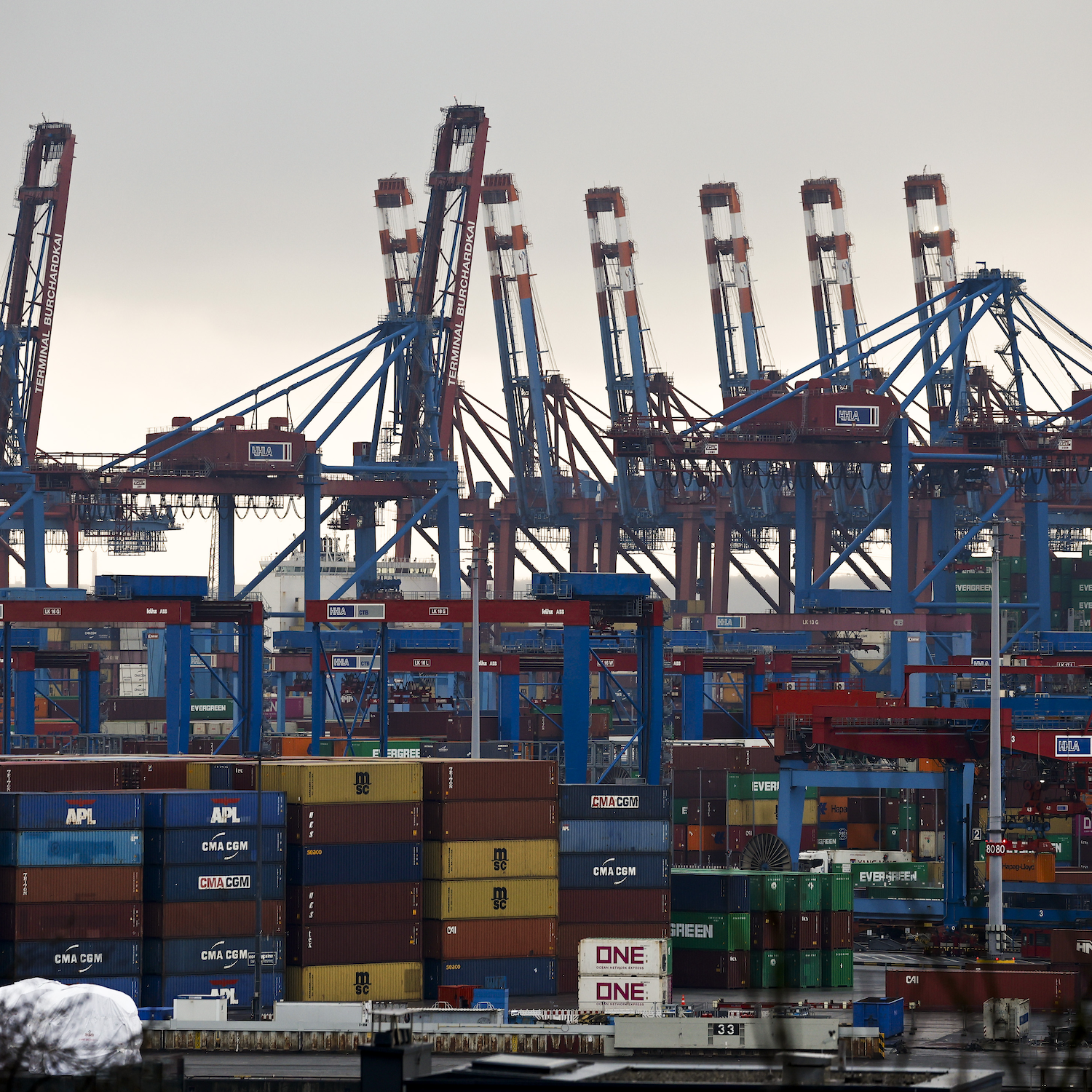
Good morning. It's Tuesday, March 4th. I'm Shemitah Basu. This is Apple News Today. On today's show, Mexico brings a case to America's Supreme Court. The Trump administration pushes immigration officials to deport more people faster. And how a single man's blood saved over 2 million babies. But first, after a one month delay, President Donald Trump's 25% tariffs on imports from Mexico and Canada went into effect at midnight last night. The President also doubled the current tariffs on imports from China from 10% to 20%. China swiftly responded with retaliatory tariffs on imports of American food and farm products like chicken, soy, wheat, corn, fruits and vegetables. Canada also announced their own tariffs on $30 billion worth of U.S. imports, with promises to extend that in the days to come. Mexico, China and Canada are among the US's biggest trading partners. Combined, the three nations were responsible for more than 40% of the nearly $3 trillion in goods imported in 2023. Trump says the tariffs will provide a new revenue source for the government, pressure companies to relocate their production operations to the US and force these countries to do more to stop the flow and illegal immigrants into the United States. Here's how Secretary of Commerce Howard Lutnick described Trump's moves to Fox News on Sunday.
- [01:39]
Howard Lutnick
We need fairness and we need the strength of Donald Trump to make the world reasonable to America and stop picking us off. It's over. Donald Trump's going to end it and make the world trade fairly with America.
- [01:53]
Shemitah Basu
On the eve of the tariffs going into effect, financial markets took a dive, with the S&P 500 posting its biggest loss since December and the dow dropping more than 6%, 600 points. The Wall Street Journal describes this as the end of a decades long era and a souring of the bet Canada and Mexico made when they signed agreements tying them to US trade, believing that the United States would continue to become more interconnected and more market oriented. So let's take some time today to talk about the expected impact of these tariffs and how we got here. A month ago, when Trump first threatened tariffs against Mexico and Canada before backing off, officials from those countries made quick moves. Deploy more resources to the border, including Canada creating a fentanyl czar and Mexico sending troops. Lutnick told CNN the administration appreciated those moves, but they hadn't done enough on fentanyl. Yesterday, Mexican President Claudia Sheinbaum disputed that claim, pointing to data that shows there's been a nearly 50% drop in fentanyl seizures at the border compared to a year ago. China, meanwhile, did not offer concessions and according to the New York Times, does not want to come across as pleading with now that the tariffs are here, economists say it could impact everything from grocery products to lumber to gas. The Wall Street Journal spoke with economists who say this trade war could lead to stagflation. That's a condition where the economy is barely growing or stagnant while combating high inflation. JP Morgan's chief economist also told the Journal that if Canada and Mexico go into a recession because of this, that would also hurt the US economy. Here's how CNN's Fareed Zakaria explained what the impact could be.
- [03:38]
Howard Lutnick
Let's take car production in America. Cars are made as a kind of integrated supply chain. In other words, parts moving back and forth from America to Canada to Mexico. They cross the border three or four times and you build essentially North American cars. So you're tariffing the part of the American supply chain. And guess who's gonna come in? The Korean car manufacturers and the Japanese car manufacturers who for whom there are no tariffs. This is a gift to Japan and Korea.
- [04:07]
Shemitah Basu
American carmakers won't be the only ones hurting. Shares of European car companies like Volkswagen, Mercedes Benz and BMW all dropped early Tuesday. And while a lot of larger American businesses have long been preparing for this moment, some of America's smaller businesses say it's been much tougher for them. Rick Muscat has a family run business that imports and sells footwear to companies like JCPenney, Macy's and Kohl's. He told CNBC that the uncertainty of the current moment makes it hard to do business. The point you're making is any business.
- [04:41]
Howard Lutnick
Manager'S worst nightmare, which is planning for the unknown.
- [04:46]
Shemitah Basu
The uncertainty of this situation keeps me up at night. I'm often asked what are you doing? How are you planning for it? And my answer is I don't know. Trump tariffs fulfill a long held Trump pledge to reshape our trade relationships. Back in February, the president acknowledged that they will cause some pain, but he said he expects foreign countries to bear the brunt of it. At the same time, he was largely elected to lower prices for Americans. And this trade war is likely to make that campaign promise much harder to fulfill. Let's turn now to another crisis brewing between the United States and our neighbors as Trump accuses Mexico of not doing enough to stop the flow of fentanyl coming north. Mexico says the United States isn't doing enough to stop the flow of guns from heading south. And today Mexico is bringing their case to the Supreme Court in a First of its kind lawsuit being filed by a foreign government in American courts about gun violence. Mexico argues that US Gun manufacturers are not just knowingly trafficking their guns into Mexico, but are actually designing and marketing those weapons to grow this illegal market. To understand Mexico's accusation, which US Gun manufacturers deny, you have to understand a few things about Mexico's gun culture and laws. First, it's actually pretty hard to legally obtain a gun in Mexico. The laws there are strict. So strict, in fact, that the Washington Post reports there are only two legal gun stores in the entire country, and both are run by the Mexican military. That means it can take weeks or months for a citizen to legally get a gun. The second is that these strict laws have not meant safer streets. Cartels get most of their guns from the United States and use them to commit violent crimes. Ann Marimo is a Supreme Court correspondent for the Washington Post. She explained the Mexican government's case that U.S. manufacturers are supplying these weapons that flow through what's known as the Iron river, deliberately designing guns that they know will be used illegally in Mexico.
- [06:59]
Ann Marimo
The examples they include in the lawsuit, Colt has a handgun called the Super El Jefe pistol, which they say is a term used to refer to cartel bosses. There's also a Emiliano Zapata 1911 pistol that's engraved with the Mexican revolutionaries statement that it's better to die standing than living on your knees. So they say that these are designed and marketed knowing that they'll end up in the hands of the drug cartels.
- [07:25]
Shemitah Basu
Lawyers for some of these gun manufacturers did not respond to requests for comment from the Post, but alleged in court filings that Mexico's lawsuit is intended to limit Second Amendment rights. And they've raised concerns that proceeding with the suit could have harmful impacts on other U.S. companies. One reason this case is an interesting one to watch is because it's unclear how sympathetic the Roberts court will be to this argument.
- [07:49]
Ann Marimo
The conservative majority of the Supreme Court has expanded gun rights and been very strong about the Second Amendment. But the lawyers from Mexico are saying this is not a Second Amendment case. This is about liability when your product is used illegally.
- [08:04]
Shemitah Basu
The case is also notable because there's a law on the books that shields gun makers from liability. In fact, at first, this case was dismissed by a lower court.
- [08:14]
Ann Marimo
The appeals court, the First Circuit, unanimously reversed that and said, well, there's a narrow exception to that law. And here the gunmaker knowingly aided and abetted the illegal trafficking of guns. And so they say the law. And that's the question for the court not whether the gun makers are liable, but just whether this lawsuit can actually proceed.
- [08:36]
Shemitah Basu
It's not entirely clear how many guns are trafficked into Mexico. One study in 2013 estimated the figure to be around a quarter million a year. Separate figures from the Bureau of Alcohol, Tobacco, Firearms and Explosives found that about two thirds of guns that are confiscated in Mexico turn out to be from the U.S. new reporting from the Wall Street Journal shows that as the Trump administration has pledged to prioritize deporting criminals who are living here illegally, a large number of people being detained do not have criminal backgrounds. Take the case of Lucas dos Santos Amarol. He is a Brazilian citizen who was living in Marlboro, Massachusetts with his pregnant wife and three year old daughter, who is a US Citizen. He also owns his own painting business. In late January, he was stopped by immigration officers near his home who said they were looking for an individual they believed he resembled. Dos Santos Amaral does not have a criminal history or orders for removal, and he was not the person they were looking for. But the officers looked him up and saw that he had overstayed a tourist visa from 2017, and he was arrested on the spot.
- [09:54]
Tarini Pardi
Not only was he arrested, he was also moved to a detention center in Texas without the knowledge of his lawyer or family.
- [10:02]
Shemitah Basu
That's Tarini Pardi, who covers the White House for the Wall Street Journal. Residing in the US Illegally is a civil violation, not a criminal offense. Dos Santas Amaral was released on an $8,000 bond and is now going through the immigration court process.
- [10:18]
Tarini Pardi
So this was kind of a surprising case. It had a ripple effect in this community where people started getting really worried that, you know, it wasn't just going to be the criminals and those with final orders for removal who were going to be targeted. It could be them. So we're seeing parents not sending their kids to schools. We're seeing people not showing up to work.
- [10:38]
Shemitah Basu
Hardy told us that immigration officials are under a lot of pressure to fulfill the promises Trump made to deport more immigrants than any time in history. The data released so far by the federal government shows that in the first month of the Trump administration, Immigration and Customs Enforcement arrested more than 20,000 migrants. That means arrests are on pace to more than double the 113,000 arrests ICE made under President Joe Biden in fiscal year 2024. But the Department of Homeland Security hasn't said how many of those arrested have criminal histories. A DHS spokesperson told the Journal that of the 20,000 people arrested, 22 were known suspected terrorists and 640 were suspected gang members. And the Journal reports that some of the arrest tactics used by ICE don't appear to be targeted at criminals.
- [11:29]
Tarini Pardi
In some cases, we're seeing that people who go for regular ICE check ins or for their court dates, they know that these people are going to be coming in at a certain time on a certain date. So it's easy for them to just target these people who don't even have a criminal background, rather than go out and look for those other individuals who, you know, have been hiding in the US For a few years and might be harder to find.
- [11:54]
Shemitah Basu
Immigration lawyers and activists have said they're taken aback by ICE's current mandate.
- [12:00]
Tarini Pardi
These are individuals who have been working in the U.S. living in the U.S. they have not previously had any run ins with the police or immigration officers. And these are individuals who in many cases also have pending asylum cases, who are being targeted, who have DACA protections or their green cards are being processed.
- [12:22]
Shemitah Basu
Still, Trump's border czar Tom Homan says the number of arrests is far below where he wants it to be, prompting the removal of at least one top official at ICE. The target number from the administration is 1,500 arrests per day across the country. Foreign before we let you go, a few other stories we're following. The Trump administration is pausing all military aid to Ukraine days after a tense confrontation between Trump and Ukrainian President Volodymyr Zelensky. In the Oval Office, a White House official said the administration is reviewing aid to make sure it's, quote, contributing to a solution. Trump, meanwhile, is scheduled to address a joint session of Congress tonight where foreign policy is likely to come up as well as his ongoing effort to radically reshape the federal government. In other news, an Australian man whose blood donations are credited with saving the lives of over 2 million babies thanks to a rare antibody, has died. Known as the man with the golden arm, James Harrison donated blood and plasma more than 1,100 times over 60 years. The precious Anti D antibody in his plasma was used to make a medication given to pregnant women to prevent their blood from attacking their unborn babies. Without it, babies could develop a fatal blood disorder. Harrison first began donating blood when at 14 years old, he himself received a life saving blood transfusion. Making a habit of going every two weeks. Harrison's blood made over 3 million doses of anti D. And finally, Lakers star LeBron James is set to make history tonight as he could become the first player ever to score 50,000 points across regular season and playoff games. James, already the NBA's all time leading scorer surpassed another Laker legend, Kareem Abdul Jabbar two years ago to become the all time scoring leader, breaking Abdul Jabbar's record that stood for almost 40 years. Yahoo Sports has a shot chart graphic displaying every basket James has made throughout his career and it's impressive. Picture a large smattering of sprinkles over ice cream with a good number of sprinkles outside of the three point line. James needs to score just one point tonight to reach 50,000 and make history. The Lakers host the New Orleans Pelicans at 1030 Eastern. You can find all these stories and more in the Apple News app. And if you're already listening in News app right now, we've got a narrated article coming up next. Town and country takes you behind the scenes with the college counselors that families pay tens of thousands of dollars to to guide their kids into elite schools. If you're listening in the podcast app, follow Apple News plus Narrated to find that story and I'll be back with the news tomorrow.