Loading summary
Transcript34 lines
- [00:01]
Shemitha Basu
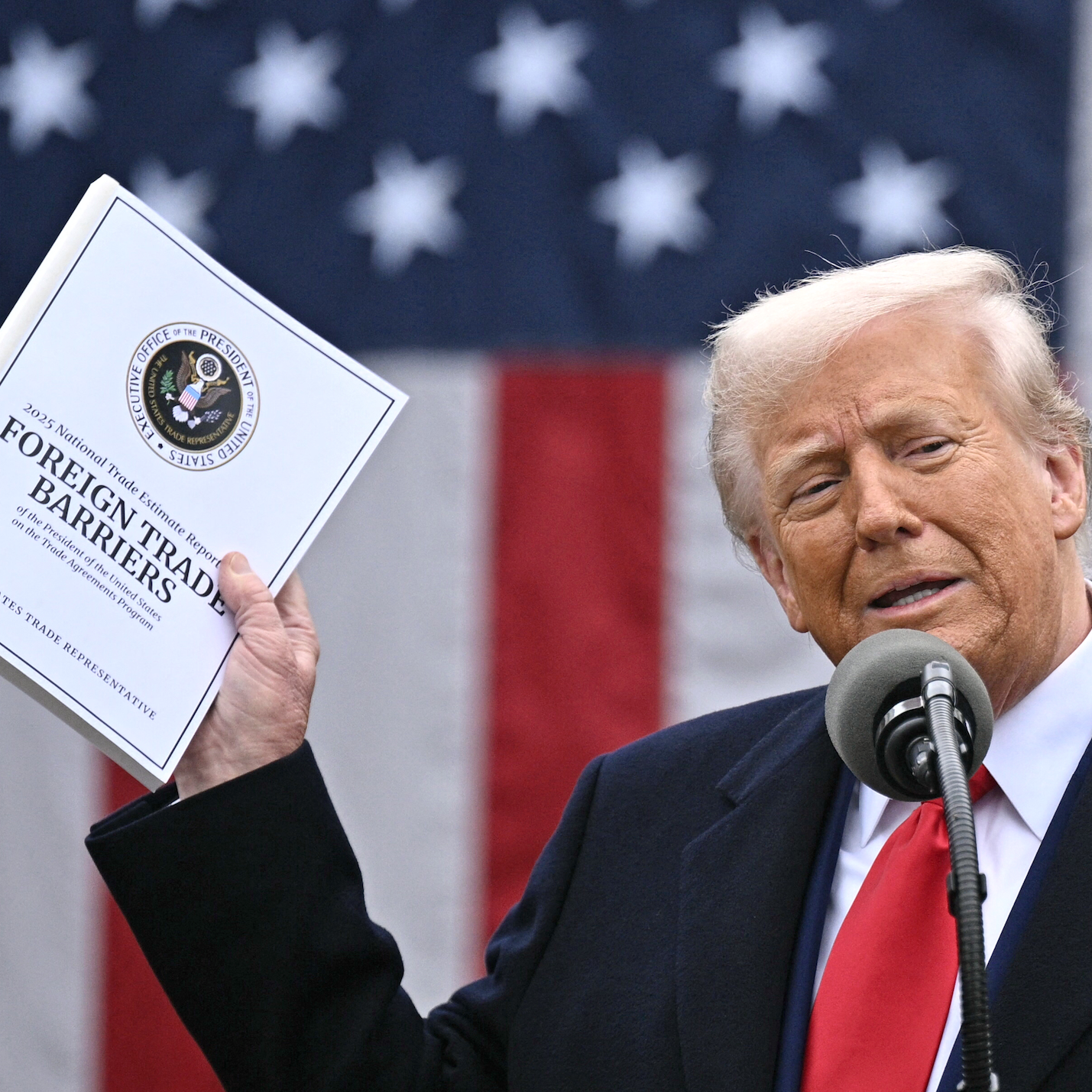
Hey there, it's Shemitha. I've got a quick request for you. If Apple News Today is an essential part of your morning routine, follow the show in Apple Podcasts. And if you have another 30 seconds, leave us a rating and a review, too. It helps other people find our show and it helps us know what you like about it. Thanks. Good morning. It's Thursday, August 7th. I'm Shemitah Basu. This is Apple News Today. On today's show, Republican lawmakers are feeling the pressure to sell voters on Trump's big, beautiful spending bill, the US Citizens caught up in immigration sweeps and the hidden health costs of wildfires. But first, as of today, nearly 70 countries will face at least an extra 10% tariff as the price of doing business with the U.S. for countries with a trade deficit with the U.S. it's more like 15%. And for a select few countries, it's much more. India is one of those countries. It must now contend with a 25% tariff, with the prospect of an additional 25% in the coming weeks as a punishment against India for increasingly importing Russian oil and gas. Since the start of the war in Ukraine, the president has repeatedly talked about these tariffs, both as a form of pressure on other countries to make deals with the US and as a key form of revenue for his domestic agenda. So today, let's look at how much the US has been generating from Trump's tariffs so far, where the money is going, and how things might look longer term. We spoke to Elizabeth Buchwald, economics reporter for CNN.
- [01:48]
Elizabeth Buchwald
So over the last about five months, so since April, there's been about $100 billion in tariff revenue. That's three times the amount that was collected for the same four months of last year.
- [02:02]
Shemitha Basu
She says that last month was a new monthly record. And right now, at least, the money hasn't been earmarked and just goes into the Treasury. But as the money comes in, people are starting to pitch various plans for where the revenue should go. Here's Steve Mnuchin, Trump's former Treasury secretary, offering a traditional, fiscally conservative view on cnbc.
- [02:23]
Steve Mnuchin
I'd like to see it as deficit reduction. I think, you know, many of us are concerned about the size of the deficit, and there's really only two ways of dealing with that. One is growing the economy, and two, is creating more revenues.
- [02:36]
Shemitha Basu
The issue of deficit reduction has become a concern to many Democrats and some Republicans, especially after the passage of the recent tax and spending bill, which the Congressional Budget Office says could increase the deficit by $4.1 trillion over the next decade. Trump has cited debt reduction as a priority, but he also floated the idea of sending direct checks to American homes, what he calls tariff rebates. Republican Senator Josh Hawley has been pushing for this and recently introduced legislation to push the issue forward.
- [03:08]
Steve Mnuchin
So this is not going to the hedge fund managers or all the Biden voters. This is not going to the Wall street kingpins. They don't, they don't need any of it. This is going to the Trump blue collar voters.
- [03:19]
Shemitha Basu
Sending checks to houses is rarely a vote loser, but Buckwell told us there could be downsides.
- [03:26]
Elizabeth Buchwald
It's unclear what the appetite is so far from everyone. I think there are concerns that it could lead to inflation if sending people more money to spend that they don't already have in their pockets. And at a time when there's pressure on prices already, we're seeing certain prices go up just as companies are paying more to import goods. There's definitely concerns there, Buchwald pointed out.
- [03:53]
Shemitha Basu
As tariff revenue starts to get allocated for various uses, those who have opposed tariffs could have a hard time arguing they should be eventually reduced or removed altogether.
- [04:03]
Elizabeth Buchwald
Having this newfound source of revenue, which for the most part right now has not come with pain for consumers, that could change quickly, of course, but for the most part right now it's not coming directly out of consumers pockets. The government has had a revenue shortfall for quite some time now, and so they've been hungry for ways to raise revenue that aren't going to harm the economy.
- [04:29]
Shemitha Basu
There are more economic deadlines in the coming days. Tomorrow Trump will decide whether to impose more sanctions on Russia, and next week he'll decide whether to end or extend a trade truce with China, escalating a tariff war between the two largest economies. While Congress is on summer recess, Republicans have an assignment from their leaders. Go back to your districts and sell voters on the massive tax and spending bill that was signed into law last month, which early polling trends indicate is unpopular. One recent poll by the AP found most U.S. adults think it'll help wealthy Americans but hurt low income and middle class people. Typically, lawmakers do some of that selling in town halls. But since President Trump returned to office, many GOP town halls have been defined by anger and criticism from constituents. And earlier this year, House Speaker Mike Johnson advised the party to avoid them. A couple of Republicans tried again. Anyway, over the last week, they got an earful. Here's what it sounded like at Representative Mike Flood's town hall in Lincoln, Nebraska.
- [05:41]
Steve Mnuchin
Quite frankly, from where I sit, there's been a lot of misinformation out there about the bill.
- [05:49]
Shemitha Basu
Okay.
- [05:54]
Steve Mnuchin
Next slide, please.
- [05:56]
Eleanor Mueller
It certainly did not go over well. You know, he could barely get a sentence out without being booed down. And I don't know that we'll see many more Republican lawmakers willing to commit themselves to this kind of experience.
- [06:13]
Shemitha Basu
That's semaphore Congress reporter Eleanor Mueller, who says with town halls potentially off the table and the midterms coming up next year, Republicans are trying to figure out how to effectively message what they see as benefits of the legislation.
- [06:28]
Eleanor Mueller
They've been told by their campaign arms. Talk about the individual components. You know, talk about no tax on tips, no tax on overtime and expanded child tax credit versus the bill of a whole as a whole, which Democrats have ensured is now associated with the thoughts of folks being kicked off their Medicaid.
- [06:44]
Shemitha Basu
Millions are expected to lose health care coverage due to funding cuts and Medicaid work requirements. Other Republicans are taking a more targeted approach in swing districts.
- [06:55]
Eleanor Mueller
They're choosing to do visits to manufacturers, to local businesses, talk to business owners who are not necessarily going to be shouting them down as they try and communicate what they think the positive things are about this bill.
- [07:07]
Shemitha Basu
Democrats, meanwhile, are going on the offensive, hosting their own town halls and visiting GOP districts. But as Republicans look ahead to the midterms and consider their messaging options, they're also eyeing Trump's fundraising efforts. The president's primary super PAC brought in nearly $177 million in the first half of this year, according to FEC filings. And he's certainly taking note of who is doing a good job at defending his signature legislation.
- [07:35]
Eleanor Mueller
I do think this month, as they're back in their districts and the next couple of months as they wrap up this year, is really laying the groundwork for that midterm election. And so I think we'll see a lot of folks start thinking about how they can align themselves with the president to take advantage of that resource. But Republicans feel like they're on the back foot a little here.
- [08:06]
Shemitha Basu
Let's turn now to a disturbing trend in U.S. immigration enforcement. In some cases, U.S. citizens are being violently arrested by law enforcement officials who are who are working to meet President Trump's aggressive deportation targets. It's difficult to pinpoint exactly how many. The government doesn't release data on this. By law, ICE is not supposed to arrest and detain US Citizens with only rare exceptions.
- [08:30]
Sam Levin
Ultimately, those folks are often accused of crimes such as interfering with officers or assaulting officers.
- [08:37]
Shemitha Basu
That's Sam Levin with the Guardian who's been reporting on the immigration raids in LA earlier this summer, where he says a number of Latino U.S. citizens were arrested.
- [08:46]
Sam Levin
Many of the people we've talked to have said they were simply in the wrong place at the wrong time, or they were engaged in a peaceful protest, or they were monitoring what was happening and in these chaotic moments end up getting detained by ice, by Border Patrol, by the Department of Homeland Security.
- [09:02]
Shemitha Basu
That's what happened to Andrea Velez, a 32 year old LA native. She was headed to work in late June when men wearing masks jumped out of a car and threw her to the ground. They were wearing vests that said police, but otherwise wore plain clothes. And Velez says they didn't identify themselves.
- [09:20]
Sam Levin
And so it was unclear to her if they were legitimate officers and why they were there. And in that moment, she was so fearful she was being kidnapped by random people in masks that she didn't know what was happening to her. And so she saw Los Angeles Police Department officers nearby, and so she left the car to run towards them to seek help.
- [09:41]
Shemitha Basu
Her sister and bystanders captured video footage of what happened next. An LAPD officer grabbed Velez, who does not appear to resist. An ICE agent ran toward her, handcuffed her, then picked her up and carried her away. Her sister, Estrella Rosas, was watching on with their mother.
- [10:00]
Eleanor Mueller
They're taking her.
- [10:02]
Shemitha Basu
She's a US citizen. She spent two nights in jail where she says the staff gave her no water. The Department of Justice charged her with assaulting an officer, which carries a 20 year sentence.
- [10:14]
Sam Levin
But Andrea says that she was simply just standing there, frozen in the middle of this chaos and was slammed to the ground by one of the officers and then taken away. So that was very disturbing to her because she felt as if she was being treated as this hardened criminal like many of the people she was detained with, when she's just an ordinary person trying to live her life. In Los Angeles.
- [10:36]
Shemitha Basu
Her lawyer requested body cam footage and witness statements, but never received them. The DOJ decided to drop the charges a little over two weeks later. It did not respond to the guardian's request for comment. Neither did ice, the Department of Homeland Security, or the US Attorney's office. The arrest upended Vilez's life.
- [10:54]
Sam Levin
Andrea told me that she essentially does not leave her home anymore without someone else by her side. She lives in fear that ICE could pick her up again. She feels that she's not safe anywhere she goes. She's been working remotely instead of returning to the scene of her arrest in downtown, where her office is journalists have.
- [11:13]
Shemitha Basu
Documented other incidents of Latino U.S. citizens arrested across California. In New York, also in Florida, some of these individuals say immigration officials racially profile them and abuse their constitutional rights. And the fear that Velez now lives with is felt broadly across the Latino community. According to polling from the nation's largest Hispanic civil rights and advocacy organization, 43% of Latino voters believe immigration authorities will arrest them regardless of their legal status. DHS has denied claims of racial profiling, saying its enforcement operations are highly targeted and that agents know who they are targeting ahead of time. Before we let you go, a few other stories we're following. In Georgia, an Army sergeant reportedly opened fire at his colleagues at Fort Stewart, a base near Savannah, and injured five other soldiers. It prompted a brief lockdown at one of the nation's largest army bases as well as some nearby schools. The alleged shooter is now in custody. He will not be charged and tried like a normal citizen, but rather under the military justice system, soldiers accused of the most serious crimes may face a court martial, which is similar to a civilian criminal trial. Three new studies released this week reveal the hidden health costs of wildfires in the U.S. researchers suggested that in the recent Los Angeles fires, more than 400 deaths between January and February were attributed to knock on effects like interruptions to healthcare and people who had pre existing lung conditions dying from related complications. And in Hawaii's 2023 fires, as many as one in five people in Maui may have been left with lung damage and nearly half reported declining health. Another study suggested a rise in people dying by suicide since the fires. And right now, Canada's wildfire smoke is drifting into parts of the US Affecting air quality. And France is contending with its own wildfires, the largest in decades. And finally, if you've been in a Lowe's or a Home Depot before, you've probably seen the little blue Energy Star stickers on washing machines and other appliances. It's a government funded labeling system that's supposed to help consumers identify energy efficient products. And since its inception in 1992, it's saved customers billions annually in energy costs and has helped avoid at least 4 billion tons of greenhouse gas emissions. Well, recently the EPA has said that it wanted to eliminate the program. And Grist reports that a unique alliance has formed between environmental groups and a coalition of industry groups who are against the plan. That's in part because Energy Star also benefits landlords who might be able to charge more for rent in their building if it's considered energy efficient. In Congress, there's also bipartisan support for the program, and recently there's been millions of dollars approved to fund it. Final approval for the EPA's request is still months away, but if consumers and businesses have their way, those stickers might stick around. You can find all these stories and more in the Apple News app. And if you're already listening in the news app right now, we've got a narrated article coming up next. Before he became the leader of the Catholic Church, Pope Leo XIV was known to many as Father Bob. Time magazine tells the story of his ascent by spending time with some of the people back home in Chicago who know him best. If you're listening in the podcast app, follow Apple News plus narrated to find that story. And we'll be back with the news tomorrow.