Loading summary
Transcript13 lines
- [00:05]
Shemitah Basu
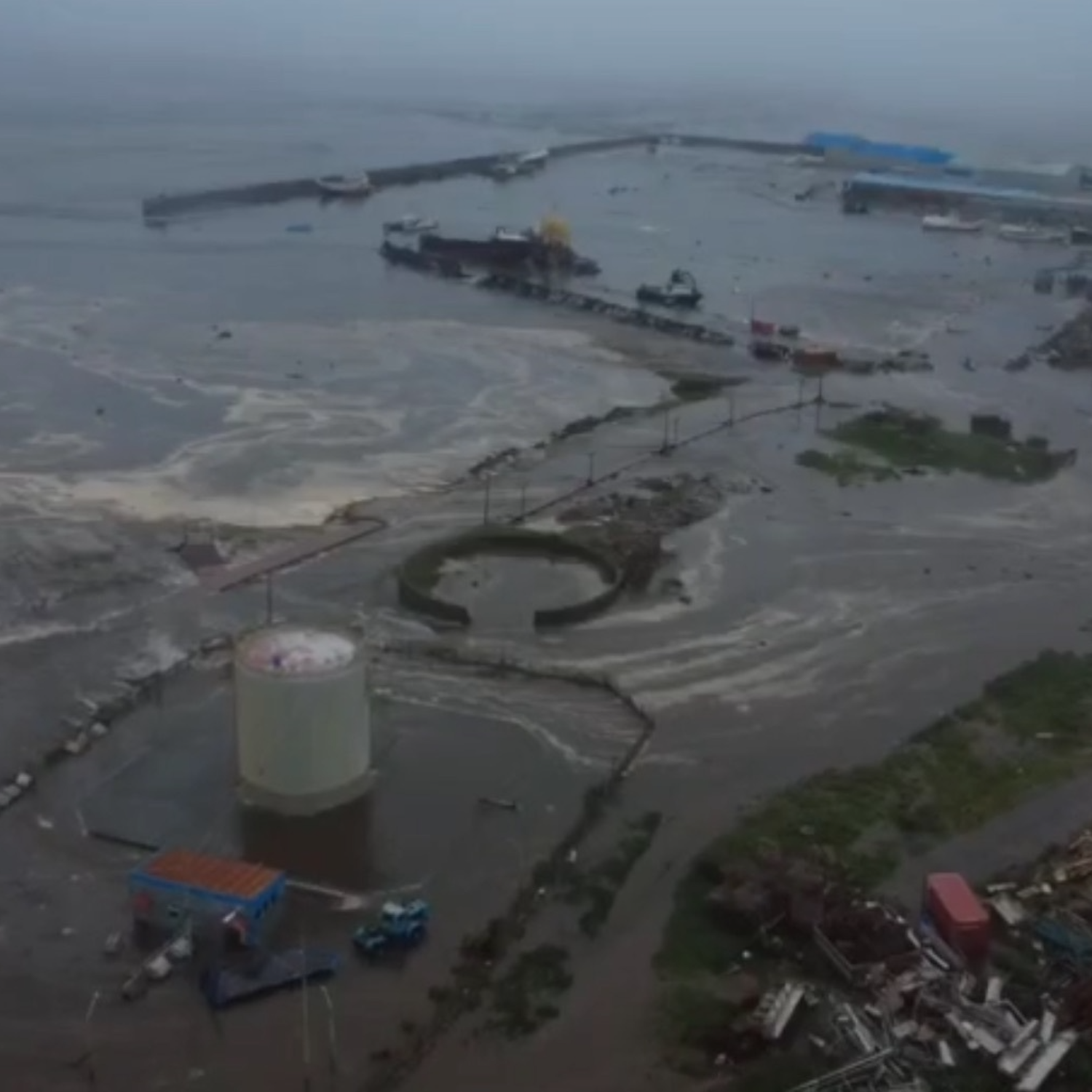
Good morning. It's Wednesday, July 30th. I'm Shemitah Basu. This is Apple News Today. On today's show, the Environmental Protection Agency is considering repealing the basis of a lot of their environmental protection policies. What's driving the nationwide air traffic controller shortage and extreme heat is driving cooped up Americans stir crazy foreign but first, a major earthquake off Russia's coast put much of the Pacific on tsunami watch and prompted evacuations in areas of Hawaii, Alaska, California and Japan. The quake was reported to be a magnitude 8.8, which would make it tied as the sixth strongest earthquake ever recorded according to the U.S. geological Survey. No major damage was caused on American coastlines. The tsunami caused coastal flooding in Hawaii and sent thousands of people to evacuation shelters. And by the time waves reached California, they were about anywhere from one to three and a half feet above the expected tide, according to NOAA data. In Japan, the tallest wave to hit was about four feet above normal tide. The eastern coast of the country has vivid memories of the last major tsunami event, the 2011 earthquake, a magnitude 9.0 that triggered a devast tsunami that resulted in over 15,000 deaths. This time, evacuation orders were quickly heated. One death has been reported of a woman who was trying to evacuate. A news presenter on a public broadcasting channel in Japan warned listeners, do not be glued to the screen. Evacuate now. And in Russia closest to the quake, people felt the rumbling from the earthquake for several minutes. Tsunami waves of up to 16ft were triggered, flooding eastern coastal areas and reportedly injuring several people. Videos from state media show large storage containers swept up and floating in the water. Russian officials said that a kindergarten was damaged. It was empty at the time, but most buildings withstood the quake. As of this morning, major damage and injuries have mostly been averted, but tsunami waves can continue to last for a day, and this is a developing story, so you can check for the latest in the Apple News app. Now to a major proposed change at the Environmental Protection Agency. The EPA is moving to roll back its own powers that regulate pollutants and carbon emissions, making US Efforts to tackle climate change much harder. For decades, scientists have researched how carbon dioxide and greenhouse gases harm public health, and they've collected firm evidence to support it. But now the Trump administration plans to repeal a fundamental scientific finding that allowed the US to regulate these harmful pollutants, which would essentially roll back the bedrock reasoning for much of what the federal government has done to mitigate the impacts of climate change over the last 15 years through the Clean Air Act.
- [03:15]
Ari Natter
They've since used that authority to make all kinds of regulations for everything from factories to power plants to oil wells to emissions from vehicles.
- [03:23]
Shemitah Basu
That's Ari Natter, an energy and environment reporter for Bloomberg News. He says if this proposal is finalized, it would mark one of, if not the most significant steps from the Trump admin to undercut policies to address climate change.
- [03:38]
Ari Natter
This is probably the biggest blow that Trump can do to rein in the EPA's ability to fight climate change. So, I mean, it's fair to say the environmental community is just horrified, especially.
- [03:49]
Shemitah Basu
Considering 2024 was the hottest year ever recorded in human history. And scientists agree that a number of recent natural disasters like the wildfires in Los Angeles, the wreckage of Hurricane Helene and the deadly floods that swept through Texas in early July were aggravated by climate change. The Trump administration says the EPA overstepped its legal authority when it initially implemented this regulatory policy back in 2009. And it's making an economic argument to defend its plan to repeal it. It claims eliminating regulations would save Americans over a trillion dollars. EPA Administrator Lee Zeldin alluded to this in his announcement of the plan yesterday.
- [04:32]
Lee Zeldin
Last November, the American public spoke. They elected President Trump President of the United States. That was the will of the American public. And when they voted, they asked for, demanded that an agency like the EPA would be cognizant of their economic concerns, that all agencies would be applying common sense.
- [04:55]
Shemitah Basu
But there's clear evidence policies limiting greenhouse gas emissions help our planet and our economy, particularly when you look at the transportation industry, which is the single largest contributor to US Emissions. It accounts for roughly a third of the overall total. According to the APA's own data, new passenger vehicles in the US emit 24% less climate pollution than they did in 2011, right before tailpipe regulations went into effect. And the agency concluded in a 2024 report that limiting emissions for cars and trucks is expected to generate more than $2 trillion in net benefits over the next 30 years. This new EPA proposal is going to have to go through a review process before it becomes finalized, potentially by next year. And there would be a 45 day period for public comments before a final version is submitted. Prior legal challenges to the endangerment finding haven't held up in court. In fact, in 2023, a US appeals court upheld the finding and the Supreme Court refused to hear the case. Now to Washington, where the National Transportation Safety Board will question officials from the army and the Federal Aviation Administration today about their roles in January's deadly collision of an army helicopter and an American Airlines passenger plane, 67 people died, and it was the first fatal commercial airline crash in the US in over 15 years. The investigative agency says it wants to understand why the helicopter was flying higher than it was supposed to that night along the Potomac River. They'll question the FAA about what it knew about the risks of this busy airspace, which is shared by commercial, private and military aircraft. And they want to learn more about air traffic control training and procedures at Reagan National Airport, where the passenger plane was trying to land that night. The FAA has previously said that the airport was understaffed, and it has continued to struggle with resourcing since the crash. Almost every single airport nationwide is dealing with this same issue. The FAA is short roughly 3,000 controllers, and one of the leading causes of that shortage, according to recent reporting by the Washington Post, is that people training to join this workforce are dropping out at high rates. One in five trainees fail to get certified at the first facility they're assigned to. Many don't try again. And the Post's transportation reporter, Ian Duncan told us others quit because the process can be dysfunctional and demoralizing.
- [07:39]
Ian Duncan
The culture is quite sort of insular. I would say it can be even quite hostile to the sort of extent that the trainers are telling these trainees that you're going to fail, like you're not going to measure up. And so, not surprisingly, people are put into this environment and a lot of them really struggle.
- [07:57]
Shemitah Basu
It takes years to get fully certified as an air traffic controller. And for some, Duncan reports, the stress doesn't feel worth the payoff, especially considering certified controllers often have to work six days a week. That's why Ryan Higgins, a trainee in California who spoke to Duncan, decided to quit.
- [08:14]
Ian Duncan
He just starts sort of sizing up this career. He's seen other people get yelled at, and he's looking at, well, they're so understaffed. Am I just going to be working massive amounts of overtime? So he just decides it's not for him. He didn't fail. He just decided to walk away and quit.
- [08:32]
Shemitah Basu
The field is dominated by white men, and Duncan described the hurdles women and racial minorities can face trying to break in. Like another ex trainee, Regina Mendez Scott.
- [08:42]
Ian Duncan
She was at JFK airport in New York, initially, was unsuccessful there, Had a trainer that she says she really didn't get on with, goes to a second airport where she says she experienced some sexual harassment. And then she's at the third airport, and she just experiences some pretty horrific racial abuse.
- [09:03]
Shemitah Basu
After a supervisor fired her, Mendez Scott appealed, won, and a judge ordered her to be reinstated, but she ultimately decided to quit, telling the Post, quote, no one could have endured what I have endured. The FAA told the Post in a statement that its training process is not easy and, quote, it shouldn't be given the responsibilities of the role. To improve worker retention, the agency has promised to improve training. It's also offering bonuses as trainees hit milestones to encourage them to stick with it. Before we let you go, a few other stories we're following. We're learning more details about the mass shooting in York City on Monday, which was the worst the city had seen in 25 years. The victims included an off duty police officer whose wife is reportedly pregnant with their third child, a real estate investment executive at Blackstone, a security guard and an NFL employee. Investigators are examining whether the gunman was specifically targeting the NFL, which is headquartered in the building, after he reportedly left a note saying that he believed playing high school football had given him cte, the degenerative brain injury linked to contact sports. Jeffrey Epstein's jailed associate, Ghislaine Maxwell, has suggested she would be willing to testify to Congress, but only if lawmakers offer to grant her immunity and gave her questions in advance. Maxwell's lawyers outlined her demands in a letter to the House Oversight Committee that subpoenaed Maxwell last week. A spokesperson for the committee said they would not even consider immunity as an option. Maxwell recently spoke to the deputy attorney general, Todd Blanche, in interviews spanning two days last week, where he said he asked questions about a hundred different people. She has become a pivotal figure in this story, but it's not clear what, if any, new information of value she has for the Oversight Committee. During its prosecution of her, the Department of Justice repeatedly accused Maxwell of being willing to, quote, brazenly lie under oath. And finally, if you feel like you have been cooped up this summer, you're not alone. The Atlantic examines how increasingly hot summers in the United States, coupled with the ubiquity of air conditioning, is making it much more common to be inside rather than out. So much so that some people are experiencing seasonal affective disorder like they might in the winter. Experts told the Atlantic that because it's not as common, there isn't as much research that's been done on summer seasonal affective disorder. But we're going to need it as more people try to balance comfort when they can get it in air conditioning and the joys of a sunny day outside. You can find all these stories and more in the Apple News app. And if you're already listening in the news app right now, We've got a narrated article coming up next from Wired. For millions of people, getting a whiff of the wrong thing can completely ruin their day, bringing on migraines, mood swings and more. Over the years, the medical establishment has largely dismissed their symptoms as psychosomatic. But one scientist believes there's a common culprit to the huge array of chemicals that dominate our daily lives. If you're listening in the podcast app, follow Apple News plus Narrated to find that story. And I'll be back with the news tomorrow.