Loading summary
Transcript27 lines
- [00:05]
Sumita Basu
Good morning. It's Friday, November 15th. I'm Sumita Basu. This is Apple News today. On today's show, a new strategy for anti abortion activists. In a UFO hearing. Military experts say we are not alone. And the return of Lindsey Vaughn. But first, President elect Donald Trump is tapping Robert F. Kennedy, Jr. To run the Department of Health and Human Services. As a candidate, Trump spoke highly of Kennedy.
- [00:44]
Donald Trump
Robert F. Kennedy cares more about human beings and health and the environment than anybody. And he's going to be absolutely. Having him is such a great honor. I've been friends of his for a long time, and I'm going to let him go wild on health. I'm going to let him go wild on the food. I'm going to let him go wild on medicines.
- [01:08]
Sumita Basu
If he's confirmed by the Senate, Kennedy will run the agency that oversees vaccines, scientific research, public health decisions, and the health care plans of Americans who rely on Medicare, Medicaid, and the Affordable Care Act's markets. It's a huge operation that runs on a $1.7 trillion budget. Kennedy, who does not have a medical or public health degree, was once a Democrat. Then he decided to leave the party and run for president as a third party candidate before dropping out of the race and endorsing Trump. People who supported his candidacy liked that he was skeptical of big money interests in food and public health. But he has also spread a lot of false information. So let's spend the next few minutes going through what Kennedy has said about various health topics and what the science says. And for help with this, we're going to lean in part on the health and science publication stat, as well as the economist Emily Oster's recent essay in the New York Times. Let's start with vaccines. For decades, Kennedy has pushed the idea that vaccines cause autism, and he founded a nonprofit that promotes theories linking vaccines to other conditions. STAT says these theories are false and have been repeatedly debunked by credible studies. Lately, Kennedy has shifted his tone on this issue, instead calling for more transparency around the science. Here's what he told NBC News earlier this year.
- [02:31]
Robert F. Kennedy Jr.
If vaccines are working for somebody, I'm not going to take them away. People ought to have choice, and that choice ought to be informed by the best information. So I'm going to make sure the scientific safety studies and efficacies are out there and people can make individual assessments about whether that product is going to be good for them.
- [02:51]
Sumita Basu
Next, let's talk about fluoride. Kennedy has called for removing fluoride from our water, saying it's linked to things like arthritis, bone cancer and neurodevelopmental disorders. Oster points out water fluoridation has been widely studied and only at high, high levels does it appear to have any effect on development. Our water just doesn't come close to those levels. The main reason to add fluoride to water is that it prevents tooth decay, which studies support. In Israel, where they got rid of fluoride in their water in 2014. They saw an increase in dental work in young children in the years after. In fact, the CDC has called the fluoridation of our water one of the country's 10 great public health achievements of the 20th century. Another topic that has gotten a lot of attention Kennedy's positions on what we eat and drink. For example, Kennedy has called for Americans to drink raw milk. Many experts say that's just not a great idea. Pasteurization kills pathogens and makes milk safer for consumption. And it's not clear whether there are any health benefits to drinking raw milk. As for food, he wants to see Americans rely less on ultra processed foods and for America to follow Europe in the banning of certain chemicals that are believed to be harmful and linked to disease. Those positions are relatively uncontroversial, but he has been very critical of the federal government's role in all of this.
- [04:16]
Robert F. Kennedy Jr.
We don't have good science because the agencies deliberately don't do that science because they don't want people to know what they're eating.
- [04:23]
Sumita Basu
And he's called for greatly reducing the size of the departments he could be overseeing. Donna Shalala, who led HHS during the Clinton administration, called RFK Jr. Totally unqualified for the role. That sentiment was quickly echoed by several Democrats yesterday. Meanwhile, many Republicans applauded the nomination, with one calling the choice brilliant and another saying it's a bad day for big pharmacy. Let's turn now to another major health issue. Abortion. Abortion was on the ballot in 10 states in this election, with voters in seven choosing to protect abortion rights. But already there's an organized legal backlash against these recently passed measures. Led by a coalition of anti abortion groups, they unveiled their roadmap to chip away at federal and state level access.
- [05:21]
Alice Miranda Olsteen
This group's theory is that they can run the same playbook that they successfully used when Roe vs. Wade was still in place.
- [05:28]
Sumita Basu
That's Politico reporter Alice Miranda Olsteen. She said this group refers to state measures that have codified abortion into their constitutions. As Minnie rows and just like when abortion was the law of the land, anti abortion groups were able to find ways to bring lawsuits through the courts to restrict the procedure. Now they're planning to find more legal loopholes to do the same.
- [05:50]
Alice Miranda Olsteen
They are targeting abortion pills, which since then have become the predominant method of terminating a pregnancy in the country.
- [05:57]
Sumita Basu
Specifically, they plan to go after the way abortion pills are distributed.
- [06:02]
Alice Miranda Olsteen
Right now a lot of people in states with abortion bans are getting abortion pills prescribed to them via telemedicine from a doctor in a blue state that has protections. There is an interest in going after that practice and trying to stop it.
- [06:18]
Sumita Basu
And Olsteen says they're planning to test out new legal arguments, including using environmental law.
- [06:25]
Alice Miranda Olsteen
They are arguing that abortion pills are contaminating the water supply. I have talked to experts who say there is no evidence of that. These anti abortion groups say they're gonna be doing their own water testing and trying to offer their own evidence. So it's unclear whether that will resonate in state legislatures, in the courts. But you have lawmakers in several states who have agreed to introduce that.
- [06:48]
Sumita Basu
Abortion rights activists told Alsteen they are prepared for lawsuits and they say the recently approved ballot measures were designed with some of these legal challenges in mind.
- [06:59]
Alice Miranda Olsteen
The pro abortion rights movement said, look, we had our lawyers, you know, really make these airtight.
- [07:06]
Sumita Basu
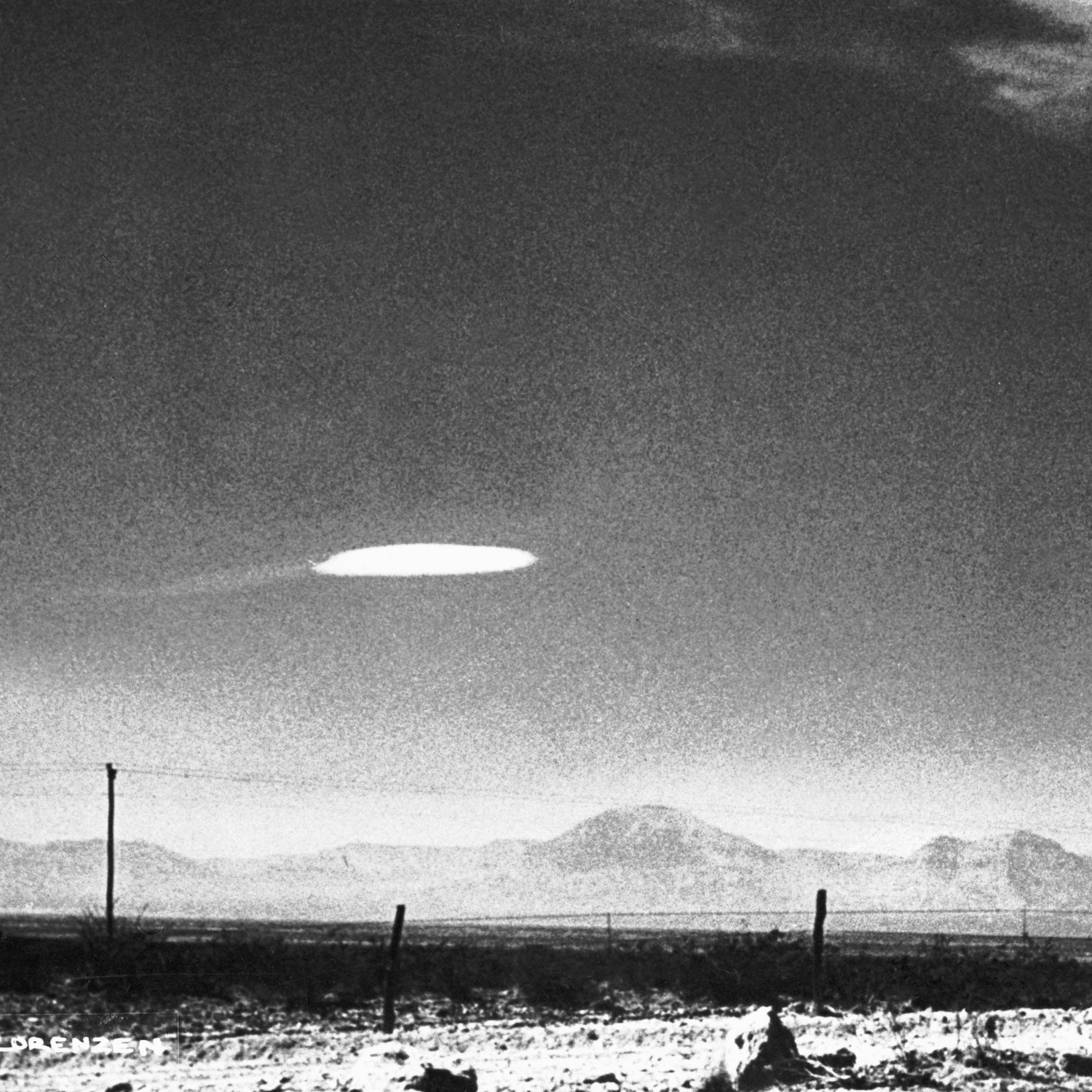
But a lot of these challenges will go before judges that could interpret the laws differently. And in this past election, Olsteen told us several conservative judges were elected in states where we could see these challenges. With a flood of post election analysis and Trump cabinet news dominating the headlines this week, you might have missed a congressional hearing focused on a decades old debate. Do UFOs exist? According to four former military and government officials, yes, and Americans deserve to know more. They testified before Congress about what Most people call UFOs but what they officially refer to as unidentified anomalous phenomena or uap. And over the last few years, military and intelligence officials have gone on the record about not only spotting UAPs, but also being concerned that they could pose a threat to national security. Including Lou Elizondo, a former Department of Defense officials official just this week.
- [08:17]
Lou Elizondo
Let me be clear, UAP are real advanced technologies not made by our government or any other government are monitoring sensitive military installations around the globe.
- [08:27]
Sumita Basu
Elizondo said he believes the world deserves to know more and he hopes President elect Trump's administration will be more transparent than previous ones. In this exchange with Representative Nancy Mace, Elizondo testified that the US and its allies have a secret program for UAPs. Has the government conducted secret UAP crash retrieval programs? Yes or no?
- [08:48]
Lou Elizondo
Yes.
- [08:49]
Sumita Basu
Okay. Were they designed to identify and reverse engineer alien craft? Yes or no?
- [08:53]
Lou Elizondo
Yes.
- [08:53]
Sumita Basu
Michael Gold, a former NASA associate administrator, also advocated for more transparency from the executive branch and from the Pentagon.
- [09:01]
Lou Elizondo
Our best tool for unlocking the mystery of UAP is science, but we cannot conduct a proper inquiry if the stigma is so overwhelming that just daring to be part of a NASA research team elicits such a vitriolic response. Therefore, one of the most important actions that can be taken relative to exposing the truth of UAP is to combat the stigma.
- [09:26]
Sumita Basu
Over the years, a lot of documented encounters with these kinds of phenomena have been explained as pretty pedestrian objects, weather balloons, drones, even trash. Gold acknowledged as much, but said that some occurrences can't easily be explained and that NASA needs more funding to document what is out there. The Pentagon issued a report in March saying that it has found no evidence of extraterrestrial spacecraft. And the Pentagon has also said that with more research, it's possible that other reports of UAP could be rationally explained as well. Before we let you go, a few other stories being featured in the Apple News app Two federal judges have agreed to delay the trials of two men accused of taking part in the riot at the US Capitol on January 6th. The judges said they want to conserve court resources and avoid unnecessary work. Since Trump has said he will pardon these defendants after he's inaugurated, this is the first time we've seen federal judges give in to this request in anticipation of Trump taking office. In climate news, there have been a series of brush fires in a truly unexpected place. New York city. More than 200, in fact, according to the fire department, far higher than in years past. New York and the surrounding region hasn't gotten much rain lately, creating dry conditions. Earlier in the week, Amtrak had to shut down service on one of its lines. Some schools north of the city closed, too. Bloomberg calls it the worst fire season the Northeast has experienced in more than a decade. And finally, one of the world's great skiers is back. Lindsey Vaughn announced on Thursday that she's coming out of retirement to join the US Ski Team, planning to race again at the age of 40. The three time Olympic medalist retired six years ago after a series of injuries, including broken arms and legs, torn ligaments and concussions. If she can stay healthy, she will likely compete again in the next Winter Olympics, scheduled to take place in Italy in February of 2026. You can find all these stories and more in the Apple News app and check out our weekly interview show. In conversation this week, I spoke with Sharon Horgan the creator of the show Bad Sisters about her mission to bring realistic women to life on screen.
- [11:51]
Robert F. Kennedy Jr.
It felt like a massive challenge, and then I was really scared of it. And, you know, I'm still kind of scared of it, but I think that's a good thing to be.
- [12:00]
Sumita Basu
The second season of Bad Sisters is now streaming on Apple TV plus, and if you're listening in the Apple News app right now, my interview with Sharon is queued up to play for you next. Enjoy your weekend, and I'll be back with the news on Monday.