Loading summary
Transcript35 lines
- [00:05]
Gideon Reznick
Good morning. After a bruising primary, Michigan's Democrats rally behind their new Senate nominee. What recent cyber attacks on water systems reveal about local preparedness?
- [00:15]
AJV Sens
There's a big issue in this country with respect to underfunding of local cybersecurity, whether that be the technology itself or the staffing levels.
- [00:26]
Gideon Reznick
And an agreement to reopen the Strait of Hormuz is coming together, but it's not the one President Trump had wanted. It's Thursday, August 6th. I'm Gideon Reznick in Fortunita Basu. This is Apple News.
- [00:37]
Samuel Bentsen
Today,
- [00:45]
Gideon Reznick
The Democratic Senate primary in Michigan delivered a major victory for the party's progressive left. And now it offers its biggest test in November's general election. Abdul El Sayed, a former public health official, was declared the winner on Wednesday, overcoming a significant spending disadvantage and opposition from establishment party leaders within the state and in Washington. During his victory speech Wednesday morning, El Sayed thanked his opponent, Congresswoman Haley Stevens, and tried to begin to bring the party together.
- [01:14]
Abdul El Sayed
As bitter and as divisive and as cynical as the campaign against us might have been, I want us to realize that there is so much more that unites us now. So whether you voted for me or voted for my opponent or didn't vote at all, we're inviting you to that movement to get money out of politics so we can put money back in pockets and finally guarantee the promise of health care through Medicare for all.
- [01:38]
Gideon Reznick
Stevens spoke to her supporters before the race was called and urged them to back whoever the Democratic nominee would be against Republican Mike Rogers.
- [01:46]
Haley Stevens
We've had a long, hard fought primary and we'll know soon who our nominee is going to be. And whoever wins is gonna go and take on Mike Rogers. If we are going to win this thing, which we are, we are gonna have to get ready and show Mike Rogers what a little stick it to him looks like.
- [02:09]
Gideon Reznick
A number of other prominent Democrats have now shown their support for El Sayed as well. Key members of the party in Michigan and elsewhere told Politico that he'll need all the help he can get in what is basically a must win race for the party. And after a bruising primary that was decided by around a single percentage point. Samuel Bentsen is a national political reporter for Politico.
- [02:30]
Samuel Bentsen
At this point, Democrats don't have the luxury of talking about electability, right? They have their guy, they have their candidate, and they have to rally behind them. And this is their candidate they'll have. Riding through November.
- [02:40]
Gideon Reznick
El Sayed's progressive beliefs, including Medicare for All, taxing billionaires, getting money out of politics and pushing for an end to military aid in Israel made some within the party nervous about his chances to win the general election in a swing state in the primary. He pointed to tens of millions of dollars spent by aipac, the pro Israel lobbying group, on behalf of his opponent Stevens, to make his case to voters. Benson said that that focus will likely continue in the general election, as AIPAC has said that it will continue to oppose El Sayed's candidacy.
- [03:11]
Samuel Bentsen
If you watched any of the three debates that they did, it was kind of the main talking point for Al said he would constantly bring the conversation back to corporate PAC money to campaign finance. We'll see in November how much AIPAC and these other super pacs will play in support of Mike Rogers, the Republican. It's still kind of an open question, but I think we can certainly expect to see some real money get poured into this battleground.
- [03:33]
Gideon Reznick
Rogers, Benson told us, is seen as a formidable candidate, having served in Congress in very narrowly losing a Senate race in Michigan just two years ago. But if El Sayed can pull it off, he may very well be seen as a major figure in the progressive wing of the Democratic Party.
- [03:49]
Samuel Bentsen
My colleagues at Politico have had reporting over the last week or so asking who's going to be Bernie Sanders standard bearer, his successor on kind of this progressive wing of the party, if he can win in November, if he can win Michigan, which is a key battleground that Trump has won twice in the last three cycles, I think he enters that conversation of someone that knows how to rally kind of the progressive side of this party. He first has to beat Mike Rogers November, and that's no easy task.
- [04:17]
Gideon Reznick
For months, President Trump has ruled out any type of agreement with Iran that would give the country control over the Strait of Hormuz, which was open to international traffic restriction free before the war. But Trump could soon face a difficult leave the strait closed and continue talks, risking more pain to the U.S. economy and voters ahead of the midterms or make a big concession. Oman and Iran are reportedly close to finishing a deal that would reopen the strait for 60 days and split control of the waterway between the two countries.
- [04:48]
Benoit Foucault
Iran controls the entrance of the Strait of Hormuz, so the northern route and the Omanis would control the southern part, which is the exit.
- [04:58]
Gideon Reznick
Benoit Foucault is a reporter with the Wall Street Journal. This agreement reportedly does not include charging tolls or fees on ships that pass through the strait, and mediators in Egypt, Pakistan and Qatar hope that once a deal is in place, it could potentially get both the US and Iran back to the negotiating table to discuss an end to the war.
- [05:16]
Benoit Foucault
The incentive is really to at least push the pause button and restart the discussions. I think that's the main rational.
- [05:22]
Gideon Reznick
But he says that Iran's leadership is also gambling here by taking a hard line approach on controlling the strait. Tehran is betting that threats to the US Economy could help Iran avoid military escalation from the US And Israel. And that Trump would prefer a messy stalemate over an all out war, especially since the conflict is so unpopular with US voters as the closure of the strait has driven up the price of fuel and other goods. Meanwhile, Iran's military has suffered major losses since the start of the war in February. And moderates within Iran have become increasingly concerned that the US blockade implemented in July when the ceasefire collapsed, could push the economy to the brink. So Iranian officials have said that even if Iran and Oman do reach a deal, the strait will remain closed until the US agrees to lift that blockade.
- [06:06]
Benoit Foucault
So obviously the immediate demand is stop the US blockade on Iranian ports, offers license to export oil again anywhere in the world for Iran, but then also very quickly after, that's really what the Iranians expect. Release of billions of dollars of cash that's been blocked abroad. But going forward it's really lifting the sanctions, right? Getting a revival of the economy right now they cannot afford the stalemate to last forever.
- [06:30]
Gideon Reznick
Meanwhile, the Trump administration hopes this initial agreement can lead to a two step negotiation that ends with limits on Iran's nuclear program. The Journal reports that Trump is open to a deal that reopens the Strait of Hormuz fully before restarting nuclear talks. But he remains focused on his stated goal for the war.
- [06:47]
Benoit Foucault
On the US side, the long term goal is really that the almost become secure again and that the region and broadly speaking the planet becomes secure again if there is absolute guarantees and measures that make sure that Iran never gets a nuclear weapon.
- [07:08]
Gideon Reznick
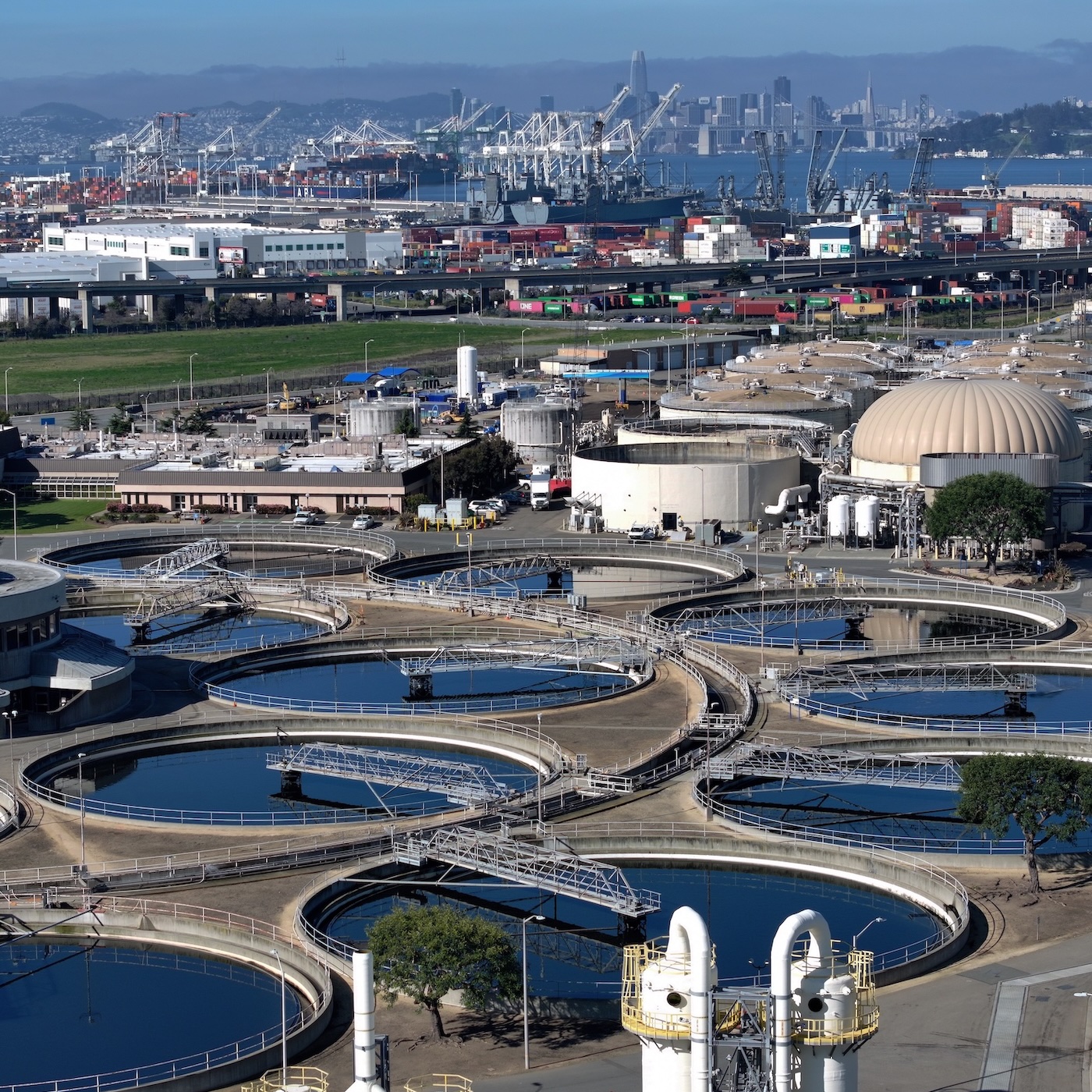
Over the last week, water systems in at least 12 states have been hit by a growing wave of cyber attacks.
- [07:15]
AJV Sens
This started on Tuesday the 28th when we got word from Minnesota's IT agency that it had observed a coordinated cyber attack against 30 local water facilities.
- [07:26]
Gideon Reznick
AJV Sens covers cybersecurity for Reuters.
- [07:29]
AJV Sens
As the week went along, more information came out and it became clear that this was happening in more places.
- [07:36]
Gideon Reznick
Attacks were reported in Michigan, South Dakota and New Jersey. So far there are no indications that they've made drinking water unsafe, but they have led to operational issues like flooding or water pressure problems that required issuing boil water advisories out of caution in some cases, federal agencies are investigating and intelligence officials told the New York Times they believe Iran is likely behind the attacks. In at least Minnesota, federal agencies were
- [08:02]
AJV Sens
stopping short of formally attributing the activity, but they did say it shared characteristics with the well documented Iranian attacks.
- [08:10]
Gideon Reznick
The White House referred Reuters questions to the FBI, which did not immediately respond.
- [08:15]
AJV Sens
Certainly Iran is not the only interested party right now, but they have a demonstrated track record of going after these kinds of devices in this way. I should say that we attempted to ask Iranian officials about the claims and the allegations and we did not hear back.
- [08:32]
Gideon Reznick
In recent decades, hackers associated with Iran have been linked to a broad array of cyber attacks on schools, hospitals, political campaigns, banks and more. And for months, federal cybersecurity officials have warned water and energy utilities that Iran targeted small computers used by many facilities across the country. PBS spoke with Cynthia Kaiser, former deputy assistant director in the FBI's cyber division, and she explained why Iran might want to target a local water system.
- [09:01]
Haley Stevens
The main aim of these operations is to sow chaos, confusion and fear. It's to say we got in somewhere and think about what we could do next. So when you look at all of these different types of targets, targets, they're going after the ones that they have the ability to get into. And oftentimes, that is the smaller municipalities, these smaller locations, water systems because they lack the funding or the IT personnel to be able to fully secure them.
- [09:29]
Gideon Reznick
Many states also use the same technology, which can more easily expose them to attacks.
- [09:34]
AJV Sens
This isn't something that's specific to a location or anything particular about your town or your water facility. This is about the kinds of devices on these networks and them being open to the Internet in ways that allow bad actors to try to manipulate them. And there's a big issue in this country with respect to underfunding of local cybersecurity, whether that be the technology itself or the staffing levels. These kinds of things are major problems.
- [10:05]
Gideon Reznick
The EPA warned in recent years that a significant number of local water systems had critical or high risk vulnerabilities that included outdated software, poor network security, weak access controls, and a lack of employee cybersecurity training. And the water industry has resisted efforts in recent years to regulate cybersecurity, which experts say is making our infrastructure more vulnerable. Here are a few other stories we're following today. For the first time in nearly a year, the CDC will have a permanent director. Dr. Erica Schwartz, the former deputy surgeon general and chief medical officer of the Coast Guard was confirmed yesterday. The agency had been without a permanent director since last August, when Dr. Susan Menares was removed after clashing with HHS Secretary Robert F. Kennedy Jr. Over vaccine policy. At her confirmation hearing, Schwartz said that vaccines are safe and effective, but she didn't weigh in on some of the policy changes Kennedy has made during his tenure. Schwartz will take over a CDC that is dealing with a 35 year high in measles cases and a growing cyclospiriasis outbreak that has now spread to 15 states. Swartz is also the first black woman to lead the cdc. The Trump administration disclosed in a court filing that it has refunded about $100 billion of tariff revenue that was collected before the President's Liberation Day. Tariffs were struck down by the Supreme Court. That figure represents roughly 60% of the total that the government collected using the International Emergency Economic Powers act before the high court invalidated them. Several companies, including Apple and Amazon, have revealed that they've received hundreds of millions of dollars or more in refunds since the court ruling. The Trump administration has used different methods to raise tariffs, and many of them are already facing legal challenges of their own. And finally, the Danube is revealing some long lost history as drought pushes water levels in Europe's second longest river to historic lows. CBS reports that at least 20 shipwrecks of Nazi World War II vessels can be seen with the naked eye in the port city of Prohovo, Serbia. Historians say as many as 200 German ships were purposely sunk there in the last months of the war as they took fire from the Soviets. And it's not just shipwrecks being uncovered either. Further along the Danube in Bulgaria, some bones have emerged. Experts think they very likely belonged to a woolly mammoth. They include parts of a tusk, a shoulder blade and a femur. You can find all these stories and more in the Apple News app. And if you're already listening in the News app right now, we've got a narrated article coming up next from New York Magazine. It looks at why a JetBlue plane went into a brief freefall last year and the answer that ultimately grounded thousands of aircraft. If you're listening in the podcast app, you can follow Apple News plus Narrated to find that story and I'll be back with the news tomorrow.