Loading summary
Transcript31 lines
- [00:05]
Gideon Resnick
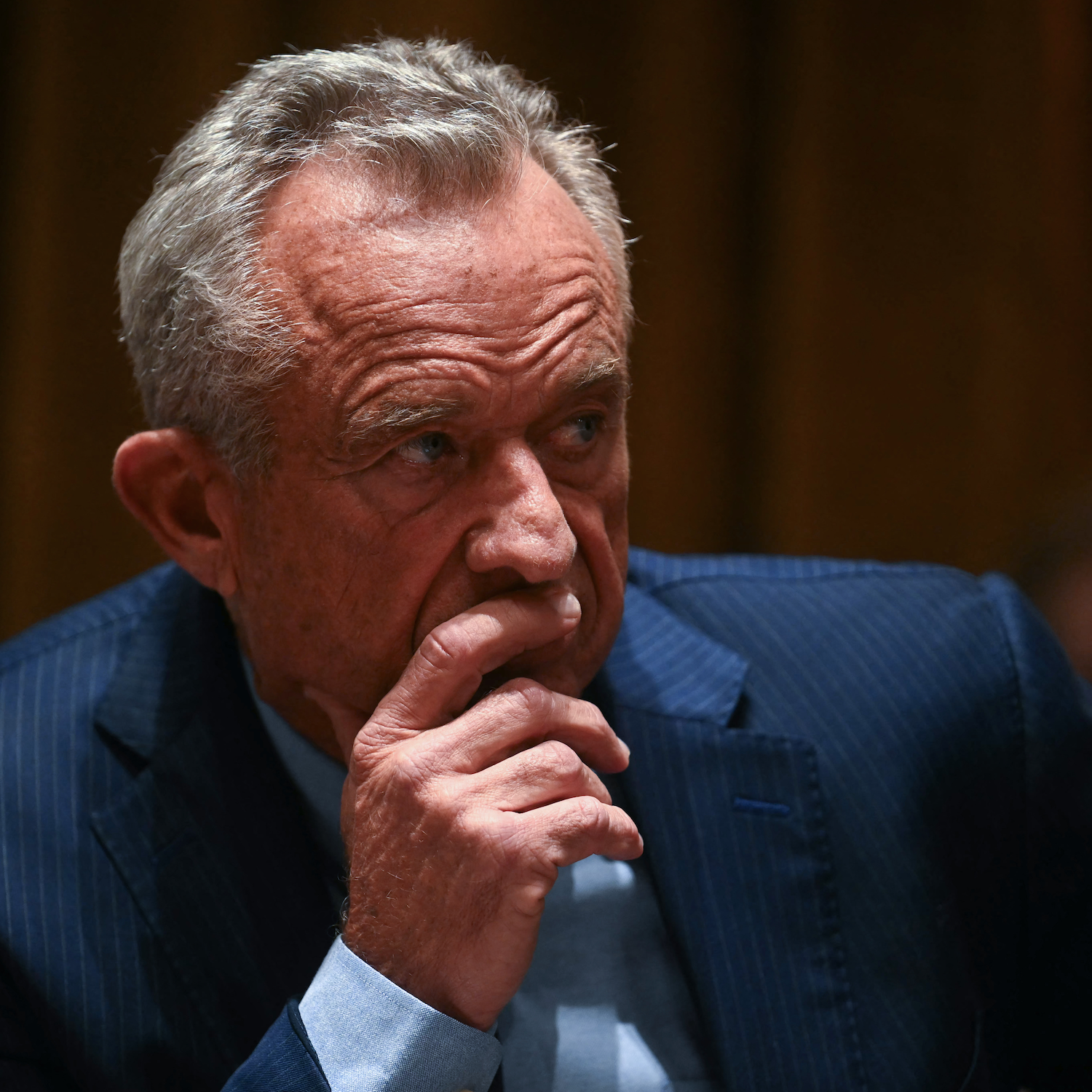
Good morning. It's Thursday, April 17th. I'm Gideon Resnick in for Shamit Debesu. This is Apple News today. On today's show, how a group of Democratic governors are navigating Trump's second term, the legal hurdles facing a US Hostage freed from Russia, and why Paris is breathing easier these days. But first, Health and Human Services Secretary Robert F. Kennedy Jr. Is making research into autism, one of his major initiatives. But he's also making proclamations about the disorder that scientists who study autism say is in direct contradiction to the research.
- [00:49]
Brandi Zydrasny
We know it's an environmental exposure. It has to be. Genes do not cause epidemics. They can provide a vulnerability. You need an environmental toxin.
- [00:59]
Gideon Resnick
Scientists say genetic factors play a critical role in whether a child will develop autism, though they acknowledge that not every case can be explained by genetics alone. Kennedy says that the HHS will launch a new series of studies to look at whether autism can possibly be connected to things like mold, pesticides, as well as certain medications and even food. And he's promised to move quickly.
- [01:22]
Brandi Zydrasny
But we're going to follow the science no matter what it says, and.
- [01:27]
Gideon Resnick
We.
- [01:27]
Brandi Zydrasny
Will have some of the answers by September.
- [01:30]
Gideon Resnick
Kennedy made those comments at a press conference yesterday. That followed a new study released this week from the CDC, an agency that falls under HHS, that concluded that among 8 year olds, 1 in 31 were diagnosed with autism spectrum disorder in 2022. In 2020, that figure was 1 in 36. While scientists have not ruled out the notion that both genes and environmental factors can contribute to the development of autism, there is still no evidence it can be prevented. One longtime autism researcher told the New York Times, autism is not an infectious disease, so there aren't preventive measures that we can take. It's also important to recognize that more people are aware of autism symptoms today than before. And our screening systems have vastly improved, meaning more people may be seeking diagnoses than before and we're better positioned to make diagnoses. In other words, the CDC says its findings don't necessarily mean that more people are autistic than before. Researchers also say that Kennedy declaring we'll have answers by September or any arbitrary date runs counter to how science works. Recently, many people who are skeptical of what mainstream scientists have to say about autism attended what's known as the annual Autism Health Summit. The summit promotes treatments that are not proven to work, like water filters or fecal transplants. NBC News reporter Brandi Zydrasny told us about a pre recorded video message from RFK Jr that was played for attendees.
- [02:59]
Gretchen Whitmer
In this video recording, he promised them that he would be finding out the cause of autism. And in the room, everybody that I talked to sort of took that as, you know, he already knew, just like they already knew the causes of autism. And for them, that has always been and continues to be falsely vaccines.
- [03:17]
Gideon Resnick
Zadrozhny says that RFK Jr. S remarks were met with excitement and applause.
- [03:22]
Gretchen Whitmer
For these guys, the anti vaxxers. They've been in this space for so long that finally they feel redeemed by this widening of the community. And so at this point, it's a moment of validation for them.
- [03:35]
Gideon Resnick
But as the health publication Stat reports, the alleged connection between vaccines and autism has been thoroughly researched and debunked. Autism usually presents during childhood, which happens to be when routine immunizations are administered, something that researchers say is a coincidental overlap, not a causal connection. But with Kennedy at the helm of Health and Human Services, the anti vax movement is now picking up renewed steam.
- [04:00]
Gretchen Whitmer
They refuse to let this go. And so at the same time that we are doing mass firings at our public health agency, at the same time that we are decimating HIV research and infant and maternal mortality groups with inside the cdc, we're going to pour money now, apparently into finding out the cause of autism. Not therapies or things that might actually help autistic people, but the same old drum we're going to continue to bang. And scientists, autism activists, parents, are saying this is just a waste of time and money.
- [04:35]
Gideon Resnick
The director of advocacy at the Autistic Self Advocacy Network told NPR that while Kennedy Jr. Makes comments like this, the administration is pursuing other policies and financial cuts that could impact autistic Americans on many fronts. Let's turn now to how a number of Democratic governors are responding and contending with the Trump administration. Governors have a different relationship with the presidency than members of Congress. Governors, like the president, hold an executive office. In fact, they have many of the same responsibilities as the president, signing legislation, appointing people to certain offices. Add the fact that different governors represent very different constituencies and that some also have aspirations for running for president themselves, and you can understand why. Some Democratic governors have tried out different strategies with the Trump White House. Some are beginning to take a more confrontational approach, like in California, where Governor Gavin Newsom announced a lawsuit yesterday against the administration over its tariff policy. The state has filed more than a dozen lawsuits against the administration in all. But this is the first time that Newsom has taken the lead role in a suit. He and the state's attorney general say that Trump is exceeding his authority by invoking the International Emergency Economic powers Act of 1977 to implement tariffs. And they argue Trump cannot unilaterally impose tariffs on US Imports without the consent of Congress.
- [06:07]
Brandi Zydrasny
The uncertainty is pronounced and it is profound in the state of California. Consider just the imports coming from Mexico, Canada and China. 44% of all of the imports into the state of California alone come from just those three countries, $197.3 billion in 2023. The impacts of these tariffs, particularly on those three countries, disproportionately impact the state of California across the spectrum.
- [06:42]
Gideon Resnick
Newsom says the tariffs have already cost the state economy billions of dollars. Then there's Michigan's governor Gretchen Whitmer, a Democrat leading a state that Trump won. She said she understands Trump's motivation for tariffs and that she doesn't oppose them outright. But she's also criticized the administration's on again, off again approach to implementing tariffs and the uncertainty they've introduced to US Markets. And as Whitmer tells it, during a trip to the White House last week, she was thrust in front of the press corps for an impromptu photo op as Trump signed executive orders and at one point he once again falsely said that the 2020 election had been rigged. Photos showed Whitmer at times appearing visibly uncomfortable, and one particular New York Times photo of her shielding her face with blue folders got a lot of attention. She recently explained at the Detroit Economic Club what was going through her mind.
- [07:31]
Gretchen Whitmer
Then, what was going through your mind at that moment? And it was, I don't want my picture taken.
- [07:36]
Gideon Resnick
That's all it was. Whitmer's appearance attracted criticism from some Democrats who felt she was being too friendly with Trump. And at that same photo op, he praised her, telling reporters he thinks she's doing a, quote, excellent job. At least one Democratic governor has directly drawn the president's ire, though that's Maine's governor Janet Mills, whose state inclusion of transgender athletes Trump sees as a violation of his executive order banning transgender women and girls from women's sports. Trump called her out and even went so far as to threaten her during a bipartisan meeting of governors back in February.
- [08:11]
Janet Mills
But I understand Maine is Maine here, the governor of Maine. Are you not going to comply with it?
- [08:19]
Gideon Resnick
I'm complying with state and federal laws.
- [08:21]
Janet Mills
Well, we are the federal law. Well, you better do it. You better do it because you're not going to get any federal funding at all if you don't.
- [08:28]
Gideon Resnick
This was Mill's response.
- [08:30]
Janet Mills
See you in court every state. Good. I'LL see you in court. I look forward to that. That should be a real easy one.
- [08:36]
Gideon Resnick
Since then, the administration has threatened to cut funding to Maine's public schools and lunch programs. And yesterday, the Trump administration sued the state, alleging that it's violating Title IX anti discrimination law. Meanwhile, Mills has said the president does not have the authority through an executive order to change Maine's human rights law, which prohibits discrimination based on gender identity. And in a statement yesterday, Mills said she believes this dispute boils down to states rights or, as she put it, defending the rule of law against a federal government bent on imposing its will. Now to reporting from NPR that looks at the life of former Marine Paul Whelan and how government bureaucracy has disrupted his reintegration to American society. You might remember that he was released from Russia about a year ago in a prisoner exchange coordinated by the Biden administration. But now that Whelan's back home in Michigan, he told NPR he's struggling to get access to basic services he needs to re enter society.
- [09:42]
Paul Whelan
When you get off the plane, you find that your former life isn't there. It's a process of putting puzzle pieces together yourself.
- [09:50]
Gideon Resnick
Guelin's conviction in Russia, where he was accused of spying on what the US has called bogus charges, is the reason he's experiencing so many problems at home now. He was detained for five years and seven months beginning in December of 2018. And when he got back to the U.S. whelan told NPR the laws that govern how unemployment benefits are awarded meant that he technically did not qualify because he hadn't recently worked in the state of Michigan. He couldn't renew his Global Entry card with Customs and Border Patrol either.
- [10:19]
Paul Whelan
They kept focusing on the fact that, well, you were arrested and you were imprisoned overseas. And I said, yeah, and look at the pictures of the president meeting me at Andrews Air Force Base when I.
- [10:27]
Gideon Resnick
Came back to get an ID and a driver's license. A member of Congress had to intervene and reach out to Michigan's secretary of state. And Whelan told NPR that he's also faced major problems getting access to Medicaid.
- [10:40]
Paul Whelan
I had applied for medical care, and I had a letter back saying that I didn't qualify because I wasn't a US Citizen. It makes you scratch your head, to be quite honest.
- [10:49]
Gideon Resnick
That shouldn't have been an issue. In 2020, Congress passed a law to guarantee U.S. hostages and their families receive medical care and assistance for five years after their release. But then Congress never appropriated funding for it. Representative Haley Stevens, a Democrat, told NPR it's quote, unacceptable that lawmakers haven't secured that funding yet. But Whelan tells npr, despite the lack of government support he's received since getting home, there have been some bright spots. His community has rallied around him. Car dealers have offered leased vehicles. Private practitioners have offered medical support. Still, he says, what he's experienced since coming home has felt very isolating.
- [11:28]
Paul Whelan
Once you're home, you're actually on your own. You know, the attention turns on the next guy that's still locked up somewhere abroad.
- [11:34]
Gideon Resnick
And Whelan tells NPR one of his biggest goals as a free man is to help improve how the government supports former hostages deal with the aftermath of what is for many, the darkest chapter of their life. Before we let you go, a few other stories we're following. A federal district judge says there is probable cause to hold the Trump administration in criminal contempt for violating the court's orders. Judge James Boasberg last month barred the administration from using the Alien Enemies act to deport alleged Venezuelan gang members to El Salvador. Boasberg is the first judge to reach this point with the administration, one that has repeatedly tested how far it can go against judicial orders. As for the next step, Judge Boasberg has asked for sworn statements from those involved in the case, which ultimately could result in the prosecution of administration officials. In economic news, Federal Reserve Chairman Jerome Powell says the central bank's best move for now is to stand pat as it waits to see how the US Economy responds to President Trump's tariff policy. For now, the economy is in good shape, according to recent data. But CNN reports that economists say it's only a matter of time before Trump's moves push up inflation and unemployment and weaken economic growth, especially if delayed tariffs are put back into place. Powell characterized the tariffs as unprecedented in modern history. And finally, Parisians can take a breath of fresh air, literally. Air pollution in the City of lights is down 50% after cars were banned from more than 100 streets. As part of the city's massive shift away from cars, the city also eliminated tens of thousands of parking spaces and added hundreds of miles of bike lanes. When Paris's mayor, Anne Hidalgo, took office in 2014, she fought to speed up the city's push for more sustainable transportation, as Paris's air quality had exceeded EU health limits regularly. As a result of the city's efforts, commutes have changed drastically. The use of bike paths doubled during rush hour between 2022 and 2023. And on some roads, cars were even outnumbered by bicycles. You can find all these stories and more in the Apple News app. And if you're already listening in the news app, right now we have a narrated article coming up next. The Wall Street Journal has the story of a secretive gambling ring that conned the Texas lottery and took home a jackpot of nearly $60 million. If you're listening in the podcast app, you can follow Apple News plus narrated to find that story. And we'll be back with the news tomorrow.