Loading summary
Transcript27 lines
- [00:05]
Shemitah Basu
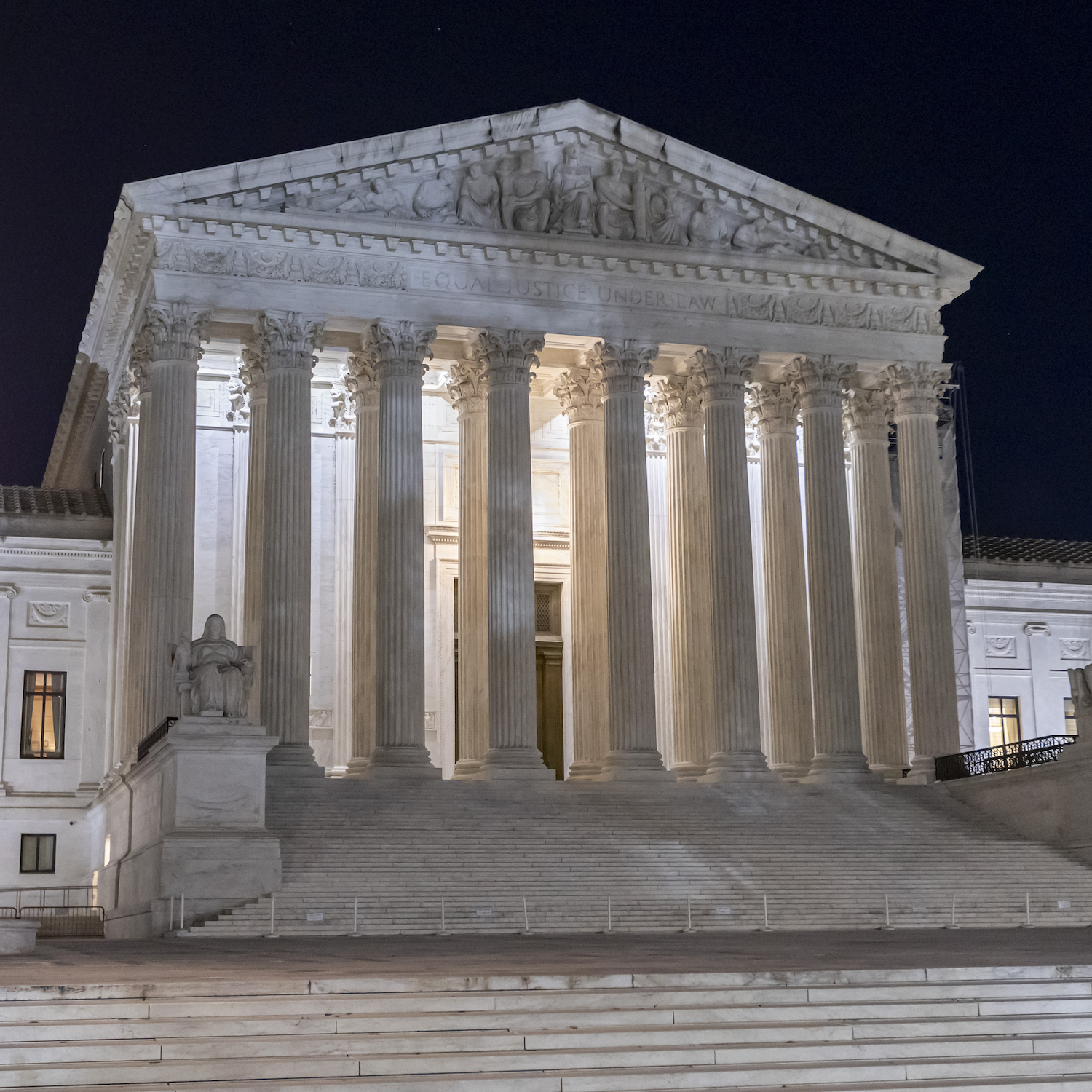
Good morning. It's Thursday, May 15th. I'm Shemitah Basu. This is Apple News today. On today's show, the Republicans raising concerns about Trump's Qatari jet gift in manufacturing towns. Support for tariffs is a mixed bag and why women feel the effects of alcohol more than men. But first, the Supreme Court will hear oral arguments today in a case that stems from President Trump's attempt to end birthright citizenship, the constitutional right that guarantees automatic citizenship to children born in the US Regardless of their parents citizenship or immigration status. Trump, in his first day in office, signed an executive order seeking to end this right. Attorneys general from 22 states, advocacy groups, and a number of individual immigrant plaintiffs have since challenged his order. And federal judges in three states have issued injunctions to block it from being enforced nationwide. One judge called it blatantly unconstitutional. But that's not actually what the Supreme Court is looking at.
- [01:17]
Maureen Grappi
The Trump administration did not ask the Supreme Court to decide whether Trump's executive order is constitutional.
- [01:27]
Shemitah Basu
Maureen Grappi is the Supreme Court correspondent for USA Today.
- [01:31]
Maureen Grappi
It asked the Supreme Court to narrow the holds that judges around the country have put on the policy. These judges have said this policy can't be implemented while the constitutionality of the policy is being litigated. And the Trump administration filed an emergency request to the Supreme Court saying that the judges shouldn't be allowed to do that.
- [01:56]
Shemitah Basu
So, in other words, the legal questions in this case are really about the scope of executive power and to what degree lower courts are allowed to restrict a president from pursuing this type of action. The administration is arguing the courts have overreached and that they're illegally limiting the power of the president. Those challenging the order have said their actions are warranted.
- [02:17]
Maureen Grappi
Without a nationwide injunction, without a nationwide pause for everybody, that's going to create chaos and confusion across the country about who exactly is entitled to birthright citizenship. So even if there are some legitimate criticisms that can be made about this process of putting policies on hold everywhere for everybody in the nation, they say this is the kind of case where those holds are completely justified and are, in fact, necessary.
- [02:47]
Shemitah Basu
These kinds of nationwide injunctions are relatively new. Both Presidents Obama and Biden face them. Trump, however, has faced a higher number in his presidencies.
- [02:58]
Maureen Grappi
Critics of the administration say, well, that's because the Trump administration has been pushing the boundaries much more than other administrations. The number of executive orders, for example, that the president has issued is much more than any of his predecessors. So then they say that there's no mystery then why he's facing More of these injunctions.
- [03:15]
Shemitah Basu
Grappi says the way the Supreme Court decides to handle this case could impact challenges to other Trump orders.
- [03:22]
Maureen Grappi
If the Supreme Court says, yeah, we think these national injunctions are a problem, and here is when they can or can't be used, that could affect challenges to Trump's policy changes that have already been made and that are likely still to come.
- [03:43]
Shemitah Basu
Let's turn now to the growing controversy around President Trump's plan to possibly accept a $400 million gift from Qatar, a luxury jet that he would use as Air Force One. Trump has said he would be, quote, stupid to turn down the plane. But a number of lawmakers on both sides of the aisle have said the opposite, like Senate Minority Leader Chuck Schumer, a Democrat.
- [04:05]
Maureen Grappi
News of the Qatari government gifting Donald TRUMP A $400 million private jet to use as Air Force One is so corrupt that even Putin would give a double take. This is not just naked corruption, it is also a grave national security threat.
- [04:26]
Shemitah Basu
Schumer has put a hold on all of the president's Justice Department nominees as he seeks more information from the admin. He's also called on Attorney General Pam Bondi, who signed off on Trump's plan to testify before Congress. Republicans have been outspoken, too. Senator Rand Paul of Kentucky called the plan a mistake. Senator Roger Wicker, who leads the Senate's Armed Services Committee, said, quote, it would be like the United States moving into the Qatari Embassy. And here's Senator Ted Cruz from Texas speaking with cnbc.
- [04:59]
Chuck Schumer
Well, listen, I'm not a fan of Qatar. I think they have a really disturbing pattern of funding for theocratic lunatics who want to murder us funding funding Hamas and Hezbollah. And that's a real problem. I also think that the plane poses significant espionage and surveillance problems. So we'll see how this issue plays out. But I certainly have concerns.
- [05:21]
Shemitah Basu
A number of far right activists have criticized Trump, too, like Mark Levin, a MAGA radio host, and conspiracy theorist Laura Loomer, who called the gift a stain on Trump's presidency. Conservative pundit Ben Shapiro has come out against it, too.
- [05:37]
Maureen Grappi
It just isn't America first in any conceivable way. If you want President Trump to succeed, this kind of skeezy stuff needs to stop.
- [05:44]
Shemitah Basu
There are strict rules under federal law about gifts for the president and federal employees. According to the Washington Post, they must report in annual disclosures any foreign gifts valued at over US$480. If a president or member of the first family wants to keep a gift worth more than that, they have to formally declare their intent to keep, keep it, pay fair market value for it, and pay federal taxes on it. Accepting a larger gift is allowed, but those items are almost always turned over to the National Archives or presidential libraries. During George W. Bush's administration, for example, he was gifted a puppy from Bulgaria who was sent directly to the National Archives, which found the dog a new home. In this case, Trump has said that he would transfer the plane to his presidential library after he leaves office and continue to use it. All of this is to say the reason for these rules is to remove any perception of a conflict of interest, ensuring public confidence in the decision making process. Trump's acceptance of this gift comes just as the administration is making sensitive deals with Qatar and other Gulf partners. Beyond the ethics of accepting this gift, there are questions about security and the cost to taxpayers, politico explains. Despite Trump's claims that this plane would be free, it's actually far from it. To retrofit a plane to serve as Air Force One, a private contractor would have to rip it apart down to the studs to make sure it meets the military's standards. Here's how Frank Kendall, who served as Air Force secretary in the Biden administration, put it to CBS Air Force One is a flying White House. It is equipped with everything the president needs that you can get into a 747 so he can do his job while he's traveling. This aircraft will not have those things, and to make it have those things would cost taxpayers hundreds of millions of dollars. Meanwhile, Boeing is already in the process of upgrading two 747s to serve as Air Force One. This was a multi billion dollar contract made during Trump's first term. The first of those two jets is expected to be ready in 2027, it just over a month since President Trump announced a set of sweeping tariffs in early April. What followed was a series of walk backs, pauses and carve outs, with businesses, markets and workers all reacting in real time to the economic impacts. Recent inflation data showed a slight cooling in consumer prices since March, and the stock market has now largely recovered the losses made this year. But the Fed has consistently warned that tariffs could lead to higher inflation and across the board, a 10% tariff on most US trading partners is still in place, according to the Washington Post. Part of what motivated the president to roll back aggressive tariffs was warnings from senior officials that his own voters, or Trump's people, as their source describes it, were beginning to suffer. Recently, the Post's Hannah Knowles traveled to the Lehigh Valley, a manufacturing hub in Pennsylvania, to talk to voters and workers about how the Trump tariffs were impacting their lives. And she went before the US and China agreed to lower tariff rates for 90 days.
- [09:08]
Hannah Knowles
What I found was a lot of skepticism about Trump's tariffs. And even among people who generally like what Trump is doing, you know, when you asked about the tariffs, you would get sort of grimaces or like, oh, I don't know how that's working out.
- [09:24]
Shemitah Basu
Right.
- [09:24]
Hannah Knowles
I mean, these are people who want to like a lot of what he's doing. And they weren't necessarily like outright critical, but they just weren't sure that this was necessarily the way to go.
- [09:33]
Shemitah Basu
Last month, the American truck manufacturing company Mack Trucks announced that it was planning to lay off as much as 10% of its workforce from a facility in the area in response to tariffs. Some Mac employees Knowles spoke with were unconcerned by stock market movements and thought tariffs could force a necessary change to bring back American manufacturing.
- [09:54]
Hannah Knowles
But I did talk to one of the union officials. He's a Republican. He didn't want to talk about how he voted, but he did say that he and he said he knows some people at this factory who regret how they voted and they voted for Trump and they're not sure that that was a good move.
- [10:08]
Shemitah Basu
Now, if there are any political consequences for the president in this closely divided swing state, the district's U.S. house representative up for reelection next year could feel it.
- [10:19]
Hannah Knowles
First, the Lehigh Valley is home to Congressman Ryan McKenzie, and he's a freshman. He flipped a very hotly contested district this past fall. He unseated Susan Wilde, a Democrat, in. So this is really a top target for Democrats. This is exactly the kind of district where they think they can ride this wave of backlash to Trump and really take back some of those seats that they lost.
- [10:43]
Shemitah Basu
MacKenzie has defended the tariffs, but called the Mac layoffs Disappointing. In 2024, MacKenzie won by just 1 percentage point and Trump narrowly lost Lehigh Valley while winning the state over foreign. Before we let you go, a few other stories we're following. Highly anticipated peace talks between Ukraine and Russia are happening today, but Russian President Vladimir Putin won't be there. Ukrainian President Volodymyr Zelensky said he was prepared to meet with Putin in Turkey, potentially setting the stage for their first face to face meeting since 2019. But despite Putin calling for direct talks without preconditions last week, the Kremlin revealed last night he will be sending a delegation. The past few weeks has seen some shift in tone from the Trump administration, especially following the highly publicized minerals deal between the US And Ukraine. Vice President Vance said recently that Russia was asking for too much, and Trump expressed suspicions that Putin could be stringing him along. Secretary of State Marco Rubio will also be in Turkey. Health and Human Services Secretary Robert F. Kennedy Jr. Faced lawmakers in back to back congressional hearings yesterday. He was called in to discuss next year's budget for HHS and mass layoffs under his direction as states like Texas confront their most significant measles outbreak in decades. Pressed on whether he would have his own children take a vaccine, he answered, probably for measles.
- [12:22]
Chuck Schumer
I you know, what I would say is my opinions about vaccines are irrelevant. I, you know, I don't want to measles seem like I'm being evasive. Yeah, but I don't think people should be taking advice, medical advice.
- [12:37]
Shemitah Basu
Me Kennedy was pressed for details on planned cuts. He's notified staff of job losses totaling 20,000 and is planning a major organizational restructure. He insisted he's prioritizing issues like debilitating disease, contaminated food and addiction. And finally, doctors are growing increasingly concerned about health risks for women who consume alcohol. According to a recent government survey, women have been drinking more in recent decades. Their consumption rate is nearly on pace with men now, and they're seeing greater health risks as a result, like liver disease and higher rates of alcohol related deaths than men. Part of this has to do with the fact that women have different body compositions than men. They have more fat tissue and less water in their bodies, which contributes to higher blood alcohol concentration. They also have fewer enzymes that can metabolize alcohol. Researchers suspect there's a link between alcohol consumption and rising rates of breast cancer, too. Studies suggest even one daily drink can increase a woman's risk of breast cancer by about 10%. You can find all these stories and more in the Apple News app. And if you're already listening in the News app, right now, we've got a narrated article. Coming up next. Fortune takes a look at how the Gates foundation plans to spend $200 billion in the next 20 years on efforts to eradicate diseases around the globe. And then when the money is spent, why the foundation will close for good. If you're listening in the podcast app, follow Apple News narrated to find that story. And I'll be back with the news news tomorrow.