Loading summary
Transcript19 lines
- [00:05]
Sumita Basu
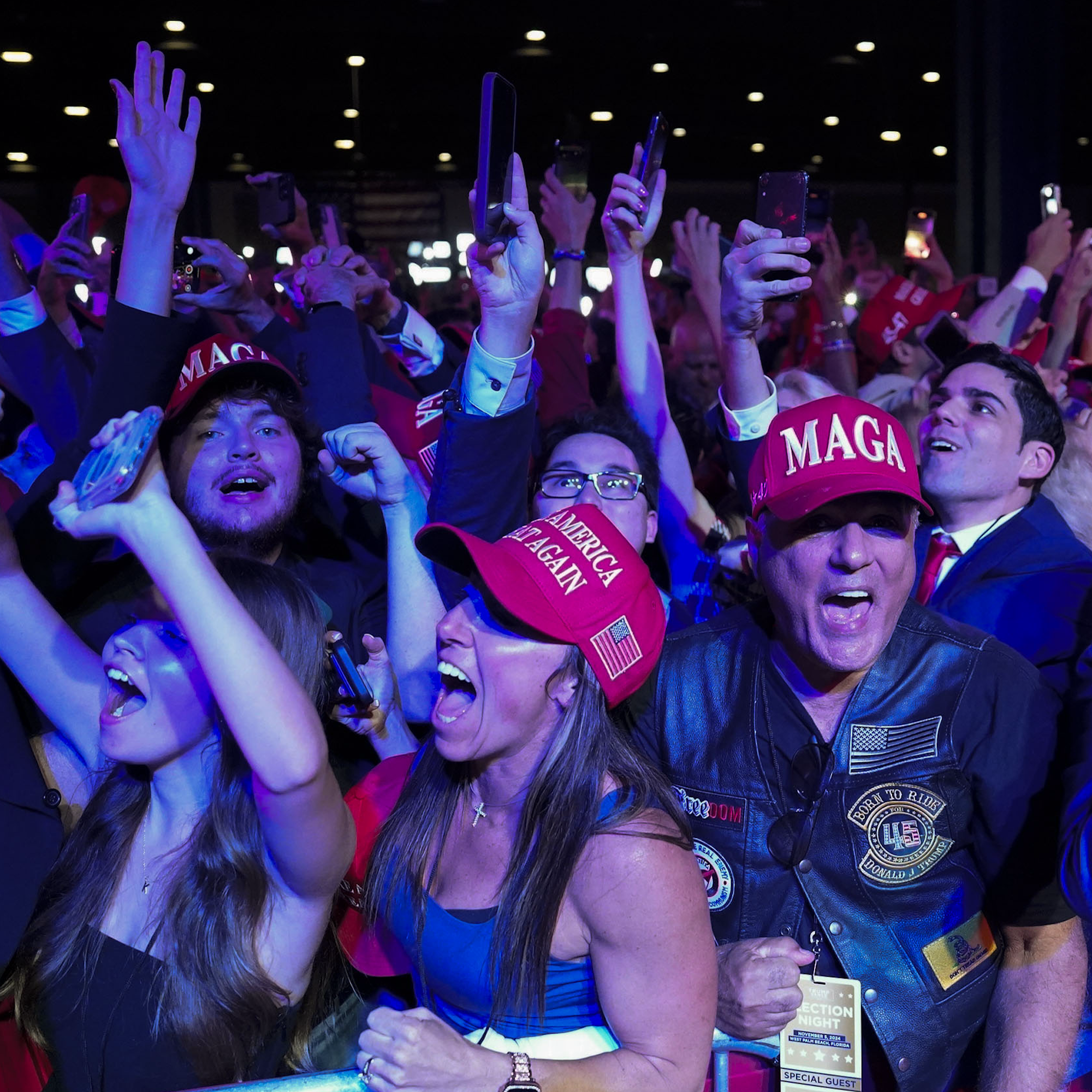
Good morning. It's Monday, November 11th. I'm Sumita Basu. This is Apple News Today. On today's show, why voters around the world are rejecting the party in power, debunking election conspiracies from the right and the left, and an election victory just in time for Veterans Day. But first, what can President elect Donald Trump get done on day one in office? He has now won the electoral college with 312 votes to Kamala Harris, 226. He has swept all seven swing states and he's 4 million votes ahead in the popular vote with about 6% of ballots left to be counted. CNN and the AP spoke to some Trump supporters about what they want to see Trump do right away.
- [01:00]
Trump Supporter
The first thing I wanted to do is pardon every single January 6th protester. I'm glad Trump is back. Let's fix this economy. Let's close this border. Let's combat this illegal immigration, immigration, trade and jobs, endless wars, ending the endless wars. I think those are going to be priorities for the new GOP moving forward.
- [01:22]
Sumita Basu
As for what Trump has said he'll do on day one in office, day.
- [01:26]
Trump Supporter
One, we're doing two things, closing the border and drill, baby, drill.
- [01:31]
Sumita Basu
Let's start with immigration policy, where Trump has vowed to not just close the border, but to launch the largest deportation operation in American history. He has also said he would re implement his remain in Mexico policy, which requires asylum seekers to stay in Mexico until their cases are processed by US Immigration courts that he'll resume construction of the wall along the southern border, and that he'll end birthright citizenship to children born to anyone who end entered the US Illegally. The Wall Street Journal says some of these executive orders will be pre drafted and ready to sign on day one, but in reality, it'll be costly and legal challenges are likely. Here's how NPR political correspondent Danielle Kurtzleben described it.
- [02:15]
Danielle Kurtzleben
None of it is to say that deportations won't happen. I'm not saying that at all, really. What I'm saying here is that those deportations might not be as rapid, as easy, or as big as he and his supporters hope. But you can bet he'll do something. This was central for him. It's just unclear what he'll be able to do.
- [02:33]
Sumita Basu
Late on Sunday, Trump announced he's tapping Tom Homan, the former acting director of U.S. immigration and Customs Enforcement, to join his administration as border czar. Homan was an early supporter of Trump's zero tolerance policy in his first term, which led to family separations at the border as for energy policy, Trump has urged oil and gas companies to expand their drilling operations, and he has said he would cut American energy bills in half. But it's unclear how. The Journal reports officials close to Trump say they have already drafted an executive order withdrawing the US Once again from the Paris climate agreement. The New York Times reports that there are other drafted executive orders that would redraw the map of some national monuments to open up more land in the west for drilling and mining. And we should note, today is the start of the COP 29 conference. That's a crucial global climate conference that Politico says Trump's election threatens to derail. Among some of the other things Trump could do on Day one, NPR reports he is considering an executive order that would reclassify many federal employees as at will employees, making it easier for him to put in place the people who will be as supportive of his agenda. And he's promised in the past to pardon many of the thousand or so January 6th rioters who he has called hostages and political prisoners. Republicans in Congress say they are prepared to work aggressively to help Trump pass his agenda. Meanwhile, Democrats and civil liberties groups like the ACLU are already promising to use the courts to fight any perceived abuse of power by Trump. Trump's campaign adviser, Jason Miller told CNN that Trump's lead in the popular vote, quote, changes everything and gives him the mandate to enact his agenda with the confidence that most Americans support him. Our election results are part of a global trend. Incumbents everywhere are losing races in Poland, then Argentina, Botswana, India, South Korea, South Africa, the UK And North Macedonia in all of those elections. And here too, the incumbent party lost.
- [04:55]
Zach Beacham
Vote share what we've seen in countries, you know, that are similar to the US meaningfully and even in some that are quite different, but still Democratic right, is a lot of hostility to governing parties.
- [05:07]
Sumita Basu
That's Zach Beacham, a senior correspondent at Vox who covers the rise of anti democratic politics around the world.
- [05:14]
Zach Beacham
Something has happened that has led to people not just in the US where this phenomenon is well documented, but everywhere being like, there's something wrong in the nature of governance right now. Something about we think that the people in power right now aren't doing the best possible job. And to me, you know, this is partially a mystery because it's just new.
- [05:37]
Sumita Basu
Here in the US ahead of the election, more than 70% of Americans said they were unhappy with the direction the country was headed. Beacham explains how political scientists try to understand these types of phenomena.
- [05:49]
Zach Beacham
It is very normal in the United States for the governing party to push people away from its policy preferences and priorities. It's called thermostatic public opinion. It's the like sort of unlovely term that political scientists use, but I like it a lot. Right. It's, you know, a thermostat going up and down depending on what the temperature is outside. People push it in the opposite direction of whatever the temperature is to try to get them to their just right. Median temp, 70 degrees or whatever that they always like. And that is. That's very common, Right. Typically you see it in midterm elections. Right. That's why the President almost always loses ground historically in midterms, but it's less.
- [06:28]
Sumita Basu
Common in presidential election years. Just look at the data. Kamala Harris wasn't exactly the incumbent, but as vice president, she represented the incumbent party. In our history, only 10 incumbent presidents have lost their reelection bids. And according to Goldman Sachs, most lost when there was a recession. While today there is no recession, at least not yet. Beauchamp says there's reason to think that inflation will play a role when the political scientists write this chapter as well. Muslim and Arab voters were one major constituency that shifted away from the Democratic Party in this election, in what many see as a referendum on the party's positions on the Israel Hamas war. In Dearborn, Michigan, a city with one of the largest Arab American populations in the country, President elect Trump won 42% of the vote. Kamala Harris got 36%. And a large share of the rest went to third party candidate Jill Stein, who has called Israel's war a genocide. NBC News says the result was virtually the same in other nearby Middle Eastern communities. In fact, the Council on American Islamic Relations, one of the largest Muslim advocacy groups in the country, surveyed Muslim voters after the election. Just 20% of respondents said they backed Harris. That compares to nearly 70% who backed Joe Biden in 2020.
- [07:56]
Trump Supporter
The Arab American vote, the Muslim American vote made a difference, and it's part of the President Trump victory.
- [08:05]
Sumita Basu
That's Imad Hamad from the American Human Rights Council. Speaking with international broadcaster DW News. One Palestinian American voter, Lexis Zaydan, explained why she decided not to vote for the Democrats.
- [08:18]
Danielle Kurtzleben
I could not get myself to bubble in Kamala Harris, who has repeatedly said over the last seven or eight months that she believes in Israel's right to defend itself.
- [08:27]
Sumita Basu
Their rejection of Democrats comes as the Middle east braces for what a second Trump presidency might mean. Already, Israeli Prime Minister Benjamin Netanyahu and Donald Trump are reported to have spoken by phone at least several times. Since the election, with Netanyahu saying that the two leaders see eye to eye. Meanwhile, Qatar announced its withdrawing from its role as mediator between Hamas and Israel, saying the two sides refused to negotiate in good faith. Still, despite the obstacles, US Republican Senator Bill Haggerty told CBS News this weekend that he believes President Elect Trump can bring an end to the war.
- [09:04]
Bill Haggerty
It seems that the entire environment is shifting right now because they see new leadership coming in and I'm, I'm encouraged by that and I think we'll have new opportunities to again, President Trump was able to deliver peace through strength. I think that's on the way and I'm optimistic what it might lead to.
- [09:19]
Sumita Basu
If Trump's first term was any indication, we can expect a very pro Israel approach in the coming years. During his first term, Trump moved the Israeli Embassy from Tel Aviv to Jerusalem, recognized the Golan Heights as part of Israel, and declared that Israel's settlements in the west bank were not violations of international law, all positions that upended decades of U.S. policy in the region. Dove Waxman, an Israel Studies professor at ucla, told the Washington Post that Trump's America first approach could cut both ways for Israel. On the one hand, he says, Trump may be open to Israel seizing more Palestinian territory. On the other hand, we could see the US Cut funding for Israel as Trump is generally against US Money going to foreign wars. A big test of how shifting US Politics will play in the region comes this week as Israel approaches the US Imposed deadline to allow more aid into to Gaza or risk American restrictions on military funding. That was the ultimatum put forth by the Biden administration ahead of the presidential election. But now with Trump elected, it's unclear if that ultimatum will be taken seriously, even as Israeli airstrikes killed scores more people this weekend and experts say a famine is imminent or may already be happening. Before we let you go, a few other stories being featured in the Apple News app. In the days since the election, conspiracy theories have been spreading on the left and the right about election fraud. So let's take a moment to clear this up. It all started from the early vote tallies suggesting millions fewer Democratic votes compared to 2020. That set off two competing conspiracy theories on the left, how did those votes go missing? And on the right, does this suggest there was fraud in 2020? Neither of those conspiracies are true. In the days since the election, as more votes have been counted, estimates from the Associated Press suggest that the number of votes cast this year will be about 157.6 million, down just 700,000 from 2020. A good takeaway from this is it takes time after an election to get the full picture of who voted and how. In other election news, some Americans say they're being taunted and harassed in the aftermath of the election. According to CBS News, thousands of black residents in at least 20 states have received racist text messages in the past few days from numbers that they don't recognize. Some of the messages tell the recipient they were selected to pick cotton or to become a slave. Federal and state authorities are working to figure out where these texts are coming from. Meanwhile, some men online have been taunting women by repeating the phrase quote your body, my choice. It was started by Nick Fuentes, a live streamer with racist, antisemitic and anti women views. And it's being repeated all over the Internet, though it's unclear how many of the reposts are bots. And finally, today is Veterans Day and former service members will be celebrating hitting a new milestone when the next Congress is sworn in in January. It'll be made up of the most women veterans in its history. At least eight women veterans have won their election so far, and a few are still yet to be called. They'll join dozens of other male vets who won their races and 14 Senate incumbents who did not have races this year. One of those veterans, however, will be stepping down soon, JD Vance, who was elected vice president. You can find all these stories and more in the Apple News app. And if you're already listening in the news app right now, we've got a narrated article coming up next. The Wall Street Journal reports on a mystery about one of Europe's richest men. What exactly happened to the $13 billion fortune that belongs to the heir of Hermes? There are a lot of theories, and if you're listening in the podcast app, you can follow Apple News News plus narrated to find that story. I'll be back with the news tomorrow.