Loading summary
Transcript21 lines
- [00:00]
Shemitha Basu
Hey there, it's Shemitha. I've got a quick request for you. If Apple News Today is an essential part of your morning routine, follow the show in Apple Podcasts. And if you have another 30 seconds, leave us a rating and a review, too. It helps other people find our show and it helps us know what you like about it. Thanks. Good morning. It's Friday, April 11th. I'm Shemitah Basu. This is Apple News Today. On today's show, a look back at this week in tariffs. The Supreme Court says the Trump administration must help bring back a man who was wrongly deported to El Salvador and why some foreign musicians are thinking twice before coming to play shows in the.
- [00:43]
Sean Donnan
US.
- [00:50]
Shemitha Basu
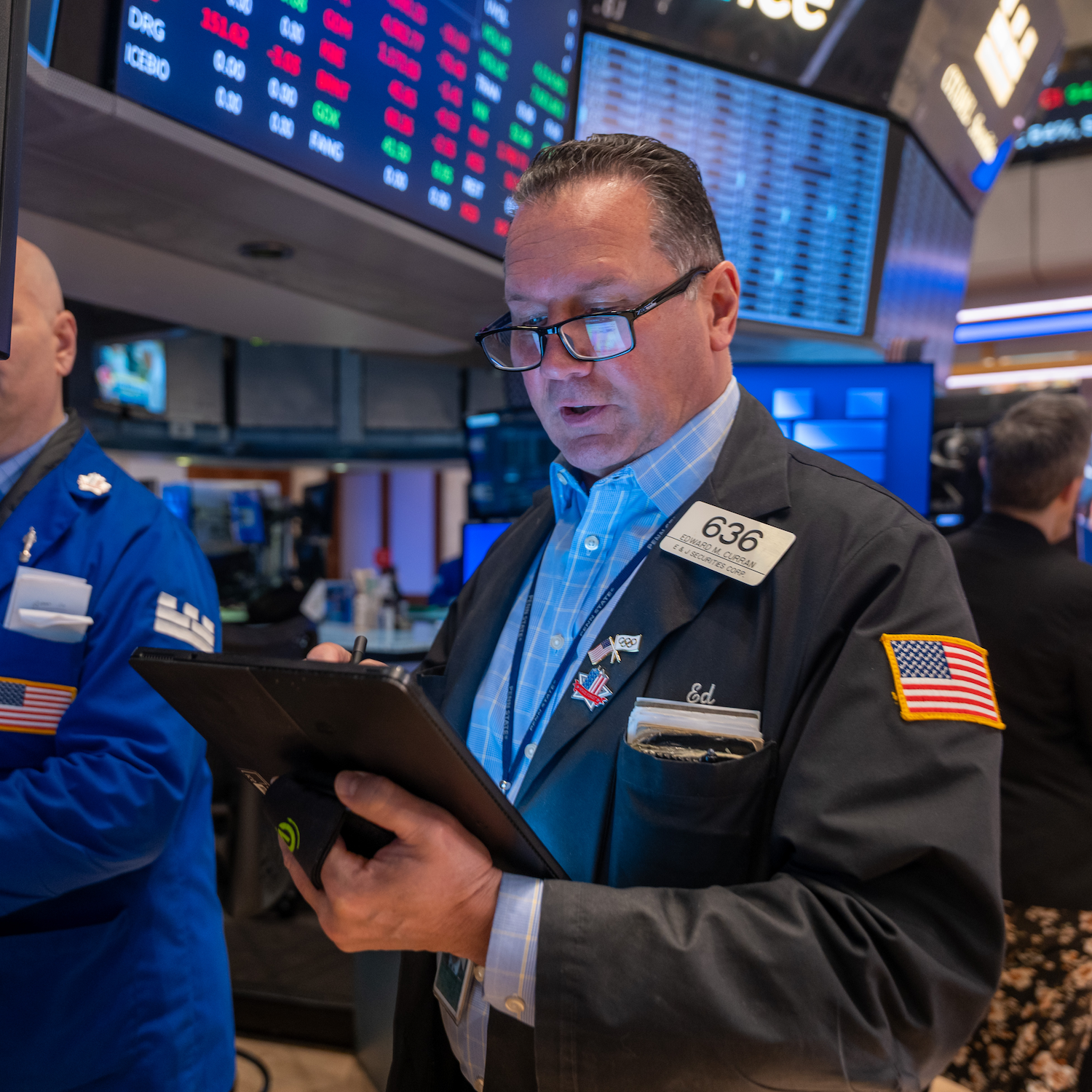
Let'S start with the biggest story all week. President Trump's tariff policy. It's been one of the most volatile weeks we've seen in decades for the markets. Even as he reversed himself on broader tariffs, the Trump administration imposed tariffs of 145% on China. To understand the impact of all of this and what comes next, I called up Sean Donnan, a senior writer for economics at Bloomberg News, And I started by asking him why the White House reversed itself in the way that it did and what, if anything, this chaotic week has actually accomplished.
- [01:23]
Sean Donnan
So, look, I think the most important thing to remember is that at the end of this week, we have much higher tariffs in place here in the United States than we did before this week. The Yale Budget Lab was out this week with a new analysis that says the average tariff rate on goods coming into the United States is now at its highest level since 1909. And we're starting to see in the global economy the impact of that. We're starting to see global trade start to slow down. We're seeing companies cancel shipments, orders from suppliers in China. While President Trump scaled back his tariffs on 60 or so countries, he's only scaled them back to a 10% baseline that again, did not exist there a week ago. There's also a 25% tariff on imported cars that's still in place. There's more sectoral tariffs to come. And over the week leading up to the scaling back, we really had an incredible reaction in global financial markets. Something like 19 or $20 trillion in value was wiped out of global financial market. Just to give you an idea, the US economy is about a $30 trillion a year economy. I mean, that's wiping out two thirds of the US Economy from global financial markets. It's enormous. And then the night before scaled back just in the kind of last day, the Market reaction turned into the bond markets. And what we saw was the yields on US Treasuries go up very, very fast. And that immediately started ringing a different kind of alarm bells. And that seems to have been what caused president now come to the end of this week. And I say, look, the story in the financial markets is not over. It's going to drag on for some time. And the tariffs are still there.
- [03:19]
Shemitha Basu
Yeah, well, that moment that you're describing on Wednesday, it sounds like that was a turning point for a lot of people watching closely this tariff policy. I mean, we heard Fox Business senior correspondent Charlie Gasparino, who's been a big supporter of President Trump's, basically say this is not sustainable.
- [03:37]
Sean Donnan
I want to tell you right now that Donald Trump outsmarted the world. Trust me, I'm an American. I support my president. But that's not really what happened here. From what I understand, people focus on the stock market all the time. It's the bond market and the sort of lending markets. That's the plumbing of the economy. And those markets were imploding last night.
- [03:58]
Shemitha Basu
So was this actually a strategy of Trump's? Are we seeing something that suggests this is a strategy that unfolded in the way he had planned, or or is this really Trump conceding and walking something back because it clearly was too unpopular and unsustainable?
- [04:15]
Sean Donnan
Look, I mean, it depends who you listen to, right? I mean, the White House very quickly started to focus on the number of countries who have come to them, you know, wanting to negotiate new deals. And therefore, this was the art of the deal. And President Trump got the leverage he wanted. He's getting the result that he wants. This is all the plan. A lot of reporting at the same time indicated that even some senior economic aides did not know this was happening, that the scaling back was happening. In fact, Jameson Greer, the US Trade representative, was up on Capitol Hill and there's pictures of him kind of in the middle of testimony, kind of looking at his phone and going, oh, okay, things have changed. In theory, he should be the person driving U.S. trade policy or certainly one of the people in the meetings and at the forefront of that.
- [05:07]
Shemitha Basu
I mean, he was even admitting, admonished in that hearing, it sounds like you're sitting here in front of us. Why is there a big movement on trade policy?
- [05:13]
Sean Donnan
Absolutely. And it's almost like he learns from the rest of the world what someone has done on his portfolio. And that's been a feature of Donald Trump and how he manages the economy and trade policy going back to his first term. Now, the risk of this, of course, is that Donald Trump somehow gets emboldened by one day's gains. Right. What we saw on Wednesday after he made the announcement was the biggest increase in the Dow Jones and the s and P500,500 that we had seen since 2008. Right. You know, this is an enormous movement. Now, there's a lot of people who also tell you that that's not a sign of a healthy market. Right. Markets should not be swinging around like this. And you know, the United States is supposed to be and its financial markets are supposed to be a kind of beacon of stability, a safe haven in the storm. And over the last week, they've been anything but.
- [06:06]
Shemitha Basu
Let's go back to this idea of concessions for a moment because we're hearing President Trump say this, some of is saying this, that they have managed to get dozens of countries to engage with them since the tariffs, new tariffs were introduced and that they're hopeful that this will now lead to serious concessions. What concessions is he hoping to get? How much of the concession talk to you appears to be substantial versus pr?
- [06:33]
Sean Donnan
Basically, look, that's a very good question, but we're only going to be able to see the answer to that when we actually see these deals and how meaningful they are and so on. Donald Trump has a history in the past of kind of proclaiming victory and claiming that he has just secured a magnificent deal. When you scratch under the surface, it's less than that. So some of the issues that Donald Trump wants to solve in a matter of days with these tariffs are issues that have been there for decades, have been pretty intractable. Now, if he's able to solve those issues, I think a lot of people in the United States will say that's great.
- [07:11]
Shemitha Basu
Well, so the administration's stated goal, end goal at least, is to bring American manufacturing back to the United States. Can I ask you to just evaluate that vision for a moment? I mean, how realistic is that? What would it look like? How long might it take?
- [07:31]
Sean Donnan
I think a lot of people in the United States feel like one of the consequences of globalization has been the loss of good paying factory jobs. That's a completely legitimate complaint. There are communities around the United States that have been decimated by deindustrialization. There's a lot of those communities, in fact, and Donald Trump has built his political support in part on votes in those places. The question is how you do it. During the Biden administration, the idea was industrial policy. We're going to give subsidies to companies to kind of end tax breaks. And we're going to find other ways to encourage them to make stuff here in the United States, whether it's semiconductors, electric vehicles, other green energy kind of products. They kind of focused on target targeted industries. Donald Trump's idea is to instead throw up this kind of defensive wall. And there's a lot of people at companies, and I hear from manufacturing companies and also economists who say, well, that's okay, we get it. But a lot of the things that we need to build here in the United States are components that come from overseas. And if you put up tariffs on steel, well, then what ends up happening is domestic steel prices also go up because they no longer have that competition from overseas. And that makes building a factory here more expensive. We know that there are fewer young people coming into the workforce every year just as a result of demographics. We also know that there's a huge amount of baby boomers who are exiting the workforce just as a result of demographics. We know that Donald Trump is cracking down on immigration as well. So who's going to work in these factories is another issue. And then there's other issues like permitting and so on. So we're not going to know for two, three years how successful Donald Trump's strategy is. But we do know now that there are all these barriers that are there and that those aren't necessarily being addressed, and in some cases, they're being made worse by Donald Trump's policies just to.
- [09:36]
Shemitha Basu
Bring us to an end here, to an end point of reflection. I mean, we've talked about there being these two competing narratives of what happened this week. I think we're going to be hearing about this for a long time. The Trump administration is touting this week as a victory, as a, this was our plan all along. Others are calling it a capitulation, a real walk back after so much backlash. How would you advise people who are listening to think about these dual narratives and decide which one is closest to true?
- [10:07]
Sean Donnan
Look, I think the kind of victory capitulation narrative is, I would just kind of set that aside. They're just blips on a policy trajectory that is taking the United States towards high tariffs, towards a new era of protectionism that Donald Trump is deliberately pursuing. And the real story in the weeks and months, possibly even years to come is going to be how the United States manages that shock. Whether we go into a recession here in the United States, whether the world goes into a recession as a result of these things, or whether it finds a way through. Now, hopefully, some of these negotiations that are going to come, whether as a result of victory or capitulation, maybe take you away from some of the worst case scenarios, but the US Is still going to be a more closed economy than it was a week, 10 days, two months ago.
- [11:10]
Shemitha Basu
Chandanan with Bloomberg. Thank you so much for your time.
- [11:13]
Sean Donnan
Hey, thank you so much for having me.
- [11:30]
Shemitha Basu
Before we let you go, a few other stories we're following. The Supreme Court ruled Thursday the Trump administration must facilitate the return of a Maryland man mistakenly deported to El Salvador back to the United States. A lower court judge ordered the administration to return Kilmar Abrego Garcia by Monday night, but Chief Justice John Roberts paused that order so the court could have time to review the case. The administration accused Abrego Garcia of being a gang member, but so far has not publicly provided any evidence of that. They admitted he was erroneously deported, but said there was nothing they could do to return him. And they argued the judge who ordered his return had no power to do so. In addition to saying the government should help him return, the justices also ordered his case to be handled as it would have if he had not been deported. There were two aviation incidents on Thursday. First in New York, a helicopter carrying six people went down into the Hudson River, ABC News reports all six people on board, including a pilot, two adults and three children were killed. Meanwhile, in Washington, a plane carrying a number of members of the House from New York and New Jersey was clipped by another plane while on the ground at Reagan National Airport. Both were American Airlines aircraft. Reagan Airport has been in the public eye ever since an American Airlines jet collided with an army helicopter in January, killing 67 people. And finally, the first of two weekends of the Coachella music festival kicks off today. The LA Times reports recent high profile incidents at the US Border where people were denied entry has some foreign artists worried about traveling to the United States, especially if they've been critical of President Trump. The US Is the biggest touring market and festivals like Coachella attract music acts from all over the world. According to the Times, this general feeling of unease, plus recently increased visa costs and longer wait times, are making some artists call their lawyers or even think twice before coming to perform in the US you can find all these stories and more in the Apple News app and check out our interview show. In conversation this week, I talked to New Yorker staff writer Jonathan Blitzer about the recent deportation of more than 200 Venezuelan migrants to a maximum security prison in El Salvador. Blitzer spoke about what he sees as the near silent Democratic response to the Trump administration's immigration agenda.
- [14:01]
Sean Donnan
I think the agenda they have is more radical than it's ever been. I think the political resistance to that agenda is as muted as I've ever seen it, which is also a source of real alarm for me. And I think actually this is the real less laboratory where you see, to my mind, the most anti democratic behavior from the administration actually beginning to take shape.
- [14:21]
Shemitha Basu
If you're listening in the Apple news app right now, that episode is queued up to play for you next. Enjoy the weekend and I'll be back with the news on Monday.