Loading summary
Transcript19 lines
- [00:05]
A
Good morning. It's Monday, January 5th. I'm Shemitah Basu. This is Apple News Today. Welcome back after a long holiday break. Let's spend most of our time today on Venezuela. What we know about what's unfolded in the past few days, what US Leaders are saying and how Venezuelans are reacting. Late Friday night into Saturday morning, a U.S. army Special Forces unit stormed a safe house in Caracas where Venezuelan President Nicolas Maduro and his wife were reportedly sleeping. Over the course of just a few hours, Maduro, who had been in power since 2013, was deposed and now faces trial in New York on federal criminal charges, including narco terrorism conspiracy. The operation was a dramatic escalation of a months long campaign in the waters around Venezuela that involved the seizure of oil tankers, airstrikes on alleged drug boats and pressure from the US On Maduro to leave office of his own accord. Removing Maduro in this way, using US Military force without congressional approval and in apparent violation of international law has led to major questions about what happens next in Venezuela. On Saturday, President Trump began to lay out the United States plans.
- [01:27]
B
So we're going to stay until such time as we're going to run it, essentially until such time as a proper transition can take place.
- [01:35]
A
On Sunday, Secretary of State Marco Rubio said US Military forces are currently still off of Venezuela's coast and will maintain a quarantine around the country to prevent oil tankers from entering and leaving and to hold leverage over the country during its transition. President Trump also said that the US Would maintain all other military options, including deploying ground troops in the country, until US Demands were met. And he said that US Oil companies would make major investments in Venezuela and fix the country's oil infrastructure. Venezuela has the world's largest oil reserves, but they're a largely untapped resource. Rubio sought to clarify Trump's comments on the oil industry in an interview with Meet the Press yesterday.
- [02:20]
B
We don't need Venezuela's oil. We have plenty of oil in the United States. What we're not going to allow is for the oil industry in Venezuela to be controlled by adversaries of the United States. You have to understand why does China need their oil? Why does Russia need their oil? Why does Iran need their oil? They're not even in this continent. This is the Western Hemisphere. This is where we live. And we're not going to allow the Western Hemisphere to be a base of operation for adversaries, competitors and rivals of the United States.
- [02:44]
A
He went on to say that the administration wants to see money made from the oil industry go toward Venezuelan citizens. While much of Venezuela's oil previously went to refineries in the U.S. china is its largest customer now. Experts say, however, it could take at least a decade to make any meaningful oil output. Let's stick with Venezuela. And who is currently in charge in Caracas? Delsey Rodriguez, who had been Maduro's vice president, was sworn in as an interim president in a secret ceremony over the weekend and is poised to be a key figure moving forward. Word Trump claimed on Saturday that Rodriguez, who had helped Maduro hold on to power, would effectively do whatever the US Wanted. But she struck a defiant tone in an address to the nation hours after Trump's press conference in which she said that Maduro was the rightful president, demanded his return, and said that Venezuela would never again be, quote, a colony of any empire. Despite her initial combative tone, by Sunday night Rodriguez appeared to have softened a bit, inviting the US Government to work together in backing Rodriguez. The White House is also effectively sidelining the Venezuelan opposition leader and recent Nobel Peace Prize winner, Maria Corinna Machado. She's pushed for another opposition figure to assume power, Edmundo Gonzalez, recognized by many countries countries as the winner of the 2024 Venezuelan presidential election. John Lee Anderson is a staff writer at the New Yorker who has profiled political leaders in the region, including former Venezuelan President Hugo Chavez and Maduro. He told us why Machado, who has praised Trump, is not getting his support right now.
- [04:42]
C
I think the American calculation is that if they were to be placed in power on the heels of an American invasion, you would see military attacks coming from Venezuela's army and its intelligence service and their paramilitaries. So this is a way of keeping the country stable, violence free. It's a very attenuated transition at the moment, which I'm not sure we've seen anything quite like it before.
- [05:08]
A
Anderson explained how Maduro's rise to the presidency in the years since have led to this moment.
- [05:15]
C
Maduro had the bad luck in 2013 to acquire power after Chavez died. Just when the oil prices plummeted, which had sustained Chavez's extraordinary boom for the past decade, a trillion dollars went through his hands. They tried to invest it in social experiments, food handouts, housing. Most of these things went sideways. There's very little you can point to and say, ah, that was money well invested. It wasn't. There was some corruption, there was negligence, there was a lot of ineptitude.
- [05:46]
A
Maduro also proved to be different than his predecessor over time.
- [05:50]
C
Maduro eventually showed in time as he began to come under siege from political opponents seeking to unseat him one way or another, mostly by legal means in elections, sometimes with street demonstrations, once by a coup that he was willing to use violence in a way that Chavez hadn't been. So he's foxy, he's street wise, he's not unwilling to get hard himself.
- [06:15]
A
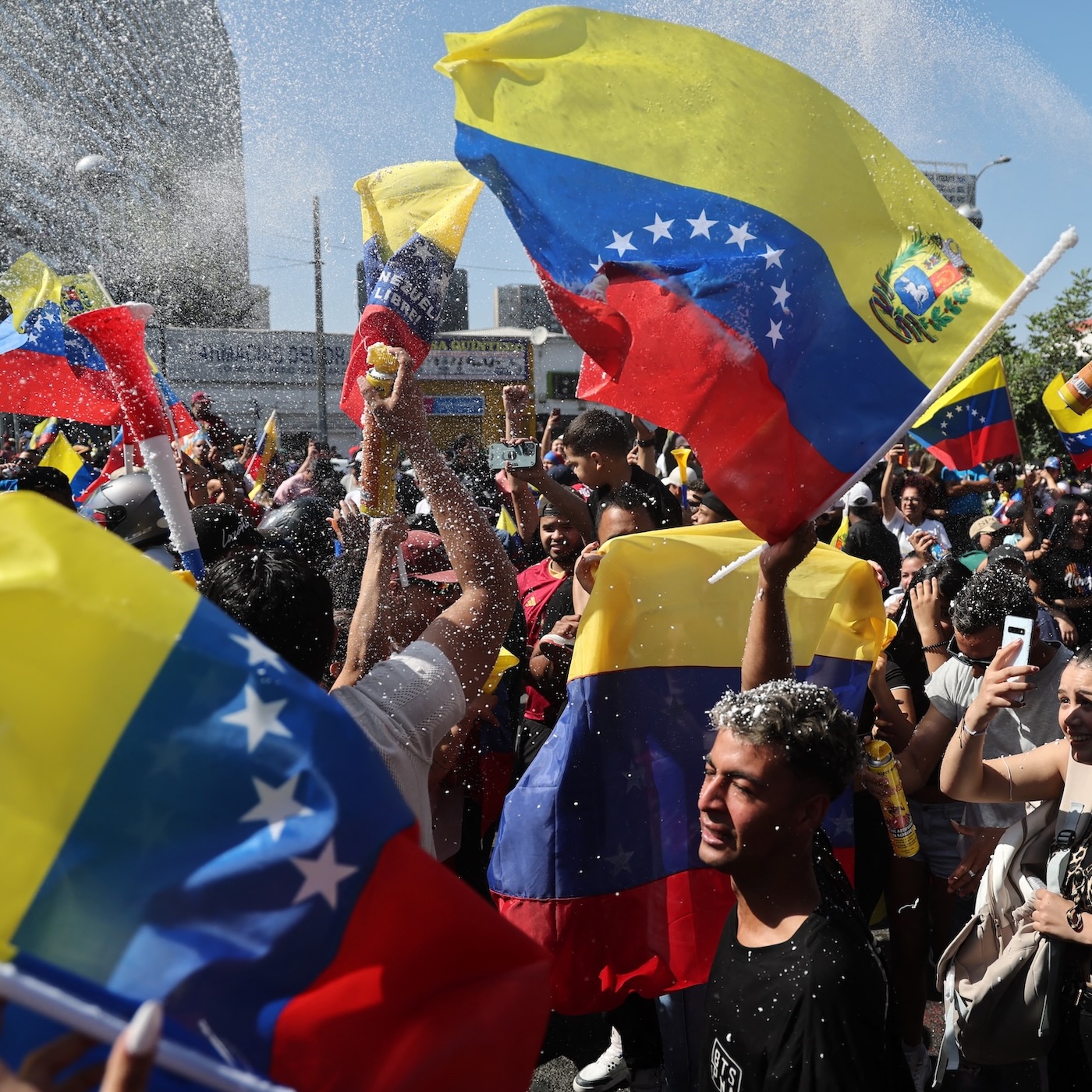
Early reaction in Venezuela appeared to be mixed. The Guardian spoke to a number of people in Caracas who described feeling unstable uncertainty and anger, not knowing whether the remaining regime will crack down on its citizens. While in large Venezuelan communities in the US like Doral in Florida, there were celebrations. Anderson said that even as many have been excited about the prospect of Maduro out of power. Trump's approach and his comments about Venezuelan oil and the country's new leader have.
- [06:46]
C
Led to concern it involves a certain amount of blackmail because he said, we came in hard, we got our man, we can come in, and we will come in much harder if you guys don't settle down. So he's basically saying, do what we say or else. And this is being imposed rhetorically on a population that many of whom of the people there may be glad to see the end of Madura, but now they're really worried because his comrades are still in power and they seem to be backed up by Trump, who is only really interested in their oil.
- [07:25]
A
As US And Venezuelan leadership work through this transition, one important voice on the American side is Secretary of State Marco Rubio. The Washington Post went so far as to call him the Viceroy of Venezuela. On NBC's Meet the Press yesterday, Rubio was asked whether he himself was now in charge of the country of roughly 30 million people. Rubio did not say directly whether that was true.
- [07:51]
B
I think everyone knows I'm pretty involved on politics in this hemisphere, obviously a secretary of State, a national security advisor, very involved in all these elements. The Department of War plays a very important role here, along with the Department of Justice, for example, because they've got. They're the ones that have to go to court. So this is a team effort by the entire national security apparatus of our country.
- [08:09]
A
Trump, meanwhile, is leaning on Rubio to enact his goal of dividing up oil resources in Venezuela and other duties. A senior US Official told the Washington Post the array of tasks and policy decisions facing Rubio now is, quote, stupefying. That not only includes energy policy, but security, sanctions and, perhaps most importantly, elections. Rubio said on Meet the Press talks of elections are premature and won't happen until Venezuela addresses issues he said are still left over from Maduro's reign.
- [08:43]
B
We are going to give people an opportunity to address those challenges and those problems. Until they address it, they will continue to face this oil quarantine. They will continue to face pressure from the United States.
- [08:53]
A
Rubio has built much of his career in politics on denouncing Latin American leaders who are hostile to the U.S. rubio's parents left Cuba before the communist takeover in the late 50s, and he has pushed regime change in Venezuela for more than a decade. Alejandro Velasco is an author and expert on modern history in Latin America and an associate professor at nyu. He was born and raised in Venezuela. He told Democracy now that he thinks Rubio has an ultimate goal that extends beyond the reaches of South America.
- [09:27]
D
He primarily just wants to get rid of the Cuban government, and so he knows that he can't sell Trump on ideology. He can't sell Trump on the idea we're going to commit troops, we're going to commit a ground invasion just on the basis of ousting a communist. So he has to find other ways, ways to do that. And he's found it through drugs.
- [09:43]
A
President Trump, meanwhile, also addressed the issue, saying on Sunday, quote, cuba looks like it's ready to fall. As the Washington Post points out, Rubio not only has to navigate the minefield that is determining what happens next in Venezuela, but also how to rebuild trust among U.S. lawmakers, many of whom have accused him of lying to Congress a few weeks ago when he said the Trump administration would seek congressional approval if it wanted to take military action action against Venezuela. In an interview with the Post, Rubio denied that he had lied and said this was not a military operation but a law enforcement operation. And finally, a few other stories were following. Authorities in Switzerland said Sunday they have identified all 40 victims who died in a massive fire at a bar at a ski resort during during a new year celebration. Sparklers being carried on bottles likely ignited the ceiling, according to preliminary findings. In addition to the 40 people who died, 119 people were injured. The victims ranged in age from 14 to 39 years old. The owners of the bar are currently being investigated for manslaughter, arson and negligence, according to the BBC. The flu surged significantly in the United States in the month of December, according to data from the CD. Authorities say the 2024-2025 flu season was the worst on record since 2018. One epidemiologist told the Guardian, you should still get the flu shot if you haven't. USA TODAY also has a list of flu symptoms that may require medical attention. They include shortness of breath or trouble breathing, blue lips or face in children, and persistent dizziness or confusion. And finally, with every new year comes new creative works hitting the 100 year mark and entering the public. CBS has a little write up of copyrighted books, films, songs and art that now have officially expired protections and are available for free use. It includes the first cartoon in which Betty Boop appears, the earliest depictions of Mickey Mouse's dog Pluto, the classic children's book the Little Engine that Could, and the song Dream a Little Dream of Me. You can find all these stories and more in the Apple News app. And if you're already listening in the news app right now, we've got a narrated article. Coming up next, women's health reports on hormone therapy, specifically testosterone for women to address menopause symptoms and how since there is no federally approved product, it's created a confusing gray area on dosage and where to find it. If you're listening in the podcast app, follow Apple News plus Narrated to find that story. And I'll be back with the news tomorrow.