Loading summary
Transcript31 lines
- [00:05]
A
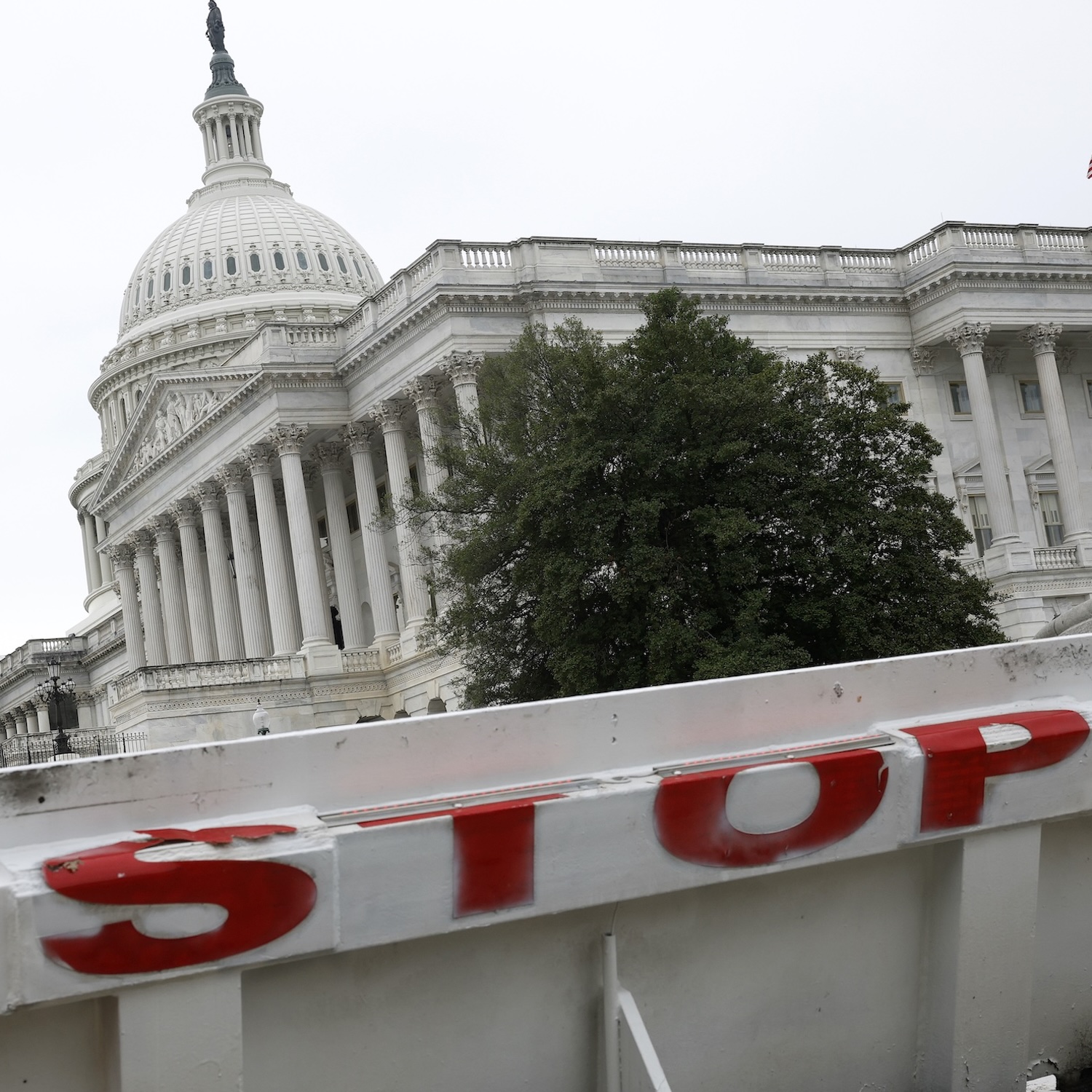
Good morning. It's Friday, October 17th. I'm Shemitah Basu. This is Apple News today. On today's show, why the nation's eyes are on the upcoming New York City mayor's race, where all that sports betting money really goes. And Taylor Swift fans swarm a museum in Germany to see the painting that inspired her latest hit. But first, Today marks the 17th day of the government shutdown. So far, President Trump has halted billions of dollars in grants for projects in cities run by Democrats, though his move to fire federal workers has been blocked for now by a federal judge. Airport staffing shortages have led to delayed flights and many furloughed federal workers receive their last paychecks, at least until the impasse gets resolved. So what will it take to get the government moving again? We reached out to Wall Street Journal reporter Siobhan Hughes to ask her what the sticking points are and whether any of them show signs of budging.
- [01:10]
B
For Republicans, their position is they're just trying to do what Democrats have done for decades, which is pass a straightforward short term bill, continuing funding at the previous year's levels until they can reach a deal. And that basically Democrats are the ones here who are being hypocrites because they are putting conditions on that government funding.
- [01:28]
A
Democrats say they won't get on board unless they get a guarantee on extending tax credits for health plans under the Affordable Care Act. They believe that pressure will force Republicans to reach a deal.
- [01:40]
B
A lot of these Affordable Care act subsidies go to Republican constituencies. These are people like small business owners, people in rural areas, people in southern bread states, for example. The states that because they never expanded Medicaid to a broader population, now have a segment of the population that has been much more reliant on these Affordable Care act subsidies. And so as a result, Democrats feel that they should hold firm because the pressure, they argue, is ultimately going to build on Republicans to come around.
- [02:11]
A
So as Hughes put it, part of the problem is both parties think they have the upper hand and can wait out the other side. Republican lawmakers say they're open to negotiating with Democrats, but only after the government is reopened. Democrats see that as a non starter.
- [02:27]
B
And a big part of the reason is Office of Management and Budget chief Russell Vogt. They noticed that he's essentially fired government workers all year, ended many government programs and withheld funds that they and Congress had appropriated. And so their sense is what is the good of cutting a deal if this administration is simply going to renege later on by using executive powers that we don't even think they have. And so we need something really ironclad here and need the president to be on board.
- [02:58]
A
Republican Senator Lisa Murkowski told the New York Times this week that the administration's moves here have made it harder to agree on terms with Democrats. But while President Trump met with congressional leaders at the White House last month, he's largely been hands off in the negotiations.
- [03:14]
B
He has been focused really on his overseas priorities, including in the Middle East. And while he has signaled an openness to discussing health care, really where he has put the bulk of his energy, or at least his administration has, is on pressuring Democrats by doing things like freezing infrastructure spending in New York City and Chicago or firing government workers, the people who tend to belong to the unions that are associated with the Democratic Party.
- [03:40]
A
Hughes told us where the next pressure.
- [03:42]
B
Point might come, the big one being on October 24, which is when many federal workers will not get paid at all. They received a partial paycheck on October 10, but this is the first paycheck when they will either be furloughed or else working without pay and could really feel money. Running dry.
- [04:11]
A
Last night New Yorkers got to see the city's mayoral candidates debate for the first time. It's a race that's been turned on its head by scandals, a high profile abandoned re election campaign and a surge of support for the Democratic socialist frontrunner Zahran Mamdani. Here's a bit of last night's face off as former Governor Andrew Cuomo and Mamdani sparred on stage as a moderator tried to move on to the next question.
- [04:37]
C
You're not a Democrat. Candidates we have you're not a Democrat. You're a Democratic. Social candidates we have you didn't vote for Kamala Harris, right? We have another ground to cover. No, no, we have that cover. That's an incendiary charge. I want to be very you may have a chance to address it, but we do have a lot of issues to get to with New Yorkers.
- [04:51]
A
Ms.
- [04:51]
C
I'll be very quick. You didn't say leave it blank in the Kamala campaign. I said leave it blank in the presidential primary because primaries place to air dissent.
- [05:01]
A
And like many, Mamdani, a first term assembly member who will turn 34 this weekend, has a double digit lead over the former governor in most polls and is currently the favorite to win in the election in just a few weeks. It's been a stunning rise. And now Mamdani's platform and his fate in this race have national implications for the Democratic Party at large. James Pogue is a features writer for Vanity Fair who wrote about Momdani's campaign and base of support for a recent cover story.
- [05:30]
D
It's a very extraordinary thing, honestly. I've, you know, hung around rock stars and stuff and this is sort of transcending even that level of celebrity and excitement. He can walk down the street and you have people sort of melt and you have people scream and you have people try to clutch the hem of his garment.
- [05:48]
A
Mamdani's campaign has focused on affordability. Top agenda items he's listed are free childcare, free buses and rent freezes. And his international profile as a person who grew up in Uganda with Indian parents as well as his Muslim faith would make him a boundary breaking New York City mayor. He's also been critical of Israel's war in Gaza, a stance that has drawn national attention and scrutiny and from his supporters, loyalty.
- [06:15]
D
It's sort of paradoxical. And so you have people who are really, really drawn to him because he has become potentially the most significant political figure in American life to really diverge from the establishment consensus on where the Israel Palestine issue fits in American politics. And then you have people who are like, I'm so glad he doesn't fixate on stuff that has nothing to do with my life and I want to hear someone talk about the buses, Poke said.
- [06:40]
A
Mamdani has uniquely managed to reach New York's immigrant population, the, as he calls it, hipster population that's more receptive to democratic socialist policies as well as some constituencies that have in the past been more likely to back Cuomo. Polk said that as the campaign has gone on, Mandani has practiced a strict message discipline and has been taking advice from former Obama era advisors.
- [07:04]
D
He's frustratingly on message and he has a habit where if something feels like it's not in the realm of what he wants to talk about, he has an amazing and well trained ability to just sort of blather on about nothing, which is a, you know, an important skill in politics.
- [07:22]
A
As the November election fast approaches, the question remains whether any part of Mandani's strategy or platform can be exported nationwide, especially in a time where Democrats are.
- [07:32]
D
Unpopular nationally, there's a lot of people who are not receptive to that politics and so it causes this kind of difficulty when someone like Bernie tries to run on populist politics and then gets caught up in culture. And I think that's going to be the big thing for testing whether or not a Zoron model can go national.
- [08:02]
A
It's a great time of year to be a sports fan. This weekend, you can catch NFL and college football games, the NBA preseason and MLB playoffs. And for many fans, that means much more than just watching. It also means gambling. Since the Supreme Court gave states the power to legalize sports betting in 2018, the industry has exploded. By the end of this year, it'll be legal in 39 states and Washington, D.C. and available online in most of them. In 2024, Americans bet nearly $150 billion on sports and 2025 to set another record. But what actually happens to all that money?
- [08:41]
E
Ordinary bettors are absolutely not making money.
- [08:44]
A
That's Jonathan D. Cohen, author of Losing America's Reckless Bet on Sports Gambling.
- [08:49]
E
They're not losing a lot of money. On average, bettors are going to win like 90 to 95% of their money back. Then you take that remaining 5 to 10%, that goes to the sportsbook and that money, that 5 to 10% is taxed.
- [09:04]
A
Cohen is my guest on this week's Apple News. In conversation, he told me supporters of sports betting argued that this taxed revenue helps fund state programs. But he says the payoff isn't nearly as big as it sounds.
- [09:17]
E
This is the dirty secret behind really gambling policy writ large is it's a lot of money. On paper, you know, it might be a couple hundred million dollars even, but in the grand scheme of state revenue and state expenditure, it is, of course, a drop in the bucket.
- [09:32]
A
Cohn also argues when you're weighing the benefits of increased state revenue, however small, you have to consider the harms as well. And he points out that most of the industry's profits come from a very small group of bettors.
- [09:44]
E
60% of sports gamblers account for 1% of NFL gambling revenue. 82%. As remarkable as it seems, 82% of the revenue comes from just 3% of bettors. And some of those are VIP types. You know, Phil Mickelson, professional golfer, is a notorious big gambler and so on. But some of them are just like guys who sort of get caught up and have a period of addiction.
- [10:06]
A
To hear the rest of our conversation, stick around after today's show. If you're listening in the news app, that episode of Apple News in Conversation will play for you next. If you prefer to listen in the podcast app, you can find it in this feed. Tomorrow, we'll be sharing all new episodes of In Conversation there on Saturdays. Before we let you go, a few other stories we're following former National Security Adviser John Bolton, who served in President Trump's first administration has been indicted on charges he mishandled classified information. Bolton is the third critic of the president to face criminal charges. He's alleged to have used an unsecured email account to send what are being described as diary notes about his daily activities while working for Trump in 2018 and 2019. Those emails emails were hacked by someone thought to be affiliated with the Iranian government. The investigation into Bolton goes back years to the publication of his book that was highly critical of Trump's first term in office. Bolton issued a statement denying wrongdoing and saying his book was reviewed by proper officials and the FBI was aware of his email hack. He went on to say he looks forward to defending himself. President Trump, meanwhile, said on Thursday that if Hamas continues to kill people in Gaza, quote, we will have no choice but to go in and kill them. The president posted the message on Truth Social in response to reports that Hamas has killed at least 33 people since the ceasefire with Israel began. Hamas has reportedly taken swift control of areas in Gaza where Israeli troops have withdrawn. The US Military warned Hamas to suspend violence and shooting at Palestinian civilians in Gaza. Hamas earlier this week released all the remaining living hostages they held in captivity as part of the truce with Israel. A later phase of the agreement would require Hamas to disarm, but so far details on how or when that will happen have not been released. And finally, as Taylor Swift's song The Fate of Ophelia sits at number one on the Billboard Hot 100 chart, her fans have been clamoring to see the real thing, art news reports. Swifties are flocking to the Wiesbaden State Museum in Germany to catch a glimpse of Friedrich Heiser's Ophelia, which the singer references in the opening scene of the music video for the song. The the 1921 oil on canvas depicts Ophelia from Shakespeare's Hamlet, who famously drowns after being overcome by grief. The museum's art director said he was surprised the painting was referenced, but that it's brought hundreds of additional visitors through their doors. And it's a great opportunity to introduce people to the museum who aren't familiar with it. You can find all these stories and more in the Apple News app. And if you're already listening in the News app right now, stick around for my full conversation with Jonathan D. Cohen on sports gambling for Apple News in Conversation. Enjoy the weekend and I'll be back with the news on Monday.