Loading summary
Transcript50 lines
- [00:05]
Cecilia Ley
Good morning. Another ceasefire goes into effect, this time between Israel and Lebanon as Trump signals more direct negotiations this weekend.
- [00:14]
Donald Trump
The oil prices are coming down and it's looking very good that we're going to make a deal with Iran and it's going to be a good deal. It's going to be a deal with no nuclear weapons.
- [00:24]
Gideon Resnick
NPR explains why a little known tool for government spying is driving a Wedge
- [00:28]
Cecilia Ley
in the GOP and what's fueling nostalgia for the night 90s. It's Friday, April 17th. I'm Cecilia Ley.
- [00:36]
Gideon Resnick
And I'm Gideon Resnick. This is Apple News today. The week began with news of failed talks, but appears to be ending with some progress. Israel and Lebanon have agreed to implement a 10 day truce, potentially removing one of the major obstacles to a deal between the US And Iran. And to that end, on Friday morning, Iran said that the Strait of Hormuz would open to commercial traffic during the ceasefire. Celebratory gunfire filled Beirut's skies after President Trump announced the deal yesterday, he invited the leaders of the neighboring countries to Washington for what would be a historic peace agreement with Lebanon.
- [01:20]
Donald Trump
It's very exciting. I think we're going to have a deal where we're going to have a meeting first time in 44 years and Lebanon will be meeting with Israel and they're probably going to do it at the White House.
- [01:31]
Cecilia Ley
Israel has been fighting the Iran allied Hezbollah, which is based there. They were not involved in the talks, but they acknowledged the truce. They said their actions would be, quote, based on how developments unfold. As CNN's Nick Robertson told the network, the fighting might stop long enough to give US and Iranian negotiators some time.
- [01:50]
Political Analyst
Iran had explicitly said it wanted a Lebanon ceasefire between Israel and Hezbollah to be place and part of the bigger ceasefire picture. So what does this do? This gives the Pakistani negotiators some leverage at the table with the Iranians to get them to soften some of their positions. Because when JD Vance left Islamabad just a couple of days ago, early Sunday morning, he said the United States has put its best and final offer on the table. The bull was in the Iranian court. They needed to soften their position, but
- [02:23]
Cecilia Ley
sustained peace could be more difficult. And yesterday's statement from Israeli Prime Minister Benjamin Netanyahu g little sense of compromise. He said Israel had refused to give in to Hezbollah's key demands, namely to withdraw from the country and commit to stopping the fighting. He instead called the deal a timeout. And Hezbollah appears to be no closer to disarming a key demand from Israel. Meanwhile, in Washington yesterday, opponents of the war tried and failed again to rein in Trump.
- [02:59]
Congressman Gregory Meeks
The president did not discuss and work with any of our allies. There was no coherent strategy. This was an open ended and undefined military engagement. And that's exactly what the War Powers Resolution was designed to restrain.
- [03:20]
Cecilia Ley
That's Congressman Gregory Meeks, a New York Democrat, speaking on the House floor just before lawmakers voted on a resolution that would have ordered the president to end the war in Iran. The measure failed by a single vote. In the Senate, a similar effort also fell short on Wednesday. That bill tried to block Trump from launching further strikes on Iran. It marked the fourth attempt by Senate Democrats to restrict the White House from continuing the war.
- [03:57]
Gideon Resnick
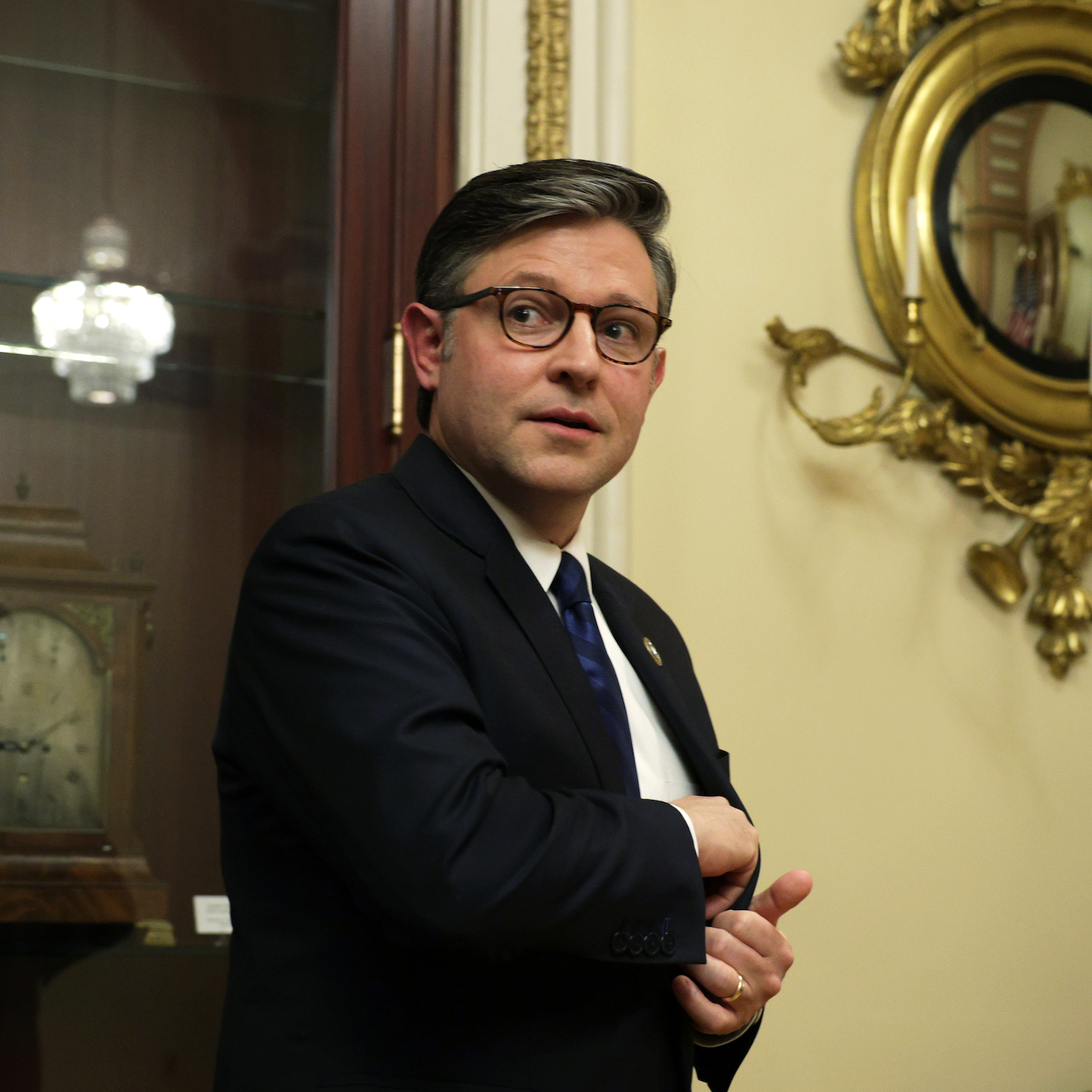
It's a major tool for government spying that you've probably never heard of, but it's caused a split in both parties overnight. The House of Representatives voted to extend the law for 10 days to allow for more time for negotiations over possible changes. What's at stake is section 702 of FISA, the Foreign Intelligence Surveillance Act. It's set to expire on Monday. It essentially allows for intelligence agencies to look at electronic communications of foreign nationals outside the U.S. without getting court orders. Eric McDaniel covers Congress for NPR.
- [04:30]
Eric McDaniel
So this might be calls, texts, emails, maybe messages and other messaging apps. And it goes into a big trove of information that federal law enforcement and federal intelligence agents can use to inform our intelligence and national security operations.
- [04:49]
Gideon Resnick
That short term extension still needs to be passed by the Senate. Supporters say that no extension would create big problems. Here's independent Senator Angus King and Republican Senator John Cornyn speaking to fox.
- [05:01]
Political Analyst
My concerns are significant because FISA is the single most important national security asset we have in the intelligence field.
- [05:08]
Chip Roy
Well, if you want to blind the United States intelligence community and the military, this is a perfect way to do it.
- [05:16]
Gideon Resnick
But the efforts have been facing bipartisan resistance. Critics say it allows agencies to listen in on Americans without a warrant.
- [05:24]
Eric McDaniel
Because all of this intelligence gathering targets foreign nationals. There's never a targeted court order or warrant that goes into collecting this information. So when intelligence analysts go in and maybe query in Americans information, this is something civil liberties advocates call a backdoor search for Americans information. They may be getting around Fourth Amendment protections that would otherwise guarantee that my communications or your communications are protected from surveillance by the federal government.
- [05:54]
Gideon Resnick
President Trump had urged lawmakers to unify behind an 18 month extension, but that didn't pan out. And as McDaniel told us, Trump's been on something of a journey here.
- [06:04]
Eric McDaniel
He's had lots of different bump ups with federal law enforcement and the intelligence community in a way that he feels is unjust. So when this FISA 702 authority was last up for renewal under President Biden in 2024, President Trump posted Kill FISA. He thought that this authority had been used as part of this broader apparatus to persecute him.
- [06:30]
Gideon Resnick
There have been documented abuses of the program. Some of those major violations include warrantless searches for journalists, political commentators, and congressional campaign donors. Proponents say that there have been oversight changes, including approval requirements, before running a search on an American citizen. But that didn't satisfy everyone. Here's Republican Representative Chip Roy, who wanted to see some more amendments.
- [06:52]
Chip Roy
Right now, I don't know what the pitch is other than what it always is, which is we gotta have this stuff to go after bad guys. Yes, we know. We all agree. Thanks. Thanks for, you know, 101. We need to figure out how we're protecting American citizens.
- [07:04]
Gideon Resnick
In the process, some Democratic senators have indicated their support, but it could still be a scramble to get it through the Senate in time for Monday's deadline.
- [07:20]
Cecilia Ley
The Trump administration has been working to curb the number of international students at American colleges and universities. It's done so by limiting visa approvals, arguing that international students threaten access for Americans and that some stay beyond the visa limits. A recent report from an international education Firm found that F1 student visa refusals reached a record high of 35% in 2025. It stands in sharp contrast to how universities have traditionally valued these kinds of students for their contributions to academic research, for the enrichment they bring to campus culture, and also for the full tuition that many of them pay.
- [07:59]
Caroline Kimeu
Essentially, the US has long thought it in its own national interest to bring the world's best and brightest to be educated at American universities.
- [08:09]
Cecilia Ley
Wall Street Journal reporter Caroline Kimeu spoke to us from Nairobi about the impacts that this has had on many students from Africa. The Journal analyzed Commerce Department data that showed that this past fall semester, the number of African students arriving and returning to the US Fell by nearly a third from the previous year. There are also other barriers. Earlier this year, the administration issued a travel ban. Of the 36 countries targeted on the list, 29 of them are in Africa. These policy shifts mean students have had to change course in the middle of the school year, like Majak Biyor, a young man from South Sudan who got a full scholarship to DU University and was studying computer science bior a Duke.
- [08:52]
Caroline Kimeu
He loved soccer. He played with a group of friends and, you know, he would meet with other African sometimes and American friends complain about the brutal winters, but otherwise he loved life at Duke. You know, he's a very introverted sort of introspective person. And friends who I interviewed in the course of reporting on this piece just spoke quite highly of him.
- [09:17]
Cecilia Ley
Because of the visa change, Biyor was told he couldn't go back to school while he was on winter break in Uganda. The State Department has told the Journal that it accepts great students, but that it's implementing a stricter vetting process. The Journal also reported that since last year, diplomats have searched the social media accounts of student applicants for any content that may oppose the Trump administration's policies or views.
- [09:41]
Caroline Kimeu
It also said that the US Visa is a privilege and not a right. And you know, it doesn't issue a visa unless, you know, an applicant has shown that they don't pose a risk to the United States. I guess, you know, the question that's come up here with some of the students and what they ask is do they pose a risk to the U.S.
- [10:00]
Cecilia Ley
kim says that some diplomatic and education officials are worried that the US Is shedding out valuable talent.
- [10:07]
Caroline Kimeu
People who go on to get into the startup world, people who come back to take on top positions in banks, others who go on to practice in cancer research, helping develop the COVID Pfizer vacc. So some of these people, essentially most of the Africans who make it to some of these top universities, the elite schools, but even just more broadly, are some of the continent's absolute best and brightest.
- [10:33]
Cecilia Ley
One university official told the Journal that all of this could lead to a future where students don't even try to apply. As for Bior, his academic career remains in limbo. He participated in a study abroad program in Germany as a temporary measure, but has fallen behind in his pre med requirements. He obtained obtained a special refugee passport from Uganda to bypass the South Sudan visa ban as a last ditch effort. But Beor is still unsure if that will allow him to return to Duke. And finally, why are young people nostalgic about the 90s right now, a time that they didn't even live through? Sam Sanders, who's in for Shamita Basu hosting Apple News and Conversation, tried to answer that question on this week's episode. So I asked him why he wanted to explore this.
- [11:30]
Sam Sanders
So I'm 41, an elder millennial who came of age, so am I in the 90s. And I began to notice over the last year or so Gen Z and Gen Alpha were also getting very excited about the 90s and 90s culture. The fashion, the music the ways that we socialize, they were nostalgic for it. But then I said, wait, they weren't there. How can they miss this thing that they didn't live through? And at that point, I said to the team over here at Apple News and Conversation, help me find someone to tell me what's going on here. I'm confused.
- [12:01]
Cecilia Ley
Yeah.
- [12:02]
Co-host
And I wonder how it's made you feel, because I noticed this on my social algorithm too, because it's confusing, because weren't Gen Z making fun of us millennials for a while?
- [12:11]
Sam Sanders
Weren't we just cringe for a long time?
- [12:13]
Cecilia Ley
Yes.
- [12:14]
Sam Sanders
What happened?
- [12:14]
Cecilia Ley
Side parts? No show stuff.
- [12:16]
Co-host
Using the laughing emoji. So then now they want to recreate the trends that raised us.
- [12:22]
Sam Sanders
Oh, yeah. Yeah. You know, at first I was also a bit offended. Like, my 90s culture is not your costume. But now I find it pretty flattering. We talked to this expert for the episode about nostalgia, Clay Rutledge, and he spoke about the different kinds of nostalgia that exist. And he pointed to specifically this idea of historical nostalgia, where you go back to a cultural bank of memories to borrow from. So it's not so much that the youth are copying us. They're seeing things that they liked in how we lived back then, and they want to have some of that in how they live now and that I support.
- [13:06]
Cecilia Ley
Yeah.
- [13:07]
Co-host
Well, what are some of those things that they want to borrow from the 90s, you think?
- [13:11]
Sam Sanders
I think the biggest thing is being able to live a full life outside of what many experts call the digital gaze. G, A, Z, E. If you are a young person or any person in the world in 2026, there's a great likelihood that you spend a large part of your day being on camera or performing for a camera. That is a reality that you and I weren't living through when we were watching Saved by the Bell and Family matters in the 90s.
- [13:42]
Co-host
Well, before I let you go, Sam, I was wondering what has made you really nostalgic lately? Are there things from the past that you would want to bring into the present?
- [13:52]
Sam Sanders
Oh, yeah. I miss playlist culture. I miss mixtape culture. So a lot of times I'll be at parties or at gatherings, and it's not a curated selection of music. It is a playlist that is generated by Spotify or whatever. And I miss the days when I used to make my friends mixtapes and they'd make some for me. And every time you went into someone's space, the music was personally curated. If Gen Z brings that back, I'd signify They have my stamp of approval.
- [14:22]
Cecilia Ley
Yeah, I agree.
- [14:24]
Co-host
So nice chatting, Sam. Thank you so much.
- [14:26]
Sam Sanders
Thanks for having me.
- [14:28]
Cecilia Ley
If you're already listening in the news app right now, stick around for that episode Coming up next. If you're listening in the podcast app, you can follow Apple News in conversation to find it or come back to the Apple News Today feed on Saturday. Enjoy the weekend and we'll be back with the news on Monday.