Loading summary
Transcript140 lines
- [00:05]
Shemitah Basu
Good morning.
- [00:06]
NPR Reporter
It's Friday, July 18th. I'm Shemitah Basu. This is Apple News today.
- [00:11]
Shemitah Basu
On today's show, the Supreme Court keeps.
- [00:13]
NPR Reporter
Issuing emergency rulings in Trump's favor.
- [00:17]
Shemitah Basu
Millions of undocumented immigrants aren't eligible for bond hearings anymore. And Stephen Colbert makes a big announcement. But first, The House approved $9 billion.
- [00:37]
NPR Reporter
In cuts to foreign aid and public.
- [00:39]
Shemitah Basu
Media that both chambers of Congress had.
- [00:41]
NPR Reporter
Previously agreed to spend.
- [00:43]
Shemitah Basu
Yesterday we spoke about how those cuts.
- [00:45]
NPR Reporter
Will impact public media.
- [00:46]
Shemitah Basu
Today, let's focus on how the bulk.
- [00:48]
NPR Reporter
Of that money, about $8 billion, was earmarked for global health programs and emergency food aid.
- [00:55]
Shemitah Basu
It's the first time in over 25.
- [00:57]
NPR Reporter
Years Congress has approved a rescission request for the president to cancel already approved funding.
- [01:03]
Shemitah Basu
Congress members typically have closely guarded their.
- [01:06]
NPR Reporter
Power over federal spending.
- [01:07]
Shemitah Basu
But over the course of Trump's second term, members of his administration, led by.
- [01:12]
NPR Reporter
White House Budget Director Russell Vogt, have aimed to give the executive branch more control. In this case, Vogt, along with Elon Musk's Doge team, are argued to lawmakers that cuts were necessary to combat what they've described as waste, fraud and abuse. That message resonated with many lawmakers who.
- [01:29]
Shemitah Basu
Ultimately supported the package, including Republican Senate.
- [01:33]
NPR Reporter
Majority Leader John Thune, who praised their work before the Senate approved the bill on Wednesday.
- [01:38]
Stephen Colbert
I appreciate all the work the administration has done in identifying wasteful spending, and now it's time for the Senate to do its part to cut some of that waste out of the budget.
- [01:50]
Shemitah Basu
But exactly how much waste, fraud, and.
- [01:52]
NPR Reporter
Abuse did Vogt and the Doge team really find when they evaluated foreign aid? NPR took a closer look and spoke with six officials at USAID and the.
- [02:02]
Shemitah Basu
State Department who had direct knowledge of.
- [02:04]
NPR Reporter
How these reviews were conducted. All six said a thorough review process didn't happen.
- [02:10]
Shemitah Basu
Instead, they said, Trump officials and DOGE.
- [02:13]
NPR Reporter
Staff members searched for keywords in the descriptions of foreign aid programs. And if they found words like gender or family planning, climate or equality, that program was flagged to be cut.
- [02:25]
Shemitah Basu
In other words, as one official put.
- [02:26]
NPR Reporter
It to NPR health correspondent Fatma Tanis.
- [02:29]
Shemitah Basu
The review may have focused more on.
- [02:31]
NPR Reporter
How much a program aligned with Trump's agenda rather than measuring its effectiveness or identifying potential improper spending.
- [02:39]
Fatma Tanis
And these officials told me that the dismantling of the agency happened so quickly it was not possible for any actual investigation to happen in that chaos.
- [02:50]
NPR Reporter
Many of the examples of allegedly wasteful spending Trump officials have presented to lawmakers and the public in recent months have not been backed up by evidence, including these comments vote made to senators last month when testifying about cuts to foreign aid.
- [03:06]
Paul Martin
Americans have been funding the 5.5 million to LGBTQ advocacy in Uganda, 800,000 for transgender people, sex workers and their clients and in Nepal, 3.6 for LGBTQ activism, free training in pastry cooking, psychosocial counseling, a cyber cafe and the dance focus groups for male prostitutes in Haiti.
- [03:31]
NPR Reporter
Again, he did not provide documentation to back up those claims or others he made in testimony, and when NPR reached out to his office to ask for evidence, Tanis received no response.
- [03:42]
Shemitah Basu
The State Department, however, told her their.
- [03:44]
NPR Reporter
Review process was exhaustive, and it said each program was reviewed individually.
- [03:50]
Shemitah Basu
NPR also reached out to Paul Martin.
- [03:53]
NPR Reporter
Who used to be USAID's inspector general.
- [03:55]
Shemitah Basu
Under Biden, in charge of looking out.
- [03:58]
NPR Reporter
For things like waste, fraud and abuse at the agency. He was fired by Trump in February, shortly after the president started rapidly dismantling usaid. Martin told NPR no one from Trump's team or the Doge team contacted him with concerns about spending.
- [04:14]
Lydia Wheeler
As far as I know, never once has anybody in Doge or in the new administration referred to the IG's Office Criminal allegations of fraud, waste or abuse. Frankly, the handful examples I'm aware of were just completely made up.
- [04:38]
Shemitah Basu
Now to the Supreme Court and how the Trump.
- [04:40]
NPR Reporter
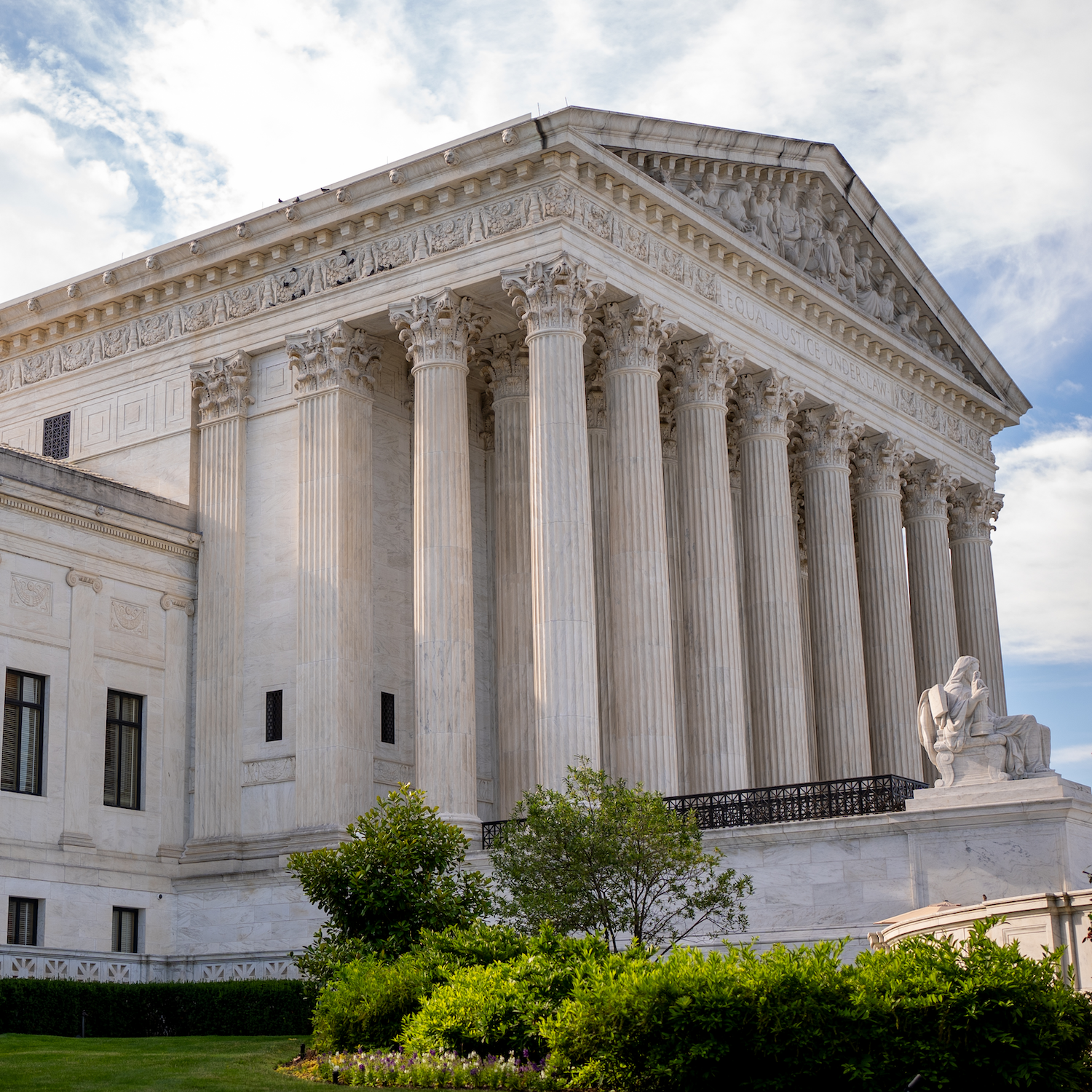
Administration is scoring big wins in cases through a system that largely keeps decisions out of the public eye, the emergency appeals process, also known as the shadow docket. Bloomberg Supreme Court reporter Lydia Wheeler told us about it.
- [04:56]
Maria Sacchetti
Basically, every time the Trump administration loses a court challenge in a lower court, what they do is they rush up to the Supreme Court and they say, hey, justices, we need you to let us, like, implement the policy that we're trying to implement while we still fight whether it's legal in court.
- [05:13]
Shemitah Basu
It's called the shadow docket because these.
- [05:15]
NPR Reporter
Cases typically have no full briefings, oral arguments or signed opinions.
- [05:20]
Shemitah Basu
And rulings are not explained the way.
- [05:22]
NPR Reporter
A typical Supreme Court decision is, so.
- [05:24]
Shemitah Basu
The public gets very little information on.
- [05:26]
NPR Reporter
How the court reached a decision.
- [05:29]
Shemitah Basu
This process is designed for questions that.
- [05:31]
NPR Reporter
Need a fast answer, like prisoners wanting a stay of execution.
- [05:35]
Shemitah Basu
It usually determines whether a specific policy.
- [05:37]
NPR Reporter
Can go into effect, not whether it's.
- [05:40]
Shemitah Basu
Legal and decisions are intended to be.
- [05:42]
NPR Reporter
Temporary, while a lower court considers the case in more detail.
- [05:46]
Shemitah Basu
But often during that period, things can.
- [05:48]
NPR Reporter
Happen that can be hard to reverse later.
- [05:51]
Shemitah Basu
An example of that came this week.
- [05:53]
NPR Reporter
When the court's conservative majority ruled in favor of Trump's efforts to make big cuts at the Department of Education.
- [06:00]
Maria Sacchetti
The Supreme Court said, you don't have to reinstate 1400 employees of the Education Department that you had cut, which a lower court had told him he had to do.
- [06:11]
Shemitah Basu
The lawsuit challenging those cuts argued Trump.
- [06:14]
NPR Reporter
Did not have the authority to do this or to scale back the Education Department at large because the department was created by Congress so only Congress can dismantle it.
- [06:24]
Shemitah Basu
Lower courts are still deciding if Trump's.
- [06:26]
NPR Reporter
Plans here are legal, but critics argue.
- [06:28]
Shemitah Basu
This shadow docket ruling effectively clears the way for Trump to dismantle the department anyway, because these cuts alone account for.
- [06:36]
NPR Reporter
Roughly half of its workforce.
- [06:38]
Maria Sacchetti
People quickly looked at that decision and said, wait a minute. This same court just two years ago said to the Biden administration, no, you can't cancel millions of dollars in student loan debt that you don't have the authority do that. So they're saying, like, how is it possible that the Trump administration has the authority to completely dismantle the Education Department? And without any explanation, it's hard to see what's the difference between those two cases.
- [07:06]
Shemitah Basu
Trump also used this approach to get.
- [07:08]
NPR Reporter
Approval to fire federal workers en masse, ban transgender people from the military, and.
- [07:14]
Shemitah Basu
Deport migrants to countries that are not.
- [07:16]
NPR Reporter
Their countries of origin.
- [07:18]
Maria Sacchetti
And the more that the Supreme Court rules in favor of the Trump administration, legal scholars say that it invites other people, other litigants to also come to the court the minute they lose at the lower court and try to appeal.
- [07:32]
NPR Reporter
Now, emergency appeals aren't new. Every president for the past 20 or so years has made them President Biden on more than a dozen occasions.
- [07:40]
Maria Sacchetti
But no president has done it to this extreme this often. In every case, they're losing.
- [07:47]
NPR Reporter
And few presidents have had the opportunity to do it with a court that they single handedly reshaped.
- [07:53]
Maria Sacchetti
President Trump, during his first term in office, was able to dramatically shift the court further to the right with three appointments and really solidify a 6:3 conservative majority. And so far, it seems, and legal scholars say that this is playing in his favor. So this is why people are saying that it's making the court look really partisan and it's hurting them reputationally as an institution.
- [08:27]
Shemitah Basu
Now to immigration and how the Trump administration is trying to speed up deportations.
- [08:31]
NPR Reporter
For people they suspect to be in the US illegally to meet the president's goal of deporting 1 million people in his first year. Washington Post immigration reporter Maria Sacchetti has been following this.
- [08:43]
Amanda Hess
The Trump administration has departed from a very common practice. Normally, after someone in the interior of the United States, say Nebraska or Northern California, is arrested for civil immigration violations, they can be detained in immigration facilities. But generally they're eligible to ask for a bond hearing. They could be released on bail, then they can be with their families, they can work, and they can meet with their lawyers, crucially, so that they can build a case against being deported.
- [09:13]
Shemitah Basu
But the administration has now decided these.
- [09:15]
NPR Reporter
Immigrants are no longer eligible for bond hearings. And in rare cases, someone might be released on parole.
- [09:21]
Shemitah Basu
But sacchetti reports that decision will be.
- [09:23]
NPR Reporter
Up to an immigration officer, not a judge. Lawyers told her this policy change will impact millions of people who cross the u. S. Mexico border over the past few decades.
- [09:34]
Amanda Hess
The folks we're talking about here are folks who have been here a long time, and lawyers for immigrants argue have some defenses against being deported. But that's very difficult to build a case when you're detained, and it can.
- [09:48]
NPR Reporter
Take months, even years for removal proceedings to play out.
- [09:52]
Shemitah Basu
The acting director of ice has acknowledged.
- [09:54]
NPR Reporter
The policy will likely face legal challenges. But people who support the administration's mass deportation goals have long argued that detaining people in this way is necessary to enforce final orders of removal and get people out of the country quickly.
- [10:10]
Amanda Hess
You have hundreds of thousands of people with final deportation orders, but generally they're very difficult to find, you know, once they're in the country.
- [10:19]
Shemitah Basu
Meanwhile, as all of this plays out, the immigration court system is shrinking, which.
- [10:23]
NPR Reporter
Could make it less capable of handling these cases.
- [10:26]
Shemitah Basu
Over the last six months, the Justice.
- [10:28]
NPR Reporter
Department fired at least 50 immigration judges, and around that same number resigned after doge offered voluntary resignation buyouts in its efforts to reduce the federal workforce.
- [10:39]
Shemitah Basu
So that means today there are about.
- [10:41]
NPR Reporter
14% fewer immigration judges nationwide Compared to the start of Trump's term.
- [10:47]
Shemitah Basu
And their workload is growing.
- [10:49]
NPR Reporter
There's a backlog of nearly 4 million immigration cases right now. The recently passed Republican tax and spending bill hopes to address this.
- [10:57]
Shemitah Basu
Congress gave over $3 billion to the.
- [10:59]
NPR Reporter
DOJ for immigration, which includes money for hiring and training more judges to address this backlog.
- [11:06]
Shemitah Basu
But NPR reports it's not clear how.
- [11:08]
NPR Reporter
The DOJ plans to replace these judges.
- [11:11]
Shemitah Basu
And the process of training will take some time. Meanwhile, there are no signs the administration.
- [11:16]
NPR Reporter
Plans to slow down detentions. In fact, the tax and spending bill aims to help ICE roughly double the nation's current detention capacity to 100,000 a day.
- [11:35]
Shemitah Basu
Before we let you go, a few.
- [11:37]
NPR Reporter
Other stories were following link.
- [11:38]
Shemitah Basu
The department of justice has recommended a.
- [11:41]
NPR Reporter
One day prison sentence for the former police officer convicted in connection with the botched raid that killed Brianna Taylor. Taylor died in 2020 in Louisville, Kentucky, when police came to her apartment looking for her ex boyfriend who was not there. Her then boyfriend said he thought police were intruders and shot at them, prompting return fire which hit Taylor. Brett Hankison was convicted of violating Taylor's civil rights when he fired 10 shots through Taylor's window and none of those shots hit her. But the jury determined that he used excessive force and his conviction carried a maximum life sentence. The two officers who fired the fatal shots were not charged. The DOJ criticized the prosecution made under the Biden administration, but Taylor's family attorney described the new recommendation as an insult to the life of their daughter.
- [12:32]
Shemitah Basu
President Trump has been diagnosed with chronic venous insufficiency, a condition of circulation where.
- [12:38]
NPR Reporter
The legs struggle to deliver blood back to the heart.
- [12:41]
Shemitah Basu
In a rare nod to his age.
- [12:43]
NPR Reporter
His press secretary, Caroline Levitt described it as a benign and common condition for.
- [12:48]
Shemitah Basu
People in their 70s.
- [12:49]
NPR Reporter
Trump is 79.
- [12:51]
Shemitah Basu
Some people started raising questions about his.
- [12:53]
NPR Reporter
Health after Trump appeared at the FIFA Club World cup final with visibly swollen legs and a bruised hand covered in makeup.
- [13:02]
Shemitah Basu
And finally, at last night's taping of.
- [13:05]
NPR Reporter
The Late show on cbs, host Stephen.
- [13:07]
Shemitah Basu
Colbert had an announcement.
- [13:10]
Stephen Colbert
Next year will be our last season. The network will be ending the Late show in May.
- [13:16]
Caroline Levitt
And.
- [13:24]
Stephen Colbert
Yeah, I share your feelings.
- [13:26]
Shemitah Basu
Colbert said it was not just the.
- [13:28]
NPR Reporter
End of his role hosting the show, but the end of the Late show itself. Colbert said he only found out on Wednesday night and expressed gratitude to CBS.
- [13:37]
Shemitah Basu
Only days before he had some harsh.
- [13:39]
NPR Reporter
Words for Paramount, CBS's parent company, for their decision to settle the lawsuit brought by Trump over its 60 Minutes interview with Kamala Harris.
- [13:49]
Stephen Colbert
The corporation released a statement where they said, you may take our money, but you will never take our dignity. You may, however, purchase our dignity for the low, low price of $16 million. We need the cash.
- [14:01]
Shemitah Basu
Cbs says that the decision was purely.
- [14:04]
NPR Reporter
Financial and in no way related to other matters. At Paramount, Colbert has hosted the show for nearly a decade, taking over following a 22 year run from David Letterman.
- [14:16]
Shemitah Basu
You can find all these stories and.
- [14:18]
NPR Reporter
More in the Apple News app.
- [14:19]
Shemitah Basu
And if you're already listening in the.
- [14:21]
NPR Reporter
News app right now, stick around for the latest episode of Apple News.
- [14:24]
Shemitah Basu
In conversation this week, I sat down.
- [14:27]
NPR Reporter
With New York Times culture critic Amanda.
- [14:29]
Shemitah Basu
Hess to talk about her journey into.
- [14:31]
NPR Reporter
Parenthood and the dizzying digital world of apps, gadgets and influencers.
- [14:36]
NPR Host
She discovered every time you look at your phone, you will get more advice about your kid, whether you're really looking at that or not. And I think what the drumbeat suggests is that our children and their emotions can be controlled and managed and optimized in this way if you just, like, absorb enough of the advice and you implement enough of the tips.
- [15:04]
Shemitah Basu
If you're listening in the podcast app.
- [15:06]
NPR Reporter
Follow Apple News in conversation to find that episode. Enjoy your weekend and I'll be back with the news on Monday.