Loading summary
Transcript35 lines
- [00:05]
Shemitah Basu
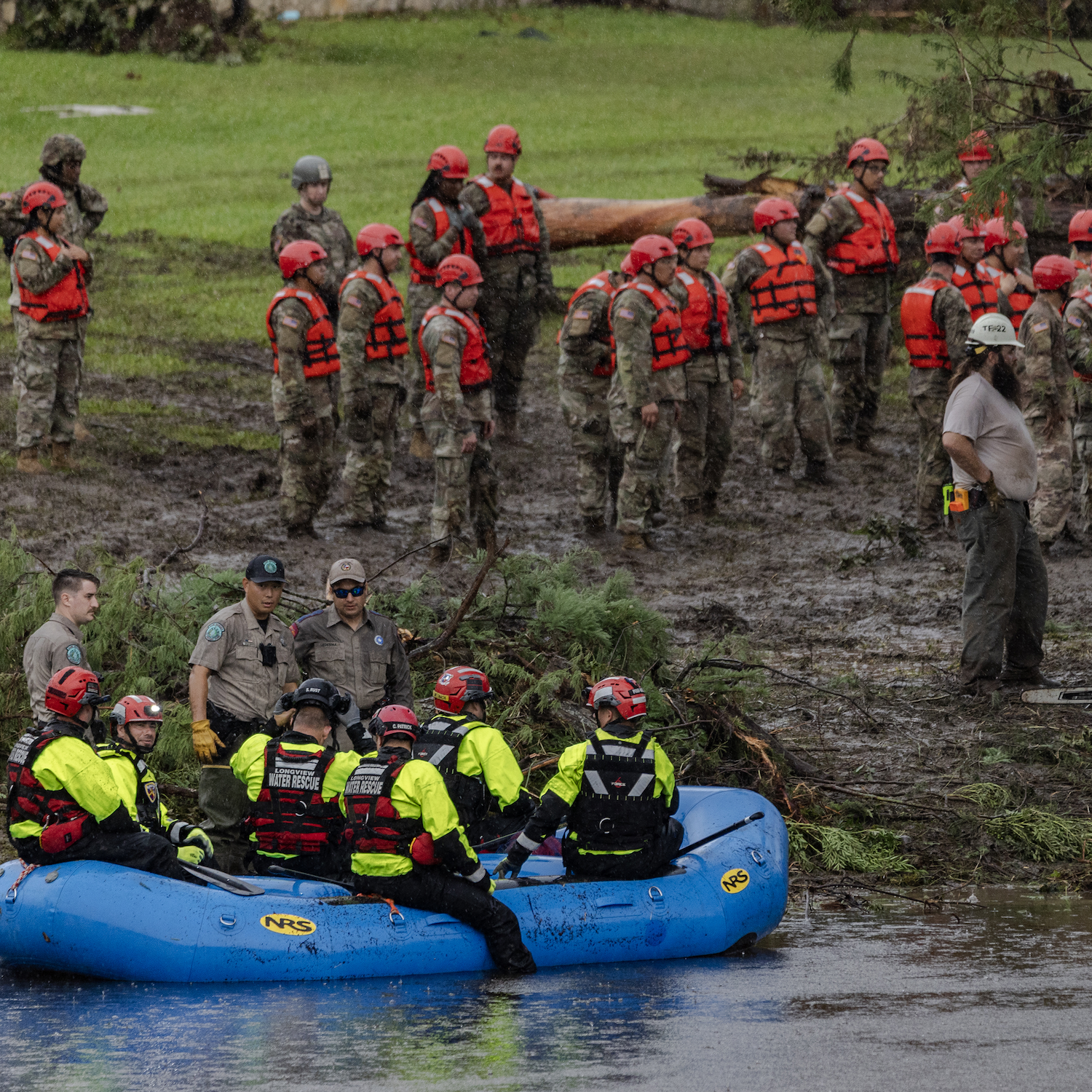
Good morning. It's Thursday, July 10th. I'm Shemitah Basu. This is Apple News Today. On today's show, the tactics some federal judges are using to challenge Trump's executive actions, the hacking group wreaking havoc on retailers and airlines, and the viral band climbing Spotify's monthly listens. That is literally unreal. But first, nearly a week after the Texas floods, there remain well over 100 people unaccounted for. In the immediate aftermath, there have been a lot of questions asked about how such a disastrous weather event could take so many by surprise, and what, if anything, could have gone better in the local disaster response. Today we wanted to spend a bit of time exploring how a confluence of factors made these floods so deadly, in particular, the geography and history, history of the area itself, climate change more generally, and local warning systems and preparedness.
- [01:07]
Emily Foxhall
There has been a long, long history of deadly flash flooding in this region.
- [01:12]
Shemitah Basu
That's Emily Foxhall, climate reporter for the Texas Tribune, who told us that the area is prone to major flooding, most notably in 1987 when 33 people died.
- [01:23]
Emily Foxhall
You may have heard this term flash flood alley. That's how some people refer to this area. It's very hilly. There's not like a deep layer of so to absorb the water. It's a very rocky area.
- [01:35]
Shemitah Basu
And when the water comes, it goes downhill fast. The thin topsoil combines with a non absorbent limestone bed, so there isn't much to slow it down, making the Guadalupe river basin one of the most dangerous regions in the country when it comes to flash floods. These were the highest floodwaters to hit Hill country in decades. The initial deluge had, according to some analysis, a 0.1% chance of occurring in a given year. So can we attribute that to climate change? As always, it's difficult to draw a straight causal line for any singular event. But as Foxhall told us, global warming does pose specific risks for flooding events, and extreme rain in the US Is increasing.
- [02:16]
Emily Foxhall
We know climate change is warming temperatures and in warmer air that can hold more moisture, so it makes heavy rainfall more likely.
- [02:27]
Shemitah Basu
So, given the area's history and topography, against a backdrop of worsening rainfall due to climate change, should Texas Hill country have been better prepared or issued more effective warnings? These are the types of questions being asked at the local press conferences this past week, and the exchanges with reporters are becoming increasingly tense. Here's the Kerr County Sheriff's team on Tuesday, unwilling to get into the details or timeline of the night of the flooding.
- [02:54]
Tom Halls
All those questions will be answered, but the priority right now is bringing people home. We totally understand that.
- [03:00]
Shemitah Basu
But your community is asking these questions.
- [03:02]
Tom Halls
And we will have. We will get answers. Right now, all of our resources are focused to recovery.
- [03:10]
Shemitah Basu
Unlike some of its neighbors, Care county does not have a siren system to warn people to evacuate. Though it's been heavily debated in recent years, local officials determined they couldn't afford to install one or add tools like river gauges, which trigger warnings when rain or floodwaters exceed a certain level, a former county commissioner told NBC. That's in part because Kerr county did not receive disaster relief funding they had asked for from fema. Texas lieutenant governor Dan Patrick says he and governor Greg Abbott are now discussing how to allocate state funds to improve warning systems.
- [03:45]
Tom Halls
Had we had sirens along this area up and down, it's possible that that would have saved some of these lives, and the state needs to step up and pay for these.
- [03:55]
Shemitah Basu
The National Weather Service did, however, put a flood watch out for the region on Thursday, which simply means the conditions are present for a flood to happen. Its first flash flood warning, meaning a flood is ongoing or imminent, came at 1:14am on Friday, the weather service said that then triggered alerts to cell phones and weather radios, and over the next few hours issued more warnings for phones and through social media channels. Some people may have never received those warnings, though service during the flooding was spotty, especially in the region's most rural areas, according to KUT News, a local NPR affiliate. And many of the children at camps along the river didn't have phones with them, according to media reports. Many feel the warnings simply didn't reach them in a timely way, some arriving hours late. Now, there's been a lot of speculation about whether recent federal cuts to the National Weather Service had an impact here, but Foxhole told us officials are saying that wasn't the case.
- [04:52]
Emily Foxhall
Many of these experts in the weather world really say the National Weather Service did everything they could. You know, at least watching this from the outside, the weather service had extra staff overnight as this was happening.
- [05:05]
Shemitah Basu
Ultimately, as global warming patterns suggest, rare weather events like extreme rainfall and flooding are to become less rare. The tragedy in Texas may now prompt a wider debate about how our warning systems work.
- [05:18]
Emily Foxhall
Like, should there have been additional sirens? Should there be more education about how to respond to a weather watch or a weather warning? And I think that's where kind of these big picture conversations we'll be watching to see where those go in the weeks to come.
- [05:40]
Shemitah Basu
Now to the ongoing legal fight over President Trump's executive orders back in June you might remember the Supreme Court's conservative majority ruled to significantly limit the power of federal judges to issue nationwide injunctions that block Trump's orders from taking effect. But the ruling carved out certain exceptions, and since then, lower court judges have cited them to keep blocking Trump's policies.
- [06:04]
Tom Halls
We're definitely seeing that the judges are carefully considering what the Supreme Court said.
- [06:08]
Shemitah Basu
That's Tom Halls, a correspondent with Reuters.
- [06:11]
Tom Halls
But they're still finding ways in which they can enjoin Trump administration policies that they believe are in violation of the law.
- [06:20]
Shemitah Basu
For example, since the court's ruling, lower court judges have blocked Trump's asylum ban at the southern border, prevented the White House from ending temporary protected status for Haitian immigrants, and required the federal government to reinstate health information previously taken down due to a Trump directive targeting Web pages related to transgender people. And today, just how far lower courts can push the limits of the Supreme Court's ruling will face one of its biggest tests yet, as a judge in New Hampshire considers new legal arguments against Trump's order seeking to end birthright citizenship.
- [06:54]
Tom Halls
What the plaintiffs are seeking is they're asking the judge to certify a class of all the children who will be subject to the president's order on birthright citizenship. And by combining all those people into a class, the the judge could then enter an order protecting that entire class.
- [07:10]
Shemitah Basu
The reason the ACLU and other groups representing the plaintiffs in this case are trying this strategy is because the court's ruling left an exception for class action lawsuits, meaning a class action lawsuit is now one of the pathways still available to secure a nationwide block on a policy. A similar legal strategy was used successfully in the asylum ban case, where a federal judge certified a class of people subject to that order and issued an injunction to protect them. But Halls points out the tricky part of this approach is that class action lawsuits have to follow a legal stipulation called Rule 23, which basically says that all of the proposed members of a class have to show that they would be harmed in the same way by a given government action. And the administration is arguing in this birthright citizenship case, they don't.
- [08:00]
Tom Halls
The people who are the name plaintiffs in the case, someone who's on a student visa in the United States and someone else who is seeking asylum in the United States. The administration is already saying, you include these people in the same class, they should be separate classes. They're going to really fight this. They're going to be doing that in case after case. And class action certification is often something that gets appealed. They take a very long time to play out. Sometimes they can take years to play out.
- [08:25]
Shemitah Basu
Barring a nationwide block on Trump's birthright citizenship order, it will go into effect on July 27th. Lets turn now to a cybercriminal organization run by teenagers and young men that's been wreaking havoc in recent weeks on retailers, insurance companies and other big businesses across several countries.
- [08:53]
Lily Hay Newman
They seem to be sort of on a joyride in a sense, just rampaging through multiple sectors in the US in the UK In Canada, causing outages, delays, a lot of chaos.
- [09:10]
Shemitah Basu
That's Lily Hay Newman, a senior writer for Wired magazine. She told us how this group called Scattered Spider has been disrupting supply chains and shutting down digital infrastructure. This week, the FBI issued a new warning that they appear to be targeting the airline sector.
- [09:26]
Lily Hay Newman
They use sort of hacking techniques or they gain initial access in complex digital ways. But really their bread and butter is social engineering where they trick someone into granting them access on purpose.
- [09:41]
Shemitah Basu
For example, they've impersonated staff members of companies pretending to have gotten locked out of a company email, tricking IT teams into giving them access to corporate systems. They've also created convincing phishing websites with URLs that include the name of their target organization, along with words like help desk or VPN to get workers to click on the links, giving them access to steal data that they then use to extort companies for money.
- [10:09]
Lily Hay Newman
But they also seem to be just delighted by any time they can start to get a string of wins or, you know, infiltrate companies and slow down their operations.
- [10:22]
Shemitah Basu
And once members of Scattered Spider figure out a way in at one company, Newman says, they attempt to use that same method to hack companies across entire industries.
- [10:32]
Lily Hay Newman
They'll think, well, probably the systems of that, let's say it's a grocery store chain, maybe other grocery store chains are using similar systems, similar software, and so they'll start to go on these sprees.
- [10:47]
Shemitah Basu
Some of their high profile attacks have targeted casinos like Caesars Entertainment and MGM resorts. MGM lost $100 million. Another widely reported target was the British retailer Marks and Spencer, which sells food, clothing, home goods and more. The company recently had to pause online orders for several months, and authorities are investigating Scatter Spider's possible role.
- [11:09]
Lily Hay Newman
The fact that they've been targeting critical sectors, it shows the vulnerability of our digital systems that without even doing sophisticated hacking in most cases, simply by having this talent for finding these weak spots and tricking someone into giving you the access you need to compromise systems, and this actor is really threatening critical services.
- [11:40]
Shemitah Basu
How to stop the group remains an open question. For one, as Neumann reports, it's not clear exactly how big Scattered Spider even is or how it's structured. The leadership is opaque and tight knit, one cybersecurity expert told her. It's relatively easy for the group to grow because its members are on Discord and Telegram platforms they seem to be using to teach new wannabe hackers how to join. In other words, once one hacker is taken offline, there are others ready to replace them. Before we let you go, a few other stories we're following. First, to a major company shakeup. Linda Yaccarino, the CEO of X formerly known as Twitter, announced that she would be stepping down yester she had a tumultuous run at the company for two years, and her departure comes a day after Elon Musk's AI chatbot Grok, made a series of antisemitic comments. Yaccarino did not provide a reason for her departure. Now let's turn to the number of confirmed measles cases in the United States. It's now the highest it has been in a single year since the virus was declared eliminated 25 years ago. There have been more than 1,200 cases so far this year, mostly in Texas and spreading to Oklahoma, Kansas and New Mexico. Two children and one adult have died, marking the first measles deaths in a decade. Experts who spoke to Stat News expressed concern that the spread and a tepid federal response could portend more trouble if vaccination rates continue to decline. According to the cdc, the vast majority of cases have been identified in people who have either not been vaccinated or whose vaccination status was unclear. And finally, to the rise and fall of an unusual band. Dust on the wind, Boots on the ground, Smoke in the sky, no peace found. That's the song Dust on the Wind, a brief number one hit on Spotify from a group called Velvet Sundown that's racked up over 1 million listens during its first month. But here's the catch. This band isn't real. It's AI. Or as Velvet Sundown put it over the weekend, AI. That's quote guided by human creative direction. Now they left a lot of pretty obvious breadcrumbs that helped Internet detectives figure out the truth. The photos of this so called band looked totally fake. Their lyrics were basically a mad lib of 70s Anti war rock tropes and they were pumping out music at breakneck pace. Two albums in June, with a third coming in July. A lot of Spotify users interviewed by the Washington Post were disturbed to find out this music made its way to their feeds without more clear labeling that it was made by AI. Despite all the listens, the critics were not as impressed with the somewhat generic sound. The Atlantic put it this way, no human artist could tolerate producing such soulless lackluster. But an AI is unburdened by shame. You can find all these stories and more in the Apple News app. And if you're already listening in the News app right now, we've got a narrated article coming up next. The Atlantic's Jennifer Sr. Dives in on something all humans do, but Americans seem to be struggling sleep. Through her own insomnia journey, she examines the collective anxiety around sleep and what this means for the way we live. If you're listening in the podcast app, follow Apple News Narrated to find that story. And I'll be back with the News tomorrow.