Loading summary
Transcript42 lines
- [00:05]
A
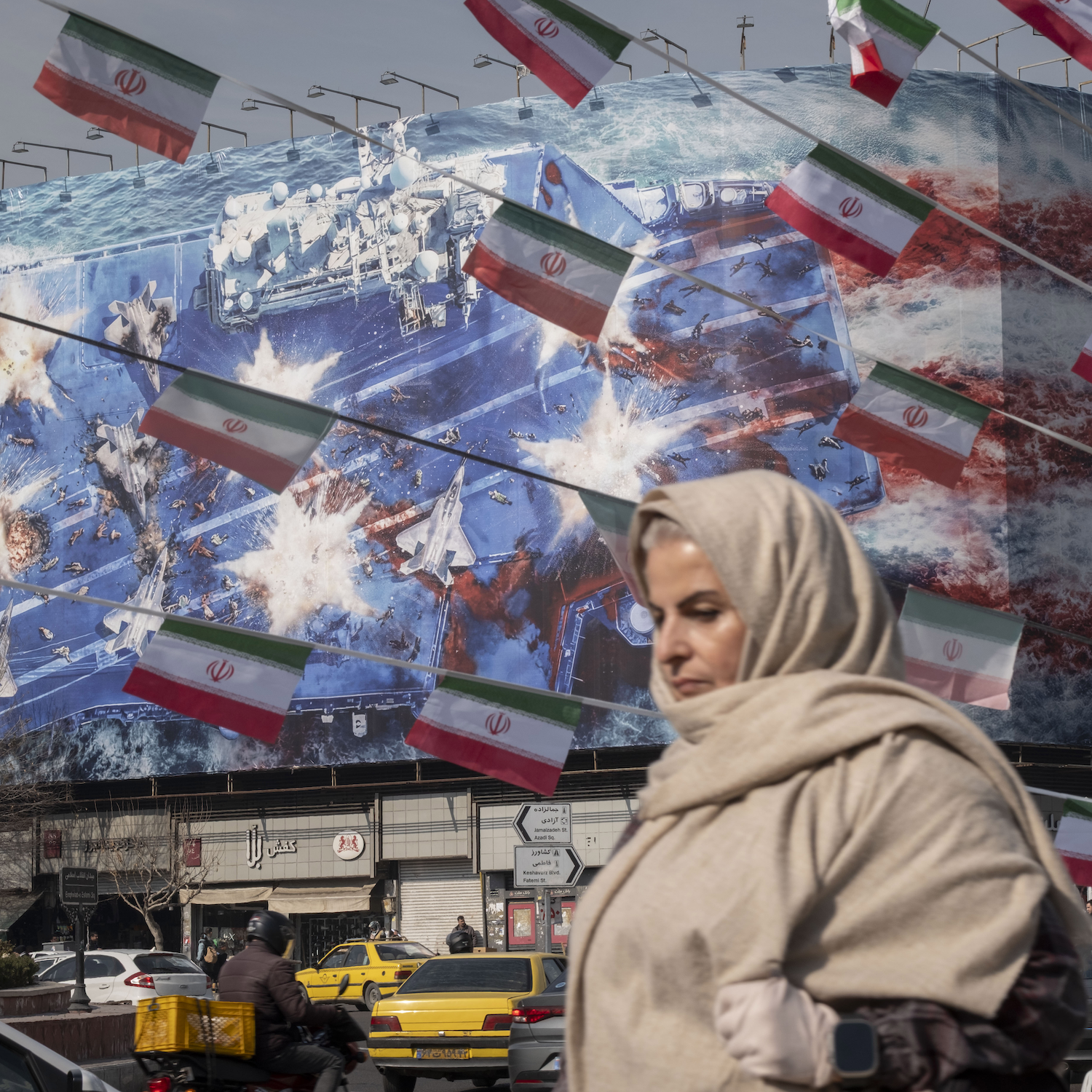
Good morning. The U.S. strikes down an Iranian drone just days before major talks. Reuters broke the news and tells us what it means.
- [00:13]
B
It's a particularly tense time. It's a particularly important time and incidents like this really highlight the lack of trust on both sides.
- [00:22]
A
The five year old boy whose iced attention drew outcry has been sent home to Minneapolis. The Washington Post explains why more kids are being detained and the copy battle that almost cost an Olympian figure skater his dream performance. It's Wednesday, February 4th. I'm Shemitah Basu. This is Apple News Today. With a rare talk between the US And Iran scheduled for later this week. Things appear to be on shaky ground. Yesterday the US Took down an Iranian drone operating close to an American aircraft carrier which has been stationed nearby as part of a military buildup. White House press Secretary Caroline Levitt relayed the Pentagon's decision to Fox News yesterday.
- [01:14]
C
It was unmanned. It was acting aggressively towards our USS Lincoln, which we know that aircraft carrier is in the region at the direction of President Trump. As for the president, he remains committed to always pursuing diplomacy first. But in order for diplomacy to work, of course, it takes two to tango.
- [01:33]
A
Reuters Idris Ali was first to the story. He told us. The motivations here are hard to know for sure.
- [01:39]
B
I think there are a couple of important things to remember here is that the incident took place in international waters. Aircraft from militaries do have the right to operate in international airspace. What is sort of in a gray zone is when they're seen as being threatening towards another country. Was the drone just flying in the general vicinity and the US Took it down or was it maybe heading towards the aircraft carrier in a way that was seen as threatening?
- [02:04]
A
For now, the end of the week talk is still on. What's less clear is what Trump actually wants to achieve.
- [02:11]
B
If you're a listener then confused, I think that is totally warranted because officials in Washington within the administration themselves are confused because this all started as President Trump really focusing on protests in Iran and quite directly telling the Iranian protesters on truth social saying help is on its way. That help never came or hasn't come so far. But the buildup continues and now it seems to be some version of limiting Iran's nuclear sort of ambitions and potentially its ballistic missile program.
- [02:45]
A
Ali points out if the focus is on Iran's nuclear capabilities, Trump already claimed to have made a significant ding in attacks. Last summer.
- [02:54]
B
The US In June carried out a large sort of attack on three Iranian nuclear facilities and at the time Trump said mission accomplished, Iran's nuclear Ambitions have been essentially decimated. And so it's really unclear what the aims are. It's unclear how you can achieve them through a aerial bombing campaign.
- [03:17]
A
Iranian officials have briefed Reuters that their primary goal is de escalation with the US And Iran's president said yesterday he backed, quote, fair, equitable negotiations. Some of Ali's colleagues have reported in recent days that some within Iran's government worry how strikes might reignite protests on the ground. The demonstrations in Iran have been silenced for now, with thousands reportedly killed by the regime. But the underlying economic conditions that provoked them remain, giving the Pentagon some leverage.
- [03:49]
B
The Iranian government, the leadership, has never been in a weaker position. They have been hit in many key areas by US And Israeli strikes in June, so less than a year ago, and the political and economic situation has only deteriorated. And so if you're looking from the outside, you could see sort of the thinking process of why now might be a time to take out a regime, a government that for decades you have seen it as an adversary.
- [04:19]
A
Unlike in Venezuela, though, the Trump administration appears much less convinced that proactively forcing leadership change in Iran would be a good idea. Secretary of State Marco Rubio told senators last week that no one knows what would happen next.
- [04:34]
D
So I don't think anyone can give you a simple answer as to what happens next in Iran if the supreme leader and the regime were to fall, other than the hope that there would be some ability to have somebody within their systems that you could work towards a similar transition. So that's going to require a lot of careful thinking if that eventuality ever presents itself.
- [04:50]
A
Trump's advisor, Steve Witkoff, and son in law Jared Kushner are scheduled to start the talks on Friday in Istanbul, along with other regional leaders. Sometimes a photo becomes the stand in for a much bigger story. That's what happened with five year old Liam Conejo Ramos when he and his father were detained by ICE last month as he was coming home from school.
- [05:20]
E
His image is really powerful and I think it has captivated the country in a way that few other images have.
- [05:30]
A
Maria Luisa Paul is a reporter for the Washington Post who focuses on immigration.
- [05:35]
E
You really see this little boy and he is kind of like the picture of childhood, right? He has this hat with bunny ears and he has a Spider man backpack and he's just watching head on as an officer is grabbing the backpack strap.
- [05:53]
A
Liam and his father are now back home in Minneapolis after spending more than a week at an immigration facility in Texas. But that image sparked national shock and anger at the Trump administration's immigration enforcement efforts. A judge ordered their release last weekend, saying that there wasn't enough probable cause to detain them. The administration has signaled it may appeal the ruling. While Liam is now home, this case put a spotlight on the rising number of child detentions by ICE in the US Right now, something Paul has been reporting on.
- [06:27]
E
The average number of people and family detention, according to the Department of Homeland Security's own data, has more than tripled since the beginning of the fiscal year in October to January. I mean, it began with 425 people on average, and now we're a little over 1300. And that's in the span of months.
- [06:47]
A
Powell says it's hard to pin down exactly how many kids have been affected by the administration's deportation policies because children end up in detention in different ways. Liam, for instance, was detained with a parent, a scenario which makes up just one part of the statistics.
- [07:03]
E
Then you have other children, for example, who are encountered by themselves because of a traffic stop. And then what has increasingly happened is that ICE agents will classify them as an unaccompanied minor, even though they might have a guardian or a parent here, have been living with them for years. And then you have the other effect of all of this, which is the family separations. I mean, the number of children who have had their parents detained and deported is significant and it's growing.
- [07:36]
A
An analysis by the Marshall Project, a nonprofit news group, says that nearly 4,000 children under the age of 18, including 20 infants, were apprehended and detained by ICE in 2025. ProPublica also found that 600 immigrant children were sent to federal detention shelters at the border in 2025, a record for the US and a higher tally than the previous four years combined.
- [08:01]
E
What the numbers tell us is that the youngest and most vulnerable lives in this country are increasingly in the middle of these policies and they're being affected in different ways. But beyond that, I think this raises a lot of concerns about due process as well.
- [08:19]
A
The Trump administration did not respond to the Post's questions about how many children are in federal detention and said they do not separate families. A spokesperson for DHS added that parents are given the option to be removed with their kids or leave them with a designated guardian. Immigration lawyers claim that in some of these cases, children have been held longer than the 20 day legal threshold. Powell says for years, kids were usually detained at the southern border. But because border crossings have significantly slowed under the Trump administration, cases like Liam's, where kids in the interior of the country are being detained are are increasing. The oil industry in Venezuela could be about to open up to Western markets. The Trump administration is poised to issue a general license as soon as this week, according to Bloomberg. But even if it does, the White House will need to convince oil executives that the region is on stable footing. Last month, Exxon CEO described it as uninvestable. It casts Venezuela's interim leader in an unusual negotiating position and as an unlikely but important figure for Trump's legacy. Formerly Nicolas Maduro's, vice president, Delsey Rodriguez has kept the bulk of military and civilian officials in place and has in recent weeks told crowds that she had had enough of the US. But at the same time, Rodriguez recently hosted the US's top diplomat to discuss cooperation with the United States and the roadmap that the Trump administration has for Venezuela's.
- [10:01]
F
I think overall, we're still learning how Delsey Rodriguez is going to handle this new relationship with the us.
- [10:09]
A
Ian Lovett is a foreign correspondent for the Wall Street Journal. He told us Rodriguez released hundreds of political prisoners, which Trump called an important and smart gesture toward peace, and has pledged general amnesty for others, though the specifics of that still need to be passed into law. Lovett reports that in conversations with officials and opposition leaders, the sense is that Rodriguez acquiescing to some things the United States wants in order to shore up her position and stay in power.
- [10:39]
F
A lot of them said that there had been negotiations with the Maduro administration and that their goal always in the past was just to buy time to sort of act like they were interested in changing, but really just to kind of delay any action that any other country might take and that those people suspected that that was probably the same playbook that Rodriguez and the other leaders, the Venezuelan government now we're going to try to follow.
- [11:03]
A
That means saying yes to certain things, like economic concessions, particularly on oil, and perhaps saving more resistance for broader political change. This strategy of offering small concessions but effectively waiting out the attention span of the administration has seemed to pay off so far. Just a couple of weeks ago, when Trump spoke with Rodriguez, he had a lot of praise for her.
- [11:26]
G
She's a terrific person. I mean, she's somebody that we've worked with very well. Marco Rubio is dealing with. I dealt with her this morning. We had a call, a long call. We discussed a lot of things, and I think we're getting along very well with Venezuela.
- [11:39]
F
Yes.
- [11:41]
A
That'S not good news for Venezuela's primary opposition leader, Maria Corina Machado, who recently gave her Nobel Peace Prize medal to Trump. She maintains that a transition to democracy is unstoppable. And and other analysts Lovett spoke with agreed that resisting democratic reform may not work out for Rodriguez.
- [12:01]
F
They think that economic liberalization and opening to foreign investment will be very difficult without some sort of political transition, that there's not a lot of trust from the market in this government, that they don't see the country's laws are sort of being reliably carried out under this government, and that to attract foreign investment, there's really going to need to be a democratic transition. So I think we'll see which of those views ends up being correct.
- [12:36]
A
And finally, a few other stories we're following. The two brothers of Renee Good, the Minneapolis woman fatally shot by a federal immigration officer last month, testified on Capitol Hill on Tuesday. Luke and Brent Ganger spoke to lawmakers at a congressional forum that's looking into the tactics and use of force by DHS agents. Luke said his family is disheartened that immigration officials haven't seemed to change their behavior since his sister's death.
- [13:05]
D
These encounters with federal agents are changing the community and changing many lives, including ours, forever.
- [13:14]
A
Brandt shared parts of the eulogy he delivered at Goode's funeral, painting a fuller portrait of who his sister was.
- [13:21]
F
She believed that kindness mattered, and she.
- [13:23]
D
Lived that belief even when things were hard, nay looked for the light.
- [13:30]
A
And.
- [13:30]
F
If she couldn't find it, she became.
- [13:32]
D
The light for somebody else.
- [13:33]
A
Senator Richard Blumenthal of Connecticut, a Democrat who organized the forum, emphasized the need for a complete overhaul of DHS and a revamping of immigration enforcement policies. Elsewhere in the Capitol, lawmakers agreed to end the partial government shutdown. The House passed a 1 trillion spending package that funds most government agencies through September, and President Trump signed the bill yesterday afternoon. The package includes stopgap funding for the Department of Homeland Security through next week, and the clock is now ticking for lawmakers to find a way to fund it longer term. Democrats have 10 days to negotiate their demands, things like a ban on agents wearing masks, names on uniforms and judicial warrants for planned actions. DHS already received a massive funding boost through last year's tax and spending bill, so immigration operations are likely to continue as is. But funding for FEMA and the tsa, which fall under dhs, could suffer if lawmakers can't reach a deal. And finally, some Winter Olympic events kick off today before the opening ceremonies on Friday as the Games begin, one figure skater received some good news about the unique music in his routine. That is the sound of Spanish figure skater Tomas Guarino's routine at the nation's championships earlier this year, set to music featuring the Minions from the Universal Pictures popular Despicable Me franchise. Guarino was told his use of the music violated copyright rules and couldn't be included in Olympic competition, but after fans rallied online, he said Universal reconsidered and granted him permission. Guarino not only uses music from the Minions films, but some of his costumes are minion inspired, featuring the character's signature blue and yellow colors and overalls. This is Guarino's first Olympics. The men's single figure skating competition begins on February 10th. You can find all these stories and more in the Apple News app. And if you're already listening in the News app right now, we've got a narrated article coming up next. GQ tells the story of the notoriously violent Walpole State Prison in Massachusetts and how in 1973, a prison guard strike left the men incarcerated there unsupervised, leading to a surprising peace which lasted for weeks. If you're listening in the podcast app, follow Apple News plus Narrated to find that story and I'll be back with the news tomorrow.