Loading summary
Transcript25 lines
- [00:05]
Shemitah Basu
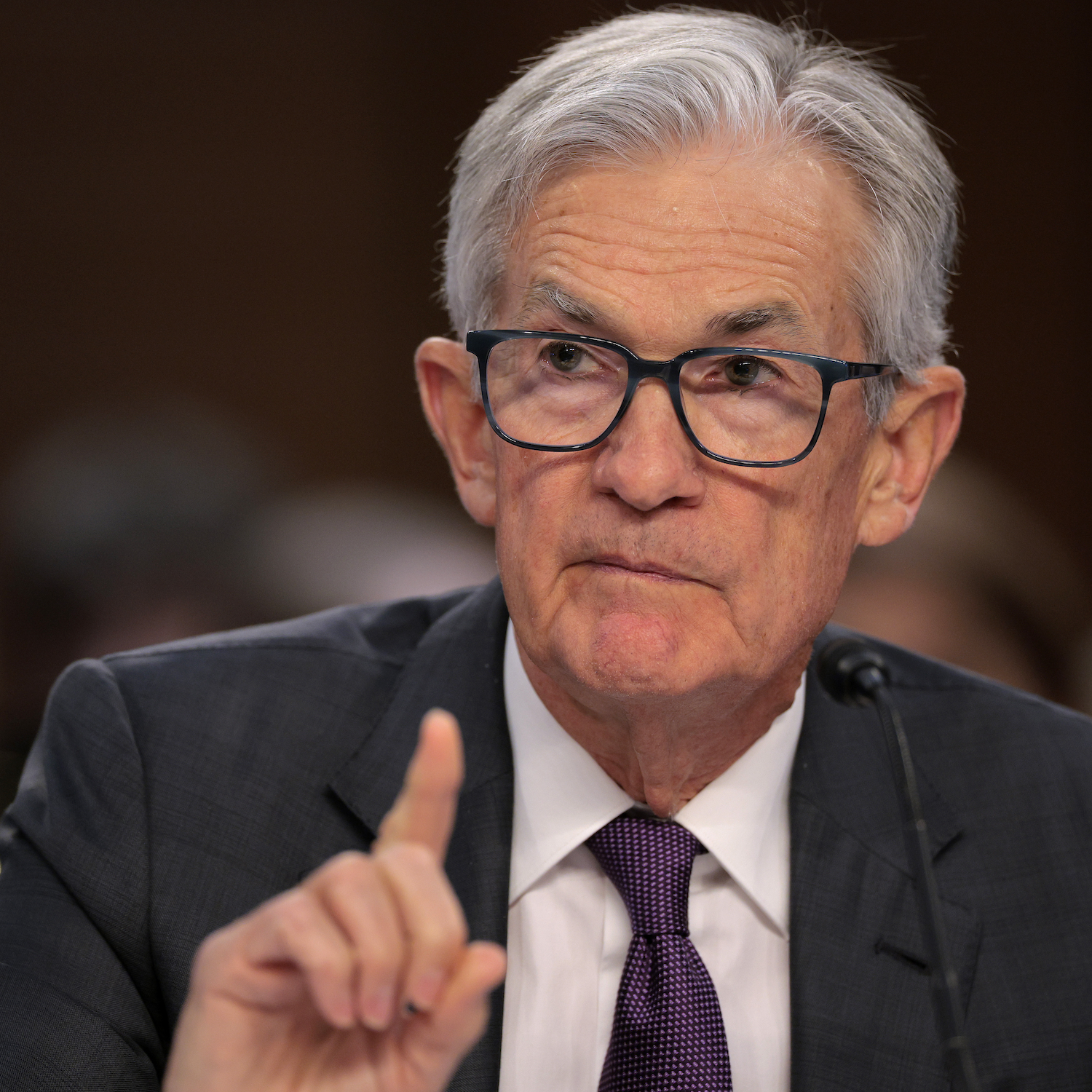
Good morning. It's Tuesday, April 22nd. I'm Shemitah Basu. This is Apple News today. On today's show, why some immigrants are considering self deportation. Google might have to break up its businesses. And on Earth Day, a look at how clean energy is winning. But first, President Trump is suggesting he wants to remove Fed Chair Jerome Powell. Here he is talking with reporters last week.
- [00:42]
Greg Ip
If I want him out, he'll be.
- [00:43]
Shemitah Basu
Out of there real fast, believe me. Trump has called Powell a major loser and has said that Powell's termination cannot come fast enough. The thing is, the Federal Reserve is one of a few government agencies designed to be entirely independent. The idea is that it allows them to do their work untouched by political pressures. But that could soon change.
- [01:06]
Josh Sisco
The Supreme Court is addressing a question about whether the President can fire members of independent agencies for anything other than cause.
- [01:14]
Shemitah Basu
That's the Wall Street Journal's chief economics commentator, Greg ip.
- [01:19]
Josh Sisco
If they do, then in theory, the President would be able to fire the chairman of the Federal Reserve, and the Fed chairman would effectively, instead of being an independent central banker, become an at will employee of the President, like any Cabinet secretary.
- [01:35]
Shemitah Basu
The case before the court is called Trump v. Wilcox. It's being heard as part of what's known as the shadow docket, meaning there are no oral arguments and little public visibility into what each side is arguing or how the justices are thinking about the issue. Now for some backstory here. Powell was appointed by Trump during his first term. He was then reappointed by President Biden. His term doesn't run out until next May, and he's repeatedly said he has no plans to resign before 2020. But he and Trump have bumped heads. Powell has been critical of Trump's tariffs, saying they will likely cause both higher prices and slower economic growth. Trump is upset that Powell hasn't cut interest rates. The Fed's role is to keep inflation low and employment levels high, not to keep politicians or even presidents happy. If the court overturns the legal precedent that keeps the Fed politically independent and makes it so that a Fed chair can be fired by the president, IP says that could potentially affect how the chair sets policy.
- [02:39]
Josh Sisco
They may decide to keep interest rates lower than they think is wise, and that might result in higher inflation and a lower dollar. Investors know this, and so they will be looking at everything the President says. And they will assume that when the president says, I want lower interest rates or I want a lower dollar, for example, that that the Fed will somehow deliver the policy that does that.
- [03:00]
Shemitah Basu
And historically, this has happened before with disastrous consequences. Ahead of Richard Nixon's reelection in 1972, he pressured the Fed chair to keep interest rates low. What followed was a decade of economic damage that stemmed from high inflation. IPP says if we see a repeat of that kind of political pressure, it'll come with several risks.
- [03:23]
Josh Sisco
One is that it could introduce a lot of volatility. Now, you might initially get a rally in stocks because stock investors tend to like lower interest rates. But you would also see the markets beginning to build and higher expectations of inflation in the long run. And that could lead to higher long term interest rates. And that would affect things like the money that the government pays to service the national debt. It would affect things like mortgage rates that homeowners pay.
- [03:45]
Shemitah Basu
Keeping the Fed independent is just a part of what's at stake here. This case before the court involves two federal officials, one from the National Labor Relations Board and one from mspb, the Merit Systems Protection Board, who were fired by Trump. Both are Democrats and both are suing, saying they were wrongfully terminated and can only be fired for cause. In fact, MSPB is the agency that's supposed to protect civil servants from politically motivated firings. So if the court rules to expand presidential powers here, we could possibly see Trump start to unravel protections for civil service workers as well. Let's turn now to immigration and the continued aggressive policies of the Trump administration and their impacts at the US Southern border. Illegal crossings have diminished significantly, with migrant encounters, with Border Patrol reaching historic lows in March. Crossings began to drop in the final year of the Biden administration. And the Wall Street Journal notes that some of the policies employed toward the end of Biden's term have benefited Trump's immigration goals. At one point during Biden's term, there were about 250,000 Border Patrol arrests in a single month. In March of this year, that number was just over 7,000. Meanwhile, NPR reports that some immigrants in the US without legal status are considering self deporting or leaving the country of their own volition. It represents an explicit strategic approach from the Trump administration. Here's NPR immigration correspondent Jasmine Garsden.
- [05:28]
Jasmine Garsd
Self deportation has been a pillar of the Trump administration's immigration policy. They've said so themselves. They've encouraged self deportation. They've pumped a lot of money into ads in the English language market and Spanish language market encouraging people to self.
- [05:45]
Shemitah Basu
Deport, like this ad featuring Homeland Security Secretary Kristi Noem that was part of a $200 million ad campaign, Leave now. If you don't, we will find you and we will deport you. You will never return. Those days are over. Aside from the ads, the headlines speak for themselves in encouraging people to consider self deportation. People have been taken off the streets by immigration officers with no warning. Some have been deported and imprisoned in El Salvador with no due process. Others are lingering in ICE detention centers that are becoming overcrowded and unsanitary. Garsd told us that Trump isn't the first to push a strategy of self deporting. Back during the 2012 presidential campaign, Mitt Romney proposed self deportations as part of his immigration plan and received wide mockery, including from Trump. The question then was, for people who had fought so hard to flee danger in their countries and pursue a life in the United States, why would they choose to leave? But Garsd told us that now people are in fact grappling with that very difficult choice.
- [06:54]
Jasmine Garsd
I think as an immigration reporter who's been covering this for years, I just have never heard so many immigrant families talking about self deportation, like considering it, and talking like a scramble to get kids their passports. That is very real.
- [07:12]
Shemitah Basu
At least one family she spoke with has had real disagreements about what to do. The father wants to return to Guatemala, while the mother wants her children to continue to go to school in the.
- [07:22]
Jasmine Garsd
U.S. she has two girls that are in school, just really bright girls. One of them is just this delightful six year old girl who wants to be a mathematician or maybe a scientist. Education is a really important thing for this mom and she's just like, I want my girls to access this education that they could not get in my country.
- [07:45]
Shemitah Basu
If this family leaves, the kids who are US Citizens can come back in the future under current US Laws. But the possibility of the parents ever returning is far from clear now to an ongoing trial involving Google. The Department of Justice argued in court yesterday that in order to break Google's monopoly on the Internet search market, the Silicon Valley giant should be forced to sell off its Chrome web browser and change other key parts of its business. The DOJ argued for years that Google is a monopoly in online search, and last summer a judge agreed, ruling that it's illegal. Today was the first day in a three week trial to decide how Google should remedy that and open up competition. This is the second such ruling against Google in the past year. Last week, a judge also ruled Google illegally monopolized certain ad tech markets. In that case, the DOJ argued Google maintained dominance with a three pronged digital ad business. That includes technology technology advertisers use to get their ads in front of people exchanges to determine which ads people are served and the platform publishers use to sell ad space on their web pages.
- [09:06]
Greg Ip
The government was concerned that this sort of disfavors Google's competitors in this market, but also it has allowed them, according to the lawsuit and the ruling, sort of unfairly extract more money than they otherwise would from both advertisers and publishers.
- [09:23]
Shemitah Basu
Josh Sisco is a reporter for Bloomberg who covers tech and antitrust litigation. He says much of the government's argument centered around previous acquisitions of companies that are key parts of the online advertising ecosystem.
- [09:36]
Greg Ip
And then they built up this sort of leading position through these acquisitions on both sides of this market, the advertiser side and the publisher side.
- [09:45]
Shemitah Basu
And the DOJ has argued if Google weren't allowed to act this way, it would be better for advertisers.
- [09:52]
Greg Ip
Advertisers might be able to keep a bigger portion of their revenue as well as publishers. And so those price changes could potentially trickle out throughout the economy. And then, you know, as a consumer, that could impact, ultimately, prices that people pay.
- [10:09]
Shemitah Basu
Google says it disagrees with the decision and plans to appeal, saying in a statement, publishers have many options, and they choose Google because our ad tech tools are simple, affordable, and effective. All these court cases could lead to some big changes in how Google operates. In addition to potentially being ordered to sell Chrome, which is the world's leading web browser, Google could be told to sell its Android operating system, which is used by more smartphone users than any other os. And perhaps most importantly, the company could be forced to terminate agreements with other big tech players that make Google the default search engine on smartphones and web browsers. In any case, Cisco says what the DOJ is arguing for is all about a more equal Internet, because right now.
- [10:56]
Greg Ip
Google is sort of synonymous with the Internet. And when people look for information online, they primarily look at Google. And so the argument is that you have one primary portal to all of the world's information. And if that changes, then there could be different, more specialized search engines and just a different sort of ecosystem. You have more choice. That's the bottom line. More choice.
- [11:28]
Shemitah Basu
Before we let you go, a few other stories we're following. Today, the Supreme Court hears a case over whether parents should be allowed to opt their kids out of reading books in school that include LGBTQ characters and themes. The case originated in Maryland's largest school district that in 2023 said it would no longer let parents exclude their children from such lessons, saying they're providing a curriculum that represents families in the district. The district is in a deep blue progressive county, a group of parents, many of them either Muslim or Christian, argued that taking away the opt out option conflicts with their religious views and violates their First Amendment rights to practice their faith without discrimination. The results of the case could have broad implications over how much, say parents have in their children's public school education. In economic news, the US dollar fell to a three year low on Monday and the yield on the 10 year treasury note rose as investors weighed concerns about tariffs and the Federal Reserve's future independence. Also, three weeks after President Trump implemented tariffs on nearly every country in the world. Before pausing some of them, we're about to get a slew of new economic forecasts and data points that will help us know how the world and investors are viewing the fallout. Today, the IMF releases its Global Financial Stability and World Economic Outlook reports, while on Wednesday the Fed will release its Beige Book, a qualitative review of economic conditions in the United States. And finally, today is Earth Day, and while President Trump has moved quickly to embrace fossil fuels and unwind environmental protections, Vox has tend charts that prove that clean energy is on the up and growing the global economy Take wind power. Despite recent executive actions specifically against wind power, US wind capacity grew 23 times over 20 years and it's drawn massive capital investment. The biggest wind producers are in states that are heavily Republican. The capacity of our electric grids is also improving with advances in battery technology. There's also solar power, where costs to scale have plummeted and growth is on a steep trajectory. The push to more sustainable vehicles is also a big factor. Cars and other transportation vehicles are the biggest greenhouse gas emitters in the US but more and more people want and are buying EVs and hybrids. And one more sign that clean energy is thriving. The jobs numbers. In 2023 alone, 150,000 new clean energy jobs were created. The sector now outnumbers jobs the fossil fuel industry globally. You can find all these stories and more in the Apple News app. And if you're already listening in the News app right now, we've got a narrated article coming up next. New York Magazine describes how a young couple got drawn into a Bay Area based cult with a very specific convert everyone to becoming vegans or else risk AI becoming powerful enough to do to humans what we do to factory farmed animals. If you're listening in the podcast app, follow Apple News plus narrated to find that story and I'll be back with the news tomorrow.