Loading summary
Transcript19 lines
- [00:00]
Jamitha
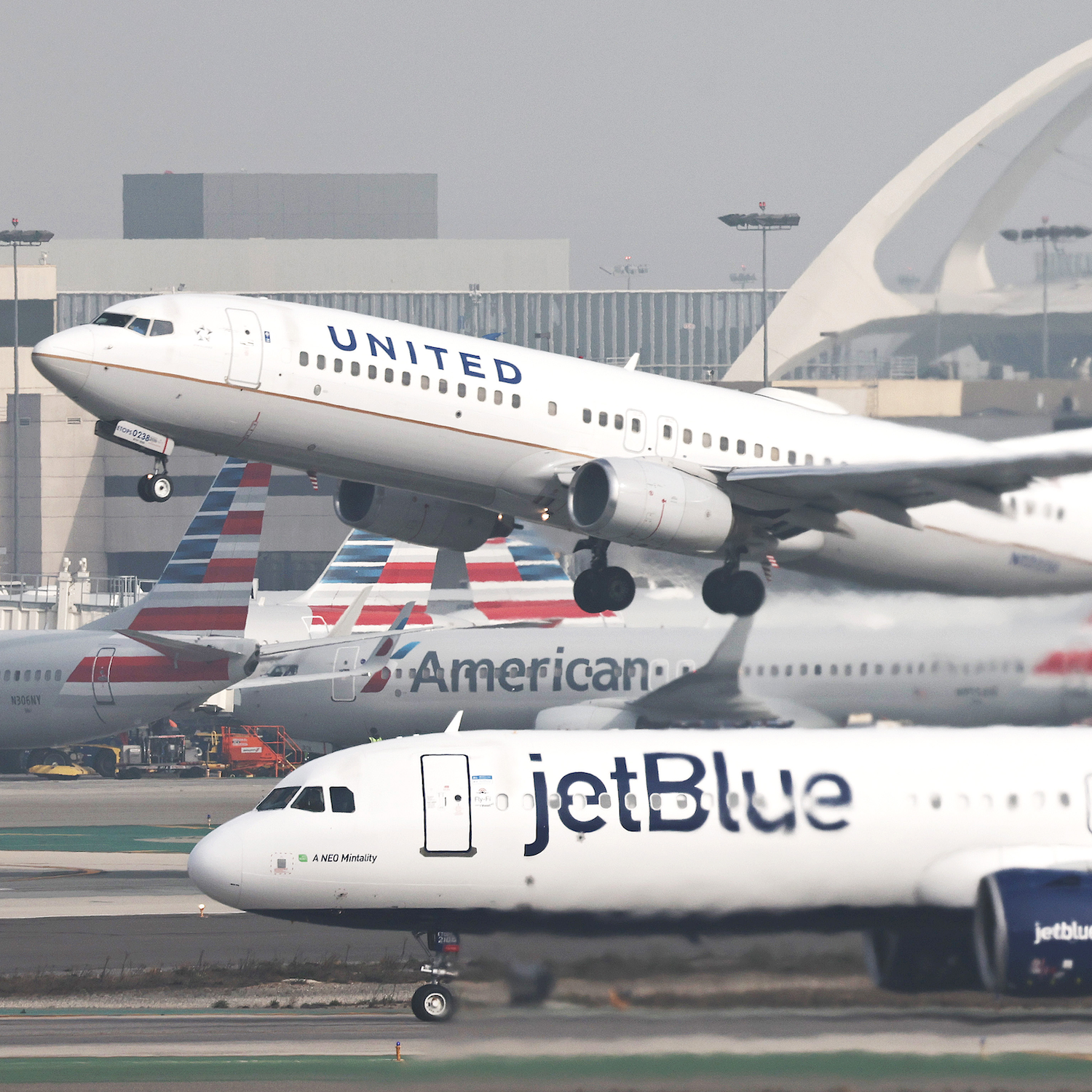
Hey there, it's Jamitha. I've got a quick request for you. If Apple News Today is an essential part of your morning routine, follow the show in Apple Podcasts. And if you have another 30 seconds, leave us a rating and review too. It helps other people find our show and it helps us know what you like about it. Thanks. Good morning. It's Thursday, February 27th. I'm Shemitah Basu. This is Apple News today. On today's show, the Supreme Court weighs in on reverse discrimination. Migrants detained by the Trump administration at Guantanamo share what they experienced and one way to counteract the egg shortage. But first, there have been a bunch of worrying headlines about air travel lately. Four commercial jets have crashed in the last 10 weeks with close to 300 fatalities. Between them have been several private airplane crashes, with fatalities in recent weeks, too. Then this week, two planes nearly collided at Chicago Midway Airport and a flight to South Carolina was forced to return to Atlanta when the cabin filled with smoke, forcing passengers to evacuate when the plane landed at Hartsfield Jackson Airport. Many people want to know, is it safe to fly right now? And do these recent crashes and near misses indicate it's less safe to fly than it was before? So we called up aviation safety reporter Darrell Campbell with the Verge, and he acknowledged seeing so many incidents within a short amount of time is really unusual. Four commercial airline crashes in roughly two months is the largest concentration of crashes we've seen since 2019. But when you look at the bigger picture, Campbell told us, the statistics tell a more comforting story.
- [01:55]
Darrell Campbell
Even including the recent crashes, your risk of getting in a fatal plane crash is about 0.2 per million flights. So it's pretty small. Put another way, you'd have to fly a day for almost 2,500 years before you get into a fatal plane crash.
- [02:08]
Jamitha
Even with these recent incidents, the risk of a plane crash is at a 60 year low, Campbell says, and thousands of flights take off and land every day without issue.
- [02:19]
Darrell Campbell
We're kind of fighting the emotional brain and the rational brain a little bit, but whenever we see one of those big plane crashes on the news, it obviously sticks with us.
- [02:27]
Jamitha
Another thing to keep in mind, none of these recent crashes happened for the exact same reason. There were a mix of factors involved, experts told Campbell indicate there is no single vulnerability in the air travel system that we should be worried about. That said, Campbell reports that our aviation safety system is pretty frail at the moment, and there are clear areas where it can be improved. The COVID 19 pandemic caused travel to come to a standstill which pushed a number of pilots, mechanics and flight attendants to retire early. And airlines have struggled to refill those roles. The nation's air traffic control system is under stress, too.
- [03:06]
Darrell Campbell
It takes two years to get a new air traffic controller from initial hiring to qualified enough to start actually working in the tower. It takes about that long for a pilot to get certified. This is just not a switch that you can turn on and off overnight. And I think to have that huge drain of experience and just personnel really put a lot of strain on the aviation system.
- [03:26]
Jamitha
And at the Federal Aviation Administration, the Trump administration recently laid off 400 employees, including mechanics, flight operations specialists, and aviation safety assistants. Trump administration officials said none were critical safety personnel. But this comes at a time when aviation experts are saying the FAA really needs more funding to shore up its staff and systems.
- [03:50]
Darrell Campbell
We know, for example, that almost 90% of the nation's air traffic control facilities are significantly understaffed, that a significant proportion of the control systems, radars, all the tools that air traffic controllers use in their day to day are sometimes decades out of date. So they're in bad need of a modernization. And we just haven't really seen Congress come through with any kind of funding to do that.
- [04:12]
Jamitha
Transportation Secretary Sean Duffy has asked elon Musk and SpaceX to help evaluate and update FAA systems. And Wired reports that a number of SpaceX engineers are already working at the FAA. Campbell says some type of public private partnership like this could be very promising. Aviation safety experts told Campbell. In Canada, a private nonprofit controls airspace and it now has one of the best run and modern systems in the world. Let's turn now to the Supreme Court, which heard arguments yesterday in a case that could change discrimination claims in the workplace. It's being brought by a woman who claims that because she's straight she experienced reverse discrimination. The plaintiff, Marlene Ames, filed a lawsuit against her employer, the Ohio Department of Youth Services, after losing two positions to people who are gay. In one scenario, Ames claimed she was passed over for a management role which was given to a gay woman who Ames said was less qualified. The New York Times reports this woman did not have a college degree as Ames did, and had not worked at the company for as long as she had. In the other scenario, Ames was removed from her job as an administrator and demoted, and her position was given to a younger gay man. Her employer has denied the accusations of bias in court filings. Lawrence Hurley, a senior Supreme Court reporter at NBC News, told us the court isn't being asked to weigh in on whether bias did or didn't happen.
- [05:51]
Lawrence Hurley
What's an issue in this case is that in some parts of the country, lower courts have set a precedent that kind of sets a slightly higher bar for people who are from sort of so called majority groups bringing these kind of claims. So in other words, it's a bit more difficult for a white person to bring a race discrimination claim than it is for a black person to bring it.
- [06:13]
Jamitha
Ames and her attorney say they want to level the playing field in the workplace. And in oral arguments yesterday, the justices appeared to agree that Ames should be allowed to pursue her claim, which was struck down in lower courts, including the 6th Circuit Court of Appeals in Cincinnati.
- [06:30]
Lawrence Hurley
Pretty much everyone in the courtroom seemed to agree that this was wrong. In fact, Justice Neil Gorsuch, one of the conservatives, actually said at one point that there was, quote, radical agreement in the courtroom on this. This issue, which, you know, having covered quite a lot of Supreme Court cases, doesn't happen very often.
- [06:45]
Jamitha
The court is considering this case two years after it struck down race conscious college admissions practices. And in a political environment where diversity, equity and inclusion programs are being targeted. At the urging of President Trump, America First Legal, a conservative law firm founded by Trump aide Stephen Miller, asked the justices to side with Ames. And Hurley told us the Biden administration had also submitted a letter to the court agreeing that the higher standard for majority groups established in lower courts was unequal. So Ames has a politically diverse range of voices backing her cause. The NAACP Legal Defense and Educational Fund has said it's important to consider the history of discrimination against minority groups and that discrimination against majority groups is quite rare. But legal experts say the court might decide that eliminating racial discrimination means eliminating it equally for all groups, which would invite a wave of change to laws governing the workplace. Please be advised this next story mentions suicide. In the early weeks of the Trump administration, nearly 180 migrants were sent to Guantanamo, the US naval base in Cuba, where some were put in a military prison intended to be used for suspected terrorists affiliated with September 11th. At the time, very little was known about who these people were or the crimes the Trump administration accused them of committing. The administration still has not provided that information, but they've described these migrants as the worst of the worst. And now that most people from the first wave of Guantanamo detainees have been deported, we're starting to hear their accounts of what it was like there. The Washington Post recently connected with three men who were held at Guantanamo. All of them crossed the US Border illegally. But the Post couldn't find any other criminal records on file. They shared their stories with reporter Sylvia Foster Frau.
- [08:52]
Sylvia Foster Frau
They said that they were denied calls to lawyers and to loved ones, despite repeated pleas. They also described what I think was one of the most traumatic aspects for some of them, migrants, really invasive strip searches, where every time they left the cell and returned to their cell, whether that was to shower, which happened very rarely, or to go outside, which happened even more rarely, they told Foster Frau.
- [09:17]
Jamitha
During their two weeks at Guantanamo, they were allowed to go outside for a total of two hours, shackled and placed in what one man described as a cage. Diovar Usutegi said from his windowless cell inside the prison, he used a Bible to keep track of how much time.
- [09:34]
Sylvia Foster Frau
After every three meals he would take in the last kind of blank page of the Bible, he would tear a piece of the page and by the time he left, that page had 14 tares in it. So he had spent 14 days in Guantanamo.
- [09:48]
Jamitha
Uska Tegui told Foster Frau the detainees were largely kept separate from each other. He overheard people threatening suicide. One man interviewed by the Post attempted it, and the other two said they considered it. A senior attorney at the ACLU told the Post that the conditions detainees at Guantanamo have described are, quote, more restrictive, more severe and more abusive than a typical immigration detention facility in the United States.
- [10:15]
Sylvia Foster Frau
Some legal aid and human rights groups have sued the administration over them taking migrants there, particularly over the issue of legal access because families weren't notified. They had no idea where their loved one was. And then there was a big concern over the due process rights of these immigrants who still have a series of rights set out in the US about what they are allowed to have access to.
- [10:39]
Jamitha
The Defense Department, which manages the military prison at Guantanamo, and the Department of Homeland Security did not respond to the Post's questions about the treatment of people detained there. When the Trump administration transferred migrants at Guantanamo to Venezuela last week, the men interviewed by the Post were reunited with their families, who have spent the last few weeks worried about their safety. Uscategui said he's haunted by the memories of what he experienced, but he left Venezuela for a reason. To flee the government there and make ends meet for his family. And he ultimately hopes to return to the US legally. Before we let you go, a few other stories we're following. The Supreme Court temporarily paused a lower courts order that would have required the Trump administration to release nearly 2 billion doll in frozen foreign aid funding by midnight last night. The emergency order from the high court requested by the Trump administration came just hours before the midnight deadline. Chief Justice John Roberts directed the parties in the case to file responses by noon on Friday as the court seeks more information about the case and decides what to do next. Meanwhile, the Trump administration also said late Wednesday it would eliminate 90% of USAID's foreign aid contracts and $60 billion in overall US assist around the world, giving a sense of scope to the president's plans for reshaping U.S. foreign aid. Health officials in Texas say a child is the first confirmed death as a result of the state's measles outbreak. The Houston Chronicle reports the child was not vaccinated against measles. As of Tuesday, the number of measles cases was 124 across nine counties. This is Texas largest outbreak of the disease in 30 years, and it spread across the border to New Mexico, where nine cases have been confirmed. School aged kids account for 101 of the 124 cases in Texas, the Chronicle says. Of those, only five had received the measles vaccine. And in an effort to lower egg prices and combat the bird flu, US Officials are looking to import eggs. The Department of Agriculture said they will also slow egg exports, USA Today reports. Turkey, which is one of the world's largest egg exporters, will increase egg shipments to the US from about 70 to 420 million this year. In addition to increasing imports, the department is also upping spending on biosecurity to help egg laying farms, as well as exploring flu vaccines for chickens. You can find all these stories and more in the Apple News app. And if you're already listening in the News app right now, we've got a narrated article coming up next. The New Yorker examines what happens if birth rates continue to fall around the world, zooming in on South Korea as an example, where last year strollers for dogs outsold those for babies. One village last registered a birth during the Olympics in 1988. If you're listening in the podcast app, follow Apple News plus narrated to find that story and I'll be back with the news tomorrow. It.