Loading summary
Transcript27 lines
- [00:05]
A
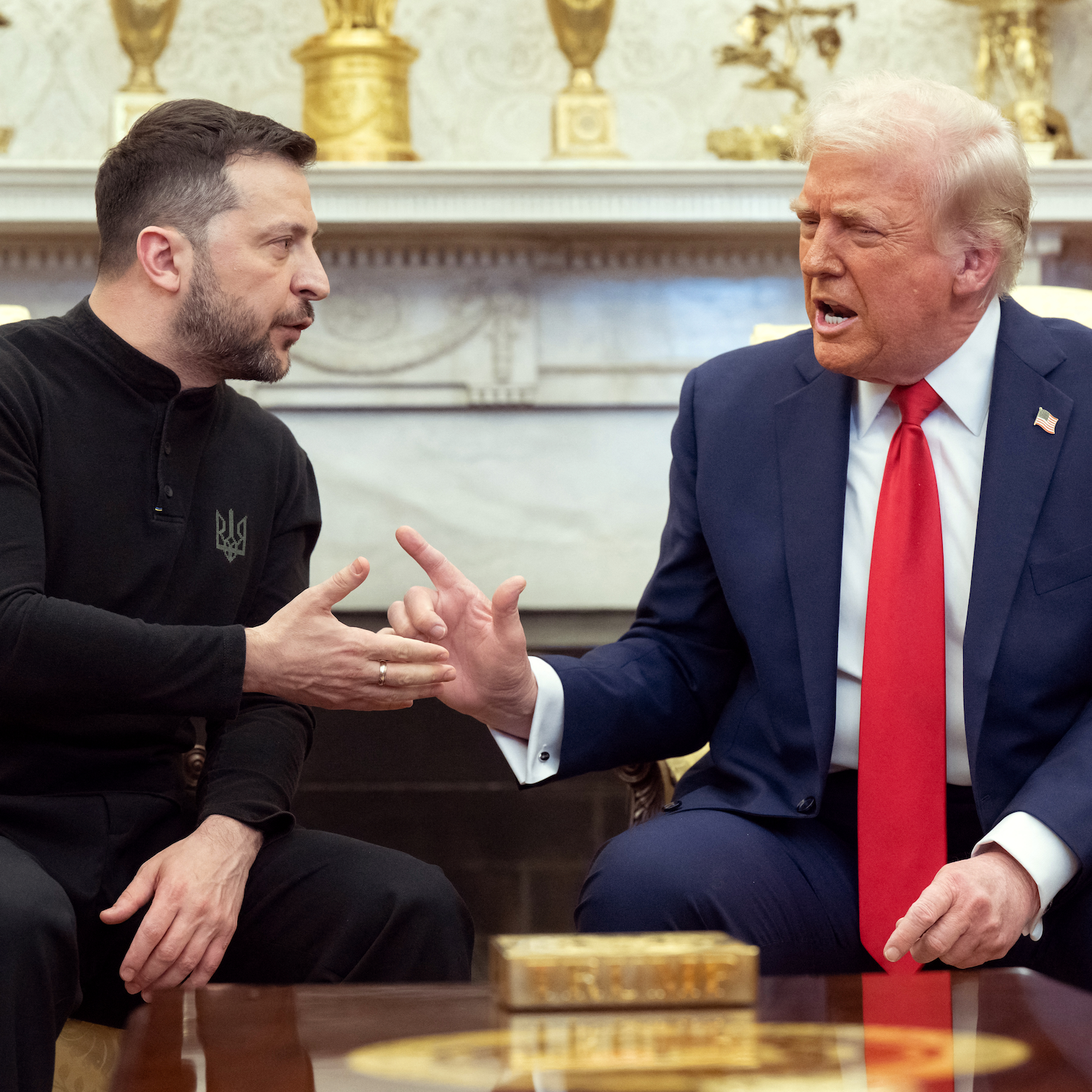
Good morning. It's Monday, August 18th. I'm Shemitza Basu. This is Apple News today. On today's show, Republican states are sending hundreds more national guard troops to D.C. programs to support maternal and infant health are in danger of losing funding. And an extreme case of snack aisle diplomacy. But first, Ukrainian President Volodymyr Zelensky and several European allies are set to meet with President Trump today. This follows Friday's summit in Alaska with Russian President Vladimir Putin. A real diplomatic victory for Putin, who got red carpet treatment on U.S. soil and walked away without making any major concessions in the war. Meanwhile, Trump failed to secure what he repeatedly said was his goal going into Friday's meeting, a ceasefire. And he did not follow through on the severe consequences he threatened for Putin if Putin did not agree to one.
- [01:07]
B
It appears that Putin has convinced Trump that a ceasefire is a bad idea.
- [01:11]
A
That's Paul McCleary with POLITICO. He says European leaders are worried Trump is now feeling more sympathetic to Putin's vision for ending the war, which would include significant territorial concessions from Ukraine, something Zelensky says is a red line. Russia controls close to 20% of Ukrainian territory and it's calling on Ukraine to give up even more. And the European allies are concerned that Putin would use the time it takes to negotiate long term peace to seize more land.
- [01:40]
B
That could take weeks or months, which plays into Putin's interests here.
- [01:45]
A
McCleary says the allies hope to present a united front today in part because, as you might remember, Zelensky's last meeting in February at the White House with Trump and Vice President J.D. vance was a disaster. Trump and Vance attacked Zelenskyy in front of the press in the Oval Office and falsely blamed Ukraine for starting Russia, Russia's war.
- [02:06]
B
And I think them coming to Washington shows that they don't fully trust what is going to happen, which is a sea change, I think, in transatlantic alliance where European leaders are wary or don't trust or feel like they need to back each other up in the face of an American president. That's astounding.
- [02:23]
A
They also want to know why Trump pivoted his position on a ceasefire. McCleary told us they're struggling to get their heads around what happened in Alaska.
- [02:32]
B
Trump told them one thing and, you know, he has his way of telling stories and of expanding or contracting the truth. Right. And they all know this. So one of the reasons that they want to come here is to get this from him.
- [02:45]
A
Immediately after the meeting on Friday, Trump and Putin offered very few details about what they discussed and where they agreed or disagreed. They took no questions from reporters over the weekend. Secretary of State Marco Rubio, who attended the summit, told ABC a temporary ceasefire is still on the table, but he says a long term peace deal is, quote, a long ways off. Special envoy Steve Witkoff, who was at the summit too, told CNN that Putin agreed to allow the US And European countries to give Ukraine certain security protections in a peace agreement, like taking whatever actions they deem necessary should Ukraine be attacked again in the future.
- [03:24]
B
We got to an agreement that the United States and other European nations could effectively offer Article 5 like language, which was the first time we had ever heard the Russians agree to that.
- [03:38]
A
Article 5 is a protection granted to members of NATO, which Ukraine has long sought to join. Russian negotiators have called that one of Putin's red lines.
- [03:48]
B
They don't want troops from NATO countries in Ukraine. They don't want any sort of ironclad security guarantees. So that one is going to be interesting to see how that plays out because the Russians have rejected most overtures for peace. But that specifically.
- [04:12]
A
Let's stay in Washington, D.C. where there have been a few key developments in the administration's aggressive push to address crime and homelessness in the city. D.C. officials have countered Trump's claims of rampant lawlessness and note that crime is at a more than 30 year low. On Saturday, three Republican led states said that they would send hundreds of national guard members to D.C. to assist the Trump administration. Some of the troops deployed in the city may soon be armed, contrary to statements around their initial deployment. And the city and the administration briefly fought in court over control of the Metropolitan Police Department at the end of last week, before a compromise was reached that kept the current chief in charge, Brian Mann, a correspondent for npr, said that the federal government's moves appear at odds with what life is largely like in the city.
- [05:03]
C
It's summer here. People are out on the streets. There are tourists, people are shopping, they're eating. This does not look like a war zone. This does not look like a place where a crime emergency is unfolding. And so there is this real dichotomy between the President's narrative and his bringing in these additional soldiers and, and what I'm seeing just with my own two eyes on the street.
- [05:26]
A
It remains unclear exactly what the National Guard is expected to do in D.C. as multiple reports indicate that they've played a limited role so far.
- [05:34]
C
It's also complicated how these National Guard soldiers are interacting with hundreds of federal agents who are on the streets and with the Metropolitan Police department that has thousands of officers here in the city. And I've been speaking to experts who say it's a real concern how all of these armed individuals on the streets are going to coordinate who's going to be in charge on an hourly, daily basis.
- [05:58]
A
What has become clear in recent days is that local and federal authorities have begun sweeping and destroying encampments where some of the city's unhoused population lives. Experts and advocates told mann that about 800 to 900 people sleep on the streets every night in the summer in D.C. and often don't have safe, affordable alternatives. The Washington Post recently spoke to people in D.C. who are experiencing homelessness and asked them about Trump's crackdown on the city. Here's Karen Irwin. Do you think people really want to be here and be unhoused? There's always underlying stuff, and if you're not dealing with what's actually going on, the emotional context of anything, then all you're doing is just shoving something that you don't want to look at into another corner until you decide you want to clear that corner. Man told us most of the unhoused people he's speaking to are isolated and frightened.
- [06:52]
C
They are confused by what's happening to them. They don't understand the complicated process that's been created to help unwell people in the United States. They desperately want to be left alone. And so to have this enormous, blunt instrument coming at them with the president describing them as maniacs, as people who are turning the country into a wasteland.
- [07:14]
A
White House officials have told NPR that unhoused people in the city need to find a way out of D.C. or into shelters. And those that don't could face fines or even jail time. Local advocates who have worked on this issue say local shelters are at capacity, that longer term efforts, including programs that provide low income families with stipends, have helped lower the city's unhoused population and that ultimately these more hostile efforts could set back the progress they've made on getting people housed under the Trump administration. Programs to support mothers and children are rapidly disappearing. Some are the result of mass layoffs at the Department of Health and Human Services. Others took big hits in the Republican tax and spending bill like Medicaid, which covers more than 40% of all births in the country. It was slashed along with federal funding to support infants and children in low income housing households. And there are more programs on the precipice, unsure if their funding will be renewed. ProPublica took a look at one of these programs. It's called Enhancing Reviews and Surveillance to Eliminate Maternal Mortality, or Erase MM for short. It gives money to states so they can review maternal deaths and investigate their causes, an issue the National Institutes of Health described in a report earlier this year as an urgent public health priority. The program launched during Trump's first term.
- [08:49]
D
Which helped several states create these committees in some cases for the first time to investigate these deaths.
- [08:57]
A
Reporter Cassandra Jaramillo told us what the states learned.
- [09:01]
D
We saw states being able to look much more closer at issues of racial disparities. Black women are much more likely to die in pregnancy related complications than white women. However, in some states, white women were struggling more with substance abuse and mental health disorders that were creating complications and these committees were able to help look at even at the facility level where possibly something in protocol could use improvement.
- [09:39]
A
The US has one of the highest maternal mortality rates among wealthy nations with the federal funding, which last year amounted to around $40 million. Distributed across 46 states, these committees make recommendations to lawmakers on how to improve health systems to better support people who are pregnant. The committees usually include a mix of experts like physicians, nurses, mental health professionals and advocates. They're all volunteers, but the federal dollars go to hiring people who can gather private records from hospitals, medical examiners, police and others to give to these committees and advocates told Jaramillo their work has made a real difference.
- [10:19]
D
The Indiana committee saw that there was an issue of women in postpartum needing more support and resources, and so lawmakers decided to allocate more funding to a program that gave home visits to postpartum moms. And we saw places like Texas do.
- [10:37]
A
Saying but the funding for the erasemm program expires at the end of September, and Jaramillo reports there are no guarantees from Washington. More money is coming. Even though the program has historically had bipartisan support. The Trump administration left ERASEMM out of its budget proposal for 2026, along with a group of programs that aim to reduce risks like premature births and infections. There is a bill that's been introduced to Congress that would include money for erasemm, but the measure has stalled, which has maternal health advocates worried for its future. Jaramillo reached out to the cdc, which is responsible for the ERASEMM grants. The agency did not answer specific questions about the future of the program. Health and Human Services Secretary Robert F. Kennedy Jr. Did not respond to her request for comment, but a spokesperson for HHS told her the agency is committed to improving maternal and infant health outcomes. Before we let you go, a few other stories we're following over the weekend. The United States halted all visas for visitors from Gaza as it conducts a, quote, full and thorough review of the process and procedures. This included temporary visitor visas for children seeking medical care in the U.S. secretary of State Marco Rubio spoke to CBS's Face the Nation yesterday, claiming without giving details on evidence that some organizations facilitating the visas have links to terrorist groups like Hamas.
- [12:14]
B
We're going to reevaluate how those visas are being granted not just to the children, but how those visas are being granted to the people who are accompanying them.
- [12:21]
A
One organization called Heal Palestine said It has evacuated 148 people, including 63 children to date. Other Palestinian rights groups denounced the move, denying medical related visas. It's not clear how long the State Department's review will take. Hurricane Erin, which lashed parts of the Caribbean over the weekend, is expected to continue to fluctuate in intensity, and CNN reports it could double in size. Erin hurricane experts note, has gone under rapid changes, intensifying from a Category 1 storm starting Friday morning to a rare Category 5 storm just 24 hours later. Scientists say these fast changing storms have become more common as the planet war. On the bright side, Erin is not expected to hit any major land masses, but could drive rip current conditions on southern beaches in the US Today and up the east coast later in the week. And finally, it's been called the Manhattan Project of snacks. The Wall Street Journal reports on a collaboration between two beloved treat brands, Reese's and Oreos, and how complicated it was to pull off. Adding to the challenge, neither side shared recipes. The blueprints for both Oreos and Reese's Peanut Butter Cups are closely guarded secrets, and neither company was eager to provide details about its number one product to a competitor. So they each had to figure out how to make an Oreo with Reese's Peanut Butter Filling and a peanut butter cup infused with Oreo flavors. Without knowing their rival's exact formulas. It took months of secret meetings, trial and error, but ultimately they got there. The new products are slated to hit supermarkets this fall. You can find all these stories and more in the Apple News app. And if you're already listening in the news app right now, we've got a narrated article coming up next. GQ spent time with Taylor Swift's boyfriend, Kansas City Chiefs tight end Travis Kelce. He gets candid about what it's like to share the spotlight with one of the world's biggest pop stars and how he's thinking about life after pro football. Plus, you should really go check out the viral photos that went with this GQ spread I'll just say one very diplomatic word about the fashion choices. Divisive. If you're listening in the podcast app, follow Apple News plus Narrated to find that story. And I'll be back with the news tomorrow.