
Podcast
APRIL PRIDE
Hosted by April Pride · EN
Welcome to the official playlist for a variety of podcasts hosted by April Pride, a trusted voice at the intersection of psychedelics, cannabis, and women’s health. These episodes explore the science and art of altered states—what it means to change your mind with intention and return transformed. Whether you're curious about microdosing, integration, or harm reduction, April's podcast offers clinician-approved guidance, personal stories, and expert insights to help you navigate your psychedelic journey.
Discover practical tools, mindset tips, and community conversations designed to elevate your experience and support your wellness goals. New episodes every couple of weeks-ish.
aprilpride.substack.com
aprilpride.substack.com
13episodes
Episodes
Newest firstAll episodes

Psilocybin and Anorexia: The First New Idea in Decades
3w ago01:01:22Tap to summarize127. Psilocybin for Anorexia: Inside UCSF's TrialDr. Amanda Downey on UCSF's psilocybin trial for anorexia, why caregivers enroll, and what the medicine can and can't reach in eating disorders.Episode SummaryEating disorders are the deadliest psychiatric illness we have. Someone in the United States dies of one every 52 seconds, and two of every three people who get conventional treatment never fully recover. Anorexia nervosa has had no new FDA-approved treatment since the 1990s. That is the ground this conversation stands on, and it is why I sat down with Dr. Amanda Downey at Town Hall Seattle. Dr. Downey is a pediatrician and psychiatrist at UCSF and a lead investigator on an active Phase 2 trial studying psilocybin for anorexia in young adults. We talk about why her trial enrolls caregivers as participants, what psilocybin might reach that decades of treatment have not, and where the science is still honestly uncertain. This one is close to me. I recovered from anorexia myself, and I know how little the map has changed.🔵 Key TakeawaysPsilocybin is being studied as the first potential breakthrough for anorexia in a generation, but every honest researcher in the room is holding equipoise, not hype. The molecule is one component of a system, not a cure.The trial's design is unusually intensive because the population is unusually vulnerable. Two high-dose sessions, three preparation sessions before each, real-time heart monitoring, and blood draws throughout. Between 8 and 20 weeks of contact per participant.Families are part of the treatment. Young people rarely get better if they return to the same system in which the illness grew, so caregivers enroll and prepare too.Improving cognitive flexibility does not guarantee behavior change. People report expanded thinking and a better quality of life. Whether that translates to weight restoration is the open question this trial is built to answer.Access without support is the real risk. Psilocybin floods the body with sensation, and people with anorexia are often profoundly disconnected from the body. Unsupported, that experience can compound harm rather than heal it.🔵 Timestamps[00:00] Why eating disorders are the deadliest psychiatric illness, and the numbers that frame the night[01:00] Meeting Dr. Amanda Downey and how she came to eating disorder and psychedelic work[03:00] The patient who inspired the study, and the moment the idea was first spoken aloud[04:30] Funding a trial the government will not pay for, almost entirely through patients and families[05:30] Trial design, and why caregivers enroll as participants[07:30] The scale of the scaffolding: 20 to 25 milligram doses and weeks of contact[08:00] Safety at the core, hypoglycemia, and real-time cardiac monitoring[09:00] The working hypothesis, cognitive flexibility, and the default mode network[11:00] Ketamine versus psilocybin, and why durability may be the difference[25:30] Audience question on integration, plasticity, and extralegal use[26:30] Harm reduction for parents, and where to find a legal path[27:00] Could this help ARFID and other eating disorders?[28:30] Adverse reactions and the terror of five hours of amplified embodiment[31:00] Cognitive flexibility that did not translate to behavior change[34:00] San Francisco decriminalization and the trial timeline[38:00] Why eating disorders get so little funding, and who the illness actually affects[43:00] Supporting the family system, and chatter about 5-MeO-DMT[46:30] Closing reflection: what psilocybin opens, and what eating disorders require to close🔵 GuestDr. Amanda Downey is a pediatrician and psychiatrist specializing in adolescents and young adults with eating disorders. She is the assistant medical director of the UCSF Eating Disorders Program, a member of UCSF’s Translational Psychedelic Research Program, and a lead investigator on an active Phase 2 trial of psilocybin therapy for young adults with anorexia nervosa, ages 18 to 25.Learn more about UCSF psilocybin and anorexia trial @ clinicaltrials.ucsf.edu🔵 ResourcesAsk April: How Do I Find a Psychedelic Guide? — column on legal access, licensed facilitators, and the Oregon versus Colorado distinctionFollow April on SubstackVisit aprilpride.comOriginal Substack post: https://aprilpride.substack.com/psilocybin-for-anorexia-ucsf-trialHosted by April PrideIG: @aprilpridecreates YouTube: youtube.com/@aprilpridecreates Get full access to APRIL PRIDE at aprilpride.substack.com/subscribe
Transcribe →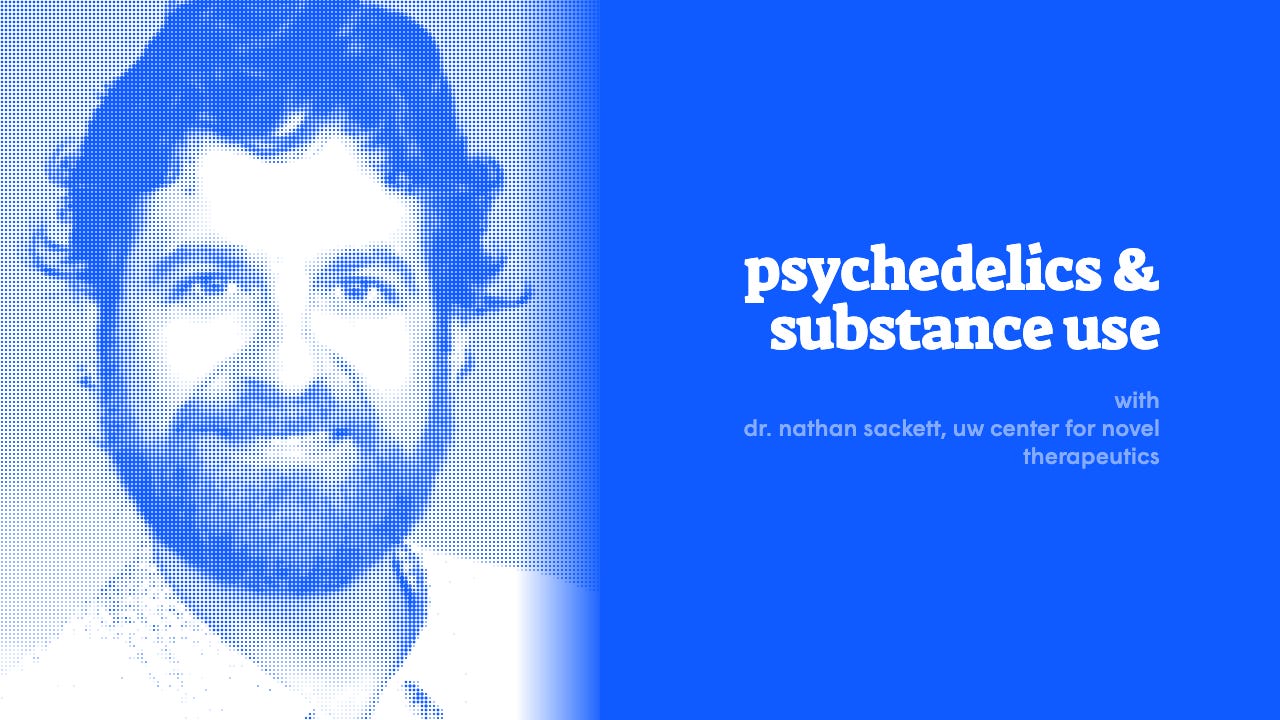
Psychedelics & Addiction: What the Research Actually Says
Jul 701:03:38Tap to summarize126. Psychedelics & Addiction: What the Research ShowsAddiction psychiatrist Dr. Nathan Sackett on psilocybin, ibogaine, MDMA, ketamine, and what psychedelic-assisted therapy can and cannot do for substance use disorder.Episode SummaryThe conversation about psychedelics as addiction treatment is moving faster than the research. Dr. Nathan Sackett is trying to close that gap. Founding director of the Center for Novel Therapeutics at the University of Washington, Sackett is an addiction psychiatrist who still sees patients — which matters, because every study his center runs is rooted in clinical reality, not advocacy optics. In this live recording from the Psychedelic Salon at Town Hall Seattle, we cover what the evidence actually supports, what compounds carry genuine risk, and why the most important variable in treatment outcomes may not be the drug at all. If you've been following psychedelic news and want a clearer picture of what's real, this is the conversation.🔵 Key TakeawaysPsilocybin works as an accelerant, not a cure. It amplifies therapeutic work already in progress — which means the therapeutic work has to be there first.Ibogaine's cardiac risk is real and cannot be fully predicted even in pre-screened patients. Clinical monitoring with a cardiologist present is not optional — it is the protocol.Ketamine is habit-forming in a way classic psychedelics are not. Since the pandemic, Dr. Sackett has seen a meaningful rise in ketamine use disorder in his clinical practice.The variation in long-term outcomes across psilocybin trials may have more to do with integration therapy than with the drug. The field does not yet have standardized integration protocols.Kratom is available at corner stores and gas stations nationwide and contains a compound with opiate-like properties roughly ten times more potent than morphine. It is undersupported in the research literature and underrecognized as a dependence risk.🔵 Timestamps[00:00] Welcome and standard disclaimer[00:00] Intro: Dr. Sackett's origin story — clinical disillusionment, a patient who'd been to a retreat, and how that led to building UW's Center for Novel Therapeutics[00:04] Why the center's name doesn't include the word "psychedelic" — and why that was a deliberate political and scientific choice[00:05] The study no pharma company would fund: psilocybin for co-occurring PTSD and alcohol use disorder[00:07] Why psilocybin over ketamine — metacognition, intensity, and the diversity of themes that come up during the experience[00:08] April's bridge: metacognition, the default mode network, and the practice of cultivating the witness[00:09] Ketamine: legal, widely available, genuinely useful for some — and increasingly implicated in use disorder since the pandemic[00:11] The Psychedelic Education and Harm Reduction Clinic at UW: what a risk triage consult actually looks like[00:13] Benzos and alcohol use disorder since the pandemic — and why women are prescribed benzos at twice the rate of men[00:14] April's bridge: benzo pharmacology, cognitive risk in older women, the Ashton Manual, and who to contact before tapering[00:14] Ibogaine: mechanism, cardiac risk, and the ethics of risk tolerance when the disease itself is fatal[00:18] April's bridge: QTc interval, torsades de pointes, and why cardiac screening is the difference between a high-risk intervention with oversight and a dangerous one without it[00:19] Ayahuasca and polysubstance use — why DMT's unusual craving-reduction profile makes it a candidate for trans-diagnostic research[00:20] Cannabis as a case study: what legalization revealed about the gap between adoption and safety data, and whether psychedelics are on the same trajectory[00:25] State psilocybin programs: Oregon's safety data, New Mexico's prescribed access model, and what happens to state programs once FDA approval arrives[00:28] Synthetic psilocybin vs. whole-plant extraction — and why onset, duration, and clinical experience may differ between the two[00:29] April's bridge: the entourage effect, Filament Health, and what we still don't know about whole-plant vs. isolated compound delivery[00:30] The current UW trial: veterans and first responders with PTSD and alcohol use disorder, a single dose, and what the results look like so far[00:32] The real cost of running a psychedelic trial: $2.5 million, 1,000 people screened for 12 participants, and the funding crisis threatening to stop this research before it reaches the people who need it[00:34] Psychosis and psychedelics: screening practices, genetic load, and why European researchers are beginning to study this in populations previously excluded from trials[00:36] Integration variability: whether differences in long-term outcomes across trials reflect the drug or the therapy model[00:37] MDMA and the FDA: what actually happened, why the boundary violations mattered, and why the agency's hesitation was not irrational[00:40] Which psychedelics for which disorders — and why MDMA and psilocybin may be suited for meaningfully different indications[00:41] Psilocybin vs. ayahuasca vs. ibogaine: mechanism, receptor profile, and experiential differences explained for a general audience[00:42] What psychedelic-assisted psychotherapy actually looks like: prep sessions, the medicine session, integration, and the role of the therapist[00:44] Psilocybin for ADHD and depression: where the pipeline stands and what "mainstream" means when FDA approval is roughly 18 months away[00:46] Safeguards for people in recovery: expectation management, the role of abstinence-based traditions, and why psychedelics are not a way to sidestep behavioral work[00:47] Seattle NTC clinical trial site — open for enrollment; link in show notes[00:48] Fentanyl, street-level opiate use, and what it would take to bring these interventions to people without housing or stable income[00:49] Integrating psychedelic therapy into abstinence-based recovery culture — and why pitting the two against each other serves no one[00:50] Kratom use disorder, ibogaine for kratom withdrawal, and the opiate pharmacology of a plant you can buy at any gas station right now[00:52] April on kratom: what she's observed since 2007 and what the popular podcast conversation gets wrong[00:52] Kratom and serotonin syndrome: what trusted sources exist, what Erowid covers, and where the drug interaction literature actually runs out[00:54] MDMA for relational trauma: why Dr. Sackett is drawn to psilocybin for the PTSD-alcohol intersection and where MDMA research goes from here[00:55] Outro: accelerant, not cure — what that distinction requires of us, of the field, and of the funding structures keeping this research alive🔵 GuestDr. Nathan Sackett is an addiction psychiatrist and the founding director of the Center for Novel Therapeutics at the University of Washington, where he leads clinical research at the intersection of psychedelic-assisted therapy, trauma, and substance use disorder. He sees patients in both an addictions clinic and UW's Psychedelic Education and Harm Reduction Clinic.Dr. Sackett on LinkedIn Center for Novel Therapeutics, University of Washington 🔵 Resources#46 Cultivating the Witness with Natasha Lannerd — on metacognition, integration, and the internal observer that makes psychedelic work stick#117 Ibogaine Treatment at Beond — a conversation with the co-founders of the Mexico-based clinic whose cardiac data Dr. Sackett is currently studyingAsk April: Q: Does the president's executive order legalize psychedelics? — on the executive order, fast-tracked FDA review, and what access will actually cost patientsFollow April on SubstackVisit aprilpride.comOriginal Substack post: https://aprilpride.substack.com/psychedelics-addiction-research-nathan-sackettHosted by April PrideIG: @aprilpridecreates YouTube: youtube.com/@aprilpridecreates Get full access to APRIL PRIDE at aprilpride.substack.com/subscribe
Transcribe →
The Wise Body: What Women's Hormones, Cycles, and Lived Experience Have to Teach Psychedelic Medicine
Jun 2300:47:06Tap to summarize125. The Wise Body: What Women's Hormones, Cycles, and Lived Experience Have to Teach Psychedelic MedicineStephanie Karzon Abrams of Galilea on why psychedelic care must account for women's cycles, life stage, and the knowledge that predates clinical trials.Episode SummaryThe research on psychedelics was built around male bodies. Women were treated as a confounding variable — their cycles, hormones, and life stages filtered out of study designs rather than centered in them. The result is a clinical landscape where practitioners are guessing, women are underserved, and the knowledge that has existed for generations in women's bodies and lineages is treated as anecdote rather than data.Stephanie Karzon Abrams is the co-creator of Galilea and founder of Beyond Consulting, a practice focused on psychedelic-informed female care: what it requires, what the research does and doesn't tell us, and what women's lived experience is already teaching practitioners who are paying attention.🔵 Key TakeawaysHormonal landscape will influence a woman's psychedelic experience — but the research is contradictory enough that we cannot yet say with certainty in what direction.GLP-1 medications slow gastric emptying and interfere with the onset of prodrugs like psilocybin, which must be metabolized into active psilocin in the gut.The distinction between knowledge and knowing is the foundation of the Wise Body framework. Knowledge can be published and replicated. Knowing is generational, intuitive, lived.Psychedelic therapy is more like surgery than a prescription. It requires preparation, skilled practitioners, and mandatory aftercare.We don't yet have adequate data on how diversity, culture, comorbidities, and socioeconomic background affect outcomes. And the ecosystems and communities that hold these medicines are not ready to be scaled.🔵 Timestamps🔵 ResourcesStephanie Karzon Abrams | Galilea, Beyond ConsultingPsychedelics & the Whole Self: A Gathering for WomxnEp. 33 | Therapeutic Psilocybin Use: Tea, Lemon Tek, and HealingFollow April on SubstackVisit aprilpride.comOriginal Substack post: https://aprilpride.substack.com/women-hormones-psychedelics-practitioner-educationHosted by April Pride IG: @aprilpridecreates YouTube: youtube.com/@aprilpridecreates Get full access to APRIL PRIDE at aprilpride.substack.com/subscribe
Transcribe →
Psychedelic Integration and Intuition: What Actually Changes After Ayahuasca
May 500:36:03Tap to summarize124. Psychedelic Integration and Intuition: What Actually Changes After AyahuascaExplore psychedelic integration and intuition through ayahuasca, grief, and leadership. What really changes after plant medicine?Episode SummaryWhat actually happens after the ceremony ends? In this episode, April sits down with Lizzi Cutler to explore psychedelic integration and intuition beyond the peak experience. From ayahuasca integration to 5-MeO-DMT, Lizzi shares how plant medicine didn’t “fix” her—but instead revealed who she already was. The conversation moves through grief and identity, including the emotional reality of not becoming a mother, and expands into how intuition can be applied in unexpected places like business and leadership. This episode will help you understand how to integrate psychedelic experiences into daily life, trust your intuition, and rethink personal growth as an ongoing, nonlinear process.🔵 Key TakeawaysPsychedelics don’t fix you—they reveal patterns you’re already living insideTrue ayahuasca integration happens over years, not days or weeksIntuition isn’t mystical—it’s a skill that can be applied to leadership and hiringGrief and identity are deeply intertwined, especially around missed life pathsIntuitive leadership may be the missing link in building aligned teams and cultures🔵 Timestamps[00:00] Intro, disclaimer, and April’s context on consciousness + intuition[01:00] Introducing Lizzi Cutler and the theme of integration[02:00] Psychedelics and grief + upcoming salon context[03:00] Lizzi’s early work: yoga, meditation, and intuitive sensing[04:00] Naming subconscious patterns and how change begins[05:00] April’s narration: awareness, observation, and the double slit experiment[06:00] Applying intuition to business, hiring, and leadership[08:00] First ayahuasca invitation and entering ceremony work[09:00] Ayahuasca + San Pedro explained (context + risks)[10:00] First ceremonies: “feeling nothing” and frustration[10:30] Dieta explained: preparation, digestion, and intuition[12:00] First breakthrough experience and community bonding[13:00] Divorce, feeling “broken,” and seeking transformation[14:00] 30–40 ceremonies later: what ayahuasca actually revealed[15:00] “Own your power” and letting go of imitation[16:00] The apprenticeship dynamic + April’s ethical commentary[18:00] Surrendering to intuition and first real validation[19:00] Bringing intuitive work into real-world practice[20:00] Shifting from personal coaching to stress + behavior change[21:00] Breakthrough moment: intuition applied to business[22:00] Alignment, investing, and intuitive due diligence[23:00] Oneness, source, and early 5-MeO insights[24:00] Psychedelics don’t give gifts—they reveal them[25:00] Intuition as a natural ability vs learned skill[26:00] 5-MeO-DMT explained + non-dual awareness[26:30] “I am enough”: the end of the “I’m broken” narrative[27:00] Embodiment, love, and kintsugi (wholeness through integration)[28:00] Integration over time + relationships and emotional growth[29:00] Building an intuitive business model (CEO-focused work)[30:00] “Intuitive analysis” and reading organizational culture[31:00] AI vs intuition: human pattern recognition[32:00] Leadership decisions, restructuring, and team alignment[33:00] Working with investors, philanthropy, and impact[34:00] Money as energy + alignment in giving[35:00] Closing reflections + where this work is going[36:00] Outro + resources + psychedelic grief salon🔵 ResourcesMicro-Psyched 12-Week Microdosing ProgramWomen in the Wild gatherings - Reserve your spot in SeattleUpcoming Psychedelic Salon ticketsFollow April on SubstackOriginal Microdosing for Midlife Substack post: https://aprilpride.substack.com/p/psychedelic-integration-and-intuition-ayahuasca-leadershipHosted by April Pride @aprilpride_Follow on IG: @getsetset / YouTube: youtube.com/@getsetset / X: @getsetset Get full access to APRIL PRIDE at aprilpride.substack.com/subscribe
Transcribe →
Microdosing for Midlife — Week 6: Emotional Resilience and Rewriting Old Patterns
Mar 2400:09:21Tap to summarize123. Microdosing for Midlife: Emotional Resilience(Week 6)Week 6 explores extinction learning, emotional resilience, and how microdosing may support gradual rewiring of fear-based patterns in midlife.Episode SummaryThis episode is part Week 6 of Microdosing for Midlife—a 12-part audio companion to the original Substack series.In this conversation, April explores emotional resilience not as toughness or avoidance, but as the ability to update old responses in real time. Using entrepreneurship as metaphor, she reflects on how repeated attempts, setbacks, and recalibration build resilience—and how microdosing psilocybin intersects with that process.The episode introduces the neuroscience concept of extinction learning—the brain’s ability to replace outdated fear responses with more informed ones. Rather than positioning microdosing as a cure or shortcut, April frames it as a catalyst for noticing habitual reactions, pausing before reenactment, and building new neural pathways through integration.If the written post focused on the science and story, this episode explores how resilience is practiced—not performed—especially in midlife when old coping strategies no longer serve.🔵 Key TakeawaysWhat extinction learning means in practical termsHow emotional resilience differs from emotional suppressionWhy microdosing is described as a catalyst—not a quick fixThe role of integration in reinforcing new neural pathwaysHow midlife transitions resurface habitual responsesWhy subtle shifts often matter more than dramatic breakthroughsOne reflection to carry into the week ahead🔵 Timestamps[00:00] Episode opening[02:00] Entrepreneurship and resilience as metaphor[04:30] Extinction learning explained[07:00] Personal example of breaking habitual responses[10:00] Integration and grounding practices[13:00] Midlife transitions and emotional awareness[16:00] What to carry forward🔵 ResourcesMicro-Psyched 12-Week Microdosing ProgramWomen in the Wild gatherings - Reserve your spot in SeattleUpcoming Psychedelic Salon ticketsFollow April on SubstackOriginal Microdosing for Midlife Substack post: https://aprilpride.substack.com/p/microdosing-psilocybin-for-emotional-resilienceHosted by April Pride @aprilpride_Follow on IG: @getsetset / YouTube: youtube.com/@getsetset / X: @getsetset Get full access to APRIL PRIDE at aprilpride.substack.com/subscribe
Transcribe →
Microdosing for Midlife — Week 5: Mask Off — Authenticity for Real
Mar 300:14:34Tap to summarize122. Microdosing for Midlife: Stability & Nervous System Change (Week 5)Week 5 explores masking, authenticity, the Default Mode Network, and how microdosing may soften rigid self-narratives in midlife.Episode SummaryThis episode is part Week 5 of Microdosing for Midlife—a 12-part audio companion to the original Substack series.In this conversation, April explores authenticity not as a dramatic revelation, but as a gradual unmasking. Rather than chasing peak experiences or forced breakthroughs, she reflects on how microdosing intersects with identity, ego softening, and the quiet recognition of truths long postponed. The episode examines the difference between escape and exposure—and why midlife often demands something more sustainable than either.Drawing from neuroscience, lived experience, and even a bridge to quantum physics, April considers how the Default Mode Network (DMN) reinforces self-stories—and how gentle disruptions may create space for new ones. This is not about dramatic ego dissolution. It’s about noticing the yes that’s actually a no, the roles we’ve outgrown, and the parts of ourselves we’ve hidden to stay acceptable.If you’ve read the original essay, this episode deepens it. If you haven’t, it stands on its own—and may send you back to read more closely.🔵 Key TakeawaysHow “masking” functions psychologically and neurologicallyThe role of the Default Mode Network in identity and self-storyWhy escape and authenticity are often confusedHow microdosing may soften rigid self-narrativesThe difference between forced revelation and sustained alignmentWhat flow actually represents in midlife transitionOne reflection to carry into the week ahead🔵 Timestamps[00:00] Episode opening[02:00] Masking, escape, and authenticity[05:00] A personal mask-off moment[07:00] Default Mode Network and ego narratives[10:00] Observation and identity[13:00] Flow and sustained alignment[15:00] What to carry forward🔵 ResourcesMicro-Psyched 12-Week Microdosing ProgramUpcoming Psychedelic Salon ticketsFollow April on SubstackOriginal Microdosing for Midlife Substack post: https://aprilpride.substack.com/p/microdosing-for-authenticityHosted by April Pride @aprilpride_Follow on IG: @getsetset / YouTube: youtube.com/@getsetset / X: @getsetset Get full access to APRIL PRIDE at aprilpride.substack.com/subscribe
Transcribe →
Microdosing for Midlife — Week 4: Stability, Change, and the Nervous System
Feb 2400:18:27Tap to summarize121. Microdosing for Midlife: Stability & Nervous System Change (Week 4)Week 4 of Microdosing for Midlife explores how nervous system stability shapes identity, growth, and long-term change in midlife.Episode SummaryThis episode is part Week 4 of Microdosing for Midlife—a 12-part audio companion to the original Substack series.In this conversation, April expands on what it actually means to feel stable while undergoing change. Midlife often brings visible transitions—shifts in hormones, identity, relationships, ambition—but underneath those external markers is something quieter: the nervous system recalibrating itself. Rather than focusing on dramatic breakthroughs, this episode examines how safety, steadiness, and subtle internal shifts create sustainable growth.Instead of chasing intensity, April reflects on how microdosing can support capacity—capacity to tolerate discomfort, to remain present in uncertainty, and to integrate insight gradually. The real work is not in peak moments. It’s in the ability to return to baseline without abandoning yourself.🔵 Key TakeawaysHow nervous system stability shapes long-term growth in midlifeWhy intensity is often mistaken for progressHow subtle shifts accumulate into meaningful identity changeWhat “capacity building” looks like beyond insightA reflection question to carry into the week ahead🔵 Timestamps[00:00] Episode opening[02:00] Framing the week’s theme[08:30] Nervous system stability vs intensity[15:00] Capacity building in midlife[22:00] Integration reflection[27:00] What to carry forward🔵 ResourcesMicro-Psyched 12-Week Microdosing ProgramUpcoming Psychedelic Salon ticketsFollow April on SubstackOriginal Microdosing for Midlife Substack post:https://aprilpride.substack.com/p/vagus-nerve-menopause-psilocybin-intuition-body-trustHosted by April Pride @aprilpride_ Follow on IG: @getsetset / YouTube: youtube.com/@getsetset / X: @getsetset Get full access to APRIL PRIDE at aprilpride.substack.com/subscribe
Transcribe →
Microdosing for Midlife, Week 3: Hormones, Perception, and Libido in Menopause
Feb 1700:11:43Tap to summarize120. Microdosing for Midlife: Hormones, Perception, and Libido (Week 3)Exploring how menopause, perception shifts, and nervous system regulation intersect with midlife libido.Episode SummaryThis episode continues Week 3 of Microdosing for Midlife, April Pride’s 12-part audio companion to her Substack series exploring microdosing through the lens of midlife transition.In this conversation, April examines one of the most quietly asked questions among women in perimenopause and menopause: can microdosing influence hormones or libido? Rather than positioning psilocybin as a hormonal intervention, she reframes the inquiry around perception, serotonin signaling, emotional regulation, and nervous system safety.The episode explores how estrogen fluctuations affect mood stability, why cortisol and stress patterns shape desire, and how subtle perceptual shifts—rather than dramatic sensations—may influence connection and intimacy. Through personal reflection and grounded science, April centers integration over hype.🔵 Key Takeaways• Sub-perceptual microdosing is about perception shifts, not noticeable psychedelic effects• Estrogen plays a role in serotonin regulation and emotional stability• Hormonal fluctuations in midlife can increase anxiety and mood vulnerability• Libido is influenced by stress regulation and psychological safety• Psilocybin research currently focuses on emotional systems—not hormone “balancing”• Interoception (body awareness) may shift during midlife transitions• Structured integration matters more than isolated insight🔵 Timestamps[00:00] Episode disclaimer and introduction[01:00] The neurobiology of change and structured microdosing[02:00] Sensation vs. perception in microdosing[04:00] Rewriting grief narratives and identity shifts[05:00] Estrogen, serotonin, and cortisol interactions[06:30] Oxytocin, connection, and emotional openness[08:00] Interoception and body awareness[09:00] Libido and menopause[10:00] Emotional safety and renewed desire[11:00] Closing reflections🔵 Additional ResourcesMicro-Psyched Microdosing GuideOriginal Week 3 post on SubstackWomen in the Wild - Reserve your spot!Learn more about this episode: https://aprilpride.substack.com/p/microdosing-for-midlife-week-3-hormones-libidoHosted by April PrideSubscribe for April’s newsletter on Substack at https://aprilpride.substack.com/subscribe or at getsetset.comFollow on IG: @getsetset / YouTube: youtube.com/@getsetset / X: @getsetset Get full access to APRIL PRIDE at aprilpride.substack.com/subscribe
Transcribe →
Microdosing for Midlife, Week 2: Brain Science of Change
Feb 1100:16:57Tap to summarize119. Microdosing for Midlife: Brain Science of Change (Week 2)Week 2 of Microdosing for Midlife explores estrogen, menopause, hormone therapy, and cognitive health—plus how psilocybin supports neuroplasticity.Episode SummaryThis episode marks Week 2 of Microdosing for Midlife, a 12-week audio series exploring how psilocybin microdosing for women intersects with hormonal change, emotional regulation, and cognitive resilience during midlife.In this installment, April Pride expands on a central question that surfaced after Week 1: whether being “spared” classic menopausal symptoms—or choosing not to take hormone replacement therapy—puts women at greater risk for cognitive decline. Drawing from current research, April reframes the fear-driven narrative around menopause, estrogen, and dementia, offering a more nuanced and reassuring understanding of what actually shapes long-term brain health.The episode also explores estrogen’s role as a neuroprotectant, how the midlife brain becomes more vulnerable to stress-based patterning, and why psychedelics like psilocybin may support neuroplasticity by softening rigid survival scripts. Through personal reflection and lived experience, April illustrates how subtle shifts in perception—not emotional erasure—can change one’s relationship to anxiety, grief, and uncertainty.This episode functions as an audio companion to the written Week 2 essay, adding scientific context, integration insights, and real-life application without replacing the original post.🔵 Key Takeaways• Menopause as a neurological transition, not just a hormonal one• Estrogen’s role in cognition, mood, and neuroprotection• Why high symptom burden—not absence of symptoms—is linked to later cognitive risk• What hormone therapy does and does not do for long-term cognition• The default mode network and midlife rumination patterns• Psychedelics, neuroplasticity, and loosening fear-based survival scripts• Microdosing as a tool for integration rather than emotional suppression🔵 Timestamps[00:00] Reflections on Psychedelic Salon and Women in the Wild[02:30] Introducing Week 2 and the HRT cognition question[03:45] Menopausal symptoms and cognitive risk[05:00] What hormone therapy research actually shows[06:30] Estrogen as a neuroprotectant[08:30] Brain changes during midlife[10:00] Psychedelics and neuroplasticity[11:30] Personal reflections on anxiety and action[13:30] Reflection questions for listeners[15:00] Micro-Psyched program overview and what’s next🔵 Additional ResourcesOriginal Week 2 post on SubstackEpisode 55: Ketamine-Assisted Therapy: Brain Effects ExplainedWomen in the Wild - Reserve your spot! Learn more about this episode: https://aprilpride.substack.com/p/microdosing-for-midlife-estrogen-cognitionHosted by April PrideSubscribe for April’s newsletter on Substack at https://aprilpride.substack.com/subscribe or at getsetset.comFollow on IG: @getsetset / YouTube: youtube.com/@getsetset / X: @getsetset Get full access to APRIL PRIDE at aprilpride.substack.com/subscribe
Transcribe →
118. Microdosing for Midlife, Week 1: Intention & Dosage
Feb 300:14:07Tap to summarize118. Microdosing for Midlife: Intention Setting, Integration, and Finding Your Dose (Week 1)Week 1 of Microdosing for Midlife explores intention setting, finding the right microdose, and integrating psilocybin gently during midlife transitions.Episode SummaryThis episode marks Week 1 of Microdosing for Midlife, a 12-week audio series exploring how psilocybin microdosing for women can support emotional awareness, intention, and integration during midlife transitions.In this opening installment, April Pride reads and expands on the first essay in the series, focused on intention setting and finding the right dose, while grounding the conversation in lived experience. Drawing from her own midlife hormonal transition, grief, and identity shifts, April frames microdosing as an integration practice that unfolds during daily life, rather than something that happens after a peak experience.The episode introduces why midlife—particularly during perimenopause and emotional regulation shifts—can be a uniquely potent time for this work. Listeners are invited to consider intention not as an outcome-driven goal, but as a present-moment orientation that supports nervous system regulation in midlife and long-term change.This episode serves as an audio companion to a Substack essay, offering context, reflection, and integration insights that stand on their own without replacing the original written post.🔵 Key Takeaways• Why midlife is a neurological, hormonal, and emotional transition• How microdosing supports integration during daily life• Intention setting in microdosing versus goal-setting• Nervous system regulation in midlife• Hormones, neurotransmitters, and emotional resilience• Microdosing protocol safety considerations• Why community-based psychedelic education supports accountability🔵 Timestamps[00:00] Series introduction and safety framing[02:00] Why this series is being shared as audio[03:00] Midlife as a period of sovereignty and transformation[04:30] Psychedelic integration practice in real time[05:30] Intention versus goals in microdosing[06:45] Hormones, neurotransmitters, and the midlife brain[07:45] Finding the right microdose and cadence[09:00] Safety considerations before beginning[09:45] Why microdosing should not be done in isolation[11:00] Listener questions and common concerns[12:30] What’s next in the 12-week microdosing series🔵 Additional ResourcesOriginal Week 1 post on SubstackEpisode 72: Preparing for a Psychedelic Journey SafelyWomen in the Wild applicationLearn more about this episode: https://aprilpride.substack.com/p/microdosing-for-midlife-intention-integration-week-1Hosted by April Pride Subscribe for April’s newsletter on Substack at https://aprilpride.substack.com/subscribe or at getsetset.comFollow on IG: @getsetset / YouTube: youtube.com/@getsetset / X: @getsetset Get full access to APRIL PRIDE at aprilpride.substack.com/subscribe
Transcribe →