
Podcast
Art Dealer Diaries Podcast
Hosted by Mark Sublette · EN
See the art world through my eyes as an art dealer with thirty years in the business. Interviews of unique and interesting individuals that collect, deal and find art as compelling as I do. Learn the pitfalls of the art world and the interesting cast of characters that are a constant thread of entertaining commentary. Pull up a chair with me, Mark Sublette and the Art Dealer Diaries.
41episodes
Episodes
Newest firstAll episodes
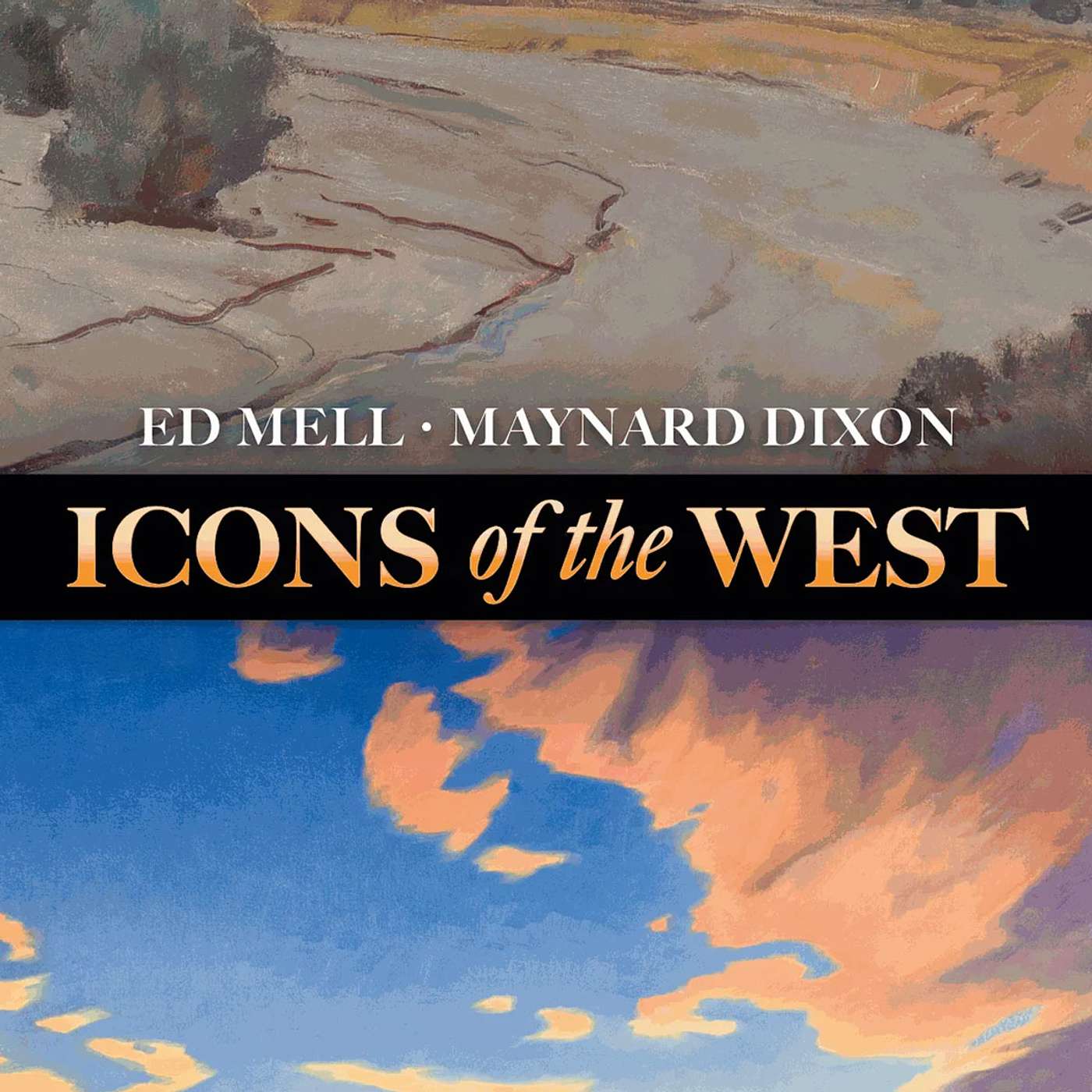
Maynard Dixon & Ed Mell: Icons of the West, Lecture by Dr. Mark Sublette at Scottsdale Art Week - Epi. 406
1w ago00:43:57Tap to summarizeThis episode is a recording of a lecture I gave at the 2026 Scottsdale Art Week event where I talked about a recent book I published and the exhibit that I curated, both titled "Ed Mell & Maynard Dixon: Icons of the West." This was a project of mine where I compared and contrasted the lives of artists Ed Mell and Maynard Dixon in a way that was interesting to me, because I had never really thought about that comparison in such a granular form.You see, I had done a show featuring Ed's works alongside the work of Maynard Dixon in the late 90s, but that project was much, much different and more based on the visual aspect of their respective art. It wasn't the same as thinking about them historically and how their paths were paralleled in many ways. After Ed passed away, I looked at the comparison of the two artists a little differently. This time I looked at it not just as a comparison between Maynard Dixon and Ed Mell, my friend, but rather Ed Mell, the historical figure and important artist.The best way to to view this podcast is on YouTube because you can see the slides of my presentation and the images that I talk about. That being said, you can just listen to me talk about these two icons and it will be just as informative and entertaining.Anyhow, I hope you enjoy this lecture I did this past March on Ed Mell and Maynard Dixon at Scottsdale Art Week and I'm glad to be able to publish it as an episode of the Art Dealer Diaries Podcast.
Transcribe →
Brad Kahlhamer: Inside the Artist's Studio - Epi. 405, Host Dr. Mark Sublette
2w ago00:50:28Tap to summarizeI had Brad Kahlhamer on today and it was fantastic. I went to his studio in the Lower East Side of New York City, and he's got this really interesting place where he creates his monumental works of art.It's in the heart of the city and you're near Bowery St. and it's crazy. You know, frantic activity, a lot of murals, there's just so much energy. We start outside then we go into this building and downstairs into a place of artistry. We show all of this in the YouTube version, we show the entire studio and all of the items he surrounds himself with for inspiration, which are so important for an artist to have. It's an absolutely sacred place. You can see some of the things that he shares with us that I'm sure may have never shared before.Brad is just an incredibly important artist. So this was one of those very unique, fun opportunities to visit an artist in their place of creation. This is a tour of Brad Kahlhamer's studio on Art Dealer Diaries Podcast episode 405.
Transcribe →
Gloria Martinez-Granados: Interdisciplinary Artist - Epi. 404, Host Dr. Mark Sublette
3w ago01:11:26Tap to summarizeI had Gloria Martinez-Granados on the show today. I was fortunate to meet her at Earth Maker Gallery, which is Thomas "Breeze" Marcus's Gallery in Phoenix, and get the chance to talk to her. I was just fascinated with how she makes her art, the intensity she works with, and the time it takes. One of the pieces that she did took over 210 days and it was made of 48,900 individual stitches. As you can imagine it's a very labor intensive undertaking. As interesting as her art is, she is equally interesting. Gloria has this long path that lead her to where she is today. She came over with her parents as an undocumented child at the age of eight. That journey of finding her place in America is fascinating as is how she reflects on being an artist in America. On her journey, Gloria got a nursing degree, and then eventually went back and got an art degree at ASU. Fast forward to today, and she has numerous award and has been a part of major museum shows.I really had a great time on this podcast, and I can always tell when I'm having fun on a podcast when time literally stops. I couldn't have told you if it was 5 minutes or 2 hours. It was a great to listen to her journey and witness her enthusiasm in person. I encourage you to watch it on YouTube if you can, just to see her beautiful smile, because she's there's such a genuineness to her and to her art and the creativity that comes through in her work.I hope you enjoy this podcast as much as I did. This is interdisciplinary artist Gloria Martinez-Granados on Art Dealer Diaries Podcast episode 404.
Transcribe →
Daniel "Uncle Danny" Akaka: Cultural Ambassador & Kahu Hānai at Mauna Lani - Epi. 403, Host Dr. Mark Sublette
Jul 800:49:53Tap to summarizeThis podcast with Daniel Akaka, Jr. (or Uncle Danny) is an audio only podcast, but the video version shows the footage I recorded at the King Kamehameha the Great Celebration, which is on June 11th every year in Hawaii. So if you watch it on YouTube, you can see this special event that consists of dancing, music, the decorating of the King Kamehameha statue with hand-made leis, a parade, and all of the other activities that went on in that very special day.Danny Akaka ,Jr. is just one of the most interesting people I've met, quite frankly. He's the cultural ambassador at the Mauna Lani Auberge Resort, and he gives talks, and he allowed me to to record this talk and put it up as an episode of the podcast. He spoke at length on King Kamehameha the Great, the leader who unified the Hawaiian islands. We learned about Kamehameha's origin and the circumstances behind his birth and how a prophecy and Halley's Comet led to his concealment as a child. Danny also touched on his personal history as well. His uncle Abraham Akaka was a reverend, and the individual who first called Hawaii "The Aloha State." His father Daniel Akaka, Sr. was the first Native Hawaiian United States senator. He was a senator for 36 years. They call him Uncle Danny for a good reason. It's because he's a person that just clicks with everyone. I'm grateful he has allowed us to share this presentation and I can't wait to speak with him again.
Transcribe →
Exploring the Cultural Institutions of Manaus, Brazil - Epi. 402, Host Dr. Mark Sublette
Jul 101:21:42Tap to summarizeI went to Manaus, Brazil recently and I visited a lot of different places that tried to capture the sense of Manaus and the surrounding area. This included going to Museu Do Indio (Indigenous Museum) and the Palácio Rio Negro (Governors Palace). I also paid a visit to Teatro Amazonas, which is an insanely beautiful opera house that was built in 1897. One thing I did while I was in Manaus that was very special, was I got to see a ceremony performed by the Tuyuka Tribe. The tribe is known as the "children of the stone snake" and they did some beautiful dances wearing traditional handmade garments. I was privileged enough to meet and interact with these amazing people and further my understanding of the indigenous people of the region. If you have the opportunity to arrange something like this this, I highly recommend it doing it because it was a truly enlightening experience.The last thing I got to do in this video was see the meeting of the waters where the Rio Negro and the Rio Solimoes come together to actually form the Amazon River. It's one of the most unique places in the world. In fact, the two rivers don't combine for over 30 miles because of their difference in temperature and sedimentary makeup. Visually, it's an insane looking conglomeration of water. The only way to really understand what I'm talking about is to see it for yourself, which you can do through the video component on my YouTube channel.Hopefully just watching the videos and hearing me, you might get a sense of what this region is like. So if you want to know what the Amazon feels like and Brazil feels like, you might want to watch / listen to this podcast.
Transcribe →
Exploring the Amazon ft. Conservationist Michael Rich - Epi. 401, Host Dr. Mark Sublette
Jun 2400:29:22Tap to summarizeIn this episode of the Art Dealer Diaries, I went down to the Amazon rainforest because I wanted to get to know more about the region and its biodiversity. While I was down there I went and visited with a man named Michael Rich. Now, Michael was down there to do some fishing and I joined him to be able to see the animals do some fishing myself. I was also as interested in just getting a sense of what it's like to be in the largest ecosystem in the world.And Michael is a very interesting guy. We did this podcast literally after we had been on the river for probably five hours. We recorded under a tree at about 95 degrees in the shade. It looks like I've been laying in the Amazon for a long time, but it was a very unique take in a way, to talk to somebody about fish biology, which he is very interested in.He is part of a nonprofit to try to help the menhaden, which is called "the most important fish in the sea." It's what feeds all the other big predator fish as well as osprey. There are companies that are coming in and devastating the stock of these small little silvery fish to make into cosmetics and pet food and all these things.Anyways, I think I came away from this trip different in the way I saw the world and my own role in it.
Transcribe →
David Griffin: Award-Winning Landscape Painter (Part 2) - Epi. 400, Host Dr. Mark Sublette
Jun 1700:54:11Tap to summarizeI had David Griffin on today and he's a unique individual in so many ways, not only as an artist but as a person as well. I'm fortunate to be able to represent David's work. I'm also fortunate to have gotten the time to talk to him and understand the path he took to get where he is today.His story starts in Lubbock, Texas, which is not an area known for its art production of artists, and coming from a family where father was actually a very sophisticated entrepreneur who came from nothing. You can imagine if you're a young person growing up in Lubbock and your dad runs and develops truck stops, that they may not understand the creative juices that someone has. David just didn't give up what was obviously his path, his road from being a illustrator to an artist, to really capturing some major awards at museum shows.I love podcasts that just kind of go at their own pace, and this was one of those. It took two hours basically. So it's a part one / part two, and it took that long because that's where the story went from understanding his process to really making a major discovery of who he is as an artist and as someone who hears music in his colors in a way that I don't think he was even aware of.So it was fascinating as somebody who's doing an interview and I think it was a great experience for him as well. So this is a wonderful discussion that we had, and I hope you take the time to listen and also go to YouTube and just see the paintings we talk about.
Transcribe →
David Griffin: Award-Winning Landscape Painter (Part 1) - Epi. 399, Host Dr. Mark Sublette
Jun 1000:53:12Tap to summarizeI had David Griffin on today and he's a unique individual in so many ways, not only as an artist but as a person as well. I'm fortunate to be able to represent David's work. I'm also fortunate to have gotten the time to talk to him and understand the path he took to get where he is today.His story starts in Lubbock, Texas, which is not an area known for its art production of artists, and coming from a family where father was actually a very sophisticated entrepreneur who came from nothing. You can imagine if you're a young person growing up in Lubbock and your dad runs and develops truck stops, that they may not understand the creative juices that someone has. David just didn't give up what was obviously his path, his road from being a illustrator to an artist, to really capturing some major awards at museum shows.I love podcasts that just kind of go at their own pace, and this was one of those. It took two hours basically. So it's a part one / part two, and it took that long because that's where the story went from understanding his process to really making a major discovery of who he is as an artist and as someone who hears music in his colors in a way that I don't think he was even aware of.So it was fascinating as somebody who's doing an interview and I think it was a great experience for him as well. So this is a wonderful discussion that we had, and I hope you take the time to listen and also go to YouTube and just see the paintings we talk about.
Transcribe →
Tour of the Historic Kolb Studio at Grand Canyon National Park - Epi. 398, Host Dr. Mark Sublette
Jun 300:20:53Tap to summarizeI had the good fortune to go and interview the Grand Canyon Superintendent, Ed Keable, and at the time, I was also allowed to do a tour of the Kolb House. This is a very special place and the story is amazing. It really is a story made for a movie. In fact, I'm surprised it hasn't been mad into one yet because it tells the story of these brothers that came to Arizona in 1901 and 1902, and they set up this photography studio, right on the edge of the Grand Canyon on the South Rim. It's still there, and we were given access to the property and to get to see and view how they lived in their house from 1904 until Emory dies in 1976. Inside is the photography room, the areas where they would have parties, and some of the most amazing views you've ever seen of the Grand Canyon. Part of the house is open as a museum, but part of it isn't. And we're going to show you the part that isn't. That's what's special about this and why I wanted to make it into a podcast. This is one of those that I highly recommend watching on YouTube.It's a pretty compelling story, and I think it's one of those places that you may never get to visit in person. Hopefully this tour via my podcast/video will give you a sense of what it's like and what it would have been like at the turn of the century in Arizona.
Transcribe →
Shonto Begay: Inside the Artist's Studio - Epi. 397, Host Dr. Mark Sublette
May 2700:35:09Tap to summarizeThis is the kind of podcast I enjoy making the most. It's one of those in the perfect location that's just off the cuff. You see, I went to artist Shonto Begay's studio in Flagstaff. We were picking up some paintings, and it was just a great opportunity to spend some time with him talking about his work, his studio, and things that affect his life. It was actually a very moving interview, and I think you'll feel the same. Artist studios are sacred places. Shonto's studio is no different and in some ways even more sacred than usual. He shared a couple of extremely personal pieces that are in his studio. Paintings that not only show how he sees the world, but how he views the healing process. So it's a great video to watch. I know it's a podcast, but if you have the chance, watch it on YouTube. Not only is it a treat to be teleported inside an important artist's studio, but it's so real and in the moment.At one point he even goes, "oh no, I gotta go put some money in the meter!" We just run down to the street to put money in the parking meter while we were filming because that's what he has to do every day where his studio is. He had been at the studio all day getting his paintings ready for me. I felt so bad I was even prepared to pay his parking ticket. So this is a very interesting and beautiful podcast with Shonto Begay.
Transcribe →