
Podcast
Art Dealer Diaries Podcast
Hosted by Mark Sublette · EN
See the art world through my eyes as an art dealer with thirty years in the business. Interviews of unique and interesting individuals that collect, deal and find art as compelling as I do. Learn the pitfalls of the art world and the interesting cast of characters that are a constant thread of entertaining commentary. Pull up a chair with me, Mark Sublette and the Art Dealer Diaries.
42episodes
Episodes
Newest firstAll episodes
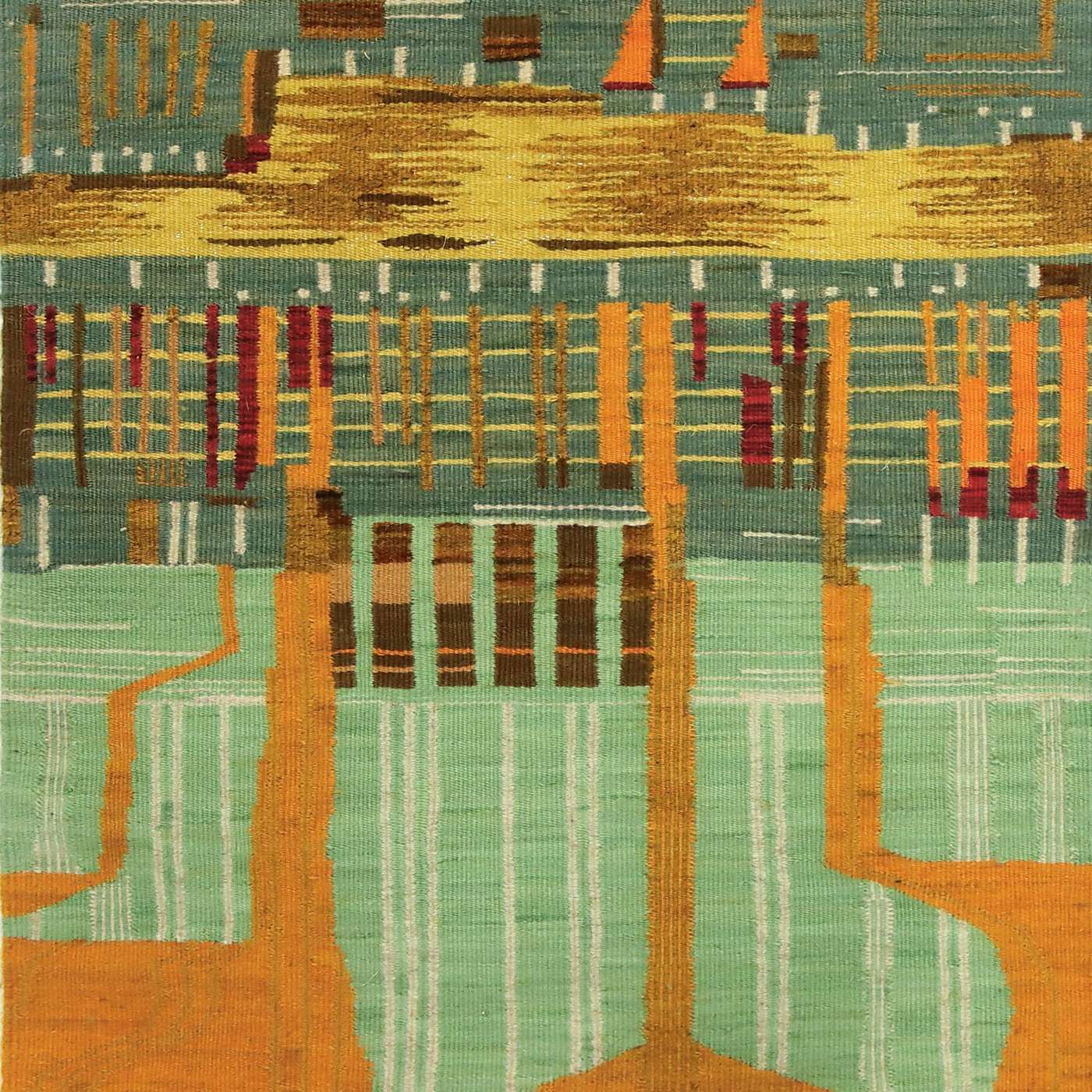
Marilou Schultz: Master Navajo Weaver - Epi. 378, Host Dr. Mark Sublette
Jan 700:58:02Tap to summarizeWhat a wonderful podcast I had with Marilou Schultz. She is a master weaver and a math teacher who grew up in Leupp, Arizona on the Navajo Nation.She has been teaching her entire life and is justs now going into weaving full-time. There's good reason for that too. You see, Marilou's weavings are very in demand. She has a waitlist that includes the Basel and MoMA collections. What she has done is interpreted various computer chips through the lens of a traditional Diné weaver. It's just an amazing story. She got a commissioned by Intel to do a rendition of the Pentium chip in 1994. She's a fourth generation Navajo Weaver and she uses her background in mathematics to create these incredible textiles. I was fortunate enough to get one of these ordered a year ago, and she brought it to me today. I got to see it for the first time during this podcast and you can see my eyes light up as she unravels this masterpiece.I highly recommend that you watch this on YouTube because you will be able to see her interact with the textile, as well see her tell her story, which is quite remarkable. This is one of my favorite podcasts that I've done. I hope you enjoy it. This is master Diné weaver, Marilou Schultz on the Art Dealer Diaries Podcast.
Transcribe →
William P. Healey: Accomplished Native American Art Collector - Epi. 376, Host Dr. Mark Sublette
Dec 1701:18:40Tap to summarizeOne of the things I love about doing this podcast is that I get a variety of people that come through my life. In this case it's Bill Healey, who I've known probably 25 plus years. His role, his part of the art ecosystem is different than many of the other people I've had on, and that is of a collector. He's a true collector who has this unique history, which I went into and I found very, interesting. How he went from economics, to commercial development, to then retiring and devoting his life to art. First Western art, Russells, Remingtons, etc., followed by an epiphany when he was at the Heard Museum, seeing images of the Native American boarding schools. I remember that exhibit very well. I have one of these images in my own collection hanging in my own office. I look at it all the time just to help keep me grounded. Well, that image really set him off on a new odyssey to understand Native art and history in a different way. He then sold off the majority of this Western material, and focused on collecting Indigenous American art. Bill has built this huge collection, part of which he donated to the Saint Louis Art Museum. They did a beautiful book on the collection and he's going to continue to give away pieces that he's collected to museum institutions to help tell the story of indigenous artists ranging from 1920 to today. It's a fun ride of through his life and over 60 years of collecting. I think it's a real gift that Bill shared it with us.
Transcribe →
Masters of Drawing Group Podcast (Part 3): Francis Livingston, Jill Carver, Dennis Ziemienski, Greg Newbold, Roseta Santiago, and Jordan K. Walker - Epi. 335, Host Dr. Mark Sublette
Feb 26, 202501:31:21Tap to summarizeThis iteration of the Masters of Drawing podcast was very interesting because I interviewed all of these artists, one after another, in a single day. Featuring Francis Livingston, Jill Carver, Dennis Ziemienski, Greg Newbold, Roseta Santiago, and Jordan K. Walker.You see, I was having a show that focused on drawing and had invited 47 artists for what I called "Masters of Drawing." These individuals are who I consider to be the very best in that field. They're all artists that primarily do paintings, but I wanted to really focus on that basic structure of most fine art, which is drawing.It's the thing that you do when you're a kid regardless of whether you're an artist or not, when you're three and you first get a crayon or a pencil. These individuals not only got that crayon and pencil, but they kept using it and using it. If you watch this podcast on YouTube, which I recommend, you can literally see them talking about drawing, speaking with their hands as if a pencil or pen was in their hands. It's really fascinating to watch because you can see each of these people's minds just go to that moment in time.So I hope you enjoy the third and final Masters of Drawing group podcast. This is episode 335 of Art Dealer Diaries hosted by Dr. Mark Sublette.
Transcribe →
Masters of Drawing Group Podcast (Part 2): Chuck Pyle, Ezra Tucker, Thomas Blackshear II - Epi. 334, Host Dr. Mark Sublette
Feb 19, 202501:15:14Tap to summarizeThis episode is different than the usual format. I was having a show that focused on drawing and I had invited 47 artists for what I called "Masters of Drawing." These individuals are who I consider to be the very best in that field. They're all artists that primarily do paintings, but I wanted to really focus on that basic structure of most fine art, which is drawing.It's the thing that you do when you're a kid regardless of whether you're an artist or not, when you're three and you first get a crayon or a pencil. These individuals not only got that crayon and pencil, but they kept using it and using it. If you watch this podcast on YouTube, which I recommend, you can literally see them talking about drawing, speaking with their hands as if a pencil or pen was in their hands. It's really fascinating to watch because you can see each of these people's minds just go to that moment in time. So I learned a lot personally about drawing, and I think you will, too. These are three individuals on this first podcast that really have, you know, at 100 years of drawing underneath them or more.I have Chuck Pyle, Ezra Tucker, and Thomas Blackshear, the Masters of Drawing.
Transcribe →
Mathieu Nozieres: Award-Winning Artist - Epi. 333, Host Dr. Mark Sublette
Feb 12, 202500:47:28Tap to summarizeMathieu Nozieres is a name you're going to remember... I say that because I can just see something in this young man. His trajectory and the way he looks at art... his commitment to Western art specifically is incredible. He actually immigrated from France to Los Angeles with his wife, who's also a wonderful artist as well.You see, Mathieu has this unique story of being a comic book artist going into fine art, traveling and studying all over the world. From Romania to Belgium, India, China, Russia, all these different places, searching for knowledge to become a better artist and then finding Western art and going, "oh... that's it. Here's my lane. I love art history. I love the West. This is where I'm supposed to be."So it's a fun ride. Just hearing where he's mentally at this point in his career is a treat. We'll look back someday, you know, 20, 30 years from now and you'll go, oh yeah, that was the first time he stepped on the scene. That was who Mathieu Nozieres was when he started his legendary Western art career. So yeah, I enjoyed this podcast a great deal and I hope you do as well.
Transcribe →
Masters of Drawing Group Podcast (Part 1): Josh Gibson, Kathryn Stedham, William Haskell, Whitney Gardner, Howard Post and Jim Woodside - Epi. 332, Host Dr. Mark Sublette
Feb 6, 202501:48:56Tap to summarizeThis is the only podcast I've ever done where I put six different individuals in one episode, all talking about one subject. Drawing.It's such an important part of being an artist because when you are just a little kid, you pick up those crayons, you pick up the pencils, you start drawing and - the people that get excited and somehow get turned onto that? Well, those are our artists. I wanted to do this major show with all these artists and I've got 47 in this show called Masters of Drawing, where they get to show that expertise that they've had ever since they were little kids. I wanted to interview different artists and see what they had to say about the process.So it's really a focus on drawing and about the show. The individuals in this episode include Josh Gibson, Kathryn Stedham, William Haskell, Whitney Gardner, Howard Post and Jim Woodside. They all have the same thing in common. They are Masters of drawing. I think you'll find this fascinating. I know I did.
Transcribe →
Susan Lyon: Fine Artist - Epi. 331, Host Dr. Mark Sublette
Jan 29, 202501:22:07Tap to summarizeI had Susan Lyon on the podcast today. What a joyful person she is. I had never met Susan, but I'm very familiar with her work and her husband Scott Burdick's work and we had a great time. We talked about her life and how she got where she is today as an artist.We speak about how she found her voice not only as an artist, but as a teacher. Which she does through her own website and through Patreon, which she feels is as much her calling as the art. So people can hear those types of things that she teaches and does, and then you can take that and go and see and learn and even sign up for classes so you can work with a master.And she is a master and her drawings are amazing. We talk about a show that I'm doing, which is called Masters of Drawing that opens on February 15, 2025. She's a part of that show and it was fun just to discuss everything that goes into her drawings. So I had a great time. I think anyone who listens or watches this will realize what an immense gift that Susan Lyon is to the world of art.
Transcribe →
Dr. Mark Sublette: Maynard Dixon Expert & Gallery Owner - Epi. 330, Host, Michael Clawson
Jan 22, 202501:12:53Tap to summarizeUnique podcast today because I'm actually being interviewed by Michael Clawson, who's the editor of Western Art Collector and he has his own podcast, which is the American Art Collective. So you'll be able to listen to this podcast on either platform. He wanted to come down and talk to me about Maynard Dixon and interview me. And I said, well, why don't you just use my studio and we can do it together? You know, you interview me just like you would any other guest, and I'll tell you whatever you want to know. And we did that. I talked on Dixon for a very long time, for about an hour and 15 minutes. It was a very interesting podcast, because when I do a lecture, it's more of a chronological, you know, follow along, connect the dots kind of thing. This really was more of a question/answer format type of podcast. Michael specifically wanted to do this interview because I have a new Maynard Dixon and Native American Art Museum that opened next to my gallery here in Tucson, Arizona. He wanted to let his listeners and readers know about this museum, which is kind of a lifelong conglomeration of all the things that I've collected and learned about Maynard Dixon.So It was very kind of him to have me on his podcast to do that and to talk about Dixon while we celebrate his 150th birthday. If you like Maynard Dixon, I think you'll find this podcast very interesting.
Transcribe →
Bob Ashley: Museum Director & Herpetologist (Chiricahua Desert Museum) - Epi 329, Host Dr. Mark Sublette
Jan 15, 202501:15:19Tap to summarizeI had Bob Ashley on today and what an interesting guy he is. I really enjoyed this podcast because it speaks to something that I've always enjoyed, which is herpetology. As a child I was fascinated with reptiles and I'm still fascinated with them. Anybody who knows me has probably seen me move rattlesnakes off the road because I don't want them to get hurt. If you like herpetology, you're going to love this podcast (plus it's the year of the snake). If you don't like herpetology and snakes, then you may not find it as interesting as I did.Bob has the Chiricahua Desert Museum, which is right on the border of New Mexico and Arizona off the I-10. It's not that far from Tucson and it's not only a museum of desert animals, but a museum that preserves and displays Apache material called the Apache Museum and Geronimo Events Center.He really is one of the top people in this field and a ton of different research gets done as a result of his commitment to herpetology, but he loves Native American art, specifically Apache because he lives and operates his museum in that region. He's very close to the point where Geronimo surrendered to the U.S. government. The museum has lots of different things that you can see and the whole history of that region from an indigenous standpoint, from Mimbres on up.Unique podcast, unique individual. I hope you do listen to it and I hope you go and visit it, which is at the Chiricahua Desert Museum, because it's a very interesting place to go. That's what this podcast is all about and that's what Bob Ashley is all about. He and I have, a similar love for snakes, herpetology, and Native American art.
Transcribe →
William Haskell : A Journey through the Modern Southwest - Epi. 328, Host Dr. Mark Sublette
Jan 8, 202500:33:44Tap to summarizeArtist William Haskell speaks on his art and life at the Mountain Oyster Club in Tucson, Arizona for the Friends of Western Art.
Transcribe →