Podcast
Art · The Creative Process: Artists, Curators, Museum Directors Talk Art, Life & Creativity
Hosted by Artists, Curators, Museum Directors Talk Art & Creativity · Creative Process Original Series · EN
Art episodes of the popular The Creative Process podcast. We speak to artists, curators, museum directors about their work & how they made their creative careers. To listen to arts episodes across a variety of disciplines, follow our main podcast: “The Creative Process · Arts, Culture & Society”. You’ll find us on Apple: tinyurl.com/thecreativepod, Spotify: tinyurl.com/thecreativespotify, or wherever you get your podcasts!
Exploring the fascinating minds of creative people. Conversations with writers, artists & creative thinkers across the Arts & STEM. We discuss their life, work & artistic practice. Winners of Oscar, Emmy, Tony, Pulitzer, leaders & public figures share real experiences & offer valuable insights. Notable guests and participating museums include: Laurent Le Bon (Centre Pompidou, Fmr. Musée Picasso), Dwandalyn Reece (Smithsonian Nat’l Museum of African American History & Culture), Chris Dercon (Grand Palais · Fmr. TATE Modern), Mechtild Rössler (UNESCO World Heritage Centre), Dimitrios Pandermalis (Acropolis Museum), Marilyn Minter, Ian Wardropper (The Frick Collection), Hans-Ulrich Obrist (Serpentine Galleries), Mark Seliger, Paul Chaat Smith (Smithsonian National Museum of the American Indian), Susan Fisher Sterling (National Museum of Women in the Arts, Ioannis Trohopoulos (Stavros Niarchos Foundation Cultural Center), Richard Flood (New Museum), John Marciari (Morgan Library & Museum), Jacques Villeglé, Nicole Fleetwood, Sébastien Gokalp (Musée national de l'histoire de l’immigration, Fondation Louis-Vuitton), Ralph Gibson, Jennifer Flay (FIAC), Bénédicte Alliot (Cité Internationale des Arts), Mojeb Al Zahrani (Institut du Monde Arabe), Valerie Steele (Museum at the Fashion Institute of Technology), Eric Fischl, Alicia Longwell (Parrish Art Museum), George Manginis (Benaki Museum), Elissa Auther (Museum of Arts and Design), Christina Mossaides Strassfield (Guild Hall of East Hampton), among others.
The interviews are hosted by founder and creative educator Mia Funk with the participation of students, universities, and collaborators from around the world. These conversations are also part of our traveling exhibition. www.creativeprocess.info
For The Creative Process podcasts from Seasons 1 2 3, visit: tinyurl.com/creativepod or creativeprocess.info/interviews-page-1, which has our complete directory of interviews, transcripts, artworks, and details about ways to get involved.
23episodes
Episodes
Newest firstAll episodes

Art is a Fundamental Element of Life - Gallerist HANNAH BARRY on a Life in Art
Sep 2100:34:58Tap to summarize“There's something fundamental about the value of art and culture. Not just being integrated for vocational reasons, but because the experience of art and having a cultural element in one's life brings enjoyment, learning, relief, or any of the many experiences and feelings that art provides. I think this is quite fundamental as an element of life. Creativity is key in any career and also in personal life, especially in terms of problem-solving, relationships, kindness, compassion, and empathy. The arts, creativity, and the cultural world at large are not just nice to have; they are essential. Their value is fundamental, although sometimes it's extremely difficult to define. To see the arts lost from the developmental moments in one's life is tragic. Developmental moments in life come at all points in the arc of one's existence. To see that taken or diminished is unfortunate. Everyone involved in working with artists, artists themselves, or those who are creative knows this and believes in it.”Today, we have with us a figure from the heart of the London art scene, Hannah Barry. At a moment when the art world often feels centered on global mega-galleries, Hannah has cultivated something truly unique in Peckham. With her gallery and the ambitious non-profit, Bold Tendencies, she has created a vibrant platform for a new generation of artists, taking risks and championing experimentation. She has been pivotal in shaping careers and bringing ambitious projects to life. We'll talk to her about the mission behind her work, her journey as a gallerist, and her latest exhibitions, including The Garden with the photographer Harley Weir.Episode Websitewww.creativeprocess.info/podInstagram:@creativeprocesspodcast
Transcribe →
Art Without Borders - RAJIV MENON'S Vision for South Asian Art
Aug 2000:46:31Tap to summarize“I want people to understand South Asian art as broader than a single gallery or a single artist, but as a larger cultural movement. I want people to encounter art in all parts of their lives, and I’m constantly thinking about new ways to achieve that. I was very aware, as someone launching a South Asia-focused gallery, that this was the cultural dynamic that undergirded the way that most people in the West were thinking about art from the region. Taking that on directly and inviting artists to work with that theme was a really important ground for setting the ethos of the gallery and the types of critical questions we wanted to tackle with the work we were doing.”My guest today is Rajiv Menon, a gallerist and curator who is carving out a distinctive space in the contemporary art world. Based in Los Angeles, Rajiv Menon holds a PhD from NYU, where he studied global media and visual culture, and he's also a passionate collector of South Asian art. He founded Rajiv Menon Contemporary with a clear mission: to bring artists from South Asia and its diaspora to a wider audience, and to cultivate a new generation of art collectors within these communities. His exhibitions have tackled fascinating themes, from the exuberant and sometimes overwhelming world of the Indian wedding through Viraj Khanna's intricate textile art in Why Did I Say Yes?, to a deep dive into the creativity of Kerala in Three Steps of Land, and a compelling look at how artists transform nostalgia into an aesthetic movement in The Past Is a Country. His work resonates far beyond the gallery walls, aiming to shift our collective culture. He's also recently been honored by the City of Los Angeles for his contributions to the arts. @rajivmenoncontemporaryEpisode Websitewww.creativeprocess.info/podInstagram:@creativeprocesspodcast
Transcribe →
How AI is Shaping Perception, How Deception is Sculpting Our Reality with Artist TREVOR PAGLEN
Aug 2, 2025Tap to summarize“There's a word for this brain rot, right? I think that's very real. There are studies coming out now that are showing that the more and more of our cognitive labor we offload to AI systems, the less creative we become, the less critical we become, and the less of our human faculties for reason we use. There's something sad about that, but there’s also something dangerous about it because that leaves us very open to being manipulated. The surveillance capitalism kind of economy of extracting data from every possible moment of everyday life in order to extract value. The sensor systems that we're surrounded with are not simply passive devices that are recording us; they are increasingly becoming active sculptors of our experience of reality. Playing dirty.If we look at the entire history of the human experience, if you saw some text or you heard some spoken language, you could 100 percent reliably infer that there was a human who created that. Our experience of having that text or that image generated for us is very akin to the experience of a magic trick, and we sort of pre-subconsciously want to attribute some kind of intelligence to what's going on on the other side.I’m trying to think about these other media strategies, whether that's UFO photography, psychological operations, magic, or neuroscience, and take them seriously as contributing factors to the changing visual culture. With the collection at Pace Gallery, (New York, Jun 26–Aug 15) it was really just to put those images together and show them. They’re all photographed on film. A lot of them are photographed on instant film. They’re not images that are made with AI; they're not images that are photoshopped. What I really wanted to get at was thinking about the ways in which what we see in an image is very often what we're predisposed to see. I am playing with these mechanics of perception and proposing that as a way of thinking about images now.At the core of the work is that sense of curiosity, that sense of joy, that sense of beauty, and that sense of learning. I've been fortunate to have all kinds of strange and interesting experiences, whether that's seeing weird things in the sky over secret military bases in the middle of the Nevada desert, going scuba diving and finding internet cables on the bottom of the ocean, or tracking spy satellites in the sky and being able to predict when they'll appear in a flash against the backdrop of stars. The world around us is extraordinary and embodied, right? It is not on screens, and I’m very privileged to have that be so much a part of my process.”Trevor Paglen is an artist whose work makes the invisible visible, whether he's photographing secret government sites from miles away or revealing the hidden infrastructures of mass surveillance. He's a geographer by training, and he combines investigative journalism with his art practice to explore the hidden power structures of our time, including military technology and artificial intelligence. His work has been exhibited in major museums around the world, and he's also an award-winning author. His exhibitions, like 'The Black Sites' and 'Limit Tele-photography,’ have earned him critical acclaim, including a MacArthur Fellowship. He's recently opened a new exhibition at Pace Gallery in New York called Cardinals, which delves into the intriguing connections between UFO sightings, AI, and the spread of disinformation.Episode Websitewww.creativeprocess.info/podInstagram:@creativeprocesspodcast
Transcribe →
How Art Helps Us Understand the World - Filmmakers, Writers & Artists Share their Stories
Jan 23, 202500:11:52Tap to summarizeHow do our personal lives influence the art we make?JIM SHEPARD (Author of The Book of Aron, Project X, & The World to Come starring Casey Affleck, Vanessa Kirby, Katherine Waterston · Winner of the PEN New England Award, The Story Prize) explores historical human dilemmas, the emotional imagination and literature's role in extending empathetic understanding. He discusses the importance of self-education and curiosity.LAURA EASON (Emmy-nominated Producer, Screenwriter, Playwright · Three Women · House of Cards · The Loudest Voice) on how we can live multiple lives through the arts. She highlights the significant role the arts have played in her upbringing and daily life, emphasizing the value of listening to others. As a showrunner, Laura discusses how her work in the theater, where she often adapted literary classics, prepared her for working in the writers’ room of House of Cards, adapting the creator’s vision.BENOIT DELHOMME (Award-winning Cinematographer · Artist · Director · At Eternity’s Gate · The Theory of Everything ·The Scent of Green Papaya) talks about the intrinsic pleasure found in art and cinematography. He likens operating a handheld camera to playing an instrument and emphasizes the importance of personalizing one's craft to imbue it with soul and freedom.JOHN PATRICK SHANLEY (Academy Award, Tony & Pulitzer Prize-winning Writer/Director · Doubt · Moonstruck · Danny and the Deep Blue Sea · Joe Versus the Volcano) recounts his personal journey from The Bronx to becoming a writer. He emphasizes the importance of embracing one's life experiences, even the seemingly ordinary ones, as gold for storytelling. Shanley reflects on his collaborations with actors Philip Seymour Hoffman and Meryl Streep and their dedication to their craft.MARK GOTTLIEB (Vice President & Literary Agent at Trident Media Group) explores storytelling as a timeless art form, comparing books to the oil paintings of new media. He comments on the transformative power of stories, which he believes can manifest in various forms—from books to movies and TV shows.ANTHONY WHITE (Artist) reflects on the role of visual arts in democracy and civil disobedience. Historical events like the Eureka Stockade, with its spirit of rebellion, have inspired his art.MICHAEL BEGLER (Showrunner · Writer & Executive Producer of Perry Mason and The Knick) discusses the importance of storytelling in understanding our history and emotions. He stresses that the arts, drawing from personal experiences, help us connect on a deeper level beyond hard news.To hear more from each guest, listen to their full interviews.Episode Websitewww.creativeprocess.info/podInstagram:@creativeprocesspodcast
Transcribe →
Elon Musk, Putin's Russia, Murdoch's Fox News: How Billionaires Shape Our World with DARRYL CUNNINGHAM
Dec 13, 202400:42:02Tap to summarizeWhat influence do billionaires have on politics, journalism, and the technology that shapes our lives? What drives people to seek absolute power, and how can we hold them accountable?Darryl Cunningham is a cartoonist and author of Science Tales, Psychiatric Tales, The Age of Selfishness, and Billionaires: The Lives of the Rich and Powerful. Cunningham is also well-known for his comic strips, which have been featured on the websites Forbidden Planet and Act-i-vate collective, among others. others. His more recent work includes a graphic novel on Elon Musk, titled Elon Musk: Investigation into a New Master of the World.“For me, it was art and the creative process of writing and drawing that brought me out of darkness and created a community I could plug into. It's an example of how creativity can make you feel better. I used my talent to help pull myself out of the pit of darkness I had fallen into. That's quite a good image.”Episode Website with Feature Articlewww.creativeprocess.info/podInstagram:@creativeprocesspodcast
Transcribe →
Art, Creativity & Intuition - Filmmakers, Musicians & Artists discuss their Creative Process
Dec 9, 202400:16:04Tap to summarizeWhere does our intuition come from? How are lifelong creative partnerships formed and what role do friendship and personal connection play? How do our personal lives influence the art we make?Erland Cooper (Scottish composer, producer, and multi-instrumentalist) explores the emotional and transformative effects of music and visual arts. He underscores how music can transport individuals to different places and evoke emotional responses and relates his personal experiences of homesickness for his native Orkney.Debora Cahn (television creator, writer, and Emmy-nominated showrunner and executive producer of Netflix’s The Diplomat) discusses the craft of long-form storytelling in television. She highlights the process of building immersive worlds and the challenge of integrating ideas into narratives that resonate with audiences on a universal level.Julian Lennon (singer-songwriter and documentary filmmaker, founder of The White Feather Foundation, and photographer/author of Life’s Fragile Moments) reflects on the influence of his heroes and teachers and remembers the thing his mother taught him. He speaks about the importance of empathy, respect, and positivity, and how these values shape his creative and humanitarian efforts.Ed Zwick (Academy-Award-winning writer, director, and producer, and author of Hits, Flops, and Other Illusions) analyzes the elusive nature of talent and the magical moments in casting where undeniable potential shines through. Zwick shares insights into the subtle and unspoken aspects of directing that elevate a performance and bring a story to life.Chris Blackwell (Founder of Island Records and inductee of the Rock & Roll Hall of Fame) highlights the importance of instinct in recognizing and nurturing talent. He recounts his initial hesitation before signing Cat Stevens to Island Records. He shares how artistic partnerships grow out of personal connections and friendship.Joy Gorman Wettels (Executive producer of UnPrisoned and the founder of Joy Coalition) highlights stigmatized social issues through her storytelling. She emphasizes that humanizing these issues by creating relatable, empathetic characters can lead to real-world change and understanding.Rick Carnes (Songwriter and President of the Songwriters Guild of America) discusses the fundamental elements of songwriting and how music marks significant moments in people’s lives. He elaborates on his creative process and the importance of mindfulness and emotional awareness in writing meaningful songs.To hear more from each guest, listen to their full interviews.Episode Websitewww.creativeprocess.info/podInstagram:@creativeprocesspodcast
Transcribe →
JULIAN LENNON on Art, Empathy & Creativity - Highlights
Nov 7, 202400:18:34Tap to summarize“I think a lot of joy comes from helping others. One of the things that I've been really focusing on is finding that balance in life, what’s real and what’s true and what makes you happy. How can you help other people feel the same and have a happier life? I think whatever that takes. So if that's charity, if that's photography, if that's documentary, if that's music, and I can do it, then I'm going to do it.From traveling, especially in Ethiopia, Kenya, and even South America, we just see these scenarios and situations where they don't have enough support or finances. Anything I’m involved in, a good percentage goes to The White Feather Foundation. From what I witnessed, I just wanted to be able to help. My best teacher ever was Mum because I watched her live through life with dignity, grace, respect, and empathy. To me, those are some of the key things that are most important in living life. I think you have to love everybody and yourself. Respect is a real key issue, not only for people but for this world that we live in, Mother Earth. It's of key importance that we honor and respect this beautiful little blue ball that we live on.”Julian Lennon is a Grammy-nominated singer-songwriter, photographer, documentary filmmaker, and NYTimes bestselling author of the Touch the Earth children’s book trilogy. This autumn, Whispers – A Julian Lennon Retrospective is being presented at Le Stanze della Fotografia, culminating in the publication of Life’s Fragile Moments, his first photography book. It features a compilation of images that span over two decades of Lennon's unique life, career, adventures, and philanthropy. He founded The White Feather Foundation in 2007, whose key initiatives are education, health, conservation, and the protection of indigenous cultures. He was the executive producer of Kiss the Ground and other environmental documentaries and was named a Peace Laureate by UNESCO in 2020.www.creativeprocess.infowww.oneplanetpodcast.orgIG www.instagram.com/creativeprocesspodcastPhoto credit: © 2024, Julian Lennon. All rights reserved.Life’s Fragile Moments, published by teNeues, www.teneues.com, August 2024. 27,5 x 34 cm |10 5/6 x 13 3/8 in., 240 pages, Hardcover, approx. 200 color photographs, texts English & German ISBN: 978-3-96171-614-2
Transcribe →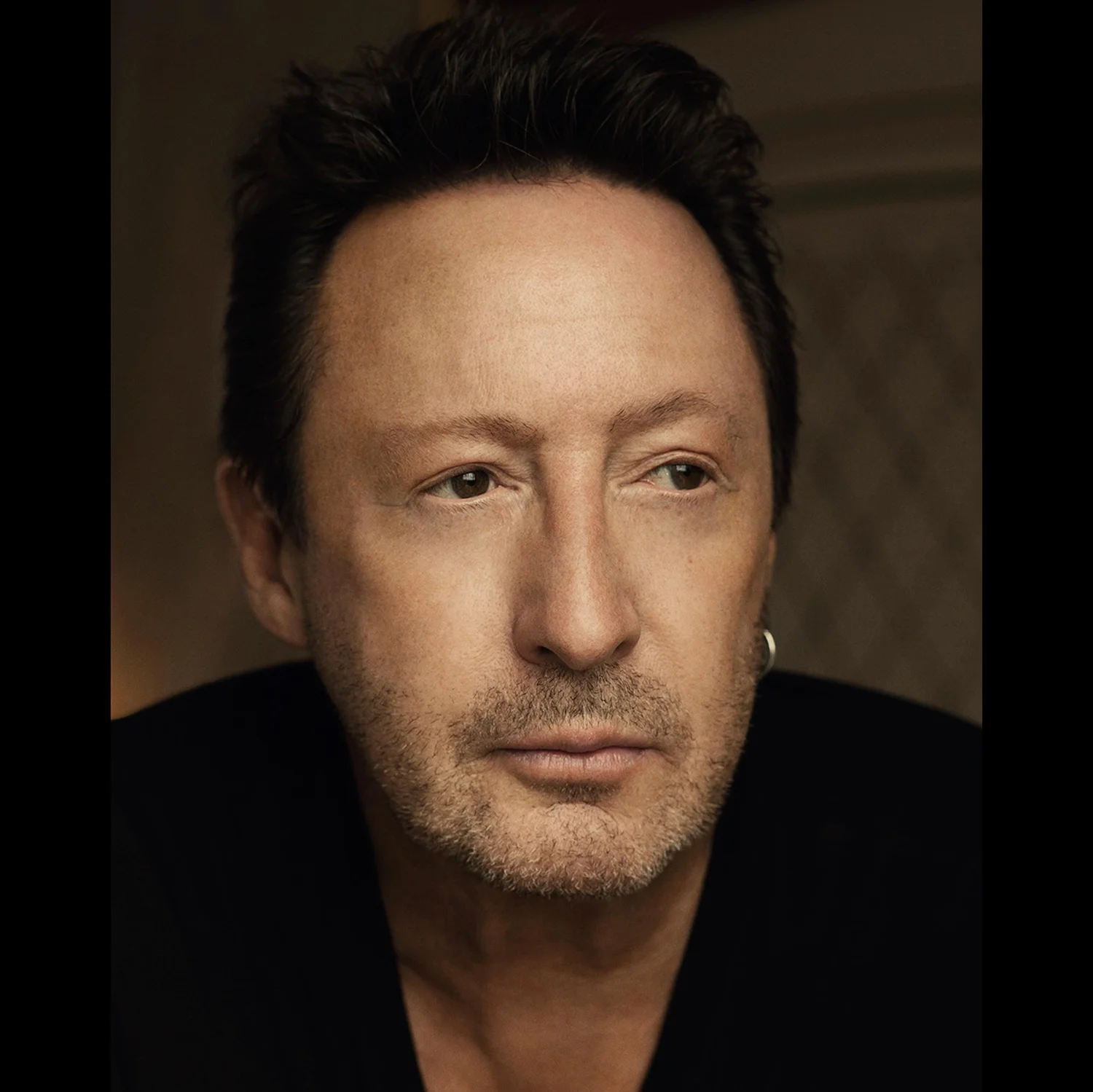
Life’s Fragile Moments with JULIAN LENNON - Photographer, Musician, Documentary Filmmaker
Nov 7, 202400:55:58Tap to summarizeWhat is the power of photography? How do images and songs bookmark our lives, reminding us of what we care about, who we love, and what it means to be alive?Julian Lennon is a Grammy-nominated singer-songwriter, photographer, documentary filmmaker, and NYTimes bestselling author of the Touch the Earth children’s book trilogy. This autumn, Whispers – A Julian Lennon Retrospective is being presented at Le Stanze della Fotografia, culminating in the publication of Life’s Fragile Moments, his first photography book. It features a compilation of images that span over two decades of Lennon's unique life, career, adventures, and philanthropy. He founded The White Feather Foundation in 2007, whose key initiatives are education, health, conservation, and the protection of indigenous cultures. He was the executive producer of Kiss the Ground and other environmental documentaries and was named a Peace Laureate by UNESCO in 2020.“I think a lot of joy comes from helping others. One of the things that I've been really focusing on is finding that balance in life, what’s real and what’s true and what makes you happy. How can you help other people feel the same and have a happier life? I think whatever that takes. So if that's charity, if that's photography, if that's documentary, if that's music, and I can do it, then I'm going to do it.From traveling, especially in Ethiopia, Kenya, and even South America, we just see these scenarios and situations where they don't have enough support or finances. Anything I’m involved in, a good percentage goes to The White Feather Foundation. From what I witnessed, I just wanted to be able to help. My best teacher ever was Mum because I watched her live through life with dignity, grace, respect, and empathy. To me, those are some of the key things that are most important in living life. I think you have to love everybody and yourself. Respect is a real key issue, not only for people but for this world that we live in, Mother Earth. It's of key importance that we honor and respect this beautiful little blue ball that we live on.”www.creativeprocess.infowww.oneplanetpodcast.orgIG www.instagram.com/creativeprocesspodcastPhoto credit: © 2021 Marilyn Clark
Transcribe →
Assembling Tomorrow: A Guide to Designing a Thriving Future - SCOTT DOORLEY & CARISSA CARTER - Highlights
Sep 21, 202400:21:08Tap to summarize“Today, someone is putting the finishing touches on a machine- learning algorithm that will change the way you relate to your family. Someone is trying to design a way to communicate with animals in their own language. Someone is designing a gene that alters bacteria to turn your poop bright blue when it’s time to see the doctor. Someone is cleaning up the mess someone else left behind seventy years ago yesterday. Today, someone just had an idea that will end up saving one thing while it harms another…To be a maker in this moment— to be a human today— is to collaborate with the world. It is to create and be created, to work and be worked on, to make and be made. To be human is to tinker, create, fix, care, and bring new things into the world. It is to design. You— yes, you!— might design products or policy, services or sermons, production lines or preschool programs. You might run a business, make art, or participate in passing out meals to the poor. You may write code or pour concrete, lobby for endangered species legislation or craft cocktails. Wherever you fit in, you are part of shaping the world. This is design work.”– Assembling TomorrowA Guide to Designing a Thriving FutureScott Doorley is the Creative Director at Stanford's d. school and co author of Make Space. He teaches design communication and his work has been featured in museums and architecture and urbanism and the New York Times. Carissa Carteris the Academic Director at Stanford's d. schooland author of The Secret Language of Maps. She teaches courses on emerging technologies and data visualization and received Fast Company and Core 77 awards for her work on designing with machine learning and blockchain. Together, they co authored Assembling Tomorrow: A Guide to Designing a Thriving Future.www.scottdoorley.comwww.snowflyzone.comhttps://dschool.stanford.edu/www.penguinrandomhouse.com/books/623529/assembling-tomorrow-by-scott-doorley-carissa-carter-and-stanford-dschool-illustrations-by-armando-veve/www.creativeprocess.infowww.oneplanetpodcast.orgIG www.instagram.com/creativeprocesspodcast
Transcribe →
Can Design Save the World? - SCOTT DOORLEY & CARISSA CARTER - Co-authors of Assembling Tomorrow - Directors of Stanford’s d.School
Sep 21, 202400:57:06Tap to summarizeHow can we design and adapt for the uncertainties of the 21st century? How do emotions shape our decisions and the way we design the world around us?Scott Doorley is the Creative Director at Stanford's d. school and co author of Make Space. He teaches design communication and his work has been featured in museums and architecture and urbanism and the New York Times. Carissa Carter is the Academic Director at Stanford's d. school and author of The Secret Language of Maps. She teaches courses on emerging technologies and data visualization and received Fast Company and Core 77 awards for her work on designing with machine learning and blockchain. Together, they co authored Assembling Tomorrow: A Guide to Designing a Thriving Future.“Today, someone is putting the finishing touches on a machine- learning algorithm that will change the way you relate to your family. Someone is trying to design a way to communicate with animals in their own language. Someone is designing a gene that alters bacteria to turn your poop bright blue when it’s time to see the doctor. Someone is cleaning up the mess someone else left behind seventy years ago yesterday. Today, someone just had an idea that will end up saving one thing while it harms another…To be a maker in this moment— to be a human today— is to collaborate with the world. It is to create and be created, to work and be worked on, to make and be made. To be human is to tinker, create, fix, care, and bring new things into the world. It is to design. You— yes, you!— might design products or policy, services or sermons, production lines or preschool programs. You might run a business, make art, or participate in passing out meals to the poor. You may write code or pour concrete, lobby for endangered species legislation or craft cocktails. Wherever you fit in, you are part of shaping the world. This is design work.”– Assembling TomorrowA Guide to Designing a Thriving Futurewww.scottdoorley.comwww.snowflyzone.comhttps://dschool.stanford.edu/www.penguinrandomhouse.com/books/623529/assembling-tomorrow-by-scott-doorley-carissa-carter-and-stanford-dschool-illustrations-by-armando-veve/www.creativeprocess.infowww.oneplanetpodcast.orgIG www.instagram.com/creativeprocesspodcastImage credit: Patrick Beaudouin
Transcribe →