Podcast
Artisan Church
Hosted by Artisan Church · EN
A church in the North Metro of Minneapolis, MN focused on bringing people home to the heart of God.
27episodes
Episodes
Newest firstAll episodes
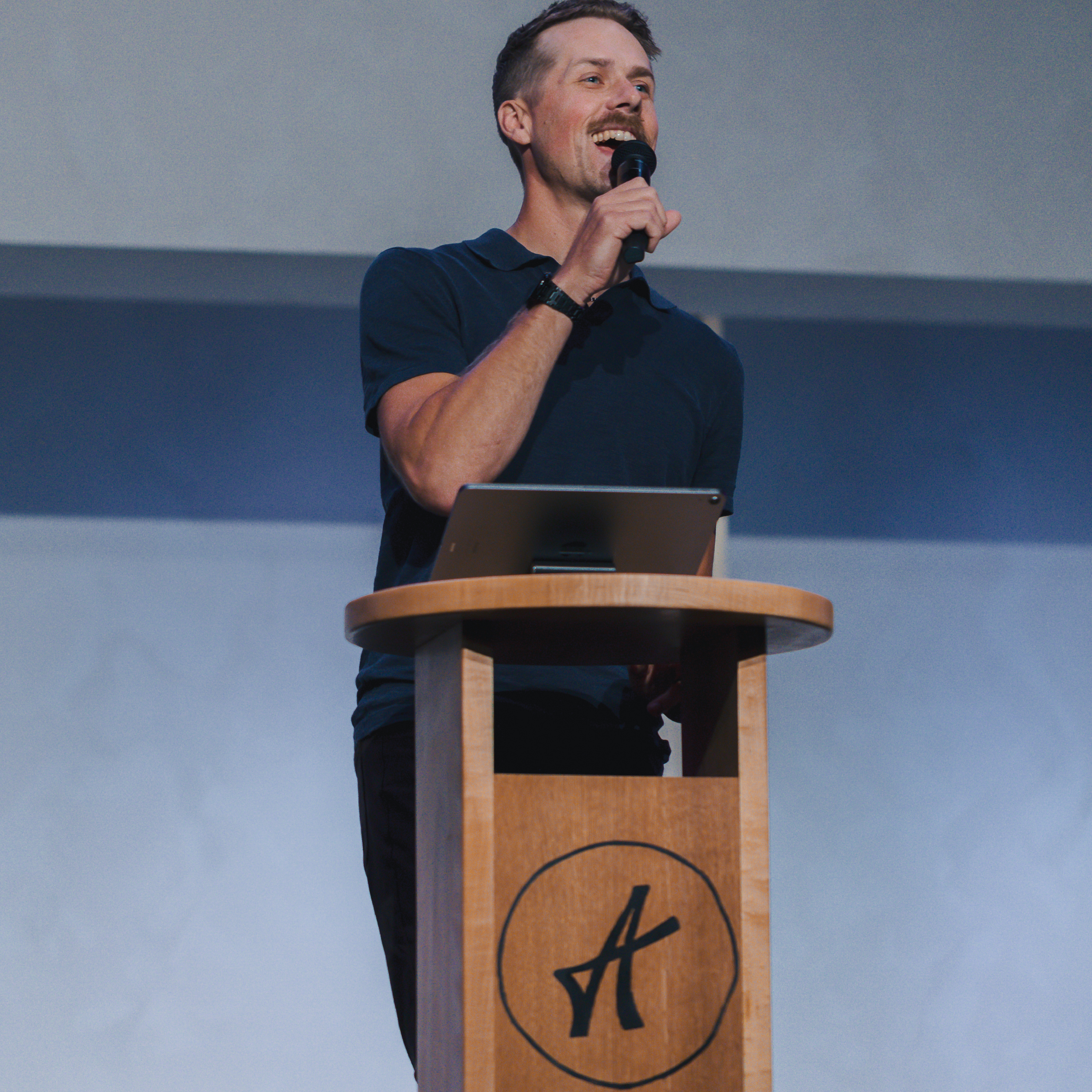
Jesus in the Suffering| Pastor Landon Pickering
2w ago00:46:41Tap to summarizeWhen life gets hard, why keep following Jesus?In Jesus in the Suffering, we explore Hebrews 2–5 and discover how the identity and work of Jesus give us strength to endure hardship without losing faith.The book of Hebrews was written to weary believers whose faith was costing them something. Rather than minimizing their suffering, the author gives them a greater vision of Jesus—because the bigger our view of Jesus becomes, the stronger our endurance will be.Through this message, we are reminded that:Jesus became one of us and can identify with our suffering.We must guard our hearts from becoming hardened through hardship.Because Jesus is our great High Priest, we can confidently approach God’s throne of grace and receive mercy and help in our time of need.Suffering is not less painful for the Christian, but it is more hopeful. Jesus is not distant from our pain. He has experienced suffering, He is present with us within it, and He is interceding for us through it.What hardship, burden, or suffering do you need to bring before the throne of God today?
Transcribe →win back the wonder | Pastor Grant Anderson
3w ago00:39:36Tap to summarizeWhat do you do when life stops making sense and you just want an answer?In this message, worship pastor Grant Anderson shares a story of getting stranded in the Colorado mountains at 1am and how it opened his eyes to a truth we often miss: that we're wired to treat God like a problem to solve instead of a presence to encounter.Walking through the story of Job, Grant unpacks the difference between wonder and doubt, and why God so often responds to our questions not with explanations, but with a bigger vision of Himself. You'll be challenged to notice God in the small, ordinary details — and given a simple, practical way to train your imagination toward wonder this week.Come to God for answers… or come to God for Him?
Transcribe →
Kingdom Builders | Doug Graham
4w ago00:41:19Tap to summarizeJesus gave His Church a clear commission: go and make disciples of all nations.This week, Doug Graham from OneHope shares how God’s Word is reaching children and teenagers around the world—including those living in places where the name of Jesus is rarely spoken. Through generosity, digital outreach, and an unwavering commitment to the Great Commission, the Church can help bring lasting hope to the next generation.
Transcribe →Sabbath Sunday | Pastor Sam Grosso
Jul 500:23:32Tap to summarizeThis Sunday, we’re doing something a little different for Sabbath Sunday. Since it’s the day after the 4th of July, we’re creating space for our church family, Dream Team, and staff to slow down, rest, and worship from home. Today’s message from Pastor Sam was pre-recorded so we can still gather around God’s Word together, even while taking a different rhythm.We pray this message encourages you, strengthens your faith, and helps you make room for the rest God invites us into.
Transcribe →I will not | Pastor Sam Grosso
Jun 2800:40:54Tap to summarizeIn this message from 1 Samuel 24, we look at the moment David had the opportunity to kill Saul but chose obedience instead of taking a shortcut. David’s story teaches us that saying yes to God often leads to hard no’s, and that not every opportunity is from Him.When voices around us get loud, when our desires feel justified, and when the shortcut seems beneficial, we are invited to pause and ask: is this my plan, or God’s purpose?Your plans or His purpose — your choice.
Transcribe →
From Highlight to Holy | Peter Reeves
Jun 2400:44:40Tap to summarizeIn this message, “From Highlight to Holy,” we look at Proverbs 30:7–9 and the quiet danger of living for admiration, opportunity, and outward success while neglecting the condition of our soul.God is more concerned with holiness than He is with our highlights. Not every opportunity is our assignment, and not every open door is worth walking through if it pulls us away from dependence on Him.Together, we are reminded to keep eternity in mind, choose authenticity over admiration, pray for godly contentment, and daily consider the state of our soul.
Transcribe →Expectations | Pastor Sam Grosso
Jun 2400:35:35Tap to summarizeIn Mark 1:35–39, Jesus is interrupted by Simon with a phrase many fathers know all too well: “Everyone is looking for you.”Work needs you. Your family needs you. The bills, the house, the church, and the people around you all seem to need something. But Jesus shows us that the goal of life is not to satisfy every demand — it is to faithfully fulfill the Father’s assignment.This Father’s Day message reminds us that contentment is not complacency. It is clarity. It frees us from the wrong expectations and helps us live with purpose, peace, and obedience to God.Everyone may be looking for you, but before you respond to everyone, make sure you’ve heard from God first.Scripture:Mark 1:35–391 Timothy 6:6
Transcribe →Power in Pain | Pastor Sam Grosso
Jun 1400:44:45Tap to summarizePain is not just something we survive. It is often something God uses to shape us.In this message, Power in Pain, we explore how the way we handle pain directly affects the trajectory of our lives. Looking at Paul’s words in 2 Corinthians 1:4–6 and 2 Corinthians 12:9–10, we see that God comforts us in our suffering, strengthens us in our weakness, and uses our pain to minister to others.This message is a reminder that weakness is not the absence of God’s power. For the follower of Jesus, weakness can become the very place where Christ’s power rests.Pain may be real, but so is the comfort, strength, and presence of God.
Transcribe →Why should I do this | Pastor sam Grosso
Jun 100:44:45Tap to summarizeAs we wrap up our City on a Hill series, we tackle an essential question: What motivates our outreach?Many people care, but not everyone acts. While guilt, religious duty, and judgment can all produce temporary action, none of them reflect the heart of Jesus. In Matthew 9, we see that Jesus was moved by compassion—a deep, inward mercy that saw people, understood their condition, and moved toward them in love.This episode explores why compassion is the necessary fuel for healthy outreach and how believers can become people who don't just talk about loving others, but consistently live it out.A city on a hill isn't bright because it's impressive. It's bright because it burns with the compassion of Christ.
Transcribe →Abide in me | Pastor Sam Grosso
May 2500:45:32Tap to summarizequestion: how do we get salty and stay salty?In John 15, Jesus teaches that fruit is not produced through striving, image, or performance, but through abiding in Him. Before we can reflect Jesus publicly, we have to remain connected to Him privately.This message is a reminder that connection produces fruit, while disconnection produces performance. The invitation of Jesus is not to try harder, but to remain closer.
Transcribe →