← At Work with The Ready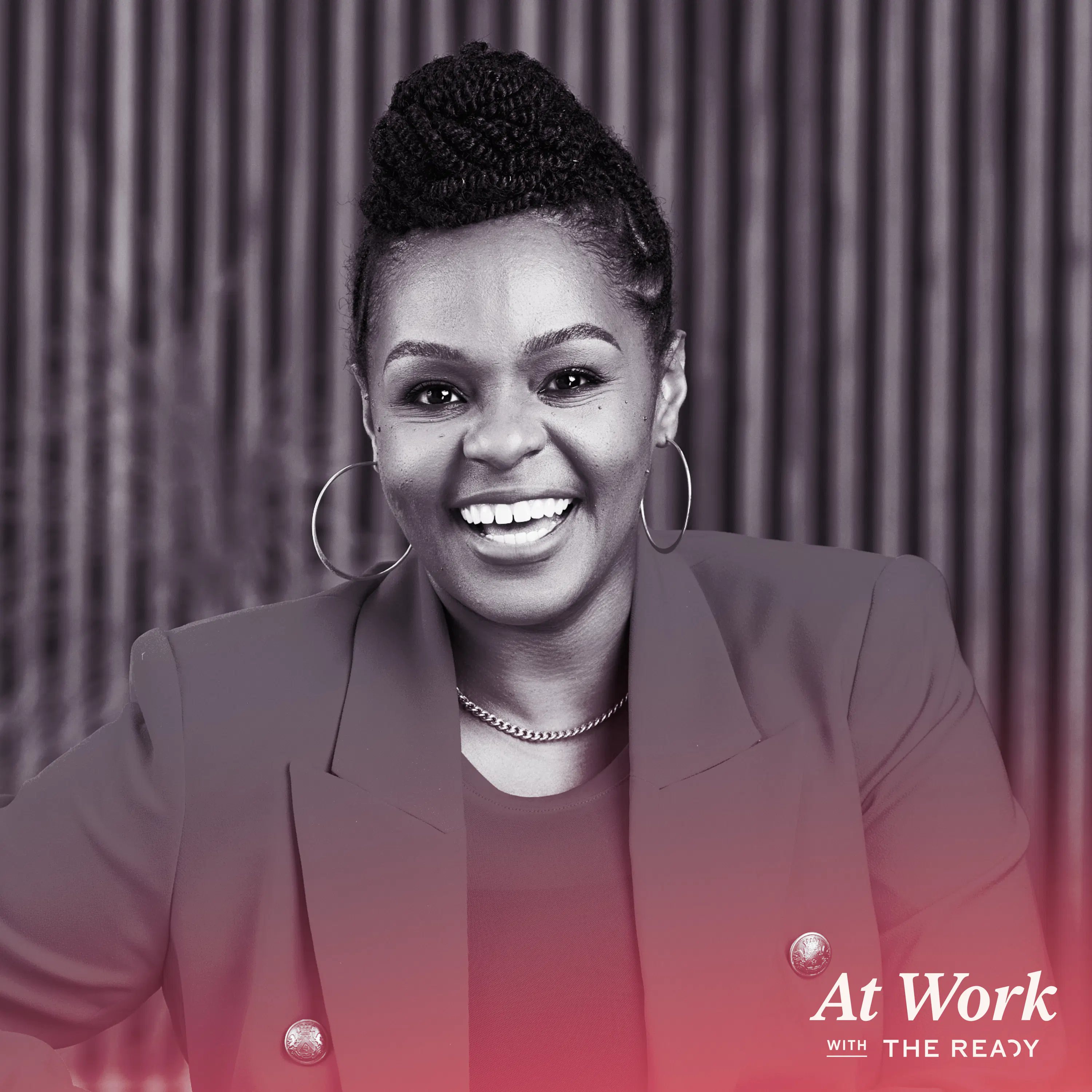
At Work with The Ready
37. Leadership Across Generations with Raven Solomon
00:56:50
Rodney Evans and guest Raven Solomon unpack why generations clash at work and how leaders can bridge the gap with empathy, inclusion, and future-ready thinking.
Loading summary
Transcript90 lines
- [00:01]
A
I don't think you can talk about the future of work without talking about inclusion. If you are, you are not talking about the future of work.
- [00:10]
B
Hey, everybody. Welcome back to Work with the Ready, a podcast about modernizing organizations now that the future of work has arrived. I am Rodney Evans and Sam is not with us today, but I am joined by a very special guest. I want to welcome Raven Solomon to the show. Raven is a professional speaker, an author, and the CEO of the Future Ready Institute. She is very well known for her work on cross generational leadership and inclusion, especially her Future Ready Inclusion framework, which I've gotten a chance to take a look at and is very cool. And it helps leaders just get real about building inclusive cultures that actually deliver results and help to prepare for what's next. That was a mouthful. You can tell I'm excited. Raven, welcome to the show.
- [00:56]
A
Thank you. I'm excited to be here. I can't wait for our conversation.
- [01:00]
B
Me too. I've been looking forward to this since I met you, whenever that was. I feel like both of us have this lens on systems and on systems change and what we'd like to see there. And so I'm excited to ask you a bunch of questions and learn from you today. But before we do that, we always start with a check in round, and today will be no different. And the check in round question I have for you, which is a little spicy, is what's something about your profession that you can't say from the stage but you wish people knew? And I can go first if you need a second to think.
- [01:40]
A
You know what? I think something popped into my head almost immediately. Yeah. Awesome. I think it is that I can see you. Like from a public speaking stage. I can see you. Right. It may be a little dark in the room, it might be dim, but I can see you. I can tell whether you're engaged or not. I can tell whether you're on your phone or not. I can feel your energy as well. So I think a lot of folks kind of see public speakers as. I don't know, there's a little bit of a God complex. A little bit. As you know to say, it doesn't matter what's going on in the room. They're gonna do their job and they're gonna do it well. Well, I feed off the energy of the room. Right. And so if I'm giving my 100% energy, it feels great when that's returned. And when it's not returned, you can get in your head about it. You know what I mean, and so. But you still got, for me, 90 minutes on a stage where regardless of how the crowd is responding, you've got to give your all. So I don't get to say that often, but I can see you. So give me what you think I deserve in return and that'd be awesome.
- [02:49]
B
Oh, wow. I really love that. That's one of the best check in answers we've ever had on this show. What a good one. So my profession is change. And the thing is, when I'm on a stage talking about it, I really talk about it like it is an imperative and that everyone can do it. Yeah, they can't. And it's because so many people, I'm not going to say most people, so many people who have worked themselves into positions of power have such a calcified ego around how shit is supposed to happen that they're just not gonna. And they sit there and they listen to me talk about the future and they go like, yeah, like that. And I'm like, yeah, but like, you're not going to do what's necessary to have what I'm talking about.
- [03:40]
A
Yeah.
- [03:41]
B
And I, I don't feel like it's productive to say that from a stage, but sometimes I'd like to, Sometimes I'd like to be like you, nodding your head.
- [03:48]
A
What are you going to do exactly? Exactly how are you going to bring this to life? Are you going to bring this to life? Are you truly bought in enough? Like, are you receiving what I'm saying? Are you going to take it home? Are you going to do something with it? Or is this just another check in the box for you at this conference? So I completely understand. That makes sense.
- [04:05]
B
Yeah, exactly. So maybe from there we go right into one of the things that I wanted to talk to you about. We have never had much of a conversation on this show about generational divides. And there's so much, particularly in social media, about different working styles and different expectations of the workplace and how younger generations are redefining, blah, blah, blah, you know better than I do all of these things. And I'd like to start with you talking about for like the Gen Xers, the boomers, the elder millennials, which is what I am. What are some of the things that people of those generations who hold positions of power need to unlearn?
- [04:56]
A
That's a really good question. I think there's so much that you and I have learned over time. We've learned over the course of our careers, we've learned through experience, and there's so much validity to what we know and understand. But I think we have to consider that there's an entire group of folks being raised now in a completely different environment with completely different lived experiences. So if I think there's anything that we need to unlearn, it's this idea that our way is the right way, that our way is superior, that because it worked for us, it should work for them. That's just not the case. Right, yeah. Let's talk about bullying as an example. Obviously most of us hopefully are not getting bullied in the workplace. But you and I grew up in a time where bullying took place. I was bullied, but it ended once I got off the bus. It ended once I got home. But now we're dealing with a generation where that bullying is 24 7, 365. It is non stop the access that they have to unprecedented amounts of information from all sides. Right. All perspectives. All of that is leading to insurmountable amounts of mental health challenges that we just cannot fathom. Having not grown up with the Internet, this idea that today's generations are growing up in the same environment that we are and therefore should be able to come out with the same understanding and navigate differences, navigate work, navigate communication, et cetera, in the same exact way. And it's just not true. It's just not true. I'll give you one example of. Let's say I talk about this one with my boomers a lot, that always being available denotes hard work and dedication.
- [06:47]
B
Sure.
- [06:48]
A
Is that true for a population? Absolutely, that is true. You had to always be available to show that you were hardworking and dedicated. Well, now we have a generation coming into the workplace who has the, let's say, privilege, but maybe the audacity to set boundaries. Does that mean that just because they're not always available, they're not hardworking and they're not dedicated, we have to stop, we have to unlearn, and we have to see things perhaps a little bit differently.
- [07:17]
B
Yeah, yeah, it's such a good point. And you know, just to, to talk about like the first point that you made about, you know, bullying as an example, if you just scale the impact that social media and just the Internet in general has had that we did not have to live with. Growing the ever present sort of like sword of Damocles over your head of being publicly shamed on the Internet just was not part of my childhood. And now, you know, it's interesting because I'm at the age where I have a lot of mom friends. I don't have kids. But a lot of my friends have teenagers. And I look at how little freedom their kids have, and those moms are living with the same concern about shame that their kids are. I'm like, we used to blah, blah, blah when we. And my friends are like, dude, if I do that shit and something goes wrong, if I let my kid walk into town, borrow the car, have a party on Friday, blah, blah, blah. And it gets into the mom's Facebook group. Like, I am a social pariah for life. When we were in high school and my mom let me throw parties because she did, because she was the best. Like, the worst thing that happened was on Monday, somebody's like, narc mom called her and got mad. But it wasn't like the whole school, like, the community didn't get involved when a parent made a slightly less acceptable decision. And it's the same for the kids. Like, the worst case scenario was you weren't invited to the party on Friday night and you didn't find out until Monday. Now you're, like, watching it real. I think to your point, it's hard for people like me to imagine what growing up online would have been like because it just was not. It was not my experience.
- [09:04]
A
Yeah, yeah, no, you're. You're totally right. And I, I think that's where empathy comes in. Right. Like, we talk a about human centered skills, right. At the Future Ready Institute. We don't call them soft skills, we call them human centered skills. Yes. Empathy is one of those. Right. It's like Brene Brown talks about empathy in this way. She says empathy is not about necessarily understanding the experience of someone, but rather the emotions that underpin that experience. So as a parent, I may not understand what it's like to grow up from 5 years old to teenage years having the shame of the Internet or the possibilities of shame that the Internet can provide. I may not understand what that's like, but I can imagine the emotions and the feelings that underpin said experience, which leads me to feel on behalf of and in conjunction with this human being that's my child. Right. And so I think there's so much room for empathy even in parenting today. And it's one of those human centered skills that we all need and that can be developed. By the way, if you don't find yourself to be the most empathetic person to your colleagues or your team members or your. Even your children, you can develop that skill.
- [10:17]
B
Yeah, absolutely. I mean, for as easy as it is to judge someone else's opinion, it's pretty hard to argue with their emotional pain when it's expressed to the second point that you made about the younger generations. I just want to ask you about this because as someone who can, like, I consider myself a bit of a reformer of work because I just fundamentally disagree with what capitalism has done to most institutions in America. I tend to be quite philosophically aligned with the younger generations about work in the sense that I think that work extended a promise that it has not fulfilled. I think most of us were sold a line of about what work was going to do for us financially, emotionally, relationally. And I think for the most part, not just institutions, but, like, work as a domain has done a pretty bad job. And I think the younger generations are just, like, seeing that for what it is and refusing to sort of buy into this myth that has been very easily disproven.
- [11:30]
A
Yeah.
- [11:31]
B
I'm curious, like, A, if you think that's true, because I don't study this. This is very anecdotal for me. And B, like, why do you think their perspective is different than someone my age?
- [11:43]
A
Yeah. I'll start with the last question. I think they've observed the great letdown of the workplace. Right? Right. I think they have. Especially Gen Z Z. So Gen Z tends to be disproportionately parented by Gen X. And what we know, factually speaking, is that Gen X was the hardest hit generation by the Great Recession of 2008. And so Gen Z has watched their parents be let down economically, be let down emotionally, mentally, by the workplace. They've seen their parents lose jobs. They've seen their parents lose stock options and maybe even lose homes and economic stability. Now, by the way, Gen X is also the only generation to have fully economically recovered from the Great Recession of 2008, which is interesting. So they've watched their parents kind of be let down by the workplace. Millennials had boomers as parents, and boomers were loyal to company. Right. It was honorable. It was noble that you stayed with the same company for 40 years. Boomers also grew up in a very, very economically optimistic environment. Sure. The perspective between millennials and Gen Z, having watched their parents raise them in different ways and experience the economy in different ways, really lends itself to this dichotomy. Right. And this separation of values and the way that they see the workplace and company loyalty. So I think that's a part of why their relationship with work is just completely different. The other part of it really leads to them watching millennials grow up. Right. If I think about My younger cousin and my younger siblings, they watch us grow up, go to college, get this degree, spend all of this money, come out during the Great Recession, have to go back home, live with parents, have all of this student loan debt, and they're looking at us saying, you know what? I don't want to be you. Why?
- [13:44]
B
Yeah, like that sucks.
- [13:46]
A
Exactly. So I think that's kind of the second why. And then I think all of this culminates now into a space where choice is so readily available. They have so many options. Right. Like for us, going to college, or at least for me, going to college was really the only option I didn't have.
- [14:07]
B
Yeah. Nobody talked to me about something else.
- [14:09]
A
Absolutely not. Not a trade or the possibilities, possibility of, you know, going. No, it was, you're going to college, you're going to get a good job and you're going to, you know, good government job or what have you, and you're going to make it out, was the sentiment. Well, now you've got a generation where they see the influencer economy, they see that as a viable option for them. They see also gig economy as a viable option. So maybe I'll go and teach myself how to code for nine weeks and then I'll have a six figure job after that and then I'll only work 20 hours a week or maybe I'll get on fiverr and I'll do photography, editing or I'll, you know, edit videos or what have you. So the options are now plentiful for them. And so now they're saying, I don't need this corporate job that is going to tax me, that is going to wax me, going to take all of my energy, all of my time. I don't need that in order to be successful. So I think that's a part of it too where they're kind of pushing back against the grain. They've seen the failure and they're like, I don't want that for myself. Not only do I not want that for myself, but now I've got the pressures of the world via the Internet. On top of that, they're saying, I'm good, good on that.
- [15:28]
B
They're like, y' all don't make that look good. So we're gonna not, we're gonna not do that.
- [15:33]
A
No. You know what else, Rodney? What's so interesting is that for our generation, what we're seeing too is that there's a lot of us who are like, you know what I don't want, I don't want the VP role I don't want the director role. I'm good with a good, steady individual contributor role. And now they're getting pushback from that. A lot of my peers are getting pushback for not being ambitious enough and going for the VP or the SVP role. But how do you blame them when they see you have zero work life integration.
- [16:04]
B
Right.
- [16:04]
A
They see you having sacrificed your family for where you are, and they see you not living out the values that you say the organization sets a high. Why would they want that? Which comes back to just authenticity. But I can go on for days about generations, Ronnie, so you may not want to.
- [16:21]
B
Interesting. You know what's funny is, so I'm in this, like, women's basically like CEO and founder group locally in North Carolina, and I've been part of it for a long time. And at the beginning of each year, we spend a little bit of time in January, just sort of like intention setting for the year for ourselves personally, for the organizations that we steward, et cetera. Most of us three years ago were talking about scale, you know, whether it was people who are going to raise money or people who are going to do seven acquisitions in the year or whatever.
- [16:54]
A
Yeah.
- [16:54]
B
This year, almost everyone that came, we were like, so lifestyle, business. Right.
- [17:01]
A
Everybody.
- [17:02]
B
Like, we're having the midlife crisis.
- [17:04]
A
Yeah.
- [17:04]
B
Looking at our parents who are out of the workforce and basically a lot of boomers, you know, a lot of parents of people I know and who are my age, like, they didn't make retirement look great because they didn't learn how to do something besides work before they got to retirement. And they are having like full blown mental health crises because they didn't really invest enough in the rest. And then suddenly this thing that was like their all consuming identity is gone and it's a problem. And so there's this group of us who are square in midlife. We're looking at how our parents are doing it. We're like, let's not do that. And everybody's sort of going, like, for what reason would I double down now? Yeah, like, could we just aim for more comfort for the second half? And I think part of it is that it's like we're never going to get what they had no matter how hard we work, because that world is never going to be available, like, yeah. To us in many ways economically. And so I think a lot of us are just like, yeah, like, let's design a life that is not just about maximization.
- [18:16]
A
Yeah.
- [18:17]
B
But I think a lot of us got to that point a Little bit later. Because we sort of grew up, like, watching our parents and being like, that's how you do it.
- [18:24]
A
Yeah, yeah. No, you're. You're speaking my language. I'm in that exact same place where two years ago, three years ago, I'm like, scale. We're gonna hire all these people, we're gonna do all these things. And now I'm just like, no, we're gonna have peace. We're gonna have mental health. We're gonna be so stable, we're going to be able to travel. We're going to live right, Build a business that is sustainable and that sustains our lifestyle, to your point, rather than this grandiose business that scales all over the world, but that cost us the things that we find to be most valuable. And that's what I think is most courageous about this generation. You know, millennials were known for pushing back against the status quo. And it wasn't just about, you know, having beer on tap in the office. It wasn't just about that. You know what I mean? That's the least in which we were pushing back, pushing the envelope. We are now pushing the envelope in how we define success. And to your earlier point about capitalism, boomers who grew up very economically optimistic experience the economic positivity of capitalism. But we growing up saw the downside. And I think now, as a more socially conscious generation as well, we also see the human implications of capitalism. And therefore, we are less emotionally bound to capitalism. And we're willing to say, you know what, I don't know, maybe this might be a little more harmful than we think. Not to you, others. And so why don't we think differently? Why don't we think differently? And we're courageous enough to do that.
- [20:02]
B
Yeah. It's so interesting that you've sort of landed in a. In a similar place. We don't know each other, but, like, we're perimenopausal and we're having these revelations.
- [20:11]
A
We're like.
- [20:11]
B
And we sort of joked and we're.
- [20:13]
A
Like, what do we want?
- [20:14]
B
Peace. When do we want it? Five years ago. But now is good, too.
- [20:17]
A
Exactly. Exactly. 1,000%. 1,000. We are on the same page.
- [20:24]
B
You talk a lot about inclusion, not just from a generational perspective, from many perspectives and from intersectionality. And one of the things that I really appreciate about your work is the way in which you talk about it, which feels very practical. It feels very grounded in reality. Not just like, the right thing to do, but, like, something that is possible.
- [20:50]
A
Yeah.
- [20:51]
B
So give us the 101 on how to think about inclusion in this moment, where like there's shenanigans at the macro level.
- [21:00]
A
Yeah.
- [21:01]
B
And yet we know that this is the trajectory over the long term. This is where systems will head, even if they're on a little detour right now. Help us understand inclusion.
- [21:15]
A
I could say so much here. I think in order to really understand inclusion at its core, you've got to understand first what diversity is. Right. Because inclusion is about the inclusion of those who are different. And so diversity is at its core, at its foundation, the presence of difference. Full stop. Many people think diversity is the presence of women or the presence of trans folks or the presence of queer folks or the presence of Muslim folks. It's not. It's the presence of difference. And so when we think about the abolishment of diversity programs, what we are in essence saying is we are trying to get rid of anything that heightens or brings awareness to difference. That, my friends, is not a strategy. That's not a strategy for today, it wasn't a strategy for yesterday, and it's certainly not a strategy for tomorrow. Why is that? Because if you think your audience, your customer base is diverse now, I want you to just imagine what it might look like 10 years from now. Because what we know is that Gen Z is the most racially and ethnically diverse generation we have ever seen. What we also know is they are the most gender diverse generation the US has ever seen. They are also the most neurodivergent generation the US has ever seen. We can go on and on and on and on about the amount of difference that is present in these forthcoming generations in comparison to perhaps our generation or preceding generations. So I say that to say that when we talk about diversity being the presence of difference, then we have to think about inclusion really being making sure that that difference is welcomed, valued, appreciated, respected, leveraged to generate organizational outcomes and to move our work forward. If we really believe that our work is so life changing and so world changing, then we want to move it forward. Right? And if we want to move it forward, then the best way to do that is by bringing everyone to the table that our work touches and ensuring that we've created the best, most inclusive, most accessible version of that for everyone. And so we can't do that. If we don't first acknowledge the difference that's present, then we work to welcome it, value it, appreciate it, et cetera. When I talk about future ready inclusion, I say that because I don't think you can talk about the future of work without talking about inclusion. If you are, you are not talking about the future of work because the future of work is more diverse. The future of commerce is more diverse. And so the work that you're doing now as an organization to meet your customer now will have to evolve because that customer, that consumer base is evolving. And we know this. The data speaks to it. Demographic shifts are happening all around us. And I always say you get to choose how you respond. Friend, I'm not telling you how you respond when I sit down, talk to executives. I'm not telling you what to do. I'm advising you to consider the macro shifts that are happening around you and to make an informed, wise decision about how you sustain this gift you've been given, I. E. Your business. So I can go on and on, but I'll pause there. That's the way I think about inclusion.
- [24:49]
B
Yeah, I love that. Here's the parallel to the work that I do that you're doing a better job of than I'm doing is that you are able to articulate something that is morally right with a real tangible reward for doing the right thing. Yes, and I can't quite do that yet because, you know, a lot of the work that we do in companies is about more participative, less hierarchical, less bureaucratic, more experimental ways of working. And that gets you a lot of things. Like it gets you adaptability and it gets you agility, and it gets you probably survival through AI tidal wave that's coming. But it's not clear like what you're saying, which is basically, this is what is happening. It is undeniable. And if you don't have the kind of organization that mirrors the population in the market, you are shit out of luck. I can't say that quite for what I do, but it's such a practical way because of course, we would love everyone to welcome diversity because it is the right thing to do and. And capitalism. So I feel like it's so pragmatic to be able to say to leaders, you know, you can't sell to a diverse customer base if you yourselves are a little pale and a little male. Like, that's not how it's going to go.
- [26:24]
A
Yeah, yeah. I mean, it kind of goes back to the generational conversation we were having and the plentiful, bountiful amount of choice that we have. You know, we have plenty of options to purchase products, to purchase services from organizations that truly align with who we are and our values. And so gone are the days where we're forced to the local retailer, for example, to buy what we need. Now it's been disaggregated so we can go anywhere across the world, literally. We can order a product from any country in the world right now. And yeah, it'll take a little while to get here. So as long as we're willing to sacrifice it immediacy for it, then a lot of people are doing that. Right. I'll tell you a quick story, Rodney. I was doing a podcast interview when I had a podcast. I commend you for the work that you do on a podcast. They are hard, they are laborious. And so I commend you. I had to let mine go. It was a lot of work. But it was called the Generational View. The idea was we were bringing different generations to the table, kind of like the show the View, and we were having conversations on things that impact society, the workplace, et cetera. So we talked to a little bit of everyone around Gen Z. So I was sitting down with a group of Latina Gen zers and I asked them how they make their buying decisions. Like how do they choose who they buy from and who they don't. One of them said, you know, I use social media. I said, cool, makes sense. The other one said, well, I generally just go to my mom, my parents. Cool, all right, cool. That makes sense too. The other one said, I use an app. And I said, really? Well, tell me about the app. She says, well, I can be in the grocery store and I can pop open this app and I could scroll into any category of product that I want to purchase. I can dial into that category and then I can see all the major producers of products within that category. Then I can click into the producer I'm interested in potentially purchasing from this app will tell me the political donations that organization has made.
- [28:29]
B
Wow.
- [28:30]
A
I get to decide whether or not my purchase of $10, $100, $1,000 is being spent with an organization that aligns with my values. And I was blown away.
- [28:42]
B
That's amazing.
- [28:43]
A
I was blown away. So we talk about choice, right? That's the choice. And now we have a generation that is concerned not just about themselves, but they're concerned about the rest of the world and they're going to choose based on those concerns. And if you don't want to be that choice, then say so. And that's okay. Like, we can, you know, we can move forward. But I think you do want to be that choice. And if you do, then we need to be making strategic decisions now that are in consideration of what's to come.
- [29:15]
B
Yes. And, you know, it brings up to me, and I think I might have mentioned this when you and I met, but I can't remember. You know, there's this principle in its origins are in engineering called Conway's Law. And it just says that you cannot create a product that doesn't reflect the culture of the organization that made it. And so to your point, it's like the way that I see some organizations going after DEI work, I'm like, this is going to be so transparent because there's nothing about the DNA of your company that that reflects this. And so it is all going to feel hollow because of Conway's Law. It's like, how are you going to tell me that this is so important to you when what's happening under the hood of your company tells a different story?
- [30:10]
A
Absolutely, 1,000%. We have an acronym to describe what Future Ready Inclusion is, just to kind of help folks remember it. And it's Steam. I have not figured out the kind of crafty connection to Steam and inclusion. Haven't figured out yet, but Steam is just the easy way to remember it. And the A in that stands for authenticity because of what you're describing. Right. Is so important that what you do strategically to align with inclusion for now and the future of work, it has to be authentic, it has to be genuine. People feel that connection. It's especially Gen Z and Gen Alpha. We've got to think about it. These folks have grown up with the Internet. They grown up on social media. Their brains are now almost automatically able to decipher between an ad, what's real, a filtered picture versus what is not filtered, something that an influencer is being paid for versus their real opinion. They've developed this skill of deciphering between what is real and what is fake. Do you think that they're not going to be able to tell when your diversity or your inclusion or your equity clauses or your sustainability promises are real and when they're fake? Do you not think they're going to be able to sniff that out? And the same thing is true for your leadership. Gone are the days where you can just tell your team who you are. They want to see who you are. Right. And that is what they're going to follow.
- [31:47]
B
Absolutely. That is such an amazing point that, like, for generations who grew up with the Internet, their detection of the dissonance between what is real and what is not is probably a lot more finely tuned than mine is or people older than me are, because I just, I don't have as much time on target as they do. Like I just haven't, I haven't put in the work to consume the Internet the way.
- [32:15]
A
Why do you think it's our grandparents and our great grandparents who are falling for the phishing emails and not. We know we have a detection device because we've been here. And the same is true for this generation. When it comes to now AI, when it comes to your company clauses and what you say, it's less about that, it's far more about what you do.
- [32:35]
B
That is such an interesting point. That's amazing. So you've made a really wonderful and very compelling and enlivening argument for inclusion. Tell me what's hard about it and what you're trading off to do it.
- [32:52]
A
Well, I think you're trading off short term gratification for sure. Okay. Yeah, for sure. The studies and the research shows that you can have a homogeneous team and they're going to go through that process of storming, norming, form. Is it forming? Maybe forming whatever it is, you know, the process, you're right. Warming, storming and norming. They're going to go through that process quicker and they're going to reach that place of productivity and performance quicker than a diverse team that's inclusive, no doubt about it. But what studies also show is that that team that's diverse and inclusive, while it might take them longer to go through that norming, forming, storming phase, their productivity is almost twice that of the average homogeneous team. So I think that's just a clear example to show any executive that this is going to take time. But what you've got to believe as a leader committed to inclusion is that that short term payoff is worth it in the long run. Which is why you have to have some sort of foresight, future ready inclusion is all about the strategic forward thinking, leveraging of difference. You've got to be looking forward because if you're making decisions on the now, we could be crushing it. But we're not looking five years, 10 years down the road and considering the evolution of not just the demographic shift, but considering even the evolution of human capability and the most valuable human skills that will exist in the future of work. If we're not thinking about those things, then I think we're doing our role a disservice as an executive leader and I think we're doing our stakeholders a disservice and our employees. So it's going to be a trade off in the short term. I also think what's difficult about doing inclusion work is that it's not always the easiest thing to measure. You know, and now, Rodney, we're entering into, let's say, a language shift in dei. Right. There are a lot of practitioners who are rebranding DEI or trying to. Because now the connotation is so very negative around the terms, even though they are clear in what they mean. Right. But, you know, now there's this negative disconnect and there's a rebranding. A lot of folks are now leaning into this idea of belonging. And I was just gonna be honest with you. I don't know what that means. Like, I can define it. Yes. How did you measure belonging? That is really hard to measure now. I think it's a lot easier to measure inclusion. It's far easier to measure diversity. And it's also kind of easy to measure equity too. Yes. Easy to measure fairness. So we want this fluffier term that's a little nicer, that's a little more palatable to people, but it's a lot harder to measure. And that is only going to set us back, in my opinion, several years towards actually actualizing and realizing diversity, equity and inclusion. We need to think about these things as outcomes, not necessarily actions. Right. Diversity is the outcome, inclusion is the outcome. Equity is the outcome to our choices, our behaviors and what we decide, our strategies, et cetera. So one of the challenges is it's not the easiest thing to measure and it's also not the easiest needle to move. It takes time. And so the immediate gratification we're just not going to see. But again, it's forward thinking and it's strategic. Yeah.
- [36:26]
B
I mean, the two things I'll add that just come up in my own work, which are the higher the altitude we're working at in an organization, the shorter term, the focus tends to be. It's just like if I'm working with the CEO of a public company, they're like, earnings are Friday, let's fucking go. And it's like, my man, we are not going to change the culture of your organization and everything about how you work, which you inherited from 150 years of industrialized garbage inside this quarter.
- [36:57]
A
Yeah.
- [36:58]
B
So that you can see results. Like, I don't know what to tell you. That's not realistic, but that's the pressure that they feel. And the other thing that is my less generous take is like, especially in large organizations, the performative corporate nonsense that has become work. Which is why knowledge work is at peak inefficiency and is mostly just Garbage. People are profoundly unwilling to be uncomfortable and, like, profoundly unwilling to learn in so many cases that feel even a little bit disruptive or a little bit challenging. And I would imagine the ways I'm trying to challenge people to make a decision in a different way, have a meeting in a different way, are less disruptive than some of the ways you're trying to challenge people. And still the resistance of, I want the outcome, but I don't want to do anything different to get there. And I want to be comfortable and experience a boulevard of green lights on my way. I'm like, yeah, it doesn't go like that.
- [38:04]
A
It doesn't. It doesn't. And the level of cognitive dissonance one has to have in order to see will is baffling. It doesn't go that way. And so much about inclusion work, especially when we talk about inclusive leadership work, is so very personal. I remember, you know, at the height of, let's say, folks, interest, you know, organizational interests in DEI, and that was 20, 20, 2021, et cetera. I remember, you know, leaders just kind of wanting the easy fix. Just give me the policy, give me the practice, give me the process changes, give me the thing that I need to do in order to get this outcome. I'm willing to do that. But it, like, it kind of goes back to the authenticity element that we were just talking about. You can implement the policy or the practice or what have you, but people can feel whether or not you did that because you needed to, or you had to, you were pressured to, or you did that because you truly felt that it was the right thing to do and the smart thing to do. So one of the six traits of inclusive leader we talk about is commitment. Commitment is all about what we call the head, the hand, and the heart. So it's the head and understanding why it's the smart thing to do, understanding the business case, the heart, in understanding and being able to articulate why is the right thing to do, and then the hand is actually doing it right. So you can have the belief from Memorial case and the business case and not do anything. So those three H's are so important. And so therefore, it's critical as a leader that I'm able to first understand why it matters to me. I've got to do that personal work, and then I have to be able to articulate why it matters to me so that people then believe that it actually matters to me. So so much of this work is personal. And I always like to tie inclusion into the future of Work. So there's this futurist who you may have heard of by the name of Alvin Toflar. Okay, so Alvin once said that the illiterate of the 21st century will not be those who cannot read or write, but it will be those who cannot learn, unlearn and relearn again. And I'm like, that's it, that's it. It's not about how smart you are anymore. It's about can you unlearn what you think you know and can you relearn again? That takes vulnerability, that takes transparency, that takes authenticity. All of these human centered skills that historically in capitalism we've been taught don't really matter as much. Right. Not in the future of work. Because now we have computers that can do a lot of that smart thinking for you.
- [40:50]
B
That's right.
- [40:51]
A
Computers can know now they know they actually have some degree of intelligence. And so it's less about how intelligent you are now. Maybe it's more about how culturally intelligent you are, maybe it's about how emotionally intelligent you are, maybe to your earlier point, how adaptive you are, how agile you are. Right. And so we see that. I believe it's the. Ooh, I'm drawing a blank on the name. Gosh, I'll have to tell you after the fact, but there's a report that comes out every so often about the most important or most powerful skills in the future of work. And none of them at this point as of this year, none of them are technologically, you know, connected. None of it, of course, all kind of human centered skills, of course.
- [41:36]
B
It's so interesting. And I do want to ask you about AI, but just to sort of wrap up on the learning. I just, I feel like because of how our organizations have been built and you know, I talk a lot about what is left over from like the information age, which is I consider sort of when enterprise computing became a thing. And really what that did for, for us was gave us so much data and information that we had never had before that then our job was to plan, to use it to analyze and plan. And now that's not what we need anymore. And we still fall back into this assumption, or in a lot of organizations, a presumption that the ability to plan and then make the plan come true is a valuable skill. Whereas to me, making a hypothesis and being able to experiment and learn as you go and change the hypothesis as you change the experiments is the skill.
- [42:38]
A
Yeah.
- [42:38]
B
What I think becomes so difficult about this, and I've used this example before because it's very easy for people to grok. I was a really serious classical cellist when I was a kid.
- [42:47]
A
Cool.
- [42:49]
B
And the way that I learned how to play the cello is you play the sheet music correctly every time. Like, you play it the way that the arranger wrote it on the piece of music. And in the best case scenario, you play it exactly that way in the performance. And about two years ago, I started learning how to play by ear. And for someone like me, who is accustomed to being able to do this thing at an elite level, to sound like hot garbage is really difficult. And that effectively, when we ask leaders to shift from knowing to learning, we're asking them to go from classical to improvisation. And it sucks. Like, I just wanted to be good. I was just, like, I was already good. I just want to be good now at this other thing that I don't know how to do. But, man, it's a hard shift. And I think to your point about the future of work, and I imagine you and I have a lot of overlap in the skills that we think are the skills people are going to have to suck real bad to learn this stuff. They're going to have to skin those knees.
- [43:58]
A
Yeah, yeah. You are going to have to suck real bad. And I think what you described is a beautiful example of learning, unlearning that way and relearning again. And so how do we infuse that into as a cultural practice inside of our organizations? There's so much we've learned and we've been successful. Yes, but how do we now unlearn the things that can be harmful in. Harmful to people, but then also perhaps unproductive in the future of work and relearn a better way? And so I think that takes a certain degree of humility, which is yet another, you know, human centered skill that we have to lean into and embrace as inclusive leaders and as leaders in the future?
- [44:47]
B
Absolutely. Before I ask you about AI, because I can hear the listener emails that are coming in as we're talking, will you give us your list of skills that you. That are top of mind for you? You've mentioned several of them already, like empathy and humility. What else, Pops?
- [45:08]
A
I think inclusive leadership, we call it inclusive capability because, you know, you can be a leader or you can just be an individual contributor. Right. Who. Who leads by influence or what have you. So you may still identify as a leader, but nonetheless, I think inclusive capability is at the top of that list. I think adaptability and agility kind of one and two of the same. I Think the this is a great one. Cultural intelligence, I think that is in connection obviously with inclusion. I think that is one of the most important skills of the future. And cultural intelligence is really about being able to not just understand, acknowledge cultural difference, which I think a lot of us can. It's also not even just about being able to appreciate and kind of respect cultural difference, but it's really about being able to adapt in light of cultural difference. How do I shift my approach now that I have such a diverse team? Maybe the way I communicate has to change. Maybe the way in which I solicit their feedback has to change. Maybe my thinking around who is most, let's say important, who's my MVP on the team has to change. Because it used to maybe be that, you know, the guy who had, I don't know, the greatest ability to sell was the most valuable player.
- [46:39]
B
That is happening because I'm like, right, every time. I mean, sure.
- [46:44]
A
Exactly. So maybe my idea of who is the MVP and why has to shift and change. So cultural intelligence, I think is so very important when we think about the diversity of the future. Relatability is one of those skills that kind of ties to authenticity, being able to understand and think critically about complexity, like the layered complexity of a problem. So it's not just problem solving anymore. Like it used to be that A plus B equals C, but now ChatGPT and Gemini is going to tell us that A plus B equals C. So now how do we unpack the layers in A and B and C to then understand what the underlying issues are? And so that layered approach is the same way we approach people. So I think that multidimensional intersectional ability to understand our workplace, our consumer. So I think there is, in other words, another level and another layer of analytical skills that we're going to have to develop accounting for intersectionality and identity. So some of those human centered skills, I kind of started with empathy, humility, transparency, vulnerability, all of those things that we once kind of turn our head to when it comes to leadership, I think are the most important now. The most. Yeah.
- [48:16]
B
So talk to me about AI. First of all, I'm just curious because you study the future of work and so do I. Where are you holding on AI? Like, biggest deal of our generation, absolute hype cycle ushering in a hellscape. Like, what's your take?
- [48:38]
A
You know, my take, probably the former. I think it's going to be one of those generationally defining things. Like it's not necessarily a moment, but I think it's a moment in time that will be life altering and generationally altering. In the study of generations and generational theory, the idea of what makes a generation, it's not just the timing of when they're born, it is about what's happening in the world that then impacts common beliefs and common behaviors and the way that we find normal, thus creating this different definition of normal and this different way of doing things in everyday life. And so AI is one of those things that is certainly big enough and impactful enough to change the way that we think, the way that we behave and what we define to be normal. And so the Internet was one of those things, right, that I can't imagine living without it. Of course AI is going to be that same thing. And I have a course that's forthcoming, actually. It's called Generations Unlocked. And in that course I give some predictions about Gen Alpha. One of the things that I predict is that AI to them is going to be more like a friend, like a trusted peer of theirs. You know, they're going to go to it for advice before they go to mom and dad, they're going to go to it for advice before they go to their friend. And once they enter into the workforce, they're certainly going to go to it before they go to their boss or before they go to their colleague. So I see AI as a life altering, generationally defining thing. I don't think it's going anywhere. What do you think though? I'm curious.
- [50:22]
B
I agree with you. The metaphor I've been using is I think that AI right now is sort of like a tsunami in the sense that like when a tsunami is far offshore, it looks like a one or two foot wave, but there's like this immense power that builds underneath it. And then as it moves toward land, it gets bigger and faster and then it completely reshapes where it makes contact. I think we're kind of there right now. I think a lot of people see this small wave and are like, that's interesting. And I don't think that people are considering the full power of what's underneath it. And I agree with you on the friend AI as friend thing. One of the things that I've thought a lot about is if we think about this sort of digital economy and like the rise of social media, really the whole industry is predicated on getting attention, on getting the attention of as many people for as many hours as humanly possible, right? And AI flips the dynamic and it is unending personalized attention for every single person who wants it however they need it at any time of day. And I don't think we have any idea what that's going to do to our brains, to our communities, to our jobs. When I have this thing that will act like my therapist, my boss, my life coach, my swim coach, my music teacher, my best friend, I don't think we can even imagine when it gets good and it can play any role that any person needs, any time, in exactly the way that the individual wants it to play. That's going to be fucking weird.
- [52:15]
A
Touche. And the impact that is going to have on the workforce, on human beings, I don't think we can even conceptualize just yet.
- [52:26]
B
I don't think so.
- [52:27]
A
I think we're guessing and we don't know how quickly it's going to happen either. But already, you know, to your point, there are a lot of people in our lives that serve a purpose specific to our need that in ways we can almost replace with AI today. And so if that is the case for us as individuals, then it will also sadly be the case for organizations. There will be work that can be done with AI that is now being done by a human being. And so, you know, it kind of goes back to those, those future ready skills that we talked about earlier. How do you start as an individual to differentiate yourself in the marketplace? How do you start thinking about developing those future ready skills that are not replaceable by AI because AI can't heal? You know what I mean? I was speaking to a healthcare organization recently and they were talking about just the ways in which they're imagining using AI and you know, all of the folks in the room were just, you know, they're sitting there with their, their arms, you know what I mean? They are anti right now, not in it. Yeah, but it was kind of amazing, right? Like it's. You think, okay, well AI can certainly be in the room recording my conversation with my physician. It can probably take notes for the physician, maybe it can maybe give a couple of options for a diagnosis, all of that. But what they were talking about, which I can't share because I'm bound to confidentiality, it was mind blowing. Mind blowing. And so even something like healthcare, where we think people are irreplaceable, you can't teach AI bedside manner, but can you teach it to do surgery? You know, like, it's unbelievable. It's unbelievable.
- [54:24]
B
Unbelievable. Yeah, it's unbelievable. Well, on that note, we should wrap. I have kept you over time already, but it's only because I was having so much fun. Tell us where to find you and plug your stuff so that all the people listening can learn more.
- [54:38]
A
Absolutely. You can find me@ravensolomon.com Solomon is S O L o M o N so you can find me there. I'm super active on LinkedIn. If you just type in Raven Solomon, my profile should pop up. I've got a monthly webinar that we do, which Rodney will be a part of soon, called Future Ready Fridays. So if you're into the future of work, which obviously you are, because you're listening here, then check that out. We're posting about it all the time on LinkedIn. There are other ways that we can stay connected for sure. But I won't bore you. LinkedIn and my website, you can get in contact with me about anything.
- [55:15]
B
Awesome. Thank you so much for doing this. I learned a ton.
- [55:18]
A
I had a blast. Thank you so much. This was great. I can't wait for part two.
- [55:23]
B
Awesome. Me too, y'.
- [55:25]
A
All.
- [55:25]
B
We are always looking for new topics for the show, so if you have an organizational pattern you're having trouble changing, shoot us a note@podcasttheready.com this show was engineered by Taylor Marvin and produced by our friend Jack Van Amberg. At Work with the Ready is created by the ready, where we help organizations around the world change the way they work. Thank you so much for listening.