Podcast
The AWS Developers Podcast
Hosted by Amazon Web Services · EN
Stay updated on the latest AWS news and insights for developers, wherever you are, whenever you want.
41episodes
Episodes
Newest firstAll episodes
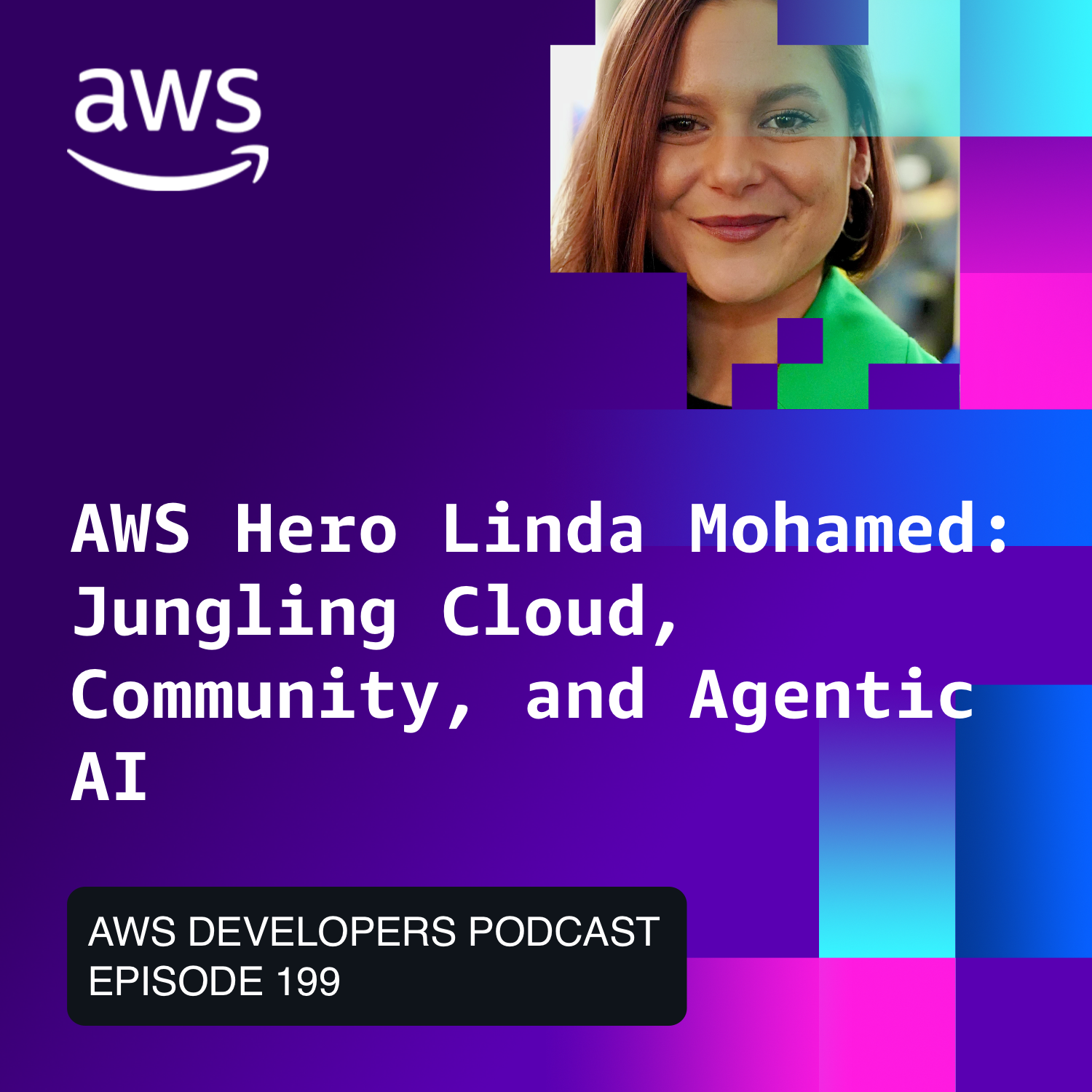
AWS Hero Linda Mohamed: Juggling Cloud, Community & Agentic AI
Mar 1101:05:19Tap to summarizeSome guests make you want to close your laptop and go build something. Linda Mohamed is one of them. In this episode, Romain sits down with Linda — AWS Community Hero, User Group Leader, Chairwoman of the AWS Community DACH Association, and independent cloud consultant based in Vienna. Linda started as a Java developer in on-premises enterprise environments. Her first AWS touch point? Building an Alexa skill for a smart home product — discovering Lambda almost by accident, and never looking back. Today she's building multi-agent AI systems, running an AI-powered video pipeline with five media customers, and doing it all while being one of the most energetic and generous contributors in the AWS community. Discover Linda's journey from Java developer in telecom to cloud and AI consultant, conference-driven development as a forcing function to ship, building Otto — a multi-agent Slack bot using Crew AI, LoRA fine-tuning, and Amazon Bedrock Agent Core Runtime. Learn about the AI-powered video analysis pipeline she built to solve her own problem and ended up selling to five media customers, vibe coding vs spec-driven development and when each makes sense, and why Clean Code principles still apply when designing agent architectures.With Linda Mohamed, AWS Community Hero, User Group Leader, Chairwoman AWS Community DACH Association, Independent Cloud ConsultantAmazon Bedrock Agent CoreBuilding Production-Ready AI Agents with Amazon Bedrock AgentCore — Danilo PocciaKiro IDE - AI-powered development environmentTerraform AWS modules by Anton BabenkoThe Phoenix Project — Gene KimClean Code — Robert C. MartinLinda Mohamed on LinkedIn
Transcribe →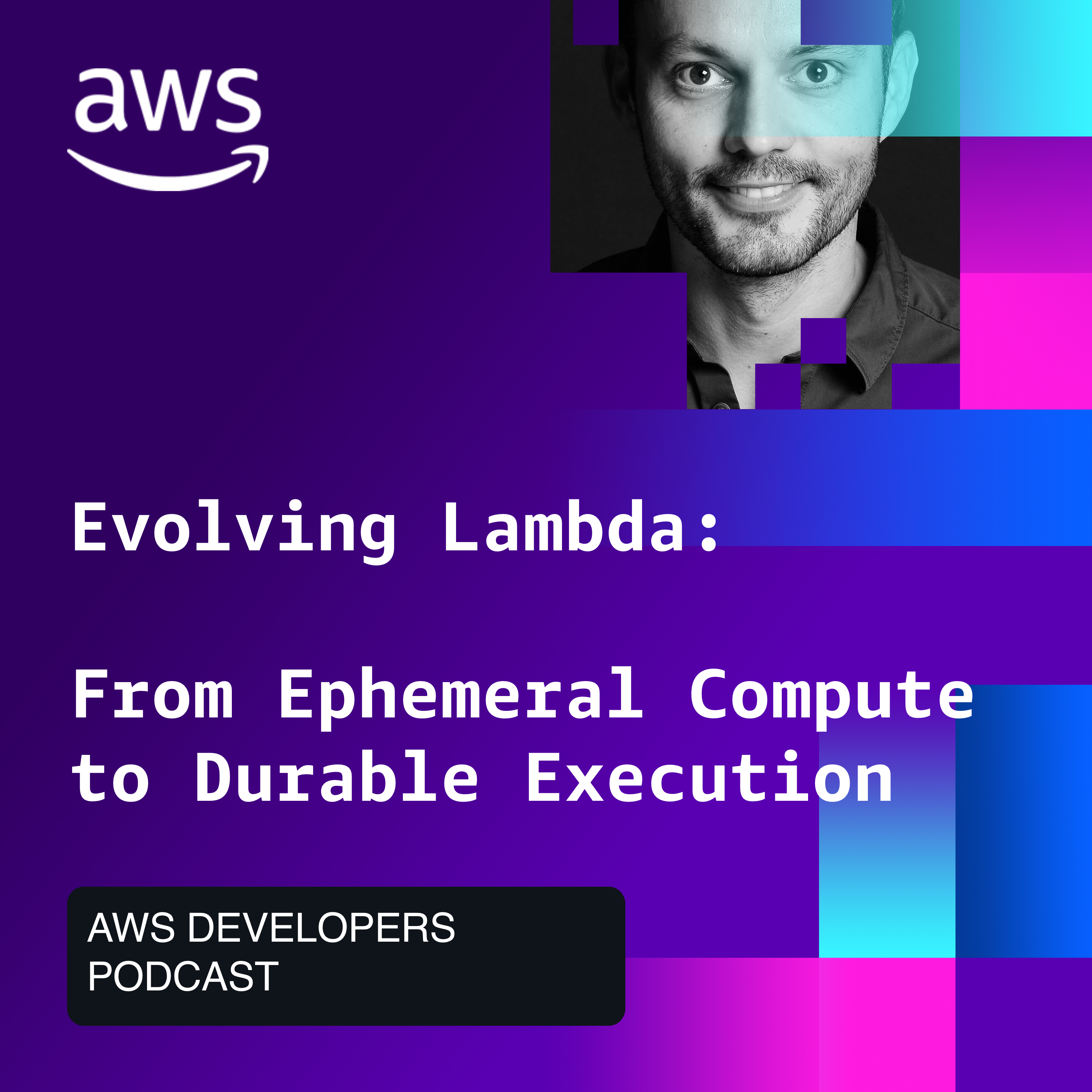
Evolving Lambda: from ephemeral compute to durable execution
Mar 401:06:41Tap to summarizeIn this episode, Romain sits down with Michael Gasch, Product Manager at AWS for Lambda Durable Functions, to explore one of the most exciting launches in the Serverless space in recent years. Michael shares the full story: from the early days of Lambda and the evolution of the serverless developer experience, to the challenges developers face when building multi-step, stateful workflows — and how Durable Functions addresses them natively within Lambda. Discover the evolution of AWS Serverless and why last year was 'the year of Lambda', key launches including IDE integrations, Lambda Managed Instances, and Lambda Tenant Isolation. Learn what Lambda Durable Functions are and what they are not, the checkpoint-replay model and how it enables resilient, long-running executions, and wait patterns including simple wait, wait for callback, and wait for condition. Explore real-world use cases: distributed transactions, LLM inference orchestration, ECS task coordination, and human-in-the-loop workflows. Michael shares unexpected feedback from customers about architectural simplification, how coding agents like Kiro dramatically accelerate writing Durable Functions, and when to choose Durable Functions vs. Step Functions vs. SQS/SNS. Plus, what's coming next: more regions, and the Java SDK (now available!).With Michael Gasch, Product Manager, AWS Serverless (Lambda Durable Functions)Lambda Durable Functions documentationAWS Regional Services availability pageDurable Functions SDK on GitHubAWS SAM - Serverless Application ModelDesigning Data-Intensive Applications by Martin KleppmannKiro IDE - AI-powered development environment
Transcribe →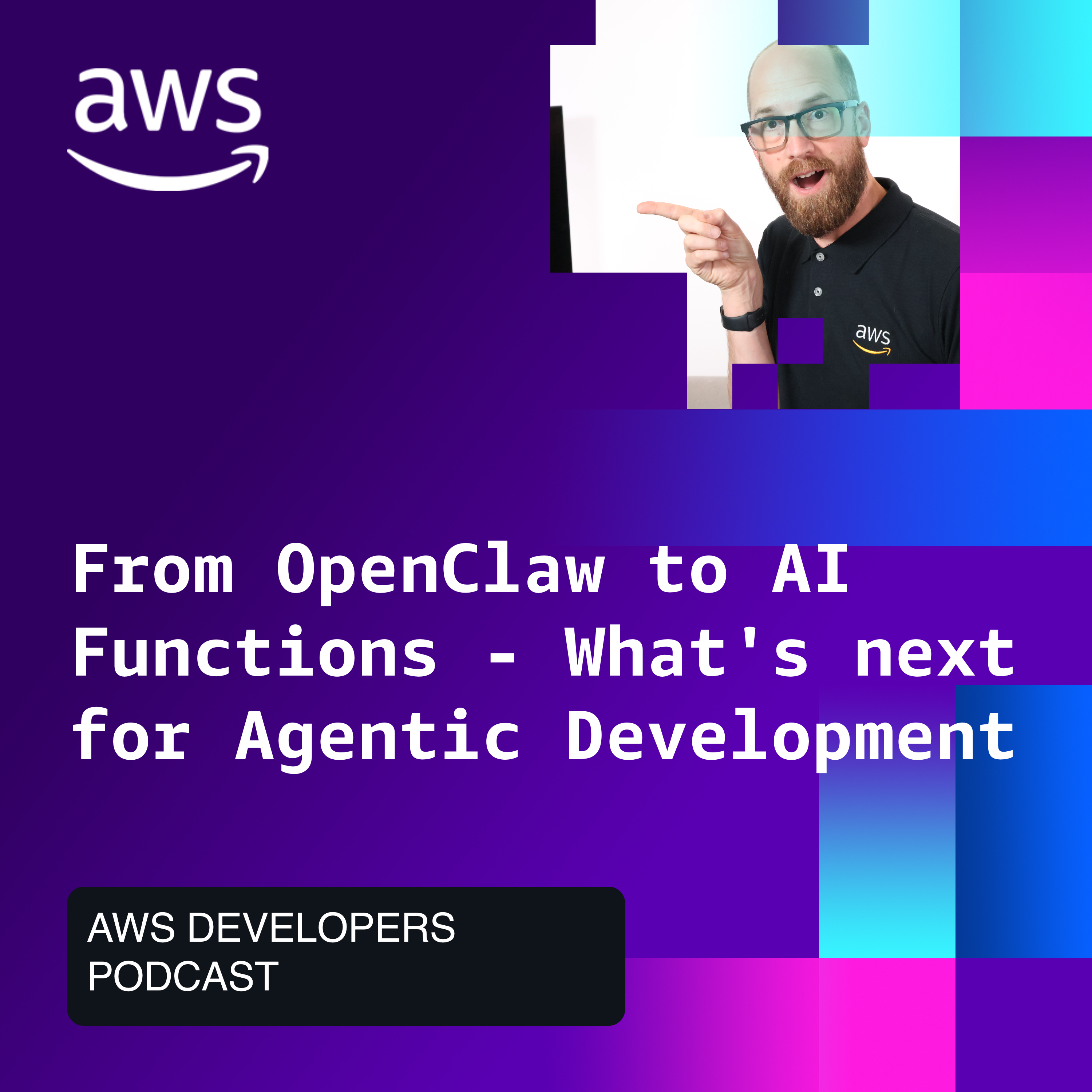
Mike Chambers: From OpenClaw to AI Functions — What's Next for Agentic Development
Feb 2501:19:12Tap to summarizeMike Chambers is back — calling in from the other side of the globe — and he brought a lot to unpack. We pick up threads from our first conversation and follow them into genuinely exciting (and occasionally mind-bending) territory. We start with OpenClaw, the open-source agentic framework that took the developer world by storm. Mike shares his take on why it happened now — not just what it is — and why the timing was almost inevitable given how developers had been quietly experimenting with local agents for the past year. Then we go deep on asynchronous tool calling — a project Mike has been working on since mid-2024 that finally works reliably, thanks to more capable models. The idea: let your agent kick off a long-running task, keep the conversation going naturally, and have the result arrive without interrupting the flow. Mike walks through how he built this on top of Strands Agents SDK and why he's planning to propose it as a contribution to the open-source project. We also explore Strands Labs and its freshly released AI Functions — a genuinely new way to think about embedding generative capability directly into application code. Is this Software 3.1? Mike makes the case, and Romain pushes back in the best way. The episode closes with a look ahead: agent trust, observability with OpenTelemetry, and a thought experiment about what software might look like in five years if the execution environment itself becomes a model.With Mike Chambers, Senior Developer Advocate, AWSMike's blog post on Async Agentic ToolsMike's blog post on Software 3.1 & AI FunctionsStrands Labs GitHub organizationStrands Labs — AI Functions repoStrands Agents SDKMorgan Willis — Deploying Secure, Production-Ready Agents
Transcribe →
Chris Miller on AI Coding, Multi-Agent Systems, and the Silicon Valley Vibe
Feb 1801:00:54Tap to summarizeJoin us for an engaging conversation with Chris Miller, an AWS Hero since 2021 and AI Software Engineer at Workato. Chris shares his journey from accidentally winning a DeepRacer competition to becoming a community leader in the San Francisco Bay Area. We dive deep into the realities of AI-assisted development, exploring multi-agent architectures, the Road to re:Invent hackathon experience, and what it's really like to be building in Silicon Valley's AI boom. Discover how Chris moved from DeepRacer champion to AWS Hero and community leader, his experience building a multi-agent imposter architecture featuring Jeff Barr, Swami, and Werner Vogels for the Road to re:Invent Hackathon, and the reality of moving beyond 'vibe coding' to responsible AI development. Learn about multi-agent orchestration patterns, token management, recursion limits, and the current state of AI development in San Francisco. Chris shares insights on developer tools like Kiro, the Strands framework, autonomous agents, and best practices for code review, testing, and transparency in AI-generated code. Whether you're exploring AI-assisted development, building multi-agent systems, or curious about the Silicon Valley AI scene, this conversation offers practical insights from the trenches.With Chris Miller, AWS Hero (since 2021), AI Software Engineer at Workato, User Group LeaderAWS Builder Loft San FranciscoAWS Hero ProgramAWS Community BuildersChris Miller on BuilderCenterKiro IDE - AI-powered development environmentStrands - Multi-agent frameworkAWS BedrockAWS Amplify Gen 2SST - Infrastructure as CodeTheo Brown YouTube ChannelBenn Jordan YouTube ChannelWorking Backwards - Book on Amazon leadership principles
Transcribe →
From MCP to Multi-Agents: The Evolution of Agentic AI (and What's Next)
Feb 1101:08:00Tap to summarizeMike Chambers reflects on 2025 as 'the year of agents' - though not quite in the way he predicted. From MCP's rocky launch to the rise of AI coding assistants, Mike shares hard-won lessons about what actually worked in production, the security challenges developers face, and why the future might be about giving agents access to filesystems and command lines rather than endless tool definitions. Discover how MCP evolved from standard IO to becoming the plugin ecosystem for IDEs, the security concerns around giving agents local machine access, and context overloading challenges. Mike walks through the framework evolution from heavy prompt engineering to model-centric approaches, why he abandoned his own framework for Strands Agents, and the rise of lightweight frameworks like ADK, Strands, and Spring AI. Learn about the real agent success story of 2025: AI coding assistants like Kiro, and Claude Code expanding beyond just code. Mike shares insights on agent skills for progressive disclosure, giving agents filesystem and command line access, long-running multi-agent systems, and moving from laptop productivity to production-scale agents.With Mike Chambers, Senior Developer Advocate, AWSMCP (Model Context Protocol)Strands Agents - Lightweight agent frameworkKiro IDE - AI-powered development environmentDeep Learning AI Conference (AI Dev 25)NeurIPS ConferenceAWS Developers YouTube Channel
Transcribe →
Spec-Driven Development in Practice: A AWS Hero Journey
Feb 400:59:00Tap to summarizeChristian, AWS Hero and Solution Architect at Bundesliga, shares his journey and hard-won lessons from adopting spec-driven development with AI coding assistants at enterprise scale. Learn when to use specs vs vibe coding, how to build effective steering documents, and practical strategies for helping engineering teams transition from traditional development to AI-assisted workflows. Discover the difference between spec-driven and vibe coding approaches, when to use each, and how to build effective steering documents that guide AI assistants. Christian shares enterprise adoption strategies that actually work, including the show-and-tell approach to reduce AI adoption fear, treating AI as a peer teammate, and creating centers of excellence for sharing learnings. We explore custom agents and the single responsibility principle, context engineering over prompt engineering, and dive into exciting re:Invent announcements like Lambda Durable Functions. Whether you're leading engineering teams, exploring AI-assisted development, or looking to optimize your development workflow, this conversation offers practical insights from real-world enterprise implementation.With Christian, AWS Hero, Solution Architect at Bundesliga, Creator of promptz.devpromptz.dev - Community library of prompts and agentsKiro IDE - AI-powered development environmentKiro Powers - Packaged capabilities for specialized tasksStrands Agents - Framework for building agentic applicationsLambda Durable Functions - Long-running workflow capabilityAWS Community BuildersAWS HeroesAccelerate by Nicole Forsgren, Jez Humble, and Gene KimContinuous Discovery Habits by Teresa TorresTeam Topologies by Matthew Skelton and Manuel Pais
Transcribe →
Native Speed, Modern Safety: Swift for Backend Development
Jan 2900:49:01Tap to summarizeJoin us as we explore Swift beyond iOS with Sebastien Stormacq, AWS Developer Advocate and Swift specialist. Discover why Swift is becoming a compelling choice for server-side development, offering native compilation, memory safety without garbage collection, and modern concurrency features that deliver exceptional performance and cost efficiency. Seb shares how Apple processes billions of daily requests using Swift on AWS infrastructure, achieving 40% better performance and 30% lower costs when migrating services from Java. We dive into the technical advantages that make Swift competitive with traditional backend languages, explore the vibrant server-side ecosystem with frameworks like Vapor and Hummingbird, and discuss practical implementations including serverless architectures on AWS Lambda. Whether you're a Swift developer curious about server-side possibilities, a full-stack developer looking to unify your tech stack, or a backend engineer evaluating language options, this conversation offers practical insights into Swift's capabilities beyond the client.With Sebastien Stormacq, Principal Developer Advocate, AWSDownload the Swift Expert Power for KiroThe Visual Studio Code extension for Swift is now available on Open VSX RegistryInterview with Chris Lattner: From Swift to Mojo and High-Performance AI EngineeringSwift AWS Lambda Runtime RepositorySwift on Lambda TutorialSwift Bedrock LibrarySwift Bedrock Library DocumentationSwift.orgGetting Started with Swift
Transcribe →
Local Unit Testing for Step Functions
Nov 2800:39:28Tap to summarizeJoin us as we dive into the new local unit testing capabilities for AWS Step Functions with Jas Narula, Product Manager from the Step Functions team. We explore how developers can now test their workflows locally using the enhanced Test State API, moving beyond the limitations of the discontinued Step Functions Local container. Jas walks us through the new mocking capabilities, support for advanced states like Map and Parallel, and how this API-based approach gives you the same production runtime for testing. We also discuss the partnership with LocalStack for offline testing, the developer experience with popular testing frameworks like PyTest and Jest, and why this new approach makes Step Functions development more like traditional test-driven development. Whether you're orchestrating Lambda functions, calling Bedrock APIs, or building complex business workflows, this episode shows you how to test with confidence before deploying to the cloud.With Jas Narula, Product Manager, AWSStep FunctionsBlog: Enhanced local testing in AWS Step FunctionsLocalStack
Transcribe →
Building AWS Builder Center: Architecture Lessons from a Large-Scale Community Platform
Nov 2100:42:11Tap to summarizeIn this episode, we dive deep into AWS Builder Center, the new community platform designed to consolidate all AWS developer resources into one central hub. Roopal Jain, Software Development Engineer on the Builder Center team, explains how this platform brings together previously scattered AWS community properties like re:Post, Skill Builder, and community.aws into a unified experience for builders. Beyond exploring what Builder Center offers - from articles and events to toolboxes organized by programming language - we take a technical deep dive into how the team built this large-scale web application. Rupal shares the architectural decisions behind their serverless microservices approach, the challenges of integrating Neptune graph database for social features like user following, and creative solutions for handling dual authentication methods in API Gateway. The conversation reveals real-world implementation challenges that many developers face, from VPC networking complexities to service-to-service authentication patterns. We also discuss Builder ID, AWS's new individual identity system, and get a glimpse of what's coming next for the platform.With Roopal Jain, Sr. Software Developer, AWSBuilder center
Transcribe →
Amazon ECS Managed Instances for containerized applications
Nov 1400:39:38Tap to summarizeIn this episode, we dive deep into Amazon ECS Managed Instances, a new compute option that bridges the gap between EC2 and Fargate for container deployments. Our guest Olly Pomeroy, AWS Container Specialist, explains how this new offering provides the flexibility of EC2 with the managed experience of Fargate. Learn about the architecture behind ECS Managed Instances, its pricing model, and how it handles instance lifecycle management automatically. Discover how AWS manages the underlying operating system using Bottlerocket OS, providing enhanced security through a read-only file system. Whether you're running GPU workloads, need specific instance types, or want to optimize costs, this episode covers everything you need to know about this new deployment option for containerized applications.With Olly Pomeroy, Senior Specialist Solution Architect, Containers, AWSLaunch: Announcing Amazon ECS Managed Instances for containerized applicationsAmazon ECSBottleRocketPodcast: the platform at Adobe
Transcribe →