
Podcast
Bad Dads Film Review
Hosted by Bad Dads · EN
Several years ago 4 self confessed movie fanatics ruined their favourite pastime by having children. Now we are telling the world about the movies we missed and the frequently awful kids tv we are now subjected to. We like to think we're funny. Come and argue with us on the social medias.
Twitter: @dads_film
Facebook: BadDadsFilmReview
Instagram: instagram.com/baddadsjsy
www.baddadsfilm.com
64episodes
Episodes
Newest firstAll episodes

Midweek Mention... Gods and Monsters
Mar 1100:22:08Tap to summarizeThis week's Midweek Mention takes us somewhere unexpectedly moving — Bill Condon's Gods and Monsters (1998), a fictionalized account of the final days of James Whale, the British director who gave the world Frankenstein and Bride of Frankenstein. Sir Ian McKellen is extraordinary as the ageing, ailing Whale — a man whose health is failing, whose memories are fragmenting, and who has grown too tired to pretend he cares about social niceties. Into his life stumbles Clayton Boone (Brendan Fraser, in peak movie-star form), a gardener and former marine who becomes an unlikely companion in Whale's last chapter. What unfolds is a quiet, beautifully lit character study about aging, depression, homosexuality in 1950s Hollywood, and what happens when two very different men decide to be honest with each other. Lynn Redgrave as Hannah the disapproving housekeeper practically steals every scene she's in. There's strip journalism, a gas mask, a Hollywood party with Princess Margaret, and a swimming pool. Whale directed horror. He understood that tragedy works best when it makes you laugh first. Budget: $10M | Box office: ~$6.5M | BBC Films co-production | Premiered at Sundance Verdict: Strong recommend from Sidey and Cris. Dan missed it but is already planning to watch it.You can now text us anonymously to leave feedback, suggest future content or simply hurl abuse at us. We'll read out any texts we receive on the show. Click here to try it out!We love to hear from our listeners! By which I mean we tolerate it. If it hasn't been completely destroyed yet you can usually find us on twitter @dads_film, on Facebook Bad Dads Film Review, on email at baddadsjsy@gmail.com or on our website baddadsfilm.com. Until next time, we remain... Bad Dads
Transcribe →
Corporate & Tech Jargon & Thunderbolts*
Mar 601:07:09Tap to summarizeThis week we go fully corporate: Top 5 Corporate & Tech Jargon — the phrases designed to sound like progress while delivering absolutely nothing. We’re talking circle back, take it offline, pivot, blue-sky thinking, synergy, and the whole “results-driven ecosystem” dialect spoken exclusively by people who describe themselves as “thought leaders” on LinkedIn.Then we hit the main feature: Thunderbolts* — Marvel’s surprisingly sincere group-therapy movie disguised as an action film. Think The Breakfast Club, but everyone’s a government assassin and the villain is basically existential depression with god-tier powers.Standard warning: we spoil. A lot. With confidence.What we talked aboutTop 5 Corporate / Techno-babbleWhy corporate language exists: credibility theatre, hiding behind vague phrasing, and “sounding senior” without committing to anything.The difference between useful technical language vs bullshit camouflage (and why “take it offline” can mean “I’m seething”).Techno-babble in movies: Back to the Future’s flux capacitor, Avengers physics word-salad (quantum tunneling, heavy ion fusion, Coulomb barrier), and classic Star Trek “modulate the phase variance” nonsense.The “pivot” moment that sneaks into real life: Friends and the cursed sofa stairwell.Thunderbolts*Why this one lands better than recent Marvel: less quippy noise, more consistent tone, and a third act that’s actually about something.The set-up: a clean-up operation that becomes a trap, plus Marvel’s best “oh, we’re definitely all going to die” elevator pitch.Bob / Sentry / The Void: a superhuman project gone wrong, and a villain that manifests as the darkest version of yourself.The big swing: a finale that avoids sky-portals and CGI armies and instead goes for inner trauma + solidarity (yes, basically an emotional intervention).The asterisk explained: the film’s marketing payoff and the “New Avengers” naming chaos.The rough edges: runtime bloat, plot convenience, and the return of accents that should’ve stayed retired.Bonus life adminWalking football cup semi-final madness (knees sacrificed, glory secured).Random watches: Tarot (not recommended), “Lords of Metal” (unexpectedly wholesome), and a bit of hype for upcoming Peaky Blinders and Baz Luhrmann’s Elvis project.If you’re even slightly Marvel’d-out but still want something that tries to have a heart, Thunderbolts* is one of the more watchable recent entries — and if you’ve ever died inside hearing “let’s circle back,” the Top 5 segment is basically free therapy.You can now text us anonymously to leave feedback, suggest future content or simply hurl abuse at us. We'll read out any texts we receive on the show. Click here to try it out!We love to hear from our listeners! By which I mean we tolerate it. If it hasn't been completely destroyed yet you can usually find us on twitter @dads_film, on Facebook Bad Dads Film Review, on email at baddadsjsy@gmail.com or on our website baddadsfilm.com. Until next time, we remain... Bad Dads
Transcribe →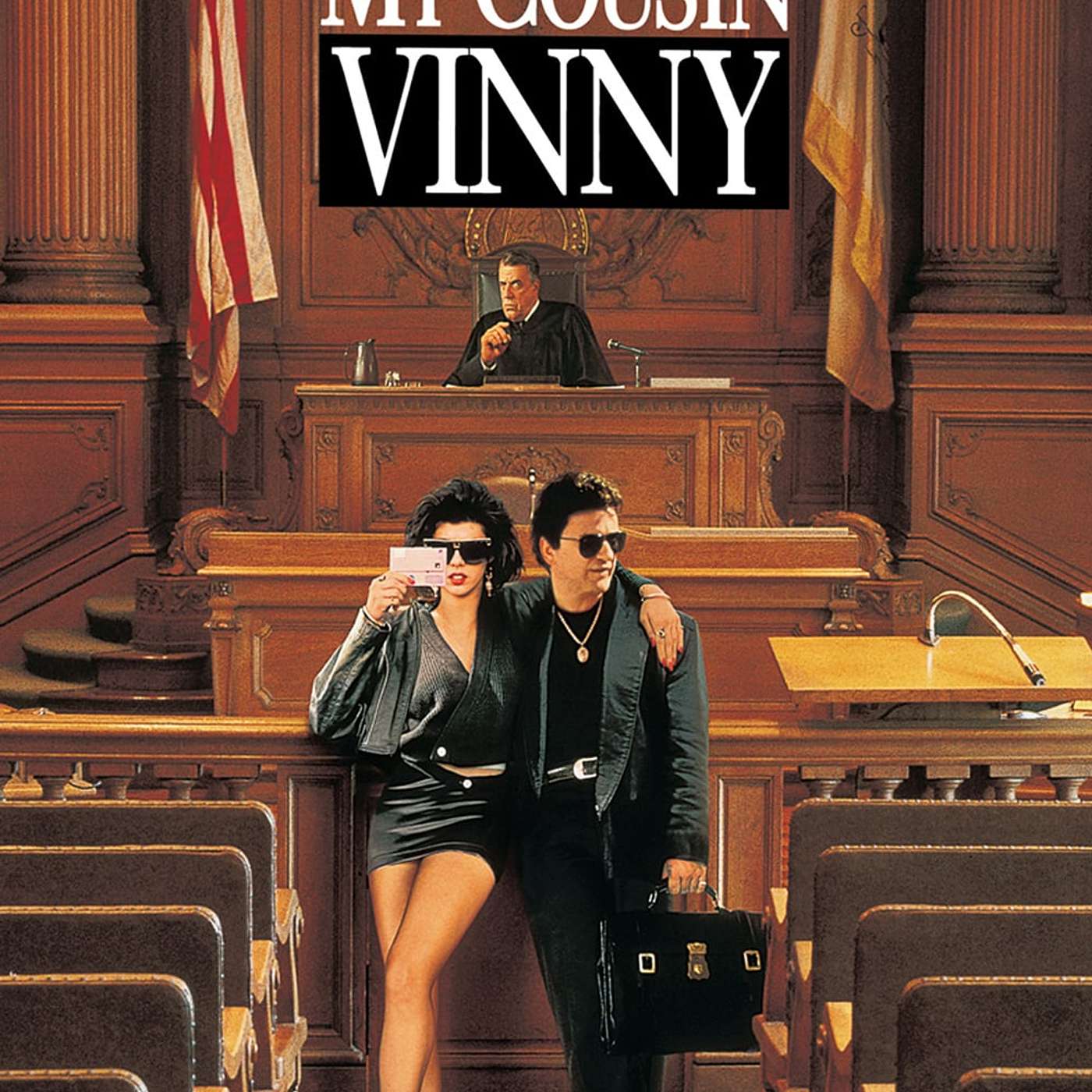
Midweek Mention... My Cousin Vinny
Mar 400:27:40Tap to summarizeBad Dads Film Review goes full courtroom chaos this week with My Cousin Vinny (1992) — the fish-out-of-water legal comedy where two broke New York kids take a wrong turn into the Deep South… and somehow end up charged with murder because of a misunderstanding that starts with a can of tuna.Sidey finally ticks off a long-standing gap (he’d never seen it), and we break down why this film still works: a tight premise, a brilliant “outsider vs small-town system” vibe, and a courtroom structure that’s way smarter than it has any right to be for a broad comedy. Joe Pesci turns up looking like he’s wandered in from Goodfellas in cowboy boots, tries to blag his way through Alabama procedure, and gets repeatedly threatened with contempt by an all-time stern judge (Fred Gwynne, aka Herman Munster).What we talked aboutThe opening setup: poverty-tour Americana, the road trip, and the tuna “crime of the century” that accidentally feeds the tension.Mistaken confession comedy: how the boys basically incriminate themselves… for the wrong offence.Vinny’s legal “credentials”: six tries at the bar, no trial experience, and a running battle with courtroom etiquette (“judge” vs “your honour”, the suit, the procedure handbook).The judge dynamic: why Fred Gwynne is the perfect straight man and how the contempt/lock-up beats become a recurring gag.Mona Lisa Vito (Marisa Tomei): the film’s secret weapon — and why her role isn’t just “girlfriend”, she’s the brain that solves the case.Courtroom mechanics: cross-exams, witness deconstruction, and why parts of this film get referenced in law-school conversations as a simple example of dismantling testimony.The car/tire evidence: the key pivot from “they’re screwed” to “hang on…” and the satisfying payoff when the story flips.Does it hold up? Runtime bloat (two hours is generous for this kind of comedy), how a lot of the plot collapses in the internet era, and why it’s surprisingly not as offensively “of its time” as plenty of early-90s comedies.The Oscar chat: why Tomei winning Best Supporting Actress felt weird for a comedy… and whether it was actually deserved.Standard warning: we spoil the beats as we go, because that’s the whole fun of a courtroom film.If you want a movie that’s basically “competence porn disguised as a daft comedy” — where the final win is earned by actual reasoning rather than magic — this one’s worth your time. (And yes: Tomei still, somehow, only gets more powerful with age.)Streaming note from the episode: available on Disney+.You can now text us anonymously to leave feedback, suggest future content or simply hurl abuse at us. We'll read out any texts we receive on the show. Click here to try it out!We love to hear from our listeners! By which I mean we tolerate it. If it hasn't been completely destroyed yet you can usually find us on twitter @dads_film, on Facebook Bad Dads Film Review, on email at baddadsjsy@gmail.com or on our website baddadsfilm.com. Until next time, we remain... Bad Dads
Transcribe →
Matt’s & The Talented Mr Ripley
Feb 2700:51:47Tap to summarizeBad Dads Film Review heads to the Italian Riviera this week for The Talented Mr. Ripley (1999) — a sun-drenched, jazz-soaked psychological thriller where gorgeous people do terrible things, and the worst person in the room still somehow isn’t the guy committing the murders.We follow Tom Ripley (Matt Damon), a small-time grifter with big social ambitions, who’s handed a golden ticket: travel to Italy and convince trust-fund prince Dickie Greenleaf (prime Jude Law, unfairly beautiful) to come home. Tom doesn’t just want Dickie’s friendship — he wants Dickie’s life. And once he’s tasted that world of money, effortless charm, and endless leisure, he’s willing to do whatever it takes to stay in it.What we talked about“Great Gatsby, but murderous”: Tom as the outsider who doesn’t just observe the rich — he tries to become them (and wear their face if needed).The grift mechanics: the Princeton jacket con, the “research” phase, practicing mannerisms and music tastes, and how the film turns impersonation into a craft.The seduction of wealth: why you’re weirdly happy to watch Tom infiltrate a circle of vapid, obscenely privileged characters.Obsession and desire: the homoerotic undertones, Tom’s fixation on Dickie, and how the film frames identity as something you can steal… if you’re ruthless enough.Set-piece escalation: the boat trip and the brutal turning point; the forged signatures, dual hotel check-ins, staged evidence, and the constant “one more lie to cover the last lie” tension.Freddy as the threat (Philip Seymour Hoffman): the first person with enough real-world instincts to sniff out “new money” fraud — and what happens when he pushes it.The ending sting: Tom “gets away with it”… but the price is isolation, paranoia, and the realization that the spoils aren’t worth much when you can’t live as yourself.Aging and attitudes: how the film plays in 2026 — including a chat about whether some of the sexuality/“homosexual as threat” framing feels dated.Plus: we somehow opened with a Top 5 Mats segment that should not work… and absolutely does.Standard Bad Dads warning: spoilers throughout, strong language, and the kind of moral compass that’s been left outside on a bath mat since the Blair government.You can now text us anonymously to leave feedback, suggest future content or simply hurl abuse at us. We'll read out any texts we receive on the show. Click here to try it out!We love to hear from our listeners! By which I mean we tolerate it. If it hasn't been completely destroyed yet you can usually find us on twitter @dads_film, on Facebook Bad Dads Film Review, on email at baddadsjsy@gmail.com or on our website baddadsfilm.com. Until next time, we remain... Bad Dads
Transcribe →
Midweek Mention... Margaret
Feb 2500:17:29Tap to summarizeThe premise (simple, but the film isn’t): A privileged but messy NYC teenager, Lisa (Anna Paquin), causes a moment of distraction that leads to a bus hitting and killing a woman (Allison Janney). In the immediate aftermath she lies to the police—claiming the light was green—helping the driver (Mark Ruffalo) avoid consequences. The rest of the film is Lisa spiralling through guilt, grief, anger, and a need to “make it right,” while the city and everyone around her keep moving.What we talked about:Peak New York energy: classrooms full of political debate, constant noise, constant arguing, constant opinion. It feels like a movie made by New York about New York.The accident scene is brutal and effective: the sound design, the “oh God she’s under the bus—no she isn’t” reveal, the shock of the detached leg detail.Lisa as a catalyst/chaos engine: she’s manipulative early (cheating, playing people), then becomes obsessive—fixated on getting the driver off the road.Adults failing her, repeatedly:Her mum is emotionally absent (Broadway ambitions, new relationship), and the mother–daughter conflict goes nuclear (including a shocking insult).The system shrugs: the driver is exonerated, and later the legal route becomes a cold negotiation rather than “justice.”The legal thread: the case can only move via next-of-kin dynamics; settlement money becomes the lever; but discipline for Ruffalo’s driver is off the table because it implies guilt.Matt Damon “week” irony: Damon is barely in it—yet appears in the trailer—making the pick feel like a forced “hipster” choice.The uncomfortable Damon subplot: a teacher boundary-crossing storyline that lands badly and makes the film feel grimier, not deeper.Performances / cast notes: Big ensemble, lots of “oh wow, they’re in this” energy: Paquin carries it; Ruffalo is an outright asshole; Allison Janney’s presence is seismic even with limited time; plus Jean Reno, Matthew Broderick, and more orbiting the core. Pacing / vibe: Overlong, heavy, and (for us) pretentious rather than profound—with the most compelling parts being the accident’s immediacy and the moral rot that follows. Theatrical cut runs about 149 minutes, with a longer 186-minute extended cut also out there. Verdict from us: Lukewarm-to-negative recommend. Strong craft and acting in places, but frustratingly long, emotionally abrasive, and not remotely worth it as a “Matt Damon week” entry.You can now text us anonymously to leave feedback, suggest future content or simply hurl abuse at us. We'll read out any texts we receive on the show. Click here to try it out!We love to hear from our listeners! By which I mean we tolerate it. If it hasn't been completely destroyed yet you can usually find us on twitter @dads_film, on Facebook Bad Dads Film Review, on email at baddadsjsy@gmail.com or on our website baddadsfilm.com. Until next time, we remain... Bad Dads
Transcribe →
Train Dreams
Feb 2000:33:44Tap to summarizeThis week’s pick is Train Dreams: a quiet, meditative Netflix drama adapted from Denis Johnson’s novella, following the life of Robert Grainer (Joel Edgerton) — a logger and railroad worker drifting through early 20th-century America. It’s the kind of film that feels like a memory: sparse dialogue, heavy atmosphere, and a sense of time moving faster than any one person can keep up with.The opening sets the tone immediately: rail tracks, a tunnel, Will Patton’s voiceover, and an image that pays off later — boots nailed to a tree, slowly swallowed by nature. From there it’s a whole life in fragments: brutal work camps, quiet domestic joy, sudden violence, and the long, haunted aftermath of loss.What we talked aboutA “Western” that isn’t really a Western — frontier vibes at first, then you realise you’re watching the world modernise around one man who can’t.Work as a lifetime trap: logging season, railroad labour, the “build it for someone else” feeling, and the way corporations just roll on regardless.The Chinese labour thread and the early sequence where a Chinese worker is taken and thrown from the bridge — and how that moment sits with Grainer for decades.William H. Macy as the old explosives guy: funny, weary, and then brutally, pointlessly lost.The wildfire: Grainer racing home, the cabin gone, wife and daughter gone off-screen — and the film refusing to give closure, so you feel the same unresolved grief he does.The recurring motif of time erasing everything: the boots, the forest reclaiming, bridges made obsolete, progress moving on without sentiment.The late-film whiplash into modernity: Grainer seeing spaceflight on a shop-window TV, then taking a plane ride — an old man briefly touching the future.Nick Cave over the end credits, and how the score and natural lighting carry the whole thing.VerdictA beautifully shot, melancholy life-story film: quiet, heavy, and surprisingly moving. Joel Edgerton is superb, and the movie’s best trick is making the audience feel the scale of time — and the smallness of one person inside it.Strong recommend, especially if you’re in the mood for something reflective rather than plot-driven.You can now text us anonymously to leave feedback, suggest future content or simply hurl abuse at us. We'll read out any texts we receive on the show. Click here to try it out!We love to hear from our listeners! By which I mean we tolerate it. If it hasn't been completely destroyed yet you can usually find us on twitter @dads_film, on Facebook Bad Dads Film Review, on email at baddadsjsy@gmail.com or on our website baddadsfilm.com. Until next time, we remain... Bad Dads
Transcribe →
Midweek Mention... Road House
Feb 1800:20:36Tap to summarizeThis week we head into full remake territory with Doug Liman’s glossy, bone-crunching update of Road House. Jake Gyllenhaal steps into Patrick Swayze’s boots as Dalton: a drifter, ex–UFC fighter, and walking concussion who takes a job cleaning up a Florida Keys bar where violence isn’t a possibility — it’s a nightly guarantee.From the opening underground fight circuit to the neon chaos of the Road House itself, the film wastes no time establishing its tone: sunburnt, hyper-kinetic, knowingly ridiculous action with a wink. Dalton isn’t just muscle — he’s a philosopher-bouncer trying (and often failing) to de-escalate a town addicted to throwing punches.What we talked aboutThe remake question: why revisit a cult classic, and does this version justify its existence?Gyllenhaal’s performance — shredded, funny, and oddly charming as a smiling human weaponThe bar as a war zone: nonstop fights that feel both brutal and cartoonishDoug Liman’s direction and the slick, CG-enhanced fight choreographyConor McGregor as the chaos agent villain — distracting stunt casting or perfect cartoon henchman?The movie’s throwback 80s energy: big action, simple stakes, zero realismThe strange lack of romance in such a sweaty, hyper-physical filmStreaming vs cinema: whether this deserved a theatrical releaseVerdictIt’s loud, dumb, stylish, and fully aware of it. Road House doesn’t try to outthink the original — it turns the dial toward modern action excess and lets Gyllenhaal carry the vibe. Not high art, but a breezy, violent crowd-pleaser that knows exactly what it is.Strong recommend if you want neon-lit mayhem, broken bones, and a remake that leans into its own stupidity instead of apologising for it.You can now text us anonymously to leave feedback, suggest future content or simply hurl abuse at us. We'll read out any texts we receive on the show. Click here to try it out!We love to hear from our listeners! By which I mean we tolerate it. If it hasn't been completely destroyed yet you can usually find us on twitter @dads_film, on Facebook Bad Dads Film Review, on email at baddadsjsy@gmail.com or on our website baddadsfilm.com. Until next time, we remain... Bad Dads
Transcribe →
Roofman
Feb 1300:19:37Tap to summarizeThis week Sidey watched Roof Man on a flight—and it turned out to be a surprisingly breezy true-crime oddity: part heist caper, part rom-com, all built around one ridiculous (but real) idea.What it’s aboutChanning Tatum plays Jeffrey Manchester, a struggling Army vet and dad who turns his “situational awareness” into a criminal superpower. His method is brutally simple: hammer through roofs, drop in overnight, hit fast-food joints for cash, vanish. After dozens of robberies he finally gets caught—then pulls off a genuinely wild prison escape and goes to ground in the last place you’d expect… a Toys “R” Us.What we talked aboutThe appeal (and absurdity) of the “roof entry” MO—and why it’s terrifying in real lifeThe prison escape: routine, observation, and one perfectly timed delivery runLiving in plain sight: how the Toys “R” Us hideout becomes a weird little home baseThe moral wobble: the film frames him as charming, but these are still violent, traumatic crimesThe Kirsten Dunst factor: why she works here, and how the romance complicates everythingWhy it’s a great “plane movie”: short, watchable, and doesn’t outstay its welcomeVerdictA light, easy watch with solid performances and a bizarre true-story hook—even if the tone sometimes smooths over how grim the real-world version would feel. Strong recommend if you want something fun-adjacent and fast-moving (especially at 30,000 feet).You can now text us anonymously to leave feedback, suggest future content or simply hurl abuse at us. We'll read out any texts we receive on the show. Click here to try it out!We love to hear from our listeners! By which I mean we tolerate it. If it hasn't been completely destroyed yet you can usually find us on twitter @dads_film, on Facebook Bad Dads Film Review, on email at baddadsjsy@gmail.com or on our website baddadsfilm.com. Until next time, we remain... Bad Dads
Transcribe →
Midweek Mention... The RIP
Feb 1100:31:31Tap to summarizeA gritty, twisty one-night siege thriller that actually looks great (yes, you can see what’s happening). The RIP throws Matt Damon and Ben Affleck into a paranoid, internal-corruption nightmare where everyone feels suspicious and every conversation sounds like it has a second meaning.The setupMiami PD captain Jackie Veles is executed by masked hitters after sending one last message and ditching her phone in the river. The FBI descends on the TNT squad (Tactical Narcotics Team), grilling Damon’s Dane and Affleck’s JD Byrne with a barrage of insinuations—then drops a key reveal: the lead agent is Affleck’s brother (Scott Adkins), and it gets physical.What we dig intoThe “big score” tip: Dane gets a text about serious cash—then tells each teammate a different number (immediately sketchy).The money house: a run-down suburban place with a single pristine attic space hiding buckets of cash—enough to bring cartel heat and dirty cops out of the woodwork.Procedure vs panic: phones confiscated, on-site double counts, and the creeping feeling that everyone has an angle.Corruption lore: VCAT baggage, rumours of a cop “crew” that hunts cash stashes, and the sense the real enemy is inside the system.The siege and the switch: masked shooters, cartel contact, and the film’s central fun: constantly reassigning blame as the night spirals.Motifs that land (and one that doesn’t): the tattoo mantra (“Are we the good guys? We are, and always will be”), the “see another sunrise” thread… and the slightly daft full-circle beat at the end.The verdictThis is Knives Out with tattoos and automatic weapons—a clean, propulsive plot, strong tension, and a solid Damon/Affleck double-act. It’s not subtle about cop-mythology, but as a contained, twist-forward thriller with a great cast and tight pacing, it’s an easy Strong Recommend.You can now text us anonymously to leave feedback, suggest future content or simply hurl abuse at us. We'll read out any texts we receive on the show. Click here to try it out!We love to hear from our listeners! By which I mean we tolerate it. If it hasn't been completely destroyed yet you can usually find us on twitter @dads_film, on Facebook Bad Dads Film Review, on email at baddadsjsy@gmail.com or on our website baddadsfilm.com. Until next time, we remain... Bad Dads
Transcribe →
Freaky Tales
Jan 3000:27:05Tap to summarizeWe went in expecting a messy anthology and came out with a genuinely original love letter to Oakland, 1987 — four stories that start as separate vibes and then click together in the final act like a mixtape that suddenly makes sense.The setup is pure mood: people spilling out of a cinema after The Lost Boys, a bright green “something in the air” glow hanging over the city, and a pulpy, comic-book style that flirts with Sin City / Scott Pilgrim energy. It’s stylish, funny, and—when it wants to be—ferociously violent.What we cover in the episodeThe anthology structure: four chapters that interconnect and payoff later, with Oakland culture (music, venues, street energy) doing most of the heavy lifting.Chapter 1: “Strength in Numbers – The Gilman Strikes Back” A straight-edge punk club gets terrorised by Nazi skinheads… and the punks decide they’re not taking it anymore. We talk wish-fulfilment retribution, the myth-making tone, and the film’s “300-style” brawl choreography.Chapter 2: “Don’t Fight the Feeling” Two women from rap group Danger Zone get their shot at a battle with Too $hort — and turn it into an 80s feminist mic-drop. The ice-cream shop scene with a vile, racist cop is one of the most uncomfortable (and effective) bits in the whole film.Chapter 3: “Born to Mack” (Pedro Pascal) A one-last-job crime thread that flips into tragedy and revenge. We dig into how this segment links the others, and why it feels like the “spine” of the film.Chapter 4: “The Sleepy Floyd Story” A real NBA legend (29 points in a quarter) gets turned into a Kill Bill-style revenge myth — samurai swords, home-invasion carnage, and a final twist that goes full pulpy sci-fi.The big theme: modern, direct, and not subtle — Nazis can get in the bin. The film turns that into catharsis, and it lands.The verdictThis is a labour-of-love movie: inventive, ridiculously well-styled, packed with music, and shot so you can actually see what’s happening in dark scenes (rare these days). It does get very bloody—especially the final stretch—but it’s never boring.If you want an episode with hype, plot breakdown, and us arguing where the film crosses from “clever urban legend” into “absolute madness,” this one’s for you.You can now text us anonymously to leave feedback, suggest future content or simply hurl abuse at us. We'll read out any texts we receive on the show. Click here to try it out!We love to hear from our listeners! By which I mean we tolerate it. If it hasn't been completely destroyed yet you can usually find us on twitter @dads_film, on Facebook Bad Dads Film Review, on email at baddadsjsy@gmail.com or on our website baddadsfilm.com. Until next time, we remain... Bad Dads
Transcribe →