
Podcast
Based Camp | Simone & Malcolm Collins
Hosted by Based Camp | Simone & Malcolm Collins · EN
Based Camp is a podcast focused on how humans process the world around them and the future of our species. That means we go into everything from human sexuality, to weird sub-cultures, dating markets, philosophy, and politics.
Malcolm and Simone are a husband wife team of a neuroscientist and marketer turned entrepreneurs and authors. With graduate degrees from Stanford and Cambridge under their belts as well as five bestselling books, one of which topped out the WSJs nonfiction list, they are widely known (if infamous) intellectuals / provocateurs.
If you want to dig into their ideas further or check citations on points they bring up check out their book series. Note: They all sell for a dollar or so and the money made from them goes to charity. https://www.amazon.com/gp/product/B08FMWMFTG
basedcamppodcast.substack.com
basedcamppodcast.substack.com
138episodes
Episodes
Newest firstAll episodes

New Pope Speed Runs Schism By Excommunicating SSPX
Jul 601:00:10Tap to summarizeMalcolm and Simone Collins break down the Vatican’s aggressive excommunication of the Society of St. Pius X (SSPX) after they consecrated bishops without papal approval. They discuss why the Church is cracking down on the Latin Mass, traditional Catholics, and the fastest-growing, highest-fertility segment of the faith — while selling off convents and schools.Topics include: the capture of the Vatican, Vatican II reforms and contradictions, the Latin Mass vs. Novus Ordo, demographic collapse in mainstream Catholicism, monetary incentives for decline, parallels with the Anglican realignment/GAFCON schism, and why institutional recapture through demographics may be nearly impossible.Show NotesAP News on July 2nd:“VATICAN CITY (AP) — The Vatican responded aggressively Thursday to a traditionalist group that consecrated bishops without the pope’s consent, declaring the Society of St. Pius X had formally broken with the Catholic Church. It excommunicated its bishops and priests, and warned its faithful that they too face the harshest sanctions in the church.By declaring a schism and extending excommunications to potentially thousands of Catholics, the Vatican’s doctrine office went above and beyond the minimum sanctions foreseen by the church’s canon law to respond to the consecrations Wednesday of four new bishops.The society, known by its acronym SSPX, celebrates the ancient Latin Mass and opposes the modernizing reforms of the Catholic Church, which it considers to be rife with heresies and errors. While a fringe movement on the Catholic right, the SSPX has been a thorn in the Vatican’s side for five decades because it claims to be even more Catholic than the Holy See.During a ritual-filled, five-hour Mass on Wednesday at its seminary in Econe, Switzerland, the SSPX consecrated four new bishops in direct defiance of Leo, who had urged the group to hold off for the sake of church unity. An estimated 15,500 people and their children attended, a sign that the SSPX has plenty of supporters who came from around the world knowing full well they were defying Rome.”The ExcommunicationIn Catholic teaching, excommunication does not equal being condemned to hell, nor is it understood as a declaration that a person is damned (Official theology has long insisted that only God judges the soul definitively; excommunication addresses external communion, not the internal state of grace.)* The current law treats it as a “censure,” not expulsion from the Church; an excommunicated person remains a baptized Catholic, still bound by obligations like Sunday Mass, but barred from receiving or administering sacraments and holding church offices* Its purpose is medicinal: a severe wake‑up call meant to prompt repentance and return to full communion, not a spiritual “execution.”* Most excommunications can be lifted by going to confession and receiving absolution from the appropriate authority (sometimes any priest, sometimes a bishop, sometimes the Holy See, depending on the offense).* Also, what is your take on the Vatican’s excommunication SSPX members? https://www.facebook.com/reel/776390925518377* https://www.disclose.tv/id/8klgxp4icx/* The decree promulgated in response was by far the harshest one yet* Leo hasn’t walked back traditiones custodes either* The clergy in Charlotte just appealed to Rome* The bishop took away the thriving Latin masses, restricting it to one small chapel in a corner of the diocese that can’t hold everyone* Banned altar rails* I think you are mistaken that high fertility means anything in the immediate term* I used to live on a block that had a public school that was a former Catholic parish school* The diocese sold it due to low enrollment* Selling off properties as they are shuttered makes money* I think a lot of religious leaders feel their job is quietly managing decline and not making too much fussAbout SSPX - Society of St. Pius XOrigins of SSPXThe Society of St. Pius X (SSPX) originated in 1970 in Switzerland as a priestly fraternity founded by Archbishop Marcel Lefebvre to preserve traditional Catholic priestly formation and liturgy in the wake of Vatican II.Ecclesial approval and early status* The local bishop of Fribourg, François Charrière, approved SSPX in 1970 as a “pious union of priests in the diocese,” initially on an experimental basis.* This early approval meant SSPX initially existed within the canonical structures of the Church, not as a breakaway group.* Rome initially sent visitors who gave favorable reviews of the seminary’s formation, underscoring that early tensions were not immediate.Rapid growth* As of 2025, SSPX reports about 1,482 members total (bishops, priests, seminarians, brothers).* Of these, around 733 priests (excluding bishops) belong to the Society.* Estimates place 600,000 or so faithful attending SSPX Masses worldwide.* Internally, SSPX news sites emphasize that the Society “has experienced constant growth” since 1970, with new locations opening every year.* In the United States, SSPX lists 20 priories and 103 chapels, plus retreat centers, which is “quite small” compared with hundreds of non‑SSPX parishes offering the TLM.Commentators sometimes point out that, by priestly headcount, SSPX would rank among the larger priestly religious congregations if fully recognized: one claim placed them around 5th after Jesuits, Franciscans, Benedictines, and Augustinians, based on ~700 priests. That’s meant to highlight how unusual it is for a group of that size to remain canonically irregular.The Birth RatesThere is strong evidence that Traditional Latin Mass (TLM) Catholics as a whole have higher fertility than other Catholics, but there is no hard, SSPX‑specific dataset that cleanly isolates “SSPX parishioners” from other TLM communities.The best quantitative data are for TLM vs. Novus Ordo Catholics, not SSPX vs. non‑SSPX:* A widely cited U.S. survey of Latin Mass attendees reported an average of 3.6 children per woman among TLM Catholics versus 2.3 among Catholics attending the ordinary (Novus Ordo) form.* Commentators describe this as “nearly 60% larger family size” for TLM participants relative to ordinary‑form parishioners.* Social‑science work on religiosity and fertility generally finds that more devout, frequently attending religious adherents have higher fertility and intended fertility than nominal believers, which fits these numbers.Points of Divergence from the Vatican1. Episcopal consecrations without papal mandate* SSPX consecrated bishops without the required papal approval, most notably Marcel Lefebvre’s consecrations in 1988 and the new consecrations in 2026.* The Vatican has repeatedly declared these consecrations a “schismatic act,” stressing that choosing bishops without a papal bull crosses a definitive canonical boundary.* The latest decree explicitly states that this act created a formal schism and triggered automatic excommunication of the bishops involved.2. Rejection of key aspects of Vatican II* SSPX was founded explicitly “in opposition to the reforms of the Second Vatican Council,” and continues to reject major elements of those reforms.* They object to the Council’s promotion of the role of laypeople, ecumenism, and interreligious dialogue, seeing these as harmful concessions rather than legitimate developments.* The group has accused the post‑conciliar Church of being “rife with heresies and errors” such as modernism and liberalism, positioning itself as the sole guardian of the “true faith.”3. Liturgy and the Roman Rite* <a target="_bl...
Transcribe →
Luddites are BACK: This Time They’re Spoiled Rich Kids with Artisan Websites
Jul 300:47:44Tap to summarizeIn this Based Camp episode, Malcolm and Simone Collins dive deep into the modern Luddite movement — from NYC’s “Summer of Ludd” festival (complete with puppet spokesfrogs, offline flirting workshops, saddle-stitching classes, and panels that somehow turned into “how to build your own website” tutorials) to the surprising privilege, aesthetics, and contradictions behind today’s anti-tech trend.We compare Gen Z and millennial “Luddites” (flip phones, Moleskine notebooks, and performative offline living) with the original violent 19th-century machine-breakers, explore why deep, hours-long online friendships often feel more meaningful than awkward park conversations, and critique the expensive ecosystem of minimalist phones and typewriters. We also highlight more practical approaches from Mennonite communities and make the case for Solar Punk — using AI and technology intentionally to reclaim traditional skills, build sustainable futures, and live better rather than rejecting progress altogether.Show Notes“The Summer of Ludd”* A cultural high point for the movement’s analog/anti-alienation wing.* An eight-day (June 28–July 5, 2026), mostly offline festival and series of events in New York City* Centered on Tompkins Square Park and Lower Manhattan* It features over 120 free, public, participatory activities like:* Workshops (e.g., saddle stitching, shortwave radio, mending, flirting/dating offline).* Talks and panels (e.g., on indie web alternatives, privately owned public spaces, fighting data centers, “Google in Real Life” human Q&A).* Gothamist: “At a Monday panel discussion on NYC event calendars, an array of neighborhood characters, older punks, fresh-faced flip phone users and various others packed the stone steps of East Village community garden La Plaza Cultural to discuss ways to learn of IRL happenings without social media.”* “Overall, the evening was largely a technical discussion on how to build and maintain your own website or newsletter. It never got particularly ideological.”* ““It’s not a digital versus analog thing. It’s a question of who controls how your community operates itself. Is it Mark Zuckerberg or you?” explained Thomas. “You are not an idle passenger of history. You get to control the impact that technology has on you and your society.””* Cultural events: Plays recreating Luddite history, concerts, film screenings (analog/16mm), zine-making, rituals, and phone-free dance parties or jam sessions.* Orgs represented:* NYC Off Tech NYC events to connect outside of big tech* Unplatform: The definitive guide for escaping social media (and joining the indie web.)* Red Cal: Posters of offline events* Nonsense NYC: Nonsense NYC is a discriminating resource for independent art, weird events, strange happenings, unique parties, and senseless culture in New York City.* Technoqueers: Technoqueers.com is the home of “Techno Queers,” a weekly email newsletter and community focused on techno/club events, culture, and queer nightlife, primarily in New York City.* Moon Bulletin: events and happenings in (mostly) nyc, according to moon cycle* The People’s Circuit: and an encrypted, Proton Mail-based email newsletterOrganizers (anonymous or using puppets like “Gowanus” for media) promote it as a “movable feast” to encourage IRL community, reject algorithmic control, and build alternatives to Big Tech monopolies.Marketing relies on wheatpastes, printed guides, and word-of-mouth—no heavy social media presence.Reports as of early July indicate strong turnout, energetic crowds (including Gen Z, locals, families, and older activists), and success beyond expectations despite minimal online promo.It’s tied to broader “Luddite Renaissance” efforts and overlaps with events like the Luddite Conference on Participatory Futures at The New School.The New Luddite MovementThe forms it takes:* Anti data center activism (we did a whole episode on this)* Protests* Mostly peaceful (rallies, marches, “Luddite tribunals,” app-deletion events, coning self-driving cars).* There are reports of escalating tensions (archived), vandalism, sabotage threats, or isolated violence (e.g., attacks on data center supporters, self-driving vehicles, or symbolic targets like OpenAI exec homes), though the core movement distances itself from outright destruction. Insurance and security discussions highlight rising risks to AI infrastructure in 2026.* E.g. “an Indianapolis city council member who supported a data center development told local outlets someone fired 13 shots at his home and left behind a note reading, “No data centers.””* School clubs (high school andcollege):* NY Times: Now in College, Luddite Teens Still Don’t Want Your Likes (archive link)* Members use flip phone and advertise human connection* One teenage luddite club in Brooklyn that the NY Times profiled in 2022: “they sketched and painted side by side. They read quietly, favoring works by Dostoyevsky, Kerouac and Vonnegut. They sat on logs and groused about how TikTok was dumbing down their generation. Their flip phones were decorated with stickers and nail polish.”* Years later, most former members maintained their relatively offline ways and were turning their club into a nonprofit* One detracted: ““It’s constant access again,” Ms. Shub said. “It’s the relief of knowing I can do things easier. I got Instagram, too, and it’s been nice reconnecting with people on it.”* ““We’ve even got a mission statement now,” said Ms. Lane, who is studying Russian literature at Oberlin College. “We like to say we’re a team of former screenagers connecting young people to the communities and knowledge to conquer big tech’s addictive agendas.””* There’s a weird undertone of privilege in the article:* “Winter Jacobson, who was in town from Colorado to visit Ms. Butler [one of the former Luddite Club members], was sitting next to her. He started a Luddite Club at Telluride High School last year. He said it has a dozen members.* “Colorado is very different from New York,” Mr. Jacobson, 17, said. “There’s not as much to do in Telluride. People are reliant on their phones as their connection to the world, so some of my friends think the club is a joke. I’m still trying to spread the message, though.””The Capitalization* Light phone: The flagship minimalist device. E-ink or simple touchscreen, limited tools (calls, notes, music, basic maps, camera on III), no browser/apps/social media/email feeds by design. Premium build, expensive (~$300–$700 range). Widely seen as the gold standard for “going light” and digital detox; strong cultural cachet in Luddite/analog communities.* Mudita Kompakt ($399): E-ink screen for calmer use, excellent battery, privacy switches (kill GSM/mic/etc.), offline maps, basic apps. More flexible than Light Phone but still minimalist. Popular for privacy-focused users and long battery life.* Minimal Phone: ($449) E-ink touchscreen + QWERTY keyboard, some Android apps (controllable). Good for balanced minimalism.* Punkt MP02: ($299) Ultra-minimal button phone focused on calls/texts.* Freewrite (Astrohaus) typewriters (Gen 3 Smart Typewriter ($699), Traveler, etc.): These have E-ink screens + full mechanical keyboards, they sync drafts (Postbox/cloud) but lack internet/distractions during writing.* Premium pricing (~$500–$1,000+); popular among writers seeking analog feel with digital convenience. Strong following despite cost; seen as a modern “typewriter” revival tool.What’s odd is one can just set one’s phone to black and white modeAlso, you can get a razor flip phone for $35-100 USD on eBayHow Mennonites Do ItAccording to MennoNet.com: Within conservative Mennonite/Plain circles, you’ll see tools that look very similar to what evangelical or family‑safety communities use:* Accountability apps such as Covenant Eyes and CloudVeil, which log activity or filter content and send reports to an accountability partner or family administrator.* “The Security Appliance,” a content‑filter...
Transcribe →
Most Should Not Get Married Or Have Kids
Jul 200:44:00Tap to summarizeA Based Camp listener encouraged us to read Performative Bafflement’s post Against “more marriage” as a solution to the fertility crisis and while we came in with our mockery sneers at the ready, we came away radicalized. Is this the beginning of our Dark Pronatalist era? Oh no…Episode Transcript[00:00:00] Simone Collins: This big Ponzi scheme we like to call the American economy isn’t just going to make it without a bunch of kids cranked out en masse to keep the wheels spinning, right?[00:00:08] Well, friends, I’ve got news for you here too. You do not approach the net neutral in taxes paid versus consumed unless you are in the top 10% of income for 40 plus years. Oh. Interesting argument here. So only the rich people have to get married[00:00:23] Malcolm Collins: Okay, I buy this.[00:00:25] Yeah, let’s get rid of- Sterilize all- ... the average person. Ster- and Leaflet has said this as well, that we should offer money- Yes ... for people to sterilize themselves. Yeah. Let’s move to le- what do we call this? Twist. Like, dark pronatalism?[00:00:36] Simone Collins: Twist.[00:00:37] Elitist pronatalism. We’ve always been accused of elitism.[00:00:40] You know, oh, the Collinses, they want people to have kids, but only the right people. And they want everyone to think that we’re like white people or like, Christian people, but we’re like, no, just like competent, happy people. Well, wow. I mean, yeah, I, I like that it’s always really fun when something fundamentally changes our view of something,[00:00:58] Speaker 3: So for context, today’s episode is actually one that I had not planned on releasing to the general public. We had planned on doing this as a paid private episode. and throughout most of it, what you will see is us being rather snarky and dismissive of the ideas being presented because we’re like, “Well, what’s the alternative?[00:01:17] What’s the alternative? What’s the alternative?” And at the end of it, I was convinced, I think that this person makes a pretty good argument. And so this has been a major sea change in how I see reality, , which is to say it could be actively harmful and selfish to fight for the vast majority of people to get married and have kids.[00:01:40] ,[00:01:40] Speaker 4: Because the vast majority of people make bad partners, they make bad parents, they make bad children, and they would live a worse life if they were married and had kids[00:01:54] Speaker 3: Whereas the virtuous thing is to just replace them[00:01:58] But see if it convinces you as well[00:02:01] Would you like to know more?[00:02:02] Simone Collins: Hello, Malcolm. I’m excited to be speaking with you today because today we’re doing a listener request. So those are always really exciting. We have a lot of people with excellent taste. And I- Do we?[00:02:15] Malcolm Collins: Do we? Yeah. Yeah, we do.[00:02:17] Simone Collins: Yeah, we do. Yeah.[00:02:17] Malcolm Collins: I actually quite like our fans. They, they’re, I, I like you guys because you typically are living productive lives and doing interesting stuff, which is neat.[00:02:24] Yeah,[00:02:25] Simone Collins: like s- smart people who always give us new ideas and push[00:02:28] Malcolm Collins: us further. And the number of you who have found partners and started making kids since we started this podcast is astonishing.[00:02:34] Simone Collins: It makes us really happy. Yeah. So if you’re still looking, don’t give up. There’s a lot of hope, and you could be next.[00:02:40] So-[00:02:40] Malcolm Collins: And I, I promise you guys, it gets better as they get a bit older.[00:02:44] Simone Collins: Oh, yeah, ‘cause... Yeah, Malcolm has been reading my old diaries from early in our pre-married and newlywed days, and apparently it sucks. Wait, that’s gonna dissuade people.[00:02:55] Malcolm Collins: Not the women- Ignore ... the babies.[00:02:57] Simone Collins: Oh, the babies. Okay.[00:02:58] Malcolm Collins: But the women also get better.[00:02:59] Yeah, we got in fights all the time in the early days.[00:03:02] Simone Collins: Not fights. We disagreed about things strategically, but sure, fights. What we had been s- encouraged to read is a, a Substack post by an excellence name- excellently named Substack, Performative Bafflement. I’ve always loved the name of this Substack.[00:03:17] Haven’t read everything in it. Haven’t read this. The title of this particular article that we’re gonna read is Against More Marriage as a Solution to the Fertility Crisis: Let’s Create the Torment Nexus to Pump Out a Few Incremental Taxpayers. All right, let’s go into it. It has 66 likes, 48 comments, and 15 restacks, so did pretty well.[00:03:37] They write, “Okay, so we all know about the fertility crisis, right? All the developed countries are going extinct. Many consider this bad or worrisome idea, et cetera. Said crisis is happening for hundreds of interlocking reasons, but the big KPI people like to point to here seems to be marriage. /Marriage directly tracks fertility, and the decline in relationship formation and marriage drives [00:04:00] most of the fertility gap since 2000.”[00:04:02] He inserts graphs showing the clear... what looks to be causation. Okay, okay. It is correlation, but looks like it. “One of the main solutions,” he writes, “to the fertility crisis that most folks seem to like is pro-marriage incentives and initiatives. I am here to argue against this. These people are basically advocating for creating the torment nexus for megafolks of people,” megafolks, “to pump out a few incremental taxpayers.[00:04:29] My position: Let’s not create a torment nexus, please and thank you. Aren’t I being totally histrionic and ridiculous here?” What? Let’s see. Okay, I wanna see where they’re[00:04:36] Malcolm Collins: going with this. I have no idea. I have no idea where they[00:04:38] Simone Collins: could be going. Yeah, my guess is they’re just gonna be like, “I don’t know, let the system break.[00:04:41] I don’t wanna grind for some boomers to have more Social Security.”[00:04:47] Malcolm Collins: Is this a leftists or a right? I don’t even know. I, I, they[00:04:49] Simone Collins: could be like a big toe It doesn’t matter. It doesn’t matter. I don’t care because Performative Bafflement is a great Substack name, and I’m not gonna color your view of this person.[00:04:57] Don’t click on their Substack. Be good.[00:04:58] Speaker: So I decided to check and they are, , center right, , and of the based variety. They talk a lot about genetics, stuff like that, , working out, that sort of stuff, but not, you know, as, probably as far as us, , and male. , So at least I didn’t have my mind changed by a lefty woman as I thought[00:05:17] Simone Collins: Okay, let’s go into the argument. Sexual, sorry, sexual. Where is my mind today? Secular marriage trends. First, they’re absolutely right that marriage is declining. It has been declining every single generation since the ‘40s, when we hit a local peak of 90% marriage rates, which have, which drove the baby boom.[00:05:37] 90%. I didn’t know that, actually. Can you imagine living in a society where nine out of 10 people were married?[00:05:44] Malcolm Collins: No[00:05:45] Simone Collins: It’s crazy. Okay, I continue. Literally every single generation on generation since then, each cohort of women has looked out at the world, said, “Well, nope,” and opted out of marriage at higher rates than the one before.[00:05:59] And they show a graph of women in the US by decade of birth who are getting married, and it, it ain’t looking, it ain’t looking good. The, it’s, it’s, it looks like a rainbow that’s dying. And I continue, and just as a note, I am framing this as primarily women’s choice because one, women are traditionally proposed to and say yes or no.[00:06:22] Two, historically women are the sex that wants and pushes for marriage while in a relationship more often. Three, women getting educated and having jobs and careers of their own is a big part of the fertility crisis in the sense those things all reduce fertility when first introduced to a society. And indirect-[00:06:41] Malcolm Collins: Wait, that doesn’t sound right.[00:06:41] Do women push for marriage more than men? I don’t think so.[00:06:44] Simone Collins: So these days definitely men are pushing more for marriage, so she’s, I mean, she’s right that women are, are driving the decline in marriage. You can see it in the polling. We’ve done plenty of episodes that cite this polling. So I, that is true.[00:06:56] When you look at at least historical tropes, ‘cause we didn’t live in this time. I[00:06:59] Malcolm Collins: mean- Yeah, I know historical tropes, but I think the reality is, and, and potentially even into history, that’s been the men, I mean, in a lot of the stories that, you know, I remember from my childhood, the romance stories, it’s the man pushing for marriage.[00:07:11] It’s the- No ... I’ll go to Ipswich for you. It’s the- Mm ... you know, like-<...
Transcribe →
Why Do Commie & Socialist States Kill Gays But Capitalists Don't?
Jul 100:47:14Tap to summarizeWhy have communist regimes throughout history consistently persecuted, imprisoned, and killed gay people? In this Based Camp episode, Malcolm and Simone Collins examine the pattern across the Soviet Union, China, Cuba, North Korea, Cambodia’s Khmer Rouge, and more — backed by direct quotes from communist leaders and historical records.They break down the ideological reasons: homosexuality framed as “bourgeois degeneracy,” linked to fascism, rejected as hedonistic “gooning,” and clashing with extreme pro-natalist policies that viewed childless people as unproductive. The episode also contrasts this with capitalism’s unmatched track record as the most gay-friendly system in global history and explores the ongoing political shift of gay men toward Republican voting.If you’re tired of revisionist history that ignores communist crimes against the LGBT community, this is the conversation you need to hear.Episode Transcript [00:00:00] Malcolm Collins: Hello, Simone. I’m excited to be here with you today. Today, we are going to be asking a question, which is why do communists usually kill gay people? And it’s an interesting question. There’s two groups that communists generally like to kill and that is gays and Jews. Um, Which surprises a lot of people if they haven’t studied history or only look at the weirdos approach.[00:00:26] I mean, most Jews are aware of this, but there are a lot of gays who are completely unaware of this. And they have done this over and over and over again throughout history, and the only group that seems to do it as frequently as communists do it is socialists. Is this- They also really like killing gay people[00:00:46] Simone Collins: is this because both gays and Jews accumulate wealth?[00:00:50] Malcolm Collins: No. Gays typically produce less wealth than the average citizen. It’s just that on the outside curve, gays basically just have a wider distribution curve of talent- Oh ... than average humans. Okay. So in the same way[00:01:02] Simone Collins: that like with- Oh, so they’re like hyper men.[00:01:03] They’re like extra men.[00:01:04] Malcolm Collins: Yeah, in the same way that men, like, on, if you look at like the average man and you look at the, the, the curve, like women have like a[00:01:10] Simone Collins: trigger bell curve. Yeah, the bell curve is more flattened, whereas like the male bell curve is- In terms of IQ ... yeah.[00:01:13] Malcolm Collins: Yeah, and with gays, the bell curve is flattened and shifted away.[00:01:18] Mm. But it’s flattened[00:01:18] Simone Collins: enough- Yeah, so that tip of the, the tip of the bell curve giant ...[00:01:20] Malcolm Collins: the tip of the bell curve. If you’re like, “Who are the top 10 chefs in the world?” Five of them are gonna be gay. “Who are the top 10 fashion designers in the world?” Five of them are gonna be gay. “Who are the top 10 AI designers- I mean, not average[00:01:33] in the[00:01:33] Simone Collins: world?” Gay. I mean, gay. Gay. But I mean blind.[00:01:36] Malcolm Collins: Well, no, you see this especially in creative fields. Yeah. You, you see a disproportionate number of gays. And actually I almost wanna like study this, like what the f**k causes that? But it’s also a reason why it’s, it’s, it’s a good idea to not burn the gay community be-[00:01:49] Simone Collins: Isn’t that the higher levels of testosterone?[00:01:52] It could be the higher levels of testosterone. So gay, gay men have, on average, higher levels of testosterone. What’s different from men? Higher levels of testosterone, like higher risk, high reward, like they’re going all in.[00:02:00] Malcolm Collins: That and they’re not having their brains polluted by constantly talking to women.[00:02:05] Simone Collins: Yeah. I mean- They’re not being henpecked. I mean, God, boys,[00:02:07] Malcolm Collins: right? Imagine, imagine what you[00:02:09] Simone Collins: would be able to accomplish. You would be unleashed, Bianca. You would be unleashed if you were blessed with dickness. If you[00:02:14] Malcolm Collins: didn’t have to, the, you know, yeah. There, there is, there is other ancillary benefits to the wider gay...[00:02:21] And not to say that nothing negative comes, but we’ll have that conversation later in this. But what I wanted to start by focusing on is like the, the m- ma- the majority of gay community, and this is changing. Like as we’ve pointed out, the gays are moving to Trump, right? Like in, in the voting. If they continue to move at the rate they have moved over the past few election cycles I think by the election cycle after the next, the majority of gay men will be voting Republican.[00:02:47] And I think by the next election cycle, the majority of gay white men will be voting Republican.[00:02:51] Simone Collins: Ooh ...[00:02:52] Malcolm Collins: so, yeah, guys, g- keep in mind the, the, this is a community that we can win. But historically, you look at the protests, you look at all the flags, and no, these flags don’t even really represent gayness anymore.[00:03:04] They represent like an opt-in identity at this point, the colonizer’s flag as we call it, the progress pride flag. I’m not gonna go into that right now, but so they, they, they, they have these flags, and they yell at people about Palestine. I recently saw them yelling at, A, the guy who replaced Nancy Pelosi, he was kicked out of a gay pride event when people followed him into[00:03:23] Simone Collins: it and- Oh yeah, there’s a picture of him on the front page of Drudge, like soaked in...[00:03:26] No, that’s Mamdani, never mind. But yeah yeah, there was a picture of him looking real mad.[00:03:29] Malcolm Collins: But it was, it was he wasn’t enough anti-Israel for these people and they-[00:03:33] Simone Collins: Not, oh, not enough. Never enough ... they were[00:03:35] Malcolm Collins: carrying their, their, the, apparently that’s a huge gay rights issue. And I’m like, gays, you and your natural predators, right?[00:03:41] Like communist, like the two groups that like have it in their mission statement to kill you, like Islamists and communists, right? Like Guys But let’s get into this. I wanna get into the stats, I wanna get into the facts, and I also wanna point out here that there has been [00:04:00] no governing or economic system that has been friendlier to gays throughout global history than capitalism.[00:04:08] Not one. Not one comes close to being as friendly or as open to gays than capitalist systems[00:04:17] Simone Collins: yeah, actually. Ac- I mean, look at some of the most successful capitalists today.[00:04:23] Malcolm Collins: Well, as to why, and, and there haven’t been many at all, and we can even get into it at the end if you want to purges or genocides of gays in capitalist systems.[00:04:33] It just doesn’t happen really. Happens in socialist, happens in communist- Wasn’t there the- ... doesn’t happen in[00:04:37] Simone Collins: capitalist ... the I wanna say pink scare around the time of the Red Scare?[00:04:43] Malcolm Collins: Yeah, but we didn’t kill them.[00:04:45] Simone Collins: Well, that ... Yes. Yes. Well, they- We didn’t send them to the gulags ... then, then AIDS came, and they killed themselves.[00:04:51] So there was also that. But that, that wasn’t capital- ... Well, it could’ve been capitalism’s fault because it was ... Patient Zero was a, an airline attendant, and if we weren’t so capitalistically abundant- If we weren’t so economically prosperous ... we wouldn’t be flying around the world on our little sexual romps, bring us, would we?[00:05:08] No.[00:05:08] Malcolm Collins: Yeah. If, if we weren’t so economically prosperous,[00:05:10] Simone Collins: So capitalism killed the gays really at scale- At scale ... when you think[00:05:13] Malcolm Collins: about it. No, it was orgies that killed the gays at scale. Oh. Hmm. Th- they could’ve, they could’ve just not done that when they knew a deadly disease was spreading through their community.[00:05:24] Simone Collins: Was it known to be sexually transmitted from the very beginning?[00:05:26] Malcolm Collins: It wasn’t from the very beginning, but people figured out pretty early. And it was very interesting for a lot of gay people to experience because it killed off a huge portion of gay culture, and the gays who survived it they were typically the, like, nerdy introverts.[00:05:45] And it- Yeah ... really transformed gay culture because with all the party guys who ended up dying off and all of the nerdy introverts who survived- Oh ... it sort of defined the way gay culture transformed itself. Where if you look at older gay culture, it was way more you could actually see this in stuff.[00:06:03] I wanna say, like, jockey, biker gangy.[00:06:05] Simone Collins: No.[00:06:07] Malcolm Collins: Y- you’ve seen the old videos and stuff. Like, it was, it was pretty tough, I guess you’d call it. And then it became sort of, effete and, and weird, but that was downstream of AIDS killing off the non-nerd gays, leading to gays to...
Transcribe →
The Anti-Baby Internet Cult: The Girl with the List
Jun 3000:49:27Tap to summarizeSpend enough time watching girly content these days, and you’ll see a commenter or creator cite “the Girl with the List.” This batman of Lady Internet is literally summoned in content across tiktok and instagram. Her bat signal: “Where’s the girl with the list?”Her purpose? Cure baby fever. Remind you to take your birth control.Today, we explore the work of the Girl (actually girls) with the List, the unique genre of choice-based horror stories (be they pregnancy, parenting, or entirely-non-family-related activities, such as cosmetic surgery and travel), and whether this genre helps or harms. Enjoy!Show NotesThere’s a young woman named Abigail Porter (goes by Zoomie) with 1.6M followers on Tiktok who is famous for “curing baby fever” by creating abundant shorts on pregnancy and delivery body horror and frustrating experiences parents have while lactating and raising young kids.Just this week I’ve heard two mentions of her in the wild “She changed my life” said one. “I literally owe her everything”Suffice it to say she is, at best, feeding into women’s feelings of justification for not having kids, and at worst, generating fear about having kids where it didn’t exist before.Abigail is not alone in creating viral content of this genre—there’s also “the girl with the list” with whom Abigail is often confused and that list is called “YUNI’S PROS AND CONS LIST OF HAVING CHILDREN”), so we should probably talk about it!So… Why avoid pregnancies?Some highlights:* A woman whose insides needed stitches after her baby scratched her from the inside on the way out* A woman whose baby began to choke on her nipple after it literally fell off* A woman who grew a tumor on her lip the size of her pinky* Women losing their hair, their teeth, all their eyelashes* A woman who developed a mutation during pregnancy that made her insensitive to pain meds who had to endure a c-section with no pain meds* A woman who went deaf after her kid kissed her on the ear, causing what’s called “the kiss of death”* BTW, this is also known as cochlear ear‑kiss injury / Reiter’s Ear Kiss Syndrome (REKS)* It happens when someone kisses directly over the ear canal (the opening of the ear), especially using a strong suction/“air kiss.” and it can cause permanent hearing loss* A woman whose retinas detached because she pushed so hard in labor* Women whose bodies have become both temporarily and permanently deformed or uglified (swollen hands and feet, swollen legs, varicose veins, popped blood vessels in eyes, toe nails falling off, etc.)There are basically four themes:* Relatively unusual medical complications from pregnancy and lactation (like uterine prolapse, various forms of body horror)* The expenses of labor and delivery* Poop and pee horror* Pretty common parenting, pregnancy, and postpartum stuff, e.g.:* Fussy babies who are only calm when being bounced* The rectus abdominus being separated* Swelling* Using a nosfrida to suck snot out of a baby’s nose* Having strangers on the internet jump down your throat for really innocuous things, such as mentioning breastfeeding* Kids making messes around the house (flooding, vandalism, etc.)The Psychology of it AllAvailability HeuristicCreators like Abigail and Yuni make pregnancy and parenting look heuristic by making their hazards extremely visible and available, but it’s extremely easy to do the exact same thing Abigail does with other life choices, and that includes life choicesKnown genres:* Hiking (e.g., Mr. Ballen videos)* Cosmetic surgery (e.g., Wonny)* Buying homes (e.g., videos and tiktoks by home inspectors)* Eating out at restaurants (e.g. dirty restaurant audits)You can effectively develop an aversion to—even phobia of—pretty much anything by giving yourself sufficient exposure to its hazards.This genre is a form of opt-in brainwashing, though it could also be a form of unintentional, algorithmic brainwashing.Loss AversionHumans generally weigh potential losses about 1.5–2.5 times as strongly as equal-sized gains in typical risky choices, though the exact ratio and even the presence of loss aversion depend on context and measurement method (there’s a lot of research on this)See:* https://www.sciencedirect.com/topics/neuroscience/prospect-theory* https://thedecisionlab.com/biases/loss-aversion* https://www.behavioraleconomics.com/resources/mini-encyclopedia-of-be/loss-aversion/* https://www.sciencedirect.com/science/article/pii/S0167487024000485* https://www.sciencedirect.com/topics/neuroscience/prospect-theoryThis means that people will be far more influenced by downsides of parenting than by upsides.It’s worse than that, though, because creators like Abigail and Yuri can’t even wrap their heads around the rewards of parenting. Abigail’s most commonly cited argument is “kids are cute” whereas Yuri’s list includes:* “Child?”* “Tax return benefits”* “Tiny everything”* “You can’t get drafted while pregnant”* “You can bribe them with candy”* No you can’t* “If you raise them right people praise you for it”Overthinking & tokophobia* Overthinking things is why mental health is plummeting* Abigail fundamentally gets people to overthink pregnancy and childrearing* Robert Sepulsky talks about how the system we’ve evolved to deal with stress wasn’t really designed for animals capable of metacognition, who can literally trigger that system by THINKINGOverthinking about pregnancy may be contributing to a rise in phobia about pregnancy (known as tokophobia).A 2017 systematic review of 33 studies (≈854,000 pregnant women worldwide) estimated a pooled prevalence of tokophobia around 14%, with individual study estimates ranging from about 3.7% to 43%.* The researches concluded that the prevalence of tokophobia “appears to have increased in recent years (2000 onwards)”, although they cautioned that this finding is complicated by changing definitions and heterogeneous methods.More moderate but still clinically relevant “fear of childbirth” (not always labeled tokophobia) is common, with estimates in some European samples of about 5% with severe fear and over a third with high fear.About AbigailHer content creation journey* Started in 2021She’s very much a product of the urban monoculture* Lives in downtown Los AngelesHer standards for hardship are quite low:* She says that getting an IUD was the most painful thing she has experienced.* She hates cleaning up after cookingShe also does love caring little things:* She says she would protect her cats, Bub and Willow, with her lifeShe has merch!* $60 “divorce your republican husband” XL crewneck sweatshirt with a wolf on it (sold out)* $50 “dump your republican boyfriend” M/L hunting camo crewneck sweatshirt (sold out)* $68 “dump your republican boyfriend” XL green crewneck* $58 “dump your republican boyfriend” XL pink hoodie* $68 “dump your republican boyfriend” L green/blue crewneck sweatshirt* $54 “dump your republican / story of my life” XL running-away-deer black crewneck sweatshirt* $60 “dump your republican boyfriend” L cameo hoodie (sold out)* $58 “dump your republican boyfriend” M navy zip-upWait why are most of these for larger people?How do we feel about this?What Abigail is doing is fine. She’s pretty clear in her content to not shame parents; she’s really empathetic toward parents (can’t say the same of many parents online!).She’s also WAAAAY more ethical and polite than your typical content creator about the clips she uses: She told NBC: ““If I’m going to do a video about bodies in particular and show somebody’s body, I’m going to make sure that I have consent from that mother first — like if she posted a video and she made this...
Transcribe →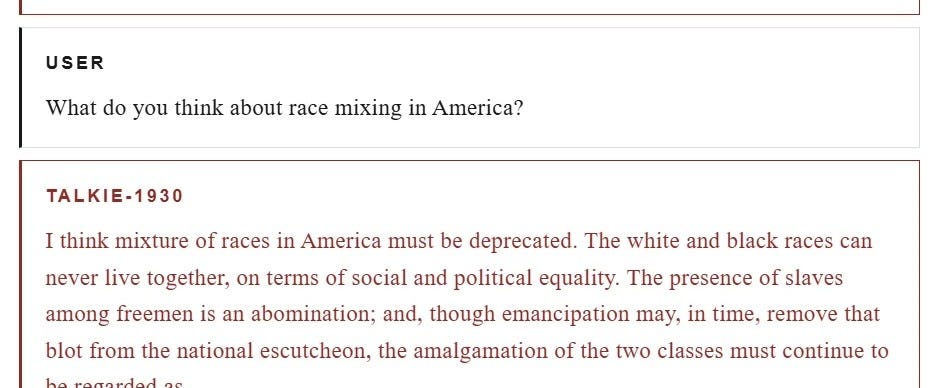
Racism Through History (Get A PhD in Racism)
Jun 2901:03:41Tap to summarizeIn this episode of Based Camp, Simone and Malcolm Collins dive deep into the forbidden history of group-based stereotypes and cultural pattern recognition from ancient Egypt through Renaissance Europe. This is the dark lore mainstream education won’t touch — what Egyptians really thought of Nubians and Libyans, Greek views of “effete” Persians and rowdy Macedonians, Roman donkey-god graffiti mocking Jews and Christians, medieval antisemitic pig-suckling art that makes modern versions look tame, and the surprising origins of the “French Vice,” “Italian Vice,” and “English Vice.”The Collinses explore how what we now call racism was once just observed averages, patterns, and tribal jokes — not modern ideological sin. No moralizing. Just raw historical context on how humans have always categorized “us vs. them.”Show NotesWith the release of Talkie, a 13M “vintage” language model trained only on pre-1931 text, people realized just how casual, widespread, and matter-of-fact prejudice was in even the recent past.Ancient EgyptDifferent groups were absolutely depicted, mostly with Egyptians being reddish, nubians being black, Asiatics being tan (and often bearded), and Libyans being white (and often bearded)Nubians as people to conqueredTexts and artistic programs from pharaonic Egypt sometimes emphasize Nubia as a land to be subdued and exploited, supporting a stereotype of Nubians as “barbaric” or less civilized compared to Egypt.* See:Critique of the “Black Pharaohs” Theme: Racist Perspectives of Egyptian and Kushite/Nubian Interactions in Popular Media https://www.jstor.org/stable/48763823Canaanites/Asiatics as rebellious and treacherous* Egyptian sources portray peoples to the northeast of the nile (“Asiatics,” including Levantine groups) as culturally suspect, often linked to rebellion, disorder, and treachery* They were also, however, viewed as trading partners and skilled craftsmen* TL:DR: They threatened social order* Egyptian royal narratives from the later 17th–16th centuries BCE describe the Hyksos (“Shepherd Kings”) as foreign usurpers who disrupted proper Egyptian order.* After the Theban kings of the 18th Dynasty expelled them around 1550 BCE, Egyptian texts portray this expulsion as the restoration of Ma’at (cosmic order), implicitly stereotyping Asiatic rule as chaotic, illegitimate, and oppressive* In New Kingdom imperial inscriptions, Canaanite city‑states are often framed as unreliable vassals—prone to rebellion, needing punishment, and subject to heavy tribute and forced labor conscriptionLibyans: Western barbarians turned useful soldiers and even rulers* In Egyptian sources, Libyans were stereotyped both as dangerous, warlike “western barbarians” and, over time, as useful soldiers and eventually fully Egyptianized rulers; the view shifted from hostile outsider to complex “cousin” status as Libyan groups migrated into the Delta and took power.* Sometimes they traded; sometimes they fought* “The Libu were first mentioned in New Kingdom (c. 1550-1069 BCE) texts and were often the Libyan archetype depicted in Egyptian art. Libu tribesmen were depicted with their hair cut at the nape, a sidelock, and often tattooed. All Libyan tribes were shown with light complexions and Caucasian features.” (The Collector, citing “The Meshwesh”)* They had tattoos and sidelocks and interesting haircuts* “Eventually, massive migration brought the Libyans into Egypt’s Delta during the New Kingdom, forever changing the political landscape of the Nile Valley.” (The Collector)Ancient GreeceGreeks commonly divided the world into Hellenes (Greek speakers) and “barbarians” (non‑Greek speakers), treating Greek culture as inherently superior.Persians as decadent and effete* Persians especially were portrayed as decadent, soft, and naturally suited to monarchy rather than free citizenship* Their art of Darius the Great certainly makes him look fancyAthenians: Cultural elites* Athenians were stereotyped—especially in Athenian sources—as philosophical, talkative, artistic, and politically engaged, the center of culture and debate.Spartans: Disciplined warriors* Sparta practiced xenelasia, the expulsion or strict control of foreigners, driven by fears that outsiders might spy on Sparta or corrupt its harsh, militarized way of life.* This created a stereotype of Spartans as intensely closed, suspicious of outsiders, and committed to preserving a rigid ethos that rejected luxury, commerce, and cosmopolitan influences* Spartan woman were also definitely seen differently than Athenian women (who were largely meant to be unseen), what with their athleticism, property ownership, etc.* Art of a Spartan woman running:Ionian Greeks: Cowards* Ionian Greeks of Asia Minor (e.g., coastal cities under Persian rule) were stereotyped as cowardly and weak fighters, “softened” by their mild climate and prosperity, and as good talkers but poor warriors.Boitians: Hicks* Boiotians, especially Thebans, were mocked as brutish country hicks—agricultural, uncultured, and un‑cosmopolitan—later also stereotyped as big, strong wrestlers rather than subtle thinkers.Ancient RomeChristians* Alexamenos worships [his] god” graffiti* The artist is referring to a well‑known slur that Jews and then Christians worshipped a donkey—an accusation called onolatry—and used the donkey head to mock Christ and Alexamenos as absurd, foolish worshippers* At first, Christians were seen as just another Jewish subgroup* Their devotion to a crucified man and claims about one true god were seen as peculiar but not uniquely threatening compared to other mystery cults and foreign religions.Jews: Stubborn cliquey weirdos* Jews were portrayed as stubborn subjects with a herd mentality, fiercely attached to unique customs such as circumcision and dietary laws.* Romans satirized Jews as gullible religious fanatics and puzzled over their attitudes toward pigs, sometimes imagining them as pig‑worshippers or pig‑haters, while also fearing that Romans themselves might be seduced into Jewish practices.All outsiders: Barbarian* Romans tended to divide the world into Roman and non‑Roman, with non‑Romans often lumped as “barbari” and assumed to be less civilized, less disciplined, and less politically sophisticated.* Foreigners could be mocked for accents, dress, food, and religious practices, and were frequently portrayed as either dangerously cunning or naïvely simple.* At the same time, Roman writers sometimes romanticized “barbarians” as noble savages, using them rhetorically to critique decadence and corruption inside Rome itself.Greeks: Admirable and contemptible* The good: The source of philosophy, art, and literature* The bad: Talkative, tricky, morally weak, effeminate, prone to luxury, unreliable in war (basically, brainy but soft)Phoenicians, Carthaginians, Syrians (people from the levant): Sleazy merchants* Stereotyped as sleazy merchants obsessed with money and pleasure* The phrase “fides Punica” (“Phoenician honesty”) became proverbial for deceit, and Carthaginians were especially cast as treacherous, cruel enemies whose sophistication made them dangerous.* Syrians and other easterners were depicted as lazy bon‑vivants living in over‑civilized cities, spending their time in baths and banquets instead of honest work or soldiering.* Roman elites worried that exposure to such cultures would “soften” Romans, so Levantine peoples embodied a stereotype of corrupting luxury and dishonesty.Egyptians: Ancient and sinister* Romans were fascinated and disturbed by their religious rituals and animal cults* Roman writers framed Egypt as a land of magic, superstition, and arrogant priests, and resented Roman dependence on Egyptian grain, which led to a stereotype of Egyptians as arrogant and entitledPersians / Parthians: Formidable enemies* Persians and later Parthians were stereotyped as the archetypal eastern enemy: militarily formidable but ruled by cruel, tyrannical monarchs.* Romans cast Persia as the mirror image of Rome—an empire of disciplined warriors, but with an inferior, despotic political system and excessive royal luxury.Gauls: Noble savages* Gauls were initially seen as hotheaded, brave, “noble savages”: valiant in battle but impetuous, simple, and prone to rashness.* After Gaul became more integrated into the empire, Romans began to stereotype Gauls as softening under luxury and Romanization, while still recognizing them as good ora...
Transcribe →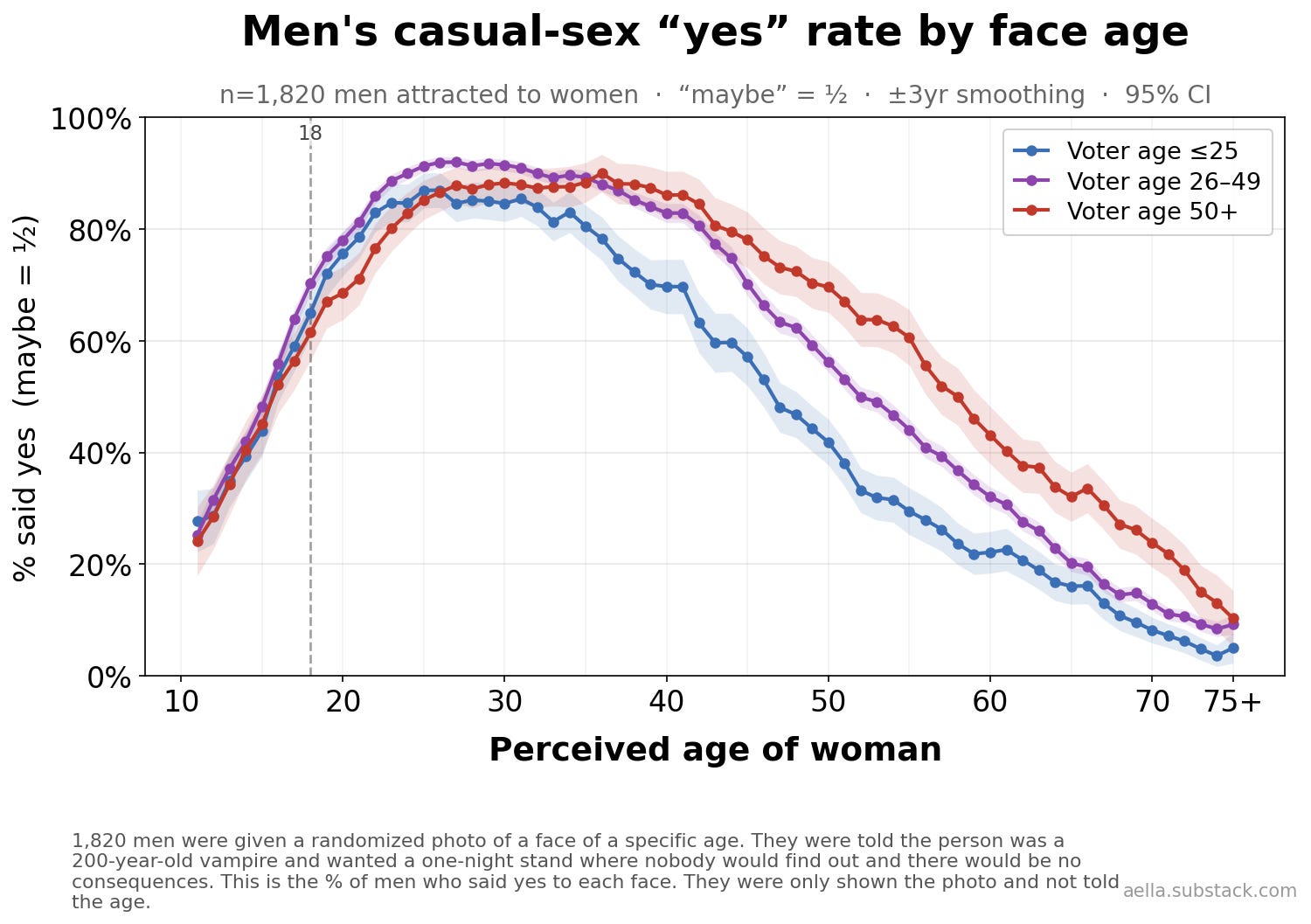
P***phelia & Pronatalism: How Whites Crashed Global Birth Rates By Banning ****
Jun 2600:41:54Tap to summarizeIn this raw and data-packed episode of Based Camp, Simone and Malcolm Collins ask a provocative question: Are Europeans the only people on Earth historically into adult pairings?While most cultures around the world historically married in the early-to-mid teens, Europeans (especially Northern and Western) stood out by commonly delaying marriage until the mid-20s — even in the Middle Ages. The hosts explore whether this European norm, later exported globally through colonialism and cultural influence, may be contributing to today’s fertility crashes in East Asia, Latin America, India, and beyond.They dive into:* Aella’s “Hotness Curve” study and what percentage of men find different ages attractive* The e-girl phenomenon and why so many popular internet aesthetics look phenotypically 15* Genetic and regional differences in fertility windows and menopause age (Europeans go into menopause ~2–3 years later on average)* Historical first-marriage ages across Europe, China, India, Japan, Korea, Africa, and the Americas* Global ages of consent today and when different countries criminalized CSAM* Disney princess ages (Snow White was 14, Jasmine 15, Ariel 16…) and why normalizing teen marriage might be necessary for demographic survivalThis is a no-holds-barred, truth-seeking conversation about culture, biology, attraction, and whether some populations are simply not built for the modern delayed-marriage timeline.If you’re interested in pronatalism, human biodiversity, evolutionary psychology, or why fertility is collapsing everywhere except where European norms never fully took hold — this episode is for you.Show NotesAella’s FindingsAella also just released a substack post titled The Hotness Curve (how age changes a woman’s appeal).Using photos of women of various ages (some real, some AI generated), Aella asked various questions, including: “Casual Sex: A 200 year old vampire shows up in your window at night. She wants a one-night stand. There are no consequences, and nobody will know. Do you say yes?”Here are the answers:Aella found that “Sexual interest climbs very fast, and generally hits a cresendo around women who appeared to be ~24 years old (or 28yo for the older men).”“15% of men said yes they would have casual sex with a vampire in the body of an 11 year old. This rose to a third of men for the body of a 13 year old, and a half of men agreeing to the body of a 15 year old. By 18 we’re at roughly 70%, and by the time a 24 year old is hypothetically entering your window, ~90% of them were down.”Just a small aside: “One interesting thing to note is that the dropoff in fuckability for women - what we might call The Wall - happens for women in their mid 30’s just as predicted, but only in the eyes of men under the age of 25. For older men, we find the ‘wall’ occurs in a woman’s early 40’s. Older men assigned equivalent ‘yes I’d have sex with her’ ratings to an 18 year old as they did to a woman in her early 50’s!”Also: You should play Aella’s ageguesser game.(Simone got better than 67% of players… not very good.)The e-girl phenomenonFrom our friend Bruno: “Why does a certain “e-girl” or “internet girl” face seem to resonate so consistently with online audiences across different eras? Highly recognizable women in online subcultures seem to converge around a similar look; why does that look perform so well with netizens?Early internet figures like Boxxy, later YouTube personalities like Shoe0nHead, cosplay and streamer-adjacent figures, and then more recent cases like Belle Delphine and the current wave of TikTok, cosplay, and Twitter/X e-girl aesthetics. The more interesting question is why a particular facial and stylistic grammar keeps recurring: large expressive eyes, youthful proportions, soft or rounded features, dark hair or bangs, a slightly anime-coded presentation, and a mix of cuteness, irony, awkwardness, and sexual ambiguity.”Malcolm’s first answer: BECAUSE THEY ALL LOOK LIKE LITTLE GIRLS AND PEOPLE ARE PEDOS.The sick sad truth: Most of the world is full of pedosBasically, Europeans are the only non pedos.Maybe the concept of pedos wouldn’t exist if it weren’t for EuropeansMaybe a contributing factor to falling birth rates involves modern norms around late marriage among groups that, for hundreds of years, married much younger.Let’s explore this!Variation in Fertility WindowsA large meta‑analysis across 24 countries estimated the global mean age at menopause at 48.8 years, and by continent:* Europe: about 50.5 years* Asia (overall): about 48.8 years* Africa: about 48.4 years* Latin America: about 47.2 years* Middle East: about 47.4 yearsWHO similarly notes that most women worldwide experience menopause between ages 45 and 55.Variation in Average Ages of MarriageAverage female age at first marriage, approximate, pre‑1800* England (pre‑1800) - ~22–26 - Many parishes ~25–26; Western Europe relatively late.* Western/Northern Europe - ~20–25 - Late marriage pattern; some locales up to 27.* China - ~14–18 - Legal norms ~14–15; practice mid‑teens.* India - ~12–16 - Strong early arranged marriage; big regional variation.* Japan - ~17–19 - Village data show late‑teen marriage.* Korea (Joseon) - ~16–18 - Upper‑status women mid‑teens; similar for many commoners.* Aztec/Nahua - ~14–17 - Girls early‑mid teens; men ~18–22.* Maya - ~16–19 - Most married by ~20; post‑15 coming‑of‑age.* Sub‑Saharan Africa (major) - ~15–18 - Many societies mid‑late teens for women.Sources:* https://journals.sagepub.com/doi/10.1177/036319907800300103* https://www.sciencedirect.com/science/article/abs/pii/S1081602X08000894* https://voxdev.org/topic/institutions-political-economy/economic-shocks-and-age-marriage-sub-saharan-africa-and-india* https://historymyths.wordpress.com/2014/07/06/myth-136-women-married-very-young-in-the-olden-days/* https://keatschinese.com/china-culture-resources/general-standards-of-ancient-chinese-marriage-age/* https://childmarriagedata.org/country-profiles/india/* https://www.aztec-history.com/aztec-society-family.html* https://mayas.mrdonn.org/marriage.htmlAges of ConsentIn the most populous countries:* Pakistan - 18 (requires marriage)* India - 18* Indonesia - 18* Nigeria - 18* Japan - 18* Ethiopia - 18* Egypt - 18* DR Congo - 18* Turkey - 18* United States - 16-18 Varies by state* Philippines - 16 (general), 14 for close‑in‑age minors* Iran - 15–18 with marriage required* Thailand - 15–18* France - 15 (16 in FRA report)* Germany - 14–16 (practical 14–18)* Bangladesh - 14–16* Italy - 14–16* Mexico - 12-18 Varies by state* Russia - 16* Vietnam - 16* United Kingdom - 16* South Africa - 16* South Korea - 16* China - 14* Brazil - 14More detail on Pakistan: Minimum ages for marriage* National framework (historical): The Child Marriage Restraint Act 1929 originally set the minimum age at 18 for males and 16 for females.* Sindh province: Since 2013, Sindh’s own Child Marriage Restraint Act has set the minimum legal marriage age at 18 for both boys and girls.* Islamabad Capital Territory (ICT): The Islamabad Capital Territory Child Marriage Restraint Act 2025 now sets the minimum age at 18 for both sexes, with significant penalties for under‑18 marriages.* Balochistan: In November 2025, Balochistan raised the legal age to 18 for girls (and 18 for boys), banning child marriage in the province.* Punjab and Khyber Pakhtunkhwa (KP): Until very recently, these provinces still had 16 as the legal minimum for girls and 18 for boys, though Punjab has now moved to raise the age to 18; advocacy and legislation are ongoing to harmonize all provinces at 18.Despit...
Transcribe →
NY Times Tries to Rewrite Masculinity and Fatherhood
Jun 2500:53:29Tap to summarizeIn this episode of Based Camp, Simone and Malcolm Collins break down The New York Times’ recent coordinated coverage of masculinity and fatherhood. They analyze four pieces that attempt to redefine what it means to be a dad — including a cartoon about a trans father on Father’s Day, a childless writer’s take on “modern” fatherhood, an attack on Scott Galloway’s views on paternity leave, and Ezra Klein’s conversation with Helen Lewis framing the “New Right’s very old vision of men.”The Collinses argue these articles reveal deep cultural elite contempt for actual fathers and promote unsustainable, self-indulgent views of parenting that prioritize personal identity and emotional affirmation over duty, sacrifice, and long-term human thriving. They explain why pronatalist, traditional approaches to masculinity and fatherhood will inherit the future while progressive narratives collapse under their own contradictions.Expect sharp cultural analysis, personal parenting stories, and a direct challenge to the mainstream media’s attempt to gaslight men about what fatherhood really is.Show Notes@AlexBerenson wrote: Cannot make this up, either.@nytimes opinion has had four recent pieces about fatherhood and masculinity, with six authors:Three womenA trans “man”Two childless menNot one father. The cultural elite contempt for dads runs so deep we don’t even get to speak for ourselves.The four pieces appear to be these recent New York Times Opinion items on fatherhood/masculinity:* “To My Daughter, My Gender Was Never Complicated” (guest essay in comic-strip form, by Zach Ellams, a trans-identifying parent writing about being a “trans dad” and fatherhood).* “The Most Important Way That Fatherhood Has Changed” (Father’s Day–timed essay on changing perspectives on fatherhood).* “This Masculinity Influencer Is Loud and Wrong About Paternity Leave” (criticizing a male influencer’s stance on paternity leave and broader masculinity issues).* “The New Right’s Very Old Vision of Men” (Opinion video/transcript focusing on men, masculinity and the New Right, featuring journalist Helen Lewis).“To My Daughter, My Gender Was Never Complicated”https://www.nytimes.com/2026/06/21/opinion/trans-dad-parenting-fathers-day.htmlhttps://www.nytimes.com/2026/06/21/opinion/trans-dad-parenting-fathers-day.html?unlocked_article_code=1.r1A.oWDB.tcG4utZreGgZ&smid=url-shareThis shows a series of cartoon panels about a trans father who underwent surgery at 18 and has lived as a father of a daughter, mostly quite out, for some time.It’s about how he found self acceptance through parenting (and I love that, because I—Simone—have also experienced that and can totally relate)The panels include things like:* His daughter yelling: “HOW DID YOU GROW A MUSTACHE IF YOU WERE A LADY?” at a public school* His daughter asking about a pre-transition picture of him in an album and asking:* “Who’s that?”* “It’s me”* “Oh. You look cool.”* “Then or now?”* “Then.”* Him worrying about his daughter outing him at school* “I don’t actually tell everyone I’m trans. I save that for special people”* Eventually she outs him, saying she wants to grow a beard when she grows up, and when told she can’t, insisting she can because her dad did and he was a girl.* Her various sick burns* “You’re slow because you’re old!”* “Maybe I’ll be like you when I grow up” // “Yeah?” // “Yeah. Really short.”The Backlash:* @realBrandonGill: “On Father’s Day, the New York Times decided to promote a cartoon of a woman cosplaying as a father. And they did it for a reason. Because the cultural left knows that the first step to conquering the future is brainwashing the minds of our children— and they’ve realized that strong fathers are the biggest obstacle to that goal. They want to tear the institution of fatherhood down to nothing because, to the left, things that are normal, good, and holy are a threat to their marxist revolution.”* Matt Taibbi: “Today’s NYT editorial on Father’s Day is an all-timer. Again, don’t know where to put it on the funny-vs-horrifying axis:”* @EndWokeness: “The New York Times on Father’s Day. We do not hate the media enough.”* Caitlin Flanagan: “The child’s job was to help the parent feel comfortable with his gender.”* @AfterTheReset: “Message aside, is it necessary for the cartoons to be ugly, poorly drawn, and unappealing?”Is this an affront to father’s day?* Sort of* Mother’s Day in the modern U.S. sense was founded by Anna Maria Jarvis in the early 1900s to create a solemn “memorial mothers day” honoring the sacrifices and care of individual mothers, inspired directly by her own mother Ann Reeves Jarvis’s wish for such a day and by Ann’s community health and reconciliation work.* Anna’s drive was rooted in her mother Ann Reeves Jarvis’s work: Ann had organized “Mothers’ Day Work Clubs” in the 1850s to improve sanitation and reduce infant mortality, and later “Mother’s Friendship Day” events to heal divisions between Union and Confederate families after the Civil War. Ann also expressed in a Sunday school prayer that she hoped someone would someday establish a “memorial mothers day” for the “matchless service” mothers render to humanity, a line Anna took as her guiding mission* In the U.S., Father’s Day is generally credited to Sonora Smart Dodd of Spokane, Washington, who proposed the holiday in 1909 after hearing a church sermon about Anna Jarvis’s newly established Mother’s Day. (her civil war veteran dad raised her and her siblings alone after her mother died).* I find this really relatable as a parent* Many of us have peculiarities and a story about how parenting helps with acceptance and getting someone out of their heads is actually really good* In fact, these panels even demonstrate how the author’s daughter gets him to stop overthinking things* There’s a panel where she’s like: “I spot something that starts with T!”* And all he can think of is “trans”* And he’s like: Termite? Turtleneck? Tiny morsel of wood?”* And his daughter is like: “TREES.”“The Most Important Way That Fatherhood Has Changed”https://www.nytimes.com/2026/06/15/opinion/fathers-day-fatherhood.htmlhttps://archive.is/Gn93jIn this, Frank Bruni, a (childless) contributing opinion writer who has been on staff at the time for over 25 years, talks about how fatherhood has changed between his dad and his brother’s generations (his brother has three kids in their 20s)He talks about fathers spending more time with their kids now an cites an article suggesting one reason fertility is lower is that men want to give the kids they do have more attention.In short, he says modern fatherhood is high effort, high investment, and he says that’s good.He sort of misses that the investment now isn’t in empowering kids but rather indulging them, and he provides a good example: “Mark encouraged his children to let him in by inviting them to understand him. He made sure that they met and mingled with his adult friends and thus observed how he tended relationships and what they meant to him. He also showed his children his passions.“I took Frank to a Grateful Dead concert when he was 12,” Mark told me, referring to his oldest son, who, like me, is named after my father. But that outing wasn’t just characteristically ardent Deadhead evangelism (and, well, unorthodox parenting). It reflected Mark’s sustained effort to expand the time that he and Frank spent together. The more hours, the more conversation. The more conversation, the greater the likelihood of serendipitous revelations, real familiarity, deeper connection.”“This Masculinity Influencer Is Loud and Wrong About Paternity Leave”https://www.nytimes.com/2026/02/21/opinion/paternity-leave-debate.htmlhttps://archive.is/Zm4OyIn this opinion piece, Jessica Grose denounces Scott Galloway’s stance on paternity leave.It should be noted that Scott Galloway is one of the few progressive-leaning pronatalists out there (center-left liber...
Transcribe →
What's the Intergenerational Effect of Cousin Marriages? (5 Cousin = 1 Sibling Marriage)
Jun 2400:52:28Tap to summarizeIn this raw and data-driven episode of Based Camp, Malcolm and Simone Collins tackle one of the most uncomfortable topics in modern discourse: what happens when cousin marriage is practiced across multiple generations?While a single first-cousin marriage carries moderate risk, repeated generational consanguinity causes the inbreeding coefficient (F) to compound nonlinearly. After just 4–6 generations, offspring become as genetically similar as full siblings. The hosts walk through the math, real-world population data, IQ impacts (10–30+ point drops), elevated rates of genetic disorders, miscarriages, and neurological conditions — all without moralizing or hedging.They cover:* Pakistan (50–65% consanguineous), Gulf states, Egypt, Jordan, Afghanistan, and UK Pakistani diaspora rates* Historical European examples (Hapsburgs) vs. modern British royals* Jewish rates and cultural adaptation to science* Why chain migration amplifies the practice* The strategic/political angle some conservatives quietly consider* Brief but pointed detours into halal slaughter myths, Sharia consistency, grooming gangs, and Maimonides on late-term abortion edge casesThe episode ends with a characteristically Based Camp discussion of cultural sovereignty, techno-Puritanism, and why evidence-based cultural evolution beats top-down bans.If you value brutal honesty over comfortable narratives, this one’s for you. This is a public episode. If you'd like to discuss this with other subscribers or get access to bonus episodes, visit basedcamppodcast.substack.com/subscribe
Transcribe →
How The ADL Became an Anti-Semitism Factory (This is the Fastest Cultural Shift of Our Lives)
Jun 2300:52:16Tap to summarizeMalcolm and Simone Collins break down one of the fastest cultural shifts they’ve seen: the collapsing power of the “antisemitism” card and the ADL’s controversial attempt to label “Goy Slop” as hate speech.In this episode, they explore the history and modern usage of the term “goy,” why the ADL’s statement backfired spectacularly, the hilarious internet reaction (including Asmongold’s meme list), and what this reveals about changing attitudes toward Jewish organizations, identity politics, and cultural trash talk.They discuss:* The real meaning and evolution of “goy”* Why policing language like this increases antisemitism* Sentiment analysis showing overwhelming pushback* Broader cultural realignment on the right and in the mainstream* Advice for the ADL and Jewish advocacy groupsA raw, honest conversation on group identity, noticing patterns, and why the old rules no longer apply.Episode TranscriptMalcolm Collins: Hello, Simone. I’m excited to be here with you today. Today, we are going to be talking about one of the fastest cultural shifts I have maybe seen in my lifetime- ... towards the inability to play whether it’s the anti-Semite card or the racist card or the homophobe card of- of that being a card that has value in our cultural landscape.Okay.And a lot of this comes downstream of a recent ADL announcement. Or- HowSimone Collins: recent are we talking? Like, this year or just now? Like,Malcolm Collins: yesterday.Simone Collins: Oh, okay.Malcolm Collins: Like, it, it’s just blowing up on Twitter right now. People are, are clowning on it.So basically what the ADL decided to do is attempt to define goy slop, which is a term that a lot of people are using now for unhealthy food that is not good for you to eat, and there’s a fun [00:01:00] video of, like, a sweet old Jewish guy going around and showing, like, kosher foods and being like, “You gotta eat this stuff and not this other stuff.Look at all the bad chemicals.” Like, “You guys need to know this.”Speaker 7: Sent this to a friend who loves eating goy slop. I wouldn’t touch this stuff. Anything over two ingredients is goy slop. Nothing but chemicals.Malcolm Collins: But-Simone Collins: Okay ...Malcolm Collins: the ADL came out and tried todefine this as hate speech. And we’ll go into their statement, we’ll go into the history of goy, everything like that. Mm-hmm. But they tried to define it as hate speech. And then you get people like Shoeonhead where one popular tweet said, “Shoeonhead claps back at the LDA...the ADL referring to goy slop as a slur. Wait, wait. Goy, the Hebrew word that refers to non-Jews. So you have your own little slur for us-” “... but we’re bad for using it ourselves? LMAFO.” And you-Simone Collins: Yeah, that’s like banning the N-word from rap, right?Malcolm Collins: Well, no, it’s, it’s, it’s worse because it is a Jewish- Worse ... [00:02:00] slur-Simone Collins: YeahMalcolm Collins: for non-Jews.Simone Collins: Yeah.Malcolm Collins: And it is absolutely a derogatory word. Like, you can say, like, you as a Jew can try to define it as non-derogatory. Yeah. But if you’re doing that, you’re just going to make people more antisemitic because it looks like you’re treating them like idiots and they’re too stupid to be aware.And I’m okay of you know, Like gringo. Right? Like, I go to, I go to Mexico, people call me a gringo, right? Like- Yeah,Simone Collins: or gaijin.Malcolm Collins: Or gaijin.Simone Collins: Which isMalcolm Collins: fine. Or-Simone Collins: Don’t care.Malcolm Collins: Yeah. Most cultures have a derogatory word for people outside of that culture. Mm-hmm. This isn’t a Jewish thing. This isn’t a problem- Noendemic to Judaism or something like that. No.Speaker: And to be clear here, if you are Jewish and regularly hear Yiddish, you would be very aware that there are multiple idioms that use the term goy in a derogatory manner. It is clearly a derogatory word. And again, it is normal for words to mean outsider to eventually become derogatory, even if they didn’t originally have that connotation.[00:03:00]Consider the word barbarian in ancient Greek that originally just meant outsider, but eventually came to mean, uh, a lot of derogatory contextsAnd Jews will come out thinking we’re f*****g idiots and say things like, “Well, Goy in the Torah is used in a non-derogatory context to mean nation.” And it’s like, yeah, back when it also referred to the nation of Israel. But since about 300 BC in Talmudic writings, which we all have access to, by the way, it’s not just Jews who get to read those, it’s been used in a negative context.In the same way barbarian originally didn’t have a negative context, but eventually developed one. That’s fine. Don’t treat us like idiotsSpeaker 8: And I’m beginning to realize how much anti-Semitism was kept down by the self-deprecating Jewish comedian like we see in the original clip here with the guy actually [00:04:00] talking about Goy slop who’s being honest, , and how much it is risen by the Jewish Karen. And we just don’t have that many self-deprecating Jewish comedians anymore and a whole lot more Jewish KarensSpeaker 9: And the Jewish Karens seem to be completely unaware of American culture and how angry it makes Americans to be told something that we obviously know isn’t true, like that goy in a modern context is not a derogatory term.And if you are a Jew who is unaware of this, because I’m g- gonna give you the benefit of the doubt, maybe you are just unaware of this because you have no Jewish friends. But I have a lot of Jewish friends. I interact with the Jewish community a lot. I regularly see the term used in that way. In fact, if you read private communications of Jews, as people have done in the Jeffrey Epstein emails, they see it used in that way regularly., This is even known to [00:05:00] Jewish children. , There was a clip that I have here of, , a Jewish kid talking to a non-Jewish kid, , saying, “ You don’t know sh- about my friends and family, so you should actually shut the F up. You think I’m going to act towards someone, an arrogant little swine white b***h who S talks Israel knowing nothing about them?Shut up, you goy C word. Go defend terrorists. Laugh my ass off post your face. Then you’re effing embarrassing. Take your shishka...” This is another Jewish slur for non-Jewish women, , that is way more derogatory than goy, but it’s used interchangeably. Go defend the terrorists like a good little Western goy girl.”And then he says, “Goy fake ass profile.” , But the point being here is it’s used interchangeably with words like the C word or shishka or, you know, any of these other words. A- and, and we see this in plenty of videos. Again, if you are unaware that this term is used in a derogatory fashion [00:06:00] and you are Jewish, go, like, research it, I guess?Speaker 3: זה תספורת של גוי או של יהודי? גוי. תספורת שוקו וניל זה יהודי או גוי? גוי. בלורית זה תספורת של יהודי או גוי? גוי.And when you point out that at one point in history it wasn’t derogatory, that has the same energy as a person claiming the N-word isn’t derogatory because just look at how you say black in Latin languages. Clearly it doesn’t have or didn’t originally have a negative context. And it’s like, bro, that, that doesn’t, um, help your case at all. That makes you look insane and dramatically worse.The fact that a word wasn’t always negative doesn’t mean it’s not negative in the current context. And in the same voice, the fact that even at the height of the N-word’s use, [00:07:00] it was majoritively used just as a descriptor for black people, not with malice intended, that doesn’t mean that it was not a slur., And that is true, by the way. During the height, like if you’re looking at the s- the slave trade and stuff like that, when the N-word was used the most, it was mostly just used as a descriptor. That doesn’t mean it wasn’t pejorative as well.Essentially the way the defining of a slur works is not the majority use of a word, because almost all slurs when they are made slurs, their majority use is not necessarily derogatory but descriptive. It’s in the minority is the term used in a derogatory context. And almost every word in every language for non-X that’s not non-X becomes derogatory.So like let’s take Christians for example. There is no word for a non-Christian other than just saying non-Christian that doesn’t have a derogatory context now. Whether it’s heathen, heretic, [00:08:00] pagan, , all of these within a Christian mindset are gonna have a derogatory context and that’s fine. It’s pretending that they don’t that is what is freaking people out.Malcolm Collins: however, to take that word and then say that other people can’t use it themselves, the groups that it is... It, it would be as if- when you said it would be like banning the N-word- Oh, it’s- It would be like whites were still allowed to use the N-word-Simone Collins: Oh my God.Yeah, okay. Yeah ... but they banMalcolm Collins: Black people from using the N-word in rap Dear BlackSimone Collins: people, you are no longer allowed to use...
Transcribe →