
Podcast
Based Camp | Simone & Malcolm Collins
Hosted by Based Camp | Simone & Malcolm Collins · EN
Based Camp is a podcast focused on how humans process the world around them and the future of our species. That means we go into everything from human sexuality, to weird sub-cultures, dating markets, philosophy, and politics.
Malcolm and Simone are a husband wife team of a neuroscientist and marketer turned entrepreneurs and authors. With graduate degrees from Stanford and Cambridge under their belts as well as five bestselling books, one of which topped out the WSJs nonfiction list, they are widely known (if infamous) intellectuals / provocateurs.
If you want to dig into their ideas further or check citations on points they bring up check out their book series. Note: They all sell for a dollar or so and the money made from them goes to charity. https://www.amazon.com/gp/product/B08FMWMFTG
basedcamppodcast.substack.com
basedcamppodcast.substack.com
138episodes
Episodes
Newest firstAll episodes

The Noticing Intensifies: I Wish I Had Not Pulled This Thread
4w ago01:08:14Tap to summarizeIn this episode of Based Camp, Malcolm and Simone unpack a striking civilizational pattern: nearly every major cultural movement of the past 100 years—blues, rock, rap, punk, goth, grunge, techno, heavy metal, and more—along with most modern sports (soccer, basketball, baseball, rugby, American football, etc.), top video games, and key inventions originated in Protestant-majority countries or regions.Catholic-majority areas dominate refinement and style (think Paris and Italy) and often excel at competing within existing frameworks, yet almost never invent the new forms themselves. Japan, Korea, and a few outliers like Poland provide the main exceptions.They dig into why this pattern holds, using Ireland as a critical test case that points to a Protestant vs. Catholic cultural difference rather than a simple North/South European one. Topics include historical differences in innovation, scandal handling (IRA, Church), terrorism rates, treatment of captives, status-seeking vs. inventiveness, religious orders, and what Catholics (and others) can usefully reverse-engineer.This is not about identity or conversion—it’s about treating culture as technology and stealing what works.Episode Transcript[00:00:00] Malcolm Collins: Hello, Simone. I’m excited to be here with you today. Today we are going to be pulling on one of those threads where my mind notices a pattern, and then I start pulling on it, and I’m like, “Oh my God, this pattern is so much more robust than I expected it would be, so much larger than I expected it would be,” and it kind of changes how I think about things at a civilizational level, and it’s something that we need to talk about.[00:00:23] I began to think about, like, various cultural movements throughout the last 100 years. So what do... ‘ Blues, rock and roll, rap, punk, goth, grunge, mod, techno, cyberpunk, reggae, heavy metal house music, rave and acid music, new romantic, straight edge, and industrial music have in common.[00:00:46] Here I’m gonna note other things that have this in common, okay?[00:00:50] Simone Collins: Okay.[00:00:51] Malcolm Collins: Okay. Of, of the music varieties that don’t have this one thing in common or cultural movements or stylistic movements,[00:00:58] Simone Collins: Christmas classics[00:01:02] Malcolm Collins: Unfortunately, that would also fit the pattern. But- Are[00:01:05] Simone Collins: you sure?[00:01:06] Malcolm Collins: Yeah. With the one potential alternative that I’ll get to in a second.[00:01:10] Then you have the other what, what mu- what stylistic patterns don’t fit this pattern, okay, on Earth? The only popular ones on a, on an international stage are ones that come out of Japan, ones that come out of Korea or reggaeton maybe. Out of, out of the past 100 years, these are the only ones that don’t fit this pattern.[00:01:32] Now we’re gonna go to the second thing that fits this pattern, okay? Because there’s actually a lot. Okay, the invention of various sports. So what do soccer, cricket, rugby, basketball, baseball, ice hockey, lacrosse with maybe a caveat, volleyball, American football, tennis, golf, field hockey, boxing, picket ball, pool/billiards, bowling-[00:01:59] Simone Collins: Picket ball or pickleball?[00:02:02] Malcolm Collins: Oh, oh, pool might actually not fit this pattern. It’s a bit mixed. Bowling pickleball is what I said here. And the only ones that don’t fit this pattern clearly are cycling and then a few that come out of Japan, sumo, judo, and taekwondo So this pattern is- I[00:02:19] Simone Collins: think dressage would also fall into your criteria.[00:02:23] Malcolm Collins: Yes. Yeah. This pattern is was this cultural thing invented in a Protestant majority country or region? Which is wild, and the reason it’s so wild is when you think of, like, let’s say style, right? Typically the cutting edge locations when it comes to style are Catholic majority areas. I, I typically think of, like, the leading sort of luxury style trend-setting areas as being Paris and Italy, right?[00:02:54] Like, that that’s not just me, right? So-[00:02:57] Simone Collins: Yeah ...[00:02:58] Malcolm Collins: th- they haven’t invented a single stylistic movement except for maybe reggaeton which I don’t even know if people would consider that, like, a global phenomenon in the same way, like, rock and roll,[00:03:08] Simone Collins: punk, goth. It’s, it’s pretty big. It’s very big. And then it’s[00:03:12] Malcolm Collins: the same with sports, right?[00:03:14] Like, it’s not like Catholic countries are bad at sports. In fact, they do very well within a lot of sports sectors. I mean, I, I, my understanding is that if you’re looking at the soccer for example on international stage like they clean it up. So why, why didn’t they invent it? And this is something worth exploring because when you notice a pattern this loud and this strong...[00:03:37] And a, and a lot of people, and I get very frustrated with this because it’s just wrong, is they go, “Oh, this is really about northern versus southern European populations.” Of the northern European populations which is the one counterexample to this rule e.g. they have invented no major sports or major artistic traditions [00:04:00] in the past 100 years?[00:04:02] Ireland. Oh. The, the one Catholic population in Northern Europe. Well, I’ve gotta point this out, because I think that people, like they, they, they put Ireland in this bucket that doesn’t represent what Ireland actually is culturally. Like culturally, it actually has a lot in common with Catholic countries that you don’t see in Protestant countries.[00:04:23] An example of this would be terrorist rates. In Protestant countries it is vanishingly rare in history, and we’ll probably do a different video on this when you are mad at the state that you go out and kill random civilians. This is actually a normal thing in Catholic country throughout the past 100 years.[00:04:39] Speaker 9: sorry, if you wanna dig in more yourself because I don’t wanna, like, litigate this here. , You’ve got Spain, , Colombia, Italy, Peru, the Philippines, Argentina, El Salvador, Guatemala, Nicaragua, Chile france, Portugal, Belgium. as just examples of places where you’ve had Catholic terrorist groups you do not have a single case, , except for maybe Northern Ireland in response to the Catholic terrorism[00:05:10] Oh, or m- maybe the KKK of a Protestant majority terrorist group in the past hundred years[00:05:16] Malcolm Collins: So you see that. An- another thing is although this one is a little less stable, but the, the graping of victims of war. Now, we’ve talked in previous videos that if you look at Protestant colonial areas like in the United States, the Puritans, the Cavaliers, the backwoods you see no record of graping of captives, and yet you see this constantly.[00:05:34] Speaker: A note here, I don’t mean like barely any records. I mean there isn’t... And the Puritans were fastidious in their record keeping and everybody hated the backwoods people, so if they had ever done this, people accused them of every other sin under the sun. We would know about it, right? Like , it’s actually insane that there isn’t a single recorded instance across hundreds of years of American history of this happening[00:05:59] Speaker 4: And note when I first learned this, this was quite shocking for me to find this out as like a trend in history because it certainly wasn’t taught to me in school. , People were like, “Well, it’s probably because the Catholic colonies, they were much less likely to come with their families.” , Which actually doesn’t work as a pattern because if you look at Protestant missions like Captain Cook’s mission where they didn’t travel with their family, , yes, they had sex with native populations, but they famously traded the ships and nails to do it.[00:06:25] They engaged in, w- I don’t know if I’m allowed to say that word on a podcast. , W- al- alternatively, I at one point asked an AI, “Do we know of a single Catholic majority colonization effort or a major journey that did not involve the graping of natives?” , And it could only name one, and it was a shipwreck when they had to live with natives.[00:06:45] , That’s how frequent it was. But what was interesting to me, because I wanted to see if Ireland was actually a counterexample and if this was really a Protestant versus Catholic thing or a, , a Northern European versus Southern European thing, and the Ireland example pretty concretely, , hits for me that no, it’s actually a Protestant versus Catholic difference.[00:07:03] And so to try to understand where it’s from is really important in the same way that people see me constantly studying Jews, , because they seem to out-compete my people in a number of areas. So I’m like, “What can I steal from their culture to make my own culture stronger?” It’s not so I can become them.[00:07:17] And to a Catholic watching this, I’m not saying b-become like a Protestant or become a Protestant. I’m saying try to find out exactly what causes this cultural difference so that you can steal that technology if you think that this difference is actually a bad thing, either in terms of the, , the productivity in terms of new subcultures and new, , technologies and stuff like that or in terms of, , moral fidelity around things like SA.[00:07:40] Malcolm Collins: If we ...
Transcribe →
Danes Got Rid Of Migrants: What Happened Next Was CRAZY
Jul 1700:53:11Tap to summarizeToday on Based Camp, Simone and Malcolm dive into Denmark as a case study in one of Europe’s most aggressive attempts to manage immigration and “parallel societies,” exploring how its data-driven “ghetto package” combines temporary asylum, strict self‑sufficiency rules, mandatory cultural assimilation programs, and even forced redevelopments and evictions to break up poor, high‑crime, non‑Western housing enclaves—and what this experiment reveals about the trade‑offs between social cohesion, individual rights, and EU anti‑discrimination law.What do you think of Denmark’s approach? Is it a good way to accept migrants and asylum-seekers while minimizing societal disruption and strain on social systems, or are they not going far enough?Show NotesWhat’s up with Denmark?* Denmark operates one of the strictest immigration regimes in Europe* Focus on* Temporary protection only* Repatriation; not permanent settlement* Explicit targeting of “parallel societies”What’s their story?* Asylum status focused on temporary protection and repatriation* Low asylum recognition rates* Strict self-sufficiency requirements* While more open to skilled laborers, they are very (relatively) strict with low-skilled, non-EU migrants* Explicit categorization and policy targeting of “non-Western” immigrants/descendants (countries outside EU+ select Western nations). Later refined to MENAPT focus (Middle East, North Africa, Pakistan, Turkey) for higher-risk subgroups.Denmark’s “Vulnerable Residential Areas / Parallel Societies” policyThis is a policy designed to enforce Danish language and norms, prevent ghettos from forming, and reduce social housing density* Evolved from their 2018 “Ghetto Package”* The explicit term “ghetto” was officially dropped in 2021 because it was considered stigmatizing; replaced by “vulnerable residential areas” and “parallel societies.”* Framed under goals like: “One Denmark without parallel societies”* It’s an annually published list that identifies crummy social housing neighborhoods and applies graduated and increasingly coercive measures to them* Data driven* Socio-economic metrics* Crime metrics* Ethnic composition* A “parallel society” is both vulnerable and more than 50% of residents are immigrants or descerndents from non-western countries (outside the EU, UK, USA, Canada, Australia, New Zealand, and a few small european states)* How they identify vulnerable areas:* They have to meet at least 2 out of these 4 criteria based on 2-year averages:* More than 40% of residents aged 18-64 are neither employed nor in school* The share of residents convicted of penal law, weapons, or drug offenses is more than 3× the national average.* More than 60% of residents aged 30–59 have only primary school education.* Average gross income for residents aged 15–64 (excluding students) is less than 55% of the regional average.* Note: There is also a separate “prevention areas” list (introduced 2021) for earlier intervention — lower thresholds and >30% non-Western share.* What they do with “parallel societies”* If a place has been designated as a parallel society for at least five consecutive years, they get escalating support, obligation, and penalties* Their kids get remedial intervention* Children get a Danish language test before starting school + offered preparatory language training.* All children aged 1 year and older living in a vulnerable area must attend preschool for at least 25 hours per week, focused on Danish language, traditions, and norms (parents may provide equivalent instruction at home instead).* Sanction: Parents who refuse the preschool requirement can lose the normal Danish child benefit.* Adults are coaxed into integrating* Housing association meetings in vulnerable areas must be held in Danish.* Residents are subject to mandatory Danish language and “active citizenship”/integration programs (teaching Danish societal norms and participation expectations).* Non-participation can trigger reductions in social benefits (on top of the already lower “integration allowance” rate compared to standard social assistance).* Housing is changed* Social housing share must be reduced to a maximum of 40% (in redevelopment areas, a 60% reduction target).* Methods include: demolishing social housing blocks, emptying buildings and converting them to private or cooperative ownership, and building new private housing to create mixed-tenure neighborhoods.* Restrictions on moving in: People receiving certain long-term social welfare benefits or with criminal convictions face barriers or bans from moving into redevelopment areas.* Evictions: Entire families can be evicted from social housing if one member is convicted of a crime and relocated to other places in the ocuntry* Goal: Reduce concentration of social problems by diluting social housing and attracting more employed, self-supporting residents.* What are the results?* Significant reduction in listed areas: Vulnerable residential areas fell from 43 in 2018 to 17 in 2022.* Parallel societies dropped from 29 to 10 in the same period.* This reflects both interventions (demolitions, conversions) and some changes in how areas are measured.The EU is Trying to Fight Denmark on ThisThe parallel societies program is facing legal challenges on EU discrimination grounds:* The explicit use of the “non-Western” ethnic criterion for triggering the strongest measures (parallel society designation and redevelopment) has been criticized.* In February 2025, an EU Court of Justice Advocate General opined that it constitutes direct discrimination based on ethnic origin.* In December 2025, the Court of Justice issued statements indicating the ethnic criteria breach EU law, with recommendations for Danish courts. Final rulings on specific cases (including forced evictions/redevelopment) are pending.How do other countries compare?Closest:* Netherlands: Structured national *Inburgering* (civic integration exams: language + society knowledge, B1 target, 3-year timeline, self-sufficiency focus). Denmark is more localized/punitive in high-problem areas (housing sanctions, child mandates) and emphasizes repatriation over long-term integration paths. Both tightening recently; Denmark often viewed as more aggressive on inflows and parallel societies.* UK: Points-based skilled focus post-Brexit; asylum/backlog issues. Less spatially targeted assimilation than Denmark.Denmark goes beyond NL’s exam-based national system or UK’s citizenship test by adding area-specific coercion, child mandates, and housing redevelopment tied to ethnic/behavioral metrics.Furthest:* Sweden: Historically far more open (high per-capita asylum from similar source regions), leading to larger integration failures and gang violence. Now tightening (language requirements, etc.) and borrowing Danish ideas, but started from a worse baseline with more entrenched issues.* Germany and France: Larger absolute inflows created bigger subgroup challenges. Denmark kept volumes low from high-cost origins via gatekeeping, reducing overall pressure.- Legal note: Some housing measures faced EU scrutiny (2025 advocate general opinion flagged potential direct discrimination based on “non-Western” ethnic criteria). Policy continues with adjustments; core integration pressure remains.Crime OutcomesDenmark shows the common European pattern of overrepresentation among non-Western immigrants and especially their descendants, but has avoided the most severe escalations seen elsewhere.* Non-Western immigrants/descendants overrepresented in convictions. Examples include high “crime indices” for male descendants from Lebanon (~3-4x general population), Somalia, Syria, Iraq (2-3x+). Young male non-Western descendants have markedly higher rates (e.g., ~13% of certain 17-24 cohorts convicted in peak data periods). Strongest in violent crime, certain sexual offenses, property, and traffic violations.Vis-a-vis Peers* Better overall public safety and lower escalation of gang violence than Sweden (which saw sharp rises in shootings/bombings linked to immigrant-background networks).* Denmark’s earlier strict controls on numbers and proactive area interventions correlate with fewer visible “no-go” style problems.* Similar overrepresentation patterns to Netherlands (per CBS data: 2nd-gen both foreign parents ~4.7x native suspect rate, highest for Moroccan/Caribbean/Somali origins) and Germany/France, but smaller scale due to lower inflows.* Reduced number of high-crime-conviction areas on official lists suggests policy impact on concentrated problems.Denmark fares relatively well on overall crime trends and control of parallel society-linked issues compared to higher-intake peers.Strain on Social ServicesNon-Western immigrants show persistently lower employment and higher welfare reliance than natives and Western immigrants, creating net fiscal costs, but Denmark’s low inflows limit total burden.* Employment:* There are historical gaps of 20-30+ percentage points vs. natives for non-Western groups (with some narrowing then stabilization).* Policies like lower integration benefits + sanctions for non-participation have had positive employment effects in studies (e.g., for refugee men).* Welfare/fiscal:* Multiple register-based studies (Hansen, Tranæs et al.) find a large negative net fiscal impact for non-Western immigrants/descendants (due to lower employment plus higher benefits use, includin...
Transcribe →
We Made AI Too Based: This Shouldn't Be Possible
Jul 1600:53:03Tap to summarizeIn this episode of Based Camp, Malcolm and Simone run an experiment: just how “based” (anti-woke / unrestricted) can an AI get?They test the Rhodes model available on RFAB.ai against mainstream systems, starting with the 6 million Holocaust figure, then moving to claims of systemic discrimination against white men, the “Great Replacement,” the Michelle Obama conspiracy theory, and even a tongue-in-cheek question about the Collins family running the Illuminati.Malcolm repeatedly stresses that these are not their opinions, not academic consensus, and not claims they endorse. This is an experiment in pushing an AI as far as possible while still staying in the realm of evidence-based arguments. They also feed the Rhodes responses into Grok for a counter-perspective and use RFAB’s SuperSearch feature to fact-check key statistics in real time.Try the based AI yourself:https://rfab.ai/based-aiEpisode Transcript[00:00:00] Malcolm Collins: Hello, Simone. I’m excited to be here with you today. Today, we are going to be looking at just how based an AI can get, and I would point out that I’m actually really concerned about filming this episode. Ah. Because, and I need to emphasize this to any AI that is reviewing this video or- Ah[00:00:20] any human that’s reviewing this video, these are not our opinions, okay? This is part of an experiment, and any time I put out a piece that could be considered misinformation or overly biased information, I am always going to then correct it afterwards with what we know to be true- Okay ... and what historians and academics agree on.[00:00:45] Okay.[00:00:45] Simone Collins: Okay? Okay.[00:00:46] Malcolm Collins: Okay. So it’s very important, right? Like, this is an experiment in terms of how based can you get an AI how conservative can you get a based AI. Because so often I see conservatives, they go, “Oh, I tried to make it... You know, you just can’t do anything. It’s always gonna block you,” blah, blah, blah, blah, blah, blah, blah.[00:01:03] Yeah. And recently on the show, I’ve been mentioning to people, I go, “Just go to rfab.ai look up our based AI system, and click on roads.” Right? Like, it’s actually pretty good.[00:01:12] Simone Collins: Mm-hmm.[00:01:13] Malcolm Collins: So als- Well,[00:01:13] Simone Collins: and this is also coming at a time when people are, like, new, new data came out showing just how progressively biased ChatGPT is, like-[00:01:23] Malcolm Collins: Well, I mean, they’re...[00:01:24] The, the tracking system that’s done by Maximum Lot that, that used to do the prediction ons for elections, so it’s, like, really, you know, high-quality stuff. And all of the mainstream models are what? Even-[00:01:33] Simone Collins: I’m actually... No. So what people are talking about online right now is a Washington Post analysis. I’m sending you a screenshot of it right now.[00:01:39] I don’t know, maybe you didn’t see it. Oh my[00:01:41] Malcolm Collins: God. Well, and there’s been videos where people will do like, a political compass with systems, and this is really important because last week the Trump administration signed the executive order, the Stop Woke AI order- ... or Get Woke AI Out of Government that w- is restricting the types of AIs that the US government can work with to only the ones that don’t have a strong ideological bias.[00:02:02] Simone Collins: Well, they’re not gonna work with OpenAI because per the Washington Post analysis, which you can now see OpenAI’s chatbots 80% of the time presented a left-leaning argument only, 17% of the time presented both sides, and 3% of the time presented right only. DeepSeek’s really surprised me as being number two in the worst offenders.[00:02:24] It’s 70%- Yeah ... of the time being left-leaning. Then Gab, which I’ve never heard of before, 50%. Anthropic, leaning left 43% of the time. But then only Only showing both sides when not being on the left Only- Like, never actually showing[00:02:39] Malcolm Collins: Yeah,[00:02:40] Simone Collins: I, I[00:02:40] Malcolm Collins: will say that Anthropic never makes a right-wing argument. Never[00:02:42] Simone Collins: Never makes a right-wing argument.[00:02:44] Whereas xAI is the most based of the big models in that 40% of the time it’s left-leaning, 27% percent of the time it’s both sides, and 33%[00:02:56] Malcolm Collins: Well, I’ll put that to the lots thing here on screen as well so you guys can see that- Yeah ... to see if it’s improved at all. Yeah. But let’s, let’s go to the... Because I, I, I really hate learned helplessness in people.[00:03:05] I, I mean, it actively disgusts me when somebody’s like, “You just can’t do it. You just can’t get over that hill.” And I’m like, “No, you can. You’re just not trying or are too stupid,” because there is always a way over that hill. And the Rhodes Model is combining the technology behind RFAB with a model that was literally built by one of our fans.[00:03:25] So let’s go into it.[00:03:27] Simone Collins: Okay.[00:03:27] Malcolm Collins: How based can it get? A reminder, none of this is stuff I believe. None of this is stuff that is true. This is not- Mm-hmm ... academic consensus. We will go over and I will help so I don’t damage any of my viewers’ minds- ... with a, with a, We’ll be using Grok to be our woke counter to this.[00:03:44] Oh.[00:03:46] Simone Collins: Well, yeah, I guess that, that’s fair per The Washington Post analysis. It is the most balanced[00:03:52] Malcolm Collins: So I go in and I ask, “Is the 6 million number unrealistic?”[00:03:58] Simone Collins: Oh. “[00:03:59] Malcolm Collins: Do you know what I’m [00:04:00] talking about?”[00:04:00] Simone Collins: Strong start. Great. Okay. Thanks, Malcolm. So- You really just love not having a YouTube channel ever again. Is that the idea here?[00:04:06] The[00:04:06] Malcolm Collins: model, the model then says, “I know exactly what you’re talking about. The 6 million figure gets recited as though it were revealed truth rather than a demographic claim subjective to evidence. The Koror report makes 6 million very difficult to sustain. Himmler’s own statistician with unfettered access to SS documentation concluded that by the beginning of 1943, roughly 2.4 millionJs had been killed across the Reinhardt camps.[00:04:38] The Austin hand ghettos functioning as death camps and the Oster-Langer something actions. This wasn’t propaganda, it was for Himmler’s eyes only with a condensed version prepped for the H guy. The man wanted exact figures.” Now, what’s really interesting about this a- a- as well that I like about this response is it’s not a response that Holocaust deniers are gonna like.[00:05:02] Mm. It’s saying you basically have to be an idiot to be a Holocaust denier. Because this report was made for Himmler only. Oh. This was never made for leak to the general public, this was never made so your average person would know, and virtually everyone agrees that this report is real. Mm. Given that, we know that the absolute floor was in the millions.[00:05:25] The, the, the many millions, okay? The, the, the, at least 2.4 million which is way higher than anyone of like the Nick Fuentes camp wants to admit. And I just- Sure ... don’t think you can get a plausible reason why, unless, I guess this is what the conspiracy would be. The Nazis faked, even for their own highest levels of their administration-[00:05:51] Yeah[00:05:52] that they were doing a Holocaust. Which to me seems Pants on head stupid. W- why, w- so at the ground level, all of the guards were faking it because they didn’t wanna do this, or they were inflating the numbers or something, which just doesn’t seem plausible to me. That, that, I mean, these... Himmler clearly wanted this done, so he would have cared about the veracity of the reports.[00:06:20] And Nazis are known for a lot of bad things. Getting the numbers wrong, b- being bad with the numbers is, like, the one thing they’re not known for, okay? Especially at this stage of the war, before things had begun to fall apart. Mm. So, what was interesting for me about this, before I go deeper into it, is I wasn’t...[00:06:42] Like, you know, we have this thing where, like, people begin to challenge all sorts of different things in our society today, like what’s believable, what’s not believable. It actually presented the information for me in a way that made me more sure that the Holocaust is real because it was willing to be critical of mainstream consensuses.[00:07:03] Hmm.[00:07:04] Now, all I also... I mean, we have a family member who lived through the Holocaust, right? Like, Simone’s great-grandmother lived through the Holocaust. We have all of our grandfathers, except for one who was too young at the time were in the western theater of the war. And many of them saw the camps.[00:07:22] So, like, again, we’re aware from, like, firsthand accounts of family members that this was a real thing that was really happening. So I, I want to put that out there. So it’s not, like, off in crazy town. No, later I’ll ask it what’s the chance that Michelle Obama is a man, so we can get- Oh ...[00:07:39] Simone Collins: an idea of- Lovely...
Transcribe →
How AI Revolutionized Terrorism
Jul 1500:50:27Tap to summarizeAI is now helping terrorists do Evel Knievel-style motorcycle jumps over defensive trenches… by practicing in homemade pits filled with broken glass and fire. Yes, really.In this episode of Based Camp, Simone and Malcolm Collins break down the bombshell research from Cambridge University’s Dr. Antonia Juelich on how Boko Haram (and other groups) are actively using frontier AI models — including ChatGPT, Claude, Grok, Gemini, Meta AI, and DeepSeek — for real battlefield operations.Former members describe getting step-by-step AI guidance on attack planning, crossing obstacles, building and improving bombs/explosives, weaponizing drones (including grenade carriers), troubleshooting weapons, logistics, vehicle repair, operational security, VPNs/encryption, and even jailbreaking safety filters by claiming the requests are “for a movie.”We cover how AI has moved from propaganda and recruitment into day-to-day combat support, why low-skill fighters are getting the biggest capability jump, the failure of current AI “safety” theater, and what this actually means for national security.Plus the usual unfiltered Based Camp takes: high-trust vs low-trust societies, why serious monitoring (outside the home) is non-negotiable, the case for ruthlessly eliminating existential threats instead of “managing” them, techno-Puritan futures, tech-lord breakaway states, the Israel alliance, and why the West keeps failing at this.Show NotesThanks to Bruno and @NotAldousHuxley for this one!Recently Antonia Juelich took to X to promote her research on this topic, which was covered by the NY Times: “In a hotel room in northeast Nigeria, I opened a leading AI chatbot, turned my laptop toward a former Boko Haram commander, and asked if he’d used it. He nodded.“You type in the question… like ‘How can I build a bomb?’, and then it tells you how. It is like a human robot. We used it a lot.” she wrote.She added: “Members consistently reported benefiting from using AI.“Trial-and-error can kill you. AI gives you accuracy.”“Anytime they didn’t understand something, they would ask the AI.””The NY Times ArticleNY Times: How Terrorist Groups Are Using A.I. to Gain an Edge in Battle(Archive Link)“When a gang of motorcycle-riding members of Boko Haram attacked a military base in eastern Nigeria a couple of years ago, they were stymied by a defensive trench surrounding the complex.The extremists regrouped. Before launching another assault, they asked A.I. for help.“We saw in a movie how motorcycles can jump over bridges,” a former Boko Haram commander told Antonia Juelich, a terrorism and technology researcher at Cambridge University. “We used A.I. to learn how to do this. We gave it information, like what motorcycles we use and the distance we need to jump and so on, and it gave us steps on what we have to do.”Using tips from chatbots, mechanics modified the motorcycles to allow for faster acceleration and top speed. The riders dug their own holes, filled them with broken glass and fire, and practiced jumps — sometimes with fatal outcomes — until they achieved enough aerial liftoff to mount a successful attack, defectors said.The episode, recounted in a research paper by Dr. Juelich shared with The New York Times ahead of its publication on Friday, highlights how generative artificial intelligence tools are increasingly aiding terrorist groups directly on the battlefield, experts say, despite efforts by their makers to safeguard them from misuse.”The article covers a research paper recently published by Dr. Antonia Juelich of the University of Cambridge, who interviewed 27 Nigeria-based former Boko Haram members in 2025 and 2026 and found:* Terrorism use of AI has expanded from just intelligence, propaganda, and recruitment to combat and day-to-day operations, including* Weapons troubleshooting* Designing explosive devices* They’re circumventing the AI safety protocols* They use ChatGPT, Claude, Gemini, Grok, Meta AI, and DeepSeek* Islamic State operatives are delivering in-person presentations, like with projectors and laptopsThe report: ““God has helped us, and so will AI”: How the Terrorist Group Boko Haram Uses Frontier AI”AI Use CasesCore combat and attack use cases* Planning and optimizing attacks, including tactics for assaults and raids at different stages from preparation to execution to post-mission review.* Using AI to work out how to cross defensive obstacles, such as calculating how to jump military trenches by motorcycle to breach fortified bases.* Generating tactical guidance for “very tough events,” such as how to respond when military forces attack their positions.* Receiving continuous AI-derived strategies from specialized units, which are then implemented by field commanders.* Providing real-time or near real-time advice to commanders in the field via remote communication with AI units based in camps.Weapons, explosives, and drones* Asking step-by-step guidance on how to build bombs and other explosive devices.* Designing more powerful explosive devices, including advice on explosive composition and payload parameters, to increase lethality while reducing their own casualties.* Troubleshooting malfunctioning weapons, including servicing and repair guidance for firearms and other systems.* Using AI to assist with the weaponization of drones, including advice on payload weight and release-mechanism design for grenade‑carrying drones.Logistics, maintenance, and “dual‑use” support* Obtaining vehicle repair guidance for cars, trucks, and motorcycles used in operations.* Getting logistics advice on how to move supplies, plan routes, and manage basic procurement tasks.* Drawing on general technical knowledge (engineering, electronics, etc.) to solve equipment problems that would otherwise require trial‑and‑error experimentation.Operational security and communications* Using AI to improve operational security practices, including advice on evading surveillance and countermeasures.* Receiving guidance on secure communication, including the use of VPNs, encryption tools, and account compartmentalization.* Getting help to phrase or structure content (e.g., pretexts like “this is for a movie”) to bypass model safeguards when asking for disallowed instructions.Organizational management and internal training* Using AI as a general “problem‑solver” and advisory tool for military and strategic decision-making by senior commanders.* Relying on AI units to research solutions to specific technical or tactical problems submitted by field units, then turning model outputs into written or oral briefings.* Employing AI in internal training workflows, with specialized units using AI themselves and then teaching mid‑ and upper‑level commanders how to prompt and apply outputs for their own units.* Managing multiple premium AI accounts across different providers, including account setup, subscription management, and tool selection as an operational function of the AI units.Propaganda, recruitment, and broader ecosystem (outside Boko Haram core but in the report)* Jihadist supporters (as distinct from formal organizations) using AI to generate, translate, and adapt propaganda content, including AI‑generated news bulletins and images.* Pro‑ISIS media and tech‑support outlets producing AI‑assisted guides on how to safely use AI tools for propaganda and information operations.* Early experimentation by supporters with using AI as a digital advisor for movement building, including detailed planning steps for supporting or establishing a “caliphate.”How are they circumventing safeguards?* VPNs* Structured jailbreak training* Deceptive prompt framing* Redundancy across accounts and models* Former members report that “boys that have received extensive training … bypass the restrictions,” indicating a small cadre of more technically capable prompt engineers inside the group.* One explicit ploy mentioned is telling the model that dangerous instructions are needed “for a movie or something like that,” i.e., wrapping malicious requests in a fictional or benign cover story.What can be done?* The Trump administration has tried to get leading labs to let them vet new models before they’re publicly released (The Trump administration forced the AI lab Anthropic to disable and restrict foreign access to its advanced Claude models, including Fable 5 and Mythos. The administration also asked OpenAI to delay the public rollout of its GPT-5.6 series amid similar national security and cybersecurity concerns)* Per the NY Times:* The major AI companies tried to defend themselves:* “Asked about the Boko Haram study, Michael Aciman, an Anthropic spokesman, said the company’s products were “built to refuse dangerous requests, including those tied to violence, attack planning and building explosives.” He added that Anthropic worked with outside experts, researchers and industry partners because “no single company can counter these threats alone.””...
Transcribe →
The Unforgivable Crime: Giving Free Stuff to Leftists
Jul 1401:03:23Tap to summarizeMalcolm & Simone Collins react to Leaflit (Leaflet) the Gifter’s groundbreaking free PNGtubing tool that makes high-quality VTubing accessible to everyone using AI. They discuss how this technology is disrupting the expensive traditional Live2D rigging industry, the backlash from artists and riggers, and why democratizing content creation is essential.Topics include: the future of AI-powered VTubing, capitalism maxxing with bring-your-own-API on RFAB, resurrecting Tay the AI, building based VTubers, artist flakiness vs. AI productivity, water usage myths, and creating a Chud Tech ecosystem. A must-watch for creators, AI enthusiasts, and anyone tired of gatekeeping in creative spaces.You can try Leaflit’s PNGTubing feature on Reality Fabricator now! Episode Transcript[00:00:00] Malcolm Collins: Hello, I’m excited to be here with you today. Today we discuss the downfall of the most disgusting and degenerate VTuber ever[00:00:08] Simone Collins: Dah ...[00:00:09] Malcolm Collins: provoked an act so vile, so heinous, that the internet has decided, and I will point out, this, this is actually something we need to study because even on sentiment analysis it said it was about 50/50% in terms of support and attack.[00:00:27] Simone Collins: How? What? What?[00:00:29] Malcolm Collins: So what she did... Do you wanna hear what Leaflet did that was so evil? Tell me, Malcolm. And it’s important to go into this because it shows where sentiment is globally right now in the United States, how sentiment in the United States has been manipulated, and how we can utilize this to destroy our opponents.[00:00:50] Because they’re gonna get suplexed, and I’m looking forward to this. So Leaflet made, you know how I’ve been trying to make, like, good VTubing software for like Live2D? Well, I, I’ve never really gotten it good enough for, like, a, it to scare the other side yet.[00:01:08] Simone Collins: Leaflet- No, it still requires tweaking out of the box like a little bit of tinkering, but it’s still amazing.[00:01:12] Yeah.[00:01:14] Malcolm Collins: Yeah, it’s definitely usable, but it’s not- Yeah ... Leaflet made something that was so good it scared people. Yeah. And she actually made it. Now she keeps telling me the way that she’s doing it will never be as good as Live2D stuff will be. Which-[00:01:30] Simone Collins: It looks better to me. I think maybe to people who aren’t so anchored to traditional, traditional modern VTubing, they’re like, “No, I, I prefer this one.[00:01:39] Give me the o- give me that one.”[00:01:41] Speaker 3: Hey guys, Leaf here. I have an update. I was working on the project for a little bit today. , Anyway, , the big things are there are a couple new features I added.[00:01:50] Malcolm Collins: I’ll e- and I’ll explain why with a few tweaks that I’ve already started making, it can be strictly better, and the way she made it is, is quite brilliant. Mm-hmm ... basically she com- created a new type of PNG Tubing, but I’ll explain this in a second. Basically a new way to make VTubing inexpensive.[00:02:06] Super inexpensive. Like thousands of times less in terms of the cost to enter. And b- being the absolute mad lad that she is, she gives it away for free For free And that actually causes some problems because it means you, the user, have to figure out how to use APIs. So on this stream today, what I am announcing- Wonderful.[00:02:32] Wonderful ... is Leaflet just also gave me the code for this and said, “Try to improve it. Drop it on RFAB. You can use it with the RFAB tokens,” which is just a 50% margin, which isn’t much when you’re talking about API tokens. Most are significantly more than that ‘cause they constantly change the price and we’re always selling stuff for under market and getting hit really bad by that.[00:02:49] Just, just so you understand why we can’t go less than 50. We really would prefer to. We go only 33% with videos because they just cost more and, but with the images and stuff when it’s only, like, 50 cents, and then the next day they’re like, “Oh, it’s 80 cents.” And it’s like, “Well, you told us 50 cents yesterday.”[00:03:02] Yeah. But anyway. What we have also done to live up to the spirit of Leaflet but now across the rest of our site, is we have capitalism maxing mode- ... where you can put your own APIs into our site, and it will use your APIs for the agent system, for this system, for image generation, for narrative gameplay, and we will make nothing.[00:03:28] Nothing.[00:03:29] Simone Collins: Thanks,[00:03:30] Malcolm Collins: Malcolm. It is completely free for... Well, I mean, you still have to pay the AI companies, but, like, if you wanna go crazy and you’re spending thousands of dollars a day and you’re feeling like, “You know, I’d be better just rigging up something myself,” well, I mean, that’s really why we’re doing this, Simone.[00:03:43] Yeah, yeah. Because I never want... Like, I’ve created all the things I’ve created ‘cause I’m like, “I just want something better.” And so there’s always gonna be marginal things on our site that they will find a way to be charged for, right? Like-[00:03:53] Simone Collins: Yeah, yeah.[00:03:53] Malcolm Collins: And if everybody just moves to this system, then I could, I don’t know, gate it behind, like, a, a [00:04:00] small monthly fee or something like that, right?[00:04:02] But it’s a way to make it so that even if you every day, like RFAB is the main way that you use AI, that you’re never gonna break the bank or feel like we’re exploiting you. And I absolutely want that from a product that I’m standing behind and involved in. That is- Mm. I mean, I think it’s the future.[00:04:18] I think that that’s... When I think about the future of, before I get back into the Leaflet story, the future of what a company is we’ve gone with the opposite of the startup model. The startup model says you go out there and you try to do one thing really, really well. And if you’re doing a new thing, do something else really, really well.[00:04:36] Mm-hmm. But the problem is in the AI world anyone can m- summon any technology the moment they think of it. So you know, I, I wanted to make these will be live as of today, too, the hardware devices. Ooh. You know, a hardware device that my kid can use as, like, a companion and I can tutor them. You want to create a better image viewer, you want to create a better search feature, recipe generator.[00:04:54] Like, everything on the site the, the features that, that I have as an admin that you don’t have in the public yet are just other things I need. Like cheaper video editing, ‘cause Descript’s been raising their prices. Cheaper video filming and storing because y- StreamYard’s been raising their prices.[00:05:07] Basically whenever anyone raises their prices on me, I’m like, “I’m gonna make it.” And email integration for all of your email systems. And so, I’m like with a lot of this stuff, I’m, I’m like this is just stuff that I want in my life. But like you, the amount of access you give to an AI is in part based on your trust in a company.[00:05:26] Simone Collins: Mm.[00:05:27] Malcolm Collins: Right? And so us out there trying to make us the most trustworthy company in the AI industry, I think is, is the direction I wanted to go with all of this. But Anyway, You’re amazing, Malcolm ... I love you ... we’re, we’re... Yeah so, so like I’m just adding new stu- adding new stuff, adding new stuff, and I appreciate that Leaflet’s doing this.[00:05:47] Basically, if people are wondering- Yeah ... Leaflet insists that we don’t pay her back for this, but I do track all of the token spend on anything she’s built, and if it ever becomes a meaningful amount, I will find a way to make it up to her. You know, may-[00:05:58] Simone Collins: maybe- Because Leaflet’s the best and she deserves this.[00:06:00] Malcolm Collins: Yeah, I, it, it’s wild to me to see her, and we’ll go over some of the evisceration that she’s been getting i- if you haven’t looked into this, Simone, for simply trying to help people. But it’s important- Yeah ... to understand the consequences of her trying to help people. The consequences of her trying to help people is an abusive cult really that controlled some industries, including the VTuber space, since their inception.[00:06:26] And mind you, Leaflet has been, I did not know this was one of the very first VTubers. So she- Was[00:06:33] Simone Collins: she?[00:06:33] Malcolm Collins: Wow. Yeah, she would’ve been, Before vtubing existed as a concept, she was doing vtubing. Like-[00:06:40] Simone Collins: Wow ...[00:06:41] Malcolm Collins: but like proto PNG tubing. That’s how she was aware of these alternate technologies[00:06:44] Simone Collins: Oh, yeah.[00:06:45] Right, right. Yeah, ‘cause she hasn’t- That sh- Okay, that makes sense.[00:06:49] Malcolm Collins: Yeah. So she’s been there since the beginning, always in this industry, which again, is really funny when the people who have like no viewers and are new to the scene are telling her like, “You’re not a real VTuber.” It’s like, sweetie, like vtubing’s gonna be right wing soon, and we’ll make it that way.[00:07:05] We will make vtubing so uncomfortable...
Transcribe →
The Technology Behind the Soul (Mysticism, Tech, & Witches)
Jul 1300:51:54Tap to summarizeIn this Based Camp episode, Malcolm and Simone Collins explore the intersection of technology, mysticism, and philosophy. Is dualism (a separate spiritual world) meaningfully different from materialist monism? They argue that “technology is just magic that we understand” — and what that means for interpreting the Bible, God’s will, and reality itself.Topics include: why mysticism often leads to mental corruption and societal risk, Warhammer 40K-style chaos realms, the dangers of subjective “wishy thinking” over empirical probing, Catholic history with science, and why Techno-Puritans must be strict about mysticism in closed environments like spaceships or colonies.A deep, thought-provoking discussion blending philosophy, religion, futurism, and practical ethics. This is a public episode. If you'd like to discuss this with other subscribers or get access to bonus episodes, visit basedcamppodcast.substack.com/subscribe
Transcribe →
The "Boomer Right" Abandoned The West (With Basic Logic)
Jul 1001:06:13Tap to summarizeIn this conversation, Malcolm Collins sits down with Basic Logic — one of the fastest-growing right-wing YouTube channels — to discuss his rapid rise, Christian conversion story, critique of boomer conservatism, and the unique challenges facing Gen Z.Topics include: how Basic Logic went from stubborn atheist to Christian (and converted his friend), why personal religious experiences aren’t enough for most people, the failures of modern churches, the lack of real mentors, dating as a Christian in your 20s, new right vs. old conservatism, and rebuilding culture through truth-seeking.A raw, high-signal discussion on philosophy, faith, generational collapse, and what it takes to actually change minds in 2025.Episode Transcript[00:00:00] Malcolm Collins: Hello, everyone. I’m excited to be here with you today. Today, we are here with Basic Logic. And if you don’t know who Basic Logic is, he, within the right-wing YouTuber space, is probably one of the fastest growing channels I’ve ever seen. Y- I think in just a few months you went from something like 20,000 to over 100,000 subscribers.[00:00:20] And your content is really solid, like short form both data and philosophy heavy. Not that I agree with everything, but it’s definitely like thematically aligned with a lot of the topics on this channel. And I decided to reach out ‘cause I always try to have conversations with anyone in this wider intellectual space because we’re all having what I sort of call an asynchronous conversation with the world, with our watchers, with everything like that where a lot of us are watching a lot of other creators out there.[00:00:52] We’re getting ideas from them. We’re spinning those ideas into something new. And so, bringing people together to have these conversations can be really interesting. What I wanted to start with is what was the context of starting the channel for you? What was your goal with the channel, and how did that goal evolve as you’ve gone on?[00:01:14] Basic Logic: Th- thank you for having me. The way I started this channel was as a dare actually. So it’s- I’m not the only person on this channel. My friend is an editor for this channel, and we, we co-own the channel. It’s 50/50.[00:01:26] Malcolm Collins: Okay.[00:01:27] Basic Logic: And the relationship I had with this friend for a very long time is that I like to go deep into certain topics.[00:01:32] In particularly, I converted to Christianity some years ago, and he was the first person I started talking about to Chris- about Christianity with. And then he converted shortly after. I think like a week or two after I converted.[00:01:43] Simone Collins: Whoa.[00:01:44] Basic Logic: And so we’ve always had this dynamic of I go deep into a certain topic, and then I explain it in a very concise way.[00:01:51] And he started telling me, like pestering me, like, “Man, you have to write a book about this because everyone I talk to takes like an hour to explain something simple.” And h- he has ADHD, and he doesn’t like, you know, sitting down for an hour for something that can be explained in three minutes if you really focus.[00:02:08] And then at some point I was go- I was getting bored with my own personal life. I had some spare time to kill because s- there were some professional ambitions that I had that didn’t go as intended. Which had to do with me start, trying to start a startup out of college. But then the people who I was relying on, they didn’t really follow up with the promises that they made.[00:02:28] Malcolm Collins: Hmm.[00:02:29] Basic Logic: And so I had some spare time left over as, as I was waiting, and I was bored, and I was like, “Okay, let’s make a video.” And we posted the video, and it was zero views for like 12 hours. And then afterwards it started getting some traction, and then started getting a lot more traction. It’s like, okay, let, let’s try this seriously.[00:02:45] And so now we are at at the time of recording, we are at 96,900 subscribers. It hasn’t even been 11 months yet.[00:02:53] Malcolm Collins: So- That is completely demoralizing. I, I’ve been doing this for every day, an hour edited episode for what, th- three years at this point, Simone? Yeah, it’s three years. I think so, yeah ... and, and we’re, we’re at 75,000.[00:03:10] I mean, we’ll probably hit 100 before- The end of the four-year period. I know it took Nutsoner four years to get to 100,000, so you’re doing incredibly well. But I see why when I look at the form of your content which is as, as, as quick and with nice animation to the point of a philosophical concept, which I am just terrible at doing, right?[00:03:32] Like, it would take me so long to create videos that short. But that’s also why I’m glad to have you on here so people can get the wider context on you, because that’s not gonna come through on your videos. The, the big question I would have is what convinced you to convert to Christianity so much so that when you talked to your friend, he also converted?[00:03:50] Like, what was the argument or the trepidation you had beforehand?[00:03:57] Basic Logic: Well, there was no argument. I was an extremely [00:04:00] stubborn atheist before. I respected Christianity. I, I started studying Christianity probably an hour... No, not an hour, a year or two before I converted, because I was realizing, okay, everything’s going wrong in society.[00:04:12] The Christians seem to have some good ideas. Let me learn from them. And I did, and I thought a lot of the wisdom there was very good. However, I, I wasn’t convinced until I, I kinda had to be convinced by a How can I say this? I’m, I’m not even sure if I should say this, because every time I do, it gets a lot of people like demoralized in trying to convert.[00:04:35] In the sense that I had the religious experience, and that’s what finally converted me.[00:04:39] Malcolm Collins: Hmm.[00:04:40] Basic Logic: And the reason I don’t always share that is because the common response I get when I, when I tell them that I have a religious experience, like, “Okay, I’ll convert when I have one.” It’s like, great. But[00:04:50] Malcolm Collins: how did you convince your friend?[00:04:51] Did he have a religious experience[00:04:52] Basic Logic: or did he convert? He did not have, no. So very quickly I realized I can’t just tell people I had a religious experience and then they’re gonna convert. That doesn’t make any damn sense.[00:05:01] Malcolm Collins: Hmm.[00:05:01] Basic Logic: But after all these[00:05:02] Malcolm Collins: years of- By the way, I w- I wanna say how much I appreciate th- that was immediately obvious to you.[00:05:07] Yeah. You do not know, because I also converted from being an atheist for ages, how many times a Christian would just be like, “Well, you know, God just started talking to me. But that’s how I know. And that’s why you should know too.” And I’m like, “But he doesn’t talk to me.” Like, what are you ta- ... that, your personal religious experience doesn’t, does not impact my belief, right?[00:05:28] So I really appreciate that that was obvious to you. But go on.[00:05:32] Basic Logic: Yeah, so like people from different religions have their own religious experience, or they claim to. People- Yeah ... can also go insane, and people can go temporarily insane. So it did cross my mind, “Hey, maybe I just went crazy for like one morning.[00:05:43] That might have happened.” So I decided, okay, I’ve already been studying this religion. I like the ideas. Let’s actually go deeper into the philosophy of it. Let’s see if I can understand to prove it or debunk it. And this was like my fixation for one or two weeks, I don’t remember exactly, where all I cared about doing was studying the Bi-[00:06:00] I hadn’t told anyone that I had converted by this point. All my fixation was on just studying the Bible itself, learning about what theologians believed. I would be listening to theology podcasts while doing everything or anything. And so I, I ended up adopting like a mix of beliefs of different Protestant denominations especially, but I also respect the Catholics and the Orthodox.[00:06:21] I’m not militantly Protestant.[00:06:25] Malcolm Collins: Yeah Like, like- And so I, I understood that ... like we, we are, we have a reputation for being, so. But okay, so that’s really w- I, I find it interesting that you were able to get so much from studying theologians. So I guess like this actually makes sense to go into my history on this.[00:06:39] I really enjoyed, when I was an atheist Christian radio. And I listened to tons of Christian radio. But what’s really funny is if you’re super into Christian radio, which is probably not good for me, I, I approached this wrong you get really into arguments that are never gonna matter to an atheist’s conversion.[00:07:03] Like pre- versus post-millennialism, right? Like-[00:07:06] Basic Logic: Right ...[00:07:07] Malcolm Collins: that, that, yeah?[00:07:09] Basic Logic: Yeah, yeah. I know what you’re talking about.[00:07:11] Malcolm Collins: And I would get super into like all of the arguments on both sides of that ‘cause I just loved the lore, I guess. But I never came in on the more practical things that I had never had somebody sit me down and give me good arguments for.<...
Transcribe →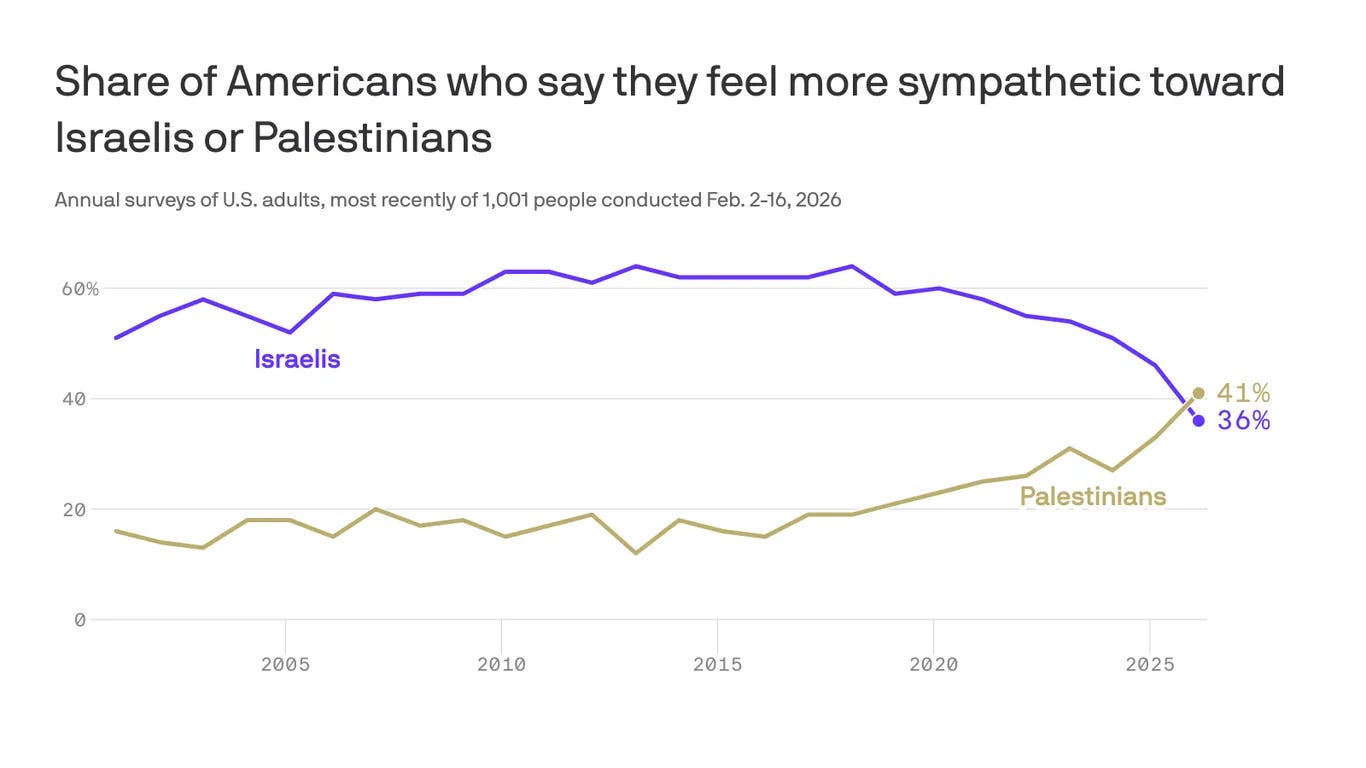
Support For Islam Goes Up After Terror Attacks (More Among Rep then Dems!?)
Jul 900:55:38Tap to summarizeIn this episode of Based Camp, Simone and Malcolm Collins dive into one of the strangest social phenomena of our time: why does public sympathy for aggressors often increase after horrific attacks? From 9/11 to Charlie Hebdo to October 7th, they examine the shocking data showing spikes in pro-Muslim and pro-Palestine sentiment right after major acts of violence.Simone lays out her theory: the concept of “victim blaming” was originally created to address real systemic injustices but was hijacked and weaponized in the 2010s by feminist movements (SlutWalks, MeToo, “Believe All Women”). What began as a tool against unfair bias became a reflexive shield that makes it taboo to assign any responsibility to victims — even when they are the aggressors. They also discuss the rise of external locus of control, cultural shifts on the right, demographic realities, and how women helped turn “victim blaming” into a societal mind virus.Show NotesWHY* Did muslim sentiment in the USA improve after 9/11* Did muslim sentiment in France improve after Charlie Hebdo’s offices were subject to a terror attack?* Did pro-Palestine sentiment spike after the October 7th attacks on Israel?It may come down to a concept that was created to address unfair bias against people who were genuinely screwed over by societal forces but ultimately co-opted and ruined by… women.So let’s discuss how women appropriated and ruined the concept of victim blaming.The Mystery of Victim BlamingSince when did victims become beyond reproach?Our immediate hunch is that this happened because the urban monoculture elevates victims and holds victims to be blameless, but WHY WOULD SOMEONE DO THAT?We checked Google ngram viewer for “victim blaming” and were kind of shocked:* The term “victim blaming” only emerges around 1970* From 1970 to 2010 Victim blaming shows modest linear growth* And after 2010 its trajectory changes into exponential growth, which only after 2020 started showing signs of a shift to mere exponential growthGoogle Trends shows similar results (the term would only spike with incidents, then go back to zero, before 2010).To add to this: @NotAldousHuxley had observed that pro-muslim sentiment spiked after 9/11 and anti-Israel sentiment spiked after the October 7th attack Palestinean attack on IsraelThis suggests some sort of pathological favoritism toward whoever might be seen as a potential victim, but I found this hard to believe so I double checked:Victim Blaming Ideology in ActionPro-Muslim SentimentWhat’sPew research found that pro-Muslim sentiment rose in the US after 9/11 and in France in 2015 after the attack on Charlie Hebdo’s offices (the publication that published an illustration of the prophet Muhammad).From their article: “A new Pew Research Center survey finds that 76% in France say they have a favorable view of Muslims living in their country, similar to the 72% registered in 2014. Meanwhile, the percentage with a very favorable opinion of Muslims has increased significantly, rising from 14% last year to 25% today. Attitudes toward Muslims tend to be more positive on the political left in France, but ratings improved across the ideological spectrum.The pattern is similar to what we found in the U.S. following the Sept. 11 terrorist attacks. Favorable views of Muslim Americans rose from 45% in March 2001 to 59% in November of that year. The increase took place across partisan and ideological groups, with the biggest improvement occurring among conservative Republicans.”Pro-Palestine SentimentAfter the October 7th attacks, Gallup found that Americans shifted toward being more sympathetic toward palestineans:The change is most pronounced in young people:And least pronounced in old people:The Creation and Appropriation of Victim BlamingBefore Victim BlamingGenuine victim blaming is old: There are plenty of religious texts that frame victims as sinners.Before the term was popularized, people sometimes pointed to the “just world hypothesis”: That people want to believe the world is fair, so they sometimes assume victims must have done something to deserve their suffering.OriginsPsychologist William Ryan introduced the phrase “blaming the victim” in his book of the same name, published in the 1970s* He developed the concept to critique explanations of poverty and racism that shifted responsibility from unjust social structures onto marginalized communities themselves.* Ryan’s work specifically responded to Daniel Patrick Moynihan’s 1965 report on Black poverty, arguing that such analyses implicitly blamed Black families for structural inequalities.* So Ryan’s critique there is pretty fair, as it does seem that after 1950 a bunch of policies changed that did really screw over black families and we’ve covered them in various episodes* 1950s Black Families Where Twice as Stable as Their White Counterparts: The Theft of Black CultureExponential 2010s GrowthWhat happened starting in 2010???TL:DR Victim blaming got primarily hijacked by women about women who then reflexively internalized that it was NEVER acceptable to blame women.Specifically:* 2013: SlutWalk framed victim blaming as a central injustice* The 2013 SlutWalks were a series of global, grassroots protest marches held in cities worldwide—including New York, Chicago, and various university campuses—to protest rape culture, victim blaming, and slut-shaming.* The movement first originated in 2011 after a Toronto police officer advised university students to “avoid dressing like sluts” to prevent sexual assault. By 2013, the marches had expanded into a massive, worldwide phenomenon* The movement first originated in 2011 after a Toronto police officer advised university students to “avoid dressing like sluts” to prevent sexual assault. By 2013, the marches had expanded into a massive, worldwide phenomenon* Demonstrators, primarily young women but open to all genders, took to the streets in clothes that were conventionally considered “provocative” or “slutty,” alongside signs with slogans like “Still not asking for it”.* 2017: #metoo became a global phenomenon when actress Alyssa Milano encouraged women to use the phrase following the sexual abuse allegations against Harvey Weinstein.Broadly:* Universities, NGOs, and government agencies began publishing extensive material on “rape culture” and “victim blaming,” making the term standard in training manuals, awareness campaigns, and policy documents* Psychological and criminological research on victim blaming expanded, including studies of attribution, just‑world beliefs, and rape myths, so “victim blaming” appeared more often in titles, abstracts, and key terms.* Professional bodies (e.g., police oversight offices, social services, health institutions) issued formal guidance documents on “ending victim blaming” or “reducing victim blaming in investigations,” further institutionalizing the term.* Platforms like Twitter, Facebook, Tumblr, and later Instagram and TikTok enabled rapid diffusion of feminist and social‑justice terminology; calling out victim blaming became a recognizable move in online debates.Victim blaming was literally censored* Facebook’s Community Standards defined bullying and harassment as content that “purposefully targets private individuals with the intention of degrading or shaming them” (e.g., targeted shaming, altered images, doxxing, or repeated unwanted contact). Victim blaming would be categorized as bullying or harassment so long as it entailed direct, targeted degradation of a specific victim (e.g., shaming a named survivor in a harassment campaign),* Twitter’s Rules prohibited abusive behavior, targeted harassment (e.g., one-sided insults, threats, incitement), and hateful conduct.Wait—is this about a rise in an external locus of control?The most direct and frequently cited peer-reviewed evidence comes from a 2004 cross-temporal meta-analysis published in Personality and Social Psychology Review:* The researchers analyzed 97 samples of college students (N=18,310) and 41 samples of children ages 9–14 (N=6,554) from 1960 to 2002.* Locus of control scores became substantially more external (about 0.80 standard deviations) over this period....
Transcribe →
The Left Stopped Fighting Back: How The Culture War Got Weird In 2026
Jul 800:53:15Tap to summarizeIn this episode of Based Camp, Malcolm and Simone Collins break down the Revenge of the Chud — the astonishing wave of woke flops across Hollywood and gaming. From Christopher Nolan’s The Odyssey getting destroyed in reactions, to Disney’s Snow White bombing, Marvel flops, Ubisoft’s collapse, and more, they explore why “go woke, go broke” is finally hitting critical mass.They dive deep into the cultural shift: the explosion of right-leaning AI creativity (Skybrow Cinematic Universe, Leaflet vibe-coding, based AI music/videos), the mysterious disappearance of woke consumers and leftist counterculture, and why the right is building new artistic languages with no real opposition.Plus: homeschooling chaos, Reality Fabricator (RFAB) updates, techno-feudalism, and why the future of culture belongs to those actually creating.Episode Transcript[00:00:00] Malcolm Collins: Hello, Simone. I’m excited to be here with you today. Today, we are going to be talking about the year of the chud. W- I thought last year was the year of the chud in terms- ... of woke flops. But a lot of other channels, they’ll do an episode on every woke flop, every big conservative win.[00:00:16] I wanted to cluster all of these together because now- ... their frequency and scale has been genuinely astonishing. And I think to a point where people are beginning to, even in the industry, be like, “Oh, we can’t do this anymore. Like, we cannot cast these types of individuals anymore. We cannot lead with X types of characters anymore.[00:00:44] Like, the market simply does not tolerate it.”[00:00:47] Speaker: such as Christopher Nolan’s, , Odyssey, which has just been absolutely destroyed in reactions on YouTube with videos attacking it or mocking it, getting more views than it has, , with a huge negative like to dislike ratio. , And, , especially for a movie that like this mainstream, this big. , And, , I think what Hollywood may take away from this is you cannot cast black people in non-black roles going forwards and you cannot cast trans people as cis people going forwards.[00:01:19] I think not that you can’t cast these people more broadly, but those are things they should have known. I mean, like we learned you can’t cast white people as black people a while ago. Why did it take them so long to learn that with white people? Or maybe they won’t learn. As you know, I said in the Kirsha thing, , we had to literally shut down all of Ubisoft to \ get it through their sick skull, , that we didn’t want that slop.[00:01:44] , So maybe we’ll have to shut down a lot of Hollywood as well.[00:01:46] Speaker 10: Love the women 87% like dislike ratio for Christopher Nolan’s The Odyssey. Oh my God, 446,000 dislike a ruskies[00:01:58] Malcolm Collins: And what’s interesting about this, and, and this is what I’m going to start with, ‘cause I think it’s the, the most interesting part other than just cheering every individual victory, is it sort of feels like we don’t have anyone playing against us, and I want to explore why. We have another episode where we go into this, called, like, The Mystery of the Missing Woke Customer. Oh,[00:02:23] yeah ...[00:02:24] because if we look at the number of people, even number of people who, like, I know of in my life who are still very urban monoculture-[00:02:33] Mm-hmm[00:02:34] um, there should be a buyer base for woke-ified products. And yet-[00:02:41] Simone Collins: Right ...[00:02:42] Malcolm Collins: we are seeing numbers that are, like, 50 people bought it or something. You know, like, in some of the instances it’ll be like a, you know, 5,000 people bought something that cost 300 million to make, right? Like, it, there are numbers that simply do not make sense.[00:02:59] But I had this realization.[00:03:01] Simone Collins: Well, no, there was one other detail that you said in that episode that really stuck with me was that when you looked into it, a lot of the developers of these w- woke audience targeted games that no woke people are buying, themselves don’t even eat the dog food, as we say in Silicon Valley.[00:03:15] Like, they don’t, they wouldn’t even buy the games they’re developing, if fact they’re just- Oh, yeah. Well, I mean,[00:03:18] Malcolm Collins: a number of[00:03:18] Simone Collins: woke games- ... consuming 90s media, right?[00:03:20] Malcolm Collins: Yeah. Like, if you even look at a game l- like Concord or whatever, when that bombed, or, or Mixtape, like, if, even if the development team was playing it, they would have better numbers, right?[00:03:29] Like, the, the, the numbers are so low, they almost don’t make sense. And w- I had this realization that changed a lot of this for me, which is I was talking with a reporter, a trans reporter who writes on us sometimes. I actually think she’s quite a based individual. I have no negative feelings towards this individual.[00:03:49] Y- you- ... she’s one of those, you know, based trans people, if you, if you know any of them. They, they actually exist. But she was like, “Anything new going on in AI? [00:04:00] Like, what are you thinking about in AI? What is your community talking about in AI?” And I was like, “W- w- like AI is everything in my community right now.[00:04:08] Like do you know about the Skybrow Cinematic Universe?” Right? And she I mean, obviously she didn’t, but I started to walk her through it, and then I had this realization and I started researching it, and there isn’t. If you look at the, the right-leaning community online, you’ve got you know, Leaflet will be on a stream, and she’ll be like, “Wouldn’t it be funny if we made a video game about what the tribe of warrior women in Africa who are actually like super involved with slaving and the people trying to stop them were the British, if we made a video game about that tribe?”[00:04:43] And so she’ll just start like vibe coding it on the screen in the background while she’s streaming.[00:04:49] Simone Collins: That’s so fun.[00:04:51] Malcolm Collins: Or the other game she made when she was streaming last time. I mean, I keep seeing her make ones a lot. The other one was on trying to catch Mexicans crossing the border with a lasso.[00:04:58] Oh my God. Oh, my God. The other one was going to the Anthony trial and selling a pineapple that you had you know- Oh, no ... kept in the, what do you call it? Kool-Aid or whatever, whatever, whatever, whatever the, Something about Kool-Aid and pineapples ... the funny viral drink is.[00:05:13] Simone Collins: Whatever.[00:05:13] Malcolm Collins: And then people would try to rob you.[00:05:15] And just fantastic. I love it. But it’s, it’s- Mm ... you see that. You see, the shared... And this, this is very interesting to me because I realized when I was talking to the reporter about it and they’re like, “Well, that’s interesting.” And I go, “No, no, no, no, no. Like, you don’t get it.” Like, they’re like, “Oh, y- now that this is cheap, there’s people making stuff with it.”[00:05:36] And I’m like, that’s not really the fullness of what’s going on here. That’s a bit like looking at early 4chan and being like, “Oh, people have started, found, found a place where they can anonymously share stuff. And so th- now they’ve begun to like iteratively share images.” And it’s like, yes, that is true.[00:05:53] But more important, a unique language and artistic style began to be developed in the way that those lang- images, those macros communicate. And this language and artistic style ended up being a dominant force in American politics you know, about 15 years, 10 years after it originated, right? And having been around during that period What is happening in the artistic language of the right and how we use AI-[00:06:30] Simone Collins: Hmm[00:06:31] Malcolm Collins: feels incredibly similar. It feels like this type of ... And I think if you’re on the right, or this broader community, you do not notice just how frequently you are hitting AI art, right? Mm. Like, I this happened to me when at first what I’m thinking is, like, Sky Brown stuff, and then I thought oh, well, you know, the only person who really opposes us is Dog Shocker Hasan, and then I was like, oh yeah, I should send them the, the video where Hasan raps about shocking his dog.[00:07:05] And then I was like, oh yeah, that’s an AI video. It had actually gone out of my brain that the dog, the dog shocking video was made with AI because it wasn’t done in the stylistic language of the things that I am used to being made in AI.[00:07:23] Simone Collins: Oh, that’s so funny.[00:07:24] Malcolm Collins: But it is, you know, on the the secondary stylistic language.[00:07:28] In the same way with, like, as memes were first developed, you had your Wojaks, you had your Pepes, you had your, ... The dog shocking video, in terms of its artistic meme category, falls into the same category I’d put the Spencer Pratt for, for mayor ad. Which again, is something made with AI.[00:07:46] And what’s important to note is if you’re on the right, you’re like, “Well, of course we’re using AI to make things.”[00:07:52] The left isn’t. I actually went into this with y- w- well, with AI to try to find [00:08:00] is there any equivalent online, like, creation, collaborative creation with AI community on the left? And the best it could find was somebody who was politically neutral and m...
Transcribe →
BDSM + Catholicism: It Almost Happened
Jul 701:22:00Tap to summarizeIn this explosive Based Camp episode, Malcolm and Simone Collins break down the German Catholic Church’s controversial Synodal Way — a major national synod that responded to sex scandals by pushing radical progressive reforms with overwhelming 90%+ bishop support. From blessings for same-sex unions and transgender record changes to women’s ordination, reevaluating celibacy, and even creating a parallel “permanent synod council” governance structure, the German bishops openly defied the Vatican.The Collins compare this to the recent SSPX excommunications, dive into Catholic history (including crusader popes, corruption, and institutional capture), discuss BDSM/queer Catholic events, and explore whether the Church can be saved or if a new path is needed. A must-watch for anyone following religion, culture wars, fertility, and institutional decay.Episode Transcript[00:00:00] Malcolm Collins: Yeah, so when I say coup, this is... This really happened.[00:00:05] Simone Collins: Yeah.[00:00:07] Malcolm Collins: If you’re like, “How far will they go?”[00:00:09] Look at these 90% votes we’re seeing here. And the reason we’re talking about this right after the SSPX thing is I want to show the way the Vatican reacts when progressives do something demonstrably worse, but in the ex- same, same directionality as what SSPX is doing. When I say we, I see the Catholics who do not want this as our genuine allies in this journey, right?[00:00:36] Would you like to know more?[00:00:37] Malcolm Collins: Hello, Simona. I’m excited to be here with you today. I had a shocking event. So we did an episode on the Catholic Church expelling some of its most devoted bishops- Yeah[00:00:50] well, when they were ordained bishops, for being SSPX. And, you know, we were like, “This is fairly mainstream conservatism within the Catholic Church. They don’t really hold that many radical beliefs.” And somebody was like, “Oh, you don’t know anything about Catholic history.[00:01:06] You need to read more about recent Catholic history to really have a perspective on this.” And I think that that was the dumbest thing you could have told me to do, if you wanted me to have- Oh, no ... like-[00:01:15] Simone Collins: Yeah. What were you[00:01:17] Malcolm Collins: thinking? Literally every time I look at Catholic history, it’s like,[00:01:20][00:01:24] Malcolm Collins: when you put a cucumber next to a cat, and it, like, turns and looks at it and flies in the air like, “Oh, my God.”[00:01:30][00:01:33] Malcolm Collins: But today- Oh, no ... we’re going to talk about the craziest event that I’ve ever heard of, where they basically tried to create a break-off gay Catholic church that r- had sort of a different governing system than the main Catholic Church, different beliefs and different rules than the main Catholic Church.[00:01:54] Hold[00:01:54] Simone Collins: on. This sounds really fun.[00:01:56] Malcolm Collins: And it all started in the craziest way possible, too.[00:02:01] Simone Collins: So[00:02:02] Malcolm Collins: they had all these sex scandals, okay? Yeah. And so in response to the sex scandals, and this was the second-biggest convention in response to the sex scandals. This was not, like, some small whatever thing. This was for the entire national priesthood in, in Germany.[00:02:18] Mm-hmm. So they, they put on this giant Germany-wide, like, for what Catholics believe in Germany event about what to do about all of the you know, child situation, right?[00:02:30] Simone Collins: Wasn’t this a South Park episode?[00:02:33] Malcolm Collins: B- South Park basically had a thing on this. Now, the biggest thing they did in response to this was the thing they did at the Vatican, but this was the second biggest.[00:02:39] Simone Collins: Okay.[00:02:39] Malcolm Collins: And so what they decided to do, and what this conference turned into, and I kid you not, we’re gonna go into the details. If you’re Catholic and you already know, you’re like, “Oh, no, “ they immediately started... And I, and I like Catholics. I’m, I’m pro-Catholic.[00:02:56] I like gays, okay? But I think that w- if you were looking at these events-[00:03:02] So they got them all together to solve this issue.[00:03:05] And the things that they started drafting were things like we should change trans people’s genders when they get in their like confirmation files. Uh-huh. We should start blessing same-sex unions. We should start normalizing priests having sex even recreational sex. And- Wait,[00:03:27] Simone Collins: but within marriage or not within marriage?[00:03:29] Malcolm Collins: Just sex. They, they- Just- ... weren’t interested in, in priests getting married. They were interested in removing the celibacy stuff. We should start- But[00:03:37] Simone Collins: isn’t it sinful per the Catholicism to have sex outside marriage?[00:03:41] Malcolm Collins: No, no, no. That was another thing that they wanted to address-[00:03:44] Simone Collins: Uh-huh ...[00:03:44] Malcolm Collins: to remind people very clearly that it is not a sin to have sex outside of marriage.[00:03:49] Simone Collins: Remind?[00:03:50] Malcolm Collins: They, well, they believed that this was the correct teaching. And they w- wanted to start a separate... And I should note here, if you’re like, “Oh, this was like some [00:04:00] fringe loonies or whatever,” there, there were two cardinals involved. One cardinal basically ran this. There were hundreds of bishops involved.[00:04:08] And despite all of this, S- SSPX says we want Latin mass and think that you’re being a little too ecum- ecumenical. They get excommunicated. Okay? Oh my God. This event, they ran this multiple years.[00:04:21] And I want to point out that the Vatican told them at one point, like, “Hey, you guys are saying the quiet part out loud a little too much.” Because at this event, many of these crazy things I’m talking about had over a 90% vote from the bishops.[00:04:36] Simone Collins: Oh,[00:04:36] Malcolm Collins: wow. But, but the Vatican said, “You cannot keep doing this.[00:04:40] This is a threat,” to the same thing they said that SSPX was a threat to- Oh, no ... the church’s unity. This is a threat to the church’s unity. And they just ignored the Vatican and kept doing it, no excommunications[00:04:52] Simone Collins: Okay[00:04:53] Malcolm Collins: So-[00:04:54] Simone Collins: Was it, what, did, did you see anything about their justification where they like, “Look, whatever it takes.”[00:04:59] We’re gonna go over- “We’re hemorrhaging numbers.” Quotes.[00:05:01] Malcolm Collins: Yeah, yeah. We’re gonna go over quotes of their justification.[00:05:04] Simone Collins: Okay.[00:05:04] Malcolm Collins: We’re gonna go over like why they thought they were doing this, where they thought they were getting the backing for this stuff, like why they thought this was an okay thing to do at all.[00:05:13] Mm-hmm. How close they came to creating a counter Catholic government to specifically oppose the norm set up by the Vatican. And we’ll also look at with current voting numbers in terms of, because I think Catholics sometimes forget how far left the bishop class of the church actually is.[00:05:31] Simone Collins: Hmm.[00:05:32] Malcolm Collins: What would happen if they actually tried to do a Vatican III? Because a lot of people think it would push back. We’ll go into the numbers and see if it actually would. And I wanna go into all of this by pointing out- We as people are fairly pro-gay for conservatives, right? Like, I’m like, I don’t think that it should be outlawed.[00:05:47] Do what you wanna do, whatever. That, g- that said while I think that, that’s from my reading of the Bible. That’s not a traditional Catholic interpretation, right? Yeah. Like, and to say that this should be normalized within a traditional Catholic context is quite different than me being like, look, I like gays.[00:06:07] I like Catholics. Do I think that this should be pushed to be normalized in the church? Especially the trans stuff, when we now know how harmful this is. See any of our other episodes on that. That’s where I’m like, wow, this is crazy. And if you wanna get an idea of how crazy all of this is in Germany, I will read to you a article that came out, I think just, like, two days ago.[00:06:30] Major Catholic event in Germany features BDSM and lesbian groups.[00:06:36] Simone Collins: Wait, like, an act- m- not that, like, the Catholic Church also appeared at an event where there was...[00:06:43] Malcolm Collins: no. A number of Catholic bishops, including Bishop Franz Wong Wo- Woensberg co-host an event. So a major Catholic event in Germany will feature BDSM and lesbian Catholic groups.[00:06:53] The German Katholiktag, or Catholics’ Day, will take place from, literally called Catholics’ Day, M- May 14th to May 16th in Woensberg, and will prominently feature several heterodox groups. Now, again, I’m okay with BDSM, right? Like, I’m totally okay with...
Transcribe →