Loading summary
Transcript91 lines
- [00:04]
Brooke Devard
The telegraph. Hi, this is Brooke Devard from Naked Beauty. I am always looking for ways to elevate our daily rituals. And the Kohler Smart toilet is proof that design changes everything. It's this stunning sculptural piece that feels like quiet luxury for your bathroom. It totally transforms your daily ritual into something elevated with customizable cleansing and touch screen controls. Functional art that makes your space feel cleaner and more intentional. A modern home deserves a modern toilet experience the difference of Kohler Smart toilets. Find more@kohler.com.
- [00:48]
Jonathan Fields
Hi, this is Jonathan Fields, host of the Good Life Project. What if your home could welcome you at the door, energize your kitchen and calm your bedroom all automatically? With Pura's family of smart diffusers, you can send every space perfectly. Choose premium clean fragrances, adjust the intensity and set schedules right from your phone. It's whole home scenting designed for the way you live. Build your Pura system today@pura.com Wholehome.
- [01:22]
Venetia Rainey
I'm Venetia Raney and this is the latest, a bonus episode for you today. As we've been mentioning this week, we recorded a special, special roundtable on 100 days of war. You can watch that on YouTube and we'll put a link to it in the show notes, but we wanted to share the audio version with you for those who prefer to listen that way. We were joined by an American and an Iranian for a fascinating discussion on what's gone right, what's gone wrong, and the long term implications of the conflict, not just for those directly involved, but also for the wider world in the years ahead. Our guests were Ben Hodges, the former commander of the US army in Europe and a veteran from the Iraq war. He joined us from Frankfurt in Germany. And Holly Dagres, Iran analyst at the Washington Institute and author of the Iranist Substack. She joined us from Washington.
- [02:07]
Ben Hodges
A short time ago, the United States military began major combat operations in Iran today.
- [02:15]
Narrator/Announcer
President Trump says Iran's supreme Leader, Ayatollah
- [02:17]
Holly Dagres
Ali Khamenei was killed in the attacks.
- [02:20]
Venetia Rainey
Ayatollah, say Ayatollahi Khamenei.
- [02:25]
Ben Hodges
The Pentagon is weighing a takeover of
- [02:27]
Roland Oliphant
that island as a way to force
- [02:29]
Ben Hodges
the reopening of the Strait of Four moves.
- [02:32]
Holly Dagres
Iran begged for this ceasefire and we all know it.
- [02:36]
Roland Oliphant
Does anyone really think that someone can
- [02:38]
Holly Dagres
tell President Trump what to do?
- [02:41]
Roland Oliphant
Come on,
- [02:43]
Venetia Rainey
has this war panned out the way you expected it to when hostilities started on February 28th? Ben, kick us off?
- [02:51]
Ben Hodges
No, not at all. I think the fact that we had no clear objective from the beginning, but multiple different justifications. That was a terrible omen for what might happen if you don't get the objective right. It's very difficult to get the force right, to have the right policies and do all those things. I was confident that the Navy and the Air Force working with the Israeli Defense Forces would be very competent and professional and doing their tasks. But their tasks bore no relation to what the strategic objectives should have been. And so I think that's part of the reason we are where we are.
- [03:38]
Venetia Rainey
Be great to hear about what you think those strategic objectives should have been a bit later. Holly, what do you think? Did this pan out the way you thought it would?
- [03:43]
Holly Dagres
I think, you know, when I look back at everything that's happened, it seemed like there was a plan in place. But then as time went on, it became clear that there wasn't. Not just because the objectives kept changing, but even just the way things were going. And some of the commentary from the President going from help is on the way, take over your institutions tweets he had put out in January after the unprecedented massacre of Iranian protesters to just the days leading up to the ceasefire where he said he was going to bomb the country back to the Stone Ages and then saying that a whole civilization could die tonight. What really stood out to me from the war was this downplaying of the fact that the Strait of Hormuz could have been closed. And we and Ben can relate to this. I imagine, like when war gaming and a potential US Iran war over the decades, that was one of the most clear cut things that everybody thought would happen and didn't just sit there and say, oh, we didn't know that was going to happen. I think that was really frustrating because it just, it showed that there was not a lot of deep thinking about where this war could go and that it was planned as it went along. And that really disturbed me as an analyst. And I saw this play out in several fronts. The fact that they had fired so many people that were brilliant on Iran and the US government and of course the lack there of Persian language speakers in the U.S. government. And I think overall this misreading of the clerical establishment itself, I think that there are some people in Washington that look at them as inferior because the country is run by clerics.
- [05:39]
Roland Oliphant
I was wondering, Holly, is our. Well, you're gonna have to stand in for Iran here. You are Iranian on the panel. What about the Iranians? I mean, I think it would be a bit black and white and maybe naive to turn around and Say, well, what did the Iranians get so right. But how has it gone from their point of view? And can the same kind of charge be leveled at them? Did they also make massive blunders?
- [06:01]
Holly Dagres
I think they had a really a pretty good read of American domestic politics. They understood that the so called forever wars were unpopular and that if there was enough cost, especially that of the deaths of American soldiers, that this would quickly be an unpopular war and of course, the impact on the US Gas prices. But more importantly, they really knew and understood the president, and not just from like a standpoint of, oh, they've been watching what he's been saying over the years. Like, they actually had people sit and study him and study his psychology. There's articles actually that have mentioned that. I think they understood this as an impatient person. That's very mercurial. At the end of the day, Iranians are known for their negotiation skills. In 2020, Trump had famously tweeted, iranians haven't won a war, but they've never lost a negotiation. Just to paraphrase what he had said, Iranians are shrewd bargainers. And I was joking with a former political prisoner, US Hostage, the other day on Twitter and I was like, they should have sent Iranian to negotiate with the Iranians because they know how to play the game. I know we're laughing here, but this is the thing. If you walk away from the talks, I think that would actually in some ways freak the Iranians out. And then they would come after you and be like, okay, okay, well, we'll meet you halfway.
- [07:29]
Roland Oliphant
They talk about the bizarre, don't they? Kind of the bizarre way of haggling in the market.
- [07:35]
Holly Dagres
Exactly. And I really, I really think that they understood Trump is not patient, that he wants to move on, apparently to other regime change ideas in Cuba, for instance, and other issues in general. They read that well and they, they really held their ground. And of course, their new weapon is the Strait. And they understand that they have in some ways enforced their own maximum pressure on the world economy by holding the strait hostage.
- [08:06]
Venetia Rainey
Ben, what do you make of that? Just maybe quickly remind our listeners and view viewers of Trump's initial goals in that speech that he gave on February 28. So regime change, or the people would rise up and overthrow, or we know from background reporting that maybe they hope to install some kind of puppet leader, Delsey Rodriguez figure permanently disable their nuclear program and get rid of the enriched uranium, destroy their missile capabilities, destroy Iranian proxies and destroy their conventional navy. Three, maybe four out of those Five have not been achieved as far as we can tell at the moment. Anyway. You mentioned what you think the Americans should have set as their strategic objectives. What could they have done to achieve more of what they laid out? Is there a version of this war that could have got them further?
- [08:47]
Ben Hodges
Honestly, this war should have never happened. I'm old enough to have been a cadet at the military academy in 1979 when the revolution in Iran took our embassy and created what exists today. The government of Iran has been the enemy of my country for my entire adult life. So of course I would want to see that, that government, that regime destroyed so that Iranian people could achieve what they, what they want. Having said that, I think we should have never started, embarked on this, on this war. If you think about what the so called objectives were, the Strait of Hormuz was open. Nobody was paying any toll or fee or anything for it. We had had problems before back in the 80s, I remember the IRGC Navy would set their little boats out there harassing US Navy ships and tankers. But that was kind of batted away and you didn't have to go to war over that as a result of the jcpoa. I mean, there was not a perfect situation, but at least Iran was not working on developing a nuclear weapon. Why did we do this? And I think it really was in part, President Trump is constantly comparing himself to Obama and to Biden. And this is all about doing something better than those two guys ever did. That's, he always makes references to them. The other thing is that I really do believe, and I'm glad that Holly alluded to it, what happened in Venezuela was about the ideal situation for a Trump administration. Only a couple of soldiers were wounded. They got Maduro and a regime change that turned out ideal, at least from, from his perspective. I'm not advocating for it, but from his perspective was ideal. I think he really believed that if we just cut off the head, there'll be an uprising there, the Iranian people will finally get freedom and, and then Trump will be the hero. He did what Obama never could do and Biden never could do or even Reagan couldn't do. It was that sort of hubris that took us down this path.
- [11:03]
Roland Oliphant
It does seem to me you're the military professional in the room. The US Military is actually at an operational level, I mean, performed remarkably well. I mean, they've, they've taken very few losses. You know, the one aircraft that came down inside Iran there was a remarkably successful rescue operation. They seem to have hit their targets. I don't know, maybe. Maybe you're about to turn around and say, well, actually, I was watching this, and there are terrible or blunders. But. But it seems to me like this isn't a case of. Of great operational success that just hasn't delivered or couldn't deliver the. The political objective. Is that fair?
- [11:41]
Ben Hodges
Yes, that's very fair. Secretary Hexeth gets up there and brags about how they've destroyed so many vessels of the Iranian Navy. That means absolutely zero. It is not relevant. The strait is still blocked to the extent that as long as ships believe that they might get hit by Iranian drone or missile, that the strait is blocked. So it doesn't matter how many other Iranian Navy vessels have been sunk or destroyed. I hate to sound like a scratch record, but if you don't have the objective right, then you start searching around for other metrics, and the go to is always, how many bad guys did we kill? How much of their stuff did we destroy? You know, and I mean, it didn't work for us in Vietnam. It didn't work for us in Afghanistan, but yet here we are again. When you don't have a clearly defined
- [12:31]
Roland Oliphant
objective from an operational military point of view, do you think they've done a good job?
- [12:37]
Ben Hodges
I feel a little uneasy being critical of the guys who are actually in the fight. But two things stand out for me is a lot of damage has been done to US Military capability. I mean, we had very expensive radar and aircraft destroyed sitting on the ground. This, to me, was quite a surprise. We had gotten perhaps complacent because we've been parking aircraft and radar all throughout the region in partner countries that allowed us to do it. Certainly we knew that Iran had drones because they were selling them to Russia. So we seem to have been really unprepared that Iran would be able to strike so much throughout the region. That surprises me. I just. I don't know the thinking behind that, but that seemed to surprise that we were not prepared for them to have done that. The US Military is always very good at adapting. You know, when we always. Secretary Gates one time said, the US Has a perfect record of getting it wrong at the start of every war. But how fast you get it right is. Is the key. So they'll. They'll figure out how to clear mines out of the straight. They'll figure out how to. To do what's needed to be done. But I think, you know, people are going to be questioning the ammunition consumption. I mean, we have burned through hundreds of Tomahawks and, And we like to use Tomahawk because it reduces the risk to almost zero for the pilots. If you're air launched, for example, or other precision munitions, I should say, I think now they're going to have to start using more weapons. If this picks back up again, that will increase the risk to pilots and ships.
- [14:20]
Venetia Rainey
Holly, I'd love to hear your take on what you've been surprised on in terms of how Iran has conducted itself during this conflict.
- [14:26]
Holly Dagres
I'll say what didn't surprise me, the war itself. And I'll say why air had been unpacked just a little bit earlier. But I don't know anyone, whether they were Iranians I talked to inside the country or people working on the file year in Washington that didn't think round two of a war was going to come. We all assumed by June something was going to pop up. But what did surprise us was that it was going to happen as quickly as it did a few months in advance. And that was what really surprised me the most.
- [14:59]
Venetia Rainey
You mean round two, sorry, as in round one was the 12 day war last summer.
- [15:05]
Holly Dagres
Round two started on February 28th. And I think what sped up the timeline of course was this anti regime uprising in January. So I think the timeline itself surprised me. But I definitely thought they were going to kill the Supreme Leader. And I remember telling folks just in the lead up to that and people were looking at me like, what are you talking about? I'm like, it only makes sense after what happened in Venezuela that they would go after the Supreme Leader. I noted a lot of the time was the way that Supreme Leader Ali Khamenei would speak about the first war, some of his rhetoric and if anything I thought that the President would take it personally. And I remember right after the 12 Day War when the first Khamenei declared victory, I think it was the President that tweeted or posted on Trisocial saying that you're lucky that I didn't let them kill you. And so you could tell that this stream of consciousness of eventually going after him and especially with the outcome of Venezuela, that inevitably he was going to be a target.
- [16:15]
Venetia Rainey
I just want to flip the question that Roland was asking to Ben. Iran has taken a battering, right? I mean, yes, the regime is still standing. Yes, they have managed to close down the Strait of Hormuz, which is obviously a huge strategic success. But you know, their leader has been killed. A lot of the top echelon has been killed. Their conventional navy's been destroyed, their missile capabilities have been heavily degraded. They've damaged alliances with many of their Gulf partners. Do you get a sense that the Iranian regime is weaker 100 days on? I know the people in charge are more hardline, but do you think the sort of structure of the Iranian regime has been weakened?
- [16:51]
Holly Dagres
I said this after the 12 Day War, and I think it still resonates now, is that we have to separate weakness in terms of foreign policy and domestic policy. I think in terms of foreign policy, it's strengthened itself because it shows that it is a regional power, that it has been able to close the Strait of Hormuz, it's been able to attack its neighbors. And despite doing so, those neighbors have been effectively calling for a ceasefire. Some of them are involved in the diplomatic negotiations, such as Saudi Arabia. And so it continues to have this deep relationship with Russia and China, who. And it's two of its key backers as allies. But on a domestic front, I mean, it's just atrocious. The war has obviously left the Iranian people worse off than before it. But those systemic issues also continue to persist, which are mismanagement, corruption and repression. And those are the exact issues that have driven Iranians into the streets for cyclical anti regime protests for years. And so they still have a domestic time bomb on their hands, which has
- [18:02]
Venetia Rainey
been worsened by this war. Right. The cost of living crisis is enormous. The economic pressures are enormous.
- [18:07]
Holly Dagres
Absolutely. And so I think a lot of Iranians that are anti regime are very much disheartened by the outcome of this war. I think they really thought this was, in their own words, the last battle and that the regime was going to collapse. And I think there was also a real firm belief that the United States, being a global superpower, actually had the ability to do that. Just hearing some of the commentary now that the Internet's partially back on, people are really disappointed in the President, who had basically said in January that he was on the side of these protesters then to go sit, not just sit across the people that massacred them, but now also saying it'd be an honor to meet the current Supreme Leader, Mashtad Khamenei, and that he has a great reputation. And again, that doesn't surprise me because we saw this exact playbook play out with Russian President Vladimir Putin, North Korean dictator Kim Jong Un, watching how he embraces the dictators in other countries, it's not surprising that inevitably the President would talk about that in terms of Iran or the Islamic Republic as well. I can't obviously predict protest in Iran, but I just can't imagine that we've seen the last of the Iranian people, especially they're having gas shortages. They have an environmental crisis. The country, like some parts were running out of water. And so even, let's say hypothetically, they make the best, the best deal around between the US And Iran and they're able to provide that sanctions relief that would help stimulate the economy. I just don't think that it would do the kind of trickle down effect because of the corruption and mismanagement and because they haven't addressed those issues. And I just don't think that money would really trickle down to the Iranian people in the way that some assume.
- [20:14]
Venetia Rainey
We're going to take a short pause now after the break. Who are the biggest winners and losers of the Iran war so far? Stay tuned.
- [20:26]
Jonathan Fields
Hi, this is Jonathan Fields, host of the Good Life Project. What if your home could welcome you at the door, energize your kitchen and calm your bedroom all automatically. With Pura's family of smart diffusers, you can send every space perfectly. Choose premium clean fragrances, adjust the intensity and set schedules right from your phone. It's whole home sending, designed for the way you live. Build your Pura system today@pura.com wholehome.
- [20:54]
Narrator/Announcer
Think of a toilet as just an everyday object. Your entire perspective shifts the moment you experience a Kohler smart toilet. Design changes everything, transforming a basic routine into something extraordinary with standout aesthetics and intuitive controls. These are functional works of art, stunning design that never sacrifices performance. Enjoy customizable features for elevated comfort and convenience. It's more than a fixture. It's a cleaner routine and a more refined space. Experience the difference of Kohler smart toilets. Find more@kohler.com Grainger knows when you're a
- [21:32]
Grainger Announcer
procurement manager for an office park, you're not managing one building, you're managing all of them. And to stay ahead, you need to see through walls and around corners. Lights about to fail, filters ready to clog H Vac on its last leg. If you wait until something breaks, you're already behind. Count on Grainger for quality products, easy reordering and 24. 7 support. Call 1-800-GRAINGER click grainger.com or just stop by Grainger for the ones who get it done.
- [22:04]
Venetia Rainey
Welcome back. You're listening to Iran, the latest with me, Venetia Rainey and Roland Olyphant. And we're in conversation with the former commander of the US Army Europe, Ben Hodges, and Iran analyst at the Washington Institute, Holly Dagres.
- [22:17]
Roland Oliphant
David Barnier, the the outgoing chief of Mossad, has been speaking to The Israeli press. He's told the Jerusalem Post that he thinks that if the US Keeps up the financial, maritime, diplomatic and military pressure on Iran, then the regime will still fall within a year. That's what he's going around saying. Do you think he's got a point then?
- [22:40]
Holly Dagres
I've heard a US officials say that if they had kept the blockade going, which they are right now, but like, if they would just let it last a couple more months, that really could impact the Iranian economy and bring them to their knees, and that it's really the President, because he wants to sit and negotiate this deal that's going to stop that process. I think it's really hard to give timelines to these things of when governments can collapse. I think it's an inevitability that the economy is going to tank, but the timeline itself is hard to say. We've also heard the former head of Mossad say that this regime's going to go in the next 10 years. And that was before this war, when he was on a book tour. And so I actually believe that assessment because as long as you don't address those key systemic issues, and they've had 47 years to do so, I just can't imagine this country go taking a different direction, like the lives of the Iranian people improving.
- [23:45]
Roland Oliphant
Can you imagine a world in which in a year or two years from now, something dramatic happens in Iran maybe, that we weren't seeing, that actually vindicates this war, that actually has people saying, maybe people like you saying, you know what, actually we can trace that back to those few weeks in early 2026. And actually now it all makes sense. Maybe I was wrong to say that the war was a bad idea.
- [24:12]
Ben Hodges
I would love to be able to celebrate Iranian people becoming free and to see the death of this regime, what that would mean. And I'm prepared to give credit to whoever is responsible for it. But I think that. But if what you pose as a possibility does happen, there will be a lot of things that would have contributed to it. You know, the economic conditions, all the things that Holly just described, and the incredible courage of people willing to risk their lives, Iranian people standing up against this. I think the problem with your hypothetical is that in the US we're in an election year. You know, every member of Congress, one third of the senators, governors, people all over the country are up for reelection or are running for election in November. And the, the gas prices, all the inflation, all these things that are happening, I think are putting pressure on president, on the administration and of course, he's getting pressure from his Iran hawks, also say, look, finish the job now it's finally time to get it done. Hammer away. So this. This is going to, I think, be a major factor going forward because of the global economic damage. And I think a lot of people who voted for MAGA really did so because they were sure that the President would never get us in another long war in the Middle East.
- [25:48]
Venetia Rainey
Some argue that America's, you know, global credibility has been damaged and that its alliances, particularly sort of within NATO and Europe especially, have been degraded in a way that they won't be able to repair. I'm wondering if you agree with that, or is there a version that suggests that this extraordinary show of force actually reinforces America's position as the world's most formidable military? You know, a foe that someone like China is now going to certainly think twice about going up against, I would say.
- [26:15]
Ben Hodges
And I live in Europe, so I hear from a lot of different European voices as well. This is as bad as I've seen it in my adult life since the immediate aftermath of Vietnam. In terms of how we are viewed, it's hard to say we're a superpower if we lose all of our allies. And this administration has worked very hard to wreck decades of relationships, including in NATO, but also even in the Middle East.
- [26:48]
Venetia Rainey
Holly, what about Iran's alliances? They've been really strained by this conflict as well. And you were speaking a little bit about it earlier, but I wonder if you could talk more. You know, before the war, there was a growing sense of, like, a Saudi Iranian rapprochement, which was unexpected, I think, but that, I assume is dead in the water now. Can you just talk about Iran's place within the region and its relationships with its allies as a result of this war and how that might change going forward.
- [27:12]
Holly Dagres
In terms of Saudi Arabia, I definitely wouldn't say that it's dead in the water, because actually, the Saudis were one of the key Arab Gulf states to actually take part in these talks. And so we saw other Arab states in the Persian Gulf, like the uae, actually push back against the Islamic Republic. But I guess what you might be actually referring to is the fact that the Saudis and the Emiratis actually responded to Iran, according to reports that came out weeks after the fact.
- [27:46]
Venetia Rainey
Militarily responded.
- [27:47]
Holly Dagres
Yeah, I think we should maybe go back a little bit in history just talking about Riyadh and Tehran's highs. So, of course, the relationship effectively ended in 2016 after the storming of the Saudi Consulates in Tehran and Mashad, in response to the execution of a Shia cleric in Saudi Arabia. And at that time, there was actually a real push from Saudi Arabia in favor of maximum pressure, which took place under the first Trump administration. But then something happened, and that was the 2019 Aramco attacks. To their surprise, the first Trump administration didn't really respond or do anything about it. And these Arab allies started thinking that, okay, we can't rely on the United States. We actually need to take action, regional matters into our own hands. And this especially became present when tensions started rising in the Persian Gulf. There were after the Iranian oil embargo was started under the first Trump administration, and there were attacks on tankers. And so they started talking to the Iranians again, some of these Arab states and trying to improve ties. And eventually we saw what was in Omani, Iraqi, and then China brokered normalization agreement between Tehran and Riyadh that was signed in 2023. And so those ties have obviously improved. And throughout this war, we've seen them continue to talk. And I think this was brought up earlier. I think there was this real realization amongst Arab states that we really need to take regional security matters into our own hands. We need to talk to the Iranians. And the only pushback, again, was the uae, and that's the outlier. And so I think this in many ways, because the Iranians really read the room. The UAE was attacked more than Israel during this war, which is really surprising. And when you look at the big picture and why they did it, it was because they knew that if they put pressure on these Arab states, they would end up calling the president of the United States and saying, okay, this war needs to end.
- [30:02]
Roland Oliphant
I was thinking about kind of trying to put ourselves in. In other capital cities around the world and thinking about this and kind of, you know, what's the implications of this for. For other countries, for other worlds and the lessons being taken for. And the reason I this occurred to me is because I've just spent the past several days writing a piece about the Ukraine war, actually, and about. There seems to be a bit of a change of dynamic there, and the Ukrainians are feeling a bit more confident. But what I noticed is that the Iran war keeps on coming up in the rhetoric there. So, for example, there's. President Zelensky last night sent an open letter to Vladimir Putin saying, look, mate, it's time to sit down and talk. And he said part of his argument was we should freeze the line of contact, have the talks, and as a precedent he pointed to the Iran conflict and said, look, that's normal international practice. You have a ceasefire, you stop fighting and you talk while the ceasefire is on. So that's why we should do it, because look at Iran. That's the normal thing to do in these international conflicts. And interestingly also, there's a debate going on in Russia about should Russia now end the war, should it keep on fighting? There was a very interesting article that's gained traction in the Russian kind of academic press. A Russian academic arguing, look, what are the options that are left to us? Well, one of the options I hear for breaking the deadlock is we kill Zelensky and we kill all of the top echelons of the Ukrainian government. Well, look at what the Americans just did in Iran. We know that's not a silver bullet. That doesn't necessarily work. You know, people on both sides of that war, looking at the Middle east, looking at Iran, taking lessons from it, using it as a kind of precedent, I was wondering if, if you two might be able to kind of do a bit of that yourself. I mean, what do you think are the kind of the lessons, the precedents that other, other powers, other countries might be taking from this if you were, if you were. Put yourself in the shoes of Xi Jinping in the, in the Forbidden City, in Beijing, or, or in the Kremlin or, or, I don't know, somewhere else. She's your capital city.
- [31:51]
Ben Hodges
Well, if I was Vladimir Putin, I would throw myself out of a window in the tallest building immediately. Wishful thinking. So, of course, what I think, in most capitals, certainly in Europe, people are concerned about the impact on energy, on fuel. I mean, the US can produce what it needs, but that's not true of most European countries. So they're concerned. Or you've even got Ursula von der Leyen, the President of the European Commission, talking about fertilizer now as a major issue because it can't get it out of the, out of the region. So this has impacts on things more than just US Gas prices. One of the things that was most frustrating for me because I am such an advocate for NATO and American leadership in the alliance, to see the President going after our allies who didn't either, like in Spain, would not allow the use of bases there as part of the attack on, on Iran. And then after, after the fact, the President and Secretary Rubio yelling at our allies for not coming to help. And, and this is such a perverted understanding of how the alliance works and, and what the importance of communicating with, with allies beforehand. And then the same, of course, would go to our partners in the, in the region. We've got the NATO summit coming up next month, the 6th, 7th of July in Ankara. And I think this is going to be a very interesting thing to watch is how do they repair damage done to relationships based on problems that America's war against Iran is causing for economies across Europe. And then finally, I'd say the Ukrainians, I love this. They are now a security exporter, you know, teaching countries in the region how to defend against shahed drones, for example, because they were not prepared for it. And so the Ukrainians are sending people and capabilities. And I've always believed that Ukraine was eventually going to become the heart of the defense industry of Europe. And I think we're starting to see some of that already, some irony that
- [34:09]
Venetia Rainey
the Americans turned down that assistance right at the beginning of the war. Mind blows. I know. Ali, what about you? What do you think other capitals around the world might be taking from this conflict?
- [34:18]
Holly Dagres
You know, I was hearing you both speak and I was thinking, you know, nobody's talking about what this really is, which is a world war. Like so many countries have either been involved in the war or trying to end the war.
- [34:32]
Venetia Rainey
You know what, we did do a couple of episodes about that at the beginning. We got a lot of pushback. Like, this is not what a world war looks like. Okay, but lay out the case, please.
- [34:39]
Holly Dagres
I just think, to put it simply, I'm not a historian, so I'm not. And I'm definitely not a military strategist. But like, when I look at it in a very simplistic terms, look at how many countries that were actually getting hit that are actually involved in the talks. And so that to me looks like a world war. But I think the one big lesson is that what comes next isn't always better. And actually this was a lesson of the Arab Spring as well. This whole idea of copy paste regime change that happened in Venezuela, thinking you're, if you replace Maduro, you're going to get a Delsi like figure in another country. And there was a lot of rhetoric about that at the beginning of this war, that where's the Del C. Rodrigo of Iran? And what we've ended up with is a regime that's more hardline, more repressive and more emboldened. It's left the Iranian people worse off. And when I look at regional capitals, I think that they're thinking about this. You noted about how the Russians are seeing Ukraine, but I think what they're also Realizing and we've discussed this in different ways, is that this, at least at this juncture, this is not a reliable US Ally to have. And if you're in Beijing or Moscow, you're looking at this and saying, well, the US Isn't in the same position of power as it used to be. But you know what? We don't need to actually do much. We need to sit back and watch and eat our popcorn because it's do. It's messing up on its own.
- [36:16]
Roland Oliphant
Very, very quick, quick fire. Because we're running out of time. Who's the biggest winner of the war?
- [36:20]
Ben Hodges
China. Because they look like the more responsible power right now. And I can't tell what they're doing behind the scenes, but I think. Think they probably will resume getting oil somehow in their own way.
- [36:37]
Roland Oliphant
Okay, China.
- [36:38]
Venetia Rainey
Holly.
- [36:40]
Holly Dagres
I was gonna say Iran won the narrative war. And I would say that because they've managed, through their AI Generated Lego videos and their snarky tweets from their Iranian embassy accounts, they've managed to win much of the narrative online and when anti Trump Americans and anti war Americans over. And I think that's something that hasn't been really discussed enough.
- [37:09]
Ben Hodges
Biggest loser of the war, Ben, Iranian people.
- [37:14]
Holly Dagres
Yeah.
- [37:14]
Venetia Rainey
Holly, is yours the same answer?
- [37:17]
Holly Dagres
Absolutely. My heart really breaks for them.
- [37:21]
Roland Oliphant
Doesn't need any more explanation. Ben, most significant moment of the war for you?
- [37:28]
Ben Hodges
I thought it was last June, actually, with the destruction, you know, with the Midnight Hammer thing. I thought, okay, that's. That's a. Draw a line under it, you know, and demonstrate that you can come back and do this whenever you need to again. But that was it.
- [37:46]
Venetia Rainey
It's a good answer, but we can't accept it because it's not this war. Most significant moment of.
- [37:50]
Roland Oliphant
I don't know, because historians might say there was a. Began and there was a lull. I mean, you know, there'll be all kinds of academic debates about this.
- [37:57]
Ben Hodges
Yeah, I was. I was kind of following in Holly's wake there, where she talked about round one and round two. So I. I did connect them. But if. If that's a technical violation of your very rigorous standards, then.
- [38:12]
Venetia Rainey
Then I wonder if one that sticks out for me is the strike on the Kuwait base. That happened very early on in the conflict, but it was the biggest loss of casualties in terms of active fighting. Six service members killed. And we now know, after Hegseth and General Dan Kane were grilled, that there wasn't the proper preparation for that base. They'd asked for better defenses against potential drone attacks. And it hadn't been given. And to me, that moment sort of encapsulates a lot of what's gone wrong for America in this war. I wonder if you've got something else you want to pull out or you want to comment on that.
- [38:38]
Ben Hodges
Well, that's actually a very good metaphor, a tragic metaphor, but it reflects on the Secretary of Defense. And, you know, he. He denied this and basically said that the soldiers who were complaining were not being honest. And, you know, I've always believed that one of the most important characteristics of a good leader is the willingness to accept responsibility, and that is the Secretary of Defense is incapable of doing that. And if you're not able to accept responsibility, then you. You're not ever going to fix things or get things done right. And what a terrible thing to have happen is soldiers killed. But I think it goes to what I said earlier about underestimating the Iranians. I mean, it's like there's no way these guys could hit us way over here. I mean, that. I think that had. That probably was some of the mindset. That's why there's so many aircraft sitting out in the open. Radar sitting out in the open. Easily hittable for shahed drones or other types of missiles.
- [39:45]
Venetia Rainey
Holly, please.
- [39:47]
Holly Dagres
I was going to say. Well, I'm struggling with the two. I think Khamenei's death was really significant, I think.
- [39:54]
Venetia Rainey
And he still buried. Am I right in saying that?
- [39:56]
Holly Dagres
Yeah, I think there was. What really stood out to me about him not being buried was the commentary. The little commentary I saw was from Iranians saying, you know, it gave them joy not to see him buried because some of the protesters were unable to bury their loved ones. And so that. That really stood out to me in some of the commentary as Iranians started coming back online. But I think for me, since I track the mood of the Iranian people and people forget this happened, was when the Israelis struck the oil depots in Tehran. That was when you really saw the mood in Iran change.
- [40:32]
Venetia Rainey
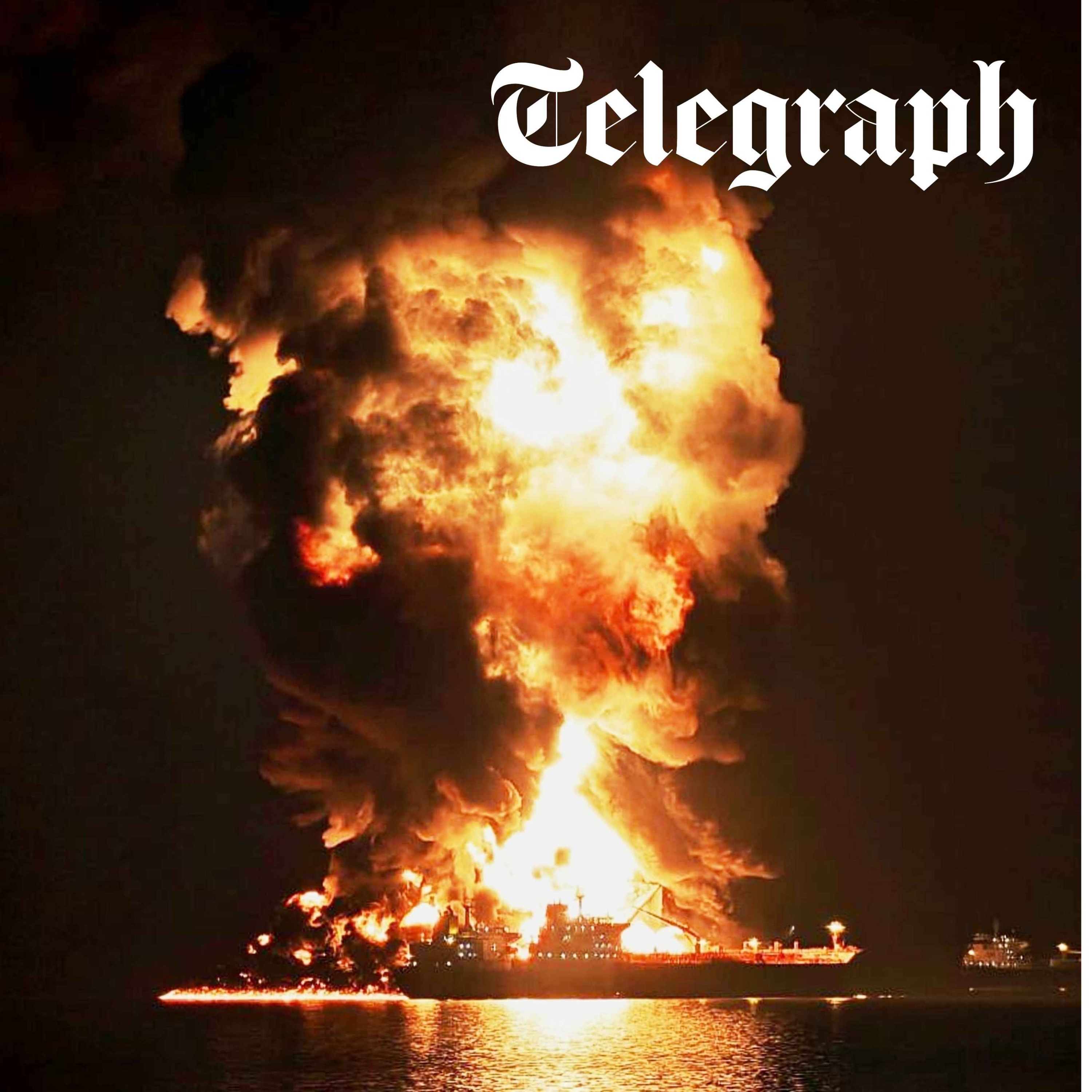
And those videos are these huge flares of flame that you could just see from throughout the city.
- [40:36]
Holly Dagres
Yeah, it look. It look very apocalyptic. Someone said that Tehran had become their Mordor, a reference to Lord of the Rings. And so that really shook Iranians. And that was the realization that this is. This war isn't necessarily against the Islamic Republic, but it's one against them too, because two things. One, it was very. The pollution it was causing, but also because, you know, Iranians view oil as their wealth and not the Islamic Republic's. And for them, that was quite the reality check. And so I think that really changed the mood and how they saw the war.
- [41:21]
Venetia Rainey
Do you want to pull out a moment, Roland, before we wrap up?
- [41:23]
Roland Oliphant
I think the one that sticks in my mind, if I don't think about it too much, and I just grab the first thing that comes out of the box, I think it's the strike on the school in Manab, partly partly because I did quite a lot of reporting on it, actually. And there's the tragedy and all of that, and what it says about, you know, kind of Iranians feeling about their grief was being hijacked by the regime for propaganda purposes. And all of that was really interesting. But the other thing is it's kind of an international zeitgeist thing. We all kind of know what's happened, right? Kind of obliquely. The US Military has taken responsibility for it. We know that.
- [42:01]
Not officially yet.
- [42:02]
Not officially yet, but obliquely. They kind of have, you know, they've had an investigation. We all basically know what happened, but that investigation hasn't been made public. And the debate around that. Why not? It seems to. We don't know yet, but it seems to come back to this whole question of. Of AI targeting and warfare and what that is going to mean to the question of. Of responsibility and of accountability and so on. I think for that reason, I mean, tragedy is horrific. All kinds of questions about how that happened, whether it should have happened and so on, but that there are all kinds of other questions that I think come out of that incident. And when that Pensiger investigation is finally published, I think it will make very, very interesting reading.
- [42:53]
Holly Dagres
Ron, to your point, there's apparently a hotline you can call and just. And say you're going to pull out of being a member of the US Military. And one of the top reasons that young service members left the role was because of Manob. It was weighing on their conscience. But I think, I mean, the preliminary reporting on it is that. But as you noted, that this was a US Tomahawk and the US Is effectively at fault. I guess we have to wait. But there hasn't been any apology issued. And what really surprised me is that former National Security Advisor John Bolton even came out and said we should actually not only apologize, but pay these families. And so what worries me is that once, once this is finalized, that nothing's done, nothing's said, and that the Islamic Republic will continue to use it for propaganda purposes. And I think the sooner they wrap it up and make their findings known and apologize, the better. Because it's just from a moral standpoint, it just is not a good look.
- [44:09]
Roland Oliphant
General Ben Hodges and Holly Dagres of the Washington Institute speaking to us there to mark 100 days of the conflict in Iran.
- [44:18]
Venetia Rainey
That's all for today's episode of Iran the Latest Goodbye Goodbye.
- [44:30]
Roland Oliphant
Iran the Latest is an original podcast from the Telegraph, created by David Knowles and hosted by me, Roland Oliphant and Venetia Rainey. If you appreciated this podcast, please consider following Iran the Latest in your preferred podcast app and if you have a moment, leave a review as it helps others find the show.
- [44:45]
For more from our foreign correspondents on
- [44:47]
the ground, sign up to our new daily newsletter, Cables via our website or listen to our sister podcast Ukraine the Latest. We are still on the same email address battlelineselegraph.co.uk or you can contact us on x. You can find our handles in the show. Notes the producer is Peter Shevlin. The executive producers are Venetia Rainey and Louisa Wells.
- [45:16]
Grainger Announcer
When you're a maintenance engineer in a beverage manufacturing plant, you keep production lines moving and quality on track because there is no room for slowdowns. With Grainger's vast selection of high quality motors, sensors, belts and hard to find parts, you can get what you need fast, fast and all in one place so nothing gets in the way of getting the job done. Call 1-800-granger. Click granger.com or just stop by Granger for the ones who get it done.
- [45:46]
Brooke Devard
Hi, this is Brooke Devard from Naked Beauty. I am always looking for ways to elevate our daily rituals and the Kohler Smart Toilet is proof that design changes everything. It's this stunning sculptural piece that feels like quiet luxury for your bathroom. It totally transforms your daily ritual into something elevated with customizable cleansing and touch screen controls. It's functional art that makes your space feel cleaner and more intentional. A modern home deserves a modern toilet experience the difference of Kohler Smart toilets. Find more@kohler.com.