Loading summary
Transcript76 lines
- [00:04]
Roland Oliphant
The telegraph.
- [00:09]
Venetia Rainey
This podcast is supported by Midi Health. Are you in midlife and feeling dismissed, unheard or just plain tired of the old healthcare system? You're not alone. For too long, women's serious midlife health issues have been trivialized, ignored and met with a just deal with it attitude. Many of us have been made to feel ashamed or forgotten. In fact, even today, 75% of women seeking care for menopause and perimenopause issues are left entirely untreated. It's time for a change. It's time for midi. MIDI is not just a health care provider, it's a women's telehealth clinic founded and supported by world class leaders in women's health. What sets MIDI apart? We are the only women's telehealth brand covered by major insurance companies, making high quality, expert care accessible and affordable for all women. Our clinicians provide one on one face to face consultations where they truly listen to your unique needs. We we offer a full range of holistic, data driven solutions from hormonal therapies and weight loss protocols to lifestyle coaching and preventative health guidance. This isn't one size fits all care. This is care uniquely tailored for you. At midi, you will join our patients who feel seen, heard and prioritized. You will find that our mission is clear to help all women thrive in midlife, giving them access to the healthcare they deserve. Because we believe midlife isn't the middle at all. It's the beginning of your second act. Ready to feel your best and write your second act script? Visit join join midi.com today to book your personalized insurance covered virtual Visit. That's join MIDI.com MIDI the Care Women.
- [01:43]
Roland Oliphant
Deserve Amazon One Medical presents Painful Thoughts.
- [01:49]
Venetia Rainey
I've been on hold to make a doctor's appointment for 23 minutes now. The automated voice has told me 47 times that my call is very important to them.
- [01:59]
Roland Oliphant
Hmm.
- [02:00]
Venetia Rainey
I'm starting to think that they don't think my call is important at all.
- [02:04]
Roland Oliphant
With Amazon One Medical 24. 7 Virtual Care, you'll get help fast without having to remain on the line to make an appointment. Amazon One Medical Healthcare just got less painful. This is the first time where I've seen my country do something that potentially is going to damage the cohesion of NATO and the trust which has always been the secret sauce of NATO. We will measure our success not only by the battles we win, but also.
- [02:35]
Tom Sharp
By the wars we Right now, all.
- [02:38]
Roland Oliphant
Eyes are on Washington, but who's actually watching Europe at the moment?
- [02:45]
David Knowles
The Deepening ties between China, Russia and North Korea would certainly have some in Washington concerned. And then Delhi has to sometimes use strong language.
- [02:54]
Venetia Rainey
The IDF will continue to uphold the ceasefire agreement and will respond firmly to.
- [02:58]
Tom Sharp
Any violation of it.
- [03:01]
David Knowles
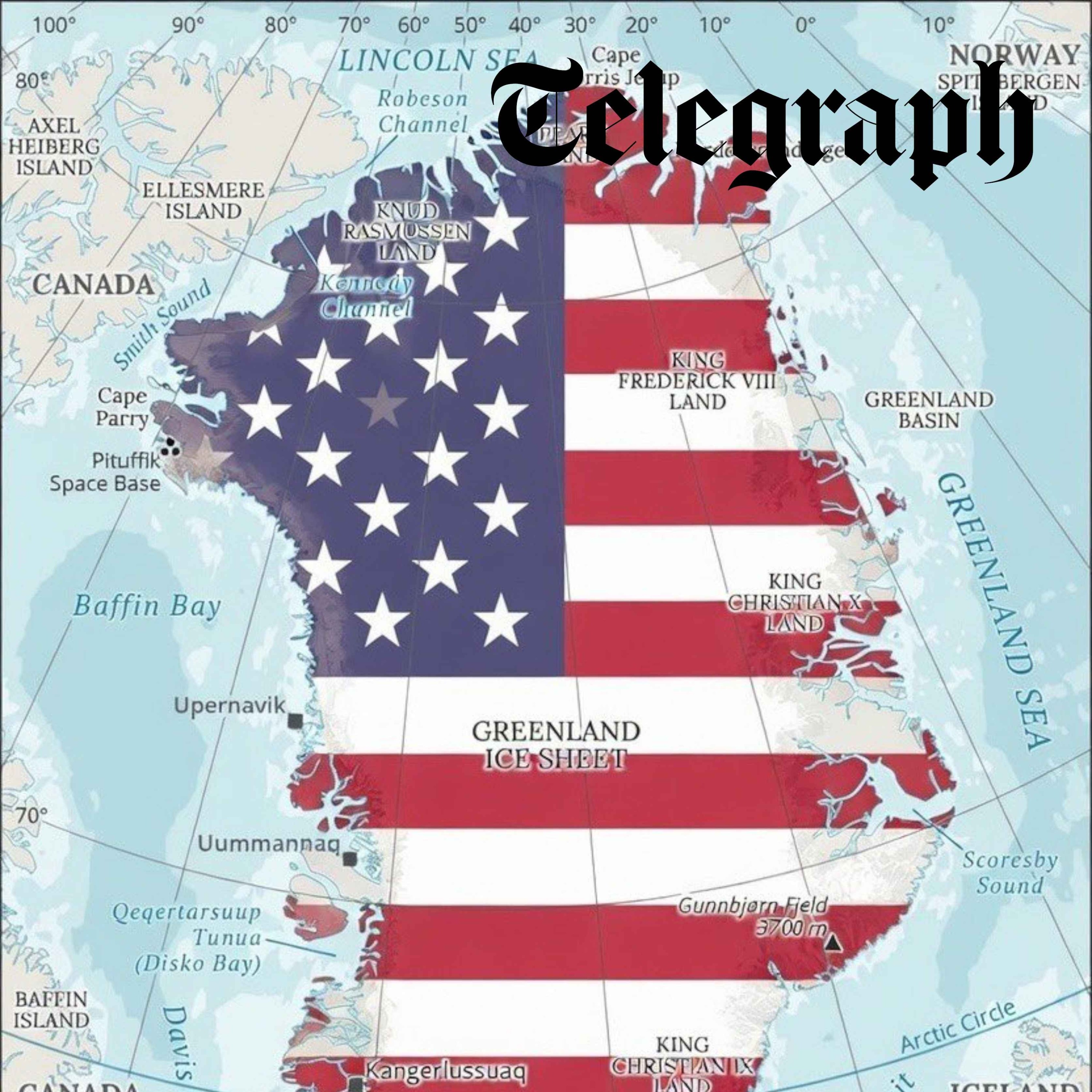
I'm Riphant and this is Battle lines. It's Friday the 9th of January, 2025, and it's been dramatic week in international affairs started with the American raid on Venezuela. By Monday, Nicolas Maduro was in a Manhattan courtroom. That was followed by discussions of an American annexation of Greenland, then a dramatic American naval operation to seize control of a Russian flag tanker in the frigid waters between Iceland and northern Scotland. While all this is going on, an uprising that could become a revolution has begun to brew in Iran. But what does all this mean? Well, one of the big implications from this week is that the transatlantic alliance is under massive stress. What could happen in the event of a conflict between two of its members, the United States and Denmark? In this case, I'll be talking to Lt. Gen. Ben Hodges, a former commander of U.S. ground forces in Europe, about how previous internal NATO disputes have been handled and what exactly happened in the Greenland, Iceland, UK gap on Wednesday afternoon. What was on board the Bella One and what does its seizure mean for the international laws of the sea? I'll be speaking to Tom Sharp, the former Royal Navy commander, about that. But first, in the many decades of its existence, NATO has seen a number of squabbles between its members. In the 60s and 70s, Britain and Iceland nearly went to war over fishing rights. Charles de Gaulle famously evicted NATO from France. And in eastern Mediterranean, tensions between Greece and Turkey have never really gone away following the 1974 war in Cyprus. But can the alliance survive America seizing control of Greenland? To answer that question, I turn to someone who knows a bit about the internal workings of NATO. Lt. Gen. Ben Hodges, a former commander of US ground forces in Europe. I started by asking him to introduce himself.
- [05:01]
Roland Oliphant
Ben Hodges, Lieutenant General, US army, retired from the army eight years ago. My last job was commander of US army in Europe, headquartered in Germany. Today I do advocacy for different things. I work with several different think tanks and do consulting to help explain Europe and the EU and NATO to different companies and investors.
- [05:23]
David Knowles
Ben, thank you so much for joining us on battle lines this week. It's been a kind of remarkable week and I must admit that when we were thinking about what topic to focus on, we really struggled because there's been US military intervention in Venezuela, then an extraordinary kind of boarding of a Russian flagged ship in the North Atlantic, which has an Iranian connection where there is apparently an uprising that may or may not turn into a revolution. And in the middle of all of this, suddenly the issue of the United States annexing Greenland has come to the fore. And I suppose actually if I can, I don't know, abuse your goodwill for a little, I might see if I can get you to reflect on how all of those things interconnect.
- [06:06]
Roland Oliphant
It's funny, everything you just listed, and it's not even Friday yet.
- [06:10]
David Knowles
Exactly. I mean, what do you make of this week so far?
- [06:14]
Roland Oliphant
What nobody has mentioned in a week is the Epstein files. All these things did not happen because the President is trying to distract from Epstein. But that is one of the byproducts. It's interesting because this year, 2026 is going to be an historically important year, maybe more than. Than most, because of the midterm elections that are scheduled for November. And so that's going to affect how the Congress, what it does, obviously it's going to affect the President. Even though he's not up for reelection, if his party loses the House of Representatives for ex, it becomes much more difficult for him to carry out his agenda. So there are domestic politics that are part of all of this as well. Most of the things that you cited are, in my view, seem to be a manifestation of the implementation of the administration's new national security strategy that came out back in November, where they lay out the assertion that the United States owns the Western Hemisphere and that it's our right to do whatever we want in the Western Hemisphere and to deny others, specifically China and Russia, from taking resources or having access in, quote, our hemisphere. Greenland, Venezuela, the Caribbean, Colombia, Cuba, all of these things, and even our neighbor Canada, the administration sees these as our sphere of influence.
- [07:47]
David Knowles
It seems to me that the question of Greenland, which is one of the thing that was really on my mind when I thought we should try and talk to you, seems to have come off the back of, as you say, the Venezuela intervention. As a military man, let's start maybe there with the Venezuelan intervention. We saw a buildup. Were you expecting what happened and what do you make of it from your experience as a former general?
- [08:10]
Roland Oliphant
Nobody should have been surprised that something was gonna happen, given the buildup in the Caribbean, the constant strikes on drug boats, the narrative about stopping drugs flowing into America, etc. Etc. But I think now that we've seen what happened on back this weekend, this was never about drugs. This is all about oil and the administration demonstrating that it can use its force wherever and whenever it wants to. Now I do want to say as a side note, how impressive the special operators and the intelligence professionals were in carrying out their task. So that just to say that, you know, hats off to them, well done. But as a commander, whenever I get a mission, I would always say, okay, what's supposed to come after this? What's the purpose of doing this operation? And, you know, the United States, we don't have a good record of having thought through to the end the purpose of why we might go into Iraq or Afghanistan or Vietnam. You know, it's never truly clearly identified as a strategic objective. And in fact, we didn't do it. We haven't done in Ukraine. Across several administrations, that's what really struck me about the seizure of President Maduro and his wife. Everybody else is still there. I mean, the regime, it's not regime change. It's just they took out Maduro and then since then, the administration has been trying to explain how they're going to run Venezuela. We're going to use the threat of military force and American oil companies are going to come rushing in and it's all going to be great and everybody's going to get rich. But yet you've got the same thugs are still in place in Caracas and you've got suppression of Venezuelan people and journalists there by those thugs. So this is all about oil and demonstrating dominance.
- [10:12]
David Knowles
I'd like to turn, if I may, to the question of Greenland, and that's not to downplay what happened in Venezuela, but I feel like the implication of a similar American operation in Greenland, which is now clearly under discussion and which the administration has refused to rule out, presents the possibility of the United States clashing with a NATO ally. You spent years in the US Army. You were commanding the US army in Europe. Did you ever imagine, did you plan for, did you have contingency plans to fight your NATO allies?
- [10:47]
Roland Oliphant
No, not once in 38 years that I was a U.S. army officer did I ever imagine that, you know, that something like that could possibly happen. Now, of course, it's never been perfect. I mean, when you've got the nature of coalitions and alliances, nations are going to argue with each other. You're going to have tensions. But typically at the military level, the mill to mill sort of stuff, the professionals there managed to always maintain the correct relationships. You stayed focused on your tasks and that sort of thing, even while the civilian leadership above you might be engaged in pretty harsh arguments. And of course, people will remember that France kicked NATO out during the time of de Gaulle, and then France came back into the military structure many years later, Turkey and Greece, there's always the potential for friction there. The Germans. There have been times when the Germans were not happy with the United States, but that was all manageable type stuff. This is the first time where I've seen my country do something that potentially is going to damage the cohesion of NATO and the trust, which has always been the secret sauce of NATO. I mean, we've never been perfect. Most nations have not done everything that they said they would do. But the Soviets and then the Russians were always pretty sure that if they were to attack a NATO country, they would get the full wrath of all of its members, including the United States. This friction that has come out of the statements from Mr. Miller at the White House and talk about Greenland has, I said, gift to the Kremlin. I mean, they must can't believe their luck that what's happening in the first year of the second Trump administration could lead to something that the Russians tried for 80 years to do. And the frustrating part is that it's a complete own goal. I mean, the Danes and the Greenlanders have always said, please come back. We'd love to have US bases come back here. We'd love to have American companies dig for the minerals that are below the ice. So it's an open door that is being used, I think, again for theater. The assertion that Greenland is covered with Chinese and Russian navy vessels is absolutely not true, and that's easily provable. That's why I don't think this is actually about security. This is about access to critical minerals that some people believe is under the ice there.
- [13:18]
David Knowles
I wanted to talk a bit more about those historical precedents you mentioned. When I think about previous conflicts or potential conflicts between NATO states, I suppose the one that really stands out is Turkey and Greece, as you said, the invasion of Cyprus, and I think it was 1974 by Turkey. And if you look at the kind of rhetoric and posturing, the eastern Mediterranean, as you say, there's always tension there. And it seems like both of those countries kind of have one another's military in the back of their minds as a potential threat. Do you have any insight into how those tensions were managed within NATO?
- [13:54]
Roland Oliphant
You're correct that both Turkey and Greece, most of their military, seems to be for the purpose of dealing or deterring the other one. But yet for decades they have been allies together with all of us at the military level. Professional officers, leaders, both in the Turkish military and in the Greek military understood that it was important to stay cool, to defend their nation's interests, but to avoid the getting caught up in what might be happening at the political level between presidents or prime ministers and ministers and so on. So that was part of it. When I was the commander of NATO Allied Land Command, which was headquartered in izmir, Turkey, for two years from 2012 to 2014, we had Greek officers working in the headquarters. The director of the staff was Greek, reported directly to the Turkish chief of staff. And this was normal. And that's part of how NATO has always managed these kind of things is the integration of officers from different countries into the command and force structure. So that's part of it. The second part is that the United States, UK and France have always been involved whenever these friction points would reveal themselves, typically over who owned what particular little island or who was in whose water or airspace. It was the French, the Brits and the Americans. That would help get it sorted and keep it from turning into something really bad. I think that will be a. The kind of approach that's necessary now when you talk about the United States, Denmark and Greenland, that, you know, some other countries are going to have to help, you know, number one, save us from ourselves, but also keep it from this thing from unraveling.
- [15:50]
David Knowles
How would you imagine a US Takeover of Greenland would take place if that task was given to you if you were in your old job?
- [15:59]
Roland Oliphant
Honestly, I would refuse the order. I mean, I would see that as an illegal order. A NATO ally Washington Treaty, which created NATO United States Signatory. A signed treaty is within our Constitution, therefore US Law. And so that would be in illegal order is how I would look at it. So I would probably not be around to participate in the actual operation. But, and I say that not to be funny, but because it's such a serious thing that I hope that our senior officers are doing some reflection and thinking about this. I do believe it would be an illegal order. And, you know, they would have a duty to, first of all, make sure that they have notified the Secretary of Defense and all the other people in the administration. Hey, look, you're contemplating something that would be a violation of a treaty which makes it illegal. So that that's part of what's going on now. I think what I would like to see would be our allies. Here's an opportunity to address what the administration claims is the reason they want Greenland is because of security. They're worried about China and Russia. And here's where Denmark and various other NATO allies, including Canada, but our European allies could say, right, you know, you guys have been over in Europe for 80 years helping protect us. Time for us to help protect you. So we're going to deploy troops, ships, whatever, and start, you know, increase the presence around Greenland and in the North Atlantic to help protect you. I think that would create an interesting way to, to address what is this really about. The UK leads the Joint Expeditionary Force, the Jeff, which is a really, really good swept up coalition of nations that have military capability, not NATO, but it's a subset, if you will, that can do things without having to have NATO approval. Let's say, you know, a big Jeff exercise in and around Greenland. I think, you know, might be useful.
- [18:07]
David Knowles
You're pretty robustly critical then of the Trump foreign policy and maybe of this strategy from which these actions or these threatened actions has come from. I'm wondering if you have some sympathy, though, perhaps for how the administration has approached some of this. Donald Trump makes the point, and I think probably fairly, that he has thrown a bucket of cold water over European allies. He has forced them to start paying more for their own defense, which successive administrations have wanted to do and kind of struggled to compel the Europeans to do. And the other thing, I suppose I was interested in your view on is that he's just sent US forces, supported by Britain apparently, to seize essentially a Russian or Iranian shadow fleet tanker in the North Atlantic, which looks like a much more robust enforcement of international law than we've seen before. I was wondering if there are elements of this kind of approach that you actually welcome.
- [19:05]
Roland Oliphant
This is a great question with about 100 different subparts to it, but let me take on two or three of those and then you push back on me. First of all, I was thrilled to see the administration enforcing sanctions. I mean, that's been a problem for years now. There's been a lot of sanctions levied against Russia and others, but they haven't always been enforced or they've been easy to work around. To see the administration going after these tankers now is exactly what should be done. I'm glad they did it, and I wish our allies in the Baltic region, for example, including Ukraine, would do that against these other shadow fleet vessels that are taking Russian oil out through the Baltic Sea, about three ships per day and delivering it to China and India and other customers. And that's how Russia pays for this terrible war it's waging against Ukraine. So I am all for the enforcement of sanctions as long as it's obviously done within a legal context. And once again, my God, the idea of fast roping from a helicopter onto a moving ship in the North Atlantic in the month of January. Those are special women and men who are flying and doing that. But it's also interesting. We could have never done that mission without allies who allow us to fly in equipment and people to an air base somewhere in UK or wherever it was, or to Iceland, from which we could then conduct this operation to seize that vessel. The intelligence sharing is so important, and this is why I am a critic of much that the administration does, because it damages the trust. And it's a large part of America's intelligence that it uses to do all the different things does not come from American satellites, but it comes from allies, both from a bilateral as well as within five eyes and other different sort of protocols. We depend on that, and we depend on access that allies give us in UK and Spain and Italy and Greece and Turkey and Germany and so on. So I always worry about that. Now, The President is 100% correct to be very harsh towards allies that are not living up to their obligations to. Of Article 3. You know, everybody knows about Article 5. Article 3 of the Washington Treaty is where it says each nation is responsible for defending itself and being prepared to help others. And that's the source of the 2% now, 5%. You know, it's a part of the treaty. And most nations candidly have not done what they're supposed to do. So the President, like all of his predecessors, is correct to do that. And, you know, frankly, most Americans, including people like me, who are longtime NATO advocates, are wonder like, what the hell? Why aren't you guys doing what you should be doing now? I think I have to say this, recognizing who I'm talking to and who's in the audience. I am sick and tired of hearing Europeans whining about, it takes too long. We don't have enough, we can't afford it. You know, the Russians might do this. Come on. I mean, the collective populations, economies, wealth, technology capabilities, industry, of all the countries of the EU plus UK plus Norway plus Canada plus Ukraine plus Turkey dwarfs Russia. I mean, not even close. And it certainly matches the United States. I think Europeans should be willing to take on a lot more responsibility and quit talking about it. If I hear one more person say, we need to step up, I am going to step in front of a train.
- [22:51]
David Knowles
Well, don't do that.
- [22:52]
Roland Oliphant
I'm sorry.
- [22:53]
David Knowles
It's fine. No, we understand. It's rhetorical. Say the worst comes to the worst. Say either Denmark is forced into a sale that it doesn't want to take part in, or say three plane loads of US Marines show up in Nuuk and raise the Stars and Stripes. What happens after that? Does NATO survive that or is that it? The North Atlantic alliance is a busted flush.
- [23:18]
Roland Oliphant
The United States is one of 32 nations in NATO. The reason that nations have been in a queue to join NATO is because of the threat to their security posed mainly by Russia. And that threat does not go away regardless of whether or not the United States remains a good reliable ally or, you know, whatever else happens, that threat is still there. And so nations, including UK will still need NATO, a collective security organization. And I mean, this thing has never been perfect, but it's been the most successful alliance in the history of the world since 1949. I'm reluctant to say it's the end of NATO just because of this. No doubt the damage is going to be severe if this progresses along the way that you just described. First of all, I'm going to send out a plea to your audience. Don't give up on the United States. The Congress has failed its job this first year, but this year I have a feeling that we're going to see more pushback from the Republican leadership in the Congress on things that the President wants to do. I could be wrong, obviously, but this is an election year, and that's going to affect how many of them think about things and do things. And as their voters and their different states and districts see what's going on, I think they are going to be more concerned about their own voters and less concerned about. About threats from the President or the party leadership. I can't prove that, but that's my sense. So don't give up on us. There's a lot of good people in the Congress that understand how important NATO is, that understand the damage that would be done if the administration pushed through on this Greenland idea. This is where Europe has agency as well. I mean, you have economic power, you have other things that could be done to cause the administration to pass.
- [25:17]
David Knowles
Something you said earlier, you said, when I said, you know, if the President gave you the job of annexing Greenland, you would refuse the order because it's illegal. Now, a couple of things struck me about that. One is, I suppose it's easier to say that when you're out of uniform than when you're in uniform. I'm not for a second kind of questioning your own principles. But there is a big dilemma for any officer disobeying a direct order, especially in a culture where the military command has to be subordinate to the elected civilian government. And the other thing that's kind of related to that which struck me is that we're seeing politics and foreign policy and military actions and almost everything in the United States, I suppose, become so polarized and so politicized. I'm wondering how difficult you think it is for your former colleagues in uniform to kind of maintain the impartiality which has always been part of the job description for US Officers. And each of them will have their own private political views, I suppose. How do you think they're coping with this? And do you think there are people who share your views who may be having to consider refusing orders?
- [26:34]
Roland Oliphant
This is why I think it's, it's important for the retired flag officer, especially at the four star level. I mean, I'm a retired three star. The four stars are the ones that have the real impact. And I think that they have a responsibility to speak out on things because it is so difficult for those who are in uniform to do that. I am very confident that those in uniform are pushing back in a lot of ways, as they should behind closed doors. You don't want to have an argument between the uniform and the civilian leadership in public. But my guess is that these kind of debates are happening inside the Pentagon the way they should. Now, at the end of the day, the retired guys, I think can and should be more involved in explaining why this is a problem. What is the damage to our alliance and to the relationships with countries. That's, that's something that they can do more effectively. And there are a couple of them that are out there doing that. The other part of this, though is in the culture. The army is 251 years old. I know that doesn't mean much to Europeans, but the US army is one year older than the country, actually. And from the beginning, this idea of subservience to the civilian leadership, it's always been there. And also in the culture, the presumption of legality of orders is there. The whole system is based on the presumption that orders are lawful and it's your duty to carry them out to the best of your ability. Even if it's a stupid order or a terrible policy. If it's not illegal, you have to do it. But you do have a responsibility to disobey an unlawful order. The hard part is you better be sure that it is unlawful. It's much more difficult for a soldier at the bottom of the chain to make that determination than it is for an officer higher up. And that's why it was our responsibility. And look, I'm Old enough. I started West Point in the summer of 1976. I was a brand new cadet there. And so 1976, this is right after the end of our war in Vietnam, the My Lai massacre. All of this stuff was fresh in everybody's mind. All of the faculty were Vietnam veterans, and they emphasized that it would be our duty when we became officers to never obey an unlawful order that you could not hide behind. What then was referred to as the Nuremberg defense. You can't say, well, I was just following orders. And so this is not something new. This is, it's in our culture. This is going to be a challenge going forward.
- [29:15]
David Knowles
Did you ever have to disobey what you thought was no legal order in your career?
- [29:19]
Roland Oliphant
I never had to disobey something, but there were times where I ignored or maybe found a way to accomplish what they wanted in a way that was in accordance with the law.
- [29:34]
David Knowles
Can I throw one last kind of. It's a bit frivolous, to be honest. I tend to do this longer kind of feature interviews, but I thought, why not? I'll throw it at you. We tend to ask people kind of, you know, what's their favorite movie about their profession or their background? Is there a film that you particularly like as a. As a former soldier?
- [29:52]
Roland Oliphant
Yeah, Mastering Commander is by far my favorite sort of military movie. Even though it's about the Navy. I mean, they really capture the challenges of being a commander, the importance of what goes on inside a crew or a ship or a team. And I just, I love watching that movie. But I also tell you I've watched probably 15 times Top Gun Maverick, because it's such a again, and I'm an instrument. I mean, I was not a Navy pilot, but they captured so well the, the human aspects of command and of leadership. And I like it. Those are the ones I like.
- [30:38]
David Knowles
I like the bit where they improbably steal an F14 Tomcat from. From what appears to be the Iranian Air force. That was Lt. Gen. Ben Hodges, retired, a former commander of US ground forces in Europe after the break. Piracy, law enforcement, and smuggling on the high seas. What does the US seizure of the Belawan mean for the international rule of the sea? And why did they take such an extraordinary interest in that rust bucket of a vessel? Are we talking about that with Tom Sharp, the former Royal Navy commander?
- [31:22]
Roland Oliphant
Amazon One Medical presents Painful Thoughts do they ever actually clean the ball pit at these kids play gyms?
- [31:31]
Tom Sharp
Or is my kid just swimming in.
- [31:32]
David Knowles
A vat of bacteria, catching whatever cootie.
- [31:35]
Tom Sharp
Of the day is breeding in there.
- [31:37]
David Knowles
A cootie that'll probably take down our whole family.
- [31:40]
Tom Sharp
Family.
- [31:41]
Roland Oliphant
Luckily, with Amazon One Medical 24. 7 Virtual Care, you can get checked out for whatever ball pittitis you've contracted. Amazon One Medical Healthcare just got less painful.
- [31:52]
Venetia Rainey
This podcast is supported by MIDI Health. Are you in midlife and feeling dismissed, unheard or just plain tired of the old healthcare system? You're not alone. For too long, women's serious midlife health issues have been trivialized, ignored and met with a just deal with it attitude. Many of us have been made to feel ashamed or forgotten. In fact, even today, 75% of women seeking care for menopause and perimenopause issues are left entirely untreated. It's time for a change. It's time for miti. MITI is not just a healthcare provider, it's a women's telehealth clinic founded and supported by world class leaders in women's health. What sets MIDI apart? We are the only women's telehealth brand covered by major insurance companies, making high quality, expert care accessible and affordable for all women. Our clinicians provide one on one face to face consultations where they truly listen to your unique needs. We offer a full range of holistic, data driven solutions from hormonal therapies and weight loss protocols to lifestyle coaching and preventative health guidance. This isn't one size fits all care. This is care uniquely tailored for you. At midi, you will join our patients who feel seen, heard and prioritized. You will find that our mission is clear to help all women thrive in midlife, giving them access to the healthcare they deserve. Because we believe midlife isn't the middle at all. It's the beginning of your second act. Ready to feel your best and write your second act script? Visit joinmitty.com today to book your personalized insurance covered virtual visit. That's joinmitty.com the care women deserve flowers die in three days matching underwear from Meundies. That's a gift that lasts. Meundies creates matching prints for couples and friends. Same adorable designs in different cuts for each of you. All made from their signature ultramodal fabric that feels impossible, possibly soft. With 30 million pairs sold and 90,000 five star reviews, MeUndies matching prints are the perfect gift. Valentine's Day is February 14th, so don't wait. Get exclusive deals up to 50% off at Meundies.com acast code acast that's Meundies.com acast Code acast.
- [34:10]
David Knowles
Foreign. Welcome back. You're listening to Battlelands, the Telegraph's foreign policy and defense podcast. Shortly after U.S. delta Force kidnapped Nicola Maduro from his home in Caracas, a tanker off the coast of Venezuela turned around and started heading as fast as it could away from the country and towards Russia. The Americans gave chase and it was finally bordered somewhere between Iceland and Scotland on Wednesday afternoon. At the same time, US forces seized another tanker in the Caribbean. The Americans said they were trying to enforce sanctions on Venezuelan oil sales. The British government said it was an act against the Russian and Iranian shadow fleet. Either way, it was a demonstration of the power of American naval might and its alliance with Britain that took place, ironically enough, not too far from Greenland itself. What does it all mean? Well, I've turned to one of Battle lines great friends, the former Royal Navy commander, Tom Sharp. Tom, welcome back to Battle Lines. Drama on the high seas yet again. We've had at least two tankers intercepted now, one in the Caribbean, which seems to have been carrying oil. One in the North Atlantic somewhere between Scotland and Iceland, which apparently was not carrying oil. Could you just give us a sense of what you think has happened here?
- [35:35]
Tom Sharp
If you package all these events together, including the raid in Venezuela, this is all part of the same drive by the US to reassert itself on the business controlling oil. Not necessarily owning oil, but controlling it and controlling the currency that provides it. This is all connected and it's all sort of a reemergence of the Monroe Doctrine that their security strategy made clear that they were now going to pursue. So you can connect the dots and call all these things roughly the same thing. The one that just that happened yesterday between the Green and Ice and UK gap has many interesting nuances to it, which I'm sure we'll come on to. But the base premise of this is controlling oil, the flow of oil, and particularly that involved with Venezuela, Iran, China and now Russia.
- [36:27]
David Knowles
Can we talk a bit about the MV Bella One as it was, which changed its name? This is extraordinary, I think, because it was quite a chase. It's been chased all the way across the Atlantic, pretty much. Why do you think it took so long? And what do we know actually about this eventual boarding in really frigid, difficult waters in the high seas of the Atlantic?
- [36:47]
Tom Sharp
I think a little bit of backstory on the ship. It had been at sea for months. It had come from the Gulf of Aden, it had gone through the sewers. This had been months in the building. And all the while it was Bela 1. It's presumed it was due alongside in Venezuela to embark Oil that was then going to Iran. That's the assumption. So this was of interest under the new Monroe Doctrine and all the sort of principles that we've just set out. This vessel was of interest and was there when the sort of ramp up in pressure, the Borden Sea started to pick up pace off Venezuela. The changing of names, the spoofing of AIs, the falsifying of documents, this isn't unusual at all. This has now become routine, dark fleet behavior. There was nothing in the way this ship was behaving prior to this that made it particularly stand out. Nevertheless, the US wanted to board it and they had permission to do so. They had legal permission to do so back end of last year. Why they didn't get on board off Venezuela is not clear. But it is important to this whole story. The working theory I've got, based on what I've heard and piecing it together based on my experience of boarding operations, was that they closed it to do what we would call either a compliant or a non compliant boarding. Compliant, there's obvious non compliant is where they take measures to make it difficult for you to get on board. They don't answer the radio, they don't put out ladders, they weave. This ship's not going to weave, it's too big. Fire hoses for example. So they're essentially trying to make it difficult for you to get on board. And that requires a certain classification of boarding team to be able to do fine. I think the working assumption was that it was going to be one of those two things. As they approached it, it became what we would call an opposed boarding, that is they could well shoot back. In UK doctrine that immediately takes that boarding out of regular forces hands and puts it there are special Royal Marine teams that can do it and of course the special forces. So it may well be that that's what happened here. This thing escalated and they lost the risk permissions, the rules of engagement to get on board. And now of course it's gone. There's multiple ships, there's multiple priorities. There's nothing specifically in this one that goes, this is the one you must get on board, but it's escaped and it's evading and it's now plodding northeast. The slowest car chase ever with a US Coast Guard cutter in company. So why does it then take so long to get on board? Meanwhile, of course, whilst it's crossing the Atlantic, it goes dark on AIs switch, is off its transponder and goes through this extraordinary charade of registering and Painting flags on its side to make it look Russian, which as an aside grants you zero legal added protection. You cannot do that underway. If you were a valid boarding target, you remain one, no matter what you drape over the side. So off she went at slow speed or reasonable speed for a ship of that size, followed by the Coast Guard casser. And there would have been an assumption. This is why I think my theory about it being possibly opposed, that they needed to wait until they were close enough to land to bring into play other forces to coerce it into becoming a compliant boarding again. And that, I think is what played out. Two nights ago. It got to the Greenland, Iceland, UK gap. We saw the movement of US aircraft and RAF aircraft. That all gave indications that things were moving. And those US aircraft were very specific in their nature, very special forces orientated. So to me there was a clear messaging point here. You become compliant or look what's coming. So that might have been real, it might have been a bluff, I don't know. But it clearly worked. And what happened next? We saw the ship alter course and then a single helicopter, a little bird helicopter, then carried out the, the boarding. So it went from what looked like a brewing Special Forces long range rotary wing over those sort of ranges would have been very spicy in terms of planning and refueling. Strong sea states, high winds, quite lively, to what actually then turned into a sort of routine, albeit at long range and in bad weather, single helicopter boarding. So fascinating. That's why I think it took so long. I think they needed to wait to get close enough to land for the bluff to be credible.
- [41:09]
David Knowles
You've been active on your Twitter raising all kinds of questions about what this means, about the rules of the sea, and also particularly for Britain. Britain was the staging post for this American operation. The RAF took part in it. The government, I think, has put out a statement openly saying we were involved in this seizure of what is, I suppose, officially a Russian ship. Now, if this is the new kind of status quo or how the Americans, and maybe we are going to act on the high seas, how does that change things compared to how they have been done in the past?
- [41:44]
Tom Sharp
It's a really interesting question and I'm very intrigued to see how this plays out. We've seen the Secretary of State talking about increasing measures. What does that actually mean in practice? Because I don't think we would have boarded that vessel on our own had that, you know, that set of conditions, had that should be coming past us, I don't think we would have boarded it on our own. Because so far we haven't. We're one of the few countries actually, that hasn't interdicted a Dark Fleet ship and seized it or at least boarded it and detained it. Whereas Denmark, Estonia, Finland, Sweden, France, at various stages, they've all leapt on board and gone, come this way, sir, and then let it, and then let it go for various reasons that some of that have been dark fleet, some of that's been undersea infrastructure and so on. We haven't. We've been quite backward leaning. And when you have conversations with our lawyers, they can be frustrating. The conversation's frustrating because you're talking about their ability to operate in this legal gray zone and our inability to counter in that same gray zone. Our adherence to rules, to the strict rules, make us almost sort of fighting.
- [42:49]
David Knowles
With one hand, what are these rules and why? Why is it a gray zone? Can you just kind of explain it to us?
- [42:53]
Tom Sharp
Because UNCLOS was written by lawyers for lawyers, right? It gives you reasons why you can board on the high seas, but they're open to interpretation, as everything is. So you can, you know, various articles, Unclos 110, for example, is one that's often cited. There are four reasons why you can. And stateless. Verifying the state of a vessel is one of them. But we historically have gone, well, if they tell us they're from this state or they provide this insurance document that says they're from this flag, then we'll let them be on their way. There is a gray zone. There's an area for interpretation here. We, so far, through the sanctioned shipping business, particularly the Russian sanctioned shipping business, have been quite backward leaning on. We've applied sanctions liberally to people, to ships, to companies, but we've never interdicted anyone at sea because we think they're moving. They're either uninsured or they're moving dark. Like I say, there's a gray zone. And the US has, has lent into this much more aggressively, I suppose, as you'd expect. So it was interesting that we then supported that because like I say, I don't think we would have necessarily boarded that vessel if left to our own devices. I think we had to support it. I think it would have been absolute suicide to not do so. And also I think it was right. Anyway, I think we should be taking a tougher stance on these vessels. We should be imposing a cost on back on Russia and the oil that's funding his war machine. I think we should be stepping this up. And the Secretary of State just said we will. And we just facilitated a country that is. So, yeah, what next? Uk needless to say, there are plenty of people who think completely the opposite way. And I think this whole thing was a crime. So this politically has a way to go.
- [44:37]
David Knowles
Well, the Russians say that, obviously the Russians say this was a Russian ship. It was flying our flag, it had Russian citizens on board. I assume they were crew members, but we don't actually know if there were some other Russians on board, who knows what kind of recourse do the Russians or other states who flag nations of ships that are interdicted have? And does this create legal risk? What would the legal risk be for Britain, I suppose in this case?
- [45:01]
Tom Sharp
Well, the legal risk is that it ends up in an international court and you get found guilty of piracy or something like that. But, you know, the Hague have accused China of this sort of thing for decades now and trying to go, yeah, so what? Or we don't recognize that ruling. So, I mean, this is the murkiness of international law. It only holds up if people agree to hold it up. If a state goes, do you know what? I'm not going to do that. And you can't legally enforce it, and you can't militarily enforce it. That, of course, is key here. Then it's meaningless. I mean, I personally don't think it is meaningless. I think you take these laws away and you end up with the sort of chaos that, that preceded them and led to them being put in place in the first instance. So I think you have to adhere to an extent to these rules, but you also have to exploit the zone, the gray zone, as well as you can. So in this case, this situation is not over. I don't think if Russian surface vessels do now close on it, I don't know where it is, by the way. I'm assuming it's being directed towards the northwest coast of Scotland. But I could be entirely wrong in that no one knows if they want to thoroughly search it, they might need to even take it alongside somewhere. So there are all these options available. It's the only one option is to get off now and say we boarded it, we didn't find anything, honors even be on your way, and everything just stops and that's the end of it. That is an option. So let's see how this plays out. But if it keeps coming towards the UK and the Russians really want to up it and start sending armed surface warships our way, you know, then we're in a bit of a situation again and this will not Go away quickly.
- [46:36]
David Knowles
Do you have any suspicions that this may not have been simply an empty oil tanker? Given the interest that's been shown in it by the United States, Britain and.
- [46:46]
Tom Sharp
Russia, there's two options here. It had something really juicy in it. I don't know what that would be. What was it that was in that ship all the way for months, all the way from the Gulf of Aden? You know, throughout a long journey that was, I don't know. Needless to say, there are conspiracies abounding. That's option one. There was something really fruity in there. But if that's the case, then why didn't they board it off Venezuela? If that was really an urgent boarding priority, then, okay, you send your military and you send your special forces in and you get on board. I think more likely is they just missed it. And then it became what I call it, a rage chase. You know, just get that ship. Because egos have been dented now and before you know it, this has developed into something. It's grown arms and legs and you've got special forces moving around in someone else's country. It's perfectly possible that's what led to this. And you know, in some ways it's the simplest answer, which is, in my view, quite often the best.
- [47:39]
David Knowles
I was wondering if you had any views on the fact that the Russians initially sent a submarine and there was some disparaging commentary along the lines of that's not going to be much use here. What does it say to you, that choice of vessel?
- [47:52]
Tom Sharp
Yeah, it's exactly no use. You almost couldn't send anything worse. If you really wanted to stop that boarding, then you're sending some Admiral Gorshkov frigates at 30 knots round the top, heading southwest at max chat to get in the way to stand 100 yards either side of the vessel. That would change the calculus. Of course it would. An ssn, a nuclear powered attack submarine, short of escalating to war, it is of no use whatsoever. If it was even there, which of course is a question. It certainly focused a few people's minds. But I mean, again, an SSN tracking that southwest at high speed is really going to offer itself up for an awful lot of counter detection opportunities that would benefit us and as I say, not them. The whole thing smacks to me of, of not having enough ships of Putin not having enough surface ships to do this properly. So it's a little bit desperate and had it even been there, pretty useless.
- [48:52]
David Knowles
It's difficult to disentangle this from all the other things that have been going on in the world this week, it's been chased from Venezuela, but it came from Iran. We all know what's happening in Iran at the moment. Really big questions there. And it's bordered, of course, as you say, in the Greenland ice and the UK gap. Just as we're having all kinds of discussions about what are America's intentions towards Greenland. The other interview on this podcast is Lt. Gen. Ben Hodges, the former U.S. army general who we spoke to a little bit about, about that question. Any views on the significance of that and what's going on in the North Atlantic as a result perhaps of this new Monroe Doctrine?
- [49:32]
Tom Sharp
The timing is agonizingly ironic, isn't it? You know, you're all pointless to us, you're all useless. You add no value. You're a leech on our resources. Rhetoric reaches a crescendo that starts to talk about invading a NATO ally, which by the way, I think is complete nonsense. I think it's part of the negotiation, so that when it backs down into something sensible, we all breathe a huge sigh of relief. But here we are. That's the language being used at the exact same moment that they need us to conduct a boarding at long range. There's a grim irony to it. On almost the same day, they conduct an operation which without us would have been very, very much more difficult and very, very much more dangerous. It's almost extraordinary that we need to say this, but it brings home the power of alliances that are based on trust and understanding and mutual respect, which we had for so long. It's extraordinary that we still need to, to say that, because, you know, it's self evident that alliances like this make everyone stronger, including the strongest member. And I suppose this operation, the timing of it happening when it did, is part of that messaging back. And the Prime Minister was able to then get on the phone and to the President and talk about Greenland brings the sequencing and the timing of all this together, as quite often the maritime environment tends to do.
- [50:53]
David Knowles
As part of all this, we did see a very large and quite sudden buildup of American military assets in their bases in the uk, apparently connected with Bella One and the boarding operation. But there has also been speculation that perhaps they're preparing for something else. Any views on that and what is going on, given Donald Trump's appetite this new year for spectacular operations overseas?
- [51:19]
Tom Sharp
I was tracking the return of, of those US aircraft to Fairford and Mildenhall reasonably closely, and it was a return. Until I know the exact numbers, I can't say for certain, but it very much looked to me like those assets returning post Venezuela. So they're based there anyway. All those special forces helicopters, those widebody jets, they're based there anyway as part of the ongoing forward deployment of them. They're critical forward bases to the US and these were aircraft coming back. It was remarkable how fast, how quickly after the Venezuela operation they were returning. That to me felt like messaging at the time. We're done here, we're moving on. Of course now it's obvious that there was more to it and they were definitely part of this build up. You saw them egressing north and then there were videos of ospreys conducting fast roping exercises. I mean, this was part of the messaging, part of the comply or this is coming next. So it's definitely all connected. What happens next? Well, largely I think depends on what happens to the ship next. Does this carry on being a special forces type operation? Does it revert to being a constabulary one or does it become customs? And I don't know. So I don't know where those jets and aircraft will go over the next few days and then what the master plan is for them. Whether that's a major exercise that's brewing in Germany or something in Iran, I don't know. I would be speculating, but I think it's important to say that as far as I can tell, most of those aircraft belonged in those bases anyway and they were coming back. It turns out they were going back very quickly to get involved in the boarding of the vessel. So yeah, there's again, the aircraft spotting industry will be all over this and will start tracking it particularly. But they do confuse, some of them, confuse regular exercise and regular routine flying activity with mass military buildup. So you do have to, you do have to treat those reports initially with a little degree of caution. But by and large they're very quick and very accurate. So let's see.
- [53:20]
David Knowles
That was the former Royal Navy Commander Tom Sharp. That's all for this edition of Battle Lines. As I said at the top of the podcast, things have been moving very quickly in international affairs this week. We'll be back on Monday with our usual start the week episode. Until then, that was Battleland. Goodbye. Battle Lines is an original podcast from the Telegraph, created by David Knowles and hosted by me, Roland Oliphant and Venetia Rainey. If you appreciated this podcast, please consider following Battle Lines on your preferred podcast app. And if you have a moment, leave a review as it helps others to find the show to stay on top of all our news, subscribe to the Telegraph, sign up to our Dispatches newsletter, or listen to our sister podcast Ukraine the Latest. You can also get in touch directly by emailing battlelinestelegraph.co.uk or contact us on X. You can find our handles in the show. Notes the producer is Peter Shevlin and the executive producer is Louisa Wells.
- [54:24]
Venetia Rainey
Flowers die in three days Matching underwear.
- [54:27]
Roland Oliphant
From Meundies that's a gift that lasts.
- [54:29]
Venetia Rainey
Meundies creates matching prints for couples and friends.
- [54:32]
Roland Oliphant
Same adorable designs and different cuts for each of you, all made from their signature ultra modal fabric that feels impossibly soft.
- [54:39]
Venetia Rainey
With 30 million pairs sold and 90,000.
- [54:42]
Roland Oliphant
Five star reviews, MeUndies matching prints are the perfect gift. Valentine's Day is February 14th, so don't wait. Get exclusive deals up to 50% off at Meundies.com acast code acast that's Meundies.com acast Code acast the New Year brings.
- [54:59]
Venetia Rainey
New health goals and wealth goals.
- [55:02]
Roland Oliphant
Protecting your identity is an important step.
- [55:05]
Venetia Rainey
Your info is in endless places that could expose you to identity theft leading to lost funds.
- [55:10]
Roland Oliphant
LifeLock monitors millions of data points per second. If your identity is stolen, our restoration specialists will fix it, guaranteed, or your money back. Resolve to make identity, health and wealth part of your New year's goals with LifeLock. Save up to 40% your first year. Visit LifeLock.com Special offer terms apply.