Loading summary
Transcript120 lines
- [00:04]
Paul Newqui
The telegraph.
- [00:09]
Arthur Scott Geddes
You know what's wild? Most people are still overpaying for car insurance just because it's a pain to switch. That's why there's Jerry. Jerry's the only app that compares rates from over 50 insurance in minutes and helps you switch fast.
- [00:22]
Gareth Caulfield
With no spam calls or hidden fees.
- [00:24]
Arthur Scott Geddes
Drivers who save with Jerry could save over $1,300 a year. Before you renew your car insurance policy, do yourself a favor, download the Jerry app or head to Jerry AI Acast.
- [00:36]
Pete Hegseth
Most all in one hr systems are a patchwork of disconnected and manual tools. Rippling is totally automated. If you promote an employee, Rippling can automatically handle necessary updates from payroll taxes and provisioning new app permissions to assigning required manager training. That's why Rippling is the number one rated human capital management suite on G2, TrustRadius and Gartner. If you're ready to run the backbone of your business on one unified platform, head to rippling.com acastbiz and sign up today. That's R-I P P L-I-N-.com acastbiz to sign up
- [01:17]
Gareth Caulfield
that footage. The freeze frame it it is unequivocally a tomahawk. A great number of experts in weaponry have spoken to a great deal of news outlets, including the Telegraph, to verify independently. This is a tomahawk.
- [01:31]
Pete Hegseth
A short time ago, the United States military began major combat operations in Iran. If you kill Americans, if you threaten Americans anywhere on earth, we will hunt you down without apology and without hesitation, and we will kill you.
- [01:50]
Paul Newqui
We were not involved in the initial strikes on Iran and we will not join offensive action now.
- [01:57]
Venetia Rainey
Today, President Trump says Iran's supreme leader, Ayatollah Ali Khamenei, was killed in the attacks. I'm Venetia Rainey.
- [02:10]
Arthur Scott Geddes
And I'm Arthur Scott Geddes.
- [02:12]
Venetia Rainey
This is Iran. The Latest. It's Wednesday, March 18, 2026. It's the 19th day of the war. And on today's episode, we'll be getting the latest from Lebanon as Israel steps up its war on Hezbollah.
- [02:24]
Arthur Scott Geddes
Plus, we'll be digging into the evidence around one of the most significant moments of the war so far. An attack on a primary school in southern Iran that killed dozens of children. But first, we need to start with some big news that broke after we recorded yesterday.
- [02:37]
Venetia Rainey
So Joe Kent, the director of the National Counterterrorism center, stepped down from the US Government. This is really significant because he is the first senior member of Trump's administration to resign over the Iran war. We have had Some more junior people resigning, but he's the most senior so far. He wrote a letter to Trump which is stinging, quite frankly. He says, I cannot in good conscience support the ongoing war in Iran. Iran posed no imminent threat to our nation, and it is clear that we started this war due to pressure from Israel and its powerful American lobbies. Now, I think this letter is significant in two ways. One, clearly it gives us an explicit window into the debate that's going on in America, particularly amongst Trump's MAGA Republican base, about the wisdom of this Iran war from an American perspective. One of our reporters, Ben Smith, wrote a story about Joe Kent and describes him as a symbol of a Republican remade in the image of the president, fiercely loyal to Mr. Trump and fiercely critical of entanglements in foreign wars. In the end, he has been forced to choose between the two camps. That's Ben Smith, and we'll link to that story in our show notes. And that gets us into the second point of significance about this letter is that this war is tearing the MAGA base apart. There is the schism over the war, but then there's the broader schism over foreign intervention and anything to do with Israel, quite significantly. And this joke letter is very anti Israeli. It comes up a lot. The Republican Party is traditionally very supportive of Israel, but what we're seeing increasingly is questions around America's support for Israel, even at the highest levels of government. So I think this is a really important one to keep an eye on. Arthur, what other stories have you spotted that our listeners should be aware of today?
- [04:18]
Arthur Scott Geddes
So the other big news is that Iran has confirmed that Ali Larajani, its security chief, died in an Israeli strike yesterday. In response, it launched retaliatory attacks. A ballistic missile equipped with cluster munitions was fired at Tel Aviv. An elderly couple were killed just outside a bomb shelter. These latest deaths brought the toll from missile attacks on Israel since the start of the Iran war late last month to 14. Iran also hit a military base that was being used by British and Australian troops in the UAE in overnight strikes across the Gulf. Elsewhere, you have the row within NATO over the war rumbling on. Trump said the alliance was making a foolish mistake on Iran after members of it refused his calls to help open the Strait of Hormuz. Inside Iran, you have Iran for the first time executing a man who was convicted of spying for Israel. That was actually during last year's 12 Day War, but it's the first such execution that has been announced since this renewed round of fighting has broken out. Israel's also made A limited incursion into southern Lebanon and has been threatening a full scale war there. To find out more about that, we're joined now by Paul Newqui, the Telegraph's global health security editor, who's speaking to us from Beirut.
- [05:19]
Venetia Rainey
Paul, welcome to Iran. The latest, what has been going on in Lebanon over the past week since we've spoken to you. We've seen some pretty extraordinary stats out recently. 1 in 5 in Lebanon now displaced or under evacuation orders. What's it been like over the last week?
- [05:35]
Paul Newqui
Well, it's intensifying, certainly in the last 48 hours. Israel has launched a limited ground incursion towards a strategic town in the south. And bombing is continuing across the country in the south in the villages around Kien, but also in the southern suburbs of Beirut, where this morning they took down a 15 story building with a single blast and blasts. More targeted continue on apartments across the southern suburbs.
- [06:13]
Arthur Scott Geddes
And what sort of targets are they trying to hit?
- [06:16]
Paul Newqui
It seems to be a mix of targets. They have said that they are after Hezbollah operatives and that certainly seems to be the case with the targeted hits on particular apartments. Last week, a few days ago, they hit two university academics who they believed were working for Hezbollah in a university office here, killing both of them. But they're also after arms storage facilities. They've said that in the southern suburbs and other parts of Beirut, Hezbollah is hiding weaponry. It still has a lot of missiles, some of them quite sophisticated. And those missiles are believed, at least by the IDF to be in parts of Beirut.
- [07:02]
Arthur Scott Geddes
So we've seen quite, quite high numbers of casualties already. The total number of people killed between 2nd and 17th of March is about 900. Over 900. More than 2000 people wounded. But perhaps the most urgent crisis is this displacement crisis. You've got nearly a million people now having been officially displaced. How's that playing out on the streets in Beirut and what's being done to kind of mitigate this crisis?
- [07:26]
Paul Newqui
Well, I mean, it is having a real impact. Beirut is packed now with displaced people, most of them from the south, but also from the Becker Valley and also from the southern suburb, which is really empty other than Hezbollah fighters. They have set up centers across the country. I think about 620. We visited a couple of them. They're set up in schools and university buildings. Many are overcrowded. One we visited was set up for 200 people, but had more than 350 in it. These are families in the main, lots of children running around, people cooking in what were formerly classrooms, and then everyone having a camp down at night, on mattresses, on the floor of classrooms and playgrounds.
- [08:15]
Venetia Rainey
I wonder what you make of the increasing references to Israel trying to repeat what they did in Gaza. In Lebanon, we saw last week leaflets being dropped over Beirut that carried a pretty explicit warning. They referenced Israel's two year assaul on Gaza, which of course has left much of the territory in ruins. It says in light of the great success in Gaza, the newspaper of the new reality arrives to Lebanon. And on the other side, it asked people to send information basically to Israeli intelligence services about possible Hezbollah targets on the ground. We've also heard Israeli generals referring to repeating what they're trying to do in Gaza. There's a lot of talk about Israel potentially trying to take over everything south of the Latani river, which is this river that divides southern Lebanon in two, and create a new buffer zone and empty it of Hezbollah. What do you make of all of that?
- [09:05]
Paul Newqui
It's hard to know really. What's basically going on is that Israel is trying to pressure the Lebanese government to act against Hezbollah and disarm it. The government here has been making moves against Hezbollah. It's outlawed it, it says that the government should have a monopoly on arms and it says it intends to disarm it. But the truth is that it's outgunned by Hezbollah and it is also rightly, extraordinarily worried about enraging sectarian division here and sparking another civil war. I mean, this is a country that suffered a long civil war in the not so distant past and memories are long. So Israel on the one hand is applying that pressure. There are large parts of Lebanese society, including from the Shia sections of societies that are pretty angry with Hezbollah. I mean, people have lost their livelihoods, their homes, they're displaced and they're not happy. So in some senses that pressure is working. The danger is that Israel goes overboard, that it invades really large parts of southern Lebanon and it causes Lebanese society to swing behind Hezbollah and whose narrative is all about resilience and defense of Lebanon. It claims to be the only army that can defend Lebanon against the Israelis. Although of course that is not why it said it got involved in this war. It said it was acting on behalf of Iran and people are very angry about that.
- [10:45]
Venetia Rainey
I know you were in the southern village of Nabi Sheet last week, which is where the Israelis went in quite aggressively. They were trying to find the remains of an airman who was, I believe captured in the 1980s and has been missing. His remains have been missing in Lebanon ever since. They killed around 40 people in that attack and left a huge crater in the hole. Let's just hear a clip of your reporting from Nabi Sheet.
- [11:09]
Paul Newqui
We're here now. In the center of Nabishit. There is a vast crater in the square behind me. It was a town square square. Huge bomb hit it, creating a crater that locals say was about 8 meters deep. They spent the last few days trying to fill it with sand to remake it. The bomb hit shortly after the commandos who landed here were discovered and fighting broke out. The locals say that this hit and several others were designed to cut the road so that the Israeli commandos could escape.
- [11:46]
Venetia Rainey
Paul, what were people on the ground telling you about how they felt about this attack? To retrieve the remains of a soldier which weren't there in the end?
- [11:55]
Paul Newqui
Well, Nabi Sheet has a special place in Hezbollah folklore. It's the place that Iran first came to establish Hezbollah. It's a very solid Shia area. It's quite a shabby village on a hill very close to Syria. The Israeli commandos came in at the dead of night. They started digging in the graveyard looking for this long missing airman. They were disturbed. A huge firefight broke out, and then the Israelis bombed the place pretty comprehensively in order to make their getaway. Now, locals obviously were angry. The town has been destroyed in parts, but they were also defiant. As I say, it's a very strong Hezbollah stronghold. And perhaps, really, people couldn't say anything else to reporters, but they said that, you know, they would fight to the last man standing and gave their full support to Hezbollah.
- [12:53]
Venetia Rainey
I guess that is the problem here, right? I mean, Israel, we spoke a bit about this last week, but Israel has been trying to eliminate Hezbollah for a while. It cut off the head of the snake. It killed Nasrallah. But just as we've seen in Gaza, where Hamas still exists, Hezbollah still exists in Lebanon, has existed for many decades, and is unlikely, no matter what kind of military campaign Israel mounts here, is unlikely to be wiped out.
- [13:15]
Paul Newqui
That's right. I mean, the conventional wisdom is that you really can't wipe out an idea and an ideology with guns. People nowadays say, well, that's a bit of a weak and woke thing to say, but I think it remains true. You know, you can. You can take out assets, you can take out bridges, you can take out armaments, but it's very difficult to bomb a people, any people, into submission. And America has found this over and over again. Vietnam, et cetera, et cetera. Israel is finding it now with its neighbors.
- [13:54]
Arthur Scott Geddes
So it seems that Israel might be Growing a little bit desperate for help, basically, in this aim of disarming Hezbollah. What do you make of the reporting that the United States and I think Israel as well have been trying to encour, encouraged Syria to send forces into eastern Lebanon to try and disarm Hezbollah?
- [14:09]
Paul Newqui
Well, I mean, there's paranoia here among the Shia community, among Hezbollah about Syria's role. Nabi Sheikh, for example, is very close to the Syrian border. And it's thought that the helicopters transporting the commandos in there flew through Syrian airspace. But that is only conjecture. And most people here think that the new Syrian government wants absolutely nothing to do with this war. It has more than enough on its plate managing Syria. It's not to say that they may not get involved. Hezbollah fought in Syria for the Assad regime for some period, so there is bad blood between them. But I would be very surprised if Syria took up this alleged American call. I think they will get much the same reaction as America got when it asked European and Southeast Asian allies to help in the Straits of Hormuz.
- [15:15]
Venetia Rainey
And to be clear, that is what the Reuters reporting says. They've spoken to people inside Damascus and Damascus is very, very reluctant to get involved. And there's history here, too. Syria occupied Lebanon for nearly three decades, only left in 2005. So I think the prospect, Lebanese people, particularly of Syrians coming back in, would be very difficult. Maybe we can just end by talking about peace talks. Have there been any? What's the prospect of some kind of resolution in this theatre of the conflict?
- [15:41]
Paul Newqui
Well, so the Lebanese government last week offered direct talks with Israel. You know, that's a first. They don't normally talk to Israel directly. For the moment. Israel has rejected that. But there's lots of gossip in academic circles online about talks, or at least prelude talks being negotiated as we speak. Certainly the Israeli position behind the scenes may not be as fierce and hard as its politicians project. I talked to a good source in Israel just yesterday, someone who is close to Netanyahu, someone who is themselves Lebanese born and has been involved in negotiations with Lebanon on behalf of Israel over decades. He said that what the Israelis were likely to push for. Well, first he said that they were unlikely to seize large parts of land. You know, in the first Israeli Lebanon War, they seized most of the south. They were there for 18 years. They got bogged down in a fight with Hezbollah and were sent away ultimately in 2000 with their tails between their legs. So he said they're unlikely to do that again. It's too much manpower demanded, too much financial resource and ultimately too much political blowback. What he is instead proposing is a deal of the sort that was done with Egypt over the Sinai decades ago, where there are areas marked ABC in southern Lebanon, or in the earlier case of Sinai, which are security areas demanding different levels of security, disarmament in the ones closer to Israel, police forces in the next one perhaps, et cetera, et cetera. And he envisages that that would be policed not by Israel, but by a new international force with real teeth. He's very dismissive of UNIFIL that has been there since the last withdrawal and hasn't really been able to assert itself. He wants a new force with what he calls a fighting power. So that may be a possibility if it can be negotiated. But, you know, the big call for Israel is they're demanding not only that Hezbollah be disarmed, but that it be declared by the Lebanese government a terrorist organization. And that's very, very difficult for the Lebanese government. It still has Hezbollah representatives in the parliament and the Shia side represented by the speaker of Parliament, not himself a member of Hezbollah, but another Shia faction called aml, has been reluctant so far to go down that path. So there's a bit of a standoff at the moment, but we may see it being resolved or moving towards being resolved in the next week or two as the pressure mounts.
- [18:48]
Venetia Rainey
So you don't think this is heading towards a longer campaign?
- [18:52]
Paul Newqui
Well, it's very difficult to tell. I think there are three broad scenarios. Either the pressure that Israel is applying now forces Lebanon to the negotiating table. I should also say that Israel is facing some pressure itself. Its northern communities are being hit hard by Hezbollah, and they don't want to have to evacuate them as they did in 23, 24. That would create enormous trouble in Israel. So that's one scenario. The second is that this just continues, that there's no room for an agreement. And then I think we'll see this rubbilization occur. You know, ISRA just hitting over and over again to degrade Hezbollah. And that could have dire, dire consequences for Lebanon, really breaking it down as a country. And some people are even saying it could lead to the literal breaking up of the country with different groups demanding different sovereignty. And then the third scenario, which must be probable also, is that the war in Iran ends with America pulling out because of the Straits of Hormuz. And I think if that were to happen, it's quite likely that the Americans would call for a ceasefire in Lebanon, too, although that's not absolutely necessary, that that would happen. Of course.
- [20:15]
Arthur Scott Geddes
Paul Newqui, Global health Security editor in Beirut, thank you for joining us on Iran.
- [20:20]
Gareth Caulfield
The latest.
- [20:20]
Paul Newqui
Thank you very much.
- [20:22]
Venetia Rainey
Coming up after the break, we look at the evidence around one of the most controversial incidents of the war so far.
- [20:38]
Arthur Scott Geddes
Are you noticing your car insurance rate creep up even without tickets or claims, you're not alone. That's why there's Jerry, your proactive insurance assistant. Jerry handles the legwork by comparing quotes side by side from over 50 top insurers so you can confidently hit buy. No spam calls, no hidden fees. Jerry even tracks rates and alerts you when it's best to shop. Drivers who save with Jerry could save
- [21:02]
Gareth Caulfield
over $1,300 a year.
- [21:04]
Arthur Scott Geddes
Don't settle for higher rates. Download the Jerry app or visit Jerry AI Acast.
- [21:10]
Pete Hegseth
Today, most all in one HR systems are a patchwork of disconnected and manual tools. Rippling is totally automated. If you promote an employee, Rippling can automatically handle necessary updates from payroll taxes and provisioning new app permissions to assigning required manager training. That's why Rippling is the 1 rated human capital management suite on G2, TrustRadius and Gartner. If you're ready to run the backbone of your business on one unified platform, head to rippling.com acastbiz and sign up today. That's R-I-P-P-L-I-N-.com acastbiz to sign up with
- [21:48]
Gareth Caulfield
its two juicy beef patties, three slices of melted cheese and tangy Big Art sauce. The big art is what happens when you start making a McDonald's burger and never stop. The Big Arch, the most McDonald's McDonald's burger yet for a limited time.
- [22:12]
Venetia Rainey
Welcome back. You're listening to Iran, the latest. But we're now on day 19 of this conflict. But there are already events and incidents that will come to define it and outlast it in ways that we probably don't fully appreciate yet. So now we're going to take you back to one of the most significant and contested attacks of the war so far. It's one that took place on the very first day in a place in southern Iran called Minab.
- [22:34]
Arthur Scott Geddes
Among a number of Iranian buildings that were destroyed in a salvo of cruise missile strikes was a primary school, leading to the reported deaths of more than 165 people, most of them young children. All the evidence now points to one culprit, the United States. If confirmed, it would rank among the worst civilian casualty incidents in decades of US Military involvement in the Middle East. It sparked a propaganda War and a wave of conspiracy theories. But what really happened?
- [23:01]
Venetia Rainey
We've waited a while to tell this story in full because we wanted to have as much evidence to go through as possible to talk us through everything. We're joined by my co host and chief foreign affairs analyst Roland Oliphant, who's been speaking to people on the ground, and our misleadingly titled Transport correspondent Gareth Caulfield, who's been digging into the open source intelligence around this attack. Roland, where does the story begin? Tell us a bit about Manab.
- [23:23]
Roland Oliphant
So Manab is a town. Someone from there estimated 70,000, so that kind of size of place. It's about 15 miles inland from the Strait of Hormuz which we're hearing so much about. So it's, it's quite an old town. There is a very ancient citadel there which is apparently the only thing that survived the Mongol invasions 800 odd years ago. It's been inhabited for a very long time. It's known for agriculture, a lot of, a lot of dates and fruit and stuff growing there. There's a lot of irrigation around the place. Apart from that, it's quite arid. So the Minab is a river that flows into the Strait of Hormuz. And population wise, the demographics are quite interesting. So this is southeastern Iran. This province also has a large ethnic Baluchi population. So it's a mixed Baluchi and Iranian population down there. So that's what Manab is, that's where it is.
- [24:14]
Venetia Rainey
So Saturday, February 28, it's the start of the working week in Iran. So people are going to offices, people are out in the streets and children are in school.
- [24:22]
Roland Oliphant
Right? Exactly. So this is a Saturday, the war begins. And as you say, it's the first day of the week in Iran. So I'll just talk you through maybe what people said to me. So the sources I spoke to said about 20 past 10ish, parents start getting phone calls saying, look, please can you come get your kids. The school's being closed because a war's just begun. And this was happening in schools all over Iran. I think it's important to bookmark this because some people have suggested that, oh well, they must have known something was going to happen because they'd called the parents to, to get people out. No, this was every school in Iran was calling parents to get their kids because the Israelis and Americans had just bombed terror and the war had begun. So I'm going to be a little bit careful about sourcing what I've heard. But these are the accounts of people from there and there are two parents accounts that I've heard. The first is of a man who was at work, got the phone call, hopped on a motorbike, drove down to the school, picked up his daughter. A lot of his relative's children were there who he knew as well. Apparently he offered them a lift or said, do you need me to take you somewhere as well? They said, no, no, mom and dad are coming to get us. Fine. He and his daughter get on a motorbike, they drive off. About five minutes later, they hear and feel an extraordinary large explosion and then another one. Everyone I've heard from talked about at least two explosions. I think, in fact there were probably about six strikes in total. They returned to the school and they found that it had been destroyed and the children, including those who he had offered to pick up, were dead. Another parents account that we heard, not so lucky. This was someone from one of the coastal villages. So the geography around there, there are lots of villages around on the coast and in the mountains around there. And lots of the people there send their kids to school in Minab. It's that kind of community, that kind of area. Minab's the kind of, I don't know, not municipal, but kind of. It's the big town, county town, I don't know. He got the phone call and said, look, I can't make it straight away, but I'll be there in a couple of hours. Obviously he was too late. His child was killed. Now that according to.
- [26:34]
Venetia Rainey
Do you know how old his child was?
- [26:35]
Roland Oliphant
I don't know, but the school was a primary school. It was up to about the age of 12, I'm told. And there are boys and girls who went to the school. A lot of reporting is called, it's a girls school. It was not a girl's school. It was a mixed school. So boys on the ground floor and girls on the upper floor, which may explain why so many girls were killed. I was told by residents of Manab that that casualty pattern was quite widely repeated. That is to say a lot of those who died were those whose parents who lived in the outlying villages, who couldn't get to school in time to pick up their kids.
- [27:10]
Arthur Scott Geddes
And then the accusations started to fly. The Iranians were very quick to come out and blame the Americans.
- [27:15]
Roland Oliphant
Right. So the Iranians immediately blamed the Americans. Locals also from the ones that I spoke to, assumed it was the Americans. And they said it for a simple reason. They said, well, the Israelis, we assume, are bombing the western part of the country during a 12 day war. In June, a year earlier, Manab and the whole region had basically been untouched. So the kind of assumption was, well, it must be the Americans because it won't be the Israelis. They assumed it was the Americans because the school was right next to an IRGC base, which would be an obvious target. It was very difficult obviously for people to tell this. They knew that explosions were going on. But that was what I was told was the general assumption amongst the local population.
- [28:01]
Venetia Rainey
So quite quickly we have the US administration being questioned about this. On March 4th. This is what Pete Hegseth, Secretary of War, said.
- [28:10]
Gareth Caulfield
Can you give us an update on what the administration knows, what you know now about the reported strike on a girls school in southern Iran on Saturday?
- [28:17]
Venetia Rainey
Right.
- [28:18]
Pete Hegseth
All I know, all I can say is that we're investigating that. We of course never target civilian targets, but we're, we're taking a look at investigating that red tie in front just
- [28:28]
Gareth Caulfield
on the basis that with the information you would have your reconnaissance abilities, ability to gather information. I mean, it's several days on now, so is there any clarity on whose munition this was?
- [28:40]
Pete Hegseth
We're investigating it.
- [28:42]
Venetia Rainey
At that same press conference, Chief of General Staff Dan Kane points to a map where he tells reporters what's been going on in the first days of the war.
- [28:50]
Paul Newqui
Over the initial days, the US Joint
- [28:52]
Pete Hegseth
forces continued to attack and attrit ballistic
- [28:56]
Paul Newqui
missile capabilities as well as integrated air
- [28:58]
Pete Hegseth
defense capabilities along the southern axis.
- [29:01]
Paul Newqui
Along the northern axis, Israel and the
- [29:04]
Pete Hegseth
Israeli Air Force has predominantly been working
- [29:06]
Roland Oliphant
integrated air defense targets along the northern
- [29:09]
Paul Newqui
flank, as well as medium range ballistic
- [29:12]
Pete Hegseth
missile capability as well.
- [29:14]
Venetia Rainey
And he points to the map and on this map you can see a strike target in the area of Manab. A few days later, Trump is asked about this on Air Force One. He blames Iran. This is a clip from Fox.
- [29:26]
Roland Oliphant
Based on what I've seen, that was done by Iran.
- [29:30]
Paul Newqui
Is that true, Mr. Hickson?
- [29:31]
Gareth Caulfield
It was Iran who did that.
- [29:32]
Pete Hegseth
We're certainly investigating it.
- [29:34]
Paul Newqui
Still investigating.
- [29:35]
Pete Hegseth
The only side that target civilians is Iran.
- [29:41]
Gareth Caulfield
We think it was done by Iran
- [29:44]
Roland Oliphant
because they're very inaccurate, as you know, with their munitions.
- [29:48]
Venetia Rainey
Gareth, I want to bring you in here. You did a fantastic story for us, looking at all of the open source intelligence data, satellite images, pictures on social media, anything else that we can use to try and verify what's actually happened here and pierce through all the claims and counterclaims. Just walk us through what you looked at and what it told you.
- [30:06]
Pete Hegseth
Sure.
- [30:07]
Gareth Caulfield
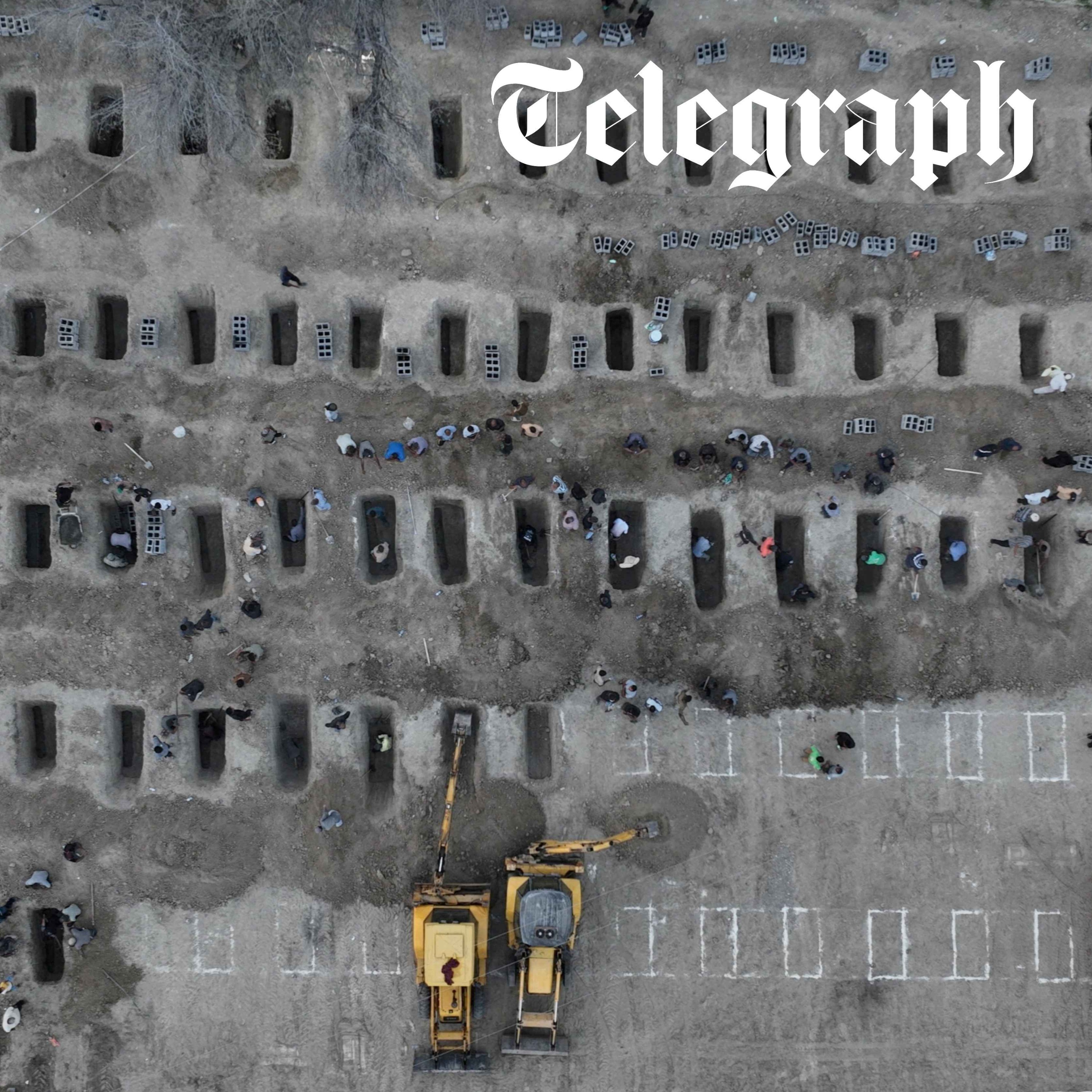
So the main thing to look at here is the satellite imagery and obviously when the Sharjah Tayebe Elementary School was targeted. That became an immediate point of great interest. Now, the good thing is that because of this proliferation of imagery from both before and after the strikes, we're able to literally do a compare and contrast what was intact prior, what had gone down afterwards. So we know immediately that the school indeed was destroyed. Were able to corroborate that with the imagery on the ground and the eyewitness accounts from parents and others at Rowland and our colleagues here have also gathered. So we know that school building was previously part of the IRGC compound which the Americans were targeting. However, we also know, and this is not an OSINT thing, this is very much looking at Google Maps. You can confirm this. If you take the satellite view of Google Maps back to the years 2013 and 2015, you can see that the compound was actually walled off. The school compound, that is, was walled off from the IRGC compound.
- [31:06]
Venetia Rainey
And this is a really crucial point. Right, that we'll get to in more depth later. But yes, sorry, just want listeners to hold that in their mind.
- [31:12]
Gareth Caulfield
Absolutely, yes. So hold that thought. Now, the, the other open source intelligence stuff going around is pictures and videos of the strike and its aftermath. Now, there is a very well known clip of a Tomahawk missile striking Minaj. It's important to note that that strike is since been identified. It is not on the school itself. It appears to be on one of the IRGC buildings in that next door compound. But there is no doubt that that weapon is a Tomahawk. Now, it's a, it's a very distinctive missile, the Tomahawk. Long, thin body, three or four fins at the rear, depending on precise model, and two notably thin stubby wings from about its midsection. That miss. Yeah, that footage, the sort of terminal second or so, if you freeze frame it, it is unequivocally a Tomahawk. A great number of experts in weaponry have spoken to a great deal of news outlets, including the Telegraph, to verify independently this is a Tomahawk. Now, we've also got lots of imagery of graves being dug in Minab after the strike, which again corroborates with the Iranian accounts that they had to dig mass graves in the local cemetery. So we are able to confirm at this point. Just to briefly recap there, there is a strike, it's on the school building and a large number of people were buried in the day or two after that strike. Now, we also have evidence from the Iranians themselves. They presented some missile debris which they said was from Tomahawks Again, experts have looked at this. I've also looked at this myself. You can verify that this debris is indeed from Tomahawks. We have items that include what appears to be an actuator motor from one of the missiles tail fins. This is how it steers itself through the air. We've got a radar antenna and the associated processing unit attached to that. Now that's an interesting one which I'll come back to. And there's also another piece of debris which quite clearly bears the logo of Ball Aerospace and Technologies Corporation, who we know by the way, they are a British owned firm. They're bought by BAE Systems in 2024. We also know from the US Naval Institute that Ball has supplied Tomahawk components certainly in the past, if not ongoing to the present day. Now returning to the radar seeker, the, the antenna from the Tomahawk. Although the Iranians are quite quick to present this at the scene, it does seem unlikely to me that this was one of the missiles that actually struck Minab itself. We can see in the video footage of the missile impact and we can also see in the photos and the satellite imagery that whatever weapon struck the school detonated and it, it flattened three quarters of the building. It took down those two floors. Only I think the northeastern corner of it still remains standing. That is not consistent in my view with certain parts of the debris recovered by the Iranians. Although these components are definitely from Tomahawks, we don't have what investigators would call a chain of custody conclusively showing that this was picked up from the site and recovered. Now it may be that there's a coincidence that these things did survive. It may be that they were brought in from elsewhere by the Iranians to illustrate this is a Tomahawk. And of course we're in the modern era of a social media war where everybody has a vested interest in claiming their enemies are doing terrible things, that they've got the definite proof to show it, which, which tends to, to mitigate against anybody asking questions. However, even though we may have doubts about this Iranian evidence, I do not believe that there is a doubt that it's a Tomahawk and it's a US launched Tomahawk at that which struck Minab.
- [34:36]
Venetia Rainey
The Tomahawk stuff is important because Trump was asked about that and he was challenged by the New York Times. Let's just hear a clip of that from AP.
- [34:42]
Pete Hegseth
Can you please provide some guidance?
- [34:44]
Roland Oliphant
It's been 13 days in.
- [34:45]
Pete Hegseth
Can you please provide some guidance, both of you, about the strike on the girls school there's been reporting that indicates
- [34:53]
Roland Oliphant
that preliminary inquiry, even though it's ongoing,
- [34:56]
Pete Hegseth
has determined that the airstrike was carried
- [34:58]
Roland Oliphant
out by the United States.
- [35:01]
Pete Hegseth
Given that there is another competing narrative that this was done intentionally, can you provide us with some guidance about whether this was the case? Well, with an issue on your first topic, an issue of such seriousness, we don't. We're not going to let reporting lead us or force our hand into indicating what happened in a particular situation because the truth matters. So I can report that CENTCOM has designated an investigating officer to complete a command investigation. The command investigation will take as long as necessary to address all the matters surrounding this incident. And the investigating officer is from outside CENTCOM and is a general officer who
- [35:40]
Venetia Rainey
does have Tomahawks in the world.
- [35:42]
Gareth Caulfield
The countries that have tomahawks. Well, in the current Iran war, the only country with Tomahawks is the U.S. there are other countries around the world, U.S. allies who have bought Tomahawks. Quite clearly, Iran is not a US ally and does not have tomahawks of any description in its arsenals.
- [35:59]
Arthur Scott Geddes
So as the kind of accusations start flying, you start to get some denial from the US like we've heard. We start to get the waters being muddied and into this situation come all sorts of conspiracy theories and alternative explanations for what's happened. I wonder if you could just talk us through some of those, Roland.
- [36:14]
Roland Oliphant
Yeah, so there's a number of these start to appear. Interestingly, these didn't really come from official sources. So I had briefings with Israeli sources. None of them ever kind of pushed the idea that this was not an allied strike. But these kind of things were showing up on social media and they were showing up in ways that seemed. It's difficult to tell whether it's coordinated or not. Right. But they began to dominate narrative. One of them was the idea that this must have been hit by a misfiring IRGC launched missile. Now this was based on footage of a misfiring IRGC missile, but which had been geolocated to a spot about, I think about 1500 miles away and therefore clearly nothing to do with that. Again, no evidence of that at all. I'd put that to people in Minab. They kind of went, well, haven't heard that one. There was the other one which I thought really kind of baffled me in a way. And it was the idea that what had happened was the IRGC had planned and staged the explosion at school to frame the Americans and the Israelis and that they had brought in the frozen Bodies of children who had been killed in the massacre of protests in January in order to create this scene of carnage. Now, I don't really want to give that much credibility, but it was out there and it was a narrative out there. And the reason it caught my eye was the Russians tried exactly the same thing when they shot down MH17 in 2014. That same narrative was pushed out by kind of Russian linked Internet trolls and so on saying aha, the bodies on the ground were very, were suspiciously fresh, they must have been in a freezer. And then the narrative there became oh, actually MH370 was part of an American or Ukrainian plot and they killed all the passengers and then they kept the bodies in cryogenic storage and distributed them. So it was a repetition of that conspiracy theory.
- [38:10]
Venetia Rainey
You also reported on the Iranian regime using the funerals around Miqab. Their propaganda.
- [38:18]
Roland Oliphant
Yes, in this area because as I said before, it's a mixed Persian and Baluchi area, but it's also, it's got quite a big Sunni minority population. When someone dies here, you always take the body back to their home village to bury them with their, with their family, with their ancestors that were just because they'll get the wrong rights if you bury them in another village or another town or something like that. That's what we do. So that's just the practice around here. A lot of parents showed up and here's what I was told happened. They showed up, they tried to get the bodies back. The IRGC who were, who were controlling the site said we can't give you the bodies because a lot of them are just in pieces and can't be identified. So we have to do DNA tests to give them back. Now I was, my sources told me that was not a complete lie. There were incredibly bad, you know, bodies literally blow into bits. It was true. Things are in pieces. The IIGC apparently then said, what we'll do is we'll have a big funeral ceremony in the center of town. And then after that, when we've identified the bodies, you can take them and rebury them and in your home village or something like that. The whole town showed up to this ceremony and they found a big poster of Ali Khamenei women waving pictures of the, the martyred Supreme Leader. And it quickly became, you know, beamed around Iran on, on state television as a, as a show of defiance and a rally in support of the regime. I was told by sources that everybody was there, a lot of people there were very anti regime, that they were there because they'd been told this was the way to kind of mourn the dead. And it was a tragedy for the town. And basically they felt that their grief had been hijacked for propaganda purposes.
- [39:58]
Arthur Scott Geddes
So how is it that this missile came to hit this school? And what was so important about the target that they were perhaps aiming for?
- [40:06]
Gareth Caulfield
So the US were aiming for the IRGC Naval Medical Clinic which is next door to the school. The school itself as mentioned, was sort of walled off about 10 years ago. But the strikes and the buildings that were targeted, which are visible in the satellite imagery that's come out since the strike, it's very clearly looking at a military facility. This is a legitimate target in the
- [40:26]
Pete Hegseth
middle of a war.
- [40:27]
Gareth Caulfield
And those have been targeted and destroyed quite legitimately. The school was walled off from the main naval compound or IRGSE compound in 2016. And we know from again, very simple Google satellite information imagery that new tarmac was laid fresh and black and even had what looked like a football pitch or a five or side pitch painted on it. So on one analysis you could give the US a benefit of the doubt to an extent and you could say that ah, perhaps this building has been turned into a gym rather than a school. However, there are other investigations which do show very clearly that the school, you know, had a website, the address was, was well known in the local area. There are pictures going around of murals inside and outside, crucially the building. Some of those, according to Reuters, were even visible on satellite imagery taken from oblique angles.
- [41:15]
Venetia Rainey
And that gets us into the crucial question of so what went wrong here? The US has released a preliminary report that suggests that the American military was using outdated intelligence data. They just hadn't re verified this target since, as you said, the school was walled off from the rest of the military compound. This is what Jonathan hackett, a former U.S. marine Corps intelligence officer told us about that last week.
- [41:39]
Roland Oliphant
There.
- [41:39]
Pete Hegseth
There are two precedents for this, also very tragic. In 1991 during the Gulf War, the US had a lot of target lists with different target data that they were not able to verify in real time. There was a bunk strike where they believed Saddam was hiding. Something like 300 plus civilians were killed in that bunker. No Saddam. Another example is 1999 in Kosovo during Operation Allied Force, the US struck the Chinese embassy and killed a number of Chinese diplomats and others in that embassy because that information was old targeting data about what that building was supposed to be and nobody verified to check if it was true. And I mentioned those two examples because I think what happened in this case very Similar situation where you're in a denied area, which means you don't have people on the ground that can go and check with human intelligence. And also a very low level of government will on the US side to verify things. As we saw Hegseth during his press release, the very first one, he said, we don't need those silly rules of engagement. Well, those, those rules of engagement are the guardrails that provide steps to ensure that when we're targeting something, we actually verify that that is the target. I wouldn't be surprised if the US did almost nothing to verify that that building still was what it said it was on the Excel spreadsheet next to that grid coordinate that said IRGC facility. The way it probably worked was they just pulled a bunch of targets and they said, we're hitting all these at the same time. And that was the end of it. There was probably no validation beyond that. And when I was doing lethal targeting, we would need at least eight hours on a single target location with a drone overhead for eight hours, because we need to make sure there are no civilians in there. We need to make sure that the people coming and going are the people we said they were. For example, is it a church, is it a hospital, is it a house? And I think that those steps were not taken in this case.
- [43:24]
Venetia Rainey
Why do you think this attack is significant?
- [43:27]
Roland Oliphant
I mean, it's significant because it's the worst single incident of civilian death in this war. It's also, to me, it's about narrative and propaganda. And this was, it seems like every war these days has one of these horrible incidents that becomes a kind of football for propagandists on both sides and becomes a victim to the creation of narrative, especially in the social media and online sphere. And it becomes a kind of a focal point, if you will, for the information operations which are meant to manipulate us, especially the media. They're designed to compel us to direct our coverage in certain ways and so on. And therefore I think it's appropriate that us, the New York Times, the ft, whoever, put in a huge amount of resources to working out exactly what happened. Obviously there are challenges with that in the rest of the war, and you can't do that with every incident.
- [44:26]
Venetia Rainey
Gareth.
- [44:27]
Gareth Caulfield
I think there's also a broader philosophical point to be made about this, because in the current modern day context, we are increasingly reliant on smart weapons, precise targeting, GPS coordinates, all those good sort of narrative strands that convinces military decision makers, politicians, and ultimately western the public in Western countries that we can precisely target our enemies, we can very, very exactly cut off the head of the snake, and that will be that. I think what this shows is that those weapons are all good and well, and they will definitely hit the target they're aimed at. But we must take greater care over the selection of those targets. And when we, you know, when militaries are refreshing those target lists and the intelligence on which they're based, they must make sure that they're making use of the most up to date available information. Now, fundamentally, if journalists, if people with access to the Internet can look up this school and say, oh, that's a school, then you quite reasonably expect that military intelligence personnel and those involved in target selection decisions will have access to the same information. And if we're not ensuring that those people are having their feet held to the fire, unaccountable, and aware that they need to be taking the greatest possible care to mitigate civilian harm, then this kind of thing could potentially happen again.
- [45:41]
Venetia Rainey
I think it's also worth pointing out that 90% of a Pentagon division focused on civilian harm mitigation response had been fired under the new Trump administration. And it clearly shows that someone didn't do their job properly. I mean, these were the first day targets, right? You would expect. I know we talk a lot about AI generating endless lists of targets, but you would expect the first day targets to have been really carefully thought through in terms of the value they would provide and civilian harm mitigation. And that didn't happen here, clearly. Arthur, anything you want to add?
- [46:12]
Arthur Scott Geddes
Yeah, I was going to talk a little bit about the use of AI in drawing up these targeting lists. There have been some quite interesting examples of signs where you can sort of see where this might be going wrong. There was a park in Iran called Police park that had an Israeli bomb dropped on it. It had nothing to do with the police, really, other than that the name of the park was the Police. It wasn't really a legitimate target of any kind. And I think that also raises what we're seeing here is a kind of new frontier, I think, of the way that AI is being used to kind of prosecute a war of this kind.
- [46:40]
Roland Oliphant
I think one thing that has happened in which you have to give the American military credit for is that they have investigated this and they have basically admitted what happened. And that mechanism, at least to some degree, seems to be working, at least on the American side. And that is not a bad thing.
- [46:59]
Venetia Rainey
I guess my worry is that with the Internet blackout in Iran and with the dwindling public resources available, we know that Planet Labs have stopped since March 9th providing any satellite imagery. They've put a delay of 14 days on all images so we wouldn't the same kind of open source intelligence that we had on this attack if something similar happened today. We just don't know. This war is becoming an increasingly black box and so all we have is the propaganda from both sides.
- [47:25]
Arthur Scott Geddes
That's all for today's episode. We'll be back tomorrow.
- [47:28]
Venetia Rainey
Until then, goodbye.
- [47:29]
Arthur Scott Geddes
Goodbye.
- [47:38]
Roland Oliphant
Foreign. The Latest is an original podcast from the Telegraph created by David Knowles and hosted by me, Roland Oliphant and Venetia Rainey. If you appreciated this podcast, please consider following around the latest formerly battle lines on your preferred podcast app. And if you have a moment, please leave a review as this helps others find the show. To stay on top of all our news, subscribe to the Telegraph, sign up for our Dispatches newsletter or listen to our sister podcast Ukraine for latest we're still on the same email address battlelineselegraph.co.uk or contact us on x. You can find our handles in the show. Notes the producer is Peter Shevlin. The Executive producer is Louisa Wells.
- [48:27]
Pete Hegseth
Hey, this is Adam Grant, host of ted's podcast Rethinking with Adam Grant. Let me share with you why smart finance leaders turn to Bill. They know that clarity isn't just helpful, it's strategic. As the intelligent finance platform, Bill uses AI to automate the busy work for nearly half a million businesses so they can focus on intentional growth, eliminate the friction and start scaling with the proven choice. Visit bill.com proven to talk with an expert about automating your business finances and get a $250 gift card as a thank you. That's bill.com proven terms and conditions apply. See Offer page for details.
- [48:59]
Gareth Caulfield
With its two juicy beef patties, three slices of melted cheese and tangy Big Arch sauce, the Big Arch is what
- [49:07]
Pete Hegseth
happens when you start making a McDonald's
- [49:09]
Gareth Caulfield
burger and never stop. The Big Arch the most McDonald's McDonald's burger yet for a limited time.