Loading summary
Transcript101 lines
- [00:04]
Roland Oliphant
The telegraph.
- [00:10]
Sofia Yan
Ryan Reynolds here from Mint Mobile with
- [00:11]
Veneesh Sharin Helene
a message for everyone paying big wireless way too much. Please, for the love of everything good in this world, stop with Mint. You can get premium wireless for just $15 a month. Of course, if you enjoy overpaying, no judgments. But that's weird. Okay, one judgment anyway. Give it a try.
- [00:28]
Sofia Yan
@mintmobile.com Switch upfront payment of $45 for 3 month plan equivalent to $15 per month required intro rate first 3 months only, then full price plan options available, taxes and fees extra. See full terms@mintmobile.com youm know what's wild?
- [00:40]
Mint Mobile/Jerry/Cargurus Advertisers
Most people are still overpaying for car insurance just because it's a pain to switch. That's why there's Jerry. Jerry's the only app that compares rates from over 50 insurance in minutes and helps you switch fast. With no spam calls or hidden fees. Drivers who save with Jerry could save over $1,300 a year before you renew your car insurance policy. Do yourself a favor, download the Jerry app or head to Jerry AI Acast.
- [01:09]
Roland Oliphant
As long as we don't have boots on the ground in Iran, they can keep telling themselves that this is not a forever war. The second that happens, then we have flashbacks to previous Middle east wars that did go on for years and years and years.
- [01:24]
Public Vox Pop / Adam Grant (advertisement)
A short time ago, the United States
- [01:26]
Sofia Yan
military began major combat operations in Iran.
- [01:33]
Veneesh Sharin Helene
If you kill Americans, if you threaten
- [01:35]
Public Vox Pop / Adam Grant (advertisement)
Americans anywhere on earth, we will hunt you down without apology and without hesitation
- [01:41]
Sofia Yan
and we will kill you.
- [01:43]
Veneesh Sharin Helene
We were not involved in the initial
- [01:46]
Roland Oliphant
strikes on Iran and we will not join offensive action now.
- [01:50]
Sofia Yan
Today, President Trump says Iran's supreme leader, Ayatollah Ali Khamenei was killed in the attacks.
- [02:01]
Veneesh Sharin Helene
I'm Veneesh Sharin Helene and this is Iran. The Latest. It's Wednesday, March 25, 2026. It's the 26th day of the war and on today's episode, we're going to be looking at Trump's 15 point peace plan, Iran's response, and what, if anything, could come of this. Plus, we'll be hearing firsthand from Americans on the streets of Washington, D.C. about how they view the war with Iran. And we'll be discussing the role that Trump's anti foreign Wars Vice President J.D. vance is playing. But first, I'm thrilled to be joined in the studio by our senior foreign correspondent, Sofia Yan, visiting from Istanbul. Sophia, welcome to around the.
- [02:34]
Sofia Yan
Thank you. Always glad to be here back in London.
- [02:37]
Veneesh Sharin Helene
It's really good to have your expert insights. So we're just going to Run through the big news updates from today and I just would be keen to just get your thoughts as we go through them. So let's start of course with the details that we've had overnight about Trump's peace plan. So Trump yesterday said that US Officials were talking to the right people in Iran and claimed they want to make a deal so badly. He confirmed that J.D. vance, the Vice President, and Marco Rubio, the Secretary of State, are involved in negotiations. And he also claimed that Iran had given the US and I'm quoting, a very significant prize relating to the Strait of Hormuz. Now, shortly afterwards, Iran's Foreign Affairs Ministry announced that ships from non hostile countries can now pass safely through the Strait. They qualify that this means countries that neither participate in nor support acts of aggression against Iran, nor belong to the US Or Israel. Now this is obviously hugely significant, but as we've said lots of times before, given reports of mine laying, the active pace of hostilities in the region, I think it remains really unlikely that shipping companies are just going to resume as normal.
- [03:33]
Mint Mobile/Jerry/Cargurus Advertisers
Right.
- [03:34]
Sofia Yan
Well, this is the big question. So far as we know, nobody's tried to test this. It's been a huge problem, primarily for a country like China, world's largest exporter. I mean, they've tried actually to manage this in the Gulf. They dispatched their own special envoy to try to figure out a way to get their ships through. Until things are clear, it is very difficult for big companies to make such decisions. I mean, there are lives at stake, there's money at stake. We're talking the global economy, we're talking global energy supplies, oil on a ship. I mean, this is not something you want going through if there's potential fire coming. It's a very big question as to what will allow companies and countries to start to feel like this is going to be stable enough for them to start sending vessels through. And this peace plan is an interesting approach.
- [04:15]
Veneesh Sharin Helene
Let's just run through the 15 point plan and trump someone who loves a 15 point, 20 point plan. It just boils down a really complex conflict into a couple of bullet points. But let's go with it. Cause this is what's being reported in US and Israeli media. We haven't seen the original text. Most are demands from Iran, but some offer something in return. So the first six are about Iran's nuclear ambitions. Iran must dismantle its existing nuclear capabilities. It must commit to never pursue nuclear weapons. No uranium enrichment on Iranian territory. Iran has to hand over its stockpile of uranium enriched 60% to the IAEA. The International Atomic Energy Agency. On a timetable to be agreed, the Natanz, Isfahan and Fordo nuclear facilities must all be dismantled. And then the IAEA, the UN's nuclear watchdog, must be granted full access, transparency and oversight site inside Iran. So that's the nuclear stuff then. There are a few demands about regional proxies. Iran must abandon its regional proxy paradigm and Iran must cease the funding, direction and arming of its regional proxies. One, about the Strait of Hormuz. It's got to remain open and function as a free maritime corridor. Two, demands about missiles. The missile program must be limited in both range and quantity with specific thresholds to be determined at a later stage. And any future use of missiles must be restricted to self defence. Now in return for all of that, Iran would apparently get a full lifting of sanctions assistance with its civilian nuclear program. And just to be clear, Iran has always maintained that it only has a civilian nuclear program. We've never seen evidence of a nuclear weapons program, although the enrichment is a pathway to that. And then the final thing that Iran would get is removal of this snapback mechanism which basically reimposes sanctions automatically if Iran fails to comply. There is talk of a 15th point if you're keeping track of any mentioned 14 things there and that's a possible month long ceasefire while discussions take place, but this remains unconfirmed. What are your initial thoughts on that, on that peace plan?
- [06:13]
Sofia Yan
So first, these are similar asks to what the US has made before. No, no nukes, no missiles. I mean this to Iran is existential. They do not want to give up on these things. One of the biggest issues that they were not willing to backtrack on in the talks that were happening just before this war broke out was the issue of missiles.
- [06:29]
Veneesh Sharin Helene
They proxies that was another stumbling block, wasn't it?
- [06:32]
Sofia Yan
So this is something that Iran has spent so much time, so many years, decades building because it's part of their, their horizontal warfare. This is how and why we are seeing this war play out in the way that it is currently across the region. This is why countries are getting hammered all over the place. And this is why the shipping's an issue. I mean this is something Iran has been planning for this day, asking this country, the Islamic Republic, to roll back on all of these points. Basically it's asking them to do something that they would never in the wildest dreams really, truly fully consider every single one. You might be able to get some concessions on some of these points. And it does in the talks again that were preceding this, this conflict. Iran did offer some pretty serious concessions. Already there was move to try to find some middle ground. From everything that has been said and reported in my own work and what we've done across the organization, it did really seem that Iran was trying to find a way to prevent war from occurring. I mean, from Iran's perspective, this is two for tried to do this twice. Both times they were hit. There's that saying bad things come in threes. Is this the third time? I mean, this is what Tehran is going to be musing about at this point, right? Can they trust Trump? From their perspective, it doesn't seem like he's somebody who can be trusted to be saying, sit at the table with me or sit at the table with who I've sent to come see you.
- [07:52]
Veneesh Sharin Helene
That's basically what the Iranians have said. Lt. Col. Zolfagari put out a video statement and he basically rejected any prospect of a deal with the current administration. He said, our first and last word has been the same from day one and it will stay that way. Someone like us will never come to terms with someone like you. You, not now, not ever. He also teased Trump, has the level of your inner struggle reached the stage of you negotiating with yourself? We've also heard separately, and this is Axios reporting from Islamic Republic officials, that they don't want to be fooled again. And that comes back to the point that you've said where twice last year, but just before the 12 day war and now before this round of conflict, they were in the middle of talks and they were supposed to be going well, and then the US Goes in. I just want to pick up on that point that you said about the nuclear aspect of this just before. And I mean, just before I think it was being reported on February 28th when this war started, the Omani foreign minister went to America and was making his case quite forcibly in the American media, saying, we've had some real breakthroughs with the Iranians in terms of the talks between Iran and the US and he said that Iran had agreed to never stockpile enriched uranium, described it as a major breakthrough. So it shows that there was some willingness around the nuclear program. And we should also say that there was an Iranian nuclear deal where a lot of these aspects were contained. The snapback mechanism that we mentioned, the. That was in the nuclear deal that was agreed in 2015 and that Trump walked out of in 2018. So in some ways, it's a step back from a deal that we already had in place and that Trump walked
- [09:11]
Sofia Yan
away from, you know, even in my conversations with regular Iranians, citizens of the country, even, they don't feel that they can trust the U.S. i mean, I've had a lot of people say similar things to me, generally on the lines of, well, we, we don't like this regime either. We've suffered. Our wives, our mothers or our daughters have suffered because of the headscarf requirements, for instance, also the mass protests and this iron fist that came down for how the protest dealt with. So a lot of people say, you know, we don't necessarily like what's going on in our country, but how can we trust someone like Trump? How does he know that this is what's good for. For us, for a country that he's so far away from? And how does he, how can we trust that he will actually agree to what he's saying and putting forward? I mean, this is something that even the general public feels. So you, you see this both at the government level, the official level in terms of the statements that Iran is putting out. And of course, they're very tight about what they say because of propaganda messaging at this moment and this tense moment of war, but also with regular people. So this sort of trust issue, I think you cannot, you can't underestimate how strong that really is, particularly when we
- [10:14]
Veneesh Sharin Helene
have thousands of Marines, and now apparently another thousand, at least, from the 82nd Airborne Division heading to the Middle East. They're going to be arriving this weekend. The signs for, if you were Iranian, you would think there's more trouble coming our way.
- [10:26]
Sofia Yan
Exactly. This is. It just goes back to what I was saying before. Trump is saying he wants to sit at the table. Is he just buying some time before he decides to move on military action? I mean, again, you look at how he's reacted before, well, it's not such a wild stance to think that might be how he decides to move going forward. And one last point to make is that for a lot of people in the Middle East, Turkey included, the one person in Iran who was left, that could have been a potential mediating voice, somebody who could bring on board the establishment, the security establishment in particular in Iran, somebody could also reach out to the West. That was Ali Larajani, and he's dead now. I can't tell you how many people in the Middle east these last few weeks have told me that there were a couple of people they thought could fill that role who could try to bridge the gap between Iran and the US And Larajani was on that list. I mean, somebody very senior in Iraq told me that if he was somebody who was killed or died at this point, that would be one of the worst things for the world because he was somebody who could bridge that gap. He's dead now. Right. So who, who exactly is Iran going to be able to have in these potential talks going forward that the rest of the country can back and support and believe in?
- [11:36]
Veneesh Sharin Helene
We should also mention that the IRGC have put out counter demands. They want the US to close all of its bases in the Gulf and pay reparations for the attacks. They say Iran should be able to collect fees from ships traveling through the Strait of Hormuz. They want to guarantee that the war won't restart. And they want an end to Israel's operation against Hezbollah in Lebanon. They want all sanctions on Iran to be lifted and no limitations on Iran's missile program. I mean, these are equally completely unrealistic demands. This does not sound like two partners who are seriously having peace talks, does it?
- [12:04]
Sofia Yan
No, but maybe one strategy is to just to draw that line in the sand for both sides. This is where we are, you now know. I mean, that's one approach. One question going forward is that Iran has always been very restrictive in terms of having independent auditors, the IAEA to come in. They restrict their work. And even if something very material were to be agreed now, what are the mechanisms to ensure that Iran is actually going to comply with what it said is going to comply? Because, again, they don't have a good track record of this. What will happen to all the material that many experts believe has been enriched? I mean, who's going to take it? Will Russia take it? I mean, where do things go from here?
- [12:43]
Veneesh Sharin Helene
We talked a bit yesterday about the role that Pakistan and Egypt are playing in negotiating this crisis. But Turkey is another country that's come up. It's where you're normally based in Istanbul. Tell us a bit about Turkey's role in all of this.
- [12:52]
Sofia Yan
Yeah, so Turkey is a very interesting one. You know, Turkey has essentially been working in some capacity since day one on this, even before. I mean, they are in the neighborhood. They are right in the middle of all of this. And they in many ways, a lot of skin in the game. They share a border with Iran, for instance. They are, from a domestic perspective, they're very concerned about the refugee crisis that may ensue if lots of Iranians are crossing the border. They were dealing with this for so many years with Syria, for instance, and they're still experiencing the effect of that, even though now Syria's got Potentially a brighter future ahead. So there are worries about having to handle an influx of new people at a time when the global economy is suffering. There's also the issue we've spoken about before about armed Kurds. Frankly, any. This is to Turkey an existential threat. They've spent many years dealing with their own Kurd militants. There's a peace process ongoing. From the perspective of the Turkish government, they don't want anything to derail that because that is, in the long term, something that they see as a net positive. But you have to think about how Turkey might actually be well positioned because they do still want, from Trump fighter jets from America. They are a NATO member. They are like everyone, being hit by rising oil prices. And as an aside, they actually import some energy, gas, for instance, from Iran. You also can't forget that Turkey still wants to join the European Union. They are always working internally to change their standards on everything, cars, fuel, you know, all sorts of things so that they can match the eu, because they still have this dream to be part of the European Union. So they have first a link to the west, to Europe, to the us, to the uk. They have things that they do still want that are quite important to the Turkish government going forward. They can speak to Iran, they can speak to the Middle East. Literally, the country straddles the European continent and the Asian continent. They are a little bit of everything. And so I think the fact that they have this experience is very important. And they. They do have a track record of trying to work out these issues. And this particular moment is a very interesting one for the US and Turkey also, because the current Turkish ambassador, Tom Barrack, he is also the special envoy to Syria, and he is Washington's man in the Middle East. He's always on the road. He is everywhere, all the time, meeting with everybody in the region. And so he's got relationships. And he talks a lot, of course, with the Turkish Foreign minister, Hakan Fidan, who also speaks a lot with the Iranians. So this is a very interesting place by which things could potentially move. There's an argument to have an intermediary who is a totally neutral third party. But who is that at this point? That's maybe an impossibility to find. China, early days of the war made some very quiet noises about trying to do this. But their interest, they don't have first the diplomatic clout to do this. They don't have the experience either, at this scale. They could, however, maybe push on an economic front, which is to keep the Strait of Hormuz open. And this is something that benefits everyone. It doesn't resolve the war, but it may lessen the impact for now, a lot of other countries in the Middle east getting involved, the Gulf in particular. But again, these are countries that are, they're so embroiled in this themselves.
- [16:01]
Veneesh Sharin Helene
And on that point about the Gulf, the final thing we should mention is that despite all of these peace talks or talk of peace talks because we don't know how real they are, if everyone's just putting out statements about peace talks, the pace of the war continues. We use accled's data and they show that the level of attacks over the last few days is consistent with earlier days. Saudi Arabia's Ministry of Defence has intercepted and destroyed three drones in the east of the country today. Kuwait has downed six drones this morning. Last night a drone strike hit Kuwait's airport and caused a fire. Bahrain has been the target of Iranian strikes today. And in Israel they've reported five separate incidents of missile fire from Iran with the impact not yet known. I think the other big question that I'd like to ask you before we wrap this up is how long do you think the Gulf states can continue to endure these sorts of attacks without wanting to shift from the defensive to the offensive?
- [16:49]
Sofia Yan
Yeah, it's a very big question. I mean, this is something for so long, this is a part of the world that relied on these US Security guarantees. And we've talked about this before. I mean, how valid is that, that at this point? I mean, does anyone still trust that what could Washington do at this point to assuage those concerns? I mean, these are all very big questions.
- [17:05]
Veneesh Sharin Helene
Potentially.
- [17:05]
Sofia Yan
The Gulf states don't even know the answer to that themselves at this stage because right now everybody's still in crisis mode essentially. Some fighting really does need to stop. But even if something were to be agreed between governments, how will the militias that Iran's backed for so long, how will they react? You know, there's been a lot of reporting about how Iran has diversified their command and control. I mean, you know, I've been told by government officials in the Middle east that as far as they understand it, Tehran doesn't control this anymore. Everyone's doing their own thing and this is what they planned after that 12 day war. So even if something were to be agreed, is it possible for this to be implemented throughout, that everyone really does lay down arms. It just puts us in such a difficult, dangerous footing because after this war, everything that could have been relied on is gone.
- [17:57]
Veneesh Sharin Helene
That was Sophia Yan, the Telegraph senior foreign Correspondent. We're going to take a short break now. Coming up afterwards, what do Americans think of this conflict? And why is JD Vance involved in peace negotiations?
- [18:13]
Mint Mobile/Jerry/Cargurus Advertisers
Finally, car shopping made for you Meet Cargurus Discover, a new search feature where you can look for vehicles based on the way you think, using your own words. No more being boxed in by filters. Whether you want great gas mileage for road trips or extra trunk space for the whole crew, simply type it in and Cargurus Discover will give you real shoppable listings that match. It's the smarter way to find the car that fits your life. With Cargurus Discover, you can skip the filters and describe what you're looking for in your own words. Simply type what you want and Cargurus Discover instantly surfaces real listings that match your exact needs.
- [18:49]
Veneesh Sharin Helene
Kids.
- [18:49]
Mint Mobile/Jerry/Cargurus Advertisers
It's no wonder Cargurus is the number one most visited car shopping site according to SimilarWeb's estimated traffic data. Buy or sell your next car today with CarGurus@CarGurus.com Go to CarGurus.com to make sure your big deal is the best deal. That's C-A-R G U R U S.com CarGurus.com hey, this is Adam Grant, host
- [19:12]
Public Vox Pop / Adam Grant (advertisement)
of Ted's podcast Rethinking with Adam Grant. Have you heard of Bill? It's the intelligent finance platform that uses AI to help you avoid costly errors and optimize cash flow. In fact, Bill reports that over 90 of the top 100 US accounting firms trust them to manage, move and maximize money. Proven by over a trillion dollars in secure transactions. Eliminate the friction and start scaling with the proven choice. Visit bill.com proven to talk with an expert about automating your business finances and get a $250 gift card as the thank you. That's bill.com proven terms and conditions apply. See Offer page for details.
- [19:47]
Mint Mobile/Jerry/Cargurus Advertisers
Are you noticing your car insurance rate creep up? Even without tickets or claims? You're not alone. That's why there's Jerry, your proactive insurance assistant. Jerry handles the legwork by comparing quotes side by side from over 50 top insurers so you can confidently hit buy. No spam calls, no hidden fees. Jerry even tracks rates and alerts you when it's best to shop. Drivers who save with Jerry could save over $1300 a year. Don't settle for higher rates. Download the Jerry app or visit Jerry AI Acast today.
- [20:24]
Veneesh Sharin Helene
Welcome back. You're listening to Iran, the latest, and one of the big questions that we've come back to repeatedly is why Donald Trump, the man who said he would be President of peace, A. Warrender, why has he chosen to plunge America into the midst of a massive regional conflict? His cabinet was more or less assembled around this exact idea. And his vice president, J.D. vance, is explicitly against foreign interventions. Now, the Telegraph has a fantastic visual data piece up online now that we'll link to in the show notes. It looks at how Trump has ordered attacks across 13 countries spanning three continents since returning to the White House a little over a year ago. So how is the Iran war going down in the U.S. do people think it's going well? And will it affect the midterms? Our colleague Natasha Leake has been speaking to people on the streets of Washington, D.C. to find out.
- [21:15]
Public Vox Pop / Adam Grant (advertisement)
I don't know that we need to
- [21:15]
Sofia Yan
be entering into wars that we're not necessarily considering the full consequences of globally. Yeah.
- [21:22]
Roland Oliphant
So I would say mostly just maybe
- [21:24]
Sofia Yan
confusion about the reason why and concern over entering into such a thing. The economy and prices of typical consumer goods like gas is something that sort of was promoted as something that would improve under this administration in some ways. And I think that the consideration of,
- [21:46]
Veneesh Sharin Helene
you know, gas prices and things like
- [21:48]
Sofia Yan
that, the actual impact on Americans was not something that was taken into consideration when we, you know, began this war.
- [21:56]
Public Vox Pop / Adam Grant (advertisement)
I mean, I don't really follow the news that much, but more clarity would be nice.
- [22:02]
Roland Oliphant
What would you say if you were
- [22:04]
Sofia Yan
to meet Donald Trump tomorrow?
- [22:05]
Roland Oliphant
What would you say to him?
- [22:07]
Sofia Yan
I would ask, like, what his plan
- [22:09]
Public Vox Pop / Adam Grant (advertisement)
with this war is.
- [22:11]
Sofia Yan
That's what I want to know.
- [22:12]
Public Vox Pop / Adam Grant (advertisement)
Because it doesn't seem like there is
- [22:13]
Sofia Yan
much of one right now.
- [22:15]
Public Vox Pop / Adam Grant (advertisement)
War is politics by other means. And if all means have failed, I mean, it could be better. It's definitely better. But I grew up, my parents are from the generation where they were humiliated by what happened in Iran in the late 70s. And that's kind of, I believe that has influenced my view of what has been going on there. And I don't want any type of suffering to go on for longer than it needs to be. It needs to be done when it needs to be done properly and no half steps.
- [22:46]
Sofia Yan
I don't know all the deets, but I think it's just very unnecessary. It just feels like all the men in office just like having a who got the biggest penis kind of competition. It just, it just feels like nothing to do with us and we're just in the middle of all of it.
- [23:01]
Mint Mobile/Jerry/Cargurus Advertisers
It's just, you know, it's literally we're
- [23:03]
Sofia Yan
not benefiting nothing from it.
- [23:05]
Mint Mobile/Jerry/Cargurus Advertisers
Everything's getting higher.
- [23:07]
Sofia Yan
Everything's getting more intense. My mom, yeah, she is not happy about this at all.
- [23:12]
Mint Mobile/Jerry/Cargurus Advertisers
The prices, the gas and everything, it's
- [23:14]
Sofia Yan
just all just big inconvenience and it's out of nowhere. I think it's just ridiculous and a waste of time. They've been fighting for years, if not with us, with each other over there. So nothing's going to be solved.
- [23:29]
Roland Oliphant
Okay.
- [23:30]
Sofia Yan
And the American people should not foot
- [23:32]
Veneesh Sharin Helene
the bill for this.
- [23:33]
Sofia Yan
I honestly think it needed to happen because he was trying to make peace with them. They were in discussions and then he just kept trying to get more nuclear weapons. And I feel like if that happens, things would be a lot worse for America and a lot of other countries. Countries. I actually voted for Trump, so I very much do support. I don't think I've had a problem with anything he's done while he's been in office this term. So how did you feel when you
- [23:59]
Roland Oliphant
heard that it had happened? Like, what was your initial reaction to the news?
- [24:03]
Public Vox Pop / Adam Grant (advertisement)
I knew that we were strong and
- [24:05]
Veneesh Sharin Helene
could dominate and so, yep, have confidence.
- [24:09]
Roland Oliphant
Do you completely support the whole thing
- [24:11]
Sofia Yan
and do you think that it kind
- [24:13]
Roland Oliphant
of contradicts America's isolation?
- [24:16]
Public Vox Pop / Adam Grant (advertisement)
Well, we can try to be isolationist,
- [24:17]
Sofia Yan
but it's not realistic when we, when we have somebody who absolutely hates our country, eats our Constitution.
- [24:29]
Veneesh Sharin Helene
Now, to talk us through the politics around all of this in a bit more depth, I want to welcome one of our Washington bureau editors, Lottie Tiplady Bishop, to the podcast. Lottie, welcome to around the latest. Let's start with this 15 point peace plan. We discussed it in detail earlier in the episode, but I'd love to know what's the view in Washington? How's it going down over there?
- [24:46]
Roland Oliphant
I actually think the timing is really interesting. So we're obviously, we're a month into the war now. So far the support has been fairly good, I would say, especially among Trump's MAGA base. You have a few dissenting voices who speak louder than the rest who have big platforms. But if you look at the polls generally, I think it was like 9 in 10 MAGA Republicans support the war, but the longer it goes on, the support is going to wane. And that is because Trump's huge campaign thing was no more forever wars. So I think the fact that this is being released in the fourth week is really interesting. I also think the timing of this coming at the same time that they're deploying J.D. vance into the peace talks is quite interesting. Obviously, he is not the most supportive of the war. I think Trump said something like he was less enthusiastic than he is. So those two coming together at this point in time is interesting. I think it's a good move by the Trump camp to show a real effort in ending the war. I'm not sure how it will go down with the public. I think it might be a little bit too in the weeds geopolitically for voters at the moment. But as we know, every time Trump opens his mouth, energy prices go down. And that is really what voters care about. A skeptical person might say the timing and the energy prices and everything is all coming together to work out quite well for Trump in this moment.
- [26:08]
Veneesh Sharin Helene
That's a really good point. And we have seen reporting around speculation that some people, no suggestion of any wrongdoing within the Trump administration, but speculation that some people knew that this was coming.
- [26:18]
Roland Oliphant
I mean, Obviously the, the FT yesterday had an exclusive that someone put a $580 million bet and then CNN reported yesterday that somebody on Polymarket had become a millionaire from successfully betting on the Iran war.
- [26:34]
Veneesh Sharin Helene
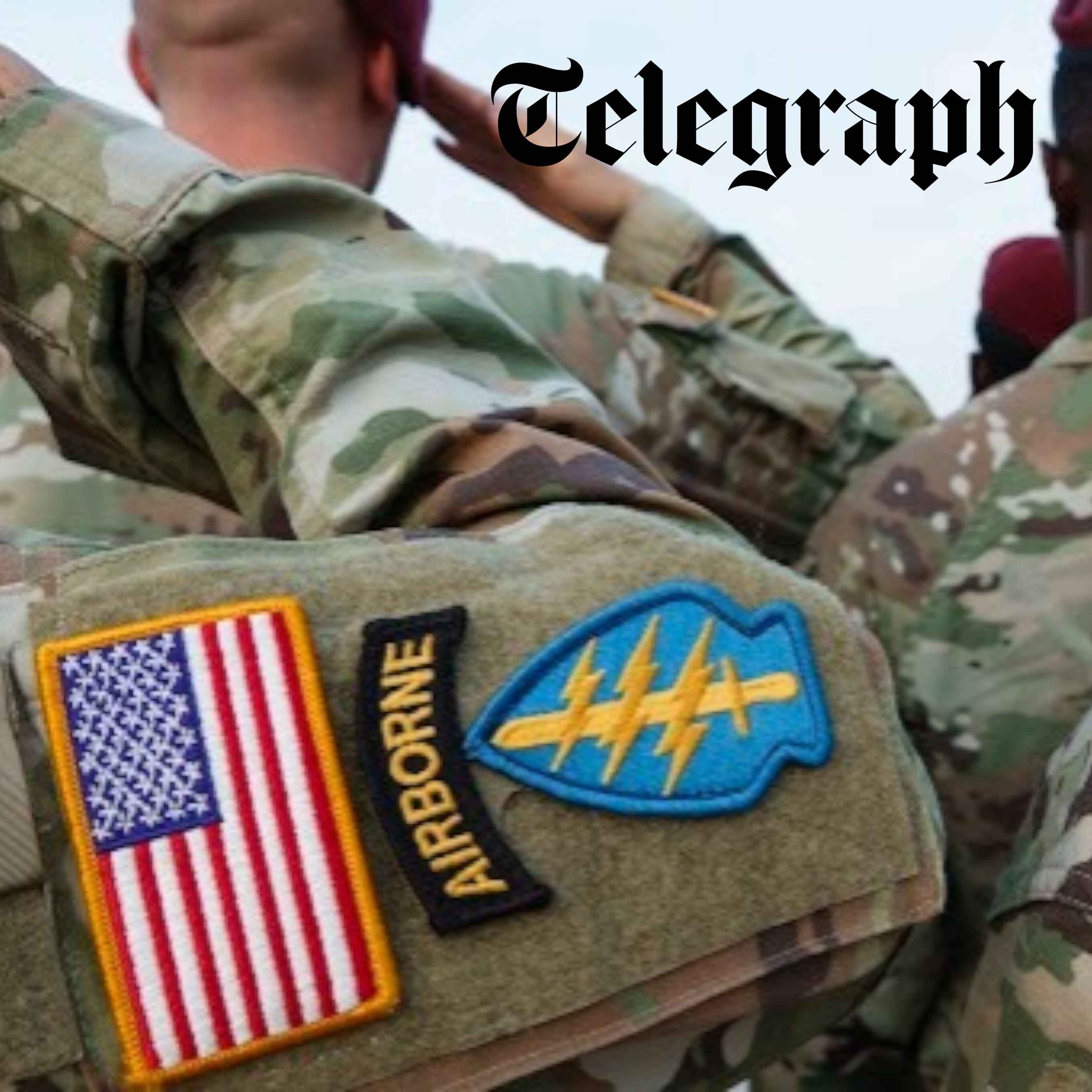
And all of this is happening as Trump is sending yet more troops, we hear, to the Middle East. So we already had to recap for our listeners. We already had 2,500 being deployed from the Sea of Japan. We knew about that a couple of weeks ago, I think now. And then There were another 2,500 announced last week coming over from California Marines. And now there's another 2,000 from the 82nd Airborne Division. I mean, what signal is Trump trying to send here? I mean, the Iranians have said we don't want to be taken as fools, basically saying you're sending more troops, you're just buying time to get them into
- [27:04]
Roland Oliphant
place, I think this is going to be a real sticking point for Trump. So interestingly, they are set to arrive on Friday when this five day deadline that he came up with, I think it was yesterday morning, is up. So I think it will be a sticking point for Trump because in terms of support among his base and also among sort of like the wider MAGA faces beyond his cabinet. As long as we don't have boots on the ground in Iran, they can keep telling themselves that this is not a forever war. I think the second that happens, I just want to clarify that the troops are being deployed to like the Middle East. We don't know where they're going, but they will be, you know, fairly close to Iran. I think the second that somebody does step foot on, like ashore of the Strait of Hormuz, which sounds like it's becoming Increasingly realistic. Then we have flashbacks to previous Middle east wars that did go on for years and years and years. And is the whole reason why a lot of Donald Trump supporters and also Cabinet, let's be honest, are really, really against Middle east intervention.
- [28:16]
Veneesh Sharin Helene
I mean, this is the president too. And we have a clip. We had a clip in the top of the old montage of the podcast when it was back when it was battle lines.
- [28:23]
Public Vox Pop / Adam Grant (advertisement)
We will measure our success not only by the battles we win, but also by the wars we end.
- [28:29]
Veneesh Sharin Helene
And this was a key promise. And it was also the key promise that J.D. vance came on board with.
- [28:34]
Mint Mobile/Jerry/Cargurus Advertisers
Right.
- [28:34]
Veneesh Sharin Helene
He wrote a big op ed in the Wall Street Journal saying, this is the campaign promise that I really support. Tell us a bit about who J.D. vance is and why it's so significant that he's now becoming involved in the peace negotiations.
- [28:46]
Roland Oliphant
So JD Vance is very firmly in the isolationist camp of Trump's kind of maggot inner circle. Probably him and Tulsi Gabbard, who's the Director of National Intelligence, are the two staunchest opposers. It is interesting that he is being brought in now, like some could say, to kind of become the face of bringing the war to a close, I think because he represents what a large part of Trump's votership got him into the White House for, which is is no more foreign wars. It's all about America. America first, basically. Trump has previously said, I am maga. America first is what I say, which is a fair point, but it's also kind of what his representatives say, as in J.D. vance. I think that a lot of media and kind of news reports like to say that J.D. vance has been very absent up until this point, which is fair. But he hasn't necessarily been so quiet. His kind of line has been, well, Donald Trump is the commander in chief. And what Donald Trump is doing is what I agree with. But I think he has been quite open about wanting the conflict to end quickly. And he also has previously said many times that Iran cannot have a nuclear weapon. So I think all of these things converging together make him a really good face to go to the American people and say, look, we are really trying to end this. I also think if you could just cast your mind back to the 15 point peace plan from a couple of minutes ago, the fact that they are putting this out and then Iran are coming back with such unworkable requests. At the same time, it all feeds into this idea that, look, we're really trying, but Iran is really scary and horrible. And is not going to help us end the war. And it puts them in a fairly decent position wherein if they do have peace talks tomorrow and they're successful, great. If they don't, then they can also say, look, we tried. Iran are completely not budging and therefore we have no choice but to carry on and go forward with it.
- [30:56]
Veneesh Sharin Helene
So potentially an optics thing to allow for a justification of a future escalation of this conflict. Do you think that's why they're pushing so hard for talks in Islamabad on Thursday? Thinking of this five day deadline?
- [31:10]
Roland Oliphant
I think so. I think that would be a fair assessment. I also think they're probably scrambling a little bit because Friday is when things get really, really serious. I mean, of course Trump could extend it again, but extending a deadline when you have 2,000 paratroopers in the region and peace talks are not going well, it's not great. It's not very convincing.
- [31:34]
Veneesh Sharin Helene
I just want to dwell a little bit longer on JD Vance because I do think he's really interesting. He's a former US Marine, he served in Iraq. He explicitly argued against US military action in Iran back in November 2024. And when this war broke out on February 28, which feels like a lifetime ago now, he was silent. He was actually silent for about 72 hours, wasn't he? I was going back through our reporting and he eventually broke his silence after three days on Fox News. And he defended a limited strike with specific goals. He said the President has clearly defined what he wants to accomplish. There's just no way Donald Trump is going to allow this country to get into a multi year conflict with no clear end in sight and no clear objective. Is that still the line he's hewing to and are people still buying that?
- [32:15]
Roland Oliphant
It's definitely the line that he is still espousing. In terms of people buying it, I think we are on shaky ground. I think they'll buy it for a few more days. I think that. But I also just think that Donald Trump's base, like his core base, the people who will vote for him no matter what on A are not the people who got him into the White house. Something like 30 to 50% of those people are actually their votes actually counted into him winning the election in 2024. I do wonder if Donald Trump can work his magic to make people still believe it or to change people's minds. And I wonder if bringing JD Vance in as his kind of most staunch isolationist and making him the face of that mind changing campaign is quite smart.
- [33:08]
Veneesh Sharin Helene
Okay, so that's what's going on this week. Let's talk a bit broader because your colleague Natasha Leake did some fantastic vox pops for us, which our listeners have heard before this chat. And one of the things that comes up a lot is cost of living. Petrol prices have risen 25% since the first strikes on Tehran, appear unlikely to come down anytime soon, and the cost of living has consistently topped polls as the number one concern for voters. You've got midterm elections coming up in November. How do you think this is going to change things for Republicans?
- [33:36]
Roland Oliphant
So I think the cost of living is the number one issue connected to this war. And also just generally, I think that the war, regardless of what Donald Trump's votership thinks, as long as energy prices are high because of the war, he is in really big trouble. I would also just caution though, I think it's a really good thing to talk about. But the midterms are in November. The Trump administration has repeatedly said we are doing everything we can to bring oil prices down. I don't know what they have up their sleeves, but if they do manage to bring them down even slightly, they can still play that as a huge win ahead of the midterms. So I think if we were to have the midterms tomorrow, it would be extremely bad news. I mean, I don't think it's going to be particularly great in America, sort of regardless of whether people were saying that before the conflict broke out. But in months and months time, I think things really could change. But I suppose what Donald Trump wants to avoid right now is a hangover. And I think the longer this goes on and the longer prices are high, even if they drop really sharply before the midterms, you will get at least a portion of people who are are in debt or had to maybe give up their car or take on a second job or more hours, and that's probably not going to be so easily forgotten.
- [35:06]
Veneesh Sharin Helene
Is the cost of living impact? Is that the main cut through aspect of this war in America? It feels like that's what came out most strongly from the vox pops. A lot of people said that how the war was going wasn't going to affect how they were going to vote. They had bigger concerns. I know that 13 US service members have died so far from this conflict, but that doesn't seem to have been a massive issue for the Trump administration so far. Is that fair?
- [35:27]
Roland Oliphant
I think that is fair. In terms of the cost of living, the service members dying, which is obviously extremely tragic. It did cause a slight problem for them with the resignation of Joe Kent last week. So he was the, I think the director of the National Counterterrorism Agency. And he, in his resignation letter did say, I cannot in good conscience serve in this administration when we are in this war and service members are dying. He's since been on kind of a MAGA media crawl, like sort of Tucker Carlson and everyone under the sun voicing his opposition to this war. People like him, podcasters that he is speaking to, yes, they do have a big listenership, but the people who listen aren't necessarily hardcore maga. So it represents a problem in that it will take away votes from people who wouldn't necessarily always vote for Donald Trump or maybe who wouldn't necessarily vote at all. But this time they were listening to Joe Rogan, they were listening to Tucker Carlson, they were listening to Megyn Kelly, and that convinced them. But then I think we also have to be quite realistic. Were any of those people really voting in midterm elections? Do the same people who were convinced to vote for Donald Trump by Tucker Carlson vote for their local congressman? I'm not sure that they do. I think they're A, too young and B, too disillusioned to care about things like that. So I'm not sure that it will have a huge impact on the midterms in terms of the loss of US Service members. But I think that that is definitely darkening the mood. And obviously America is a hugely patriotic country that has a lot of. Of respect for its military. And it is being felt. I don't know if it's being felt in terms of blame, but it's being felt in terms of. This is probably not a very good idea to be here.
- [37:20]
Veneesh Sharin Helene
It's interesting that you bring up the Joe Kent letter because one of the things that really stuck out to me from that is blaming Israel for dragging America into this war. I know the debate around Israel has really riven the Republicans in terms of the more traditional Republicans who believe that America is a staunch ally of Israel and will defend it no matter what. And. And perhaps the sort of newer Republicans, part of this MAGA base, who are a lot more critical of Israel and in many cases you could say just are anti Semitic. There's a heavy anti Semitic thread amongst many of the sort of MAGA podcasters, and I think there was an anti Semitic thread in Joe Kent's letter as well. To me, anyway, how has that been playing out, that anti Israel aspect, given that US and Israel are allies in this war?
- [37:59]
Roland Oliphant
I think you're right. I think a lot of the sort of newer I'm not, I'm remiss to call them maga. I think they are kind of climbing on the back of maga's success. Populism is perhaps a better word, are just quite anti Semitic. They're also misogynistic and racist and all of those kinds of things extreme, which gets people's attention. The Israel thing question is an interesting question because I've lived in America now for almost a year and a half, which I appreciate is not a very long time compared to some of our other more seasoned correspondents. But the feeling I get is it's a huge country and there is a real question or attitude that a lot of what goes on in Washington is not really anything to do with what goes on in the rest of the country in middle America. So I would imagine this is purely opinion. I haven't read any polls or anything about this that that not necessarily an anti Israel sentiment, but questions over the allyship are being raised in places across the country. I think that a lot of sort of average Joe blogs Americans would think that, oh, the Israel thing is a Washington thing and I'm not really sure why it has to involve Danny, the guy in the Marines from down the road who's now being deployed to Iran. So I can see it happening in that sense, but I haven't. Like I say, it's actually a really interesting question. It's not something I've seen a lot about in the US media. Obviously there's loads of stuff about anti Semitism and how it's splitting Trump's cabinet and so on and so forth, but not necessarily with actual working Americans.
- [39:51]
Veneesh Sharin Helene
That was Lottie Tiplady Bishop, an editor in our Washington bureau. That's all for today's episode of around the Latest. We'll be back again tomorrow. Until then, goodbye. Iran. The Latest is an original podcast from the Telegraph, created by David Knowles and hosted by me, Vanish Shirani and Roland Oliphant. If you appreciated this podcast, please consider following around the latest on your preferred podcast app and if you have a moment, leave us a review as it helps others find the show. To stay on top of all of our news, subscribe to the Telegraph, sign up to our Dispatchers newsletter or listen to our sister podcast Ukraine the Latest. We're still on the same email address, battlelines telegraph.co.uk or you can contact us on X. You can find our handles in the show Notes the producer is Peter Shavlin. The executive producer is Living Louisa Wells.
- [40:46]
Public Vox Pop / Adam Grant (advertisement)
Hey, this is Adam Grant, host of ted's podcast Rethinking with Adam Grant. Have you heard of Bill? It's the intelligent finance platform that uses AI to help you avoid costly errors and optimize cash flow. In fact, Bill reports that over 90 of the top 100 US accounting firms trust them to manage, move and maximize money. Proven by over a trillion dollars in secure transactions. Eliminate the friction and start scaling with the proven choice. Visit bill.com proven to talk with an expert about automating your business finances and get a $250 gift card as the thank you. That's bill.com proven terms and conditions apply. See Offer page for details. Guys, it's no use putting it off. The best time for an underwear refresh is now. Tommy John Underwear is designed for a perfect fit that stays put all day. There's zero chafe, thanks to four times more stretch than competing brands and their innovative horizontal draw fly is a game changer. With over 30 million pairs sold, there are thousands of men out there more comfortable than you. Don't settle for less. Go to tommyjohn.com today for 25% off your first order with code comfort. That's TommyJohn comfort. Tommy John Comfort Perfected.