Loading summary
Transcript58 lines
- [00:04]
Sophia Yan
The telegraph.
- [00:09]
Jerry Insurance Advertiser
Are you noticing your car insurance rate creep up? Even without tickets or claims, you're not alone. That's why there's Jerry, your proactive insurance assistant. Jerry handles the legwork by comparing quotes side by side from over 50 top insurers so you can confidently hit buy. No spam calls, no hidden fees. Jerry even tracks rates and alerts you when it's best to shop. Drivers who save with Jerry could save over $1,300 a year. Don't settle for higher rates. Download the Jerry app or visit Jerry AI Acast today.
- [00:43]
Quo Business Phone Advertiser
Missed calls, slow replies, messages scattered everywhere. If you're running a business that's not just annoying, it's revenue slipping away. That's where quo comes in. Spelled quo. Quo is the one rated business phone system on G2. One shared business number for calls and texts. Stop missing customers. Start capturing every opportunity. Try quo free and get 20% off your first six months at quo.combusiness that's quo.combusiness quo. No missed calls, no missed customers.
- [01:24]
Henry Bodkin
There's a tendency here to get quite drunk on assassinations just to really, really enjoy the tactical success so much that the strategic conversation gets dampered.
- [01:36]
Sophia Yan
A short time ago, the United States
- [01:38]
Quo Business Phone Advertiser
military began major combat operations in Iran. If you kill Americans, if you threaten Americans anywhere on earth, we will hunt you down without apology and without hesitation and we will kill you.
- [01:55]
Roland Oliphant
We were not involved in the initial strikes on Iran and we will not join offensive action now.
- [02:03]
Sophia Yan
Today President Trump says Iran's supreme leader, Ayatollah Ali Khamenei was killed in the attacks.
- [02:14]
Roland Oliphant
I'm Roland Oliphant.
- [02:15]
Venetia Rainey
And I'm Venetia Rainey.
- [02:16]
Roland Oliphant
And this is Iran. The Latest. It's Thursday, March 19, 2026, the 20th day of the US Israeli war with Iran. In today's episode, we'll be covering the views from Israel and also Iraq with our correspondents Henry Bodkin in Jerusalem and Sophia Yan in Turkey, but recently returned from the Iraqi Iranian border. But first, here are the latest updates as we speak around about lunchtime UK time today. Obviously, as we know, an extremely fast moving situation. It's quite possible by the time you hear this that some enormous event has overtaken all of it. But first we'll get some some of the latest updates on the war.
- [02:58]
Venetia Rainey
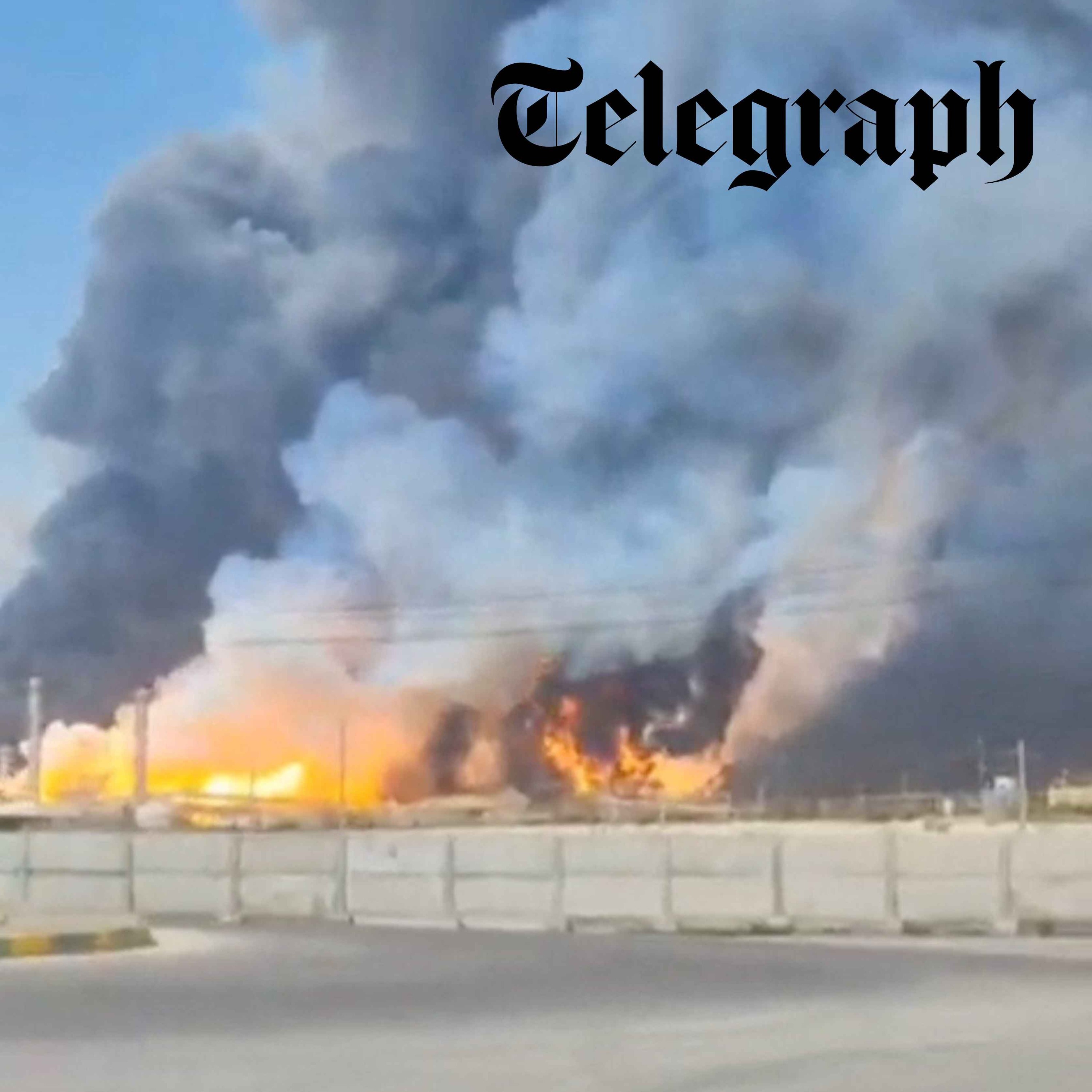
Let's talk first about the attack on South Pas natural gas field. So Israel last night attacked. This is the world's biggest natural gas field, South Pas in Iran. About 3/4 of Iran's natural gas is produced here, most of it consumed domestically Iran responded furiously, targeting Gulf states. It's fired missiles at the uae, Qatar, Bahra, Kuwait and Saudi Arabia. The most significant attack so far has been on Qatar's Raslafan industrial city and it's caused what officials have described as significant damage. So you've woken up this morning to lots of talk about energy prices. Gas prices have surged 35% at the time recording. These are huge jumps. And what analysts are saying is that basically energy providers are starting to price in long term destabilization from this conflict. We've also had a post from Donald Trump. He said he knew nothing about Israel's attack and said Israel violently lashed out of anger. Some suggestion that Israel did this then without American knowledge. We've seen reporting that counters that from the Wall Street Journal. They've cited unnamed U.S. officials that said Trump did approve of it in a bid to pressure Tehran into unblocking the Strait of Hormuz. We've heard lots, obviously about that and the crisis that this is causing in the energy markets around the world. Trump also threatened to blow up the entire South Pas gas field if Iran strikes Qatar again.
- [04:12]
Roland Oliphant
And the point to get there, of course, is that Qatar and Iran share South Pars. It's an offshore field in the Persian Gulf. And Rasl, which they hit, is on the Qatari side of that. So you can see the, the Iranians taking a tit for tat response here to that strike. Raslafan, I believe, handles the figure I saw this morning on a, on a briefing note from an industry source was 19% of the world's LNG comes through there. The potential knock on impact is enormous. I suppose the other point to make, of course, is that when you start hitting energy infrastructure like that in Gulf nations, whether it's Iran or Qatar or Saudi Arabia, you're going for the real kind of the pillar of their economy and basically their statehood. This is serious stuff. Now, amid all this, European leaders called an emergency summit in Brussels to discuss all this. Bart de Viva, Belgium's prime minister, told reporters as he went in this morning that there was no willingness from Belgium at least to be part of this war. We didn't start the war, we don't want the war. Now off the back of that, just kind of as we speak, really. So around roughly lunchtime, let's say on Thursday afternoon, Emmanuel Macron has emerged with a partial ceasefire proposal. He's saying there should be a truce that should cover both energy and water infrastructure. He said in a social media post following talks with the Emir of Qatar. And this is what Mr. Macron wrote. It is in our common interest to implement without delay a moratorium on strikes targeting civilian infrastructure, particularly energy and water supply facilities. Civilian populations and their essential needs, as well as the security of energy supplies, must be protected from military escalation.
- [05:53]
Venetia Rainey
And I think that really speaks to how this conflict is getting broader and taking on a life of its own. Europe would like to think that it can stay out of it. As the Belgium minister said, it's not our war. We didn't start this war. And we've heard similar things from the Germans, from the Finns, but this war might start to take on its own logic and drag them in, whether they like it or not. Roland, before we get to our guests, I know you had one more story
- [06:12]
Roland Oliphant
you wanted to highlight, kind of on that note, of how the war can spread. So Reuters overnight had a great exclusive, basically reporting that Donald Trump's administration is considering deploying thousands of US troops to reinforce the operation as it prepares for the next possible steps. This is sourced to a US official of three people familiar with the matter. So in classic Reuters style, there multiple sourcing. This is not just some random person sounding off. These sources make very clear that no decision has been taken that it's meant to provide Trump with additional options as he considers expanding US operations. Those options include securing safe passage for oil tankers through the Strait of Hormuz, which they say could be accomplished primarily through air and naval forces, but could also mean deploying US troops on Iran's shoreline.
- [07:02]
Venetia Rainey
And do we think this is linked to the 2,500 marines which have been redeployed from the Sea of Japan and should be arriving in about a week and a half? Or is this something separate?
- [07:09]
Roland Oliphant
I'm not sure if that's separate or otherwise, but we do. As you said, there is a Marine
- [07:13]
Venetia Rainey
Extraditionary Amphibious Response Group.
- [07:16]
Roland Oliphant
Yes, essentially firemen, we'd call them in journalism, foreign firemen. The people who rush off to the airport as soon as something happens. That's what this. This particular group of U.S. marines do. They're normally based in Okinawa and they're on their way. I've written a. I wrote a piece on telegraph.co.uk, about what they might do and how you might unblock the Straits of Hormuz. So if you want a menu of options for the armchair admirals among you about how and where you might mount an amphibious operation in response to this, do look up that piece on the Telegraph. The big point to point out, of course, is that America into This signaling to its public and to the wider world that there would be no boots on the ground. It's now pretty clear that they're at least having the discussion. Not saying it's going to happen, but they're definitely considering it as an option in the menu, which I think tells you just how far this mission could creep.
- [08:11]
Venetia Rainey
Let's turn to our guests now. We're joined down the line by Henry Bodkin, our Israel correspondent in Jerusalem, and Sophia Yan, senior foreign correspondent, who's joining us from Istanbul. Henry. Sophia, welcome to the podcast. Henry, let's start with you. This attack by the Israelis on the South PAS gas field in Iran, Trump obviously saying that he didn't know anything about it, that they didn't give permission. What are you hearing in Israel about this attack?
- [08:33]
Henry Bodkin
Israeli ministry officials are briefing that Trump certainly did know about this, that this was coordinated in advance. That's the quote. There's one particular newspaper, Yedioth Aranoth, which is saying that the attack was coordinated at premier level beforehand. So Netanyahu talking to Trump and that it was agreed, obviously, within that maybe Trump feels that Israelis went harder than he thought they were going to. Maybe he's reacting to anger in back channels from his Arab Gulf partners. But the Israelis are certainly briefing as much as they dare, really, because they don't want to fuel the flames of any story of divergence between the two sides. Obviously, the relationship with America is always the most important thing, but they're saying that they did tell Trump and that Trump knew. And I think similar reporting is coming out from Washington as well.
- [09:25]
Venetia Rainey
What are Israel's war goals? We've spoken a lot about America's and how they've sort of shifted shape over the weeks from regime change to just taking out missile capabilities, nuclear capabilities, the navy. What has Israel said that its war goals are? And how different do they feel from the American war goals?
- [09:41]
Henry Bodkin
So in terms of what Israel has said, it's very similar to Donald Trump. So that's regime change, right? So Benjamin Netanyahu, in my view, has kind of found a more kind of inspiring register to talk about it than Donald Trump. He talks about the ancient friendships between the Jewish and Persian people and how, you know, we're coming to save you and all of that. That said, there's great skepticism about the extent to which the Israelis really mean that they're coming at this from a different place. You know, they genuinely are threatened by Iran, whereas the evidence that America is genuinely threatened by Iran is obviously more open to debate. And whilst Israel I think would love the idea of the regime being replaced with a new regime that's pro Israeli, pro West. I don't think their main aim is to degrade Iran as a threat for a generation. That, I think, is the difference. I think Israel is probably held to a slightly lower standard here than Donald Trump in the sense that because most normal thinking people recognize that Israel is under threat from Iran, I think they're entitled to bash it up as much as they see fit. That's the argument. Rather than say, look, we started this, I think Donald Trump is under more of a pressure to actually say that he's left Iran a better place than when he found it. Last week, the discussion was Israeli officials, Israeli politicians worried that Trump was going to wrap this up before Israel had done sufficient damage to Iran so that they would have to come back kind of every year, every other year, and mow the grass, as it were, keep attacking Iran to keep the threat level, as they perceive it, down to an acceptable level. Obviously, since then, Hormuz has kicked off, which it looks like it's going to lengthen the war. Trump's no longer talking about quick off ramps and stuff. And so in these off the record briefings from senior military officials, they're quite upbeat this week. I think they're happier is that they've got more time to really, really degrade Iran's infrastructure to build weapons and to be offensive. That's the core aim.
- [11:48]
Sophia Yan
One thing to note is that Trump has gone back and forth on what he did or did not know of this attack. I mean, he said at first that the US Knew nothing of the Israeli attack. Then later he's threatening to blow up all of Iran's South Pars gas fields if Tehran were to strike back. I mean, it's been like this through the whole since the war started, from the very beginning, where Trump isn't even always clear about whether or not he wants regime change. And so what is the final goal? This is a very good question. It does still seem, as Henry said, that it's moving toward the idea of regime change. But again, what Trump has said publicly keeps changing. Is it A or is it B? And this has been the case again since this war began.
- [12:26]
Henry Bodkin
There's been some quite interesting briefing put out this morning by the Israelis on how this attack on South Pas goes towards the stated aim of regime change. There's going to be power outages as result of it, so sort of inconvenience to civilians. They think they may be making progress with all the hits they've done on the Basij and the local law enforcement and repressive elements of the regime. We've just had the Festival of Fire. We've got Nowuz coming up tomorrow. We've got Eid coming up towards the end of the week. And at different countries can be on slightly different days. And the Israeli thinking, as stated off the record, is that this could be a good window to provoke the uprising. If it's going to happen, it could happen this week. And that cutting off the gas might increase anger towards the regime.
- [13:13]
Sophia Yan
Yeah, I think that's a really good point that Henry raises. I mean, it's still a big what if we still have this Internet blackout in Iran? It's very difficult to get a very clear accounting of the impact of this war. There are some voices that are coming out, but I think the one thing that we haven't seen yet is this popular uprising, which many experts do think could be the thing that makes the regime really, truly fall. Even though these attacks keep, the assassinations keep going, somehow they're still running. But the big question mark is if at one point this gets to a to be something that prompts the Iranians to come out to the streets to start protesting. Because even before this war happened, we had years of different protest movements taking place. There was an issue with water running out of natural resources. There were already energy infrastructure concerns, people running out of gas, for instance, and heating. There were a lot of concerns that on top of the oppression that many people face within Iran, I mean, this is a very big question on the
- [14:10]
Roland Oliphant
apparent divergence between American and Israeli war aims and whether it is heading the intention is what Sophia just described or not. So Admiral Brad Cooper, he's the head of US centcom, so basically running this war for them. He said, you know, our military objectives are very well defined. It's eliminating Iran's ability to project power against Americans and against its neighbors. And on March 16, he said, is also to end their ability to project power and harass shipping in the Strait of Hormuz, which obviously falls short of regime change. And then I want to put this to Henry, actually contrast that to the conversation I had with an Israeli source. I think probably in the first week of the war, which seems like a long time ago, but isn't now. He said to me, I don't think that a lot of people around the world realize how big this is. As far as we are concerned, this is a massive, historic moment. It's going to remake the Middle east in the way the 1979 revolution remade it. And after this, all of the threats, all of the conflicts in the Middle east, which can all be stemmed to Iran, are going to go away and everything is going to be marvellous. This is about being on the right side of history real, kind of like we're going to change everything. Now, is that a sentiment you've heard or is that a confidence that they began with and then it faded away and now it's back? What's your sense of that, Henry?
- [15:32]
Henry Bodkin
That's a big sentiment here. I wouldn't say it's necessarily phrased like that. Everyone has it, or even the majority, but it's a significant way of thinking. This kind of epochal versus wrong, this is the moment type thing, this feeling that this particular junction of Israel's history and there are opportunities now to do things that, that there never have been before. There's an undercurrent of the rest of the Middle East. The Muslim Middle east is a complete mess and we're an enlightened country and we'll go sort it out for them. On the right of Israeli politics at the moment, that creeps into some of this conversation. A lot of Israelis just take the normal security argument, the fact that Iran is definitely a belligerent anti Israeli state and that there is evidence of nuclear enrichment and obviously they've got these ballistic missiles and that's more than enough reasoning to go and bash them up very severely. But yes, the more kind of historical epochal argument is definitely quite alive, particularly on the right.
- [16:41]
Venetia Rainey
Should we talk a bit about your reporting in Iraq, Sofiah Iraq is a country we haven't spoken about much, although we've had some brilliant dispatches from you and some voice notes that our listeners can go back to last week's episode to hear. But you were reporting there for, I think, just over a week up in northeast Iraq around Bill, you have published a series of articles that we'll link to in all the show notes. You've been speaking to Iranian Kurds. You've been reporting on attacks on Western bases in Iraq. First, give us a bit of a flavour of what it was like up there while you were reporting.
- [17:11]
Sophia Yan
You know, Iraq is very interesting because it is the only nation in this war to be hit by both sides. So Iraq hosts Western military personnel, the Americans, the Brits, other coalition forces that were put in place many years back to fight against the Islamic State terrorist group. Those military personnel are largely still in place. There have been some moves to evacuate people, but until this war broke out, Iraq, like other countries, had this military presence from the West. They also of course host Western diplomats. There's Western companies involved in the energy sector, the oil fields, the gas fields. I mean, there's a whole host of American and British companies, for instance, that are involved in a very material way in Iraq. But at the same time, Iraq shares a border of about a thousand miles long with Iran. It also hosts Iranian separatist groups within its borders in Iraq. They've been operating in exile for many years. So these are reasons why Iran might want to hit Iraq. But at the same time, because Iraq has been so uniquely positioned right next to Iran for many years, the federal government in Baghdad has tried to tow this toe the line. And so there are a lot of Iranian backed militias that operate within Iraq. It's very much embedded within the governance of Iraq itself. And all that has meant that this war in a way is a. There's a microcosm of the war within Iraq itself. So that's why it's getting hit on all sides. And I hope I've explained that. Well, it's very complex and there's so many things happening, so many different attacks, all the drones, all the missiles, all the rockets. But all this to say is that Iraq really is in a very unique position because they are trying to keep the peace and also because this means that possibly upsetting the very delicate security balance within the country itself. So the north is this semi autonomous Iraqi Kurd region, the rest of the country governed by federal Iraq. And so there is already a delicate balance within the country's own borders to manage. And then you've got this war on top of it and they're getting hit on all sides.
- [19:12]
Roland Oliphant
How did it feel when you were there, all this tension stuff? I know that, you know, you were able to file some reporting and you sent us some really, really great dispatches. Are you able to speak, I don't maybe speak a bit more freely about how did it feel? Did it feel a lot more dangerous? Could you feel this tension everywhere? Just give us a flavor of what it is like or what the atmosphere is like on the ground?
- [19:34]
Sophia Yan
Yeah, well, I chose to report primarily in northern Iraq in the Kurd region, because usually this is an area that's a bit safer for foreigners. There are less Iran backed militias operating in that part of the country as opposed to Baghdad and elsewhere where foreigners have been kidnapped before, for instance by the militias and held for quite some time. So I chose to work in that part of the country. And also because the Iranian Kurds, separatist groups are operating in that area, too. And so there was talk of possibly a ground invasion launched by the Iranian Kurds in Iraq into Iran itself. But I have to say that with this particular war, because of how tense it is, northern Iraq is not safe for foreigners the way it used to be. The kidnap threat has increased significantly. I mean, there were threats in the time that I was there that came out specifically against my profile, American female journalists. There have been death threats, murder threats against journalists also in that period of time, to international, to foreign journalists, and also to local Iraqi journalists. And there have been a lot of restrictions on media, on what you can and cannot report. And those restrictions have gotten stronger over time. And we're seeing this spreading across the region. In Iraq itself, in the Kurdish region, authorities issued several directives that again, became more restrictive as time went on. The concern really stemmed from trying not to allow Iran to see how much damage may have been sustained. And so there were certain things that we. We just couldn't do. I mean, specific time and date, for instance, and the impact of attacks. There were also requests for not showing certain leaders of the community next to the damage sustained. But the attacks were getting much more frequent. And there's no air defense. I mean, Iraq doesn't really have its own air defense system. Everything that's in the country comes from the Western military personnel. So everything shot down comes from, for instance, American C rams that are intercepting projectiles in the sky. And those systems are really there to protect the Western military. Well, the American military presence, let's be clear, if it also happens to protect other Western military troops and their presence on the ground, well, that's a good, positive consequence. But really, those American systems are there to protect the American. American presence and the American interests in countries. So being in a place where there's not much air defense, there are no public bomb shelters, there's no alarm infrastructure at all in the country. I mean, the only real alarms that exist are, again, around where the American military have a presence. And also some of the energy infrastructure, the oil and gas fields, have their own systems, because, of course, if they were to be targeted, it could be catastrophic. So they have their own systems in place. But for the general population of millions of Iraqis, there is no safety at all. And that was something that I could feel very strongly. I mean, it got to the point where there were hotels in a lot of places that wouldn't take foreign foreigners as guests, because if you were a guest in that hotel, that could mean that the hotel could then come under attack and Many hotels have come under attack in Erbil and Suleimaniya. These were places we were working. And so the threat level has changed entirely in a place like Iraq. I mean, just overnight because of this war.
- [22:41]
Venetia Rainey
And even with, with these defenses aimed at American military bases that you mention, I mean, we saw a striking video of a one way attack drone, the kind that you normally see in Ukraine, filmed flying freely through a US military base before exploding into a doorway. I mean, that's pretty extraordinary, isn't it, that something like that can get through American defenses so easily. Did you see a lot of that kind of stuff?
- [23:03]
Sophia Yan
From the moment I got there, there were attacks day and night. The first night I was there, there was an attack actually against the US Embassy in Baghdad. And there was debris that fell in the Green Zone and the international zone that's now been closed off. And so this kind of, you know, there was an attempt by various monitors on the ground to get a sense of how the attacks were happening, like if there were certain times of day where they might be more frequent. But they're coming from all over the place. I mean, Iran is firing them at Iraq, also firing them through Iraqi airspace to other countries. But also a lot of these attacks, you have to remember, are coming from within Iraq itself, from Iran backed militia groups that are trying to hit the Western interests, embassies, consulates, military, diplomats, companies, because they're involved in the energy infrastructure again. And so a lot of this is coming from within the country and some of it's coming from, well, it seems to be launched from places that are quite close by. And so the sense is, you know, I would say that everybody's pretty much on edge. A lot of the Iranian Kurd groups, the separatist groups, this opposition in exile, they've also been hit. I mean, they have their own armed units and so they've been also attacked. Almost every single group, I believe, believe has sustained attacks. It's just coming from all over the place. And from the perspective of Iraqi authorities, what they want is to try to bring tensions down.
- [24:21]
Roland Oliphant
In today's paper you have a piece talking to an Iranian Kurd force based in Iraq. And their message is the regime will not fall unless we launch an offensive. They've been stuck in a pretty peculiar place, haven't they? Because at the very beginning of the war, we were basically told by American or Israeli or somebody was telling us. It got into the public domain, this idea that the Americans and Israelis were going to back the Iranian Kurdish groups to launch a ground offensive across the border. Then it was massively played down, then it was never going to happen. You've now spoken to someone who says they're not going to be able to do this without us. Can you tell us about them and where they now sit in all of this mess?
- [24:59]
Sophia Yan
In northern Iraq, Iranian Kurd groups have been operating for many years in exile. And so they are generally political organizations, many of which also have armed units. And about a week before the war broke out, there was a sense in the community, even though they have for many years disagreed on their final aims, for instance, whether to fight for an independent nation or whether to fight for greater autonomy. Just one week before this war broke out, because there was a sense that something might happen, they did form a coalition of groups. And so this was very in. In the Kurdish community, this was unprecedented in the sense that it's always been difficult to align aims for what their final goal is in terms of pushing for greater rights for the Kurd. So after this coalition was formed, the war broke out, and then there was a big question mark of what they might do. The Iranian card groups, a lot of them were issuing pretty strong statements publicly. From their perspective, this is a pretty good opportunity. They see and believe that the regime has weakened to a point where they might actually have a chance to campaign and push for greater autonomy for the Kurds of Iran. And the Kurds are amongst the world's largest stateless ethnic groups. They're split across four countries, Iran, Iraq, Syria, Turkey. And they faced. They have faced varying degrees of discrimination. And so this idea that they might have a chance to push for more autonomy is one that none of them take lightly.
- [26:17]
Roland Oliphant
Did you get the sense that they want to go, they want to launch this ground offensive, and maybe they're a bit annoyed with Donald Trump for backing out of it?
- [26:25]
Sophia Yan
I would say from the first day I got there and started speaking to these groups and some of their commanders, there has always been a sense that if they had the opportunity to go in, that they would take it. Because to them, this is about pushing for greater rights for their own people. If those aims align with what the US Or Israel might want to do, that could be a happy coincidence. But what they're looking for is a way to push for greater autonomy. A lot of them think that this can only happen if the regime were to fall. A lot of the comments that I heard was that extensive US Air cover would be very important because they just have light weapons, they've got guns, they've got men, and they can go in, but they're going to need some support to make sure that the IRGC and that Iranian forces are neutralized along the way. I mean, some of them were saying, you know, they were asking me what I thought, you know, what, what does Trump want? You know, a lot of them want to know this, and I think a lot of people in the world have that same question. What is it that Trump's after? Is it something that we understand? Is there a plan? Is there something that we can assist with? Do our interests align to a certain point? I mean, these were the kinds of things that the people I interviewed were talking about. So they are looking for an opportunity. They're ready to act. They want to act, but they need the right opportunity by which which they see a chance to do something for the Kurds and possibly to assist in this broader potential plan for the Tehran regime to fall.
- [27:47]
Roland Oliphant
We're going to take a short break now. When we come back, we'll be discussing one of the big mysteries of this war. Where does the Middle East's other superpower, Turkey, stand in all of this?
- [28:04]
Darina from Quo
Hi, I'm Darina, co founder of quo. If you run a business, you know, the team that responds first wins the customer. You've probably opened your phone to a bunch of missed calls and no voicemails. Those are missed opportunities and exactly why we built quo. QUO is the business phone system that helps your team handle every call and text right away. Join over 90,000 businesses that win more customers with Quo. Try Quo for free@quo.com business. That's Quo.com business.
- [28:34]
Jerry Insurance Advertiser
Tired of your car insurance rate going up? Even with a clean driving record? You're not alone. That's why there's Jerry, your proactive insurance assistant. Jerry compares rates side by side from over 50 top insurers and helps you switch with ease. Jerry even tracks market rates and alerts you when it's best to shop. No spam calls, no hidden fees. Drivers who save with Jerry could save over $1,300 a year. Switch with confidence. Download the Jerry app or visit Jerry AI Acast today.
- [29:03]
Strawberry Me Career Coach Advertiser
Let's be completely honest. Are you happy with your job? The fact is, a huge number of people can't say yes to that. Too many of us are stuck in a job we've outgrown or one we never really wanted in the first place. But we stick it out and we give reasons, like, what if the next move is worse? And I've put years into this place and maybe the most common one. Isn't everyone miserable at work? But there's a difference between reasons for staying and excuses for not leaving. It's time to get unstuck. It's time for Strawberry Me. They match you with a certified career coach who helps you get from where you are to where you want to be, either at your existing job or by helping you find a new one. Your coach helps clarify your goals, creates a plan and keeps you accountable along the way. Go to Strawberry Me Career and get 50% off your first coaching session. That's Strawberry Me Career.
- [30:03]
Venetia Rainey
Welcome back. You're listening to Iran, the latest. And we're still on the line with Henry Bodkin, our Israel correspondent in Jerusalem, and Sophia Yan, senior foreign correspondent in Istanbul. Henry, I want to turn to you because the other theater in this wider Middle east war is Lebanon. Of course. Of course. Israel has been readying an invasion and has sent some troops in already over the past few weeks. I know you've been up reporting in the north of Lebanon, seeing some of those troops massing. What have Israeli officials been telling you about what they think the scope and timeline of this war in Lebanon with Hezbollah will be?
- [30:34]
Henry Bodkin
Israeli officials, senior IDF officers, they're saying that the story has been for the last two weeks, slightly over two weeks now, since ground troops went in, that it's just about defensive positions really quite close to the border within a few hundred meters or within a few kilometers. But when they go a few kilometres in, they often don't stay. And that, they said, is to prevent or to reduce or to thwart the risk of ground incursions by Hezbollah. So terrorists coming over the borders and causing havoc in northern Israeli towns and villages. They've ordered an evacuation for the whole of that southern section south of the Litany river, that section of several miles down to the Israeli border, and in places north of Vass as well. When we were there a few days ago now, we witnessed a huge buildup of armor, of tanks going up to the border, of large artillery pieces, a lot of ammunition, like big ammunition tank shells, artillery shells, things like that, a lot of logistical equipment which would suggest that they're building up the capability to push in a lot deeper. And this is a little bit out of date now, but the colonel that I spoke to said, look, we'd love to go in and basically take the whole area up to the Litany River. We're amassing the capability to do it. We don't wait for the order from the government to build up the capability. What we do is we build up the capability and then say to the government, and do you Want to do it so that if they say yes, they can go in. So what are Hezbollah doing? They're not fighting for every yard or anything like that. They've had some nasty hits on Israeli tanks. They have been to a small extent fighting in quite a guerrilla way, kind of hiding in the rubble of these bombed out villages. But on the whole, they're not fighting, they're falling back. Israeli officials have been briefing that this is not tied to the Iran operation in terms of when it ends. Right. This is an Israeli local issue. They'll keep going for as long as they need to. That's what they've been briefing. The big question is, is Israel going to turn this section of southern Lebanon into a buffer zone, into a quote, unquote, sterile zone once again? Which, which of course it was for. For many years before the year 2000, tens of thousands of people have evacuated a lot of these Shia villages. There's still some Christian villages which have stayed put because they have an understanding with the IDF that they won't get hit because they don't allow Hezbollah in to use their villages as a base. But there's a lot of talk about. It has echoes of Gaza of destroying terrorist infrastructure. Well, really that means homes, because Hezbollah use civilian homes for a lot of their activities. It's not like Gaza in the sense that there isn't a population trapped there. The population, a lot of them have, have evacuated in the last few days. The IDF had been destroying bridges across the Litani river and also petrol stations. So again, this is back to the Iran thing. The Israelis are kind of institutionally very, very skeptical about the idea of civilian infrastructure. If it could be used by a terrorist in any way, it's a target. So the bridges in particular could give rise to further suspicion that they're planning a buffer zone type thing. But, but we don't know at this stage. All we can say is that they're building up the capability to do it. They haven't done it yet. And the civilians in northern Israel really, really want them to do it because they're living under terror.
- [34:07]
Venetia Rainey
On this idea of a buffer zone, am I right in thinking that the vast majority of missiles being fired at Israel are coming from north of the Litany river and that most Hezbollah operatives are believed to have already evacuated north of the Litani River?
- [34:20]
Henry Bodkin
Yeah, absolutely. And this IDF colonel that I spoke to a few days ago freely admitted that the vast majority of the things that are actually causing a problem to Israeli civilians, that is missiles. So these are not ballistic missiles. These are smaller missiles, more local missiles and drones, although Hezbollah do have some ballistics are coming from north of the Litany River. The threats from south of the Litany river, as I've said said, was the potential threat of a ground incursion and kind of line of sight type missiles, anti tank missiles and stuff. But, you know, that's been pretty much neutralized by the presence of the IDF even within those first line of villages. So believe me, me and my colleagues from the other international press did point out to him this apparent incoherence is saying, well, like, you know, if you're going into this bit of southern Lebanon to protect the civilians of Israel, but the threat, threat to the Israeli civilians is not in that bit, what are you doing? And he said, well, it's kind of above my pay grade, but I guess the ultimate hope for the Israelis would be that they completely root out Hezbollah from this southern area, maybe Ashara in Syria. He's been pretty good about being serious about cracking down on Hezbollah's supply routes and doing all he can from that side of things. Maybe Trump calls up President Owen in Beirut and the Lebanese armed forces up their game in terms of taking on Hezbollah and there could be some sort of choke. But yeah, there does seem to be a slight incoherence in terms of where the Israelis are and what they're trying to achieve.
- [36:01]
Roland Oliphant
We've had a message from a listener saying, the question I want to know about is Turkey. Their position is a bit of a mystery. They're a massive player in the Middle east, they're in NATO, but what are they thinking? What's their view on it? They are potentially a major player in this war. They're certainly a major player in the region. What can you tell us about the Turkish view of all this?
- [36:21]
Sophia Yan
Well, you said it already. Turkey's in NATO. If they get pulled into this war, there's a big question mark. What does that mean for NATO? What does that mean for Europe? And Europe right now is not so much in the thick of it. They do have military personnel that have been impacted across the region, but it's not, not a country that's being attacked at the moment. It's in Europe, of course, not us, Israel or Iran. So it's not one of the main players. But if Turkey were to get involved, that throws into the mix a big question mark over what Europe's involvement might look like going forward. Turkey has been very keen to make sure that this does not complicate their interests and their affairs. They do rely on a lot of These Middle Eastern countries, Iran included, for energy imports. And from Ankara's perspective, one very big question is the issue that we were just talking about, the Kurdish question. There are. There have been armed Kurd groups, the pkk, for instance, that Turkey considers a terrorist group. Also, other Western nations consider them a terrorist group to Ankara. This is an existential threat. This is something they've been dealing with for decades. They've been fighting these militants for a very long time. There is an ongoing peace process. If this war continues to escalate, if armed Iranian Kurds were to go into Iran, if somehow Iraqi Kurds were involved, this to Turkey is honestly their worst nightmare, because they don't want to see any part of the Kurdish community get any stronger or to fight for greater autonomy, because then that means that could blow back on how Kurds in Turkey feel and that could change this dynamic that, that we're starting to slowly see, which is to move toward peace, a detente between the Turkish Kurdish militants, the pkk, and also the Turkish government. So for them, the last thing they want to see is anybody armed from the Iranian Kurdside going into Iran, because this could blow out of proportion for them. And they're very worried about that because again, they've just spent so many years trying to handle this issue and finally maybe have reached some sort of resolution that they would like to see continue. So. So this has been a real nightmare for Turkey. The foreign minister has made comments to that effect, being very clear that Turkey does not want to be dragged into this. But that position may be difficult to keep going forward because there have been missiles coming through to Turkey. There has been some debris that has landed in Turkish territory.
- [38:49]
Venetia Rainey
There is a joint base, three missiles intercepted to Turkey. Is that still correct?
- [38:53]
Sophia Yan
Yes, three that we know of and three that have come through. And so there is a joint American Turkish base in Adana. This is on the south, south part of Turkey, along the coast in Chirlik. And there's some thinking that these missiles were targeting that base, maybe perhaps going towards Cyprus. But regardless of what that final destination was for these attacks, what the final target was, Turkey is getting dragged into this, whether or not it wants to or doesn't want to be, because it is in the region and again, is a pretty major player. The other and last thought I'll leave you all with when it comes to Turkey, is that before this war, there was already a growing rivalry between Israel and Turkey. Now, this is a very complicated relationship. Turkey, culturally, ideologically, from a religious perspective, they are much more on side with the Muslim part of this region, it's a Muslim country. They are often from senior leadership, from President Erdogan in Turkey himself, issuing statements in solidarity with their quote, unquote, Palestinian brothers and sisters. They are in every which way, publicly very much anti Israel, but still have maintained some trade relations with Israel. So it's been a very complicated situation. They also are trying to get American fighter jets from Trump. This has been on the list for many, many years. But due to all sorts of geopolitical challenges, Turkey still hasn't gotten them. But it's something that they still do want. So Erdogan has met with Trump on this issue. It's a difficult balancing act, but on the whole, there was a greater tension, rising tension between Israel and Turkey. And there's some sense within Turkey that if Iran, as the arch nemesis of Israel, were to go that attention and that vitro that comes out of Israel that's directed now at Iran, could then be directed toward Turkey. So Turkey right now, just like so many countries, they really want to find a way to pull everything back from the brink.
- [40:56]
Venetia Rainey
Should we end with some final thoughts? It'd be great to hear both of you have such a wealth of experience reporting from across the region. Where do you see this war going over the coming weeks? Henry, kick us off.
- [41:06]
Henry Bodkin
It's interesting in Israel, I mean, I think that, and I recognize this obviously from covering the Gaza war quite intensively and other wars, but there's a tendency here to get quite drunk on assassinations, to just celebrate. I'm not saying that as an argument against what they're doing. I'm not commenting on that, but just to really, really enjoy the tactical success so much that the strategic conversation gets dampered. We saw it so much with the war in Gaza. The IDF are very good at putting out. We've hit this company commander in Hamas. This is the person who did that 10 years ago and killed his citizens in this terrorist attack. We've got him. And, and people love that. And then in the end, Hamas wasn't defeated and that. You're just beginning to hear some voices of caution now in the Israeli press, just being like, hang on, come on, let's just try and look at the. The pilots are very good and they're very brave and we've done brilliantly, et cetera. But let's try and look at the strategic picture and are things actually changing to our advantage there? But look, people here are very, very pro the war. And I don't see that changing. And the instinct will be, be if things don't go in Israel's favor just to hammer them harder.
- [42:17]
Sophia Yan
Sophia well, the fallout from this is already so massive. The attacks across the region, the economic impact, the oil prices. I mean, there's a big question of how long regional authorities can seek to contain the situation. Arguably it's already not contained. I think in the longer term, I agree with the sentiment about this being a massive turning point for the region and for the world. You just think about where we were even pre Gaza, even before that started, there was a move toward normalization between the Arab world and the Israelis and that was going by many accounts actually quite well. There were different agreements inked, there were trade deals. I mean, there was a lot of movement in this on this front. After Gaza, after the war, the 12 day war last year, after this current war, when the dust finally does settle, what does that look like? What do partnerships in this region look like? What does it mean to have a U.S. security guarantee? I mean all these countries in the Gulf, this is a very good example they have had for a long time a U.S. security guarantee. What does that mean if you've got attacks coming into your territory that are injuring and killing civilians? This is a question that every single country in the Middle east is asking themselves right now. These governments are thinking about how they're going to have to position later on. I mean, I'll go back to Iraq itself. I mean there are discussions already within the country, for instance, about what to do for air defense. I mean the country doesn't necessarily have enough money to procure those systems, but they are starting to think about what to do for the future to protect their people. Because this status quo, as we've noted in the Middle east, just does not seem sustainable anymore.
- [43:51]
Roland Oliphant
Senior foreign correspondent Sophia Yan ending that discussion there with great thanks to her and Henry Bodkin in Jerusalem. That is is all from Iran the latest today. We'll be back tomorrow, which is incidentally Nowruz Persian New Year.
- [44:09]
Venetia Rainey
We'll be discussing how the last week of the war has been going and we'll be doing some maths on the missiles left across the region until then, that was around the latest Goodbye, Goodbye.
- [44:25]
Roland Oliphant
Iran. The Latest is an original potential podcast from the Telegraph created by David Knowles and hosted by me, Roland Oliphant and Venetia Rainey. If you appreciated this podcast, please consider following Iran the Latest formally battle lines on your preferred podcast app. And if you have a moment, please leave a review as this helps others find the show to stay on top of all our news subscribe to the Telegraph, sign up for our Dispatchers newsletter, or listen to our sister podcast Ukraine for latest. We're still on the same email address, address battlelinestelegraph.co.uk or contact us on X. You can find our handles in the show. Notes the producer is Peter Shevlin. The executive producer is Louisa Wells.
- [45:09]
Quo Business Phone Advertiser
Over 90 of the top 100 US accounting firms trust Bill to simplify and secure bill pay. That's proven financial infrastructure built on over a trillion dollars of secure payments. Visit bill.com proven for a special offer with verbocare.
- [45:28]
Jerry Insurance Advertiser
Help is always ready before, during and after your stay. We've planned for the plot twists, so support is always available because a great trip starts with peace of mind.